Cryptocurrencies saw tremendous growth in 2021. The global market cap of crypto now stands at $2.25 Trillion. With features like secure and irreversible transactions, inflation protection, high yields, and cheap global funds transfers, crypto has become everyone’s go-to solution for finance. Multiple sectors are now joining the crypto bandwagon with their amazing decentralized solutions.
Despite their immense popularity, we are still a long way from widespread usage. Although it feels that crypto is growing, a population-wide analysis shows that crypto users remain a minority. The global crypto ownership rates were merely 3.9% in 2021, with over just 300 million crypto users globally.
However, industries are evolving to bring crypto to the masses and one of the key drivers of this growth is the gaming sector. According to analysts, gaming will be the key sector to offer blockchain and crypto a chance to become a genuine use case, not only by making games more immersive but also by developing internal economies that will educate people about cryptocurrencies. This $150 Billion industry is all set to push crypto to the masses.
Giving Blockchain and Crypto a Real Use Case
Crypto and gaming were an ideal combination that never materialized previously. However, with the advancement in blockchain, people have realized the potential of crypto gaming, giving rise to play-to-earn (P2E) games. These games have proven to be a game-changer in the industry, offering income streams to users that were not previously available in free-to-play games.
The P2E model combines blockchain solutions such as crypto and non-fungible tokens (NFTs) to provide additional value as well as an excellent user experience. Crypto specifically is being used as in-game currency to reward users for playing the game. Even NFTs are transforming the way we deal with in-game items, making them easily accessible outside the gaming ecosystem for real-world monetization.
Moreover, many games have simplified blockchain and crypto to new users, driving mass adoption. The majority of blockchain gaming platforms have already demonstrated to the world why crypto gaming is the way of the future. Even platforms like Citrus are playing a key role in accelerating the transformation of gaming. It is offering a wide range of solutions to the blockchain and gaming worlds through a mix of decentralized finance (DeFi), NFTs, innovative dApps, and other technologies.
Going Mainstream with Play-To-Earn and Metaverse
Mainstream adoption of crypto is feasible when everyone can engage in an ecosystem and find value in it. As for now, crypto gaming appears to be on pace to increase adoption through the utilization of the play-to-earn and metaverse concepts. Even as cryptocurrencies are here to stay, blockchain gaming could be a tremendous force that will assist us in getting this revolution started.
Moreover, if people can be persuaded to play games and learn about cryptocurrencies, we could attain widespread acceptance sooner than projected. In addition, if gaming platforms like Citrus continue to flourish and provide a solid foundation for blockchain P2E games, we may see some of the world’s greatest economies participate in crypto gaming. In fact, Asia-pacific countries could be the largest gaming market due to the bulk of its appeal among the younger generation.
Beyond that, NFTs and the metaverse could be an added advantage to its success. Crypto gaming is all set to expand, and in a few years, we may expect to see an entirely new gaming world. With the ease of access to the gaming industry, crypto would see widespread acceptance among the masses.
For NFL fans, 2021 was a great year. Stadiums returned to capacity crowds after the 2020 season was shortened with limited attendance. Stadium parking lots were again filled with the enthusiastic anticipation of tailgaters and their barbequed camaraderie.
It was also a great year for Bitcoin (BTC) investors as the largest cryptocurrency by market capitalization reached all-time high prices multiple times throughout 2021, eventually topping out at $69,000 in early November. This led to a dramatic increase in media coverage of Bitcoin.
Seven NFL players in 2021 decided to call the audible and begin either being paid in crypto or having their cash salary partially converted to crypto. These players have capitalized on the return of the regular season and the increased profitability of Bitcoin.
Aaron Rodgers
The reigning 2020 NFL MVP announced via a Nov. 1 video post on Twitter that he was partnering with Cash App payment service to accept a portion of his salary in Bitcoin. Rodgers will earn roughly $22.3 million this year.
The video depicted Rodgers dressed as John Wick for a Halloween party. If that wasn’t strange enough, likely by design, Rodgers also told viewers that he would donate $1 million in BTC.
In Rodgers’ case, he will have a portion of his salary sent to his Cash App account, which he will then use to buy BTC.
The Twitter profile for the star quarterback for the Green Bay Packers features a picture of himself on the field during a game with the iconic laser eyes, further signaling his support for BTC.
Tom Brady
Tom Brady is another very high-profile NFL star quarterback who dabbled heavily in cryptocurrency in 2021. Brady has not yet said that he is being paid in BTC by the NFL, but he will be paid in crypto by FTX exchange after he took an equity stake in Sam Bankman-Fried’s exchange, and will serve as a brand ambassador.
Brady has not reserved himself to crypto assets alone, however. The iconic football star launched his own NFT platform, called Autograph, in April to attract the top talent in sports, entertainment, fashion and pop culture.
It doesn’t end there for Brady and crypto, though. Late in October, Brady threw the 600th passing touchdown of his career, marking an all-time high for the NFL, and helping to secure Brady’s position as the all-time leading touchdown passer in the league’s history. Brady paid 1 BTC to the fan who was initially given the ball by the receiver who completed the touchdown.
That BTC was worth about $62,000 at the time of the game, but the ball itself may be worth over $500,000 according to Goldin Auctions sports memorabilia auction company.
Odell Beckham Jr.
Odell Beckham Jr. (OBJ) followed in Aaron Rodgers’ footsteps by announcing late in November that he had partnered with Cash App to receive his salary from the NFL in BTC. His contract stipulates that he should receive about $4.25 million from the NFL this season.
The Los Angeles Rams’ wide receiver told fans that he would give back $1 million in BTC as part of his new partnership with Cash App. Beckham appears to be no stranger to the crypto and NFT scene as his Twitter profile dons a Crypto Punk NFT.
In case you haven’t noticed, Jack Dorsey’s Cash App is involved with both OBJ’s and Aaron Rodgers’ BTC salary deal. The payment service app has had a great 2021 through the first three quarters of the year by raking in nearly $10 billion in revenue from 36 million active users and 100 million downloads.
Trevor Lawrence
The Carolina Panthers’ new star quarterback joined the ranks of NFL superstars who are publicly accepting crypto payments. Lawrence’s deal, however, is not with the NFL directly. The 2021 NFL top draft pick’s crypto salary comes from an endorsement deal with the crypto portfolio app FTX (formerly Blockfolio).
The value of his deal has not been made public, but if Lawrence has been hodling his crypto earnings, there is a good chance he has enjoyed an appreciation in value, especially from the Solana (SOL) coins. The total crypto market cap has increased by about $500 billion since late April when the deal was announced.
Saquon Barkley
Saquon Barkley, the superstar running back from the New York Giants, revealed in July that he was converting all of his endorsement pay into BTC. As with most others on this list, Barkley is not being paid directly with crypto. Instead, he is swapping some of his cash earnings for crypto.
Barkley is using the Strike payment app to acquire his BTC. He is not the first NFL player to use Strike to buy BTC with his salary, however. Last year, former NFL offensive lineman Russel Okung became the first player to publicly share that he was using Strike to convert his NFL salary to BTC.
Barkley’s reasoning for trying to amass wealth with BTC revolved around the lack of longevity among NFL athletes. He told The Best Business Show host Anthony Pompliano on July 15:
“When you see the KD’s, the Lebrons and Bradys of the world and you want to create generational wealth, you can’t do that with the sport that I play and the position that I play and coming off of injuries. When you sit out of football for a whole year, you realize that this game could be taken away from you.”
Sean Culkin
Kansas City Chiefs’ tight end Sean Culkin went public with his plans to convert his entire salary from the NFL into BTC. While others on this list committed to converting only a portion of their salary into Bitcoin or being paid for endorsements with cryptos, Culkin is swapping 100% of his salary.
I fully believe Bitcoin is the future of finance and I wanted to prove that I have real skin in the game — not just trying to make a quick buck. I will be converting my entire 2021 NFL salary to #Bitcoin.
Like with Saquon Barkley, Culkin’s reasoning for turning to crypto has to do with the short half-life common among players in the league. The average time most athletes spend in the NFL is 3.3 years, according to Statista. Culkin said in a statement:
“Considering my career—particularly its physical demands, and brevity–it makes the most sense to be paid in sound money that I believe protects its purchasing power over time.”
Aaron Jones
Last but certainly not least on the list of NFL stars earning crypto is the Green Bay Packers’ Aaron Jones. The running back signed a deal with FTX to become an ambassador for the exchange in September. Like with Tom Brady’s deal, Jones purchased an equity stake in the exchange.
Jones will also integrate the FTX Pay platform into his own charity’s website to enable it to accept crypto donations.
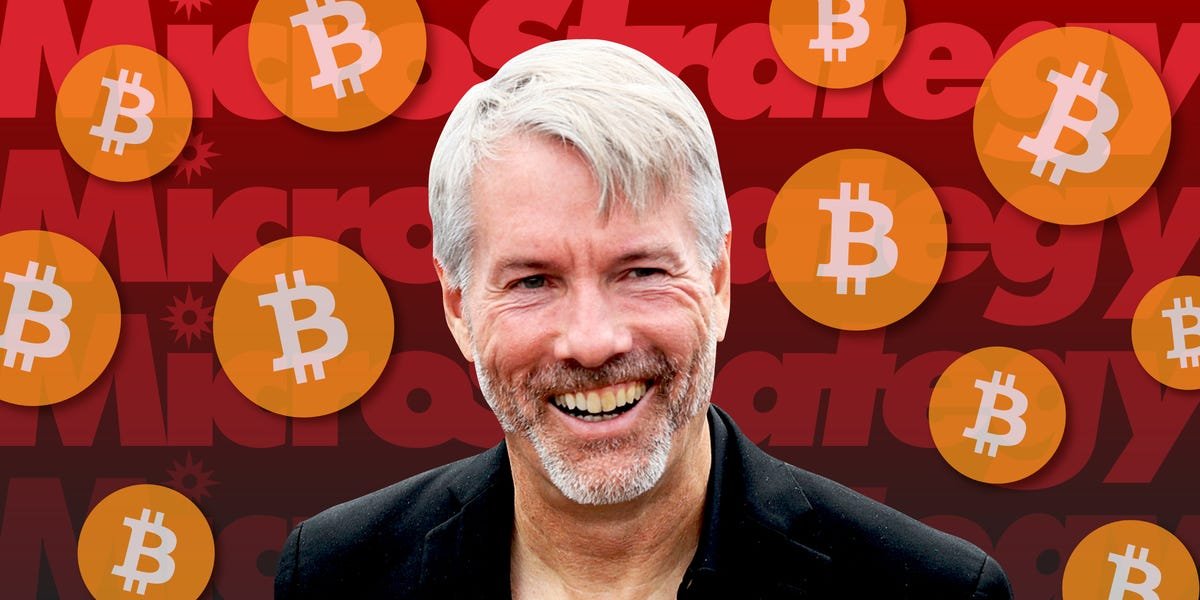
Michael Saylor is one of the most vocal supporters of bitcoin and is CEO of MicroStrategy, the company with the largest bitcoin holdings in the world. The CEO has always been a big proponent of the digital asset, taking both a personal and professional stake in the asset.
Saylor had revealed in 2020 that he holds over 17,000 BTC. At this time, bitcoin was still trading below $30,000 and Saylor had said that he got all of his holdings for an average of $9,882. Bitcoin has since grown over 100% since the CEO made his big reveal, pushing the value of Saylor’s holdings to almost $1 billion.
Related Reading | December Turns Red For Bitcoin As Market-Wide Sell-Offs Continue
How Much Is Saylor’s BTC Worth?
Michael Saylor told The Information that he does not believe that anyone should sell any of their bitcoin and that he has actually never sold any of his bitcoin. In his 2020 reveal, he said that he held a total of $17,732 BTC, all of which he had purchased before his company MicroStrategy, had purchased its first bitcoin. At an average trading price of $13,900, Saylor’s holdings were worth a little over $246 million.
“Some have asked how much #BTC I own. I personally #hodl 17,732 BTC which I bought at $9,882 each on average. I informed MicroStrategy of these holdings before the company decided to buy #bitcoin for itself.”
Bitcoin is now trading significantly higher than it was when Saylor had made his big reveal, growing as high as $69k at his peak. Presently, the price of BTC is revolving around $48,000. At this present value, the CEO’s bitcoin holdings are now worth over $850 million.
BTC begins recovery trend | Source: BTCUSD on TradingView.com
He intends to continue holding these coins as he believes that bitcoin is headed for $6 million apiece. This means that the CEO still expects the cryptocurrency to grow another 12,000% from its current value.
How Much Bitcoin Does MicroStrategy Own?
MicroStrategy boasts the largest bitcoin holdings of any public company. The company had begun accumulating bitcoin in 2019 and has since garnered 122,478 as of its last purchase, bringing the total value of its holdings to over $6.1 billion. All of its BTC were purchased at an average price of $29,861, putting the company firmly in profit at the current value of the asset.
Related Reading | Crypto Research Analyst Puts Ethereum At $9,000 In Six Months
However, its CEO had begun purchasing bitcoin before the company. Saylor revealed that he had all of his BTC before MicroStrategy had bought its first bitcoin, adding that his personal holdings were shown to convince the company to begin investing in the digital asset.
The company, like its CEO, has no plans to sell is BTC. Instead, it has begun looking towards new ways to generate yield from the investment, which Saylor revealed at an investor day presentation held last week.
Featured image from Business Insider, chart from TradingView.com
Polygon (MATIC), a layer-two network designed for scaling and application infrastructure development on Ethereum (ETH), has been making the rounds among blockchain enthusiasts as of late. From its $1 billion investment into zero-knowledge technology to co-launching a $200 million Web 3.0 social media initiative up to integrating with Opera’s web browser to make its decentralized apps accessible to 80 million Android mobile users, the network’s momentum is going strong.
But partnerships and business aside, the technological capacities of the network, especially when compared to Ethereum, are also attracting the attention of many blockchain developers. In an exclusive interview with Cointelegraph, Polygon co-founder Sandeep Nailwal talked about the extent of the network’s adoption.
Cointelegraph: What are the current gas prices and transaction speeds for Polygon? And how does that compare to Ethereum?
Sandeep Nailwal (SN): From the Polygon Scan Explorer, you can see that the average block time is around 2.3 seconds. As for Ethereum, that is 15 seconds. And then the gas fees, you can see 0.001 MATIC tokens; this is a point fraction of a penny.
CT: Have there been any notable nonfungible token (NFT) drops on the Polygon network recently?
SN: None of them have become like CryptoPunks or anything, but I think Polygon’s biggest kind of support is from the gaming companies […] They all added to NFT. If you go to market, talk to any random 10 different gaming teams, they will tell you six to seven are building on Polygon.
But the notable drops on NFT, the biggest, have been Dolce and Gabbana, the brand. They made a $7 million sale recently. There are other big luxury premium watch brands, and these guys are coming in. Apart from that […] Elon Musk minted an NFT. Jack Dorsey minted NFT of his first-ever tweet, and […] Mark Cuban — all those were on Polygon networks only.
#NFT sales have seen astronomical growth since 2020.
2020 total sales: $340 million 2021 total sales: $9 billion (so far)
Let’s see what happens in 2022, with NFTs in sports, gaming, and #metaverses now gaining traction. https://t.co/VDD8v2YwVo via @cointelegraph
CT: What are some popular decentralized apps built on the Polygon blockchain? And what does their total value locked (TVL) look like?
SN: Polygon is now used by all the decentralized finance applications in Ethereum. The only one remaining was Uniswap. And the community signaled a week back that they are also launching on Polygon now. So as for the popular DApps, I would say Uniswap, Aave, Decentraland, etc. I think the TVL across the bridges is around $5 billion or $6 billion.
CT: What is your objective for investing in zero-knowledge technology?
SN: We had committed $1 billion for zero-knowledge technology, which we believe is the holy grail of blockchain scaling. And privacy is the second element — that’s one thing where everybody gets confused. So you use ZK to verify computations back on Ethereum without sending back the entire data. Instead, you simply provide proof that everything was correctly computed on layer two and put a […] succinct proof back to Ethereum.
CT: In your opinion, would further Ethereum upgrades empower the network’s capacity to match that of layer-two solutions?
SN: Even if 2.0 comes in here, that will not provide enough scalability. Next year, the proof-of-stake [PoS] upgrade will keep everything the same; like Ethereum has 13 transactions per second [TPS] right now, maybe it will go to 20 TPS [after PoS], but not more than that. So that does not add anything to scalability. And let’s say in three to five years, even if the sharding comes, we’ll have a projection of 64 shards. And with each acting at 20 transactions per second, but that’s still 1,280 transactions per second overall, right? That’s still not enough for the entire world.
Related: Uniswap v3 contracts deployment on Polygon approved with 99.3% consensus
CT: What does Polygon’s adoption currently look like?
SN: There are 3,000 plus active development teams on it. This was posted by Alchemy some time back. It should actually be up to 5,000. The daily active users on Polygon have become 50% more than Ethereum, and with gaming NFTs, we are seeing so much happening on Polygon.
On December 23, the Nova Scotia Securities Commission issued an investor alert that reminded local investors that ATB CRYPTO is not a registered company to conduct the business of securities and derivatives trading in Nova Scotia. The regulator stated that ATB Crypto claims to be an
online trading
Online Trading
Online trading represents the trading of fiat currencies, digital currencies, commodities, stocks and indices, where traders and investors intend to make a profit, via the purchase or sale of the aforementioned products. This is done through an electronic network, made accessible by brokers in the form of an online trading platform or hub.Online trading continues to see a rapid growth year on year, due to a number of reasons. Firstly, the number of brokers offering their services, with more money being spent on advertisements and sponsorships to attract potential traders. Secondly, more traders are aware of the ease in applying for online accounts; the low barrier to entry now means a trader only needs to deposit virtually as little as one wants in order to places trades. Thirdly, the improvement of financial technology, better performing hardware and software, leading to quick and consistent execution, which in turn is helped by higher liquidity, and reduced trading costs such spreads and commissions, have fueled the retail trading industry immensely. How to Trade Online?Before the emergence of the Internet, traders would have to place trades over the phone, which could be rather cumbersome, especially if one wanted to place multiple trades in a short space of time. Indeed, online trading has opened a new field of trading in the form of foreign exchange scalping, whether manually, or by way of automated trading robots. An example of online trading is the trading the foreign exchange market with a forex broker, using a platform which the broker will provide. The trader installs the platform on their computer, and they are given the information and tools needed to start trading. The most common online retail platform for forex trading is known as MetaTrader 4 (MT4).
Online trading represents the trading of fiat currencies, digital currencies, commodities, stocks and indices, where traders and investors intend to make a profit, via the purchase or sale of the aforementioned products. This is done through an electronic network, made accessible by brokers in the form of an online trading platform or hub.Online trading continues to see a rapid growth year on year, due to a number of reasons. Firstly, the number of brokers offering their services, with more money being spent on advertisements and sponsorships to attract potential traders. Secondly, more traders are aware of the ease in applying for online accounts; the low barrier to entry now means a trader only needs to deposit virtually as little as one wants in order to places trades. Thirdly, the improvement of financial technology, better performing hardware and software, leading to quick and consistent execution, which in turn is helped by higher liquidity, and reduced trading costs such spreads and commissions, have fueled the retail trading industry immensely. How to Trade Online?Before the emergence of the Internet, traders would have to place trades over the phone, which could be rather cumbersome, especially if one wanted to place multiple trades in a short space of time. Indeed, online trading has opened a new field of trading in the form of foreign exchange scalping, whether manually, or by way of automated trading robots. An example of online trading is the trading the foreign exchange market with a forex broker, using a platform which the broker will provide. The trader installs the platform on their computer, and they are given the information and tools needed to start trading. The most common online retail platform for forex trading is known as MetaTrader 4 (MT4). Read this Term platform that connects investors with contracts for difference (CFDs) trading in
cryptocurrencies
Cryptocurrencies
By using cryptography, virtual currencies, known as cryptocurrencies, are nearly counterfeit-proof digital currencies that are built on blockchain technology. Comprised of decentralized networks, blockchain technology is not overseen by a central authority.Therefore, cryptocurrencies function in a decentralized nature which theoretically makes them immune to government interference. The term, cryptocurrency derives from the origin of the encryption techniques that are employed to secure the networks which are used to authenticate blockchain technology. Cryptocurrencies can be thought of as systems that accept online payments which are denoted as “tokens.” Tokens are represented as internal ledger entries in blockchain technology while the term crypto is used to depict cryptographic methods and encryption algorithms such as public-private key pairs, various hashing functions, and an elliptical curve. Every cryptocurrency transaction that occurs is logged in a web-based ledger with blockchain technology.These then must be approved by a disparate network of individual nodes (computers that maintain a copy of the ledger). For every new block generated, the block must first be authenticated and confirmed ‘approved’ by each node, which makes forging the transactional history of cryptocurrencies nearly impossible. The World’s First CryptoBitcoin became the first blockchain-based cryptocurrency and to this day is still the most demanded cryptocurrency and the most valued. Bitcoin still contributes the majority of the overall cryptocurrency market volume, though several other cryptos have grown in popularity in recent years.Indeed, out of the wake of Bitcoin, iterations of Bitcoin became prevalent which resulted in a multitude of newly created or cloned cryptocurrencies. Contending cryptocurrencies that emerged after Bitcoin’s success is referred to as ‘altcoins’ and they refer to cryptocurrencies such as Bitcoin, Peercoin, Namecoin, Ethereum, Ripple, Stellar, and Dash. Cryptocurrencies promise a wide range of technological innovations that have yet to be structured into being. Simplified payments between two parties without the need for a middle man is one aspect while leveraging blockchain technology to minimize transaction and processing fees for banks is another. Of course, cryptocurrencies have their disadvantages too. This includes issues of tax evasion, money laundering, and other illicit online activities where anonymity is a dire ingredient in solicitous and fraudulent activities.
By using cryptography, virtual currencies, known as cryptocurrencies, are nearly counterfeit-proof digital currencies that are built on blockchain technology. Comprised of decentralized networks, blockchain technology is not overseen by a central authority.Therefore, cryptocurrencies function in a decentralized nature which theoretically makes them immune to government interference. The term, cryptocurrency derives from the origin of the encryption techniques that are employed to secure the networks which are used to authenticate blockchain technology. Cryptocurrencies can be thought of as systems that accept online payments which are denoted as “tokens.” Tokens are represented as internal ledger entries in blockchain technology while the term crypto is used to depict cryptographic methods and encryption algorithms such as public-private key pairs, various hashing functions, and an elliptical curve. Every cryptocurrency transaction that occurs is logged in a web-based ledger with blockchain technology.These then must be approved by a disparate network of individual nodes (computers that maintain a copy of the ledger). For every new block generated, the block must first be authenticated and confirmed ‘approved’ by each node, which makes forging the transactional history of cryptocurrencies nearly impossible. The World’s First CryptoBitcoin became the first blockchain-based cryptocurrency and to this day is still the most demanded cryptocurrency and the most valued. Bitcoin still contributes the majority of the overall cryptocurrency market volume, though several other cryptos have grown in popularity in recent years.Indeed, out of the wake of Bitcoin, iterations of Bitcoin became prevalent which resulted in a multitude of newly created or cloned cryptocurrencies. Contending cryptocurrencies that emerged after Bitcoin’s success is referred to as ‘altcoins’ and they refer to cryptocurrencies such as Bitcoin, Peercoin, Namecoin, Ethereum, Ripple, Stellar, and Dash. Cryptocurrencies promise a wide range of technological innovations that have yet to be structured into being. Simplified payments between two parties without the need for a middle man is one aspect while leveraging blockchain technology to minimize transaction and processing fees for banks is another. Of course, cryptocurrencies have their disadvantages too. This includes issues of tax evasion, money laundering, and other illicit online activities where anonymity is a dire ingredient in solicitous and fraudulent activities. Read this Term, foreign exchange, indices, commodities, and stocks. The firm claims that its headquarter is based in the Marshall Islands.
According to the commission, at least one Nova Scotia investor has lost funds after he opened a trading account with ATB Crypto. The investor is considered to have been investing in crypto coins. Though his account showed that he gained substantial returns, his withdrawal requests were denied or met with undisclosed requirements to send additional funds to ATB Crypto to cover tax consequences. Online searches show that ATB Crypto is a scam.
Stephanie Atkinson, Director of Enforcement for the Nova Scotia Securities Commission, admitted that there has been a recent rise in scams that involve purported online trading platforms. He said: “This is the fourth alert of this nature issued by the Commission in the last eight weeks. Always take time to verify registration and conduct research on the entities and people you invest with. Becoming an informed investor is your best protection from irreversible financial loss.”
The regulator urged local residents to exercise extreme caution when dealing with companies that are not registered in Nova Scotia. The commission said that it is illegal for firms to solicit investments in Nova Scotia without registering with the regulator and comply with securities laws of the province, unless an exemption applies. The agency further advised residents to see if a person or entity is registered by checking the Canadian Securities Administrators’ National register. The agency also encouraged residents to contact their local securities regulator to report investment scams or when they suspect suspicious behaviors for anyone providing investment opportunities.
How Can Investors Protect Themselves?
Cryptocurrency has captured the world’s attention this year, and scammers have also taken notice. With the increase in the popularity of crypto assets and blockchain technology, an influx of unprecedented scams has been on the rise. The high-tech nature of cryptocurrency is attracting sophisticated scammers capable of executing schemes and hacks. The recent “Squid Game” scam shows how developers disappeared with more than $3 million and drained the liquidity pool for the exchange after the new SQUID cryptocurrency token skyrocketed in value to a price of $2,861 before plummeting to $0. Crypto investors are opening themselves to such kinds of new and evolving risks of scams and fraud. Investors should therefore be cautious and be able to read red flags of frauds and scams, such as guaranteed high investment returns, unlicensed/unregistered sellers, skyrocketing account values, sounds to be good to be true, and fake testimonials.
On December 23, the Nova Scotia Securities Commission issued an investor alert that reminded local investors that ATB CRYPTO is not a registered company to conduct the business of securities and derivatives trading in Nova Scotia. The regulator stated that ATB Crypto claims to be an
online trading
Online Trading
Online trading represents the trading of fiat currencies, digital currencies, commodities, stocks and indices, where traders and investors intend to make a profit, via the purchase or sale of the aforementioned products. This is done through an electronic network, made accessible by brokers in the form of an online trading platform or hub.Online trading continues to see a rapid growth year on year, due to a number of reasons. Firstly, the number of brokers offering their services, with more money being spent on advertisements and sponsorships to attract potential traders. Secondly, more traders are aware of the ease in applying for online accounts; the low barrier to entry now means a trader only needs to deposit virtually as little as one wants in order to places trades. Thirdly, the improvement of financial technology, better performing hardware and software, leading to quick and consistent execution, which in turn is helped by higher liquidity, and reduced trading costs such spreads and commissions, have fueled the retail trading industry immensely. How to Trade Online?Before the emergence of the Internet, traders would have to place trades over the phone, which could be rather cumbersome, especially if one wanted to place multiple trades in a short space of time. Indeed, online trading has opened a new field of trading in the form of foreign exchange scalping, whether manually, or by way of automated trading robots. An example of online trading is the trading the foreign exchange market with a forex broker, using a platform which the broker will provide. The trader installs the platform on their computer, and they are given the information and tools needed to start trading. The most common online retail platform for forex trading is known as MetaTrader 4 (MT4).
Online trading represents the trading of fiat currencies, digital currencies, commodities, stocks and indices, where traders and investors intend to make a profit, via the purchase or sale of the aforementioned products. This is done through an electronic network, made accessible by brokers in the form of an online trading platform or hub.Online trading continues to see a rapid growth year on year, due to a number of reasons. Firstly, the number of brokers offering their services, with more money being spent on advertisements and sponsorships to attract potential traders. Secondly, more traders are aware of the ease in applying for online accounts; the low barrier to entry now means a trader only needs to deposit virtually as little as one wants in order to places trades. Thirdly, the improvement of financial technology, better performing hardware and software, leading to quick and consistent execution, which in turn is helped by higher liquidity, and reduced trading costs such spreads and commissions, have fueled the retail trading industry immensely. How to Trade Online?Before the emergence of the Internet, traders would have to place trades over the phone, which could be rather cumbersome, especially if one wanted to place multiple trades in a short space of time. Indeed, online trading has opened a new field of trading in the form of foreign exchange scalping, whether manually, or by way of automated trading robots. An example of online trading is the trading the foreign exchange market with a forex broker, using a platform which the broker will provide. The trader installs the platform on their computer, and they are given the information and tools needed to start trading. The most common online retail platform for forex trading is known as MetaTrader 4 (MT4). Read this Term platform that connects investors with contracts for difference (CFDs) trading in
cryptocurrencies
Cryptocurrencies
By using cryptography, virtual currencies, known as cryptocurrencies, are nearly counterfeit-proof digital currencies that are built on blockchain technology. Comprised of decentralized networks, blockchain technology is not overseen by a central authority.Therefore, cryptocurrencies function in a decentralized nature which theoretically makes them immune to government interference. The term, cryptocurrency derives from the origin of the encryption techniques that are employed to secure the networks which are used to authenticate blockchain technology. Cryptocurrencies can be thought of as systems that accept online payments which are denoted as “tokens.” Tokens are represented as internal ledger entries in blockchain technology while the term crypto is used to depict cryptographic methods and encryption algorithms such as public-private key pairs, various hashing functions, and an elliptical curve. Every cryptocurrency transaction that occurs is logged in a web-based ledger with blockchain technology.These then must be approved by a disparate network of individual nodes (computers that maintain a copy of the ledger). For every new block generated, the block must first be authenticated and confirmed ‘approved’ by each node, which makes forging the transactional history of cryptocurrencies nearly impossible. The World’s First CryptoBitcoin became the first blockchain-based cryptocurrency and to this day is still the most demanded cryptocurrency and the most valued. Bitcoin still contributes the majority of the overall cryptocurrency market volume, though several other cryptos have grown in popularity in recent years.Indeed, out of the wake of Bitcoin, iterations of Bitcoin became prevalent which resulted in a multitude of newly created or cloned cryptocurrencies. Contending cryptocurrencies that emerged after Bitcoin’s success is referred to as ‘altcoins’ and they refer to cryptocurrencies such as Bitcoin, Peercoin, Namecoin, Ethereum, Ripple, Stellar, and Dash. Cryptocurrencies promise a wide range of technological innovations that have yet to be structured into being. Simplified payments between two parties without the need for a middle man is one aspect while leveraging blockchain technology to minimize transaction and processing fees for banks is another. Of course, cryptocurrencies have their disadvantages too. This includes issues of tax evasion, money laundering, and other illicit online activities where anonymity is a dire ingredient in solicitous and fraudulent activities.
By using cryptography, virtual currencies, known as cryptocurrencies, are nearly counterfeit-proof digital currencies that are built on blockchain technology. Comprised of decentralized networks, blockchain technology is not overseen by a central authority.Therefore, cryptocurrencies function in a decentralized nature which theoretically makes them immune to government interference. The term, cryptocurrency derives from the origin of the encryption techniques that are employed to secure the networks which are used to authenticate blockchain technology. Cryptocurrencies can be thought of as systems that accept online payments which are denoted as “tokens.” Tokens are represented as internal ledger entries in blockchain technology while the term crypto is used to depict cryptographic methods and encryption algorithms such as public-private key pairs, various hashing functions, and an elliptical curve. Every cryptocurrency transaction that occurs is logged in a web-based ledger with blockchain technology.These then must be approved by a disparate network of individual nodes (computers that maintain a copy of the ledger). For every new block generated, the block must first be authenticated and confirmed ‘approved’ by each node, which makes forging the transactional history of cryptocurrencies nearly impossible. The World’s First CryptoBitcoin became the first blockchain-based cryptocurrency and to this day is still the most demanded cryptocurrency and the most valued. Bitcoin still contributes the majority of the overall cryptocurrency market volume, though several other cryptos have grown in popularity in recent years.Indeed, out of the wake of Bitcoin, iterations of Bitcoin became prevalent which resulted in a multitude of newly created or cloned cryptocurrencies. Contending cryptocurrencies that emerged after Bitcoin’s success is referred to as ‘altcoins’ and they refer to cryptocurrencies such as Bitcoin, Peercoin, Namecoin, Ethereum, Ripple, Stellar, and Dash. Cryptocurrencies promise a wide range of technological innovations that have yet to be structured into being. Simplified payments between two parties without the need for a middle man is one aspect while leveraging blockchain technology to minimize transaction and processing fees for banks is another. Of course, cryptocurrencies have their disadvantages too. This includes issues of tax evasion, money laundering, and other illicit online activities where anonymity is a dire ingredient in solicitous and fraudulent activities. Read this Term, foreign exchange, indices, commodities, and stocks. The firm claims that its headquarter is based in the Marshall Islands.
According to the commission, at least one Nova Scotia investor has lost funds after he opened a trading account with ATB Crypto. The investor is considered to have been investing in crypto coins. Though his account showed that he gained substantial returns, his withdrawal requests were denied or met with undisclosed requirements to send additional funds to ATB Crypto to cover tax consequences. Online searches show that ATB Crypto is a scam.
Stephanie Atkinson, Director of Enforcement for the Nova Scotia Securities Commission, admitted that there has been a recent rise in scams that involve purported online trading platforms. He said: “This is the fourth alert of this nature issued by the Commission in the last eight weeks. Always take time to verify registration and conduct research on the entities and people you invest with. Becoming an informed investor is your best protection from irreversible financial loss.”
The regulator urged local residents to exercise extreme caution when dealing with companies that are not registered in Nova Scotia. The commission said that it is illegal for firms to solicit investments in Nova Scotia without registering with the regulator and comply with securities laws of the province, unless an exemption applies. The agency further advised residents to see if a person or entity is registered by checking the Canadian Securities Administrators’ National register. The agency also encouraged residents to contact their local securities regulator to report investment scams or when they suspect suspicious behaviors for anyone providing investment opportunities.
How Can Investors Protect Themselves?
Cryptocurrency has captured the world’s attention this year, and scammers have also taken notice. With the increase in the popularity of crypto assets and blockchain technology, an influx of unprecedented scams has been on the rise. The high-tech nature of cryptocurrency is attracting sophisticated scammers capable of executing schemes and hacks. The recent “Squid Game” scam shows how developers disappeared with more than $3 million and drained the liquidity pool for the exchange after the new SQUID cryptocurrency token skyrocketed in value to a price of $2,861 before plummeting to $0. Crypto investors are opening themselves to such kinds of new and evolving risks of scams and fraud. Investors should therefore be cautious and be able to read red flags of frauds and scams, such as guaranteed high investment returns, unlicensed/unregistered sellers, skyrocketing account values, sounds to be good to be true, and fake testimonials.
Merry Christmas (Eve)! For this special episode of Unchained, three other crypto journalists and I discuss their favorite stories from the past twelve months, how they would grade crypto journalism in 2021, and what they are looking forward to covering in 2022. Show highlights:
what stories Michael, Michael, Jeff, and I will remember from a ~busy~ 2021
why 2021 is “clearly the biggest year” yet for the industry
how CoinDesk, Forbes, and Decrypt can improve their news coverage in 2022
what Michael, Michael, Jeff, and I think about all the negative energy directed at journalists from the crypto and tech space
how mainstream media can do a better job covering crypto
predictions for what the biggest stories of 2022 will be
In May 2021, we announced the launch of Coinbase Giving. Coinbase Giving is the operational embodiment of our commitment to Pledge 1%: our promise to dedicate 1% of Coinbase profits, equity, and employee time toward charitable activities that leverage the power of crypto to increase economic freedom in the world.
Where we are
In the past 7 months we’re proud of what we’ve accomplished:
Coinbase Giving is the largest charitable organization focused on Crypto (>$500M endowed at the time of post)
GiveCrypto, founded in 2018, has been brought officially under the umbrella of Coinbase Giving to enable scale and maximize social impact
We have launched 7 programs, supported 410 organizations, deployed ~$2M, and are impacting 2K+ lives
We are only at the beginning of this journey. 2021 has been a test and iteration year — our impact is still modest. The purpose of this post is to share progress and lessons learned.
Areas of focus
In 2021 our focus has been to support endeavors that align to three broad categories:
Increasing education around, and access to, crypto
Accelerating the development of crypto protocols that underpin the cryptoeconomy
Fostering the next generation of crypto talent, no matter where they are located
Highlights from 2021
GiveCrypto is our nonprofit that enables crypto based direct giving to some of the most needy people in the world. In doing so we also educate them about crypto and give them an alternative to their broken financial systems.
GiveCrypto has been one of Coinbase Giving’s largest investment areas in-house. GiveCrypto is a two-sided market. First, donations are driven by donors who are inspired to give charitably. Second, from these donations, crypto is put directly in the hands of people in need through our on-the-ground Ambassador program.
Bringing GiveCrypto directly within Coinbase has accelerated our ability to integrate donation collection within the consumer experience. As such, 2021 has been a critical year of rebuilding and integration. As the #1 crypto exchange in the US, we see this connection as a huge step forward in enabling public donations using crypto and Coinbase products. We have taken this chance to revamp our Ambassador program — our system to distribute funds directly into the hands of the most needy. In 2021, we were purely testing our distribution system and only reached 246 recipients. However, with those tests now under our belts, we feel ready to scale distributions dramatically in 2022.
Already we are seeing how crypto possesses unique characteristics that make it suitable as a cross-border donations mechanism. For example, it allows donors to avoid disintermediation by bad actors, who often take a cut at the expense of the recipient. Crypto adoption is growing, particularly in Latin American countries where hyperinflation can be devastating. Our independently validated randomized control test shows that direct giving continues to demonstrate high real-life impact, whether in enabling individuals to pay for food, education, or other day-to-day needs.
Developer Grants2.0 to accelerate the development of crypto protocols.
In August, we launched the second iteration of our Crypto Community Fund whose goal is to make the cryptoeconomy safer and easier to access for everyone. We selected 6 developers to fund across 3 thematic areas: (1) Scalability; (2) Privacy, identity and zero knowledge research; and (3) Protocol security and other foundational infrastructure.
Grant terms are typically 1-year and we will share progress on their journeys throughout 2022.
Base 11 partnership to foster the next generation of global and diverse crypto talent.
Earlier this year Coinbase announced our three-year partnership with Base 11. Together, our goal is to develop the next generation of diverse crypto talent. In early October, Base11 hosted the Next Frontier Conference & Expo, which featured a fireside chat with Alesia Haas, CFO at Coinbase and Landon Taylor, Founder & Chairman, Base 11.
At the conclusion of the conference, the Coinbase Giving team launched our first ever Open Innovation Challenge, giving away over $10,000 in prizes and an exclusive NFT. The Open Innovation Challenge called for participants to focus on four key pillars: environmental sustainability, healthcare, education, and financial inclusion. The call to action has drawn hundreds of participants from all over the world and dozens of quality submissions that address the key pillars described above. We’re excited to enter the judging phase and will announce the winner in Q1 2022.
Learnings
The crypto-forward charitable ecosystem — like the crypto ecosystem — is still nascent. That said, there are a growing number of novel partnerships between established non-profits (who deeply understand the social sector) and technical partners (who get crypto/blockchain) trying to better solve old problems with new solutions. We’ve learned this is Coinbase Giving’s sweet spot for grant-making.
As more people hold crypto, more people want to give in crypto. “45% of crypto holders donated $1,000 or more to charities in 2020 compared to 33% of all investors”, according to a new report by Fidelity. We have engaged in many conversations with potential partners exploring the role Coinbase Giving could play in connecting nonprofits and endowments with the infrastructure they need to accept and hold crypto as an endowment (only ~2% have the ability to do so currently).
Without education, there is no access. As the crypto market has heated up in 2021, so has the call for Coinbase Giving to provide more educational resources and support. Non-profits, NGOs and education leaders increasingly see crypto literacy as a next-generation skill required for the future success of their communities and constituencies. Coinbase’s investment in Crypto Learn and other initiatives distinctly well position Coinbase Giving to address this educational need. We look forward to exploring more in 2022.
Accelerating and building infrastructure is more than open source code. There are many barriers to the simple and secure use of crypto and blockchain that are just as much about infrastructure development as having the right protocols. There are also many more applications for blockchain to solve social problems than have yet been envisioned or realized. This is all infrastructure. We can do better to support a flourishing ecosystem.
Next Up
With 2021 as a foundation-building (half) year, we are looking forward to incorporating what we’ve learned and to drive the social impact of crypto in 2022. We’ll keep the community up to date on what’s happening with a quarterly blog. Stay tuned!
Coinbase Giving: Half Year in Review was originally published in The Coinbase Blog on Medium, where people are continuing the conversation by highlighting and responding to this story.
Decentralized cloud protocol StackOS is joining forces with the Avalanche blockchain platform, after being declared the network’s preferred DeCloud provider for its growing developer ecosystem.
The confirmation follows a poll conducted on the official StackOS Twitter account, one that saw users quizzed about which blockchain they would like to see the protocol become interoperable with. After thousands of followers had their say, Avalanche was named the winner with 75.9% of votes cast, beating out the likes of Cardano, Polygon (formerly Matic), and Solana.
As the first decentralized cloud protocol operating on Avalanche’s fast-growing smart contract platform, developers will have the opportunity to leverage StackOS’ cross-chain Infrastructure Protocol to deploy full-stack applications, high-traffic decentralized applications (dApps), blockchain privatenets and mainnet nodes.
In addition, the DeCloud leader will support future technical Avalanche events by sponsoring compute, rewards, and educating developers on how to anonymously leverage StackOS’ no-code, UI-based application deployment engine in a matter of minutes.
Decentralizing the Cloud
While Bitcoin popularized the idea of decentralized currency, and the defi movement has precipitated the emergence of an open and transparent alternative to legacy tradfi, StackOS is determined to make itself the face of DeCloud.
In doing so, the permissionless protocol hopes to rumble the established big cloud cartel dominated by centralized entities such as Amazon, Google and Microsoft, principally by saving clients the hassle of paying for expensive set-ups and ongoing maintenance overheads. Global spending on public cloud services was predicted to grow by 23.1% this year, from $270 billion in 2020 to $332.3 billion.
Unlike existing cloud solutions, StackOS requires no sign-up or infrastructure costs, with computational power and storage provided by third parties (individuals, businesses) who receive cryptocurrency rewards in the form of $STACK tokens. Literally, anyone can join the network and start supplying their computational power.
The Avalanche team has requested for its nodes to be added to the one-click deploy StackOS App Store, thereby creating a network of ‘unstoppable’ Avalanche nodes and giving developers the ability to expeditiously deploy an Avalanche node.
Devs will also be able to take advantage of deploying work-in-progress applications on private testnets before promoting them to the mainnet.
According to StackOS, the number of service requests served on the apps deployed on its platform recently surpassed the three-million mark, a little more than three months since the mainnet launched in August.
A Blockchain Cloud Takeover
The relationship with Avalanche is not the first time StackOS has provided its DeCloud services to a fast-growing Layer-2 blockchain. Other large projects have also adopted StackOS’ decentralized cloud to bring one-click nodes and seamless deployments to their developer ecosystem.
StackOS was previously incubated as the de facto DeCloud solution on the NEO platform, too. Some 250 individual projects now deploy on Stack’s trustless cloud, which is powered by cluster operators scattered around the world.
Within the growing ecosystem, community members can become governors with two tiers – Node Apprentice and Node Authority – corresponding to the number of tokens staked. StackOS governors can variously influence burn rates per resource purchase transaction and the height of annual yield in the governor pool.
Like its new DeCloud provider, Avalanche has enjoyed impressive traction in the market since launching last year. Ava Labs’ layer-2 scaling solution, which supports a glut of DeFi dApps and subnets and is fully interoperable with Ethereum, is now a bonafide top 10 blockchain due to its ultra-low fees and high throughput (4,500+ tps). With a powerful DeCloud provider now part of its armory, Avalanche’s inexorable expansion looks set to continue.
About Avalanche
Avalanche is the fastest smart contracts platform in the blockchain industry, as measured by time-to-finality. Avalanche is blazingly fast, low cost, and eco-friendly. Any smart contract-enabled application can outperform its competition by deploying on Avalanche. Don’t believe it?
About StackOS
StackOS is a cross-chain open protocol that allows individuals and organizations to share their computing resources and collectively offer a decentralized cloud; where developers around the world can deploy any full-stack application, decentralized app, blockchain private nets, and main net nodes.
We aim to provide the world with “The Unstoppable Infrastructure Protocol”, which will allow any person across the world to deploy their application without incurring heavy cloud management costs and freely run any application they wish to run. StackOS furthermore intends to help brick and mortar businesses around the globe, to go online cost-effectively and securely with minimal technical overhead.
Coinbase Prime announced yesterday that the company has established a collaboration with Enfusion to offer seamless crypto trading to institutional investors. The integration, which is expected to be completed during the second quarter of 2022 (Q2 2022), will give institutions easy access to the growing market of digital assets.
Coinbase Prime expects leading financial institutions to increase their crypto exposure in the future. The company aims to provide efficient institutional-level crypto services to its clients through the integration of innovative technologies.
“Enfusion’s connectivity with Coinbase Prime will allow us to seamlessly manage our crypto positions alongside other assets from a single interface, streamlining our trading operations. We’re very excited to see two platforms. We rely on the everyday team up to continue improving how institutions access the crypto markets,” said Eric Peters, the CEO and CIO of One River, a leading asset management firm.
In September 2021, Coinbase Prime announced the launch of innovative features to help clients in the management of their portfolios. Earlier this year, Coinbase acquired Routefire to expand Prime Brokerage execution.
OEMS Enfusion
According to Brett Tejpaul, the Head of Institutional Sales, Trading and Prime at Coinbase, the institutional interest in digital assets has increased substantially in the last 12 months.
“By providing straight-through processing to Coinbase Prime via APIs, Enfusion is providing its clients institutional access to digital asset custody and algorithmic trading, with the potential to further our relationship in the future,” he said in a recent post.
“We’re excited to connect to our first OEMS Enfusion, as their native multi-asset management system is a natural first choice to collaborate with on a joint institutional offering. We expect financial institutions to continue to increase their portfolio exposure to crypto, and we’re committed to offering the best tools to enable them to manage it efficiently,” Tejpaul added.
Coinbase Prime announced yesterday that the company has established a collaboration with Enfusion to offer seamless crypto trading to institutional investors. The integration, which is expected to be completed during the second quarter of 2022 (Q2 2022), will give institutions easy access to the growing market of digital assets.
Coinbase Prime expects leading financial institutions to increase their crypto exposure in the future. The company aims to provide efficient institutional-level crypto services to its clients through the integration of innovative technologies.
“Enfusion’s connectivity with Coinbase Prime will allow us to seamlessly manage our crypto positions alongside other assets from a single interface, streamlining our trading operations. We’re very excited to see two platforms. We rely on the everyday team up to continue improving how institutions access the crypto markets,” said Eric Peters, the CEO and CIO of One River, a leading asset management firm.
In September 2021, Coinbase Prime announced the launch of innovative features to help clients in the management of their portfolios. Earlier this year, Coinbase acquired Routefire to expand Prime Brokerage execution.
OEMS Enfusion
According to Brett Tejpaul, the Head of Institutional Sales, Trading and Prime at Coinbase, the institutional interest in digital assets has increased substantially in the last 12 months.
“By providing straight-through processing to Coinbase Prime via APIs, Enfusion is providing its clients institutional access to digital asset custody and algorithmic trading, with the potential to further our relationship in the future,” he said in a recent post.
“We’re excited to connect to our first OEMS Enfusion, as their native multi-asset management system is a natural first choice to collaborate with on a joint institutional offering. We expect financial institutions to continue to increase their portfolio exposure to crypto, and we’re committed to offering the best tools to enable them to manage it efficiently,” Tejpaul added.
Nonfungible token, or NFT, became such a tech buzzword in 2021 that even Collins Dictionary declared the abbreviation its word of the year and Google searches for NFTs spiked to record levels.
Behind the term is a market that approaches $17 billion, according to Cointelegraph Research. And the NFT marketplace OpenSea is responsible for processing most of these transactions, with a trading volume that recently surpassed $10 billion.
NFTs’ potential reaches far beyond art to include music, sports collectibles and video games, while its utility encompasses ownership as well as exclusive access to unique functions and features.
From CryptoPunks and Beeple’s collage to NBA Top Shot and RTFKT, the following collections stood out, not only in numbers but for their growing communities. As we wrap up 2021, let’s take a look at the top 10 collections and sales in NFTs this year.
CryptoPunks, Larva Labs
CryptoPunks are the OG of NFTs, according to DappRadar. The collection launched back in 2017 before the ERC-721 NFT standard existed. Larva Labs released all 10,000 punks for free to Ethereum users and since then, CryptoPunks’ popularity and value on the secondary market have boomed.
Source: Larva Labs
In June 2021, an alien punk sold at Sotheby’s for $11.75 million. In August, Visa acquired a $150,000 CryptoPunk for its corporate collection and Hollywood agency UTA inked a deal to use CryptoPunks in mainstream media. August 2021 saw a record $400 million spent on CryptoPunks in a single month. In September, Reddit co-founder Alexis Ohanian attended the Met Gala sporting a CryptoPunk badge.
CryptoPunks has seen the highest trading volume on OpenSea with 756,984 Ether (ETH) ($3.03 billion). Its increasing value and historical relevance makes it the top NFT collection.
Bored Ape Yacht Club, Yuga Labs
The collection with the second highest historical trading volume is Bored Ape Yacht Club, or BAYC, with 266,843 ETH ($1.07 billion).
The core team behind Yuga Labs is made up of four friends who wanted “to make some dope apes, test our skills and try to build something ridiculous” this year, according to their website. The lead artist behind BAYC is All Seeing Seneca. As an owner of one of the 10,000 Bored Apes, an NFT can double as a Yacht Club membership card and grant members-only access to THE BATHROOM, the Bored Ape Kennel Club and Mutant Ape Yacht Club, or MAYC.
In September, Sotheby’s sold a collection of 107 BAYC NFTs, made up of 101 Bored Apes and six Mutant Apes, for $24.4 million. This is the third-highest off-chain NFT art sale at an auction house to date, after Beeple’s NFT pieces. In November, a surge in OpenSea sales appeared to be connected with a more than 900% uptick in the sale volume of BAYC and MAYC NFTs, likely due to celebrity buyers like Jimmy Fallon, Post Malone who featured BAYC NFTs in a music video and Rolling Stone magazine Bored Ape and Mutant Ape covers. Most recently, BAYC was part of a four-way collaboration between PUNKS Comic, Gmoney and Adidas Originals for the launch of Adidas’ “Into the Metaverse” NFT project.
Thrilled to have collaborated with @RollingStone on their first-ever NFT covers. Auctions for these two 1 of 1’s close Monday on @SuperRare:
On Tuesday, Bored Ape Yacht Club NFTs surpassed the floor price of CryptoPunks for the first time indicating bullish public sentiment toward the future of BAYC.
Beeple
NFT artist Mike Winkelmann, better known as Beeple and self-described as a “dude who makes crap,” holds the record for first and second-most expensive digital art pieces sold at public auction and off-chain as of November 2021, according to Art Market Research.
Following British auction house Christie’s $69.3 million sale of Beeple’s “Everdays: The First 5000 Days” in March 2021, Beeple’s “HUMAN ONE” piece sold for $28.9 million in November. “HUMAN ONE” is a tangible seven-foot-tall rotating box made of LED screens. It can be physically displayed, unlike most NFTs that live in digital wallets. The footage on the screens will be periodically edited and updated using blockchain by Winkelmann in response to current events, according to Christie’s statement.
Beeple became a household name in 2021, especially after winning GQ’s Maddox Gallery Artist Of The Year in September and sitting down with Jimmy Fallon on the late-night TV talk show The Tonight Show.
Related: Why NFTs can be a riskier investment than cryptocurrencies — Report
Axie Infinity, Sky Mavis
Axie Infinity shattered records as the game became the first DApp to surpass $2 billion in NFT trading volume this year, according to a DappRadar Q3 industry report. Axie lags just behind CryptoPunks in trading volume. The game recently moved to the Ronin sidechain solution and generated over $776 million in revenue in Q3.
Source: Axie Infinity
Axies are creatures used to duel other players, battle enemies and complete daily quests. These NFTs can be bred (minted), bought and sold, and are valued by their rarity and in-game advantages. In November, a land plot within the monster-battle NFT game sold for a lucrative 550 ETH ($2.3 million).
Axie Infinity co-founder Jeff “Jiho” Zirlin spoke on a panel at the NFT BZL conference earlier this month about his belief that “we are in a battle for the future of the internet, and grassroots communities such as Axie are having an impact against large corporations,” referring to corporations like Facebook and Apple.
Axie Infinity was first created in 2018 and currently leads the gaming sector as a pioneer of the play-to-earn, or P2E, movement. And since launching a staking program that allows users to hold Axie Infinity Shards (AXS) governance tokens, the trading game increasingly attracts players.
NBA Top Shot, Dapper Labs
NBA Top Shot is a popular fantasy basketball NFT game that first launched in late 2020. As a first-of-its-kind sports collectible game, users can collect, trade and sell cards as digital tokens that represent their favorite NBA players and moments. Highlights can be used to complete challenges or arrange into showcases to show off to the community.
Source: NBA Top Shot
This summer, Top Shot collectors who were in person at the NBA Summer League games in Las Vegas were able to purchase live in-arena moments. It also welcomed the WNBA to Top Shot and introduced its first WNBA pack drop.
Officially licensed by the National Basketball Association, NBA Top Shot was created by Dapper Labs and built on the Flow blockchain. The historical trading volume, according to DappRadar, is $750.4 million. The three highest-selling NFTs were LeBron James NFTs from the Los Angeles Lakers’ 2019–2020 season.
VeeFriends, Gary Vaynerchuk
Behind VeeFriends is entrepreneur Gary Vaynerchuk, also known as Gary Vee, as both the artist and the project founder. His hand-drawn animal doodles sold out in May for $51 million at auction in the first week, which Vaynerchuk said in one of his podcast episodes, he pocketed. After 90 days, VeeFriends’ revenue totaled $91 million. For the additional $40 million, Vaynerchuk received a 10% royalty on every secondary transaction. In October, Christie’s auctioned five VeeFriend characters for over $1.2 million.
The VeeFriends collection is made up of 10,255 character NFTs and each represents intellectual property. A benefit of owning a VeeFriend is a three-year admission token to the multi-day superconference VeeCon. One NFT called “Hangout Hawk” even comes with the opportunity to receive mentoring sessions with Vaynerchuk. One collector, YouTuber Dan Markham, exchanged his Tesla Roadster for graphic novelist Eli Burton’s “Positive Porcupine” NFT. In the following Twitter thread, VeeFriends outlines its latest collaborations with companies from card game producer Uno to the department store Nordstrom.
[5-min read] What’s been going on in VeeFriends this week!
Related: Blockchains vie for NFT market, but Ethereum still dominates — Report
FLUF World
FLUF World is a collection of metaverse-ready 3D avatars called FLUFs living as NFTs on the Ethereum blockchain. FLUFs are programmatically generated rabbit avatars. In an interview with Cointelegraph, New Zealand-based FLUF World founders shared their approach to entering the metaverse. “We had this strong belief that Web 3.0 metaverse is this community-led creative vision,” they said, adding:
“When you start with stories and weave them into characters, then people fall in love with those characters. And we’ve been really deliberate to build them in a way that makes them dynamic and engaging. It’s not a static piece of art. You can name them, modify the backgrounds or attach new music, according to your mood or vibe. All of this data is stored on-chain. And the users are part of the co-creation journey with us.”
During Miami Art Week, FLUF World hosted a FLUF Haus event to introduce FLUFs popstar, AngelBaby, who performed the first-ever live metaverse concert for both physical and virtual attendees. FLUF Haus organizes events that engage real-world artists into the metaverse and is FLUF World’s way of remaining connected to the physical world.
Users can purchase virtual real estate called Burrows, which serve as meeting spaces for FLUFs and other avatars. The latest addition to FLUF World includes 9,669 Party Bears, which sold out within 10 minutes of being dropped to users who wanted new avatars to explore the metaverse alongside existing FLUFs and spider Thingies.
Jadu Hoverboards and Jetpacks, Jadu AR Inc.
What do Canadian musical sensation Grimes, seven-time Formula One world champion Lewis Hamilton and legendary American rapper Snoop Dogg all have in common? Answer: Together with augmented reality developer Jadu, they are all behind a series of rare Jadu Hoverboards NFTs for players to fly around the augmented reality inside the metaverse. This collection of 6,666 hoverboard NFTs was the firm’s second NFT drop. The first, consisting of 1,111 Jadu Jetpacks, sold out in 20 seconds with a total volume of 2,632 ETH ($10.5 million) traded.
The Jadu Hoverboard collection has also been making waves with 1,873 ETH ($7.5 million) in cumulative volume traded since inception. Recently, Jadu raised $7 million in a seed round backed by prominent venture capital firms such as Coinbase Ventures to fund the development of the world-scale augmented reality game Mirrorverse, launching next year. On top of that, Jadu is partnering with The Sandbox to bring its jetpack NFTs to the latter’s metaverse. Both jetpacks and hoverboards will be compatible with 40,000-plus avatars, including popular collections like FLUFs and CyberKongz.
Back to the Future Day is the perfect time to reveal the Jadu Hoverboard NFT.
On Dec. 14, Nike entered the metaverse after acquiring RTFKT, with the goal of delivering next-generation collectibles to bridge the gap between culture and gaming. RTFKT, pronounced like the word “artifact,” is a studio fostering a new digital sneakers culture for video game and blockchain enthusiasts. In an exclusive interview with Cointelegraph, Chris Le, the firm’s co-founder, said casually: “I manage a team of artists and conceptualize sneaker designs. If I feel like getting my hands dirty, I’ll model the 3D sneakers, do all the rendering and make the NFT’s out of them.” Although the collection consists of 13 sneaker NFTs, they’ve fetched an impressive 976 ETH ($3.9 million).
Aside from NFT footwear, RTFKT also minted a series of 20,000 three-dimensional avatars on the Ethereum blockchain called Clone X. These in-game characters can be used in decentralized virtual reality realms, such as Decentraland, together with other wearable items. At the time of publication, RTFKT Studios second collections trending in terms of trading volume for its Clone X collaboration with artist Takashi Murakami.
Related: Adidas Originals to launch debut NFT collection
Pak, Nifty Gateway
Pak, a pseudonym for a digital artist or anonymous entity, ranks as the top NFT artist with a total artwork value sold of $321 million across 66,319 pieces, according to data by CryptoArt. The creator’s works are known for their sophisticated blend of futurism and spatial depth interwoven with geometry.
During an event earlier this month called Merge, interested buyers were required to purchase as many Merge tokens as they desired during a 48-hour sale. Each new Merge token transfer was then combined with the original Merge token in the recipient’s wallet, forming a single entity and increasing its “mass” value. At the end of the auction, buyers then received dynamically generated NFTs based on how much “mass” they accumulated throughout.