Author: admin

  • AMA Satoshi Club x Liti Capital, August 15th – Bit Media Buzz

    AMA Satoshi Club x Liti Capital, August 15th – Bit Media Buzz

    [ad_1]

    Bit Media Buzz

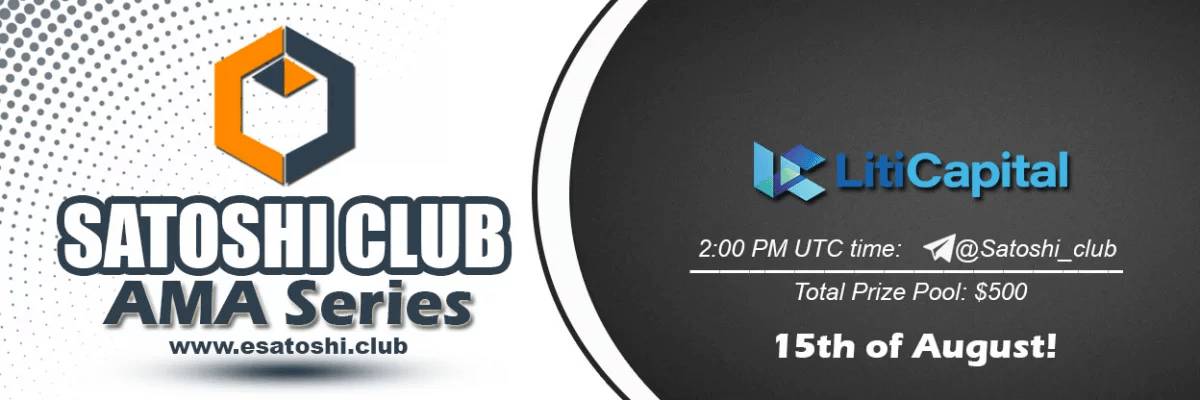
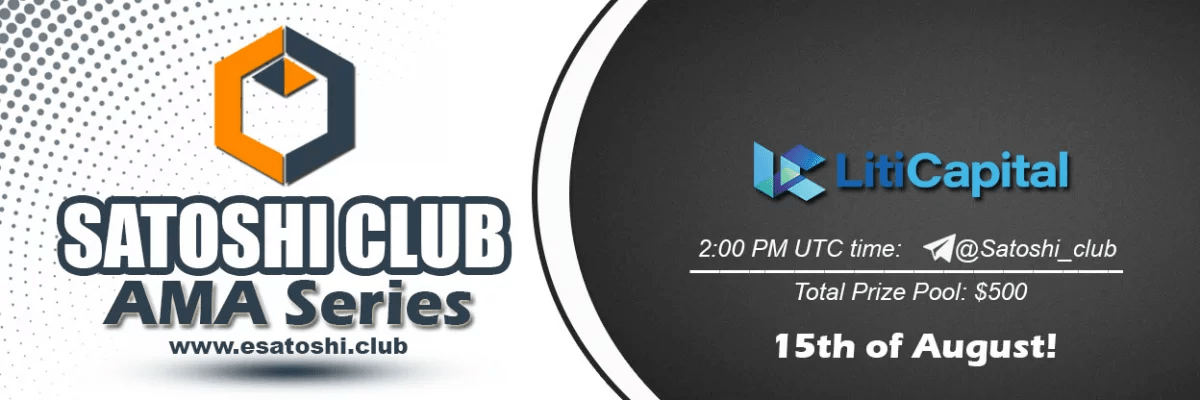
    We are pleased to announce our next AMA on August 15th 2021 at 02:00 PM UTC Time: Satoshi Club x Liti Capital

    Click to see the hour
    ️Total Reward pool: $500

    ️Requirements:
    👉 Join Satoshi Club Telegram group
    👉 Join Liti Capital Telegram group

    We will have the following structure:

    Part 1: 100$ /6 users — We’ll select 6 questions from the community. A user can post maximum 3 questions.

    Part 2: 100$/10 users — Open chat for 120 seconds. You can post Max 3 questions. Liti Capital Team will select 10 questions and answer them.

    Part3: 300$ — A quiz about Liti Capital

    For more details:
    Liti Capital Website — liticapital.com
    Liti Capital Telegram — @Liti_Capital_Official
    Satoshi Club — @satoshi_club
    Russian — @satoshi_club_ru
    Spanish — @satoshi_club_spanish

    Source


    [ad_2]

    Source link

  • How Big Is Bitcoin’s Lightning Network? The Answer Will Surprise You

    How Big Is Bitcoin’s Lightning Network? The Answer Will Surprise You

    [ad_1]

    The Lightning Network is one of the most bullish developments that the Bitcoin ecosystem has seen so far. And all the available metrics point up, a healthy and vibrant network is brewing. However, investor Kevin Rooke took a deeper look and found out that the Lightning Network is probably even bigger than previously thought. “Inaccurate comparisons and privacy preserving features make it hard to truly understand how big the Lightning Network is.

    Related Reading | Bitcoin Lightning Network Reaches Record Capacity

    What does Rooke mean by that? Let’s find out.

    The Lightning Network By The Numbers

    A casual look at popular analytics platform 1ml tells us that, at the time of writing, The Lightning Network is composed of 24,688 nodes, 64,577 channels, and the network capacity is 2,272.89 BTC. All of those numbers are up. However, “The Lightning Network is not a borrowing protocol, an AMM, or a store of value. Furthermore, the idea that Bitcoin is “locked” on the Lightning Network is misleading at best.

    There are a number of DeFi protocols that have a much higher number of BTC “locked,” and people mistakenly compare that number to the Lightning Network ‘s capacity. In DeFi, usually, the funds are in fact locked and can’t be touched until the contract in question runs its course. In Lightning, things are quite different: 

    As explained in the book Mastering the Lightning Network, funds that are added to the Lightning Network are not locked, they are unleashed. As soon as a new Lightning channel is opened, those funds can be sent anywhere on the Lightning Network in an instant, and for almost no cost.

    And speaking about channels, Kevin Rooke talked about them in an “investor letter” dated June 28th:

    There are currently over 51,800 channels routing payments between 22,000 nodes, and 21% of those Lightning Network channels were created in the last 30 days.

    On the surface, 21% monthly channel growth seems impressive, but new channel creation is a slightly misleading metric as nodes frequently open and close new channels.

    A more accurate measure of growth is that the total number of channels on the Lightning Network is up by 10.8%, or over 5,000 channels in the last month.

    Compare that to the more recent figure that we gave you at the beginning of the section and note how the number of channels grew in just a month and a half. That’s not all, take into account that:

    Some nodes don’t want their channels to be included in the public Lightning Network graph, and instead choose to open ‘unadvertised’ or ‘private’ channels.

    BTCUSD price chart for 08/13/2021 - TradingView

    BTC price chart for 08/13/2021 on FTX | Source: BTC/USD on TradingView.com

    Privacy Doesn’t Let Us See How Much Money Goes Through Lightning

    Most of the transactions that take place inside the Lightning Network are private. Only at the time of settlement between two parties are the final numbers forever registered into the Bitcoin blockchain. That means it’s impossible to know exactly how much money is going through Lightning on any given day. Or in total. 

    Related Reading | Bitcoin Community Celebrates as Crucial Lightning Network Project Launches

    However, Rooke estimates that “annual on-chain volume is almost 6x higher than the value locked into the Bitcoin network, despite the relatively high transaction fees and slow block times that make payments cumbersome.” That’s on the main Bitcoin blockchain.  On the other hand:

    The Lightning Network is designed for making fast and inexpensive payments, so if $85 million of Bitcoin is already on the Lightning Network, it would make sense for annual payment volume to be at least 6x higher, or at least $510M.

    That’s a bare minimum. And things are just getting started. In September, El Salvador’s Bitcoin Law goes into effect and the whole country will start using the Lightning Network. And take into account that roughly a quarter of El Salvador’s GDP comes from remittances, so it’s not a stretch to think that Salvadoreans all over the world will start using it as well. Add to that Jack Dorsey’s projects, both Square and Twitter are looking into Lightning integration.

    In fact, Dorsey published this tweet yesterday:

    And this is just the tip of the iceberg. For more impressive numbers and deductions, be sure to read “The Lightning Network Is Bigger Than You Think.

    Featured Image by Anuraj SL from Pixabay - Charts by TradingView


    [ad_2]

    Source link

  • Why Did the Poly Network Attacker Return Half the Money They Stole?

    Why Did the Poly Network Attacker Return Half the Money They Stole?

    [ad_1]

    Poly Network, a cross-chain DeFi protocol, recently suffered a $600M hack — the largest DeFi exploit in crypto history. Mudit Gupta, security researcher and SushiSwap dev, breaks down the attack, explaining how it occurred, why the hacker is returning the funds, and what Poly Network should do next. Show highlights:

    • how Poly Network works
    • what specific mechanism the hacker attacked on Poly Network
    • why many people (including myself) had never heard of Poly Network before the hack
    • how “keepers” failed to protect Poly Network
    • why a failed transaction was the key to pulling off the hack
    • what SlowMist claims to have discovered about the hacker
    • what could be motivating the hacker to return the stolen funds
    • how the hacker is communicating with Poly Network
    • why Tether was able to freeze funds while USDC and BSC allowed the hacker to get away with their tokens
    • how Poly Network should handle negotiations with the hacker

    Thank you to our sponsors!

    Sorare: https://sorare.com  

    Polymarket: https://polymarket.co/unconfirmed

    Crypto.com: https://crypto.onelink.me/J9Lg/unchainedcardearnfeb2021 

    Episode Links

    Mudit Gupta

    Poly Network hack


    [ad_2]

    Source link

  • Stronger crypto regulations in US won’t necessarily help prevent fraud, says Okcoin CCO

    Stronger crypto regulations in US won’t necessarily help prevent fraud, says Okcoin CCO

    [ad_1]

    Though Okcoin chief compliance officer Megan Monroe said that there are still certain grey areas over cryptocurrencies in the United States, further regulation may not be the best solution.

    In a statement to Cointelegraph, Monroe said current U.S. regulations are sufficient to police cryptocurrency exchanges, token issuers and custody wallet providers, but “jurisdictional boundaries of these federal financial regulators are neither clear nor collaborative.” Rather, she advocated for a framework with greater clarity to determine which crypto firms should be subject to regulation and let investors know which protections are available.

    “A clear regulatory framework with established jurisdictional boundaries, flexible compliance standards and open communication channels with registrants (as well as with state regulators) would be a good way to initiate an evolving framework for market participants to grow their businesses,” said the Okcoin chief compliance officer. “[This] would provide retail customers that seek to work with regulated entities a clearer understanding of the investor protections that would be available to them.”

    She added:

    “We do not believe that further regulation will necessarily prevent fraud and platform abuse […] Fraud should not be limited to focusing on retail customer regulatory compliance issues in the securities markets.”

    Two of the major government agencies handling digital asset regulation in the United States, the Securities and Exchange Commission, or SEC, and the Commodity Futures Trading Commission, or CFTC, have different jurisdictional claims regarding crypto.

    The SEC often determines whether tokens are securities using the Howey Test, with Chairperson Gary Gensler arguing the crypto industry, including decentralized exchanges, falls within the regulatory purview of the federal agency. However, former CFTC Chair Christopher Giancarlo has claimed that cryptocurrencies are commodities and thus would be subject to regulation by the CFTC.

    The apparent lack of clarity can be seemingly confusing to crypto firms that are considering relocating to the U.S., or local ones making the transition to the digital space. David Schwartz, chief technology officer of Ripple Labs, told Cointelegraph earlier this year that it was “difficult to figure out which laws apply and how they apply to something new,” like cryptocurrencies or blockchain technology.

    “Over time, the regulators have educated themselves about the industry and expanded their scope to incorporate new blockchain technology, such as decentralized exchanges and DApps,” said Monroe. “But, the regulations still lag behind the industry innovation, which is why the regulators have yet to provide comprehensive regulatory guidance on decentralized finance technology.”

    Related: Will regulation adapt to crypto, or crypto to regulation? Experts answer

    The Okcoin chief compliance officer said that an “incubator” approach might be one possible solution to this “patchwork of financial regulations,” wherein crypto traders and businesses could operate without fear of legal action for a set period of time. She also encouraged projects to clearly identify the risks to both investors and users, and for greater communication and collaboration between agencies like the CFTC, SEC and Financial Crimes Enforcement Network.