Swing, a cross-chain infrastructure platform to trade and move crypto between blockchains, has announced that its cross-chain liquidity and bridging protocol, is now live on Binance Smart Chain (BSC).
Originally built on the Polkadot blockchain, Swing has recently expanded to several different blockchain networks, including Avalanche, Polygon, and Solana.
Acting as liquidity and bridging aggregator of the most popular decentralized finance platforms and DEXs (decentralized exchanges), with Swing, users can access the full range of popular DeFi platforms and trade seamlessly across them all without surrendering control of their funds to any third party.
Integration of Binance Smart Chain will broaden Swing’s access DeFi apps, and specifically, will allow the platform to aggregate liquidity and bridging opportunities across the most popular DEXs on BSC, including PancakeSwap, BurgerSwap, BiSwap, and more.
Binance Smart Chain is the Ethereum Virtual Machine (EVM) compatible dApp and smart contract platform from the world’s largest crypto exchange, Binance. Although created by a centralized exchange, Binance Smart Chain is a decentralized platform that hosts a number of decentralized applications.
“We are thrilled to become a part of the Binance Smart Chain (BSC) network. The number and variety of decentralized applications on Binance Smart Chain gives our protocol a chance to show what it can do. Users and traders will feel an immediate benefit by having all of the best liquidity and bridging options available in one place.” – Swing Founder, Viveik Vivekanantha
The Swing protocol is currently live on Ethereum, Polygon, Avalanche, Fantom, xDai, and now Binance Smart Chain, where it aggregates bridges and liquidity sources to find the lowest slippage on cross-chain token swaps and liquidity transfers.
Ideal, a US-based
technology provider company, has announced the launch of its crypto analytics
application programming interface (API), Impact API, using Pyth Network’s
real-time on-chain market data.
By using the Pyth
Network, Impact API provides cryptocurrency trading companies with
institutional-grade analytics and complete transparency on their profitability and
transaction costs.
Ideal s decision
intelligence solutions help to turn data analytics into clear actions for trading
success, and, therefore, it provides traders in traditional finance and cryptocurrency
markets with performance insights that help them better understand their true
execution costs and enhance their trading decisions. Impact API helps to bring transparency
on the crypto transactions, a market where costs and spreads are mostly opaque.
John Crouch, the Ideal
CEO, said: “The high-quality, real-time market
data provided by the Pyth Network opens up a world of opportunity for crypto
trading firms. We are thrilled to build upon Pyth’s innovation with our
plug-and-play analytics. Our Impact API uses Pyth’s data to instantly calculate
market impact costs and reveal what spreads traders are actually paying. We’ve
seen cases where crypto spreads are 10 to 100 times higher than they would be
in traditional markets. In the coming months, we’ll expand the range of
available market data sources and add new analytics functionality.”
Adding to that, Michael Cahill, the Director at Pyth Data Association, stated: “As the Pyth ecosystem continues to gain momentum with over 40
data providers contributing real-time pricing, and over 120 projects using the
oracle, we are thrilled to see Ideal building advanced analytics using Pyth
Network data. With our network of the world’s most prominent trading firms,
several regulated exchanges and foundational crypto companies, we are proud to
make financial data freely accessible to all. Ideal shares our desire to bring
greater transparency and insight to both crypto and traditional markets.”
Financial
Institutions Are Embracing APIs
The announcement by
Ideal comes at a time when the number of API-led
financial services companies continue
to proliferate around the world. Fintechs such as Plaid, Tink, Belvo and
Truelayer are providing their API-related services in the US, Europe, Latin
America and the UK, respectively. These firms offer developer and engineering tools
that reduce the operational and technical effort needed for apps to connect to
their users’ financial accounts.
The use of APIs is
making it possible for other firms to integrate what are otherwise complex
services to develop from scratch simply by adding in a few lines of code. Financial
infrastructure companies are enabling developers and firms to innovate around services
such as wealth management, insurance, personal finance, lending and payments.
Ideal, a US-based
technology provider company, has announced the launch of its crypto analytics
application programming interface (API), Impact API, using Pyth Network’s
real-time on-chain market data.
By using the Pyth
Network, Impact API provides cryptocurrency trading companies with
institutional-grade analytics and complete transparency on their profitability and
transaction costs.
Ideal s decision
intelligence solutions help to turn data analytics into clear actions for trading
success, and, therefore, it provides traders in traditional finance and cryptocurrency
markets with performance insights that help them better understand their true
execution costs and enhance their trading decisions. Impact API helps to bring transparency
on the crypto transactions, a market where costs and spreads are mostly opaque.
John Crouch, the Ideal
CEO, said: “The high-quality, real-time market
data provided by the Pyth Network opens up a world of opportunity for crypto
trading firms. We are thrilled to build upon Pyth’s innovation with our
plug-and-play analytics. Our Impact API uses Pyth’s data to instantly calculate
market impact costs and reveal what spreads traders are actually paying. We’ve
seen cases where crypto spreads are 10 to 100 times higher than they would be
in traditional markets. In the coming months, we’ll expand the range of
available market data sources and add new analytics functionality.”
Adding to that, Michael Cahill, the Director at Pyth Data Association, stated: “As the Pyth ecosystem continues to gain momentum with over 40
data providers contributing real-time pricing, and over 120 projects using the
oracle, we are thrilled to see Ideal building advanced analytics using Pyth
Network data. With our network of the world’s most prominent trading firms,
several regulated exchanges and foundational crypto companies, we are proud to
make financial data freely accessible to all. Ideal shares our desire to bring
greater transparency and insight to both crypto and traditional markets.”
Financial
Institutions Are Embracing APIs
The announcement by
Ideal comes at a time when the number of API-led
financial services companies continue
to proliferate around the world. Fintechs such as Plaid, Tink, Belvo and
Truelayer are providing their API-related services in the US, Europe, Latin
America and the UK, respectively. These firms offer developer and engineering tools
that reduce the operational and technical effort needed for apps to connect to
their users’ financial accounts.
The use of APIs is
making it possible for other firms to integrate what are otherwise complex
services to develop from scratch simply by adding in a few lines of code. Financial
infrastructure companies are enabling developers and firms to innovate around services
such as wealth management, insurance, personal finance, lending and payments.
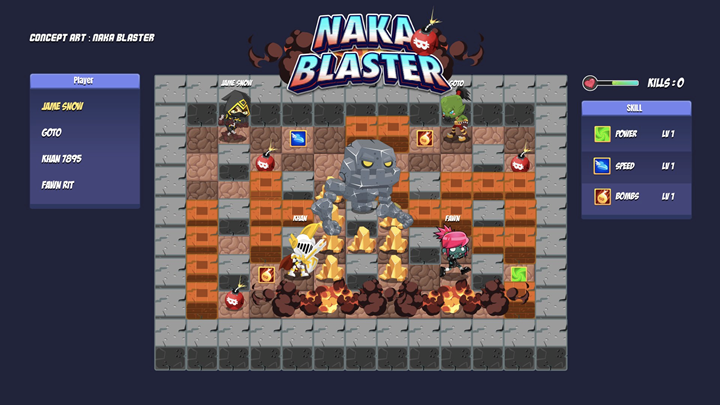
Play-to-earn games are seeing drastic improvements with the release of three new titles by Nakamoto Games. The developer already released the immersive NAKA Galactic, a space-themed action game, and Naka Blaster, its first multiplayer interactive shooting game that is currently its most popular title.
Nakamoto Games will follow their success with its first 3D game, Escape, in Q1 2022. It’s the most ambitious release to date with the inclusion of advanced computer graphics and fully-featured game mechanics and multiplayer features aside from the traditional play-to-earn in-game dynamics that have taken the gaming world by storm. Escape will be one of the first AAA games to be released in the Web3 gaming space.
Nakamoto Games CEO Tor shared the team’s excitement about the new releases: “Our team constantly strives to push hard and deliver high-quality games to our passionate user base. We are thrilled about the upcoming release of Escape and are proud of the release of Naka Galactic and Naka Blaster and we look forward to hearing from the community about these titles.”
The team at Nakamoto Games is also enabling a fast-growing suite of Web3 games that provides players with gameplay experiences at the level of traditional titles. The release of new titles such as Naka Galactic, Naka Blaster, and Escape, as well as already successful ones like Duck Hunter, NAKA Runner, NAKA DUI, and Alien Apocalypse, are part of Nakamoto Games’ plan to build what it calls the NAKAVERSE.
The ambitious plan consists of a gaming ecosystem with its own economy powered by NAKA tokens. These will be used across games to purchase NFTs that represent digital land and game items as well as to have the ability to customize elements in the NAKAVERSE.
Nakamoto Games aims to become a solution that enables other game developers to thrive. It has chosen to build on the Polygon scaling solution for Ethereum to guarantee the scalability, security, and cost-effectiveness of these releases. In this way, Nakamoto Games seeks to provide independent game developers with the necessary infrastructure to build a gaming ecosystem that makes the most of Web3’s advantages. Eventually this will lead to a healthier industry with democratized earnings and improved monetization.
As most of us were enjoying some R&R over Christmas break, Coinbase Cloud protocol specialist Elias Simos was scouring the web for the most interesting crypto charts of 2021: 69 of them to be exact.
In the latest Around The Block podcast, we sit down with Elias and discuss some of the most interesting data points from the year, and what it all means for the future. (High level takeaways below)
Metaverse and smart contract assets outperform
Price isn’t everything, but the two top performing assets in 2021 are indicative of broader trends throughout the year. 2021’s best performing assets were:
Metaverse gaming tokens
Smart contract platform tokens
The governance tokens of gaming worlds Axie Infinity (AXS) and The Sandbox (SAND) each posted 16,000 and 13,000 percent gains respectively. Meanwhile, platform tokens from Polygon, Terra, Solana, and Fantom, all posted 8,000% gains or more.
Given that play-to-earn gaming had a breakout year, and layer 1s not named Ethereum saw strong adoption, these trends should be of no surprise. Now let’s dig a bit deeper.
The state of Layer 1s
Ethereum’s native token (ETH) did a modest 2X over the year, while it was somewhat of a rough year for Ethereum DeFi blue chips, with the DeFiPulse index down 80% over the year vs ETH.
The price of DeFi assets doesn’t tell the entire story, however. TVL of Ethereum DeFi applications showed tremendous growth over the year, and the number of unique Ethereum addresses interacting with DeFi protocols 4x’ed.
DefiLlama and Decentral Park Capital
Regardless, ETH killers and sidechains won the year when measured by growth of overall market share.
DefiLlama and Decentral Park Capital
The great migration & the EVM standard
In May, there was $200M sitting in Ethereum bridges. That number climbed to $20B by the end of the year, underscoring the great migration of value from Ethereum to other ecosystems.
Remember that the EVM is essentially the brain of Ethereum that performs computations for the network. When other Layer 1s adopt the EVM, it makes deploying existing applications on new networks easier for developers, in addition to making it easier for users to migrate to these new chains.
The dominance of value on EVM compatible chains (Avalanche, Polygon, etc) suggest that a standard is forming around the EVM. This should ultimately keep Ethereum as the gravitational center of the smart contracting world, as ETH applications and assets will be natively interoperable with most other chains.
Rise of the app chains
While EVM chains still dominate the landscape, the end of 2021 saw a rise in value on Tendermint chains. Recall that Tendermint is a standard popularized by Cosmos, that lets developers build application specific blockchains that are capable of interoperating with one another.
Building app-specific chains in the past came with significant opportunity cost, because they were cut off from most liquidity and users. With the growth of Tendermint chains like Osmosis (AMM), Umee (lending), and Stargaze (NFTs), that’s becoming less of an issue.
Now that these app specific chains have a widening array of use cases and liquidity that they can interoperate with, look for more builders to take advantage of customizability that these chains offer in 2022.
The ENS airdrop + DAOs
In 2021, ENS reminded everyone of Web3’s native user acquisition strategy: the airdrop.
ENS (Ethereum Name Service) addresses are best thought of as email addresses that you can send money to (e.g. Jimbo.eth). After 5 years in development, the project shifted to a DAO model, and airdropped ENS governance tokens to every user with an ENS address.
Since the ENS DAO treasury collects revenue from new .eth registrations, revenue for the newly minted ENS DAO treasury ramped up significantly: another testament to how much a well orchestrated airdrop can move the needle.
Dune Analytics, matoken.eth
Beyond ENS, DAOs had a strong year, evident by the growing usage in key pieces of DAO infrastructure. Gnosis Safe, which is the most popular multisig wallet DAOs use to manage their treasuries, saw 3x growth in both the number of Safes and transactions executed in 2021. Snapshot, a tool that helps DAOs execute off-chain votes with on-chain verification, exhibited strong growth as well.
EN-EFF-TEES
Activity on the dominant platform for NFTs tells you all you need to know about the breakout year NFTs enjoyed.
Dune Analytics, Richard Chen
OG NFT CryptoPunks saw 60x YoY growth, reaching a total volume of 650K ETH, or $1.7B at current prices. This figure however, includes a flashloan powered $500M wash sale — a powerful reminder of how much subjectivity there is in on-chain data.
The second most notable NFT project of the year was Bored Ape Yacht Club, which went from a niche community to the celebrity NFT of choice, including the likes of Steph Curry, Shaq, Justin Bieber, Jimmy Fallon, Paris Hilton, among others. At one point the BAYC floor (price of the cheapest NFT in the collection) momentarily flipped the CryptoPunks floor.
In the heat of new issuances flooding the market, and older NFT collections achieving billion dollar market caps, the average price of NFTs changing hands did a 150x from 0.1 ETH to roughly 15 ETH by year end.
Dune Analytics, Richard Chen
One of the most interesting NFT launches of the year was Loot (covered here), which let anyone mint 1 of 8,000 NFTs that could form the basis of a Dungeons and Dragon style RPG game. Initial excitement was skyhigh, before fizzling out as time went on.
Dune Analytics
While Loot’s flame may have dimmed, it was still a landmark year for NFT based gaming, with the breakaway success of Axie Infinity bringing play-to-earn and GameFi narratives to the forefront. As the data shows, Axie Infinity NFT volume dwarfs that of any prior NFT based game.
CryptoSlam and The Block
Lastly, while Ethereum was the center of the NFT show, marketplaces appear to be springing up across multiple chains. The data shows that lower fee environments are enabling different types of user activity. Solana’s Magic Eden, for example, has more transactions than OpenSea since users are unencumbered by exorbitant gas fees.
More in Elias’s epic thread
Beyond being chock-full of illuminating data points on the year in crypto and Web3, the full thread underscores the beauty of on-chain data and the increased maturity of the industry. The ability for one person to put together a dataset this rich is a testament to all of the great data providers the industry now has at our disposal.