With the recent crypto market decline, investors have become more fearful of the market. Recorded on the Fear & Greed Index, it shows that this remains an incredibly frightening time for users of cryptocurrencies. In times like these when the prices of digital assets continue to slide down, it is expected that investors become warier. However, this time around, the market had quickly gone into “Extreme Fear” territory with no sign of emerging anytime soon.
Scared Of Investing?
At the start of the month, top cryptocurrencies such as Bitcoin and Ethereum had begun a recovery trend that would eventually wash over the rest of the market. As prices rose, so did positive sentiment among investors who had flooded back into the market. Not long after though, the market had started one of its signature correction trends that comes with the bull rally and now investors have chosen to retreat instead of risk further downside.
Related Reading | CeFi Platform Celsius Restricts Yield Rewards To Only Accredited Investors In U.S.
The Fear & Greed Index shows that the market had been on a downward sliding scale since coming out of last week which had ended with a neutral sentiment from both sides of the market. By Monday however, this had quickly turned into fear with bitcoin finally falling to the $43K territory. Tuesday in itself proved to be worse as the market had indeed fallen into extreme fear, leading to a low score of 20.
Now, while Wednesday is starting out better than what Tuesday ended with at a score of 25, it still does not spell good news for the short term. When investors are scared of the market, they tend to not put any money into it for fear of losing more. This also triggers people taking profits from the market due to fear of their coins dropping further in value. With such low momentum, prices can suffer more instead of staging another recovery.
Is Fear Good For Crypto?
When it comes to how the market is feeling towards cryptocurrencies, it can often be a matter of personal perspective. There are those who believe that steering clear of the market while it is fearful is the best bet and to only invest once the prices start recovering. However, there are those who believe the opposite.
Related Reading | The Ronin Hack Aftermatch: Axie Infinity’s $1M Bug Bounty
Those who subscribe to the “buy the blood” school of thought often welcome downtrends like these since it gives them the opportunity to purchase coins at a “discount.” This mainly comes down to the risk appetite of the investor.
Nevertheless, it still stands to reason that some of the largest rallies have come after the market has consolidated from a price drop. This was the case in late February/early March which had seen the market in extreme fear turn greedy very fast as prices began to recover.
Total market cap falls to $1.8 trillion | Source: Crypto Total Market Cap on TradingView.com
Featured image from Psychology Today, chart from TradingView.com
Recently, bitcoin prices have struggled, often dipping below the $43,000 mark and then failing to post substantial gains.
Around 9:20 a.m. EDT, the world’s most popular crypto asset retreated to $42,777.20, CoinDesk data show, Saturday.
The majority of cryptocurrencies traded lower early Saturday. Global crypto market market capitalization fell nearly 3% to $1.15 trillion in the last 24 hours, while total crypto market volume was up 9.3 percent to $89.50 billion.
Suggested Reading | Ark CEO Cathie Wood Is As Bullish As Ever, Sees Bitcoin Hitting $1 Million By 2030
Bitcoin Short Stay At Near $44K
Bitcoin was able to inch back slightly shortly thereafter, reaching $43,962.01 at approximately 10 a.m. EDT. Following this comeback, it retreated again, falling to around $42,840 at 1:30 p.m.
On the other hand, the overall volume of stablecoins was $74.34 billion, or 83.06% of the total 24-hour volume of the cryptocurrency market.
Bitcoin was recently trading at an average price of around $43,500, roughly where it was 24 hours ago and well below the $47,000 barrier it crossed just a few days earlier, as investors continued to weigh in on the Federal Reserve’s new hawkish zeal and the ongoing twist of economic developments sparked by Russia’s attack on Ukraine.
BTC total market cap at $805.46 billion on the weekend chart | Source: TradingView.com
Unease Over Fed’s Monetary Policy Tightening
According to an email from Oanda Senior Market Analyst Americas Edward Moya:
“Bitcoin is unsure of its direction as Wall Street gets concerned about the central bank’s aggressiveness in tightening monetary policy.”
Following these recent price swings, various experts expressed their predictions for the cryptocurrency’s future direction.
Ben McMillan, chief information officer at IDX Digital Assets, weighed in, indicating critical levels of support and opposition.
“$43k is a critical support level in the near term as bitcoin attempts to build on its recent relative strength,” he noted.
Suggested Reading | Bitcoin Helps Market Hover Past $2 Trillion As BTC Nears $48,000
Containing Inflation
Cryptocurrency prices deviated somewhat from the performance of the main equities markets, which were marginally positive. The Nasdaq, which is heavily weighted toward the tech sector, gained less than a tenth of a percentage point.
The US central bank has communicated strongly over the last week, both collectively and through individual governors, that it will step up efforts to contain inflation, which has hit about 8%, a four-decade high.
The correlation coefficient between Bitcoin and US equities has increased in the last 90 days as investors have become more risk averse in response to the Federal Reserve’s withdrawal of the pandemic-era intervention that is attributed with catalyzing the ascent of cryptocurrency.
Featured image from Research Affiliates, chart from TradingView.com
After two years and many COVID-19 restrictions finally subsiding, the world is welcoming the return of in-person theater, movies, comedy, music and sports. This has left some wondering what will happen to the legions of digital creatives who occupied and entertained us while normal life was at a standstill — and to the multibillion-dollar economy they inhabit.
Will the world forget the platforms and artists they discovered during the pandemic now the doors of festivals, fashion shows and concerts are open to them again? Is the creator economy, which recent estimates suggest will exceed $100 billion this year, strong enough to withstand a stampede back to real-life experiences?
I strongly believe it is. Government-imposed restrictions may have accelerated the pace of change, but the transformative trends in video streaming we witnessed during the pandemic were nascent before and would have caught hold regardless.
And, while I claim no deep training in macroeconomics, I am a technologist who has spent the past several years working in and around one of the most transformative new technologies to arise in decades: the blockchain. This is the technology that will completely reshape digital life, supercharging the creator economy in the process.
Related: Decentralization revolutionizes the creator’s economy, but what will it bring?
Playing on a digital stage
The enforced slowdown has given many artists the time — and the push — needed to experiment in the digital sphere, find new audiences and explore new ways to showcase their talents.
Even musicians who might never have given serious thought to live streaming a concert have taken to the digital stage. And, there’s evidence this will continue. Take singer Dua Lipa, who broke paid livestreaming records with 2020’s Studio 2054 concert. Initially said to be reluctant, Dua Lipa decided to go the livestream route after being forced to postpone an album tour. This turned out to be a good call: Her digital appearance drew more than five million views globally.
A survey from Middlesex University and funded by the UK Economic and Social Research Council showed that some 90% of musicians and 92% of fans believe livestreaming would remain an effective way to reach fans unwilling or unable to travel to venues in the post-pandemic world. Providers should take note: The study also found that audiences do not expect free access to live music and are not particularly discouraged by paywalls.
The rise in creative energy has inspired the developer community as well. New niche streaming platforms have grown up, helped by the emergence of low-cost decentralized infrastructure that allows application builders to encode video, store data and handle identity without having to pay expensive centralized cloud providers for such services.
Related: Music in the Metaverse creates social and immersive experiences for users
These centralized providers will increasingly find themselves on the defensive. Two attention-grabbing incidents in 2021 are illustrative: Hackers attacked Twitch and released private information about its code and its users to the world. And, Facebook suffered colossal reputational damage from a lengthy outage and whistleblower claims that its management has repeatedly chosen to prioritize profit over safety.
What comes next?
Big Tech’s woes and pandemic-related restrictions have sped up fundamental changes already underway in how the world produces, consumes and uses video content — changes likely to propel growth in the creator economy well into the future. And, given the increasing availability of low-cost decentralized blockchain infrastructure, these emerging players have a shot at mounting a serious challenge to the FAANG-run streaming providers.
There are five ways that blockchain will hasten growth in the creator economy, and help cement it as a central force in worldwide culture and entertainment:
Exclusivity: Nonfungible token- (NFT-) gated access and NFT ticketing are only two of the decentralized tools that improve the digital experience for event-goers: NFT tickets curb scalping while giving attendees a unique souvenir, all while token gating supports unique experiences for fans such as access to private groups and direct messaging with creators.
Fan ownership: The Web3 era is defined by the shift from extracting value from renters to accreting value to owners. Just as the blockchain enables fans to engage directly with their favorite creators, it offers a pathway to asset ownership in individual creator economies outside of traditional centralized platforms.
Low-cost streaming: Video streaming accounts for more than 80% of Web2 internet traffic and counting. Developers, eager to seize a piece of this market without being crushed by high costs, are increasingly seeking blockchain-based affordable infrastructure to support creator streams. With their new ability to draw global audiences through on-demand access-anywhere streams, creators are turning to uniquely Web3 features such as tipping, paid entry and live shopping to monetize their content.
Immersive interactivity: The one-way nature of Web2 publishing is already giving way to immersive interactivity that rewards users for participation. With the ability to record immutably and securely on the blockchain, creators can incentivize interactions without sacrificing privacy.
Niche down: While Web2 was built to scale up, Web3 is built to niche down. With its lower cost, increased security and resistance to censorship, the blockchain makes it possible to build micro-communities serving smaller niches than would be economically viable in Web2. That’s a fundamental shift that not only puts creators in control but also makes communities less appealing to attention-seeking trolls.
The stage has been set for a blossoming of creative activity, and those poised to take it will be assisted by decentralized infrastructure.
Related: The Metaverse will change the live music experience, but will it be decentralized?
Digital creatives have always recognized that they must be nimble to succeed. Now, there is a technology that will empower them and their analog peers to reach new audiences on their own terms without having to cede power or profit to tech behemoths like Google and Amazon.
My faith in the ability of musicians, gamers, influencers and creators to adapt to the new realities to come — and to thrive in them — has never been stronger.
The creator economy? The clue’s in the name.
This article does not contain investment advice or recommendations. Every investment and trading move involves risk, and readers should conduct their own research when making a decision.
The views, thoughts and opinions expressed here are the author’s alone and do not necessarily reflect or represent the views and opinions of Cointelegraph.
Doug Petkanics is a co-founder at Livepeer, where the team is building a decentralized live video broadcast platform to enable the next generation of video streaming. Prior to Livepeer, Doug was co-founder and CEO of Wildcard, a mobile browser. He also co-founded Hyperpublic, which was acquired by Groupon. He was the VP of Engineering at both.
Bitcoin continues to trend lower over the weekend and seems at risk of re-testing previous lows. The first crypto by market cap was rejected at mid-area north of $40,000 and was unable to muster the momentum to hold those levels.
Related Reading | Did Top Three Bitcoin Addresses Just Call Another Local Bottom?
As of press time, Bitcoin trades at $39,921 with a 1.2% and 5.2% loss in the last day and 7 days, respectively.
BTC trends to the downside on the daily chart. Source: BTCUSD Tradingview
Yuya Hasegawa, analyst for Bitbank, attributes BTC’s price recent price action to the Russia-Ukraine situation. In that sense, the analyst expects potential relief as the U.S. Secretary of State Antony Blinken and the Russian Minister of Foreign Affairs Sergey Lavrov scheduled a phone call for next week.
This could tone down the tensions around the situation at the border. On top of that, the analyst claims Bitcoin is sitting at “ample technical support” which could protect its price from further downside.
However, is a long weekend in the U.S. which usually leads to potential periods of high volatility driven by low trading volumes across the crypto market. Hasegawa said talking about BTC’s price immediate and medium-term potential headwinds:
We still have the January U.S. PCE, February jobs report, and CPI until the March FOMC meeting, so it is safe to say that, depending especially on these inflation data, the worst may be still ahead of us, and even if the price rebounds from the current level in the short term, upside is likely quite limited unless the Russian military shows some signs of retreating.
The macro-situation seems to occupy everyone’s attention. A separate analyst from Material Indicators (MI) claims the Russia-Ukraine situation could see an outcome after the Winter Olympics in Beijing. These events have been linked to similar crises in the past, such as the invasion of Crimea which took place in 2014 during the Olympics hosted by Russia.
Bitcoin To See Short Squeeze Over Long Weekend?
Further data provided by Material Indicators claims BTC could have entered a distribution phase. Recommending traders to “avoid knife catching”, especially during periods of low volume, MI presented their Trend Precognition indicator which flashed a bearish arrow on the daily chart as BTC’s price trend below $40,000.
Material Indicator’s Trend Precognition Indicator flashed a bearish signal on the daily chart. Source: Material Indicators via Twitter
This could suggest the benchmark crypto might re-test its lows which could find good support, as MI claimed, “in areas of prior consolidation”. The levels between $35,000 to $38,000 were relevant during BTC’s price previous sell-off and could operate as support.
However, MI noted that there are “Liquidity gaps”, levels on the order book with low bids or asks orders, on both sides of the BTC/USDT trading pair. Thus, Bitcoin could see a short squeeze to the upside or downside.
Related Reading |Comparing Apple’s Growth With Bitcoin, Why This Expert Sets $700K As Long-Term Goal
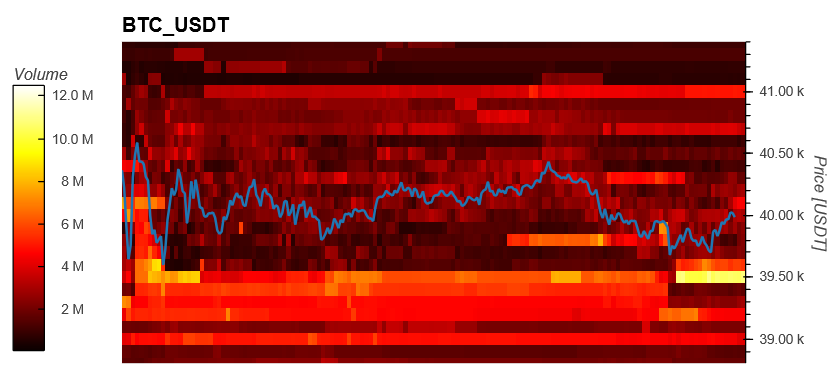
Currently, there are around $10 million in bid order around $39,500. Therefore, there seems to be strong support for BTC at that level which could favor the bulls, at least in the short term.
BTC’s price (blue line on the chart) with potential support on $39,500 due to concentration of bid orders (levels below the price). Source Material Indicators
Herculean HODLers, Tim Draper and Michael Saylor, to offer insight into life after accumulation.
LOS ANGELES, CA — November 1, 2021 — Draper Goren Holm, early-stage blockchain venturecapital fund and producers of the world’s largest blockchain and cryptocurrency conference, LA Blockchain Summit, announced today that Tim Draper, Founder and Managing Partner of Draper Associates, and Michael Saylor, Founder and CEO of MicroStrategy, will host a fireside chat with one another at the all virtual 8th edition of LA Blockchain Summit, November 2–4. These two Titans of Bitcoin will share insight into what life might look like in a post-BTC accumulation world. Tickets to the Summit are entirely free and another crypto giveaway is underway courtesy of title sponsor ABRA.
ABRA will be joined by other industry heavyweights such as Robinhood, LunarCRUSH, H2CryptO, Simetria, PLENTY, Rivet, Kalamint, StableTech, SuperWorld, AKRU, Amber Group, Ownera, Sensorium, Degens, TradeStation Crypto, Copper Technologies, Cosmos & Starport, Giftz, PrimeDAO, GSX, Litecoin, Stacks Foundation, Stellar Development Foundation, Tezos, Casper Association, Tron, INX, Only1, SupraFin, unFederal Reserve and more. Virtual booths will be available for attendees to interact with each sponsor throughout the event.
The agenda for LA Blockchain Summit will feature a variety of blockchain and cryptocurrency related themes including development, NFTs, enterprise blockchain, investment analysis, marketing strategies, tokenized securities, stablecoins, as well as trends and insights from industry experts such as the Former SEC Chairman John Clayton, current Security & Exchange Commission’s Hester Peirce, Congressional Blockchain Caucus’ Rep. Tom Emmer, Skybridge Capital’s Anthony Scaramucci, Ropart Asset Management’s Todd Goergen, DMCC’s Ahmed Bin Sulayem, Robinhood Crypto’s Johann Kerbrat, and McLaren Racing’s Lindsey Eckhouse..
Be a part of this year’s event by claiming your free virtual ticket today while taking advantage of this year’s crypto giveaway at lablockchainsummit.com/giveaway.
About Draper Goren Holm
Draper Goren Holm, a partnership between Tim Draper, Alon Goren, and Josef Holm, is a venture studio and fund focused on accelerating and incubating early-stage blockchain and fintech startups, while simultaneously producing the industry’s top cryptocurrency events, Security Token Summit, Global DeFi Summit and LA Blockchain Summit. Portfolio companies include LunarCRUSH, Plenty Defi, Tezos Stable Technologies, Totle, Ownera, Degens, Giftz, Vertalo, CasperLabs, Rivet, Simetria and more. More information can be found at https://drapergorenholm.com.
The apocalyptic crash in NFT prices and market activity has caused some doubt over the longevity of non-fungible tokens. Even the art world, where non-fungible tokens have made the biggest splash, seems to be growing wary of NFTs.
Ben Reynolds, the Chief Executive and Founder of Sure Dividend, told Finance Magnates that: “to create a sustainable artist economy long-term, several changes need to occur.”
Bank Account Alternative. Business Account IBAN.
“With the lack of high-end identity and creation verifications, NFTs aren’t really supporting artists long-term. It has potential as a way for artists to earn money and royalties. Still, there’s a lot of issues to overcome to put more protection in place for artists,” he said, specifically pointing to instances of fraud and plagiarism within the NFT space.
Just last week, Coinbase Co-Founder Fred Ehrsam said on Bloomberg TV that: “90% of NFTs produced…probably will have little to no value in three to five years.”
“You could say the same thing about early internet companies in the late ’90s,” he added.
Ben Reynolds, Chief Executive and Founder of investment advisory firm Sure Dividend.
Ehrsam drew a parallel between NFTs and crypto markets at large: “People are going to try all sorts of things. There’ll be millions and millions of cryptocurrencies and crypto-assets, just like there were millions and millions of websites. Most of them won’t work.”
However, even if 90 per cent of NFTs will lose their value in the next several years, some of them will retain it, and as non-fungible token technology continues to develop, some analysts believe that new use cases will bring new verticals value to non-fungible token markets.
“NFTs Will Continue to Adjust Organically into a Wide Variety of Use-Cases.”
So, are NFTs over and done with?
Mango Dogwood, the Community Manager at Charged Particles, told Finance magnates that the answer is “Absolutely not.” Charged Particles is a platform that allows users to Interest-bearing Non-Fungible Tokens (DeFi NFTs).
“What we’re seeing is really just the beginning of what NFTs will be used for,” Dogwood said. “Art turned out to be an incredibly successful vehicle for teaching a huge new group of people about the underlying technology that is the blockchain, and a lot of these people are very creative thinkers who are bringing completely new innovation to the space.”
In other words, the boom-and-bust cycle that NFT markets saw at the beginning of this year may not have a meaningful impact on the future of non-fungible tokens: “I don’t think that NFTs have lost their relevance at all. In fact, I don’t think they’ve even seen the threshold of the relevance that’s coming in the next few years.”
“I think NFTs will continue to adjust organically into a wide variety of use-cases beyond what we’ve seen this year in the art world,” Dogwood said.
Mango Dogwood, the Community Manager at Charged Particles.
“Core NFT Developments Are Happening at a Deeper Level.”
Les Borsai, who is both the Chief Strategy Officer of Waves and a renowned NFT collector, has a different perspective: “I would say the hype has been increasing,” though “I suppose it depends where you are looking,” he told Finance Magnates.
“NFTs can be viewed in many ways. I think the basic understanding was that it was a collectable piece of art sold in a marketplace. The mainstream centralized outlets became interested, and everyone was launching an NFT. Today we have Television Stations, Shoe Brands, Sports Franchises and Gaming companies looking at them,” he said. “But for those outlets, the demand may have gone down.”
Suggested articles
ATFX Connect Appoints Steve Whittet as Institutional Sales DirectorGo to article >>
Borsai pointed out that even in their current iterations, NFTs already have many use cases. “For me, the core NFT developments are happening at a deeper level, not unlike altcoins that launched in 2014 on the back of the Ethereum launch. An NFT, unlike a piece of art that hangs on my wall, can be so many things.”
For example, “It can be a financial instrument that pays out like an annuity; it can be something I borrow and lend money on instantly. It can be used for yield farming based on Rarity. It can be an artefact in augmented reality or an avatar in VR. It can represent my identity the way a CryptoPunk can be a profile pic, which I have.”
“So for me, the hype is far from done,” Borsai said. “You don’t have to look far to find a Bored Ape or Wicked Cranium creating an economy…supported by the [NFT] community.”
“The ‘Metaverse’ Component and Gamification of NFTs Will Continue to Keep Them Relevant.”
However, Borsai, like many others, believes that the non-fungible token space is undergoing a major shift in focus: a move away from collectables and toward tokens that have a wider set of applications.
For example, “the ‘metaverse’ component and gamification of NFTs will continue to keep them relevant,” Borsai said. “If you look at Aavegotchi, Bored Apes and Alien Boys as examples, they have robust offerings where the NFT is part of their structure.”
At the same time, non-fungible token technology has been improving behind the scenes over the past few years. “In 2017, when I bought a CryptoKitty, I had to wait hours (if not days),” he said. “That was a technology problem. Today, we are not seeing that with NFT drops. As a matter of fact, the drops are blowing out in a matter of hours. We also have great new scaling solutions emerging.”
The “Democratization of Art.”
Borsai, Dogwood, and many others believe that the next frontier for non-fungible tokens is decentralized finance.
“I think we’ll start to see more and more intersection between NFTs and DeFi (Decentralized Finance),” Dogwood said, adding that: “this is what we’re exploring at Charged Particles.”
“Bringing together the implicit value from the financial side of crypto and the speculative value from the art side, we start to see some fascinating new doors open in the future of the NFT space.”
Similarly, Borsai added that decentralized finance could enable NFT market-making and “[building] an economy around collectables” in similar ways that DeFi innovators have “created new markets that bring superior returns,” for example, practices like Yield Farming.
But, the principles of decentralized finance can be used to create new use cases for non-fungible tokens, even within the art world.
“[DeFi innovators] look at traditional gallery systems and the approach to valuations in art and have better ideas,” Borsai said. “Ideas that support the community creating art so that a major collector or gallery isn’t the final say on what art deserves to be seen. It’s the democratization of art.”
Furthermore, Borsai pointed out that the intersection between DeFi and art could lead to the creation of new kinds of artistic work: for example, “sharing music is super interesting: taking a song and having many pieces create a different experience as a whole piece. It’s not unlike buying a series of pieces that make up one bigger piece.”
“I am excited to see my NFTs on my Samsung Frame,” he said.”If we have any doubt that we are headed in this direction, take a look at Christie’s and Sotheby’s launches. I could go on and on.”
What do you think about the future of NFTs in art and beyond? Let us know in the comments below.
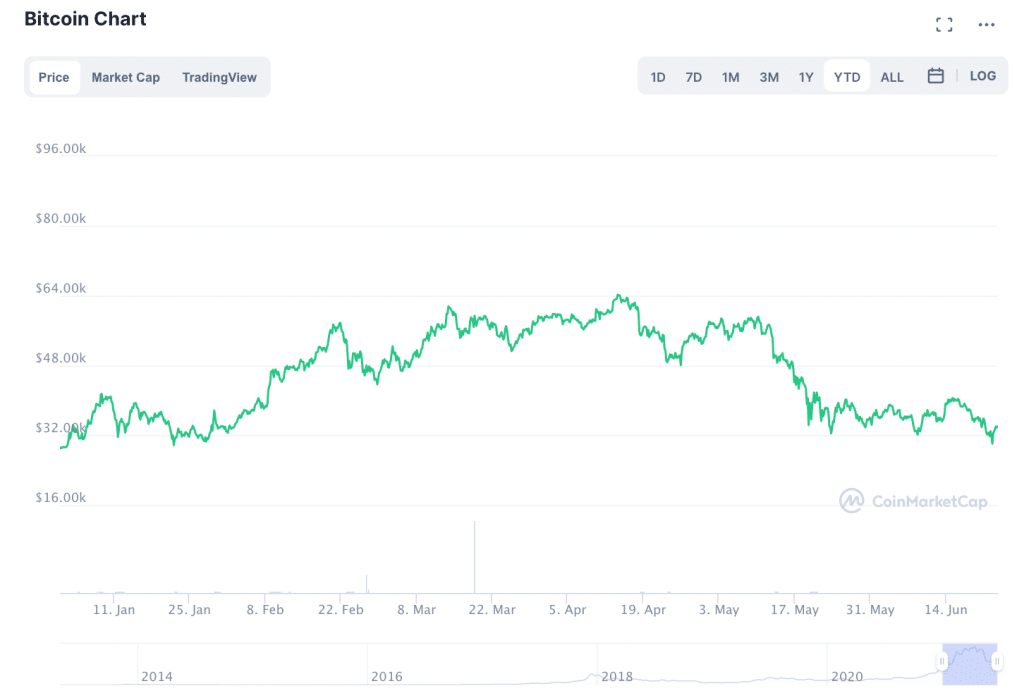
For the past several weeks, the price of Bitcoin has been dancing just above the $30,000 support level, sometimes dipping below and occasionally making strong moves toward the $40,000.
Bank Account Alternative. Business Account IBAN.
But, every time Bitcoin seems to make a decisive move one way or the other, it is only a matter of hours before BTC retreats to familiar territory: price levels around $31K, $33K, $35K with no clear path forward.
Bitcoin’s relative stagnancy around this level has caused a bit of division amongst analysts attempting to predict what could happen next. Some believe that BTC is just moments away from regaining its losses and riding a rally back to $60K and beyond by the end of the year. In June, some analysts have predicted that BTC could reach as high as $200,000 by the end of 2021.
However, not everyone is so optimistic. If Bitcoin falls to sustained levels below $30K, some analysts believe that BTC may be in for a prolonged depression before any upward movement is possible. Thus, Bitcoin seems to be in a rather precarious position: while BTC seems fairly stable above $30K, movement below $30K could lead Bitcoin to new lows. So what’s next for Bitcoin?
Would a Move below $30K Trigger Another Wave of Leveraged Bitcoin Liquidations?
“If Bitcoin drops below $30K for more than a few hours, it will cause a worldwide panic from traders and people searching for places to buy BTC,” said Kelan Kline to Finance Magnates. Kline is a personal finance expert and Co-Founder of The Savvy Couple.
A prolonged movement below $30K could essentially trigger a series of events that closely resemble what happened to Bitcoin markets in May of this year: “Exchanges will be under extreme pressure with too many customers on the website at once, causing market instability in both fiat and cryptocurrency markets.”
“When it’s trading time in Asia, Bitcoins liquidity could be significantly lower as traders would follow suit of selling their bitcoins off as well, which would create an even larger waterfall effect on the global financial system.”
“We Haven’t Lost All Gains in 2021.”
One point of possible positive news for Bitcoin is the fact that it actually did briefly fall below $30K earlier this week, and it did not trigger a new wave of liquidations, as some believed it would.
In fact, some analysts see the drop below $30K as a sort of non-event: Marco Van Den Heuvel, Head of Community at decentralized search engine Presearch, told Finance Magnates that: “This dip honestly did not come as a surprise.”
“Breaking $30,000 pretty much indicated we would see $28K levels, followed by hopeful support and a bounce. Which is what we saw starting just now, back to $31,500,” he explained.
In fact, Van Den Heuvel pointed out that any further drops below $30K could be a good thing for Bitcoin’s price levels in the long term. After all, the price drops may present opportunities for longer-term hodlers with ‘diamond hands’ to scoop up BTC at a discount.
Marco Van Den Heuvel, Head of Community at decentralized search engine Presearch.
“They are key levels in which a lot of buys are waiting to scoop up ‘cheap’ Bitcoin,” Van Den Heuvel said. “Personally, I believe we’re trading around support levels now for Bitcoin, whereas altcoins can still see another 30-40% decrease in price if bitcoin dominance actually attempts the 50% retest and successfully breaks it.”
Suggested articles
GIBX Mining Farm and IPFS Mining Pool Opening Up New OpportunitiesGo to article >>
“Realistically, we haven’t lost all gains in 2021,” he continued. “Bitcoin is trading around January 2021 levels, as are many altcoins. I feel like this event puts many people back into reality; making money is ‘easy, but keeping it is a different skill. It requires stone-cold decision making, rather than being permanently bullish.”
“Risk management is important. It’s also clear how much speculation there is still in this space, and how people’s emotions take over, resulting in a [downward] spiral of events.”
How deep is this downward spiral? “To me, current sentiment shows we’re hopefully close to a bottom,” he said. “Many people that capitulate now may not find their lower buy orders hit.”
BTC Sales by “Weak-Handed” Hodlers Could Give Way to Purchases by Longer-Term Investors
Indeed, under current market conditions, Bitcoin may not be poised to drop anytime soon, but negative news could bring a new round of bearish movements to BTC.
Ben Reynolds, the Founder of Sure Dividend, pointed out to Finance Magnates that Bitcoin is still reeling from negative news that hit the headlines in May: “China has recently cracked down more on crypto by banning more crypto-related social media accounts on Weibo,” he said, adding that Elon Musk’s Twitter drama may have influenced Bitcoin.
Ben Reynolds, Chief Executive of Sure Dividend.
Reynolds also pointed to “the FBI reclaiming the millions of dollars worth of bitcoin from the pipeline ransom hackers group,” which he said “[proves] that governments can still manipulate it even when it is not regulated, which could have some investors who prefer to question their investments.”
These pieces of news, and any other negative reports that could come out soon, may continue to wash out new money from bitcoin markets. “Any new investors who are susceptible to emotion and fear clouding their investment decisions might be the ones who pull out and cause BTC to drop below $30K,” Reynolds said.
On the other hand, positive news updates about Bitcoin could act as a boon for crypto prices and positive developments are underway: “Businesses are developing bitcoin ETFs, allowing customers to buy, sell and checkout by using crypto. The FBI used it to reclaim a ransom and strengthened its ability to become more mainstream.”
“Investor Fixation on Every Little Price Fluctuation Is Derailing the Ecosystem from What It’s Supposed to Be Doing.”
And while $30K seems to be Bitcoin’s ‘magic number’ of the moment, Kirobo Chief Executive, Asaf Naim pointed out that BTC analysts and investors often become fixated on certain price points.
“We all know that investors can panic when they see an asset fall below the price they consider symbolic,” Naim told Finance Magnates. “But, let’s not forget that these numbers are arbitrary – back in 2017, $20,000 was considered the magic number for Bitcoin.” In the years between 2018 and 2020, it was all about Bitcoin’s so-called “curse of $10,000.”
“Then in April of this year, it topped $63,000, and now $30,000 is considered the bottom,” Naim continued.
Asaf Naim, Chief Executive of Kirobo.
Indeed, Bitcoin’s big price rally from November of 2020 until May of 2021 reset the global mindset about where Bitcoin should be price-wise. Before the chain of liquidations that sent the price spiralling in May, some analysts and investors believed that a steady price above $50K could soon be Bitcoin’s new ‘normal’. However, BTC has failed to regain enough momentum to sustain levels above $40K for weeks.
Now that the latest round of hype seems to be over, the conversation around Bitcoin seems to be shifting away from how big BTC will be and back towards how it can and will be useful to the world.
“I think that if people would focus on the very real, practical applications of decentralized technology instead of obsessing over whatever mood Bitcoin has decided to be in on a given day, they’d find that the fundamentals of the crypto market as a whole are rock-solid,” Naim told Finance Magnates.
“Frankly, I think that investor fixation on every little price fluctuation is derailing the ecosystem from what it’s supposed to be doing – upgrading the way the world transacts through decentralized technology.”