Crypto bulls are back in the race with substantial transactions. On 1 April 2022, a leading XRP wallet transferred 40 million coins worth over $32 million from an unknown wallet to the digital exchange Bitstamp.
While the crypto market cap jumped by more than $100 billion in the past 24 hours, transactions with a value of at least $1 million have also increased significantly. “Both Bitcoin and Ethereum saw transaction spikes at their tops a couple of days ago. We can see whether transactions are taken while a position is in profit or at a loss. For the first time since November, there were 3x as many profitable transactions vs losing transactions,” Santiment noted.
On-chain movements of crypto whales saw an uptick during the recent market rally. In addition to the $32 million XRP transfer, several other $100 million+ crypto transactions were observed during the last 24 hours. A crypto millionaire address moved 3,000 Bitcoin worth over $138 million from Coinbase to an unknown wallet on 1 April at 16:57 UTC.
Ethereum
While the recent large crypto transfers were mainly focused on Bitcoin, USDT, and XRP, the Ethereum network also witnessed a rise in whale movements. On 31 March 2022, someone sent over 35,500 ETH worth more than $119 million from crypto trading platform Bitfinex to an unknown wallet. ETH’s price boom has played an important role in its surging whale movements. As a result of the latest developments, Ethereum’s dominance against Bitcoin is increasing.
“Ethereum has been gaining in price dominance against Bitcoin, and the ETH / BTC price ratio of 0.074762 on Friday came within millimeters of an 8-week high of 0.074878. The top 10 whale addresses remain to hold a significant percentage of supply,” Santiment added.
Yesterday, the deposit contract of Ethereum 2.0 topped 11 million ETH.
Crypto bulls are back in the race with substantial transactions. On 1 April 2022, a leading XRP wallet transferred 40 million coins worth over $32 million from an unknown wallet to the digital exchange Bitstamp.
While the crypto market cap jumped by more than $100 billion in the past 24 hours, transactions with a value of at least $1 million have also increased significantly. “Both Bitcoin and Ethereum saw transaction spikes at their tops a couple of days ago. We can see whether transactions are taken while a position is in profit or at a loss. For the first time since November, there were 3x as many profitable transactions vs losing transactions,” Santiment noted.
On-chain movements of crypto whales saw an uptick during the recent market rally. In addition to the $32 million XRP transfer, several other $100 million+ crypto transactions were observed during the last 24 hours. A crypto millionaire address moved 3,000 Bitcoin worth over $138 million from Coinbase to an unknown wallet on 1 April at 16:57 UTC.
Ethereum
While the recent large crypto transfers were mainly focused on Bitcoin, USDT, and XRP, the Ethereum network also witnessed a rise in whale movements. On 31 March 2022, someone sent over 35,500 ETH worth more than $119 million from crypto trading platform Bitfinex to an unknown wallet. ETH’s price boom has played an important role in its surging whale movements. As a result of the latest developments, Ethereum’s dominance against Bitcoin is increasing.
“Ethereum has been gaining in price dominance against Bitcoin, and the ETH / BTC price ratio of 0.074762 on Friday came within millimeters of an 8-week high of 0.074878. The top 10 whale addresses remain to hold a significant percentage of supply,” Santiment added.
Yesterday, the deposit contract of Ethereum 2.0 topped 11 million ETH.
Coinbase, a US-listed cryptocurrency exchange
Cryptocurrency Exchange
A cryptocurrency exchange is an online platform that supports the exchange of various currencies for a cryptocurrency or digital asset.Comparable to a generalized financial exchange, a crypto exchange’s core function is to permit and encourage the buying and selling of cryptos.This is accomplished by producing a stable trading environment suitable for traders nested through different locations around the world. Sometimes a crypto exchange may be referred to as a digital currency exchange (DCE) for short.How Does Trading Take Place on a Crypto Exchange?Cryptocurrency trading occurs over a centralized exchange, although these crypto exchanges should be used with caution given the implications that surround the custody of new assets. Similar to the banking industry, when a crypto exchange holds cryptocurrencies of users they accrue interest and are no longer classified as client money.These provide an accessible platform for not only companies, hedge funds, and retail traders for exchanging digital currencies.Additionally, crypto exchanges serve a critical role in producing stability within the cryptocurrency sector given how the sourcing and pricing of these assets are innately volatile. One could think of a crypto exchange as an intermediary who provides a service by connecting buyers and sellers from various markets under one roof. In exchange for facilitating trades and for services rendered, a digital currency exchange generally collects a fee of an outgoing transaction that averages between 0.20% to 0.25% or will request a deposit fee that has been known to be as high as 11% for credit card deposits. Crypto exchanges may also support the exchange of crypto tokens, such as the Binance Token, which is ranked as the 9th most valuable cryptocurrency in the world.
A cryptocurrency exchange is an online platform that supports the exchange of various currencies for a cryptocurrency or digital asset.Comparable to a generalized financial exchange, a crypto exchange’s core function is to permit and encourage the buying and selling of cryptos.This is accomplished by producing a stable trading environment suitable for traders nested through different locations around the world. Sometimes a crypto exchange may be referred to as a digital currency exchange (DCE) for short.How Does Trading Take Place on a Crypto Exchange?Cryptocurrency trading occurs over a centralized exchange, although these crypto exchanges should be used with caution given the implications that surround the custody of new assets. Similar to the banking industry, when a crypto exchange holds cryptocurrencies of users they accrue interest and are no longer classified as client money.These provide an accessible platform for not only companies, hedge funds, and retail traders for exchanging digital currencies.Additionally, crypto exchanges serve a critical role in producing stability within the cryptocurrency sector given how the sourcing and pricing of these assets are innately volatile. One could think of a crypto exchange as an intermediary who provides a service by connecting buyers and sellers from various markets under one roof. In exchange for facilitating trades and for services rendered, a digital currency exchange generally collects a fee of an outgoing transaction that averages between 0.20% to 0.25% or will request a deposit fee that has been known to be as high as 11% for credit card deposits. Crypto exchanges may also support the exchange of crypto tokens, such as the Binance Token, which is ranked as the 9th most valuable cryptocurrency in the world. Read this Term, has announced on Thursday that it added support for Solana on an initial phase. That said, users can now handle their Solana (SOL), and Solana tokens (SPL) alongside their tokens held on all of Wallet extension’s supported networks.
“Today’s update makes it easier to keep track of all your crypto across an ever-growing range of supported networks, without the need to manage multiple wallet apps. However, this launch is just the beginning — Coinbase Wallet plans to further integrate with the Solana ecosystem, including the ability for users to connect to Solana dapps, and the ability to view and manage their Solana NFTs directly within their Coinbase Wallet extension,” Coinbase noted in a statement published via its website.
Coinbase Wallet’s extension has support for other networks like Ethereum, Avalanche, Polygon, BNB Chain, among others. With the new support of Solana, the US-listed firm aims to unlock more of Web3 ‘without needing to manage multiple wallets.’
Solana Blockchain in Figures
It has been reported that over the past year, the blockchain
Blockchain
Blockchain comprises a digital network of blocks with a comprehensive ledger of transactions made in a cryptocurrency such as Bitcoin or other altcoins.One of the signature features of blockchain is that it is maintained across more than one computer. The ledger can be public or private (permissioned.) In this sense, blockchain is immune to the manipulation of data making it not only open but verifiable. Because a blockchain is stored across a network of computers, it is very difficult to tamper with. The Evolution of BlockchainBlockchain was originally invented by an individual or group of people under the name of Satoshi Nakamoto in 2008. The purpose of blockchain was originally to serve as the public transaction ledger of Bitcoin, the world’s first cryptocurrency.In particular, bundles of transaction data, called “blocks”, are added to the ledger in a chronological fashion, forming a “chain.” These blocks include things like date, time, dollar amount, and (in some cases) the public addresses of the sender and the receiver.The computers responsible for upholding a blockchain network are called “nodes.” These nodes carry out the duties necessary to confirm the transactions and add them to the ledger. In exchange for their work, the nodes receive rewards in the form of crypto tokens.By storing data via a peer-to-peer network (P2P), blockchain controls for a wide range of risks that are traditionally inherent with data being held centrally.Of note, P2P blockchain networks lack centralized points of vulnerability. Consequently, hackers cannot exploit these networks via normalized means nor does the network possess a central failure point.In order to hack or alter a blockchain’s ledger, more than half of the nodes must be compromised. Looking ahead, blockchain technology is an area of extensive research across multiple industries, including financial services and payments, among others.
Blockchain comprises a digital network of blocks with a comprehensive ledger of transactions made in a cryptocurrency such as Bitcoin or other altcoins.One of the signature features of blockchain is that it is maintained across more than one computer. The ledger can be public or private (permissioned.) In this sense, blockchain is immune to the manipulation of data making it not only open but verifiable. Because a blockchain is stored across a network of computers, it is very difficult to tamper with. The Evolution of BlockchainBlockchain was originally invented by an individual or group of people under the name of Satoshi Nakamoto in 2008. The purpose of blockchain was originally to serve as the public transaction ledger of Bitcoin, the world’s first cryptocurrency.In particular, bundles of transaction data, called “blocks”, are added to the ledger in a chronological fashion, forming a “chain.” These blocks include things like date, time, dollar amount, and (in some cases) the public addresses of the sender and the receiver.The computers responsible for upholding a blockchain network are called “nodes.” These nodes carry out the duties necessary to confirm the transactions and add them to the ledger. In exchange for their work, the nodes receive rewards in the form of crypto tokens.By storing data via a peer-to-peer network (P2P), blockchain controls for a wide range of risks that are traditionally inherent with data being held centrally.Of note, P2P blockchain networks lack centralized points of vulnerability. Consequently, hackers cannot exploit these networks via normalized means nor does the network possess a central failure point.In order to hack or alter a blockchain’s ledger, more than half of the nodes must be compromised. Looking ahead, blockchain technology is an area of extensive research across multiple industries, including financial services and payments, among others. Read this Term Solana has been growing the fastest, with a total locked value of over $7.35B and over 1,400 projects launched covering DeFi, NFTs, and Web3.
Until now, those interested in exploring the Solana ecosystem or holding SOL and SPL tokens had to create yet another crypto wallet, manage an additional app or browser extension, and keep track of their assets across multiple platforms. From now on, users of the Coinbase Wallet extension can store, send, and receive SOL and all of its SPL tokens.
“We want to empower millions of people to seamlessly participate in the exciting world of dapps and the larger crypto ecosystem. With its low fees and fast transaction times, Solana makes the world of crypto accessible to even more people and is a great introduction to web3,” Adam Zadikoff, Senior Product Manager at Coinbase, pointed out.
Coinbase, a US-listed cryptocurrency exchange
Cryptocurrency Exchange
A cryptocurrency exchange is an online platform that supports the exchange of various currencies for a cryptocurrency or digital asset.Comparable to a generalized financial exchange, a crypto exchange’s core function is to permit and encourage the buying and selling of cryptos.This is accomplished by producing a stable trading environment suitable for traders nested through different locations around the world. Sometimes a crypto exchange may be referred to as a digital currency exchange (DCE) for short.How Does Trading Take Place on a Crypto Exchange?Cryptocurrency trading occurs over a centralized exchange, although these crypto exchanges should be used with caution given the implications that surround the custody of new assets. Similar to the banking industry, when a crypto exchange holds cryptocurrencies of users they accrue interest and are no longer classified as client money.These provide an accessible platform for not only companies, hedge funds, and retail traders for exchanging digital currencies.Additionally, crypto exchanges serve a critical role in producing stability within the cryptocurrency sector given how the sourcing and pricing of these assets are innately volatile. One could think of a crypto exchange as an intermediary who provides a service by connecting buyers and sellers from various markets under one roof. In exchange for facilitating trades and for services rendered, a digital currency exchange generally collects a fee of an outgoing transaction that averages between 0.20% to 0.25% or will request a deposit fee that has been known to be as high as 11% for credit card deposits. Crypto exchanges may also support the exchange of crypto tokens, such as the Binance Token, which is ranked as the 9th most valuable cryptocurrency in the world.
A cryptocurrency exchange is an online platform that supports the exchange of various currencies for a cryptocurrency or digital asset.Comparable to a generalized financial exchange, a crypto exchange’s core function is to permit and encourage the buying and selling of cryptos.This is accomplished by producing a stable trading environment suitable for traders nested through different locations around the world. Sometimes a crypto exchange may be referred to as a digital currency exchange (DCE) for short.How Does Trading Take Place on a Crypto Exchange?Cryptocurrency trading occurs over a centralized exchange, although these crypto exchanges should be used with caution given the implications that surround the custody of new assets. Similar to the banking industry, when a crypto exchange holds cryptocurrencies of users they accrue interest and are no longer classified as client money.These provide an accessible platform for not only companies, hedge funds, and retail traders for exchanging digital currencies.Additionally, crypto exchanges serve a critical role in producing stability within the cryptocurrency sector given how the sourcing and pricing of these assets are innately volatile. One could think of a crypto exchange as an intermediary who provides a service by connecting buyers and sellers from various markets under one roof. In exchange for facilitating trades and for services rendered, a digital currency exchange generally collects a fee of an outgoing transaction that averages between 0.20% to 0.25% or will request a deposit fee that has been known to be as high as 11% for credit card deposits. Crypto exchanges may also support the exchange of crypto tokens, such as the Binance Token, which is ranked as the 9th most valuable cryptocurrency in the world. Read this Term, has announced on Thursday that it added support for Solana on an initial phase. That said, users can now handle their Solana (SOL), and Solana tokens (SPL) alongside their tokens held on all of Wallet extension’s supported networks.
“Today’s update makes it easier to keep track of all your crypto across an ever-growing range of supported networks, without the need to manage multiple wallet apps. However, this launch is just the beginning — Coinbase Wallet plans to further integrate with the Solana ecosystem, including the ability for users to connect to Solana dapps, and the ability to view and manage their Solana NFTs directly within their Coinbase Wallet extension,” Coinbase noted in a statement published via its website.
Coinbase Wallet’s extension has support for other networks like Ethereum, Avalanche, Polygon, BNB Chain, among others. With the new support of Solana, the US-listed firm aims to unlock more of Web3 ‘without needing to manage multiple wallets.’
Solana Blockchain in Figures
It has been reported that over the past year, the blockchain
Blockchain
Blockchain comprises a digital network of blocks with a comprehensive ledger of transactions made in a cryptocurrency such as Bitcoin or other altcoins.One of the signature features of blockchain is that it is maintained across more than one computer. The ledger can be public or private (permissioned.) In this sense, blockchain is immune to the manipulation of data making it not only open but verifiable. Because a blockchain is stored across a network of computers, it is very difficult to tamper with. The Evolution of BlockchainBlockchain was originally invented by an individual or group of people under the name of Satoshi Nakamoto in 2008. The purpose of blockchain was originally to serve as the public transaction ledger of Bitcoin, the world’s first cryptocurrency.In particular, bundles of transaction data, called “blocks”, are added to the ledger in a chronological fashion, forming a “chain.” These blocks include things like date, time, dollar amount, and (in some cases) the public addresses of the sender and the receiver.The computers responsible for upholding a blockchain network are called “nodes.” These nodes carry out the duties necessary to confirm the transactions and add them to the ledger. In exchange for their work, the nodes receive rewards in the form of crypto tokens.By storing data via a peer-to-peer network (P2P), blockchain controls for a wide range of risks that are traditionally inherent with data being held centrally.Of note, P2P blockchain networks lack centralized points of vulnerability. Consequently, hackers cannot exploit these networks via normalized means nor does the network possess a central failure point.In order to hack or alter a blockchain’s ledger, more than half of the nodes must be compromised. Looking ahead, blockchain technology is an area of extensive research across multiple industries, including financial services and payments, among others.
Blockchain comprises a digital network of blocks with a comprehensive ledger of transactions made in a cryptocurrency such as Bitcoin or other altcoins.One of the signature features of blockchain is that it is maintained across more than one computer. The ledger can be public or private (permissioned.) In this sense, blockchain is immune to the manipulation of data making it not only open but verifiable. Because a blockchain is stored across a network of computers, it is very difficult to tamper with. The Evolution of BlockchainBlockchain was originally invented by an individual or group of people under the name of Satoshi Nakamoto in 2008. The purpose of blockchain was originally to serve as the public transaction ledger of Bitcoin, the world’s first cryptocurrency.In particular, bundles of transaction data, called “blocks”, are added to the ledger in a chronological fashion, forming a “chain.” These blocks include things like date, time, dollar amount, and (in some cases) the public addresses of the sender and the receiver.The computers responsible for upholding a blockchain network are called “nodes.” These nodes carry out the duties necessary to confirm the transactions and add them to the ledger. In exchange for their work, the nodes receive rewards in the form of crypto tokens.By storing data via a peer-to-peer network (P2P), blockchain controls for a wide range of risks that are traditionally inherent with data being held centrally.Of note, P2P blockchain networks lack centralized points of vulnerability. Consequently, hackers cannot exploit these networks via normalized means nor does the network possess a central failure point.In order to hack or alter a blockchain’s ledger, more than half of the nodes must be compromised. Looking ahead, blockchain technology is an area of extensive research across multiple industries, including financial services and payments, among others. Read this Term Solana has been growing the fastest, with a total locked value of over $7.35B and over 1,400 projects launched covering DeFi, NFTs, and Web3.
Until now, those interested in exploring the Solana ecosystem or holding SOL and SPL tokens had to create yet another crypto wallet, manage an additional app or browser extension, and keep track of their assets across multiple platforms. From now on, users of the Coinbase Wallet extension can store, send, and receive SOL and all of its SPL tokens.
“We want to empower millions of people to seamlessly participate in the exciting world of dapps and the larger crypto ecosystem. With its low fees and fast transaction times, Solana makes the world of crypto accessible to even more people and is a great introduction to web3,” Adam Zadikoff, Senior Product Manager at Coinbase, pointed out.
Coinbase Wallet browser extension now offers support for sending, receiving, and storing Solana and SPL tokens
By Adam Zadikoff, Senior Product Manager
Making web3 more user-friendly means more ways to interact and connect with dapps across a wide range of blockchains and networks. Today, we’re introducing our initial phase of support for Solana. Users can now manage their Solana (SOL) and Solana tokens (SPL) alongside their tokens held on all of Coinbase Wallet extension’s supported networks, including Ethereum, Avalanche, Polygon, BNB Chain, and many more. This allows users to unlock more of web3 without needing to manage multiple wallets.
Over the past year, there has been an explosion of interest in web3 and decentralized applications, including NFTs and decentralized finance (DeFi). One of the blockchain networks that has seen a surge in usage is Solana, which has built a vibrant community of both developers and users along the way.
Today’s update makes it easier to keep track of all your crypto across an ever-growing range of supported networks, without the need to manage multiple wallet apps. However, this launch is just the beginning — Coinbase Wallet plans to further integrate with the Solana ecosystem, including the ability for users to connect to Solana dapps, and the ability to view and manage their Solana NFTs directly within their Coinbase Wallet extension.
Over the past year, there has been a surge in interest and usage of blockchain networks. While this has resulted in exciting new projects, ecosystems, and communities, it has also revealed scaling issues that have the potential to leave users with high network fees (or “gas”) and long transaction processing times.
Many users have been looking for networks that are optimized for scale, offering low-cost transactions and fast transaction times. One of the fastest-growing blockchains over the past year has been Solana, which now has over $7.35B in total locked value (TLV) and more than 1,400 projects launched, spanning DeFi, NFTs, and web3. It is home to a number of well-known NFT projects including the Degenerate Apes collection, and DeFi protocols including the decentralized exchange, Serum.
Up until now, users who wanted to explore the Solana ecosystem or hold SOL and SPL tokens had to create yet another crypto wallet, manage an additional app or browser extension, and keep track of their assets across multiple surfaces. Starting today, Coinbase Wallet extension users can store, send, and receive Solana (SOL) and all of its SPL tokens alongside all of their EVM-compatible assets, including tokens held on Ethereum, Avalanche, Polygon, BNB Chain, and many more.
If you already have a Solana wallet, such as Phantom or Solflare, it’s quick and easy to import your existing Solana self-custody wallet into Coinbase Wallet. All you’ll need is the latest Coinbase Wallet desktop extension and your Solana wallet’s recovery phrase. You can read our step-by-step instructions on the Wallet extension guide for more information.
If you don’t already have a Solana wallet, the Coinbase Wallet extension will automatically create one for you. And with recently launched Coinbase Pay, it’s easier than ever to add SOL to your Coinbase Wallet extension — you can safely and securely transfer SOL you already hold in your Coinbase account to your Coinbase Wallet, or buy SOL using your stored payment methods.
Today’s release makes SOL and SPL tokens available on the browser extension. This means that if you use Coinbase Wallet on both mobile and desktop, you’ll only see the SOL and SPL tokens that are in your wallet when using Coinbase Wallet extension. You will not be able to see them in the Coinbase Wallet mobile app, however your tokens are safely stored in your wallet.
How to import an existing Solana-based wallet into Coinbase Wallet
We want to empower millions of people to seamlessly participate in the exciting world of dapps and the larger crypto ecosystem. With its low fees and fast transaction times, Solana makes the world of crypto accessible to even more people and is a great introduction to web3.
Today’s launch is just the beginning of Coinbase Wallet and the Solana ecosystem coming together. In the coming months, we’ll be adding support for Solana NFTs and the ability for you to connect your wallet to Solana dapps to interact with everything the Solana ecosystem has to offer.
You can experience the latest enhancements for yourself by downloading Coinbase Wallet’s browser extension for free from the Chrome Web Store. Make sure to follow us on Twitter @CoinbaseWallet for the latest Wallet-related news and product announcements.
—
Information is provided for informational purposes only and is not investment advice. This is not a recommendation to buy or sell a particular digital asset. Coinbase Wallet is a self-custody wallet providing software services subject to Coinbase Wallet Terms of Service and Privacy Policy. Coinbase Wallet is distinct from Coinbase.com, and private keys for Coinbase Wallet are stored directly by the user and not by Coinbase. Fees may apply. You do not need a Coinbase.com account to use Coinbase Wallet.
Expand your dapp’s reach with just a few lines of code
By Sid Coelho-Prabhu, Product Management Director, Wallet
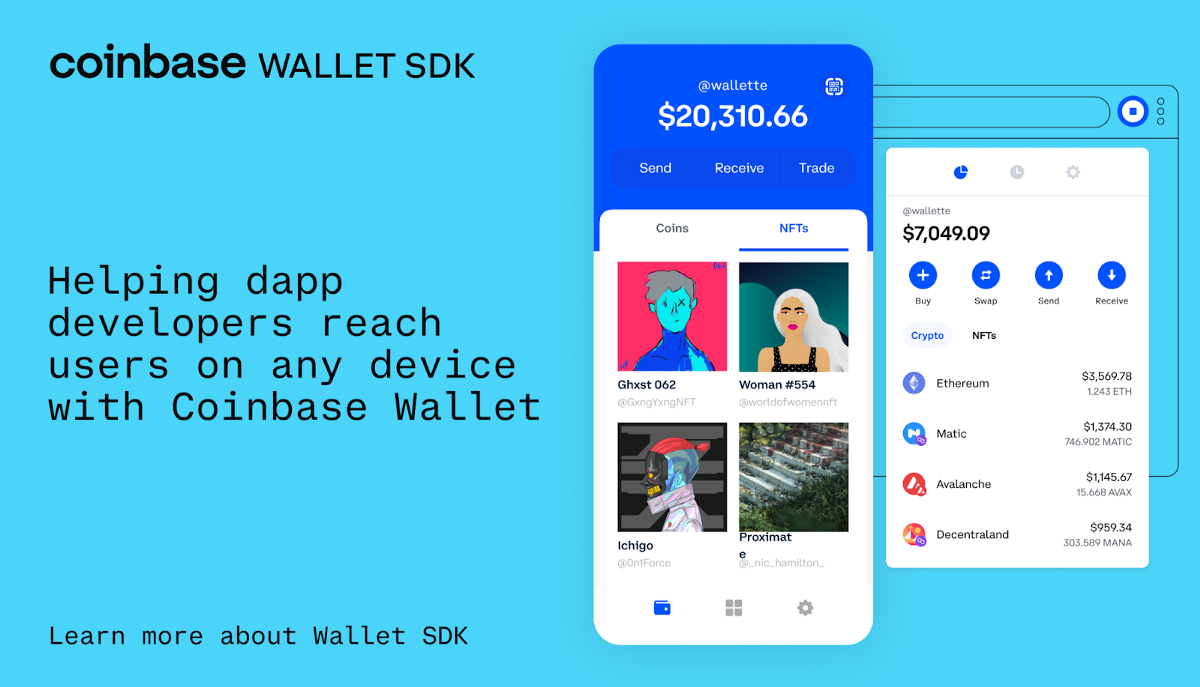
Millions of people choose Coinbase Wallet to use dapps, earn yield with DeFi, trade more than hundreds of thousands of assets, and hold their NFTs. In just minutes you can integrate Coinbase Wallet in your dapp, expanding your reach to users on all of their devices — and open your dapp up to the multichain Coinbase ecosystem of over 89M users across 85 countries, on whatever device they prefer.
With just a few lines of code, you can open up access to your dapp to Coinbase Wallet users across the iOS and Android mobile apps as well as the Wallet browser extension on Chrome.
Coinbase Wallet SDK takes just 5 minutes to integrate and doesn’t require you to deploy any additional infrastructure. You can learn how to integrate with Coinbase Wallet in our technical documentation, read our post on using web3-react to connect, or watch the Coinbase Wallet SDK demo.
We are dedicated to making the benefits of crypto and the entire web3 ecosystem accessible to all — regardless of network or blockchain, country or currency, crypto savvy or crypto skeptical. We’re building Coinbase Wallet to reflect that commitment. With support for all EVM-compatible chains, including Avalanche, BNB Chain, Polygon, and many more, you can access millions of users for your dapp across the most popular ecosystems.
We also know that security is top-of-mind for anyone building in the web3 ecosystem. By offering integration with the most trusted and secure name in crypto, you can help put your users at ease while they explore your dapp, confident that their crypto and data are safe.
The built-in trust offered by Coinbase Wallet shows: As of February 2022 it’s the most downloaded mobile dapp wallet in the United States. Integrating your dapp with Coinbase Wallet can immediately unlock access to 12M Wallet users, with the potential to reach the full Coinbase ecosystem of over 89M users in 85 countries.
We see Coinbase Wallet SDK as a critical way to expand access to dapps, which is why we want this experience to be available to everyone in the crypto community. To make that possible, Coinbase Wallet SDK is open-source, making it available for any dapp developer that wants to integrate it into their product.
Crypto is just getting started, and Coinbase Wallet is your key to what’s next. For developers, Coinbase Wallet is the best self-custody wallet to integrate with, as it’s the most trusted name in crypto and offers unparalleled reach to 89M users across the entire Coinbase ecosystem. Coinbase Wallet also offers the most user-friendly self-custody experience, unlocking the entire world of crypto, including collecting NFTs, earning yield on your crypto, accessing play-to-earn games, engaging in DeFi, participating in DAOs, and more. To learn more, visit our website.
Disclaimer:
Coinbase Wallet is a self-custody wallet providing software services subject to Coinbase Wallet Terms of Service and Privacy Policy. Coinbase Wallet is distinct from Coinbase.com, and private keys for Coinbase Wallet are stored directly by the user and not by Coinbase. Fees may apply. You do not need a Coinbase.com account to use Coinbase Wallet.
Dubai, U.A.E., February 22nd, 2022 — MRHB DeFi, the world’s first ethics-based decentralized finance (DeFi) platform, is announcing the 22.2.22 launch of Sahal Wallet, a non-custodial cryptocurrency wallet that functions as a gateway to the entire MRHB ecosystem of ethical DeFi products.
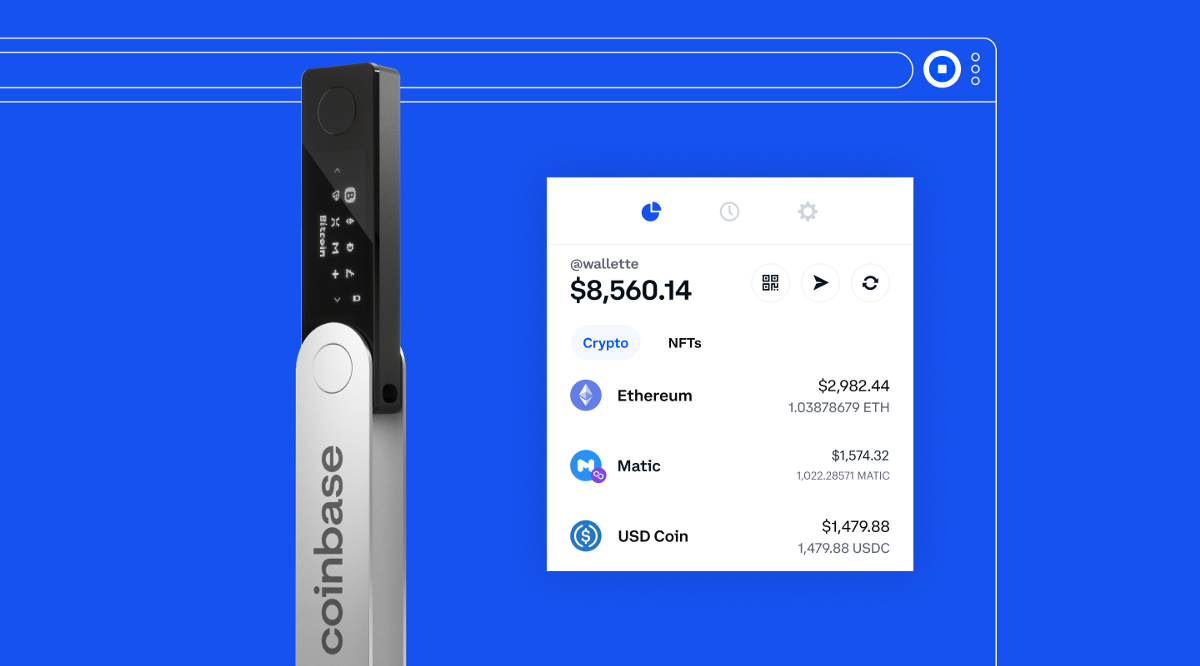
Since launching the Coinbase Wallet browser extension as a standalone self-custody option in November, we’ve seen incredible adoption. Wallet extension makes it even easier to explore web3 by bringing the world of decentralized apps (dapps) to more devices. Today, we’re adding support for Ledger hardware wallets to Coinbase Wallet extension, providing an additional layer of security and greater peace of mind for our users.
Ledger is an industry leader in hardware wallets, with more than 4 million people putting their trust in Ledger to keep their crypto safe. To celebrate today’s launch, we have partnered with Ledger to release the Nano X Coinbase Edition, which is available for a limited time in Ledger’s online store.
Building the most user-friendly self-custody experience in crypto means giving our users more ways to keep their crypto secure while they access web3 and the world of crypto. And today’s launch is just the beginning — we will continue to build out support for more hardware wallets across all of our users’ devices.
Coinbase Wallet is your passport to collecting NFTs, participating in DeFi, joining a DAO, and so much more. As you start to live more of your life on the blockchain, it’s more important than ever to keep your assets safe.
Fortunately, there are many steps you can take to keep you and your assets safe as you explore web3. It all starts with your recovery phrase, backing it up in a secure location, and making sure to never share it with anyone. And as a reminder, Coinbase will never ask you for your recovery phrase.
Coinbase Wallet offers additional layers of security for our users. For users of Wallet browser extension, we recommend adding a password to keep your assets safe. And in the Coinbase Wallet mobile app, you can use biometrics or a PIN to secure your Wallet.
Today, we are adding support for Ledger hardware wallets in the Coinbase Wallet browser extension, introducing an additional security option for our users. Hardware wallets are physical devices that store the private keys to your crypto wallet offline. Because every transaction on the blockchain requires both a user’s public and private keys, a hardware wallet ensures that only the user who holds the physical device can complete a transaction.
Using a hardware wallet is a lot like using two factor authentication to secure a website login, but instead of a six digit code that is sent as an SMS or generated in an authenticator app, your hardware wallet is used to physically confirm transactions with the press of a button.
Whether you are a first-time hardware wallet user or already have a Ledger it is easy to use Coinbase Wallet to connect to the ever-growing world of NFTs, dapps, and DeFi. All you need to do is download the Coinbase Wallet browser extension, connect your Ledger to your computer, and follow the on-screen instructions.
While today’s launch brings support for Ledger devices to the Wallet extension, we have ambitious plans to support more types of hardware wallets not only in Coinbase Wallet extension, but with our mobile apps as well. We will soon also add support for users with multiple active wallet addresses on a single Ledger device to select which address they want to use with Coinbase Wallet.
We want to empower everyone to use dapps and access web3, and that requires building the easiest-to-use and most accessible self-custody wallet in the ecosystem. Today’s release solves another set of important user needs, including the ability to use a hardware wallet for enhanced security.
You can experience the latest enhancements for yourself by downloading Coinbase Wallet for free from the App Store on iOS, Google Play on Android, or the Chrome web store. Make sure to follow us on Twitter @CoinbaseWallet for the latest Wallet-related news.
Coinbase Wallet is a self-custody wallet providing software services subject to Coinbase Wallet Terms of Service and Privacy Policy. Coinbase Wallet is distinct from Coinbase.com, and private keys for Coinbase Wallet are stored directly by the user and not by Coinbase.com. Fees may apply. You do not need a Coinbase.com account to use Coinbase Wallet.
Ledger and the Ledger logo are registered trademarks of Ledger SAS. Purchase of the Ledger Nano X Coinbase Edition can be made on Ledger’s website and subject to Ledger Sales Terms and Conditions and Privacy Policy. Subject to availability.
Liechtenstein-based crypto exchange LCX has confirmed the compromise of one of its hot wallets after temporarily suspending all deposits and withdrawals on the platform.
The hack was first identified by PeckShield, a blockchain security company, based on the suspicious transfer of ERC-20 tokens from LXC to an unknown Ethereum (ETH) wallet.
hot wallet compromised? @lcx https://t.co/uL5a7oCFfM
The probable hot wallet compromise was soon confirmed by the exchange as it announced the loss of numerous tokens including ETH, USD Coin (USDC) and other tokens including its in-house LCX token.
Ethereum blockchain based assets such as ETH, USDC, EURe, LCX and other assets have been moved to the
Hacker ETH Wallet: 0x165402279F2C081C54B00f0E08812F3fd4560A05
Based on PeckShield’s investigation, LCX lost a cumulative of $6.8 million after the hacker successfully transferred eight types of tokens that included Sandbox (SAND), Quant (QNT), Chainlink (LINK), Enjin Coin (ENJ) and Maker (MKR).
Details of the stolen funds on LCX. Source: PeckShield.
At the time of writing, LCX has not shared any plans to help return the stolen funds. However, the company has confirmed to take security measures to protect other wallets and assets:
“During this difficult period, we greatly appreciate the support from our customers, other exchanges, security experts, and the broader crypto community.”
LCX has not yet responded to Cointelegraph’s request for comment.
Related: ImmuneFi report $10B in DeFi hacks and losses across 2021
A recent report from security platform ImmuneFi found that crypto companies incurred losses of over $10.2 billion in 2021 due to hacks, scams and other malicious activities.
As Cointelegraph reported, ImmuneFi identified 120 instances of crypto exploits and rug-pulls, the highest-valued hack being Poly Network at $613 million, followed by Venus and BitMart with $200 million and $150 million, respectively.
Crypto trading platform AscendEX suffered a loss of $77.7 million in a hot wallet compromise that allowed hackers to access and transfer tokens hosted over the Ethereum (ETH), Binance Smart Chain (BSC) and Polygon (MATIC) blockchains.
Soon after realization, AscendEX proactively warned its users about the stolen funds, confirming that the hackers were not able to access the company’s cold wallet reserves.
22:00 UTC 12/11, We have detected a number of ERC-20, BSC, and Polygon tokens transferred from our hot wallet. Cold Wallet is NOT affected. Investigation underway. If any user’s funds are affected by the incident, they will be covered completely by AscendEX.
According to PeckShield, a blockchain security and data analytics company, around $60 million worth of tokens were transferred over the Ethereum blockchain. Tokens stolen from the Binance Smart Chain and Polygon are worth $9.2 million and $8.5 million respectively, as evidenced by EtherScan data.
Some of the popular tokens stolen in this hack include USD Coin (USDC), Tether (USDT), and Shiba Inu (SHIB). However, AscendEX is yet to officially confirm the exact worth of the tokens taken away by the hackers.
The company also announced to help the affected users by covering up their losses due to this attack.
Related: Bitmart hacked for $200M following Ethereum, Binance Smart Chain exploit
Just last week on Dec. 05, a similar attack on crypto exchange BitMart resulted in a loss of nearly $200 million due to a hot wallet compromise hosted over the Ethereum and Binance Smart Chain blockchains.
As reported by Cointelegraph, the hack was a straightforward case of transfer-out, swap, and wash:
Transfer of stolen tokens on Bitmart. Source: PeckShield
While BitMart CEO Sheldon Xia confirmed the losses over Twitter, he announced a temporary stop on all withdrawals and deposits while further investigations were underway.
The deposit and withdrawal function of all tokens will be resumed step by step, along with the recovery progress of security testing and public chain development. No worries, we are marching forward, security will be always the first priority.
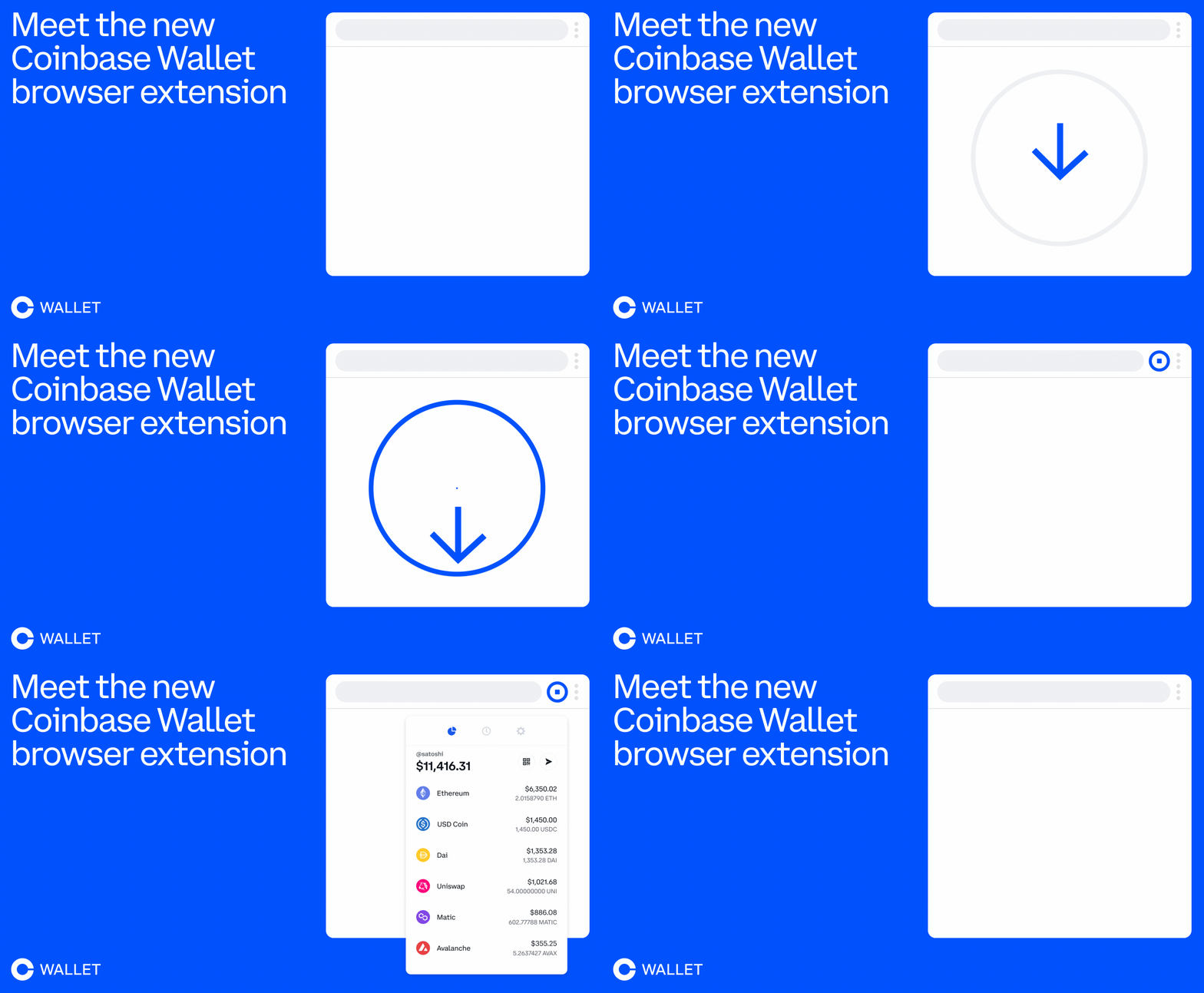
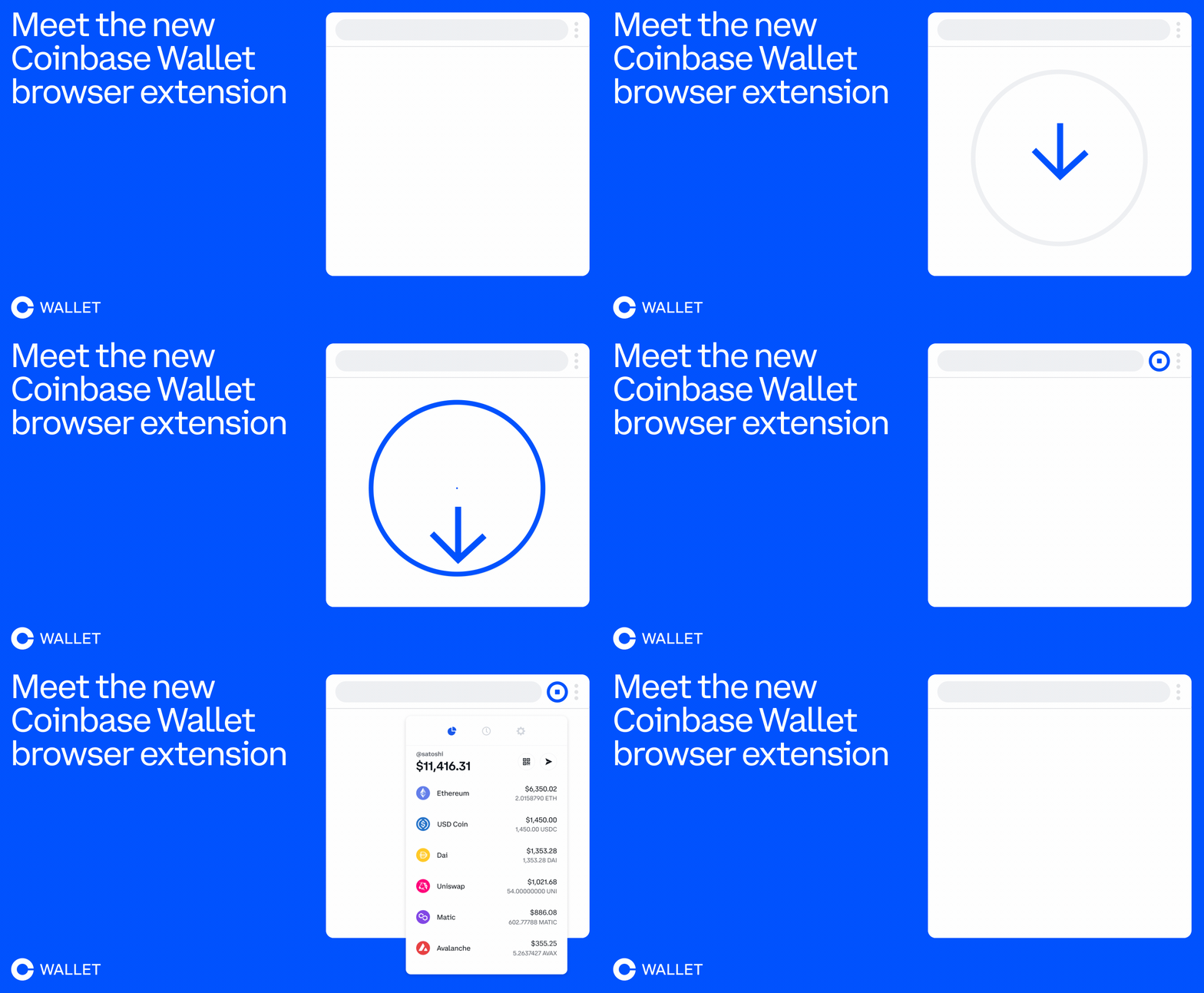
In May, we introduced a downloadable browser extension that brought Coinbase Wallet onto laptops and desktops. We’ve seen incredible traction with the Coinbase Wallet extension, which made it easier to securely connect to decentralized apps (dapps) and decentralized finance (DeFi) from more devices.
Today, we’re bringing full standalone functionality to Coinbase Wallet extension. Now customers can browse dapps, access thousands of cryptocurrencies, trade on decentralized exchanges (DEXes), earn interest, and collect NFTs, all with just a few clicks.
Total control of your crypto from your browser
When we first launched the Coinbase Wallet extension, we wanted to empower millions of customers to engage in the exciting world of dapps, and bringing Coinbase Wallet to desktops was a key way to increase access to the larger crypto ecosystem.
Today’s release gives the Coinbase Wallet extension full standalone functionality, unlocking the world of crypto on desktop. Now, you can browse dapps, access thousands of cryptocurrencies, trade on decentralized exchanges (DEXes), earn interest, and collect NFTs from your browser without needing to confirm transactions on your smartphone.
It all starts with your recovery phrase
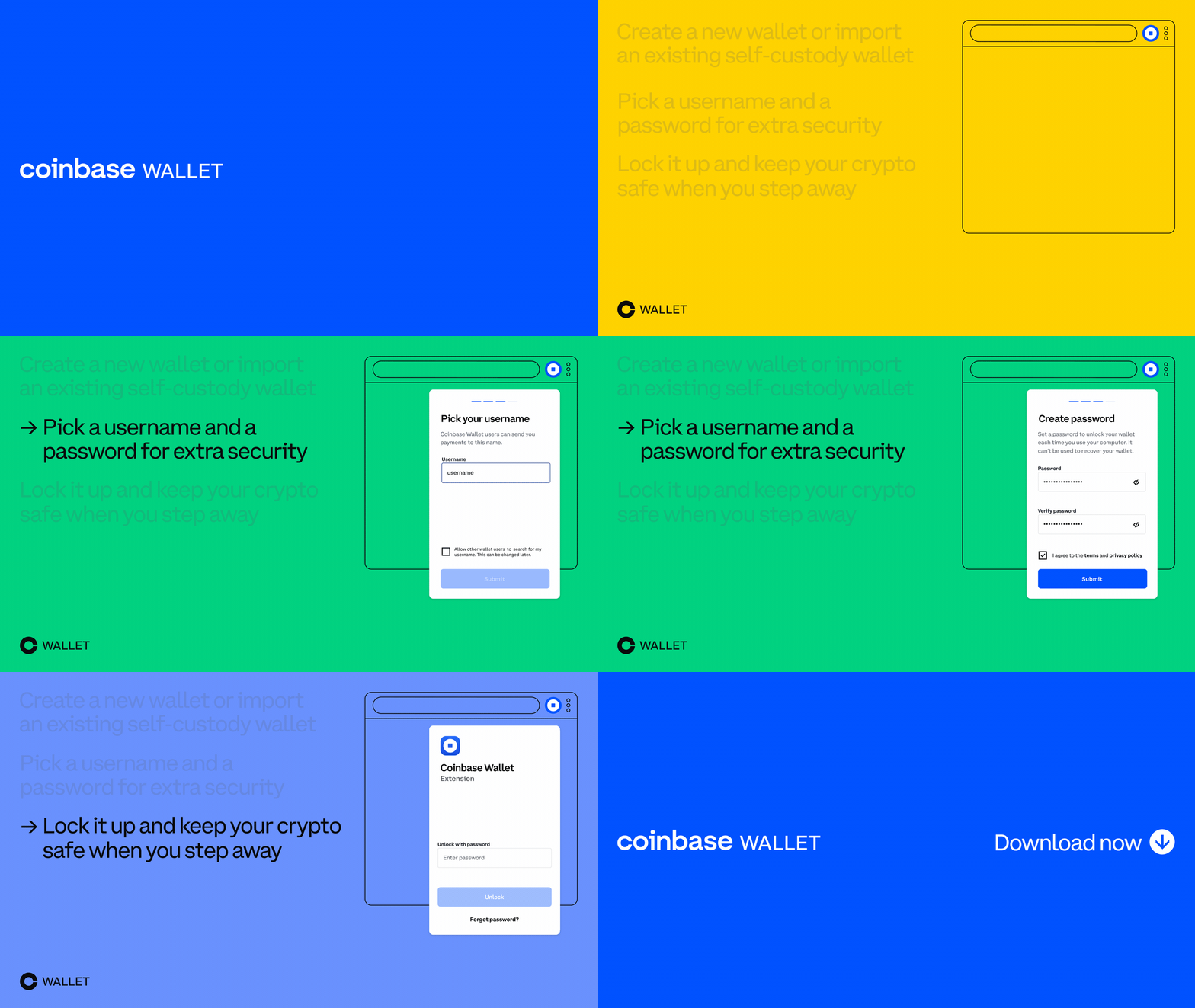
With today’s release, we have made it easy for both new and existing Wallet users to get started with the standalone extension.
If you have been using the Coinbase Wallet extension via WalletLink, make sure you have your recovery phrase handy and then choose ‘Sign out’ from the Settings menu in your Wallet extension. Choose ‘Import a wallet’ and then enter your recovery phrase.
If you are a new customer, download Coinbase Wallet for free from the Chrome web store. If you do not already have a self-custody wallet, select ‘Create a new wallet’. If you would like to import an existing self-custody wallet, such as MetaMask, Trust Wallet, Coinbase Wallet, or another Ethereum-based wallet, choose ‘Import a wallet’ and then enter your recovery phrase.
If you have been using WalletLink and would prefer to continue using the browser extension as a linked account and keep handling confirmations and signing from the mobile app, you do not need to take any additional steps. If you need to re-enable the connection, choose WalletLink in your Coinbase Wallet mobile app’s settings.
You can also seamlessly link your self-custody Coinbase Wallet to a Coinbase account and access everything that Coinbase has to offer, including buying crypto with cash.
Looking forward
We’ll continue working to empower everyone to use dapps and web3 by building the easiest-to-use and most accessible self-custody wallet in the ecosystem.
You can download the new Wallet extension from the Chrome web store. We’re always listening to our users and welcome feedback. Follow us on Twitter @CoinbaseWallet for the latest Wallet-related news, and visit our help center for any additional questions.
Coinbase Wallet is now available as a standalone browser extension was originally published in The Coinbase Blog on Medium, where people are continuing the conversation by highlighting and responding to this story.
There is no greater fear for cryptocurrency investors than one day forgetting the password to their blockchain wallets, seeing how their own money is right in their hands but still locked away forever from them. If this has happened to you, however, don’t lose hope. There are ways to recover a lost blockchain wallet password, as explained by a leading expert at wallet recovery with years of experience from KeychainX.
Step by Step Guide for Recovering a Lost Blockchain Wallet Password
Blockchain has over 76 million wallets created since its inception in 2011, and many users might have lost their passwords in the passing decade. But if Blockchain.com support will not help you recover your password, what other options do you have? Luckily, Robert Rhodin, the CEO of KeychainX and an expert in the field of wallet recovery, has written a complete step by step guide to help you with the process of recovering it yourself.
Lost your blockchain wallet password?
First, if you forget your password but remember what email you used for creating your wallet, you are able to request they send you all wallets ever created with that address. The link for that service as well as all the upcoming services and software tools you will need to download are all in the guide.
If you are not able to remember the email there are several other options to recover the encrypted wallet. It is possible to use btc recover, an open source Bitcoin wallet password and seed recovery tool, to download the encrypted backup. In order to do this, you will need to install a number of python libraries and be a bit familiar with the command prompt as it has no graphical user interface. If you have a wallet.aes.json backup and do not remember the wallet ID, it is possible to import the wallet into a new Blockchain.com wallet.
Finally, if you have created a second password on your wallet you would be able to use a “brute force” method to crack the password. For this you will need a GPU rig (with one or more NVIDIA or AMD video cards) which is able to try thousands of different passwords per second. In addition to owning GPU cards, you need to use a software tool like hashcat to run the password cracking for you.
If you are still not able to find any password, you could use a bunch of different word lists repositories. Make sure you have plenty of memory space and bandwidth as many of these word lists are 10 to 30GB in size. As you can see, one will need some programming skills and relevant hardware to attempt a wallet recovery. Remember that if all this seems to much for you, there are professional services like KeychainX that will for a fee help you recover your lost Blockchain.com or Blockchain.info wallet.
KeychainX Can Even Recover Blockchain Wallets With 15,17,19 or 21 Mnemonic Words
If you are not yet familiar with KeychainX, it is a bitcoin wallet recovery service operating since 2017. The company recovered wallet keys for many clients from all over the world and you can see some of their raving reviews on Trustpilot where KeychainX has an almost perfect 4.9 ‘Excellent’ score. Read this recent article about how it unlocks different types of wallets and here about specifically recovering keys from Multibit Classic or Multibit HD.
The service covers all kinds of situations such as recovering lost Bitcoin wallets from wallet.dat files, Dogecoin wallet passwords, blockchain second or first passwords, Android wallet or spending PIN, Ethereum from JSON files, and Ethereum presale wallets. KeychainX can even decrypt your blockchain.info 15,17,19 or 21 word mnemonic seed that is no longer supported by blockchain.com itself.
A GPU rig hard at work
KeychainX has shared a client success story that shows how it recovered an old blockchain.info wallet with more than a 12 words story mnemonic seed – something many people mistakenly think is impossible. The client only remembered 17 words out of his mnemonic seed which was used to backup the wallet, and the team had to use a combination of brute force and a lot of “source code archeology” to recover the funds from the no longer supported wallet. The story also shows the lengths that KeychainX is willing to go to for its clients and the amazing ingenuity that is sometimes needed in the process.
To learn more about the company visit KeychainX.io or just send an email to KeychainX@protonmail.com if you need to talk about password recovery.
This is a sponsored post. Learn how to reach our audience here. Read disclaimer below.
Image Credits: Shutterstock, Pixabay, Wiki Commons
Disclaimer: This article is for informational purposes only. It is not a direct offer or solicitation of an offer to buy or sell, or a recommendation or endorsement of any products, services, or companies. Bitcoin.com does not provide investment, tax, legal, or accounting advice. Neither the company nor the author is responsible, directly or indirectly, for any damage or loss caused or alleged to be caused by or in connection with the use of or reliance on any content, goods or services mentioned in this article.