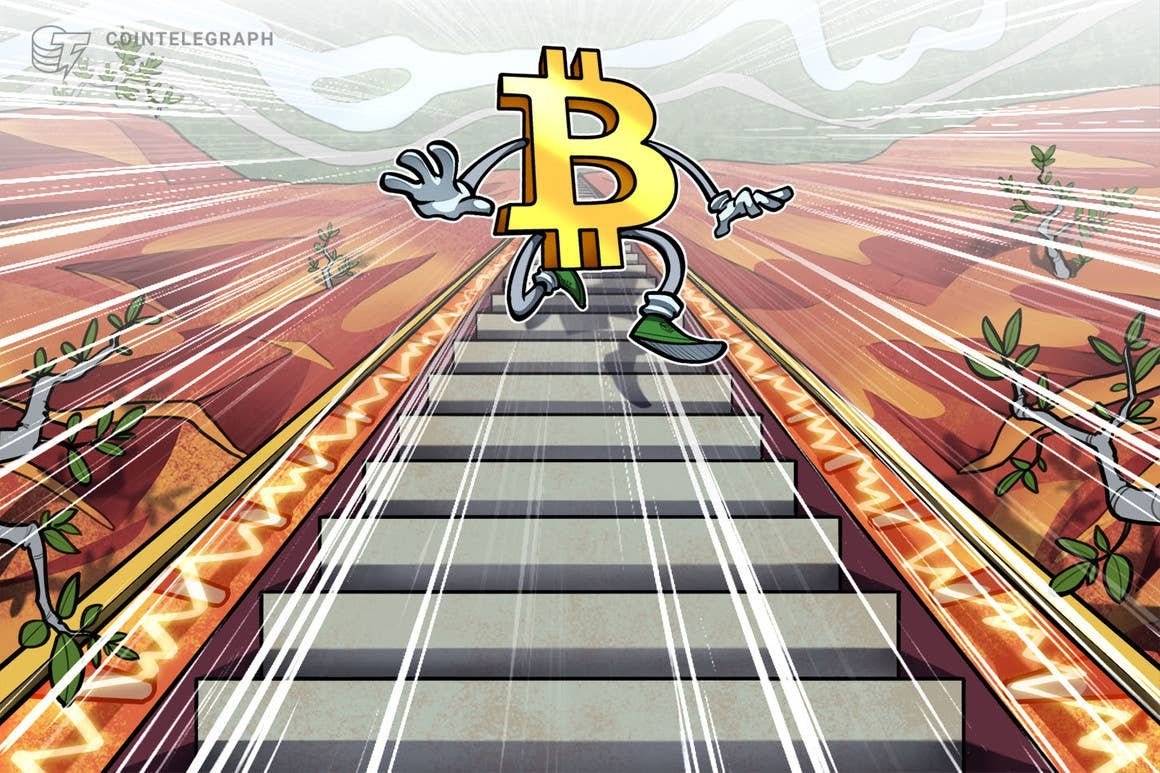
Data from Cointelegraph Markets Pro and TradingView showed BTC/USD losing $43,000 following the news after hitting local highs above $43,800 on Bitstamp.
With the source of the issue unknown at the time of writing, traders were left in the dark as an already sensitive crypto market fell back towards es
“We are investigating issues with the platform and have to temporarily halt trading,” Bitfinex wrote as part of its latest service update.
We are investigating issues with the platform and have to temporarily halt trading. We will keep everyone updated on here and our status page https://t.co/u3pYCVVGQq as we know more. We apologise for the inconvenience.
Tuesday had seen fellow exchange Binance, the largest by volume in the world, suspend trading for two hours as part of scheduled maintenance, this having no significant impact on BTC price action.
With Thursday already set to be a charged day, however, Bitcoin looked set to close out September almost exactly at its predicted “worst case scenario” price of $43,000.
In so doing, the largest cryptocurrency would once again validate predictions made by stock-to-flow model creator PlanB, who also correctly estimated the August close of $47,000.
Fellow trader and analyst Rekt Capital meanwhile reiterated the need for BTC/USD to reclaim its 21-week exponential moving average level (EMA) by the end of Sunday to preserve overall bullish momentum.
Market mimics $10,000 BTC from September 2020
Meanwhile, the overall character of the Bitcoin market was still far from bearish for most.
Related: Bitcoin breaking new highs in Q4 will ‘temporarily turn alts to dust’ — Analyst
Despite lackluster price action, the odds remain for a dramatic return to form in the coming weeks and months, with comparisons to the same period in 2020.
The latest was from Cole Garner, who noted that the large block of buyer support just below $40,000 was reminiscent of the order book setups when BTC/USD was at $10,000 in September last year.
This week also saw long-time pundit Bobby Lee predict not only $100,000 in the mid term, but as much as $200,000 or more for Bitcoin in a new “FOMO rally.”
By Casper Sorensen, Vice President, Customer Experience
The following is the latest update in our series of blog posts describing our commitment to continually improving our customer experience.
One of our Coinbase cultural tenets is Customer Focus. This tenet sets the expectation that we solve customer problems with technology that is instinctive to use and continuously ask “How does this create more value for our customers?”
We recognize that when it comes to our customer support experience, we’re early in our journey of creating more value for customers.
In past blog posts we highlighted how improving our customer support experience is a top priority and this year we have more than quadrupled our capacity and launched new ways to contact us. As the journey continues, we are excited to share that we will implement the capabilities below by year end:
Faster Response Times: Speed matters in the fast moving cryptoeconomy, so we are matching that speed by further increasing our capacity to provide customers with the best response times in the industry. Customers should trust that we will match their sense of urgency when they contact us.
24/7 Live Phone Support: Direct connections matter, so 24/7 phone support will be available for all retail customers who prefer speaking live with an expert. Whether the question is simple or complex, customers in the US, UK, Germany, and Japan will have the option to connect with our in-country based customer service teams before the end of 2021 with further expansion planned for 2022.
Live Messaging: We value our customers’ time, so we’re launching messaging, which means customers can connect with us when the time is right and continue the conversation seamlessly if they have to step away. Our team of customer service experts will be available via messaging 24/7 with the speed our customers expect.
In-Product Support: Ease of use is important, so this year we are creating a more seamless support experience within our iOS and Android apps. This suite of features will provide users with an intelligent and personalized self service experience, saving customers time when they have questions. Live support will be a core part of this experience as well, allowing customers to quickly message our team of experts when needed.
Our goal is to provide our customers with the most trusted customer service experience in crypto. We look forward to providing these new capabilities to you, so please stay tuned as we will continue to update this blog with the status of our journey.
Coinbase To Launch 24/7 Phone Support and Other Enhancements to Customer Support by End of Year was originally published in The Coinbase Blog on Medium, where people are continuing the conversation by highlighting and responding to this story.
This report updates on what 0xB10C, Coinbase Crypto Community Fund grant recipient, has been working on over the first half of his year-long Bitcoin development grant. This specifically covers his work on Userspace, Statically Defined Tracing support for Bitcoin Core.
By 0xB10C, Coinbase Bitcoin developer grant recipient
The reference implementation to the Bitcoin protocol rules, Bitcoin Core, is the most widely used software to interact with the Bitcoin network. Bitcoin Core is, however, a black box to most users. While information can be queried via the RPC interface or searched in the debug log, there is no defined interface for real-time insights into process internals. Yet, some users could benefit from more observability into their node. Hobbyists and companies running Bitcoin Core in production want to include their nodes in their real-time monitoring. Developers need visibility into test deployments to evaluate, review, debug, and benchmark changes. Researchers want to observe and analyze the behavior of nodes on the peer-to-peer network. Exchanges and other services handling large sums of bitcoin want to detect attacks and other anomalies early.
Peeking inside with Userspace, Statically Defined Tracing
The eBPF technology present in the Linux kernel can be used for observability into userspace applications. The technology allows running a small, sandboxed program in the Linux kernel, which can hook into predefined tracepoints in running processes. Once hooked into a tracepoint, the program is executed each time the tracepoint is reached. Tracepoints can pass data, for example, application state. Tracing scripts can further process the data. The practice of hooking into tracepoints in userspace applications is known as Userspace, Statically Defined Tracing (USDT). For example, these tracepoints are also included in PostgreSQL, MySQL, Python, NodeJS, Ruby, PHP, and libraries like libc, libpthread, and libvirt.
The static tracepoints can be leveraged by Bitcoin Core users wishing for more insights into their node. Adding USDT support did not require intrusive changes, and no custom tooling had to be written. When not used, the performance impact of the tracepoints is minimal to non-existent. Only privileged processes can hook into the tracepoints, no information leaks to other processes on the host. These properties make Userspace, Statically Defined Tracing a good fit for Bitcoin Core.
For example, I placed two tracepoints in the peer-to-peer message handling code of Bitcoin Core. For each inbound and outbound P2P message, the tracepoints pass information about the peer, the connection, and the message. This data can be filtered and processed by tracing scripts. As a demo, I have built a P2P Monitor that shows the communication between two peers in real-time. Users can find this script alongside other USDT examples in the contrib/tracing/ directory of the Bitcoin Core repository.
body[data-twttr-rendered=”true”] {background-color: transparent;}.twitter-tweet {margin: auto !important;}
Use-cases for Userspace, Statically Defined Tracing
I list some use-cases for Userspace, Statically Defined Tracing I have thought about or worked on. With only three tracepoints merged, there is plenty of room for developers to add new tracepoints and get creative with tracing scripts. Issue #20981 contains discussion and ideas for additional tracepoints that can be implemented.
Researchers and developers can use the P2P message tracepoints to monitor P2P network anomalies in real-time. One example could be detecting the recent addr message flooding as reported in this bitcointalk.org post. The messages were announcing random IP addresses not belonging to nodes on the Bitcoin network. The flooding has been covered in detail by Grundmann and Baumstark. They discuss that the attacker could obtain the number of connected peers and learn about other addresses, including Tor addresses, the node is listening on. This would reduce the privacy of the node operator. It’s important to stay vigilant to these attacks, discuss them, and then, if needed, react to them.
Similarly, I have been instrumenting the Bitcoin Core network address manager with tracepoints. The addrman keeps track of gossiped network addresses for potential outbound peers connections a node makes. It’s designed to be resiliant against Eclipse Attacks, where a node only has connections to peers controlled by the attacker. The attacker can choose which information to feed to the node, enabling, for example, double-spending attacks. Information about the addresses in the addrman might help detect the build-up of an eclipse attack when combined with other data.
Additionally, these addrman tracepoints can be helpful during debugging and code review. To showcase this, I build a tool that visualizes the addresses in the addrman data structure based on the data submitted to the tracepoints.
body[data-twttr-rendered=”true”] {background-color: transparent;}.twitter-tweet {margin: auto !important;}
A Prometheus metric exporter can also build on top of the tracepoints without requiring additional code in Bitcoin Core. There already exist RPC-based Prometheus exporters and projects like Statoshi. However, RPC-based exporters are limited by the information exposed via the RPC interface, and Statoshi is large a patch-set that requires maintenance on each Bitcoin Core release. I have published an experimental USDT-based exporter called bitcoind-observer that hooks into the three currently merged tracepoints and serves metrics in the Prometheus format. The exporter can be used by everyone currently running a Bitcoin Core node compiled with USDT support. A demo is available on bitcoind.observer.
The already existing tracepoint validation:block_connected can be used to benchmarking block validation. This allows, for example, to compare the initial block download performance between different patches and can aid in detecting performance improvements and regressions. For example, the bitcoinperf project might benefit from such tracepoints. I’ve used the tracepoint to benchmark Martin Ankerls pull request #22702. If merged, the changes he proposes would result in a substantial block validation speed up and reduction in memory usage.
Next steps
I will collect further ideas for tracepoints and implement them alongside example tracing scripts and more tooling. This will also involve communicating with other Bitcoin and Bitcoin Core developers about which tracepoints could be helpful in their projects. An example is Antoine Riard’s cross-layer anomaly detection watchdog which he initially proposed as a new, internal module to Bitcoin Core. However, many of the required events and metrics can be collected by hooking into tracepoints. This means the watchdog could be an external runtime, which would speed up the watchdog development and requires less code and maintenance on the Bitcoin Core side.
If everything goes according to plan, the v23.0 release of Bitcoin Core, expected in early 2022, will include the first set of tracepoints. A goal is to enable USDT support in release builds by default, which still needs some work. Additionally, the tracepoint API should be semi-stable and thus needs testing.
In short: I have been adding tracepoints to Bitcoin Core that users can hook into to get insights into the internal state. The tracepoints are based on Linux kernel technology and do not require intrusive changes or custom tooling. The groundwork is done. Now further tracepoints can be added, and tooling can be written.
Coinbase is officially seeking applications for our 2021 developer grants focused on blockchain developers who contribute directly to a blockchain codebase, or researchers producing white papers. Learn more about the call for applications here.
Userspace, statically defined tracing support for Bitcoin Core was originally published in The Coinbase Blog on Medium, where people are continuing the conversation by highlighting and responding to this story.
By Casper Sorensen, Vice President, Customer Experience
At Coinbase, our goal is to be the most trusted crypto platform. Our security team significantly invests to protect our 68+ million users.
We take many steps to protect our customers from account takeovers (ATOs), which are often caused by phishing campaigns, SIM swaps, or support scams.
First, every customer is opted in to two-factor authentication by default. This level of security is not the default for many traditional financial institutions and other technology platforms. But at Coinbase, we believe this extra helps provide important baseline protection for our customers.
Second, we require device verification for all customers when they log in from a new, unrecognized device. This provides yet another line of defense against potential attacks.
Finally, we encourage customers to use the most advanced hardware security keys available, such as Yubikeys. Yubikeys provide the most powerful two-factor authentication available on the market today.
As a result of these protection efforts, only a small number (less than .01%) of customers have been impacted by account takeovers. In the rare event that a customer notices a potential account takeover, we provide multiple channels for customers to quickly and easily lock their account so no further unauthorized activity can take place.
Today, we’re beginning to roll out phone support for ATOs, to provide customers with a live agent to kick off an investigation. If you believe you’re a victim of an ATO, please call +1 888 908–7930 or visit our support page to protect your account and get help.
Since January, we have improved our customer support by increasing our support staff headcount by 5x, providing self-service messaging prompts within the product itself to guide our customers through challenging transactions, and we’re scheduled to roll out live messaging as a new support channel later this year to provide real time support for our customers.
Our goal is to protect our customers as they participate in the cryptoeconomy while also providing them the best user experience possible. That said, we recognize that our work is never done when it comes to security and support — and they remain a top priority for Coinbase.
Continuing our commitment to customers: introducing phone support for ATOs was originally published in The Coinbase Blog on Medium, where people are continuing the conversation by highlighting and responding to this story.
Data from Cointelegraph Markets Pro and TradingView showed BTC/USD rising to tackle a giant sell wall during Saturday, only to reverse downwards to Friday’s levels.
As Cointelegraph reported, the area of seller pressure from $47,000 and upwards had been a formidable feature on the daily chart throughout the week, with Bitcoin taking several days to prepare its attack.
In the event, the wall was only partially broken before momentum ran out and BTC/USD returning to more familiar territory.
At the time of writing, BTC price action focused around $46,500, a classic “Bart Simpson” structure characterizing the past 24 hours’ movements.
“Nothing special about this move, it’s just typical for a weekend,” Cointelegraph contributor Michaël van de Poppe summarized.
“However, the heavy resistance zone was hit between $47-49K, and no breakthrough happened for Bitcoin. Remaining cautious.”
Suitable volume would be needed to sustain another run-up and flip fresh resistance levels to support — a breakout without that volume could ultimately fail and cost overly optimistic traders
Fellow trader and analyst Rekt Capital meanwhile eyed the forthcoming daily close for confirmation of the $46,000 support zone reached just a matter of days ago.
#BTC is now in the process of a retest attempt of its Ascending Triangle
A 4HR Close above the top of the triangle would be great (left chart)
After cementing $2 support, ADA/USD thus went on to hit its highest levels since mid May, when it came off $2.50 all-time highs amid a sea of change in Bitcoin.
Singapore, Aug 9th, 2021 — Mimo, home of the world’s first decentralized, algorithmically-pegged EUR token, is now officially live on Polygon.
Polygon lands a massive integration with Mimo. With easy access to blockchain services all on the strength of a euro stable token, the newly merged DeFi project brings a valuable utility to the network.
Ren, a network for cross-chain exchange, announced that Railgun, a smart contract system providing privacy to crypto users via zero-knowledge proofs (zk-SNARKs), now supports renBTC and renZEC.
Integration of Ren with Railgun allows users to take advantage of Railgun’s privacy attributes and combine it with interoperability.
By using Railgun, user’s wallet addresses will be removed from their actions and transactions on blockchains where that information was previously public. Railgun users will enjoy privacy when trading, using leverage platforms, and when providing liquidity to decentralized applications (dApps).
“The collaboration with Railgun will continue to be fruitful for both communities; by helping to expand each other’s networks and bring interoperability and privacy features to both ecosystems. The Railgun community will also be exploring RenJS to enable native deposits into their ecosystem.” – The Ren Team
How To Use Railgun
Bridge BTC or ZEC to Ethereum via RenBridge: bridge.renproject.io
Deposit assets into the Railgun ecosystem by following these directions.
Utilize these assets in DeFi as you would otherwise.
By Casper Sorensen, Vice President, Customer Experience
The following is the latest update in our series of blog posts describing our commitment to continually improving our customer experience.
At Coinbase, we strive to be the most trusted and easy to use platform to help our customers access the cryptoeconomy. We recognize the challenges some of our customers have experienced with their Coinbase accounts, and we want to reiterate that continually improving the customer experience remains a top priority. In my last post, we committed to providing you ongoing updates on the investments we’re making to better serve customers. Since then, we’ve continued to add even more support staff, improve and simplify our products, and identify additional opportunities to serve you more quickly and competently. Here’s an update:
Reduced customer support backlogs.
We have recently eliminated our backlog across most queues and have sufficient agent capacity in place to minimize the risk of potential future backlogs. Since January, our customer contact rate (the number of times customers contact customer service divided by the number of monthly transacting users) has been reduced by 70%. Over that same period, we saw our total number of verified users increase from 43 million to 56 million.
But we realize we still have work to do. Here’s what we’re doing to make our customer service even better:
Adding more support staff.
One of the biggest investments we’ve made is in our support staff. We now have more than 3,000 people dedicated to solving customer issues. This represents a more than 5x increase in support staff since January. We’re continuing to hire great people to quickly support our customers’ needs, as well as ensure we’re meeting customers where they are, which includes a growing number of social media platforms.
Offering live support.
We’re on track to support customers live, via chat and phone. We’ve already begun rolling out a virtual assistant to help customers navigate common issues, and live chat via messaging is coming later this year. We’re working to offer live phone support in the coming months to assist customers with several issues including account security.
Keeping you safe.
Coinbase takes extensive security measures to ensure your account and cryptocurrency investment remains as safe as possible. In addition, we provide ongoing education and resources for how to protect your accounts from Account Take-Overs — also referred to as “ATOs”. This happens when a bad actor is able to use your login credentials to access your account and perform fraudulent activity. While ATOs have only impacted a very small subset of our customers (a tiny fraction of one percent), we recognized that when they do occur, they can cause stress and confusion for our customers. That’s why we are standing up a phone support team which will guide these customers through the necessary steps to quickly lock down accounts, and restore access.
Improving product User Experience (UX) and workflows.
Our product teams continually ship new features designed to simplify and improve our products, including in-product alerts to provide relevant and useful information to customers. Through systematic customer pain point identification and close collaboration with our engineering team, we’ve been able to further reduce the possibility of high severity issues. For example, we’re implementing two-factor authentication recommendations for users with high balances to provide these users with additional security. By helping our customers avoid potential issues in the first place, we’ve made a meaningful impact on the number of customers coming to customer support for help. Further, we are hyper-focused on making sure our site is stable, ensuring during bull and bear markets you have the ability to buy and sell.
Expanding education and training tools.
We’re improving our self-service online Coinbase Help resources. The cryptoeconomy continues to rapidly change, with new technologies introduced every week. Through initiatives like Coinbase Learn, we’re committed to helping our customers navigate these changes and our platform of products.
We appreciate your patience as we continue to improve the Coinbase experience for our customers. We will never tire in our pursuit of creating more value for our customers. For support questions, please visit our support page.
Customer Support Improvements at Coinbase was originally published in The Coinbase Blog on Medium, where people are continuing the conversation by highlighting and responding to this story.
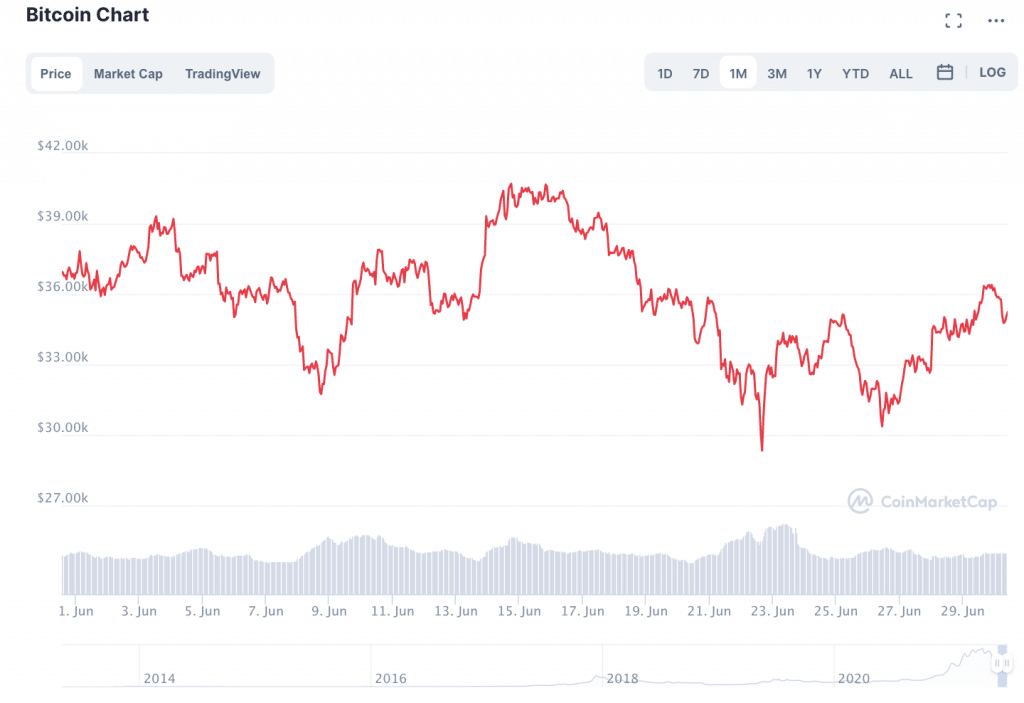
As the month of June draws to a close, Bitcoin is continuing to trade within the $30K – $40K range for the fourth week in a row.
Justin Hartzman, Chief Executive of Canadian cryptocurrency trading platform, CoinSmart.
Bank Account Alternative. Business Account IBAN.
Justin Hartzman, Chief Executive of Canadian cryptocurrency trading platform, CoinSmart, told Finance Magnates that: “It’s no secret that the crypto market has more or less been moving along sluggishly.”
Indeed, BTC still does not seem to have enough momentum to make strong moves one way or the other. While BTC briefly dropped below $30K earlier this month, a move that many feared would lead to further drops, it quickly recovered to levels just over $30K.
“During this recent surge, the Bitcoin price managed to flip the 20-day simple moving average from resistance to support,” Hartzman explained. “This is crucial as the bulls have gained a strong support wall which could prevent a further fall.”
On the other hand, BTC does not seem to have enough support to break through the other side of the $30K – $30K range, either. “The Bitcoin price faces a major resistance wall between $36,500 – $38,500.”
Was Bitcoin Oversold in May?
According to IntoTheBlock’s IOMAP metric, “around 1.65 million addresses had purchased ~850,000 BTC tokens at this level,” Hartzman explained. IOMAP, which stands for “Out of the Money Around Current Price,” identifies the ten most relevant clusters of investor positions at a range of +-15% of Bitcoin’s price at any given moment.
Doug Schwenk, Chairman and Chief Executive of Digital Assets Research (DAR).
“It’s likely true that BTC’s price was overly-impacted by some negative news events in the past weeks.”
“If the buyers somehow flip this wall from resistance to support, $40,000 is definitely within reach,” he continued. “It depends on the appetite for long-term investors in further accumulation of BTC during this market phase.”
Doug Schwenk, Chairman of Digital Asset Research (DAR), added that Bitcoin’s price movement has “been very positive over the past couple of days, and could continue upward.”
“BTC trades largely on sentiment, and if that continues to be positive in the coming hours and days, we could easily see BTC trade above $40k. It’s likely true that BTC’s price was overly-impacted by some negative news events in the past weeks which has seen it trade lower than anticipated.” Indeed, the government of China has been cracking down on cryptocurrency mining, leading to some uncertainty in Bitcoin markets. However, some analysts believe that this crackdown will not hinder BTC’s growth in the long term.
Banning Bitcoin mining makes the network more resilient.
Future generations will look at this time and it’ll be obvious that a decentralised monetary network at scale is more resilient than a nation state acting against it. https://t.co/8pTe4snjpZ
Exchanging Gift Cards to Crypto, Bitcoin’s Adoption Going MainstreamGo to article >>
Of course, “It’s always at risk of falling further, especially as an asset that trades on sentiment and doesn’t yet have a strong economic use case.” However, BTC’s recent sell-off “has been perceived as over done, which likely brings buyers back into the market. Only time will tell if that view will turn into action.”
Leverage Has Been Purged from Bitcoin, Possibly Promoting Healthier BTC Growth
This prolonged period of relative stagnancy in the price of Bitcoin seems to reflect the possibility that much of the leverage that propped the Bitcoin price up earlier this year has been purged from the market.
Indeed, the elimination of leverage from Bitcoin was cited as the reason for BTC’s price crash in May. Over the course of the month, the price of BTC dropped from $58,000 to $34,000; at its lowest point, the price of Bitcoin was nearly $32K.
Tom Howard, Head of Business Development & Growth at PowerTrade, told Finance Magnates that: “Funding rates appear to have stabilized near zero or slightly negative, which indicates the overexposed bulls have rinsed out and bears are being cautious.”
“Realized volatility has fallen, indicating that over-leveraged positions have been closed out, and that market strength is building.”
Tom Howard, Head of Business Development & Growth at PowerTrade.
Indeed, while leverage seems to have been the driving force that drove the price of Bitcoin to unprecedented heights earlier this year, the market structure was practically wiped away in an instant. A Bitcoin that is overly pumped by leverage has a house built on the sand. Now that leverage has been expelled, BTC may have a shot at building its house on the rock.
In the Short-Term, “De-Levered Markets Get Crushed”
American entrepreneur-turned-crypto enthusiast, Mark Cuban Tweeted about the effects of leveraged trading in the midst of the price drop: “De-Levered Markets get crushed,” he said.
“Doesn’t matter what the asset is. Stocks. Crypto. Debt. Houses. They bring forced liquidations and lower prices. But, crypto has the same problem that HFTs (high-frequency traders) bring to stocks, front-running is legal, as gas fees introduce latency that can be gamed That makes drops drop faster, and gains go up faster,” he said.
While the price drop seemed to foster negative opinions about Bitcoin related to short term price volatility, some analysts believe that the expulsion of leverage from the market is a positive thing for BTC over the long term. Hartzman said that: “this is a good thing, as some semblance of normalcy can now return to the market.”
“There was way too much leverage for market dynamics to remain sustainable over the long-term.”
“Altcoins Are Seeing a Surge That’s Not Necessarily Reflected in Bitcoin Dynamics.”
While Bitcoin may be moving sluggishly, altcoins are seeing much stronger price movements. “Bitcoin is the market leader so it definitely has a major impact on the price movement of altcoins,” Hartzman told Finance Magnates.
“Even so, altcoins are seeing a surge that’s not necessarily reflected in the bitcoin dynamics. There’s been renewed interest in DeFi and many investors are taking the low volatility in BTC prices to revisit the fundamentals of other promising crypto projects.”
Additionally, Schwenk told Finance Magnates that: “We see continued interest in a rotation from BTC into so-called altcoins.”
“Some buyers have been quicker to act on that interest and some are waiting. There is a strong narrative to altcoins as an alternative on several metrics including, ESG and fundamentals. We think, based on client feedback, that this trend will continue over the next year as Ethereum transitions to proof-of-stake and changes happen in the altcoin ecosystem.”
What are your thoughts on Bitcoin’s price movements and their effects on the altcoin market? Let us know in the comments below.