Tag: Stronger

  • Market May Be Suffering But Bitcoin And Ethereum Will Pull Back Stronger, Bloomberg Analyst

    Market May Be Suffering But Bitcoin And Ethereum Will Pull Back Stronger, Bloomberg Analyst

    [ad_1]

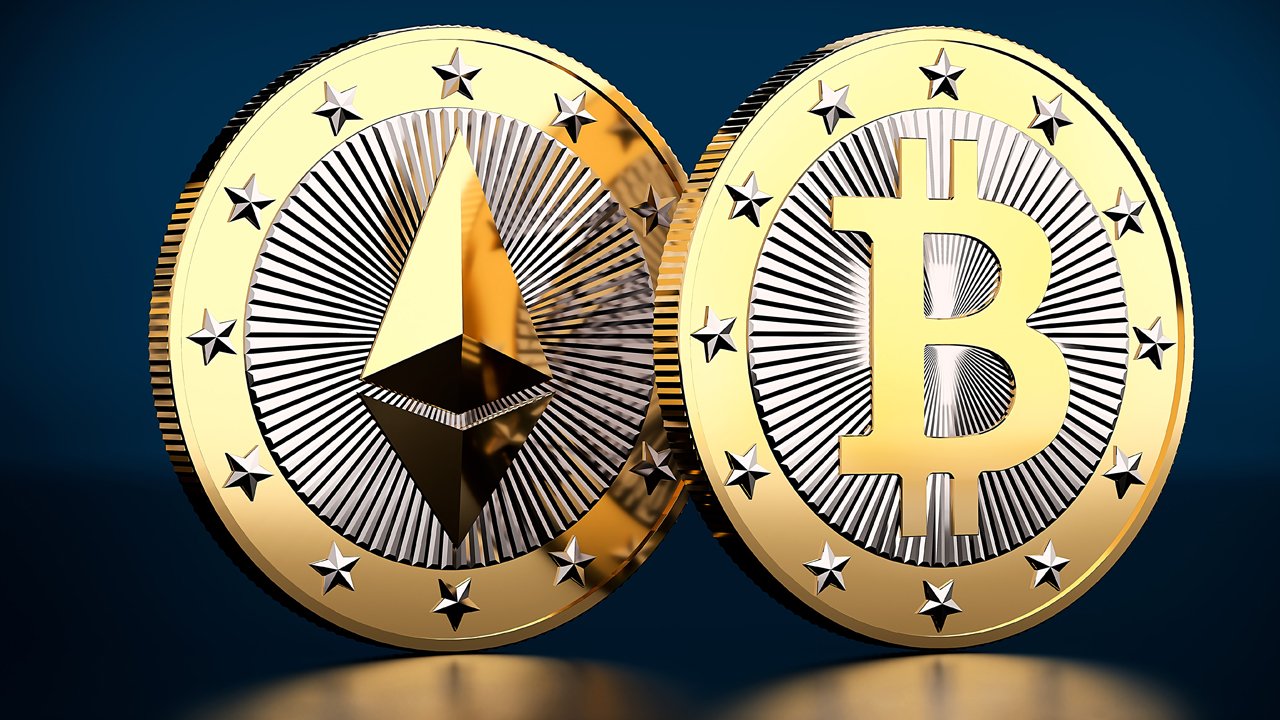
    Bitcoin and Ethereum have led the market in the recent downturns that have rocked the market. These two digital assets are no doubt market movers in their own right and as such, uptrends or downtrends begin with them. It has raised concern among investors who believe that the market is finally heading into a stretched-out bear market. However, not everyone believes this as some believe the current downtrend is only temporary.

    Mike McGlone On Bitcoin And Ethereum

    Mike McGlone is one of the leading Bloomberg analysts. Focused on the financial market, he authors a newsletter that shares his thoughts around various markets, including stocks and the crypto market. McGlone is currently one of the people with the most optimistic view of the market despite the various dips that have rocked the space. Most especially on the top digital assets in the crypto market.

    Related Reading | Solo Ethereum Miner Hits The Jackpot With 170 ETH For Mining A Block

    McGlone who was on The Wolf of all Streets podcast shared some interesting thoughts on the market, putting the analyst at an overall bullish position for bitcoin and ethereum.

    Bitcoin price chart from TradingView.com

    BTC down to $38K | Source: BTCUSD on TradingView.com

    The analysts point to the correlation with the stock market. This, he explains, is getting ready for a pullback and when this happens, bitcoin and by extension, ethereum, would benefit from this correction.

    “Here’s my prediction: the markets pull back,” said Mike McGlone. “We finally get a 10%, maybe 20%, correction in the stock market. All correlations are one, which is usually the way it works. Bitcoin comes out better off for it. Ethereum, potentially too.”

    This pullback though is only reflected on the top two cryptos which McGlone expects to recover after this.

    Other Cryptos May Not Fare Well

    Talking about other cryptocurrencies, the analyst took a more bearish stance on them. The positivity displayed in the podcast towards top coins bitcoin and ethereum did not translate to the rest of the market which he does not expect to fare well despite the pullback.

    Related Reading | Ethereum Fee Averages Remain Above $30 Despite 35% Drop. Price Pump Incoming?

    McGlone especially focused on dog coins which were arguably the winners of 2021. The craze which saw various meme tokens with no utility whatsoever soar to billions of dollars in valuation was referred to as “stupid” by the Bloomberg analyst.

    “The rest of the space, we do have to admit, the speculation you saw in the dog coins last year was indicative of this. It’s just stupid and we’re going to tell the story to our grandkids,” he said.

    Even for a digital asset like Solana which had a largely successful year, McGlone did not seem excited about it. He lumped SOL in with the dog coins, which he said were the riskiest of assets. “The bottom line is they are the riskiest of assets,” said McGlone. “There’s massive speculation. I mean the dog coins and even in things like Solana,” he added.

    Featured image from Bitcoin news, chart from TradingView.com

    [ad_2]

    Source link
  • Stronger crypto regulations in US won’t necessarily help prevent fraud, says Okcoin CCO

    Stronger crypto regulations in US won’t necessarily help prevent fraud, says Okcoin CCO

    [ad_1]

    Though Okcoin chief compliance officer Megan Monroe said that there are still certain grey areas over cryptocurrencies in the United States, further regulation may not be the best solution.

    In a statement to Cointelegraph, Monroe said current U.S. regulations are sufficient to police cryptocurrency exchanges, token issuers and custody wallet providers, but “jurisdictional boundaries of these federal financial regulators are neither clear nor collaborative.” Rather, she advocated for a framework with greater clarity to determine which crypto firms should be subject to regulation and let investors know which protections are available.

    “A clear regulatory framework with established jurisdictional boundaries, flexible compliance standards and open communication channels with registrants (as well as with state regulators) would be a good way to initiate an evolving framework for market participants to grow their businesses,” said the Okcoin chief compliance officer. “[This] would provide retail customers that seek to work with regulated entities a clearer understanding of the investor protections that would be available to them.”

    She added:

    “We do not believe that further regulation will necessarily prevent fraud and platform abuse […] Fraud should not be limited to focusing on retail customer regulatory compliance issues in the securities markets.”

    Two of the major government agencies handling digital asset regulation in the United States, the Securities and Exchange Commission, or SEC, and the Commodity Futures Trading Commission, or CFTC, have different jurisdictional claims regarding crypto.

    The SEC often determines whether tokens are securities using the Howey Test, with Chairperson Gary Gensler arguing the crypto industry, including decentralized exchanges, falls within the regulatory purview of the federal agency. However, former CFTC Chair Christopher Giancarlo has claimed that cryptocurrencies are commodities and thus would be subject to regulation by the CFTC.

    The apparent lack of clarity can be seemingly confusing to crypto firms that are considering relocating to the U.S., or local ones making the transition to the digital space. David Schwartz, chief technology officer of Ripple Labs, told Cointelegraph earlier this year that it was “difficult to figure out which laws apply and how they apply to something new,” like cryptocurrencies or blockchain technology.

    “Over time, the regulators have educated themselves about the industry and expanded their scope to incorporate new blockchain technology, such as decentralized exchanges and DApps,” said Monroe. “But, the regulations still lag behind the industry innovation, which is why the regulators have yet to provide comprehensive regulatory guidance on decentralized finance technology.”

    Related: Will regulation adapt to crypto, or crypto to regulation? Experts answer

    The Okcoin chief compliance officer said that an “incubator” approach might be one possible solution to this “patchwork of financial regulations,” wherein crypto traders and businesses could operate without fear of legal action for a set period of time. She also encouraged projects to clearly identify the risks to both investors and users, and for greater communication and collaboration between agencies like the CFTC, SEC and Financial Crimes Enforcement Network.