Tag: Stock

  • Bitcoin Hits Two-week High Imitating The Stock Rally

    Bitcoin Hits Two-week High Imitating The Stock Rally

    [ad_1]

    Cryptocurrencies are seeing a significant recovery as investors take advantage of the recent stock market rally and increased risk appetite. Bitcoin hits its highest in two weeks, extending gains from earlier this week that had seen it climb to $41,938 per coin on Saturday morning (Jan 24th).

    Related Reading | Bitcoin mimics stocks rally, hits two-week high

    Bitcoin, the largest digital currency globally, has hit $41,938. It is 16% high from Thursday’s low and 27% from the current year’s low of $32,950.

    Bitcoin Price
    Bitcoin price hits two weeks high of $41,938. Source: Tradingview.com

    Ether, the second-largest digital currency, has scaled new heights, reaching $3K for the first time since January 21.

    Bitcoin recorded its biggest single-day gain since mid-June as fears of faster than expected Fed rate hikes led to an increase in inflation, with the cryptocurrency also being roiled by technological innovation. However, Friday’s 11% rise was enough to consider haven against this trend and get some positive press at least until Monday when everything will likely go back down again.

    Bitcoin Price Recovery: Thanks to Amazon

    Despite a long week of volatility from earnings, US stocks ended the week strong. The tech-heavy NASDAQ secured gains thanks to Amazon’s robust growth and Facebook owner Meta Platforms’ disappointing results that evening gave them more confidence in their business models moving forward.

    Related Reading | Amazon Strong Growth Attributed to the Cloud Despite Retail Headwinds

    Bitcoin has moved seamlessly into the mainstream. That resulted in investors looking to get in on the action when risk appetite is low. Ed Hindi, Chief Investment Officer of Tyr Capital, said;

    “The current panic and volatility surrounding bitcoin are based on a fundamental misunderstanding of it as an asset class. When valuations on the Nasdaq fall, misguided institutional investors start liquidating bitcoin positions en masse as if it were a tech stock.”

    The recent rise in the stock market has given other listed crypto assets a boost. As a result, some currencies even reached new highs.

    BTC Price Prediction

    Though prices for Bitcoin have seen a significant drop in the last week of January and were sitting at 47% of their all-time high, the cryptocurrency recovered slightly after reaching a low of $33K on Jan 24, 2022, and is worth about $42k.

    Buy, sell and hold? Analysts are split on whether or when to buy cryptocurrency. But more than half believe this is a good time for buyers, with only 45% disagreeing.

    The experts from the top fintech companies predict that by the end of 2022, bitcoin will reach an all-time high of $93,717 – more than 24K dollars higher than its current all-time high price.

    This is a great time to invest in cryptocurrency. Experts predict that by the end of 2025, bitcoin will trade at $192k and mount up over 300% from its November 2021 peak and reach nearly half a million dollars by 2030. While these predictions may seem lofty goals at first glance, they’re significantly less than what experts predicted back in July 2021 when their last forecast said bitcoins prices could reach 265k or 706K, respectively.

                       Featured image from Pixabay, chart from TradingView.com

    [ad_2]

    Source link

  • Bakkt stock goes parabolic, GBTC outpaces BITO ETF and Tom Brady offers 1 BTC for 600th touchdown ball: Hodler’s Digest, Oct. 24-30

    Bakkt stock goes parabolic, GBTC outpaces BITO ETF and Tom Brady offers 1 BTC for 600th touchdown ball: Hodler’s Digest, Oct. 24-30

    [ad_1]

    Coming every Saturday, Hodler’s Digest will help you track every single important news story that happened this week. The best (and worst) quotes, adoption and regulation highlights, leading coins, predictions and much more — a week on Cointelegraph in one link.

    Top Stories This Week

    Bakkt shares skyrocket after partnering with Mastercard and Fiserv

    On Monday, the share price of the Intercontinental Exchange-backed crypto services company Bakkt (BKKT) surged 120% on the back of two major partnerships with Mastercard and Fiserv. 

    Both partnerships were announced on Monday, with the Mastercard deal enabling Bakkt’s U.S. customers to buy, sell and hold crypto assets via custodial wallets. Meanwhile, the strategic collaboration with global payment provider Fiserv gives Bakkt the chance to offer merchant-facing digital asset services. 

    The news sparked a bullish rally that saw BKKT surge by 120% to sit at $30.60 by the end of trading on Monday.


    ProShares Bitcoin-linked ETF launches on NYSE

    ProShares achieved a major milestone for the crypto sector this week after the firm debuted its Bitcoin (BTC) futures-based exchange-traded fund (BITO) on the New York Stock Exchange (NYSE) on Tuesday. 

    ProShares’ Bitcoin Strategy ETF saw around $1 billion in volume on its opening day, with Bloomberg analysts stating that it was arguably the largest first-day volume for an ETF in terms of “natural” or “grassroots interest.” 

    After two days on the NYSE, ProShares’ ETF became the fastest fund ever to reach $1 billion in assets under management. Following ProShares’ ETF, many onlookers are waiting to see how the next in line performs. At the time of writing on Friday, Valkyrie just launched its Bitcoin futures ETF on the NYSE.


    GBTC delivered better returns than Bitcoin ETFs last week

    While there has been a lot of hype surrounding the long-awaited launch of the first U.S. Bitcoin ETFs, Grayscale’s executives highlighted that the Grayscale Bitcoin Trust (GBTC) actually outperformed them last week. 

    Over a seven-day period starting from Oct. 19, the industry stalwart GBTC returned around 8.8%, while the new and shiny ProShares Bitcoin Strategy ETF dipped around 0.5%.

    Despite Grayscale outlining plans to convert GBTC into an ETF, Barry Silbert, CEO of Grayscale’s parent company Digital Currency Group, was still keen to rub salt in the wound, as he highlighted GBTC’s higher trading volumes compared to BITO. As of Monday, GBTC’s volume totaled $374 million, while BITO managed to generate $286 million.


    Volt Equity’s ‘Bitcoin revolution’ ETF goes live on NYSE

    Speaking of ETFs, Volt Equity’s Bitcoin ETF went live on the New York Stock Exchange on Oct. 28. 

    The Volt Crypto Industry Revolution and Tech ETF, which is trading under the ticker BTCR, opened at $21 in a nod to Bitcoin’s max supply of 21 million BTC. BTCR tracks companies with significant exposure to Bitcoin, such as MicroStrategy, Tesla, Twitter, Square, Coinbase and several BTC mining firms. 

    According to Volt Equity, the ETF is implementing a management approach informed by PlanB’s Bitcoin stock-to-flow model, a quantitative model intending to predict BTC’s price. Volt Equity told Cointelegraph that the firm will gauge the market behavior of Bitcoin and adjust its exposure to mining firms if the asset drops in value significantly.


    NFL quarterback Tom Brady gives fan 1 BTC for his historic 600th-touchdown-pass ball

    Superstar NFL quarterback Tom Brady almost lost the ball he threw for his record 600th touchdown pass this week after wide receiver Mike Evans mistakenly handed it off to a fan after scoring.  

    Evans apparently did not realize that it was the quarterback’s record pass at the time. However, Brady revealed after the game on Monday that he offered the fan 1 BTC as thanks for handing it back quickly.  

    The Tampa Bay Buccaneers also agreed to give the fan two signed team jerseys, a helmet with Brady’s autograph, Mike Evans game cleats as well as a jersey signed by the wide receiver, season tickets for the rest of the year and through 2022, as well as a $1,000 credit towards purchases at the team’s store. Many onlookers have complained that it was a weak offer, as the ball could have sold for a much higher value via auction.


    Someone bought $3,400 worth of SHIB last August. It’s now worth $1.55 billion

    On Thursday, an unknown crypto billionaire was unveiled after their wallet address was shown to be worth $5.63 billion in SHIBA INU (SHIB). 

    The anonymous SHIB hodler’s $3,400 investment in the dog-themed token in August 2020 equated to a value of $1.55 billion. Out of the total of 44 purchases since that time, the investor never spent more than $3,200 on the asset at one time.  

    SHIB has gained around 85,437,459% over the past 12 months, and the asset temporarily ousted Dogecoin (DOGE) as a top-10 ranked coin this week. SHIB surged to a market cap of $40.3 billion on Thursday, while DOGE tallied in at $31.6 billion at the time. 

    SHIB has since seen a sharp pullback, allowing DOGE to briefly regain its status as the number one memecoin. At the time of writing, DOGE’s market cap sits at $36.1 billion, while SHIB’s figure stands close behind at $38.5 billion.


    Winners and Losers


    At the end of the week, Bitcoin (BTC) is at $62,540, Ether (ETH) at $4,420 and XRP at $1.08. The total market cap is at $2.66 trillion, according to CoinMarketCap. 

    Among the biggest 100 cryptocurrencies, the top three altcoin gainers of the week are SHIBA INU (SHIB) at 164.03%, Curve DAO Token (CRV) at 58.39% and Decentraland (MANA) at 54.46%. 

    The top three altcoin losers of the week are OKB (OKB) at -23.74%, XDC Network (XDC) at -12.94% and Stacks (STX) at -9.66%.

    For more info on crypto prices, make sure to read Cointelegraph’s market analysis.


    Most Memorable Quotations


    “Anybody that does the homework […] ends up investing into it. Look at Ray Dalio, a Bitcoin skeptic, now a Bitcoin investor.”

    Anthony Scaramucci, founder and managing partner of SkyBridge Capital


    “#Bitcoin is the most practical solution for a consumer, investor, or corporation seeking inflation protection over the long term.”

    Michael Saylor, CEO of MicroStrategy


    “To a degree, we think rising regulations could be a positive for Coinbase’s competitive positioning, particularly versus business models that predominantly rely on markets being unregulated.”

    Peter Christiansen, Citi analyst


    “As of yesterday, the total size of the digital asset market was $2.7 trillion. Among that $2.7 trillion, nearly 60% were commodities. […] Given the size, the scope and the scale of this emerging market, how it’s interfacing and affecting retail customers, and with the scale of the growth being so rapid, potential financial stability risks in the future, I think it’s critically important to have a primary cop on the beat.”

    Rostin Behnam, acting chairperson of the U.S. Commodity Futures Trading Commission


    “Creators, owners and operators or some other persons who maintain control or sufficient influence in the DeFi arrangements, even if those arrangements seem decentralized, may fall under the FATF definition of a VASP where they are providing or actively facilitating VASP services.”

    Financial Action Task Force


    “GameStop is looking for a unique individual who can help accelerate the future of gaming and commerce. In this future, games are the places to go, and play is driven by the things you bring. Future creators won’t just build games but also the components, characters, and equipment. Blockchains will power the commerce underneath.”

    GameStop job post


    “The conversation has shifted dramatically, where I think there’s a little bit of an understanding [from professional sports organizations] that there’s something here. I meet very little resistance these days that NFTs are a thing.”

    Caty Tedman, head of partnerships at Dapper Labs


    “There may be some parallels here between the 2017 bull run and this 2021 cycle; however, adoption is far greater, open interest is higher, and the utility of crypto is unrecognizably farther along than in 2017.”

    Steven Gregory, CEO of Currency.com


    Prediction of the Week 


    Bitcoin price dip matches October 2017 with BTC ‘explosion’ still forecast before 2022

    Bitcoin’s price sustained a bit of turbulence this week, trading above $63,000 before falling down to around $58,000, based on data from Cointelegraph’s BTC price index. Following the dip, Bitcoin’s price rallied back up past $62,000. 

    Zooming out on a longer time horizon than just this week reveals similarities in price action between 2021 and 2017 (one of the crypto market’s notable bull runs) according to charting from Twitter user Smart Crypto. The Twitter personality posted a tweet showing two charts side by side — one from 2017 and one from 2021. 

    Both charts showed Bitcoin’s price action from July until the end of the year. The charts look as if 2021 rhymes with 2017 in terms of Bitcoin’s price action. If BTC’s chart continues playing out similarly to 2017, the asset could be in for a notable rise in value ahead. Smart Crypto’s tweet was seemingly based on analysis from Twitter user TechDev. 


    FUD of the Week 


    CFTC reportedly investigating decentralized prediction platform Polymarket

    Earlier this week it was reported that the Commodity Futures Trading Commission (CFTC) was investigating Polymarket, a New York-based decentralized prediction market platform. 

    The news was first reported by Bloomberg, citing anonymous sources who claimed that the CFTC was looking to gauge whether the firm was enabling customers to trade binary options and conduct swaps that should be registered with the financial regulatory agency. 

    “Polymarket is firmly committed to complying with applicable laws and regulations and to providing information to regulators that will assist them with any inquiry,” a spokesperson from Polymarket said.


    SEC reportedly knocks back Valkyrie’s leveraged Bitcoin ETF

    It was reported on Thursday that the U.S. Securities and Exchange Commission (SEC) had knocked back two Bitcoin ETF applications from Valkyrie and Direxion. 

    On Tuesday, Direxion filed for a product that would enable investors to buy contracts that short the price of BTC, while Valkyrie applied for a leveraged BTC futures ETF the following day. 

    As many onlookers have pointed out, the SEC appears to specifically favor Bitcoin ETFs that offer direct exposure to futures contracts, as opposed to funds that are directly backed by the asset, or ones that are leverage-based and shorting-focused in this instance.


    US gov attorneys to target individuals and gatekeepers for crypto prosecutions

    A group of high-ranking U.S. government attorneys from the SEC, Department of Justice (DOJ) and CFTC outlined their agencies’ directives for white-collar crypto enforcement on Wednesday. 

    The SEC’s enforcement director, Gurbir Grewal, said the regulator is putting its focus on gatekeepers, as he noted that “they’re the first line of defense more often than not against all manner of misconduct.” Grewal added that the SEC is also keeping an eye on unregistered crypto exchanges, unregistered and fraudulent initial coin offerings, and crypto-lending platforms.

    Nicholas McQuaid, the principal deputy assistant attorney general of the DOJ’s Criminal Division, said that his agency is looking to crack down on fraudulent individuals specifically. While Vincent McGonagle, the acting director of the Division of Enforcement for the CFTC, said that regulators are focusing on the wild west of decentralized finance (DeFi).


    Best Cointelegraph Features

    We haven’t even begun to tap into the potential of NFTs

    Nonfungible tokens will become a critical component of all brands’ marketing and digital strategy initiatives.

    Why now? SEC took eight years to authorize a Bitcoin ETF in the US

    The SEC has been holding steady for years, but the real-world dynamics of crypto adoption and maturation rendered an ETF approval all but inevitable.

    Crypto City: Guide to New York

    The city that never sleeps is one of the major hubs in the crypto world despite the best efforts of regulators.
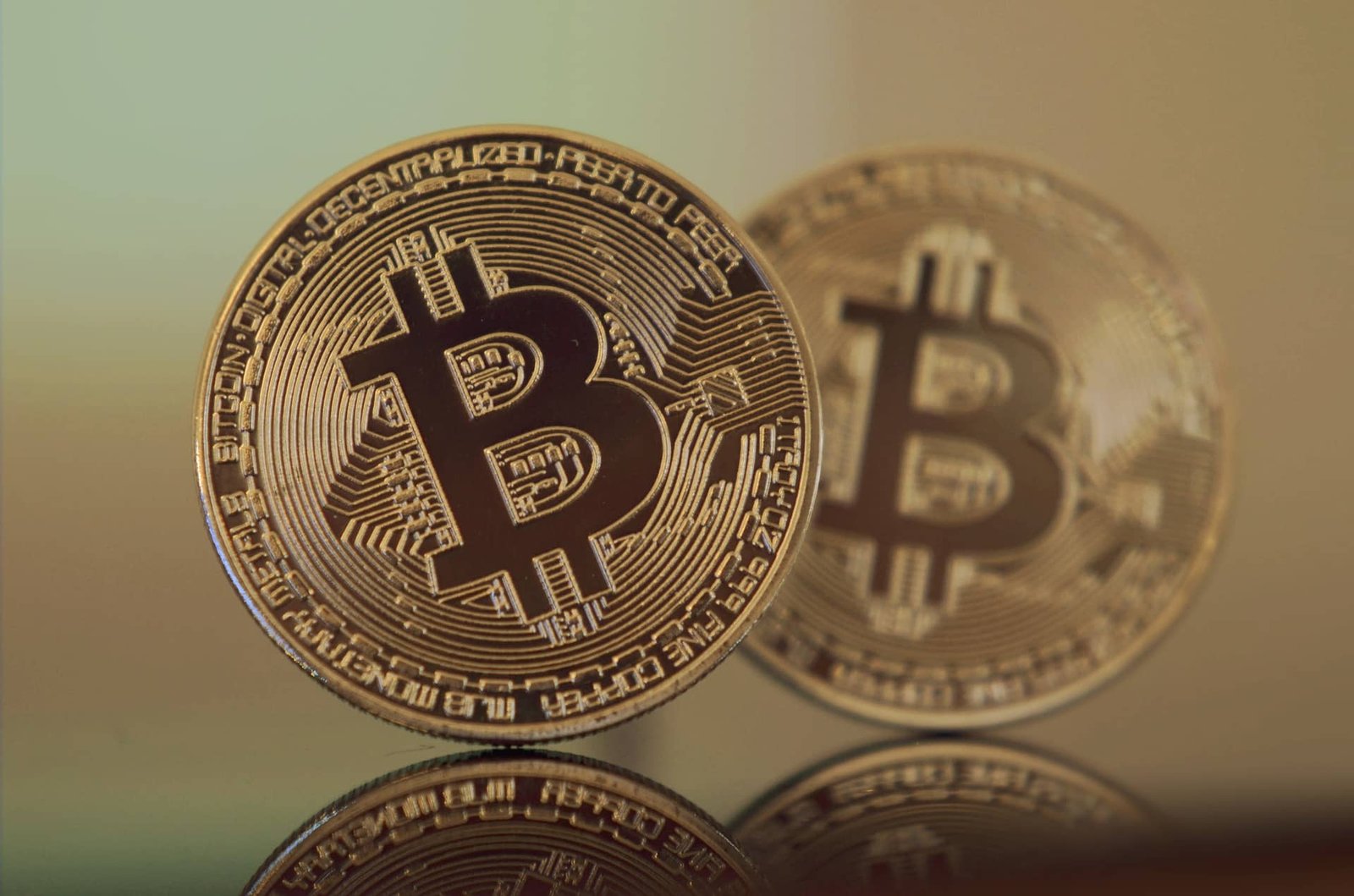
    [ad_2]

    Source link

  • Robinhood’s Crypto Activity Drops 78%, Stock Tanks Below IPO

    Robinhood’s Crypto Activity Drops 78%, Stock Tanks Below IPO

    [ad_1]

    Robinhood had a net loss of $1.32 billion this past quarter, recording a plunge of 78% in revenue from crypto transactions from 2Q. Their shares dropped 12% to $34.80 at 9:46 a.m. in New York, $38 below the IPO price in late July, Bloomberg reported.

    Robinhood
    Robinhood Markets Inc. shares down to $34.80 on the daily chart – Source: Robinhood Markets Inc on TradingView

    Analysts had estimated Robinhood Markets Inc. would have a total revenue of $423.9 million during an earlier Bloomberg survey, but the numbers fell short hitting only $364.9 million.

    Vlad Tenev, Robinhood’s Chief Executive Officer, had predicted that the trading activity would tumble in the third quarter of 2021 and fewer accounts would open. As he stated during the Q3 Earnings Call, the tumbling numbers do not worry them since they have different short-term goals.

    The fourth quarter might be falling short as their anticipation for Q4 is that “total revenue will be less than $325 million and full-year revenue will be less than $1.8 billion. At the top end, this implies full-year revenue growth of 85 percent.”, said Jason Warnick, Chief Financial Officer.

    Warnick also reminded that they typically show a “seasonality curve that shows higher growth in the first quarter of the year versus the last three quarters.”, and further explained their Q3 focus on building a team:

    We continue to make progress building our teams with increases primarily in engineering, customer service, and our regulatory, and compliance teams. In the quarter, we added 580 new full-time employees across the company, growing 21 percent sequentially versus Q2.

    Warnick added that they are not worried about the near-term profitability, rather they feel safe about being “a profitable company over the long term.”

    Robinhood’s Crypto Activity Drops-Off

    In Robinhood’s report they show a big drop-off on their monthly active users (MAU) from 21.3 million in the second quarter to 18.9 million in this third quarter. Their crypto activity tumbled as well, as they had significantly fewer new funded accounts.

    Many thought Robinhood would improve the way to invest in the crypto market. However, many wonder if they can meet with many of their clients interests, such as integrating new digital coins.

    Related Reading | Strategist: Next Wave of Bitcoin Investors Likely to Come from Robinhood

    Crypto activity and revenue plays a big role in Robinhood’s platform. Ever since they announced their intent to offer a crypto wallet, a waitlist of 1 million clients surged. On the potential growth that this project might bring, Tenev commented:

    We actually believe that by rolling out wallets, we will go a long way toward addressing the primary pain point that customers feel right now.

    Regulatory Requirements Vs. Crypto Platforms

    Tenev stated during the Earnings Call that “the regulatory landscape is increasingly uncertain.” As they want to enhance their involvement in the crypto space, they also intend to watch over their platform and keep it safe by “introducing products that comply with legal and regulatory requirements.”

    He explained that Robinhood is carefully looking into new virtual currencies, but they mantain the focus on meeting regulatory guidelines since they do not want another run-in

    Related Reading | Robinhood Fined $70M For Causing “Significant Harm” To Customers

    In a recent interview with Bloomberg, Blockchain Capital General Partner Spencer Bogart reacted to Robinhood’s tumbling numbers and suggested this drop-off aligns with the frustration that the historically unfriendly regulations from the U.S create for crypto platforms.

    Bogart explains that “Historically, the U.S. has been so unfriendly to innovation in the crypto space that most platforms are forced to ban Americans.” According to his opinion, regulations have only worked against the American people’s freedom rather than being implemented in their favor.

    For a country that is founded on the principles of freedom, growth, and innovation, to see the U.S. on a shortlist that these merging crypto platforms cannot service, alongside Syria, Sudan and North Korea, it is not just a disgrace, it is a disservice to the American people who should be able to access this technology.

    He clarifies that he is unsure of Robinhood’s inside issues, but he understands the landscape behind Tenev’s comments about the regulatory situation “where there really isn’t much clarity”. However, he remains positive as he sees “the tide turning” for crypto.

    Robinhood does not sound worried about the Q4 result and they are aiming to play the profitability slow and steady. Warnick said they are investing in crypto and looking forward to diversifying their product selection.

    Crypto
    Total crypto market over $2.4 Trillion in the daily chart | Source: Crypto Total Market Cap from TradingView.com


    [ad_2]

    Source link

  • Here’s why Bitcoin might be safe from a global stock market crisis

    Here’s why Bitcoin might be safe from a global stock market crisis

    [ad_1]

    One of the reasons behind Bitcoin’s (BTC) volatility, the substantial price oscillations that occur regularly, is the discrepancy of its use cases. Some pundits deem it “digital gold,” a truly scarce and perfect store of value (SoV). Others consider Bitcoin a technology project or a type of software with a corresponding network.

    El Salvador’s adoption as legal tender will likely evidence the means of exchange (MoE) functionality that the Lightning Network provides. The Layer-2 scaling solution allows instant and insanely cheap transfers, although it requires regular on-chain transactions to enter or exit this parallel network.

    As these narratives about Bitcoin shift over time, so does BTC’s correlation to traditional assets. For example, there have been sustained periods of a strong correlation with gold.

    Bitcoin vs. gold (precious metal) in 2020. Source: TradingView

    The March 2020 crash was devastating for almost every asset class, but the recovery pattern that followed those six or seven months was virtually identical for gold and Bitcoin. Curiously, the opposite movement occurred in 2021, displaying an inverse correlation between the two assets.

    Is Bitcoin a tech stock proxy?

    On the other hand, Bitcoin started to mimic the Hong Kong stock market, as measured by the Hang Seng Index (HSI). Among its top constituents are Tencent, Alibaba, and Meituan, which are billion-dollar Asian technology companies.

    Bitcoin vs. Hang Seng Index (stocks). Source: TradingView

    This shift in investors’ perspective — from tracking gold price to tech stocks — begs one the question of whether Bitcoin will succumb to the Hang Seng downward movement seen in the past 90 days. Does it make sense to decouple right now? If so, will Bitcoin continue to act as a safe haven amid a general correction?

    On Sept. 14, China’s second-largest property developer, Evergrande Group, announced that a significant decline in sales forced the company to postpone payments over its debt. This single company has over $300 billion in liabilities, which and according to analysts this could severely impact the broader market.

    In August, China’s retail sales disappointed at 2.5% versus the previous year, where investors expected a 7% growth rate. Obviously, growth and the economy were heavily impacted in 2020 by governments’ reaction to the Covid-19 outbreak.

    However, one must consider that the most influential Central Banks have been practicing near zero or even negative interest rates since the Q1 of 2020. Thus, if the economy fails to gain momentum amid multiple trillion-dollar stimulus packages, there’s not much that can be done to prevent a generalized stock market correction and potential losses on debt markets.

    The problem is: Bitcoin might be 12 years old, but it has never faced a significant economic crisis, at least nothing that puts the $250 trillion-plus global debt markets at risk. Therefore, any analysis or estimate will unlikely yield a credible assessment.

    Bitcoin might be less impacted by a market meltdown

    However, the cryptocurrency has an edge over traditional markets like commercial real estate, stocks, and bonds. Lenders will foreclose on these assets if clients default on their payments, and this adds further pressure because the bank or institution has no interest in keeping them.

    On the other hand, generally speaking, Bitcoin and cryptocurrencies cannot be used as collateral.

    Regarding the billion-dollar Bitcoin futures liquidations on derivatives markets, those are just synthetic instruments. Undoubtedly these events will impact the price, but at the end of the day, the effective BTC stays at the derivatives’ exchange. It solely moves from the long (buyer) balance to the short (seller) account.

    Until Bitcoin becomes fully entrenched in financial markets and accepted as collateral and deposits, the mid-term systemic risk for the cryptocurrency is lower than the traditional market.

    The views and opinions expressed here are solely those of the author and do not necessarily reflect the views of Cointelegraph. Every investment and trading move involves risk. You should conduct your own research when making a decision.