Tag: Regulatory

  • An Ethereum blockchain upgrade, crypto regulatory battles, and Bitcoin price discussion: Hodler’s Digest, Aug. 1-7

    An Ethereum blockchain upgrade, crypto regulatory battles, and Bitcoin price discussion: Hodler’s Digest, Aug. 1-7

    [ad_1]

    Coming every Saturday, Hodler’s Digest will help you track every single important news story that happened this week. The best (and worst) quotes, adoption and regulation highlights, leading coins, predictions and much more — a week on Cointelegraph in one link.

    Top Stories This Week


    Square to acquire Australian fintech Afterpay in $29B deal

    Jack Dorsey’s digital payments firm Square entered into a $29 billion stock deal to purchase Australian buy now, pay later (BNPL) firm Afterpay this week. 

    Just like the name Afterpay implies, Square will essentially be buying the firm now and paying later, with the transaction set for the first quarter of 2022 and to be paid out entirely in Square common stock.

    Bitcoin (BTC) proponent Anthony Pompliano was pleased with the news, noting on his web series The Best Business Show that Square is one of the only stocks he owns, as he forecasted that the firm’s valuation will explode following the acquisition.

    In an Aug. 3 YouTube video, Pomp went for sheer and utter clickbait with the title “SQUARE is going to be worth 1 TRILLION dollars,” and he emphasized the potential of rolling out Afterpay’s BNPL services to 70 million Cash App users and 2 million Square merchants.


    Ethereum London hard fork goes live

    The London hard fork arrived almost on schedule on Aug. 5, ushering in Ethereum Improvement Proposal 1559. An interesting feature of the upgrade is that it also ushered in some bullish sentiments from Ethereum (ETH) proponents and some sour grapes from Bitcoin maxis. 

    Ethereum has now transitioned away from a bidding-based fee market to a fixed price-and-burn mechanism, which may see the asset become deflationary if more ETH is burned than issued in block rewards. However, this may be more likely after the switch to proof-of-stake with ETH 2.0If the asset does become deflationary, it would reach the status of “ultrasound money,” which is a term that has also been a long-running meme in ETH communities that mocks Bitcoiners’ description of BTC as sound money due its capped supply of 21 million.


    BREAKING: White House confirms support for minor changes to crypto tax proposal

    The White House officially backed a last-minute amendment to the controversial U.S. infrastructure plan that proposes expanded cryptocurrency taxation to raise an additional $28 billion in revenue. The amendment maintains stringent reporting requirements for blockchain developers and validators while exempting miners. 

    However, the amendment’s vague wording and lack of clearly defined terms suggest that crypto developers and proof-of-stake validators would still be subject to expanded reporting and taxation that some have described as “unworkable.”

    For some reason, members of the White House seem intent on cracking down on tax evasion in crypto without understanding the nuances of the industry. They also seem to overlook the blatant rorting of the system from multinational giants who essentially vacuum capital out of the people’s pockets while paying zero tax.


    Mike Novogratz blasts US officials for poor grasp of crypto industry

    Amid the backdrop of looming crypto regulations that will most likely increase taxes and decrease profits, Galaxy Digital CEO Mike Novogratz has come out swinging in response to Senator Elizabeth Warren’s remarks calling cryptocurrency “the wild west” of the U.S. financial system.

    The billionaire crypto proponent’s jabs were, of course, delivered through social media, with Novogratz taking to Twitter on Aug. 3 to assert that most U.S. officials have no idea what they are talking about when it comes to crypto: 

    “Crypto is the future of our financial system and our citizens deserve officials that do their homework to understand this new technology. Most of our leaders haven’t done that yet. We also need regulators and politicians who understand that new ideas need room to grow.”


    Circle and Unstoppable Domains to introduce username-based USDC payments

    Circle and Unstoppable Domains are working to introduce username-based addresses as an alternative to long-winded alphanumeric crypto wallet addresses to aid the not-so-tech-savvy, a.k.a. newbies and boomers. 

    According to an Aug. 4 announcement, blockchain domain name provider Unstoppable Domains and stablecoin issuer Circle are collaborating to release readable “.coin” usernames for USD Coin (USDC) transfers.

    As part of the partnership, both companies will collaborate to enable support for .coin username extensions across wallets and crypto exchanges that list the number two-ranked stablecoin. 

    Under this arrangement, USDC transfers will become akin to sending an email, likely mitigating the problem of transferring coins to the wrong address, losing funds forever and living with regrets over one’s lack of due diligence.

    Winners and Losers


    At the end of the week, Bitcoin is at $42,651, Ether at $2,867 and XRP at $0.74. The total market cap is at $1.73 trillion, according to CoinMarketCap.

    Among the biggest 100 cryptocurrencies, the top three altcoin gainers of the week are Voyager Token (VGX) at 94.22%, THORChain (RUNE) at 50.69%, and Ravencoin (RVN) at 44.13%.

    The top three altcoin losers of the week are Amp (AMP) at -14.97%, XinFin Network (XDC) at -4.74%, and Telcoin (TEL) at -1.66%. 

    For more info on crypto prices, make sure to read Cointelegraph’s market analysis.


    Most Memorable Quotations


    “We can see Bitcoin on the balance sheets of cities, states, governments, companies, small [and] big investors.”

    Michael Saylor, MicroStrategy CEO


    “We’re now moving into a world where we have these nonfungible software objects that have unique identities that can actually accept money, pay money and can participate in governance, either in decentralized autonomous organizations or potentially other kinds of governments that can govern themselves.”

    Joe Lubin, ConsenSys founder and CEO


    “I’m spending five hours a day on everything from regulation to licensing and everything in between.”

    Sam Bankman-Fried, FTX CEO


    “Primarily, crypto assets provide digital, scarce vehicles for speculative investment. Thus, in that sense, one can say they are highly speculative stores of value.”

    Gary Gensler, chair of the U.S. Securities and Exchange Commission


    “Crypto is a bit like the parable of the blind men and the elephant. People touch it from different sides. They get distracted and carried away and energized about these different topics.”

    Marc Andreessen, Andreessen Horowitz general partner and co-founder


    “If you put a gun to my head, and you said, ‘I can only have one.’ I would choose gold.”

    Ray Dalio, billionaire hedge fund manager


    “Just so we’re all clear here, the SEC has no authority over pure commodities or their trading venues, whether those commodities are wheat, gold, oil….or #crypto assets.”

    Brian Quintenz, U.S. CFTC commissioner


    “The more people with stablecoins in the pocket, the more people who can participate in decentralized finance.”

    Matthew Gould, Unstoppable Domains CEO

    Prediction of the Week 


    Bitcoin chart fractal suggests BTC price will have rallied to at least $80K by September

    If this latest bullish BTC prediction turns out to be true, Bitcoiners may soon be able to start driving their lambos on the moon. 

    Nunya Bizniz, an independent market analyst, posted a bullish prediction on Aug. 1, as they highlighted that the recent rally of around 40% in late July included 10 consecutive days of lovely green candles, and not those horrible red ones that bears love so much. 

    The analyst noted that each of BTC’s previous 10-day bull runs has ended up with at least a 100% price increase within 30 to 60 days. Therefore, if history repeats itself, Bitcoin’s price may double and surge to new all-time highs around the $80,000 mark.

    FUD of the Week 


    South Korean regulator to reportedly shut down 11 crypto exchanges

    Crypto regulations in South Korea may become more stringent after news circulated this week that South Korea’s top financial regulator, the Financial Services Commission, or FSC, is reportedly planning to shut down a dozen local cryptocurrency exchanges amid accusations of fraud.  

    The FSC will suspend operations of at least 11 mid-sized crypto exchanges in South Korea due to alleged illegal activities and fraudulent collective accounts, according to local media outlets.  

    The publication cited anonymous industry sources claiming that the names of the exchanges were not yet disclosed, so Koreans will not know exactly what to FUD over until the names come to light. The sources argued that the mentioned crypto exchanges will be unable to get approval for operation by the FSC. 

    The report also notes that the authority is planning to implement stricter regulations for smaller crypto exchanges in South Korea, meaning that anyone firm that wants to partake in illegal behavior will have to do it on a large scale.


    Monero’s former maintainer arrested in the US for allegations unrelated to cryptocurrency

    Speaking of alleged illicit behavior, Riccardo Spagni, the former maintainer of the Monero (XMR) cryptocurrency, was arrested last month in Nashville, Tennessee, but not for anything related to crypto.  

    Spagni is facing fraud charges tied to alleged offenses in South Africa between 2009 and 2011, during his time serving as an information technology manager at a company dubbed Cape Cookies. 

    Spagni allegedly fabricated additional invoices from a supplier of Cape Cookies, which included inflated prices for goods and services, along with his bank details instead of the suppliers’. He now faces a hearing on Aug. 5 to determine whether he is held, pending trial. If convicted in South Africa, he faces 20 years in prison.


    Breaking: BSV reportedly suffers ‘massive’ 51% attack

    Bitcoin SV reportedly suffered a “massive” 51% attack on Aug. 3 that resulted in up to three versions of the chain being mined simultaneously.

    Speaking about the attack, Lucas Nuzzi, a network data product manager at Coin Metrics, stated on Twitter that “someone is seriously trying to destroy BSV,” and added that:

    “For over 3 hours, attackers were able to take over the chain. All exchanges that received BSV deposits during that time might have been double spent.”


    Best Cointelegraph Features

    BlockFi faces regulatory heat, a sign of possible crypto lending regulations?

    The crypto lending giant BlockFi is facing regulatory scrutiny from a handful of states in America ahead of a proposed public listing.

    Civic engagement and crypto: Miami unveils its own digital coin

    MiamiCoin is not just a cryptocurrency, but rather a decentralized application that can function as a developer platform for cities.

    Ready to deploy? Amazon’s Bitcoin acceptance can prime a payments future

    Amazon denied reports it will accept BTC payments soon, but seemingly, it’s only a matter of time before the tech giants embrace the token economy.


    [ad_2]

    Source link

  • Interview with Adam Baker from Mercuryo On Crypto Regulatory Landscape

    Interview with Adam Baker from Mercuryo On Crypto Regulatory Landscape

    [ad_1]

    The regulatory landscape on cryptocurrencies and the blockchain industry is changing, many expect a global crackdown on this industry. The atmosphere is tense, as the United States, China, and Europe seem to be moving to tackle a topic long overdue.

    Adam Berker, Senior Legal Counsel at global payment network Mercuryo, conducted a research on some of the most relevant points in terms of regulations, money laundering policies, and more. To have a better grasp of the current regulatory outlook, we asked him for a more detailed look into his research. This is what he told us.

    Q: Can you talk more about your background, your work at Mercuryo, and how you got involved with the crypto industry?

    A: My first experience with the cryptocurrency industry was in 2019 when I worked at Musaev & Associates law firm. I received a request from a private investor for participation in Telegram Open Networks’ (TON) ICO. Even though telegram did not launch its cryptocurrency, I managed to finish this investment project and really got interested in the crypto industry.

    Later, in 2020 I joined Mercuryo as a Legal Counsel and started providing full legal support to the group of companies with entities in the UK, Cyprus, Estonia, and Cayman Islands for conducting its activity all over the world. I also undertake performing AML & KYC/KYB checks and onboarding procedures in financial institutions.

    Under my management, Mercuryo expanded its activity to the US, Canada, Latin America and considerably enlarged the number of companies in the corporate structure, obtaining corresponding crypto and payment licenses. Furthermore, I provided legal support in developing partnerships with crypto industry leaders for such products as Cryptocurrency Widget, Acquiring & Crypto-Acquiring, Over-the-Counter deals. Additionally, I provided legal support in securing a $7.5M Series A funding led by Target Global, a major international VC fund with €800M+ under management.

    Q: Recently you conducted research on crypto regulation on a global scale, what are some of the key points and takeaways from your investigation? Would you say that regulations are leaning more positively or negatively for cryptocurrencies around the globe?

    A: According to my research, we may divide regulatory authorities’ approach to the 3 categories:

    • Business-oriented. These jurisdictions prefer to ease the process of incorporation, obtainment of licenses and ongoing operation so that crypto businesses would be more interested in them. One of such jurisdictions is Canada, as the whole process of incorporation and license issuance is made online and very quickly, they require a minimum package of documents and the local Anti-money laundering regulation does not require crypto companies to obtain proofs of address from the end-users.
    • Control-oriented. These jurisdictions usually impose very strict requirements for the crypto entities regarding the Know-Your-Customer (KYC) procedure of the clients. For example, if you want to operate from Lichtenstein, you would need to obtain information about the client’s address of residence, the origin of assets and even professional occupation. In Australia, you will only need to identify your customers, but if you do this using electronic tools (as most crypto services do), you would need to obtain two identification documents. Though, it does not matter for the local regulator AUSTRAC that some customers may only have national ID. All these additional requirements negatively affect business metrics, as customers don’t like undergoing long KYC procedures.
    • “Gray” jurisdictions. There isn’t any specific crypto regulation, neither AML, nor financial services’ laws formally apply to crypto in these countries. Yet, these states are open for crypto companies and they are definitely working on ways to implement crypto into their legislative systems. For example, Brazil has introduced “auxiliary financial services” as a special type of activity for crypto companies and they will surely go further with it.

    In general, regulations are leaning more positively on the cryptocurrency industry as they help businesses understand the local “rules of the game” and protect customers from fraud and scams.

    Q: Why do you think it has taken regulators so long to approach cryptocurrencies, and crypto-based companies and services? Do you agree with the statements made by government officials claiming that cryptocurrencies and the crypto space are “highly unregulated”?

    A: A few years ago, many governments used to be against any crypto and they tended to ban anything related to this sphere. Now they understand that it is a huge economic sector, and for that reason, they try to take part in it.

    Of course, nowadays crypto regulations of many countries are not as developed as the regulation of financial services, for example. Nevertheless, it is definitely not a “highly unregulated” field, since there are such jurisdictions as Estonia and the UK, where local lawmakers developed very advanced and clear rules for crypto companies, including those related to licensing, customer onboarding, ongoing monitoring and reporting.

    In general, we may say that most of the countries opt for crypto regulations that would be similar to financial services’ regulations, especially to electronic money institution regulations. For example, in the U.S. you should register your business as a Money Services Business with FinCen on a federal level and then obtain Money Transmitter authorizations in the states where your business is planning to provide services (except for Montana since there is no MT license requirement). In most states, you will be able to provide both money transmission services (in general: cash checks, transmit money, own and operate ATMs, and provide electronic funds transfers) and provide crypto-related services. The main problem with the U.S. is that companies have to obtain MT licences separately in every state. Though, 29 states concluded a Multistate Licensing Agreement for MSBs and companies may file one application that will be reviewed by all the participants of the Agreement. Nevertheless, this system still needs time for development and proper implementation as each state has its own requirements for the money transmitters.

    By the way, one of the main, but not quite obvious, problems nowadays is an inconsistency between regulations in different countries, which is a serious obstacle for businesses as most of the crypto companies conduct their activity in the international arena. The best solution for this is a unifying agreement between countries. For example, the European Union may implement some kind of passporting system which is now used for financial institutions. This system enables companies that are authorised in any EU or EEA state to conduct their activity freely in any other state with minimal additional authorisation.

    Q: Many believe that a U.S. crackdown on the industry will have a negative global impact on the entire crypto industry. According to your research, are there any safe havens for companies that want to operate without hostilities? Can the U.S. really have a global reach when it comes to cryptocurrencies?

    A: The U.S. already impacts the whole industry with their regulations since even foreign crypto-companies that want to provide services to the U.S. citizens need to comply with their laws. For that reason, most of the crypto projects try to avoid any relations with the U.S. For example, we may often see the U.S. in the list of banned countries in many ICOs. However, most of the regulated jurisdictions allow entities to provide services to foreigners under local laws.

    In my opinion, the most favourable jurisdictions are Canada, as I have said before, and Lithuania since they don’t have strict KYC requirements, companies may have foreign directors and the process of incorporation and license obtainment is rather simple in comparison to other jurisdictions. Additionally, I should underline that in Canada crypto companies obtain Money Services Business registration which also gives them the possibility to carry out currency exchange services, money transfer services, issue or redemption of traveler’s checks, money orders or bank charges, check cashing and ATM operation. Moreover, Canadian regulator FINTRAC regularly issues detailed guidelines which can be very useful for such companies.

    Also, many crypto companies incorporate their legal entities in so-called “gray areas” (unregulated jurisdictions) like the Seychelle Islands. This also could be an option since they are not obliged to comply with common crypto rules like in other countries. Nevertheless, problems may arise later when these countries finally approve local laws which may not be as favourable as in other jurisdictions.

    Q: Often, we see regulators, government officials, and politicians asking for a crackdown on the industry, especially in the U.S. Is this the most efficient approach? How can users, consumers, and the countries themselves benefit from clear regulations and fair policies?

    A: Of course, no one will benefit from the crackdown as new industries need assistance from governments for future development. If lawmakers impose too many restrictions, companies just will not start their businesses there. Nevertheless, clear and fair policies give companies an understanding of the local rules, certain consequences for their violation and ways to protect themselves. Additionally, these regulations protect customers from fraudsters since every diligent market player is licensed by the correspondent authority and every customer may file a complaint in case of unlawful acts. On the other hand, regulations help governments control fiat money flows, fight money laundering, and, of course, collect taxes.

    Q: Coinbase, Ripple, and others major companies with revenues directly linked to the crypto industry have been lobbying in Washington and other centers of political power around the globe. Do you think this is something that more companies should embrace openly? How can a crypto company or crypto service provider approach regulators if they already have a negative bias?

    A: It is clear that the whole industry gains an advantage if such major companies achieve success in lobbying their own interests. In this case, bigger companies create precedents and regulatory authorities will follow these precedents in future cases regarding other companies.

    My general advice for companies that already have a negative bias is that they should always be in contact with authorities and be ready to provide detailed responses to official requests. Still, it always depends on the specific case, country of incorporation, whether there were any serious violations of applicable regulation or not.

    Q: Recently, Uniswap Labs and other DeFi interfaces limited the users’ access to specific tokens. Speculations point out a possible intervention by regulators in the U.S. towards these companies. Many criticized the decision and questioned the decentralized nature of the protocol. How can this relation between DeFi companies, regulators, and users work out in the long term? Do you envision a future where users must use backdoors to interact with any DeFi product?

    A: Since governments try to control the crypto sphere more and more, it is obvious that DeFi companies also will be regulated, even though they do not involve fiat transactions in their business scheme.

    As there is no escape from the regulation, crypto companies should not ignore this process. On the contrary, it is better for them to build a constructive dialogue with authorities so that the latter could understand all the needs of the industry.

    For example, today it is clear that governments fight against anonymity in crypto and this may also affect projects like Uniswap since they do not require users to undergo any KYC procedures. In this case, using backdoors to interact with DeFi products or any other crypto products may be a possible option for users that do not want to disclose their identity.


    [ad_2]

    Source link

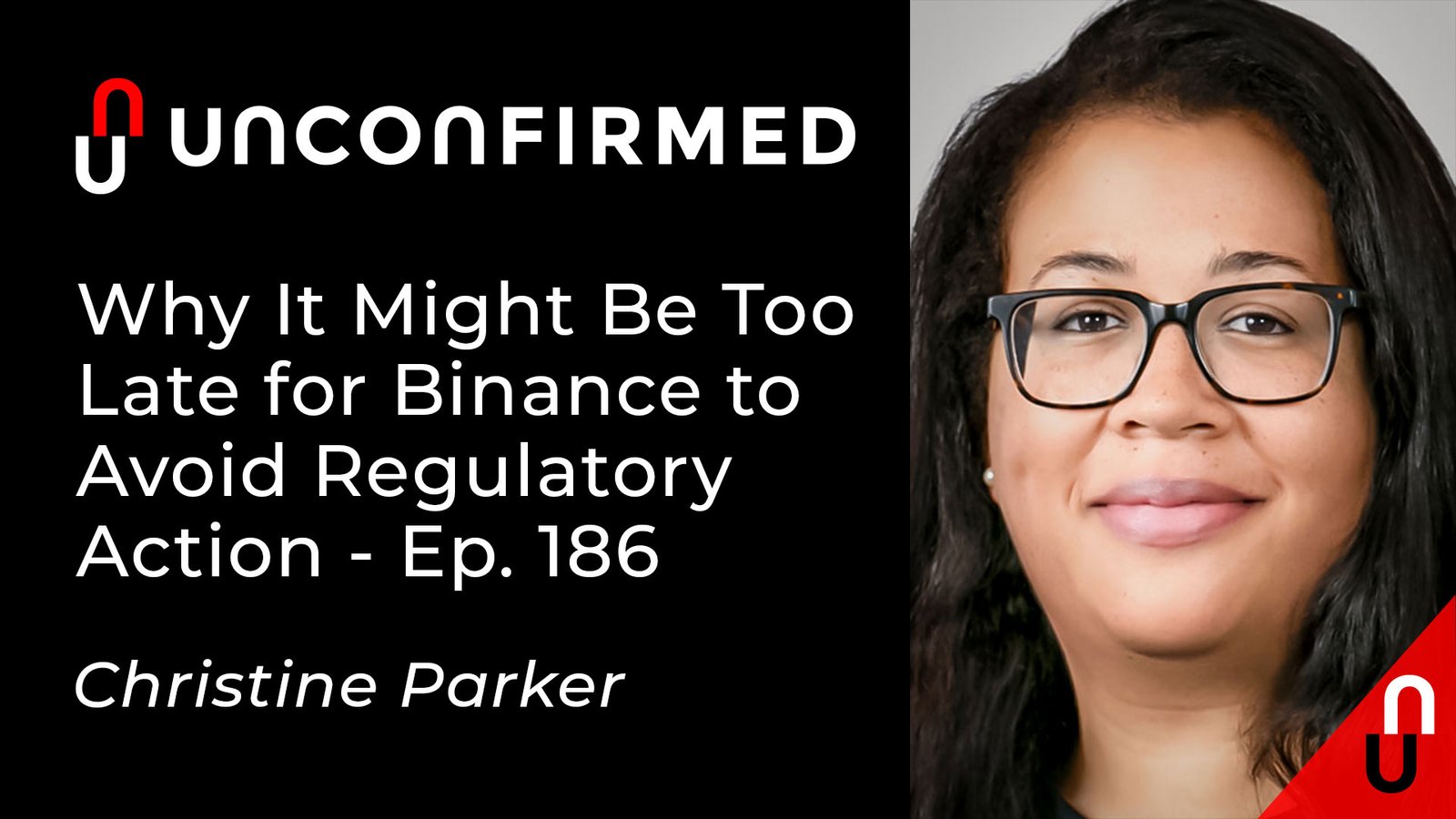
  • Why It Might Be Too Late for Binance to Avoid Regulatory Action

    Why It Might Be Too Late for Binance to Avoid Regulatory Action

    [ad_1]

    Christine Parker, partner at Reed Smith, summarizes the slew of regulatory headlines facing Binance and how such scrutiny may affect the exchange going forward. Show highlights:

    • which countries are investigating Binance
    • why it has been difficult for governing bodies to regulate Binance
    • whether the reports that regulatory bodies, like the CFTC/IRS/DOJ, coming after Binance are correct
    • when Christine expects regulators to make a move against Binance
    • how hiring ex-regulators might help Binance in Congress
    • whether Binance’s strategy of leaving countries with tight regulations helped or hurt the exchange
    • what Christine thinks of Binance’s strategy to localize its business model 
    • whether or not it is too late to avoid regulatory penalties for Binance
    • why transitioning to a DAO business model would not absolve Binance of prior infractions
    • how the BitMEX situation could inform Binance
    • whether criminal charges could be in Binance CEO Changpeng Zhao’s future

    Thank you to our sponsors!

    Crypto.com: https://crypto.onelink.me/J9Lg/unchainedcardearnfeb2021 

    Oasis: https://oasisprotocol.org 

    NEAR: https://near.org  

    Episode Links

    Christine Parker: https://www.linkedin.com/in/christine-parker-b09a31/

    Binance Investigations

    Binance Material

    • CZ letter
    • CZ Unchained appearance
    • Binance’s compliance hiring spree


    [ad_2]

    Source link