Opera, one of the major crypto-friendly internet browsers, announced the integration of eight blockchains in a continued effort to introduce Web3 to more than 380 million mobile and desktop users worldwide.
In Jan. 2022, Opera launched the Crypto Browser project, a Web3-focused initiative for facilitating navigation across decentralized applications (DApp), games and metaverse platforms. As part of this initiative, the browser company added support for eight major blockchain ecosystems, including Bitcoin (BTC), Solana (SOL), Polygon (MATIC), StarkEx, Ronin, Celo, Nervos DAO and IXO.
Opera said in the announcement that its users now have access to the Polygon and Solana DApp ecosystems, as well as “the benefits of Layer 2 DeFi via StarkWare-powered DiversiFi.”
The latest integrations enable Opera users to access Polygon proof-of-stake (POS) blockchain and Ethereum L2 ecosystem via StarkEx.
Opera’s Crypto Browser project. Source: Opera
According to the company, the intention behind integrating multiple blockchains was to ensure chain agnosticism and Web3 involvement in an environment-friendly manner. Jorgen Arnesen, EVP Mobile at Opera stated:
“Ultimately, Web3 is on its way to becoming a mainstream web technology and users won’t need to know they’re interacting with it. They need to get a superior user experience and a true benefit.”
The announcement further highlighted the need for carbon-neutral solutions with low gas fees, which stands as one of the main reasons for choosing Polygon over the Ethereum blockchain.
Related: Brave to integrate with Solana blockchain on its privacy-enabled browser
Back in Nov. 2021, Opera competitor Brave browser integrated Solana blockchain to strengthen its DApps capability.
We’ve partnered with @solana to integrate it into the browser and make it the default for DApp support. We will soon bring best-in-class wallet features for the Solana blockchain into our desktop & mobile browsers. #BreakpointLisbon https://t.co/tTB7NXKWjI
Citing the partnership, Brendan Eich, CEO and co-founder of Brave said that:
“With more and more users and creators requiring tools for fast and affordable access to the decentralized Web, this integration will seamlessly pave the way for the next billion crypto users to harness applications and tokens.”
Brave is yet to announce the addition of multi-chain support to rival its growing competition.
Polygon (MATIC), a layer-two network designed for scaling and application infrastructure development on Ethereum (ETH), has been making the rounds among blockchain enthusiasts as of late. From its $1 billion investment into zero-knowledge technology to co-launching a $200 million Web 3.0 social media initiative up to integrating with Opera’s web browser to make its decentralized apps accessible to 80 million Android mobile users, the network’s momentum is going strong.
But partnerships and business aside, the technological capacities of the network, especially when compared to Ethereum, are also attracting the attention of many blockchain developers. In an exclusive interview with Cointelegraph, Polygon co-founder Sandeep Nailwal talked about the extent of the network’s adoption.
Cointelegraph: What are the current gas prices and transaction speeds for Polygon? And how does that compare to Ethereum?
Sandeep Nailwal (SN): From the Polygon Scan Explorer, you can see that the average block time is around 2.3 seconds. As for Ethereum, that is 15 seconds. And then the gas fees, you can see 0.001 MATIC tokens; this is a point fraction of a penny.
CT: Have there been any notable nonfungible token (NFT) drops on the Polygon network recently?
SN: None of them have become like CryptoPunks or anything, but I think Polygon’s biggest kind of support is from the gaming companies […] They all added to NFT. If you go to market, talk to any random 10 different gaming teams, they will tell you six to seven are building on Polygon.
But the notable drops on NFT, the biggest, have been Dolce and Gabbana, the brand. They made a $7 million sale recently. There are other big luxury premium watch brands, and these guys are coming in. Apart from that […] Elon Musk minted an NFT. Jack Dorsey minted NFT of his first-ever tweet, and […] Mark Cuban — all those were on Polygon networks only.
#NFT sales have seen astronomical growth since 2020.
2020 total sales: $340 million 2021 total sales: $9 billion (so far)
Let’s see what happens in 2022, with NFTs in sports, gaming, and #metaverses now gaining traction. https://t.co/VDD8v2YwVo via @cointelegraph
CT: What are some popular decentralized apps built on the Polygon blockchain? And what does their total value locked (TVL) look like?
SN: Polygon is now used by all the decentralized finance applications in Ethereum. The only one remaining was Uniswap. And the community signaled a week back that they are also launching on Polygon now. So as for the popular DApps, I would say Uniswap, Aave, Decentraland, etc. I think the TVL across the bridges is around $5 billion or $6 billion.
CT: What is your objective for investing in zero-knowledge technology?
SN: We had committed $1 billion for zero-knowledge technology, which we believe is the holy grail of blockchain scaling. And privacy is the second element — that’s one thing where everybody gets confused. So you use ZK to verify computations back on Ethereum without sending back the entire data. Instead, you simply provide proof that everything was correctly computed on layer two and put a […] succinct proof back to Ethereum.
CT: In your opinion, would further Ethereum upgrades empower the network’s capacity to match that of layer-two solutions?
SN: Even if 2.0 comes in here, that will not provide enough scalability. Next year, the proof-of-stake [PoS] upgrade will keep everything the same; like Ethereum has 13 transactions per second [TPS] right now, maybe it will go to 20 TPS [after PoS], but not more than that. So that does not add anything to scalability. And let’s say in three to five years, even if the sharding comes, we’ll have a projection of 64 shards. And with each acting at 20 transactions per second, but that’s still 1,280 transactions per second overall, right? That’s still not enough for the entire world.
Related: Uniswap v3 contracts deployment on Polygon approved with 99.3% consensus
CT: What does Polygon’s adoption currently look like?
SN: There are 3,000 plus active development teams on it. This was posted by Alchemy some time back. It should actually be up to 5,000. The daily active users on Polygon have become 50% more than Ethereum, and with gaming NFTs, we are seeing so much happening on Polygon.
Crypto trading platform AscendEX suffered a loss of $77.7 million in a hot wallet compromise that allowed hackers to access and transfer tokens hosted over the Ethereum (ETH), Binance Smart Chain (BSC) and Polygon (MATIC) blockchains.
Soon after realization, AscendEX proactively warned its users about the stolen funds, confirming that the hackers were not able to access the company’s cold wallet reserves.
22:00 UTC 12/11, We have detected a number of ERC-20, BSC, and Polygon tokens transferred from our hot wallet. Cold Wallet is NOT affected. Investigation underway. If any user’s funds are affected by the incident, they will be covered completely by AscendEX.
According to PeckShield, a blockchain security and data analytics company, around $60 million worth of tokens were transferred over the Ethereum blockchain. Tokens stolen from the Binance Smart Chain and Polygon are worth $9.2 million and $8.5 million respectively, as evidenced by EtherScan data.
Some of the popular tokens stolen in this hack include USD Coin (USDC), Tether (USDT), and Shiba Inu (SHIB). However, AscendEX is yet to officially confirm the exact worth of the tokens taken away by the hackers.
The company also announced to help the affected users by covering up their losses due to this attack.
Related: Bitmart hacked for $200M following Ethereum, Binance Smart Chain exploit
Just last week on Dec. 05, a similar attack on crypto exchange BitMart resulted in a loss of nearly $200 million due to a hot wallet compromise hosted over the Ethereum and Binance Smart Chain blockchains.
As reported by Cointelegraph, the hack was a straightforward case of transfer-out, swap, and wash:
Transfer of stolen tokens on Bitmart. Source: PeckShield
While BitMart CEO Sheldon Xia confirmed the losses over Twitter, he announced a temporary stop on all withdrawals and deposits while further investigations were underway.
The deposit and withdrawal function of all tokens will be resumed step by step, along with the recovery progress of security testing and public chain development. No worries, we are marching forward, security will be always the first priority.
Melbourne, Australia, November 19, 2021— Ethereum’s biggest DeFi chain Polygon and ethical DeFi platform MRHB DeFi are leading the charge on the next big thing in DeFi — decentralized philanthropy — or DePhi for short which is estimated at over USD 300 billion each year in Muslim countries alone with around USD 1.5 trillion in assets held by around 160,000 foundations globally.
“Polygon has become one of the leading full-stack scaling solutions for Ethereum, given its speed and scalability,” says Deniz Dalkilic, MRHB DeFi CTO. “As Marhaba strives to achieve its end goal of building a comprehensive, secure and scalable ecosystem where liquidity is a priority, we are thrilled to announce our integration with Polygon. To expand our presence on Polygon we have received a grant from Polygon to optimise our solutions for their network.”
The Polygon team has been enthusiastic in its support of the ethics-based startup, recognizing that MRHB DeFi is the first Islamic finance d’App. Polygon has agreed to support MRHB DeFi’s plan to develop a sidechain solution that opens up DeFi to millions globally. The two parties have recently signed an agreement which puts into writing their aim to bring philanthropy to the crypto space, stating that:
MRHB DeFi intends to build its DePhi (Decentralised philanthropy) protocol on Polygon technology, which would be a dedicated philanthropy protocol based on funding social initiatives for the benefit of the community, using the quadratic funding model.
With this solution, MRHB intends to catalyse the crypto philanthropy ecosystem, with focus on being the first mover in channelling the annual Zakat contributions of the Islamic World (est. USD 300 billion annually)
Quadratic funding is a technique that applies mathematics to ensure the optimal funding — more democratic, more scalable — of community and social, charitable initiatives.
Bringing Philanthropy — a Key Pillar of the Islamic Faith — to DeFi
DePhi forms a key part of MRHB DeFi’s strategic plans for its protocol. As part of MRHB’s approach to supporting a more ethical and community focused approach to decentralized finance, DePhi seeks to bring a key pillar of the Islamic faith — charity or zakat — to what is still a sector driven by self-interest. Once the DePhi protocol is implemented, MRHB DeFi users will have the option to send a portion of their crypto asset wealth to charities which would be linked to the platform, thus fulfilling their voluntary or faith-driven obligations.
End users who wish to donate will be able to deposit funds and generate rewards via trading fees on liquidity pools created by MRHB DeFi. After depositing the donation, assets would be locked for 60 days before being distributed to one of pre-approved charities nominated by the donor.
In addition, MRHB DeFi will set aside five percent of its DAO treasury to be invested in these pools as a form of crypto endowment, as such, this will generate wealth in perpetuity for charitable causes.
CTO Dalkilic adds: “Decentralized philanthropy represents a significant step forward in sharing the benefits of DeFi globally and allowing for community- and public good- focused initiatives to be supported from the cryptoverse. Polygon is one of the most respected projects in the crypto space, and we’re excited to align our vision of using DeFi for good causes, with theirs.
“Being the first d’App on Islamic finance, we have received strong support from the Polygon team to bring the project to the community. Polygon is the latest in a long line of partnerships we are fostering and developing as we work to grow our vision of an ethics-first platform and project. ”
MRHB DeFi recently partnered with Ethereum scaling and privacy engine zkSync, a leading ZK-Rollup solution for Ethereum. It has also received strategic investments and backing from Blockchain Australia, Mozaic, Contango Digital Assets, NewTribe Capital, Sheesha Finance, Acreditus Partners, EMGS Group, MKD Capital and Sinofy Group.
About MRHB DeFi
MRHB DeFi is a halal, decentralised finance platform built to embody the true spirit of an “Ethical and Inclusive DeFi” by following faith-based financial and business principles, where all excluded communities can benefit from the full empowerment potential of DeFi.
The diverse team is comprised of researchers, technocrats, influencers, Islamic fintech experts & business entrepreneurs, who came together to ensure that MRHB DeFi prevails in a manner that will impact society as a whole, essentially bridging the gap between the faith-conscious communities and the blockchain world.
Polygon is the leading platform for Ethereum scaling and infrastructure development. Its growing suite of products offers developers easy access to all major scaling and infrastructure solutions: L2 solutions (ZK Rollups and Optimistic Rollups), sidechains, hybrid solutions, stand-alone and enterprise chains, data availability solutions, and more. Polygon’s scaling solutions have seen widespread adoption with 3000+ applications hosted, ~600M total transactions processed, ~60M unique user addresses, and $5B+ in assets secured.
If you’re an Ethereum Developer, you’re already a Polygon developer! Leverage Polygon’s fast and secure txns for your Dapp, get started here.
Layer one network Polygon continues to expand and solidified its position in the crypto space. Recently, they announced a new partnership with Filecoin, a network that allows users to store and transfer data via a native marketplace.
The cooperation launched the Filecoin-Polygon Bridge, to increase their interoperability. Built by the Textile team, the bridge enables users to use any Polygon mainnet to connect with Filecoin’s storage and
(…) start storing data on Filecoin from any Polygon address without any conversions, signups, developer tokens, or secrets exchanged.
In addition, Textile, Polygon, and Filecoin announced further incentives for users and developers to leverage the bridge. For the foreseeable future, they will cover all storage costs for every project using the Textile Filecoin Storage Bridge. Thus,
Filecoin will bring greater functionality to Polygon applications that require decentralized and verifiable data storage.
The bridge will be “gradually” improved to increase its usability and will launch a governance model. In that way, the community will have the power to decide the direction of the project and will operate as an additional incentive for users and developers to jump in and participate.
📂 @textileio’s Filecoin-Polygon Storage Bridge can store data from any Polygon address owner accelerating the Web3 interoperability between Polygon & Filecoin ecosystems.
The bridge will benefit from Filecoin’s features, and any app, smart contract, or service will still rely on the InterPlanetary File System (IPFS) to retrieve data. Information will be available on an entity called “storage contract” to be created with miners operating on the Filecoin Network.
One of Textile’s main objectives is to improve Polygon, and other blockchains capacity to hold and transfer data:
Filecoin brings many of the best parts of the IPFS stack, including verifiable data, peer-to-peer (p2p) data exchange, de-duplication, and more. We can create a more secure data storage layer for Polygon applications and their users (…).
An Improve Storage Layer For Polygon, How Does It Work?
According to a blog post published by Textile, the Filecoin Storage Bridge to Polygon is supported by two concepts. The first is “deposit” and is power by an API that enables them to take place on-chain, the second is “storage” power by several APIs that “interact off-chain with a storage validator that will interface with Filecoin”.
This system offers protection against bad actors and potential Sybil Attacks, as users must deposit funds proportional to the length of time that they’d like to keep their data storage, Textile clarified. The default amount to be deposited for an hour of storage is 100GWEI per second or 0.00036 MATIC every hour.
As seen in the chart below, research firm Messari records an increase in total value locked on Polygon. This metric, as research Ryan Watkins said, has many detractors but can be used as a proxy to determine “how much value” users place on the smart contracts running on this ecosystem.
Source: Messari
The metric has seen a recovery after a decline during June and is “trending nicely” towards previous highs. At the time of writing, MATIC trades at $1,64 with an 8.3% profit in the daily chart.
MATIC follows the general market sentiment with a rally in the daily chart. Source: MATICUSDT Tradingview
Singapore, Aug 9th, 2021 — Mimo, home of the world’s first decentralized, algorithmically-pegged EUR token, is now officially live on Polygon.
Polygon lands a massive integration with Mimo. With easy access to blockchain services all on the strength of a euro stable token, the newly merged DeFi project brings a valuable utility to the network.
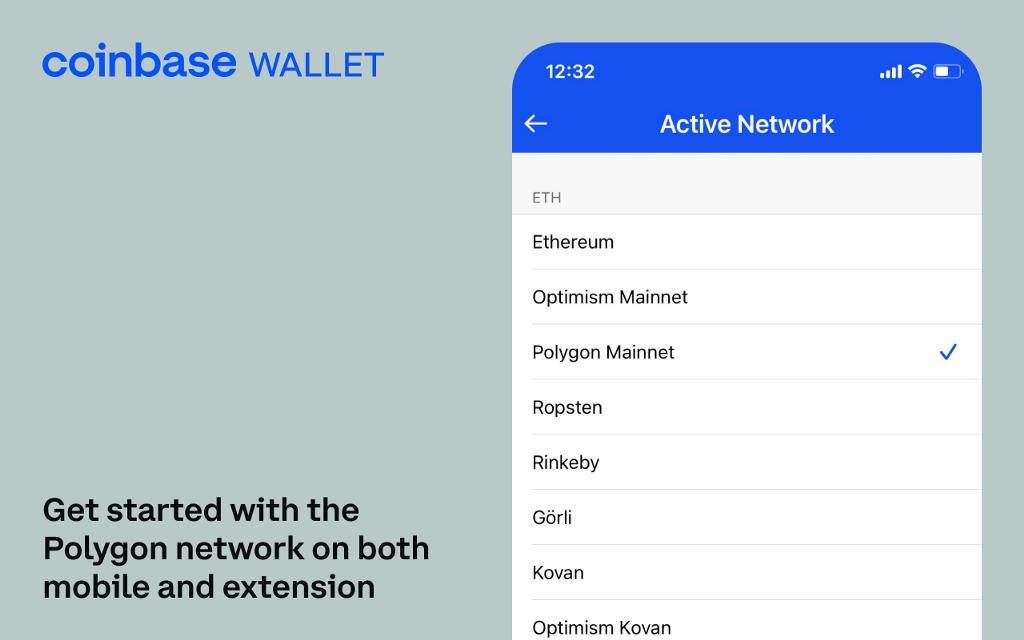
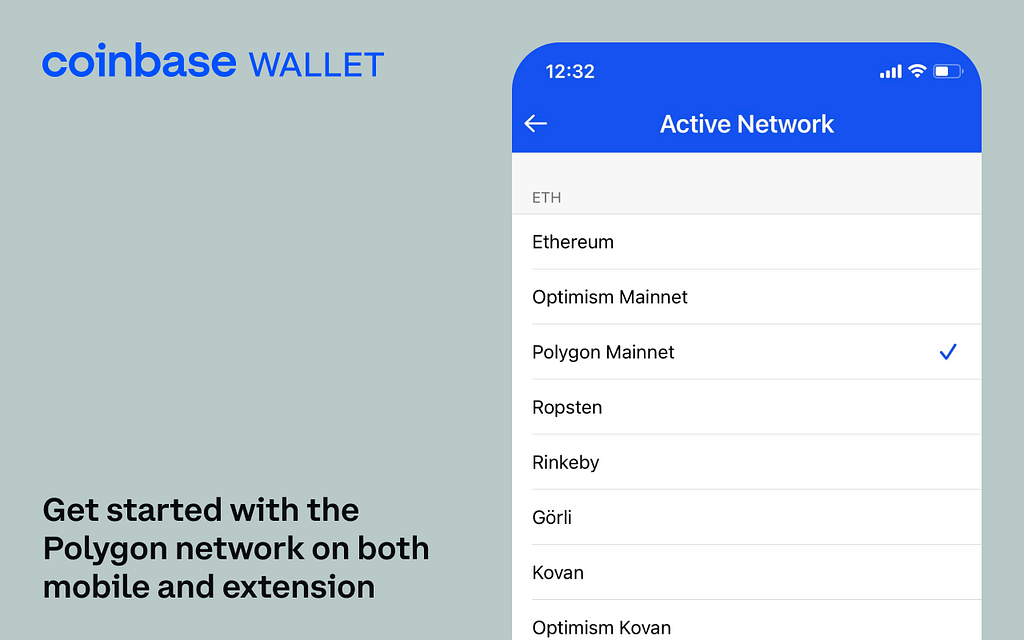
The Polygon network is now available on Coinbase Wallet mobile app and extension, with more scaling solutions to come
We’re excited to launch support for using decentralized apps (dapps) on the Polygon network, both for Coinbase Wallet mobile and extension.
Over a million Coinbase Wallet customers are using decentralized finance apps such as Uniswap, Compound and Aave, and NFT platforms like OpenSea and Zora. However, there are often high transaction fees and long confirmation times. And users with smaller transactions can be priced out of being able to participate in the open financial system. This has made the need for accessible scaling solutions even more important.
We are excited to support the Polygon network, which has recently emerged as one of the leading scaling solutions. This integration will allow for faster and cheaper transactions, and provide easier access to dapps on Polygon.
Last year, we added support for Optimistic rollups, another scalability solution, and today’s announcement underscores our dedication to making DeFi more accessible.
Connect Polygon & Coinbase Wallet We’ve made it simple for users to set up and get started with Polygon in a few steps:
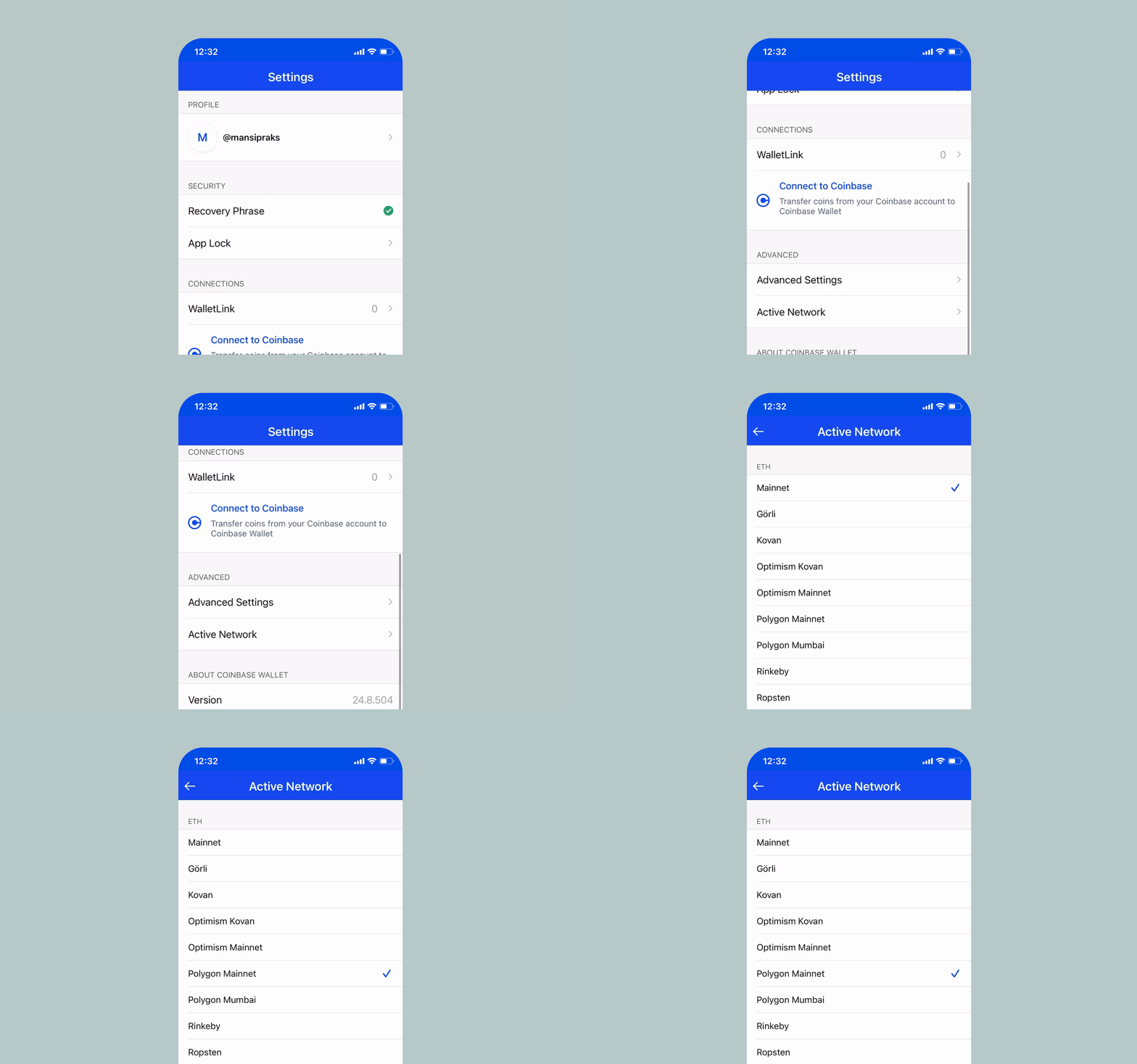
Open up your Coinbase Wallet mobile app. Navigate to Settings, select Active Networks and then Polygon network from the list.
Once you enable “Polygon”, this will allow you to conduct transactions and access dapps on the Polygon network. (Don’t see Polygon? Please check that you are running the latest version of the Android or iOS Coinbase Wallet app.)
The switch to the Polygon network will automatically be reflected on both the mobile app and in the Coinbase Wallet extension.
Get Started with Polygon To get started, visit the Polygon Web Wallet and connect your Coinbase Wallet. Use the Polygon Bridge platform to send some ETH or any Ethereum token like USDC, DAI, UNI, etc. from the Ethereum mainnet to the Polygon network. Once you have moved some coins over to the Polygon network, you can try out the latest Polygon dapps. For example, you can try lending out your coins to earn interest on Aave for Polygon.
Looking Ahead We want to enable millions of more users to engage in the world of decentralized finance and dapps. In the coming months, we’ll continue to take steps to make it easier for users to access and interact with a variety of Layer 2 networks both on mobile and web.
Developers: Integrate your dapp with Coinbase Wallet If you’re a developer of apps on Ethereum, Polygon or Optimism, you can easily add support for Coinbase Wallet users by integrating the WalletLink SDK, which lets users sign into your dapp with Wallet (get started here). If you have previously integrated WalletLink into your dapp, please upgrade to the latest WalletLink SDK version 2.1.4 or later to add support for Polygon.
We’re always listening to our customers and welcome feedback and troubleshooting questions via our help center.
This website may contain links to third-party websites or other content for information purposes only (“Third-Party Sites”). The Third-Party Sites are not under the control of Coinbase, Inc., and its affiliates (“Coinbase”), and Coinbase is not responsible for the content of any Third-Party Site, including without limitation any link contained in a Third-Party Site, or any changes or updates to a Third-Party Site. Coinbase is not responsible for webcasting or any other form of transmission received from any Third-Party Site. Coinbase is providing these links to you only as a convenience, and the inclusion of any link does not imply endorsement, approval or recommendation by Coinbase of the site or any association with its operators.
Unless otherwise noted, all images provided herein are by Coinbase and are for illustration purposes only. Actual product may vary, including the dapps available and integrated with Coinbase Wallet.
Connect to Dapps on the Polygon network with Coinbase Wallet was originally published in The Coinbase Blog on Medium, where people are continuing the conversation by highlighting and responding to this story.
Polygon has announced the integration of yield optimization vaults on the Maker Network. The blockchain-enabled protocol, formerly referred to as the Matic Chain, tweeted on Wednesday that it “will be opening a vault on Maker” and investing $50M of MATIC tokens as agreed liquidity from the treasury.
With the recent integration, it means the protocol has now broadened in scope, vision, and transformation to become an Ethereum scaling aggregator.
Related Reading | Scaramucci’s Skybridge Capital Launches Ethereum Fund
Such feet, among others, would see the protocol network providing developers with L2 solutions. This will be in addition to the POS/Plasma chain – mainnet, launched in April 2020.
Key Terms Explained
About The Polygon
Polygon provides the core components and tools to join the new, borderless economy and society. Two key platforms materialize it: The polygon framework and the Polygon protocol.
With these technologies, any project can quickly spin up a dedicated blockchain network that combines the best features of “stand-alone blockchains (sovereignty, scalability, and flexibility) and Ethereum (security, interoperability and developer experience).”
Plus, these blockchains are friendly with all the existing Ethereum tools such as Metamask, MyCrypto, Remix, etc. So again, the exchange of information among themselves and with Ethereum is facilitated.
Related Reading | Why Terra (LUNA) Will Reward Users With New Community Bounty Program
Summary: Polygon is a blockchain protocol and a framework for creating and connecting Ethereum-compatible blockchain networks.
One is collapsing together scalable solutions on Ethereum and supporting multiple chains in the Ethereum ecosystem.
What Is Matic Token?
MATIC, the native token of Polygon, is an ERC-20 token running on the Ethereum blockchain. The tokens are used for payment services on Polygon and as a settlement currency between users who operate within the Polygon ecosystem.
MATIC set to follow an upward trend in the daily chart. Source: MATICUSD Tradingview
This has turned out to be quite positive for the MATIC community as the token as hovering in the green-zone marking 1% of growth at the time of writing this article.
As an integral part of the announcement, $50M of MATIC tokens have been committed by Polygon on the newly opened vault on Maker.
About MakerDAO
MakerDAO is an organization developing technology for borrowing, savings, and a stable cryptocurrency on the Ethereum blockchain.
It has created a protocol permitting anyone with ETH and a MetaMask wallet to loan themselves money in the form of a stable coin referred to as “DAI.”
Related Reading | Ethereum Upgrades Could Jumpstart $40 Billion Staking Industry, JP Morgan
By integrating loans with a stable currency, MakerDAO typically allows anyone to borrow money and reliably predict how much they had to pay back. This alleviates the fear that used to come in the era of crypto to crypto borrowing.
Polygon Is Elated
Polygon board, opening a vault on Maker and committing $50M of MATIC tokens as seed liquidity from the treasury, sincerely thanks the MakerDAO community and team.
They appreciate the effort to quickly process the entire governance activities/polls and their feedback to onboard MATIC as collateral.
“This is a crucial development in Polygon’s long-term vision and commitment to develop the Ethereum scaling landscape and entice the gifted builders and engaged community members,” the board reveals.
Following this, Polygon will be minting DAI, which will invest in the Ethereum ecosystem.
Vault Projects On Polygon
Similarly, there are few other networks opening vaults on polygon technology. Beefy Finance, for instance, launched its first Beefy yield optimizing vault In Polygon on the 28th of April, 2021.
The finance tech is a Decentralized, Multi-Chain Yield Optimizer platform that allows its users to earn compound interest on their crypto holdings. In addition, it has launched a new Ape Swap vault deployed on Polygon.
Quarries On The Project
Despite the attractiveness, there have been some skeptical postures on the project.
Many keen crypto lovers and observers are quarrying that, If approved, would Polygon utilize this class of vault themselves?
Are there any specifically identified users – individual or entity – who have expressed an intention to use this class of vault if MakerDAO onboarded this collateral? Well, for now the MATIC community seems to be appreciating the latest development.
Featured image from Pixabay, chart from TradingView.com