Tag: offers

  • Autonomy Network Introduces AutoSwap That Offers Stop Losses and Limit Orders on Decentralized Exchanges

    Autonomy Network Introduces AutoSwap That Offers Stop Losses and Limit Orders on Decentralized Exchanges

    [ad_1]

    On January 7, Autonomy Network, a DeFi protocol, announced the launch of a unique decentralized application (DApp) known as ‘AutoSwap’ on Binance Smart Chain (BSC)
     
     blockchain 
    network. The AutoSwap is considered as the first-ever DApp that stops losses, provides limit orders, prevents impermanent losses, executes arbitrary orders, and provides recurring payments for decentralized exchanges like PancakeSwap that run on BSC blockchain.

    The AutoSwap is not just available on the Binance Smart Chain blockchain network. The
     
     DApp 
    is also available on major blockchains such as Solana, Polygon, Avalanche, and Ethereum that support decentralized application development. The launch of AutoSwap therefore marks a significant development within the DeFi ecosystem. This is the first time when the DApp is becoming available for decentralized exchanges. Loss protection, stop loss, and limit orders features were only available on centralized exchanges. The introduction of such features on decentralized exchanges therefore enables DEX traders to boost returns and better manage risks without having to look at the screen 24/7. Autonomy Network is an off-the-shelf decentralized automation protocol that enables crypto users to automate their orders to stay active even when the traders go to sleep.

    Lack of automation solutions such as recurring payment, loss protection, stop losses, and limit orders was a real problem especially with the rapidly growing trading volumes in decentralized exchanges. As a result, many decentralized exchanges have partnered with Autonomy Network to allow their users experience the same features available in centralized exchanges. For instance, SokuSwap decentralized exchange has successfully integrated Autonomy Network on its Binance Smart Chain network. Pangolin decentralized exchange is integrating Autonomy‘s impermanent loss prevention, stop losses, and limit orders features on its Avalanche network. Pangolin wants to improve its overall usability and to offer better risk management to users and liquidity provider tokens by integrating the Autonomy Network. ApeSwap will soon integrate Autonomy-powered limit orders on its Binance Smart Chain network.

    Autonomy Network is not just automating trading. It can also be integrated into DAO management tools, lending protocols, NFT projects, and metaverse projects to create arbitrary actions to be triggered under arbitrary conditions. A perfect example is SushiSwap’s lending and margin trading platform Kashi, which has integrated the Autonomy Network to automate self-liquidations.

    Lastly, crypto users need to understand such developments are occurring before Autonomy Network launches its native token. The protocol is preparing for its Initial DEX Offering (IDO) that would enable the launch of its token next month.

    How DeFi Is Transforming Business Financial Services

    The development by the Autonomy Network protocol comes at a time when DeFi is significantly automating the financial industry sector. The use of blockchain technology is removing the need of counterparties and addressing risks through technology advancement. Currently $2 trillion USD in digital currency exists under management. Cryptocurrencies such as Bitcoin and Ether are becoming more widely accepted for payments. DeFi firm Compound Labs released USDC-based loans that guarantee at least a 4% yield, which is much higher than traditional products. Besides that, many DeFi platforms are providing cross-border access to capital with rates that are far better, which would have been otherwise unavailable. As a result, the transaction in banking industry is starting to see Defi’s potential to overhaul the inflexibility of current processes. The adoption of DeFi in transaction banking is opening up new capital opportunities for larger firms and increasing liquidity for small-and-medium size businesses. For instance, US Bank and Morgan Stanley are now providing crypto products for their wealth management clients.

    On January 7, Autonomy Network, a DeFi protocol, announced the launch of a unique decentralized application (DApp) known as ‘AutoSwap’ on Binance Smart Chain (BSC)
     
     blockchain 
    network. The AutoSwap is considered as the first-ever DApp that stops losses, provides limit orders, prevents impermanent losses, executes arbitrary orders, and provides recurring payments for decentralized exchanges like PancakeSwap that run on BSC blockchain.

    The AutoSwap is not just available on the Binance Smart Chain blockchain network. The
     
     DApp 
    is also available on major blockchains such as Solana, Polygon, Avalanche, and Ethereum that support decentralized application development. The launch of AutoSwap therefore marks a significant development within the DeFi ecosystem. This is the first time when the DApp is becoming available for decentralized exchanges. Loss protection, stop loss, and limit orders features were only available on centralized exchanges. The introduction of such features on decentralized exchanges therefore enables DEX traders to boost returns and better manage risks without having to look at the screen 24/7. Autonomy Network is an off-the-shelf decentralized automation protocol that enables crypto users to automate their orders to stay active even when the traders go to sleep.

    Lack of automation solutions such as recurring payment, loss protection, stop losses, and limit orders was a real problem especially with the rapidly growing trading volumes in decentralized exchanges. As a result, many decentralized exchanges have partnered with Autonomy Network to allow their users experience the same features available in centralized exchanges. For instance, SokuSwap decentralized exchange has successfully integrated Autonomy Network on its Binance Smart Chain network. Pangolin decentralized exchange is integrating Autonomy‘s impermanent loss prevention, stop losses, and limit orders features on its Avalanche network. Pangolin wants to improve its overall usability and to offer better risk management to users and liquidity provider tokens by integrating the Autonomy Network. ApeSwap will soon integrate Autonomy-powered limit orders on its Binance Smart Chain network.

    Autonomy Network is not just automating trading. It can also be integrated into DAO management tools, lending protocols, NFT projects, and metaverse projects to create arbitrary actions to be triggered under arbitrary conditions. A perfect example is SushiSwap’s lending and margin trading platform Kashi, which has integrated the Autonomy Network to automate self-liquidations.

    Lastly, crypto users need to understand such developments are occurring before Autonomy Network launches its native token. The protocol is preparing for its Initial DEX Offering (IDO) that would enable the launch of its token next month.

    How DeFi Is Transforming Business Financial Services

    The development by the Autonomy Network protocol comes at a time when DeFi is significantly automating the financial industry sector. The use of blockchain technology is removing the need of counterparties and addressing risks through technology advancement. Currently $2 trillion USD in digital currency exists under management. Cryptocurrencies such as Bitcoin and Ether are becoming more widely accepted for payments. DeFi firm Compound Labs released USDC-based loans that guarantee at least a 4% yield, which is much higher than traditional products. Besides that, many DeFi platforms are providing cross-border access to capital with rates that are far better, which would have been otherwise unavailable. As a result, the transaction in banking industry is starting to see Defi’s potential to overhaul the inflexibility of current processes. The adoption of DeFi in transaction banking is opening up new capital opportunities for larger firms and increasing liquidity for small-and-medium size businesses. For instance, US Bank and Morgan Stanley are now providing crypto products for their wealth management clients.

    [ad_2]

    Source link

  • StorX Offers the Most Reliable Decentralized Cloud Storage Solution

    StorX Offers the Most Reliable Decentralized Cloud Storage Solution

    [ad_1]

    Data is the most important element of today’s information-driven businesses. The better decision-makers understand their staff’s requirements, industry developments, and client expectations. Also, it can more strategically plan future growth. This need has fuelled massive development in decentralized cloud storage.

    StorX aspires to be a decentralized cloud storage leader. Convenient enterprise-grade storage options like Google Drive are combined with solid open source technologies. It wants to democratize the monopolized cloud service industry. Its technology allows consumers to rent storage from individual farms rather than a centralized service provider. Moreover, it is an open-source initiative.

    StorX node is for you if you want to put your empty disc space to work, contribute to the future of cloud storage, and be paid. Anyone may run a node on the network and earn SRX tokens. The network integrates Google Drive with dependable open source technologies. It also promotes good performers and removes bad performers. It uses an AI system to assess node reputation.

    The User, The Star, and The Satellites are the three core parts of StorX Ecosystems. The SRX token is a payment currency on the StorX platform. The user hosting data must pay in SRX, and the farmer hosting node will receive it in SRX.

    Node Operators

    The primary role is to help the network as storage node operators establish storage supplies. The inclusion of nodes in the network and their reputation is based on node reputation.

    Node Reputation

    StorX relies on a scalable and robust node reputation system. The sophisticated StorX AI system quantifies the Node’s stability and performance. The system employs reputation measurements to exclude adversaries from the network, enhancing security, dependability, and durability.

    Network Node Inclusion

    The network offers a unique procedure for adding additional nodes. When a storage node enters the network, its reputation is set to 0. Whenever someone uploads a new file to the StorX network, the Satellite adds unvetted nodes to the target list while maintaining file durability. Satellite is a sequence of machine learning methods that improve payload distribution on a node.

    Unvetted nodes must present proof-of-work to store data. After vetting, the Node is selected for broad upload. A node’s reputation rises over time as it stores data and produces proof-of-work for it.

    Node Selection

    The standard storage nodes are chosen based on throughput, latency, dependability, uptime history, and geographic location. As part of the load-balancing process, all uploads are forwarded to qualified nodes, with a preference for recommended nodes but a possibility for any qualified node. The system monitors the Node’s activity. Its reputation score grows over time if it gives download statistics, passes audits, and maintains uptime.

    Rewards, Penalties, and Node Reputation

    Node reputation is used to determine a node wallet’s reward eligibility. The StorX Governance team has a good reputation. The mark refers to the Node’s reputation as an active network member eligible for $SRX incentives. The StorX Governance team may alter this barrier to accommodate the growing network. Penalties for low-reputation nodes are in the amount of $SRX tokens. AI automatically deducts token staking/reward penalties. The whole procedure is kept within the smart contract for community accountability.

    The StorX Ecosystem functions flawlessly when Storage Node operators maintain Good Node Reputation. Nodes that perform poorly may be disqualified, resulting in no “hosting and staking incentives”. Staked SRX may be burnt as a punishment if it repeatedly harms StorX Storage Network.

    Reasons Backing Good Node Reputation:

    • Provide a solid cloud Infrastructure
    • $SRX Stake increases “Good” Node Reputation
    • Ensure 100% uptime
    • Always keep nodes updated with the newest patches and OS updates.

    Causes for a Node’s Poor Reputation:

    • Incorrect node configuration, such as not accessible on the specified port.
    • Node response time
    • Low traffic on primary app
    • If you correctly configure the Node, it will be considered for storage, and its reputation will rise.

    Maintaining a Good Reputation

    A robust node satisfies all of the readme’s criteria. Its reputation will grow as it stays active in the network. Because a node’s reputation is based on its contribution to the network, greater network activity means a higher reputation. Node owners (farmers) are asked to distribute and utilize the StorX App as much as possible to build a reputation. Access the farmer dashboard to verify repute. The team is working on a dedicated dashboard to show the Node’s data.

    Open Community

    One of the other plus points, StorX is always open for input and ideas to improve the farm node’s reputation-based reward and punishment mechanism. They consider recommendations seriously as it will help establish a better and more simplified node reputation environment.

    Conclusion

    To summarize and conclude, in simple terms, on the StorX mainnet, SRX is a utility token that drives the StorX data storage marketplace. Operators need to set up Node and earn SRX. Also, save data and pay using SRX. Node operators need to maintain Good Node Reputation to ensure StorX Ecosystem works perfectly and operators earn through the Node and its reputation.

    [ad_2]

    Source link

  • Bakkt stock goes parabolic, GBTC outpaces BITO ETF and Tom Brady offers 1 BTC for 600th touchdown ball: Hodler’s Digest, Oct. 24-30

    Bakkt stock goes parabolic, GBTC outpaces BITO ETF and Tom Brady offers 1 BTC for 600th touchdown ball: Hodler’s Digest, Oct. 24-30

    [ad_1]

    Coming every Saturday, Hodler’s Digest will help you track every single important news story that happened this week. The best (and worst) quotes, adoption and regulation highlights, leading coins, predictions and much more — a week on Cointelegraph in one link.

    Top Stories This Week

    Bakkt shares skyrocket after partnering with Mastercard and Fiserv

    On Monday, the share price of the Intercontinental Exchange-backed crypto services company Bakkt (BKKT) surged 120% on the back of two major partnerships with Mastercard and Fiserv. 

    Both partnerships were announced on Monday, with the Mastercard deal enabling Bakkt’s U.S. customers to buy, sell and hold crypto assets via custodial wallets. Meanwhile, the strategic collaboration with global payment provider Fiserv gives Bakkt the chance to offer merchant-facing digital asset services. 

    The news sparked a bullish rally that saw BKKT surge by 120% to sit at $30.60 by the end of trading on Monday.


    ProShares Bitcoin-linked ETF launches on NYSE

    ProShares achieved a major milestone for the crypto sector this week after the firm debuted its Bitcoin (BTC) futures-based exchange-traded fund (BITO) on the New York Stock Exchange (NYSE) on Tuesday. 

    ProShares’ Bitcoin Strategy ETF saw around $1 billion in volume on its opening day, with Bloomberg analysts stating that it was arguably the largest first-day volume for an ETF in terms of “natural” or “grassroots interest.” 

    After two days on the NYSE, ProShares’ ETF became the fastest fund ever to reach $1 billion in assets under management. Following ProShares’ ETF, many onlookers are waiting to see how the next in line performs. At the time of writing on Friday, Valkyrie just launched its Bitcoin futures ETF on the NYSE.


    GBTC delivered better returns than Bitcoin ETFs last week

    While there has been a lot of hype surrounding the long-awaited launch of the first U.S. Bitcoin ETFs, Grayscale’s executives highlighted that the Grayscale Bitcoin Trust (GBTC) actually outperformed them last week. 

    Over a seven-day period starting from Oct. 19, the industry stalwart GBTC returned around 8.8%, while the new and shiny ProShares Bitcoin Strategy ETF dipped around 0.5%.

    Despite Grayscale outlining plans to convert GBTC into an ETF, Barry Silbert, CEO of Grayscale’s parent company Digital Currency Group, was still keen to rub salt in the wound, as he highlighted GBTC’s higher trading volumes compared to BITO. As of Monday, GBTC’s volume totaled $374 million, while BITO managed to generate $286 million.


    Volt Equity’s ‘Bitcoin revolution’ ETF goes live on NYSE

    Speaking of ETFs, Volt Equity’s Bitcoin ETF went live on the New York Stock Exchange on Oct. 28. 

    The Volt Crypto Industry Revolution and Tech ETF, which is trading under the ticker BTCR, opened at $21 in a nod to Bitcoin’s max supply of 21 million BTC. BTCR tracks companies with significant exposure to Bitcoin, such as MicroStrategy, Tesla, Twitter, Square, Coinbase and several BTC mining firms. 

    According to Volt Equity, the ETF is implementing a management approach informed by PlanB’s Bitcoin stock-to-flow model, a quantitative model intending to predict BTC’s price. Volt Equity told Cointelegraph that the firm will gauge the market behavior of Bitcoin and adjust its exposure to mining firms if the asset drops in value significantly.


    NFL quarterback Tom Brady gives fan 1 BTC for his historic 600th-touchdown-pass ball

    Superstar NFL quarterback Tom Brady almost lost the ball he threw for his record 600th touchdown pass this week after wide receiver Mike Evans mistakenly handed it off to a fan after scoring.  

    Evans apparently did not realize that it was the quarterback’s record pass at the time. However, Brady revealed after the game on Monday that he offered the fan 1 BTC as thanks for handing it back quickly.  

    The Tampa Bay Buccaneers also agreed to give the fan two signed team jerseys, a helmet with Brady’s autograph, Mike Evans game cleats as well as a jersey signed by the wide receiver, season tickets for the rest of the year and through 2022, as well as a $1,000 credit towards purchases at the team’s store. Many onlookers have complained that it was a weak offer, as the ball could have sold for a much higher value via auction.


    Someone bought $3,400 worth of SHIB last August. It’s now worth $1.55 billion

    On Thursday, an unknown crypto billionaire was unveiled after their wallet address was shown to be worth $5.63 billion in SHIBA INU (SHIB). 

    The anonymous SHIB hodler’s $3,400 investment in the dog-themed token in August 2020 equated to a value of $1.55 billion. Out of the total of 44 purchases since that time, the investor never spent more than $3,200 on the asset at one time.  

    SHIB has gained around 85,437,459% over the past 12 months, and the asset temporarily ousted Dogecoin (DOGE) as a top-10 ranked coin this week. SHIB surged to a market cap of $40.3 billion on Thursday, while DOGE tallied in at $31.6 billion at the time. 

    SHIB has since seen a sharp pullback, allowing DOGE to briefly regain its status as the number one memecoin. At the time of writing, DOGE’s market cap sits at $36.1 billion, while SHIB’s figure stands close behind at $38.5 billion.


    Winners and Losers


    At the end of the week, Bitcoin (BTC) is at $62,540, Ether (ETH) at $4,420 and XRP at $1.08. The total market cap is at $2.66 trillion, according to CoinMarketCap. 

    Among the biggest 100 cryptocurrencies, the top three altcoin gainers of the week are SHIBA INU (SHIB) at 164.03%, Curve DAO Token (CRV) at 58.39% and Decentraland (MANA) at 54.46%. 

    The top three altcoin losers of the week are OKB (OKB) at -23.74%, XDC Network (XDC) at -12.94% and Stacks (STX) at -9.66%.

    For more info on crypto prices, make sure to read Cointelegraph’s market analysis.


    Most Memorable Quotations


    “Anybody that does the homework […] ends up investing into it. Look at Ray Dalio, a Bitcoin skeptic, now a Bitcoin investor.”

    Anthony Scaramucci, founder and managing partner of SkyBridge Capital


    “#Bitcoin is the most practical solution for a consumer, investor, or corporation seeking inflation protection over the long term.”

    Michael Saylor, CEO of MicroStrategy


    “To a degree, we think rising regulations could be a positive for Coinbase’s competitive positioning, particularly versus business models that predominantly rely on markets being unregulated.”

    Peter Christiansen, Citi analyst


    “As of yesterday, the total size of the digital asset market was $2.7 trillion. Among that $2.7 trillion, nearly 60% were commodities. […] Given the size, the scope and the scale of this emerging market, how it’s interfacing and affecting retail customers, and with the scale of the growth being so rapid, potential financial stability risks in the future, I think it’s critically important to have a primary cop on the beat.”

    Rostin Behnam, acting chairperson of the U.S. Commodity Futures Trading Commission


    “Creators, owners and operators or some other persons who maintain control or sufficient influence in the DeFi arrangements, even if those arrangements seem decentralized, may fall under the FATF definition of a VASP where they are providing or actively facilitating VASP services.”

    Financial Action Task Force


    “GameStop is looking for a unique individual who can help accelerate the future of gaming and commerce. In this future, games are the places to go, and play is driven by the things you bring. Future creators won’t just build games but also the components, characters, and equipment. Blockchains will power the commerce underneath.”

    GameStop job post


    “The conversation has shifted dramatically, where I think there’s a little bit of an understanding [from professional sports organizations] that there’s something here. I meet very little resistance these days that NFTs are a thing.”

    Caty Tedman, head of partnerships at Dapper Labs


    “There may be some parallels here between the 2017 bull run and this 2021 cycle; however, adoption is far greater, open interest is higher, and the utility of crypto is unrecognizably farther along than in 2017.”

    Steven Gregory, CEO of Currency.com


    Prediction of the Week 


    Bitcoin price dip matches October 2017 with BTC ‘explosion’ still forecast before 2022

    Bitcoin’s price sustained a bit of turbulence this week, trading above $63,000 before falling down to around $58,000, based on data from Cointelegraph’s BTC price index. Following the dip, Bitcoin’s price rallied back up past $62,000. 

    Zooming out on a longer time horizon than just this week reveals similarities in price action between 2021 and 2017 (one of the crypto market’s notable bull runs) according to charting from Twitter user Smart Crypto. The Twitter personality posted a tweet showing two charts side by side — one from 2017 and one from 2021. 

    Both charts showed Bitcoin’s price action from July until the end of the year. The charts look as if 2021 rhymes with 2017 in terms of Bitcoin’s price action. If BTC’s chart continues playing out similarly to 2017, the asset could be in for a notable rise in value ahead. Smart Crypto’s tweet was seemingly based on analysis from Twitter user TechDev. 


    FUD of the Week 


    CFTC reportedly investigating decentralized prediction platform Polymarket

    Earlier this week it was reported that the Commodity Futures Trading Commission (CFTC) was investigating Polymarket, a New York-based decentralized prediction market platform. 

    The news was first reported by Bloomberg, citing anonymous sources who claimed that the CFTC was looking to gauge whether the firm was enabling customers to trade binary options and conduct swaps that should be registered with the financial regulatory agency. 

    “Polymarket is firmly committed to complying with applicable laws and regulations and to providing information to regulators that will assist them with any inquiry,” a spokesperson from Polymarket said.


    SEC reportedly knocks back Valkyrie’s leveraged Bitcoin ETF

    It was reported on Thursday that the U.S. Securities and Exchange Commission (SEC) had knocked back two Bitcoin ETF applications from Valkyrie and Direxion. 

    On Tuesday, Direxion filed for a product that would enable investors to buy contracts that short the price of BTC, while Valkyrie applied for a leveraged BTC futures ETF the following day. 

    As many onlookers have pointed out, the SEC appears to specifically favor Bitcoin ETFs that offer direct exposure to futures contracts, as opposed to funds that are directly backed by the asset, or ones that are leverage-based and shorting-focused in this instance.


    US gov attorneys to target individuals and gatekeepers for crypto prosecutions

    A group of high-ranking U.S. government attorneys from the SEC, Department of Justice (DOJ) and CFTC outlined their agencies’ directives for white-collar crypto enforcement on Wednesday. 

    The SEC’s enforcement director, Gurbir Grewal, said the regulator is putting its focus on gatekeepers, as he noted that “they’re the first line of defense more often than not against all manner of misconduct.” Grewal added that the SEC is also keeping an eye on unregistered crypto exchanges, unregistered and fraudulent initial coin offerings, and crypto-lending platforms.

    Nicholas McQuaid, the principal deputy assistant attorney general of the DOJ’s Criminal Division, said that his agency is looking to crack down on fraudulent individuals specifically. While Vincent McGonagle, the acting director of the Division of Enforcement for the CFTC, said that regulators are focusing on the wild west of decentralized finance (DeFi).


    Best Cointelegraph Features

    We haven’t even begun to tap into the potential of NFTs

    Nonfungible tokens will become a critical component of all brands’ marketing and digital strategy initiatives.

    Why now? SEC took eight years to authorize a Bitcoin ETF in the US

    The SEC has been holding steady for years, but the real-world dynamics of crypto adoption and maturation rendered an ETF approval all but inevitable.

    Crypto City: Guide to New York

    The city that never sleeps is one of the major hubs in the crypto world despite the best efforts of regulators.

    [ad_2]

    Source link

  • Pre-Public Sale: MRHB DeFi Offers Pre-IDO Prices to its Community Members | by Bit Media Buzz | Oct, 2021

    Pre-Public Sale: MRHB DeFi Offers Pre-IDO Prices to its Community Members | by Bit Media Buzz | Oct, 2021

    [ad_1]

    Bit Media Buzz

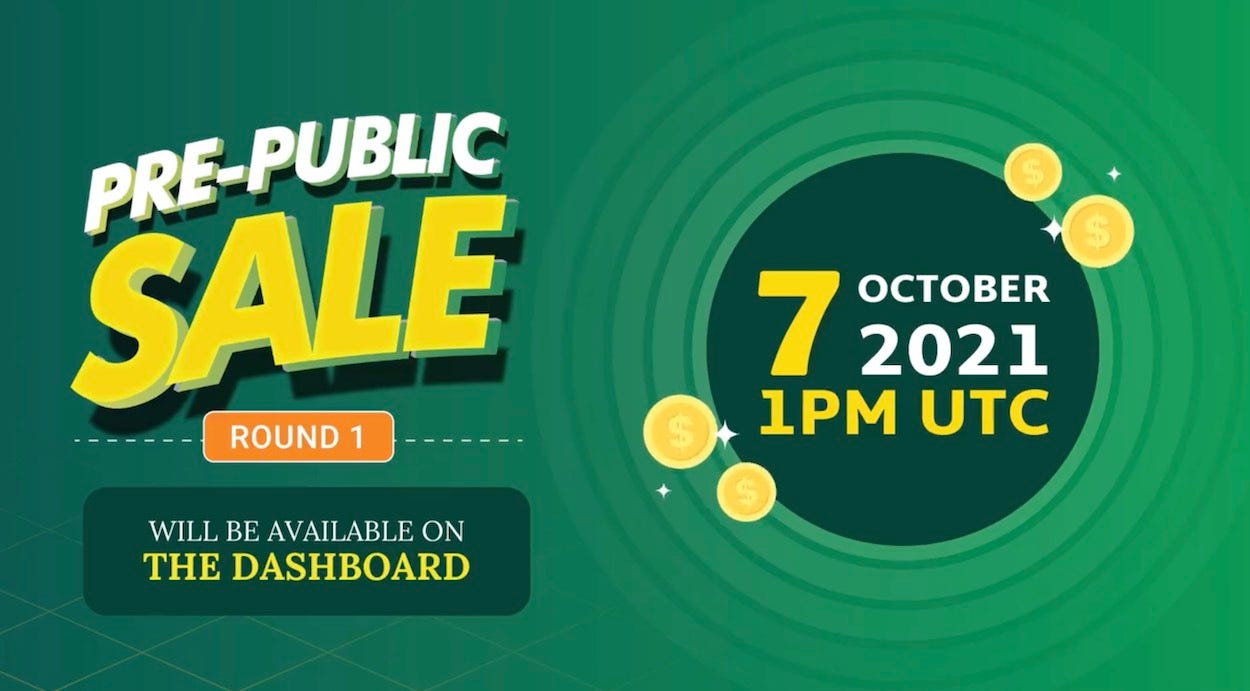
    Dubai, U.A.E, Oct 7th, 2021 — Socially conscious and ethical DeFi ecosystem MRHB DeFi is democratizing access to its private sale by allowing its public community members to partake in the pre-public sale rounds. Usually reserved only for the larger and institutional investors, the earlier stage private sale rounds offer early access, with investors able to enjoy privileged pricing.

    MRHB’s community has reached 20,000 members in less than four months and to better reward their early supporters, MRHB has eliminated the large minimum participation amount required, in effect, leveling the playing field for smaller investors by offering access at pre-IDO prices. MRHB has officially announced that registration for the Pre-Public Sale Round 1 starts today, 7th October at 1PM UTC.

    “In line with our ethos of inclusion, MHRB DeFi is pleased to offer this unique opportunity to our loyal community who has supported us from the beginning,” says MRHB DeFi CEO Naquib Mohammed. “Our inclusive and ethical philosophies promote equitable sharing of opportunities. This applies to our token launch as well as our products, so we stay true to our vision of empowering communities.”

    Strategic Investments and Strong Support from Partnerships

    Having onboarded institutional investors such as Mozaic of New World Group, Sheesha Finance, Contango Digital Assets and NewTribe Capital, to name a few, the DeFi ecosystem startup has received strategic investments which also comprise partnership support in various areas including advisory, marketing, networking, amongst others.

    MRHB is currently developing eight different Shariah-compliant DeFi products, with the first being its Souq NFT, an NFT creation platform and marketplace which supports multi-chain solutions.


    [ad_2]

    Source link

  • Crypto exchange AscendEX now offers no-fee credit card deposits

    Crypto exchange AscendEX now offers no-fee credit card deposits

    [ad_1]

    AscendEX, a cryptocurrency exchange platform, announced it has partnered with BANXA to offer a zero-fee rate for users to buy crypto with their credit card/debit card. This promo is concurrent with other fee-free bank transfer payment methods. Active since July 6th, the zero-fee event will last for 14 days.

    The Event Period:

    July 6th, 12 a.m. UTC through July 21st, 12 a.m. UTC.

    Details:

    1. Users who buy digital assets using BANXA on AscendEX will be eligible for zero transaction fees. This applies to both existing and new users.
    2. Also, the first 200 new users who sign up on AscendEX and buy 500 USDT or more digital assets worth using BANXA will be eligible for a 5% discount per purchase. Each buyer can save up to 50 USDT.
    3. After buying any digital asset using BANXA, users who transfer assets worth more than 500 USDT to their futures account will be eligible for Futures Bonus Credit worth 20 USDT. Users who transfer assets worth over 1,000 USDT will be eligible for Futures Bonus Credit worth 50 USDT. The Futures Bonus Credit pool is capped at 10,000 USDT and will be distributed on a first-come, first-served basis.

    BANXA Promo:

    • Fiat Currencies Available: AUD, CAD, CZK, DKK, EUR, GBP, HKD, NOK, PLN, RUB, SEK, TRY, and USD.
    • Tokens Available for Purchase: BTC, ETH, USDT, USDC, LINK, BNB, LTC, XRP, and BAT.
    • Payment Method: Apple Pay, Visa, and Mastercard.

    [ad_2]

    Source link