GENERAL BYTES, a bitcoin and crypto ATM manufacturer, has announced this week the launch of its newest model, the BATMTwoUltra. This latest machine is loaded with the newest features while offering operators the same qualities they are familiar with from the BATMTwo series.
Benefits
The BATMTwoUltra comes with the additional option to configure the ATM for bidirectional (cash to crypto, crypto to cash) operations.
Another advantage is that it is no longer required to manually assemble the unit upon delivery because the head and the stand are no longer separate units, saving the operator, valuable time when deploying machines to new locations.
Also, the new BATMTwoUltra offers an optional extended recycler system called BNR that will be able to dispense up to 15 bills simultaneously. Furthermore, support for S&G or Kaba Mas auditable locks is standard, a necessity for operators relying on 3rd-party armored vehicles for cash collection.
There is also a choice to select 600, 1,200, and 1,400 acceptor/recycler capacities so that the BATMTwoUltra can serve the busiest of locations. Bidirectional support is available when opting for a configuration with a recycler, opting for the BNR extended recycler offers both high speed and security.
The recycler module enables dispensing banknotes inserted into the BATMTwoUltra by other customers and can recycle up to 180 banknotes. Adding a recycler to a configuration increases the initial price of the BATMTwoUltra, but it reduces operator visits to the ATM by up to 50%, saving on expenses in the long run.
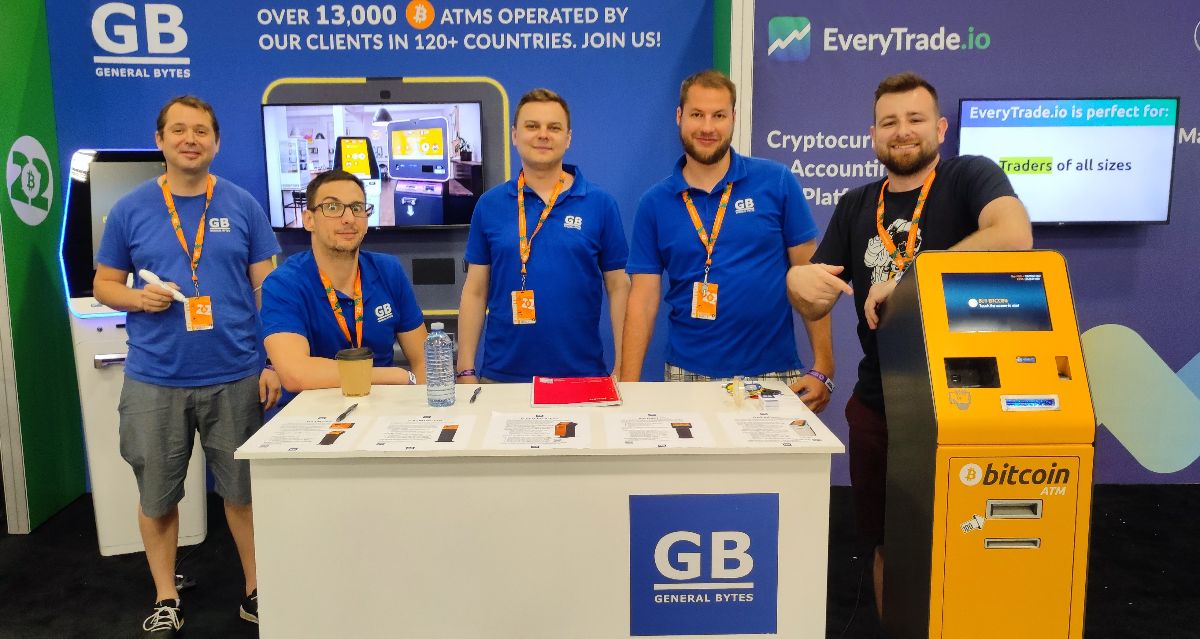
The GENERAL BYTES team presenting its newest BATMTwoUltra at the Bitcoin 2022 conference
“We’ve collected client and end-user feedback for years and incorporated it into our latest model, the BATMTwoUltra. A workhorse designed to be a perfect fit for any location that offers optional bidirectional operations using the latest in recycler technology. Many Bitcoin 2022 conference attendees already had the opportunity to test it live, and they gave us some raving reviews, but now it’s your turn to discover this brand new Bitcoin ATM!” – GENERAL BYTES CEO, Vojtech Fryal
Oracles, according to Cryptopedia, are protocols for smart contracts in the blockchain industry to interact with external data. Smart contracts are essentially computer programs that run within a blockchain and automate a set of transactions when certain conditions are met. Thus, smart contracts contribute to the complete decentralization of the blockchain industry by allowing transactions to take place automatically and without the intervention of a third party.
As appealing as the concept of blockchain as a self-contained, permissionless, and trustless system is, it would have no real-world applications if there was no way to use external, off-chain data, which is where oracles come into play.
According to a recent report, the blockchain industry has over 77 million active users, demonstrating the constant innovation in the space, even though it is only a decade old.
Because oracles connect the blockchain world to the outside world, there is a need to keep up with the blockchain industry’s constant innovation. However, oracles have struggled with centralized control, as some protocols are controlled by a single entity and serve as the sole source of data for smart contracts. If blockchain technology is to achieve its primary goal of decentralization, oracle networks must also be decentralized to provide smart contracts with an increased level of security and transparency.
The Importance Of Decentralized Protocols Like QED
One of the significant issues with introducing oracles to the blockchain is that it contradicts the ethos of blockchain technology, which is trustlessness. One way to address this is to ensure that oracles connected to the blockchain are decentralized and not governed by a single entity.
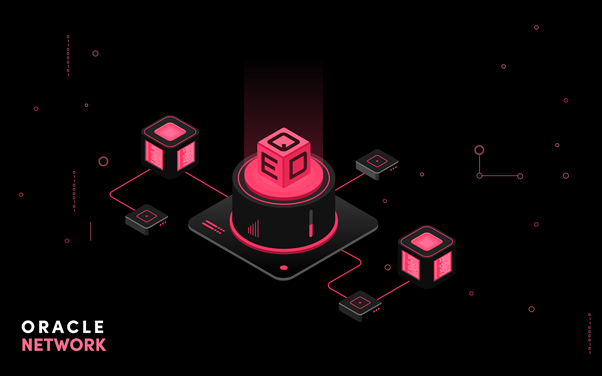
QED is a decentralized oracle protocol with a robust economic model that connects blockchains, smart contract platforms, and off-chain data resources. QED is a decentralized oracle that aims to achieve trustlessness by distributing data points among multiple entities and modeling the blockchain network.
DelphiOracle, QED’s base software, is the most widely used protocol on WAX.io, the world’s most trusted blockchain ecosystem for NFTs, dApps, and video games. For more than four years, the Delphi oracle has served as a multi-party source of truth, providing smart contracts with real-time prices for asset pairings on the various blockchain networks. DelphiOracle has already proven itself in the blockchain industry, and QED is built on it. The purpose of introducing QED is to solve problems inherent in existing models of oracles and blockchain systems.
Economic Model Of QED
The economic model of QED distinguishes it from existing Oracle protocols because it focuses on both the technological and commercial sides, which are both important when it comes to delivering and aggregating real-world data for smart contracts. The following are some of the characteristics of the QED economic model:
Recourse: QED is customer-centric because it protects users by providing a recourse mechanism. Clients would eventually be able to use the external collateral provided by QED to process loss restitution that may have occurred due to systemic risks.
Accuracy: To maximize real-time accuracy, automated systematic and reliability scoring is implemented to phase out poor-performing articles by increasing allocation to more capital-efficient oracles.
Decentralization: QED used distributed ledger technology as a mode of operation, promoting decentralization and eliminating the lingering issue of centralization in Oracle protocols. The native token “$QED” also serves as an economic constraint for QED.
Final Thoughts
QED is a breath of fresh air for Oracle protocols. It aspires to lead the next generation of Oracle protocols that provide services to smart contracts in a fully decentralized, transparent, and open manner. To make the most of its innovative economic model, QED intends to integrate with public blockchains. Furthermore, to promote scalability and interoperability, the QED protocol is also powered by the UX network. QED’s economic model was implemented to address issues with the commercial viability of existing Oracle protocols, and it would as a model for the next generation of Oracle protocols shortly.
MANILA, Philippines — RFOX Media, a subsidiary of Southeast Asia based RedFOX Labs, has launched RFOX Run, a new jump-and-run casual game in Myanmar, powered by prolific tournament game platform Goama. RFOX Run introduces a new gaming rewards model called Play-to-Eat, an innovation of the increasingly popular Play-to-Earn model, where players that are identified as winners and have signed up for an RFOX ID can redeem food vouchers from foodpanda, the leading food delivery service in Myanmar.
At RedFOX Labs, we believe that blockchain companies have a responsibility to explore humanitarian approaches to the innovations they produce. Through our Play-to-Eat model, we believe that RFOX Run users will gain the dual benefits of food rewards and blockchain education, providing them with both immediate- and long-term solutions.
The top RFOX Run players can claim their prizes through the RFOX Media website by registering for an RFOX ID. Winners will receive foodpanda vouchers redeemable with a unique voucher ID, and get their choice of food delivered to their doorstep. To kickstart the campaign, RFOX Media has allocated $22,000 worth of vouchers as rewards.
The global play-to-earn market, mainly driven by blockchain-based companies, has experienced exponential growth this year, with a total market capitalization of $9.21 billion and average year-to-date growth rates of 1,604.12%, according to analysis from CoinMarketCap data on 36 identified play-to-earn companies. From a larger perspective, the video game industry is currently valued at around $170 billion and is expected to grow to $268 billion after five years, according to CoinTelegraph.
In this context, RFOX Media can become a crucial participant in the high-growth play-to-earn market through RFOX Run. Its unique approach to encourage further adoption through play-to-eat and other models reflects RedFOX Labs’ endeavors in empowering blockchain-related growth in Southeast Asia. RedFOX Labs also operates RedFOX Games, which currently runs the KOGs Slam! NFT game on closed beta testing, with more products about to launch.
Earlier this month, RFOX Media and Goama entered a partnership for the launch of RFOX Run in Myanmar, with plans to extend the relationship across the Southeast Asia region. This collaboration brings together an audience of more than 20 million Southeast Asian residents and aims at serving the largely untapped gaming market in Myanmar.
Ben Fairbank, CEO, and Co-founder of RedFOX Labs commented:
“Just weeks after we revealed the partnership between RFOX Media and Goama, I’m happy to see that it has delivered innovative results through the new RFOX Run game and the first-of-its-kind Play-to-Eat model in Myanmar. The Myanmar market is still so young, with a lot of potential, and through this collaboration we have quickly launched a new casual game that has an added benefit of rewarding top players with food. We look forward to serving millions in Myanmar with innovative gaming solutions like this, among other things we are planning to launch in the future for the country.”
Wayne Kennedy, CPO and Co-founder of Goama said:
“We at Goama are very thrilled to work with RedFOX Labs to be the first ones to bring both NFTs and tournament prizes to Myanmar! This furthers our ambition of bringing a casual eSports platform to leading apps throughout Southeast Asia. We’re also very happy to have created RFOX Run, where users can compete for the top spot and at the same time be compensated with food vouchers!”
About RedFOX Labs
RedFOX Labs is a Southeast Asian venture builder that identifies and builds successful business models for the region’s emerging markets. It is focused on unlocking the true market value of the Southeast Asian digital economy for high consumer demand services such as e-commerce, e-media, e-travel, and esports/gaming and focuses on adding value to the digital economy using emerging technologies such as blockchain. As a company, its value is tradable through its native token ($RFOX).
foodpanda is a leading delivery platform in Asia dedicated to bringing consumers a wide range of food, groceries and more, quickly and conveniently. Powered by technology and operational excellence, foodpanda is spearheading the growth of quick-commerce (q-commerce) across the region with its network of retail partners, as well as pandamart cloud stores to provide more on-demand options beyond the millions of food delivery options. foodpanda operates in more than 400 cities across 12 markets in Asia — Singapore, Hong Kong, Thailand, Malaysia, Pakistan, Taiwan, Philippines, Bangladesh, Laos, Cambodia, Myanmar, and Japan. foodpanda is a subsidiary of Delivery Hero, a global leader of the food delivery industry. www.foodpanda.com
About Goama
Goama is a leader in platform gamification, setting the benchmark in digital innovation and user engagement, working with some of the world’s biggest superapps and brands. Its turnkey solution offers a plug and play platform that creates unique gamified experiences that empower its business partners to build engaged communities. Goama has partnerships with the leading apps across 24+ countries to help them drive user engagement, increase monetization opportunities, and acquire new users. https://goama.com