[ad_1]
 This week, the publicly traded mining company Marathon Digital Holdings unveiled new firmware and a control board designed to enhance the efficiency of bitcoin mining rigs. Marathon revealed it has been developing this technology for about a year. Marathon Releases Custom Firmware and MARA UCB 2100 Control Board On March 25, 2024, Marathon (Nasdaq: MARA) […]
[ad_2]
Source link
Tag: introduces
-

Marathon Introduces Custom Firmware and Control Board for Enhanced Bitcoin Mining Operations
-
Gemini Introduces Crypto Rewards Credit Card in the US
[ad_1]
Crypto trading platform, Gemini confirmed the availability of its crypto rewards credit card in the US yesterday. According to the exchange, users will be able to earn crypto rewards on purchases.
Dubbed ‘Gemini Credit Card’, the product has been issued by WeBank and features Mastercard, the US-based financial services provider, as the exclusive card network. Gemini noted that its crypto rewards credit card received more than 500,000 sign-ups since the launch of its waitlist.
“Last year, the crypto industry had its breakout moment with 44% of crypto owners in the U.S. reported first buying crypto in the last year. Gemini is committed to helping drive more education and offer innovations that remove barriers of entry for consumers who want access to crypto such as bitcoin,” said Pravjit Tiwana, the Chief Technology Officer (CTO) of Gemini. “In partnership with Mastercard and WebBank, we developed the Gemini Credit Card to offer a simplified way to invest in crypto without asking consumers to change their daily behavior.”
Gemini is one of the most valuable digital exchanges in the world. In November last year, the crypto trading platform raised $400 million in growth equity funding and reached a valuation of more than $7 billion.
Crypto Rewards
Sherri Haymond, the Executive Vice President of Digital Partnerships at Mastercard, said that the latest partnership with Gemini will provide an efficient crypto reward experience to the users. Furthermore, Haymond highlighted the growing global popularity of the cryptocurrency ecosystem.
“Mastercard and Gemini share in the belief that providing relevant and innovative crypto rewards experiences will not only empower consumers but also unlock access to the digital currencies ecosystem. We’re honored to work hand in hand with Gemini to deliver these one-of-a-kind rewards offering and make it even easier for consumers to experience crypto,” Haymond added in the press release.
Crypto trading platform, Gemini confirmed the availability of its crypto rewards credit card in the US yesterday. According to the exchange, users will be able to earn crypto rewards on purchases.
Dubbed ‘Gemini Credit Card’, the product has been issued by WeBank and features Mastercard, the US-based financial services provider, as the exclusive card network. Gemini noted that its crypto rewards credit card received more than 500,000 sign-ups since the launch of its waitlist.
“Last year, the crypto industry had its breakout moment with 44% of crypto owners in the U.S. reported first buying crypto in the last year. Gemini is committed to helping drive more education and offer innovations that remove barriers of entry for consumers who want access to crypto such as bitcoin,” said Pravjit Tiwana, the Chief Technology Officer (CTO) of Gemini. “In partnership with Mastercard and WebBank, we developed the Gemini Credit Card to offer a simplified way to invest in crypto without asking consumers to change their daily behavior.”
Gemini is one of the most valuable digital exchanges in the world. In November last year, the crypto trading platform raised $400 million in growth equity funding and reached a valuation of more than $7 billion.
Crypto Rewards
Sherri Haymond, the Executive Vice President of Digital Partnerships at Mastercard, said that the latest partnership with Gemini will provide an efficient crypto reward experience to the users. Furthermore, Haymond highlighted the growing global popularity of the cryptocurrency ecosystem.
“Mastercard and Gemini share in the belief that providing relevant and innovative crypto rewards experiences will not only empower consumers but also unlock access to the digital currencies ecosystem. We’re honored to work hand in hand with Gemini to deliver these one-of-a-kind rewards offering and make it even easier for consumers to experience crypto,” Haymond added in the press release.
[ad_2]
Source link -

Coinbase Wallet introduces support for the Solana ecosystem | by Coinbase | Mar, 2022
[ad_1]
Coinbase Wallet browser extension now offers support for sending, receiving, and storing Solana and SPL tokens

By Adam Zadikoff, Senior Product Manager
Making web3 more user-friendly means more ways to interact and connect with dapps across a wide range of blockchains and networks. Today, we’re introducing our initial phase of support for Solana. Users can now manage their Solana (SOL) and Solana tokens (SPL) alongside their tokens held on all of Coinbase Wallet extension’s supported networks, including Ethereum, Avalanche, Polygon, BNB Chain, and many more. This allows users to unlock more of web3 without needing to manage multiple wallets.
Over the past year, there has been an explosion of interest in web3 and decentralized applications, including NFTs and decentralized finance (DeFi). One of the blockchain networks that has seen a surge in usage is Solana, which has built a vibrant community of both developers and users along the way.
Today’s update makes it easier to keep track of all your crypto across an ever-growing range of supported networks, without the need to manage multiple wallet apps. However, this launch is just the beginning — Coinbase Wallet plans to further integrate with the Solana ecosystem, including the ability for users to connect to Solana dapps, and the ability to view and manage their Solana NFTs directly within their Coinbase Wallet extension.
Over the past year, there has been a surge in interest and usage of blockchain networks. While this has resulted in exciting new projects, ecosystems, and communities, it has also revealed scaling issues that have the potential to leave users with high network fees (or “gas”) and long transaction processing times.
Many users have been looking for networks that are optimized for scale, offering low-cost transactions and fast transaction times. One of the fastest-growing blockchains over the past year has been Solana, which now has over $7.35B in total locked value (TLV) and more than 1,400 projects launched, spanning DeFi, NFTs, and web3. It is home to a number of well-known NFT projects including the Degenerate Apes collection, and DeFi protocols including the decentralized exchange, Serum.
Up until now, users who wanted to explore the Solana ecosystem or hold SOL and SPL tokens had to create yet another crypto wallet, manage an additional app or browser extension, and keep track of their assets across multiple surfaces. Starting today, Coinbase Wallet extension users can store, send, and receive Solana (SOL) and all of its SPL tokens alongside all of their EVM-compatible assets, including tokens held on Ethereum, Avalanche, Polygon, BNB Chain, and many more.
If you already have a Solana wallet, such as Phantom or Solflare, it’s quick and easy to import your existing Solana self-custody wallet into Coinbase Wallet. All you’ll need is the latest Coinbase Wallet desktop extension and your Solana wallet’s recovery phrase. You can read our step-by-step instructions on the Wallet extension guide for more information.
If you don’t already have a Solana wallet, the Coinbase Wallet extension will automatically create one for you. And with recently launched Coinbase Pay, it’s easier than ever to add SOL to your Coinbase Wallet extension — you can safely and securely transfer SOL you already hold in your Coinbase account to your Coinbase Wallet, or buy SOL using your stored payment methods.
Today’s release makes SOL and SPL tokens available on the browser extension. This means that if you use Coinbase Wallet on both mobile and desktop, you’ll only see the SOL and SPL tokens that are in your wallet when using Coinbase Wallet extension. You will not be able to see them in the Coinbase Wallet mobile app, however your tokens are safely stored in your wallet.

How to import an existing Solana-based wallet into Coinbase Wallet
We want to empower millions of people to seamlessly participate in the exciting world of dapps and the larger crypto ecosystem. With its low fees and fast transaction times, Solana makes the world of crypto accessible to even more people and is a great introduction to web3.
Today’s launch is just the beginning of Coinbase Wallet and the Solana ecosystem coming together. In the coming months, we’ll be adding support for Solana NFTs and the ability for you to connect your wallet to Solana dapps to interact with everything the Solana ecosystem has to offer.
You can experience the latest enhancements for yourself by downloading Coinbase Wallet’s browser extension for free from the Chrome Web Store. Make sure to follow us on Twitter @CoinbaseWallet for the latest Wallet-related news and product announcements.
—
Information is provided for informational purposes only and is not investment advice. This is not a recommendation to buy or sell a particular digital asset. Coinbase Wallet is a self-custody wallet providing software services subject to Coinbase Wallet Terms of Service and Privacy Policy. Coinbase Wallet is distinct from Coinbase.com, and private keys for Coinbase Wallet are stored directly by the user and not by Coinbase. Fees may apply. You do not need a Coinbase.com account to use Coinbase Wallet.
[ad_2]
Source link -

Rakuten Enters NFT Space, Introduces New Marketplace
[ad_1]
Rakuten, a leading Japanese internet company, has officially entered into the growing non-fungible token (NFT) space through the launch of Rakuten NFT. The newly launched platform supports buying and selling of the emerging asset class.
Rakuten mentioned that the NFT marketplace has many innovative features, including an efficient platform that enables IP holders to build their own websites for issuing and selling NFTs. According to the company, customers will be able to earn and spend Rakuten Points after purchasing through the use of their Rakuten ID.
In 2021, amid the growing adoption of non-fungible tokens around the world, Rakuten announced its plan to roll out its own NFT marketplace. On 25 February 2022, the company officially introduced the marketplace through a new website and mentioned that the sales of NFT content will start at 9:00 pm JST.
“Any NFTs purchased can be added to a collection on the buyer’s own webpage and can also be put up for sale in the marketplace and sold. A service for peer-to-peer issuing and selling of NFT content is planned for launch in 2023 or later, which will support IP holders in Japan and worldwide to issue NFTs, as well as spur further development of a global market for NFTs. Plans also call for the introduction of a diversity of additional payment methods,” Rakuten explained.
NFT Ecosystem
The global NFT ecosystem saw rapid growth in 2021. After a record jump in trading volumes and adoption, leading players in the financial services industry entered the non-fungible token market. Last year, the Japanese firm GMO entered the NFT market through a joint venture. Furthermore, prominent sports and entertainment brands are planning to take advantage of the latest buzz.
“Rakuten NFT is planning to produce and sell the J.League NFT Collection Players Anthem, the J.League official NFT collection, and to develop the Rakuten NFT Art Gallery, a collection of original NFT artwork selected by Rakuten NFT,” Rakuten added.
Rakuten, a leading Japanese internet company, has officially entered into the growing non-fungible token (NFT) space through the launch of Rakuten NFT. The newly launched platform supports buying and selling of the emerging asset class.
Rakuten mentioned that the NFT marketplace has many innovative features, including an efficient platform that enables IP holders to build their own websites for issuing and selling NFTs. According to the company, customers will be able to earn and spend Rakuten Points after purchasing through the use of their Rakuten ID.
In 2021, amid the growing adoption of non-fungible tokens around the world, Rakuten announced its plan to roll out its own NFT marketplace. On 25 February 2022, the company officially introduced the marketplace through a new website and mentioned that the sales of NFT content will start at 9:00 pm JST.
“Any NFTs purchased can be added to a collection on the buyer’s own webpage and can also be put up for sale in the marketplace and sold. A service for peer-to-peer issuing and selling of NFT content is planned for launch in 2023 or later, which will support IP holders in Japan and worldwide to issue NFTs, as well as spur further development of a global market for NFTs. Plans also call for the introduction of a diversity of additional payment methods,” Rakuten explained.
NFT Ecosystem
The global NFT ecosystem saw rapid growth in 2021. After a record jump in trading volumes and adoption, leading players in the financial services industry entered the non-fungible token market. Last year, the Japanese firm GMO entered the NFT market through a joint venture. Furthermore, prominent sports and entertainment brands are planning to take advantage of the latest buzz.
“Rakuten NFT is planning to produce and sell the J.League NFT Collection Players Anthem, the J.League official NFT collection, and to develop the Rakuten NFT Art Gallery, a collection of original NFT artwork selected by Rakuten NFT,” Rakuten added.
[ad_2]
Source link -
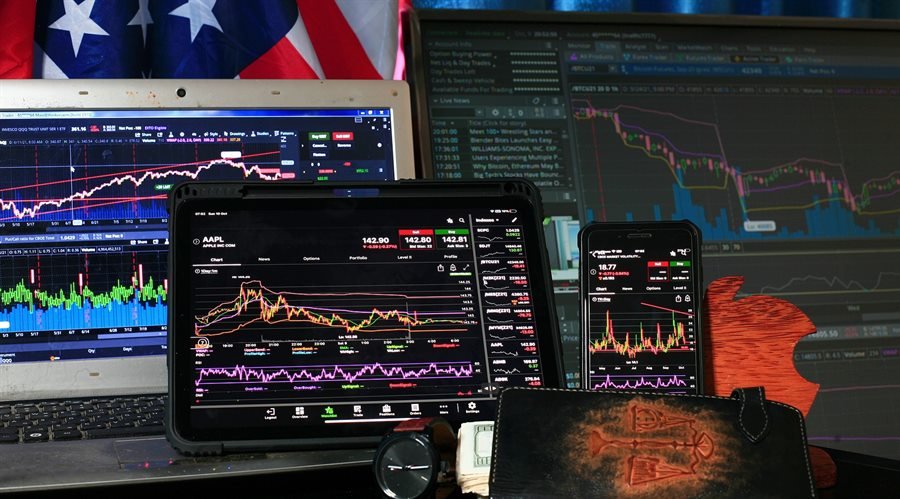
Autonomy Network Introduces AutoSwap That Offers Stop Losses and Limit Orders on Decentralized Exchanges
[ad_1]
On January 7, Autonomy Network, a DeFi protocol, announced the launch of a unique decentralized application (DApp) known as ‘AutoSwap’ on Binance Smart Chain (BSC)
blockchain network. The AutoSwap is considered as the first-ever DApp that stops losses, provides limit orders, prevents impermanent losses, executes arbitrary orders, and provides recurring payments for decentralized exchanges like PancakeSwap that run on BSC blockchain.The AutoSwap is not just available on the Binance Smart Chain blockchain network. The
DApp is also available on major blockchains such as Solana, Polygon, Avalanche, and Ethereum that support decentralized application development. The launch of AutoSwap therefore marks a significant development within the DeFi ecosystem. This is the first time when the DApp is becoming available for decentralized exchanges. Loss protection, stop loss, and limit orders features were only available on centralized exchanges. The introduction of such features on decentralized exchanges therefore enables DEX traders to boost returns and better manage risks without having to look at the screen 24/7. Autonomy Network is an off-the-shelf decentralized automation protocol that enables crypto users to automate their orders to stay active even when the traders go to sleep.Lack of automation solutions such as recurring payment, loss protection, stop losses, and limit orders was a real problem especially with the rapidly growing trading volumes in decentralized exchanges. As a result, many decentralized exchanges have partnered with Autonomy Network to allow their users experience the same features available in centralized exchanges. For instance, SokuSwap decentralized exchange has successfully integrated Autonomy Network on its Binance Smart Chain network. Pangolin decentralized exchange is integrating Autonomy‘s impermanent loss prevention, stop losses, and limit orders features on its Avalanche network. Pangolin wants to improve its overall usability and to offer better risk management to users and liquidity provider tokens by integrating the Autonomy Network. ApeSwap will soon integrate Autonomy-powered limit orders on its Binance Smart Chain network.
Autonomy Network is not just automating trading. It can also be integrated into DAO management tools, lending protocols, NFT projects, and metaverse projects to create arbitrary actions to be triggered under arbitrary conditions. A perfect example is SushiSwap’s lending and margin trading platform Kashi, which has integrated the Autonomy Network to automate self-liquidations.
Lastly, crypto users need to understand such developments are occurring before Autonomy Network launches its native token. The protocol is preparing for its Initial DEX Offering (IDO) that would enable the launch of its token next month.
How DeFi Is Transforming Business Financial Services
The development by the Autonomy Network protocol comes at a time when DeFi is significantly automating the financial industry sector. The use of blockchain technology is removing the need of counterparties and addressing risks through technology advancement. Currently $2 trillion USD in digital currency exists under management. Cryptocurrencies such as Bitcoin and Ether are becoming more widely accepted for payments. DeFi firm Compound Labs released USDC-based loans that guarantee at least a 4% yield, which is much higher than traditional products. Besides that, many DeFi platforms are providing cross-border access to capital with rates that are far better, which would have been otherwise unavailable. As a result, the transaction in banking industry is starting to see Defi’s potential to overhaul the inflexibility of current processes. The adoption of DeFi in transaction banking is opening up new capital opportunities for larger firms and increasing liquidity for small-and-medium size businesses. For instance, US Bank and Morgan Stanley are now providing crypto products for their wealth management clients.
On January 7, Autonomy Network, a DeFi protocol, announced the launch of a unique decentralized application (DApp) known as ‘AutoSwap’ on Binance Smart Chain (BSC)
blockchain network. The AutoSwap is considered as the first-ever DApp that stops losses, provides limit orders, prevents impermanent losses, executes arbitrary orders, and provides recurring payments for decentralized exchanges like PancakeSwap that run on BSC blockchain.The AutoSwap is not just available on the Binance Smart Chain blockchain network. The
DApp is also available on major blockchains such as Solana, Polygon, Avalanche, and Ethereum that support decentralized application development. The launch of AutoSwap therefore marks a significant development within the DeFi ecosystem. This is the first time when the DApp is becoming available for decentralized exchanges. Loss protection, stop loss, and limit orders features were only available on centralized exchanges. The introduction of such features on decentralized exchanges therefore enables DEX traders to boost returns and better manage risks without having to look at the screen 24/7. Autonomy Network is an off-the-shelf decentralized automation protocol that enables crypto users to automate their orders to stay active even when the traders go to sleep.Lack of automation solutions such as recurring payment, loss protection, stop losses, and limit orders was a real problem especially with the rapidly growing trading volumes in decentralized exchanges. As a result, many decentralized exchanges have partnered with Autonomy Network to allow their users experience the same features available in centralized exchanges. For instance, SokuSwap decentralized exchange has successfully integrated Autonomy Network on its Binance Smart Chain network. Pangolin decentralized exchange is integrating Autonomy‘s impermanent loss prevention, stop losses, and limit orders features on its Avalanche network. Pangolin wants to improve its overall usability and to offer better risk management to users and liquidity provider tokens by integrating the Autonomy Network. ApeSwap will soon integrate Autonomy-powered limit orders on its Binance Smart Chain network.
Autonomy Network is not just automating trading. It can also be integrated into DAO management tools, lending protocols, NFT projects, and metaverse projects to create arbitrary actions to be triggered under arbitrary conditions. A perfect example is SushiSwap’s lending and margin trading platform Kashi, which has integrated the Autonomy Network to automate self-liquidations.
Lastly, crypto users need to understand such developments are occurring before Autonomy Network launches its native token. The protocol is preparing for its Initial DEX Offering (IDO) that would enable the launch of its token next month.
How DeFi Is Transforming Business Financial Services
The development by the Autonomy Network protocol comes at a time when DeFi is significantly automating the financial industry sector. The use of blockchain technology is removing the need of counterparties and addressing risks through technology advancement. Currently $2 trillion USD in digital currency exists under management. Cryptocurrencies such as Bitcoin and Ether are becoming more widely accepted for payments. DeFi firm Compound Labs released USDC-based loans that guarantee at least a 4% yield, which is much higher than traditional products. Besides that, many DeFi platforms are providing cross-border access to capital with rates that are far better, which would have been otherwise unavailable. As a result, the transaction in banking industry is starting to see Defi’s potential to overhaul the inflexibility of current processes. The adoption of DeFi in transaction banking is opening up new capital opportunities for larger firms and increasing liquidity for small-and-medium size businesses. For instance, US Bank and Morgan Stanley are now providing crypto products for their wealth management clients.
[ad_2]
Source link -

Asia-based crypto exchange Coinhako introduces new pro platform
[ad_1]
Coinhako, an Asia-based cryptocurrency exchange, announced today the launch of its platform for institutional and high-net-worth customers, Coinhako Privé.
With the launch, all Coinhako Privé clients enjoy access to the following suite of services:
- Institutional grade liquidity and digital asset management tools
- Round-the-clock white-glove services provided by a dedicated personal relationship manager
- Zero percent trading fees and competitive pricing
“After years of consultations, experiments and research, we are pleased to officially unveil Coinhako Privé. Created to suit the growing demands for Coinhako services from institutional and High-Networth Individual (HNWI) customers. In order to better serve this growing customer segment, our team set out to craft this bespoke solution to better suit their needs. Coinhako Privé offers specially tailored bespoke services for an esteemed class of clients to manage their digital assets like Bitcoin, Ethereum, and more. Think of it as visiting a bespoke tailor where every detail of your custom-made suit is crafted to perfection, except that with Coinhako Privé, our team of dedicated experts assists you with managing your digital asset portfolio.”
– The Coinhako TeamOffer for opening an account at Coinhako Privé
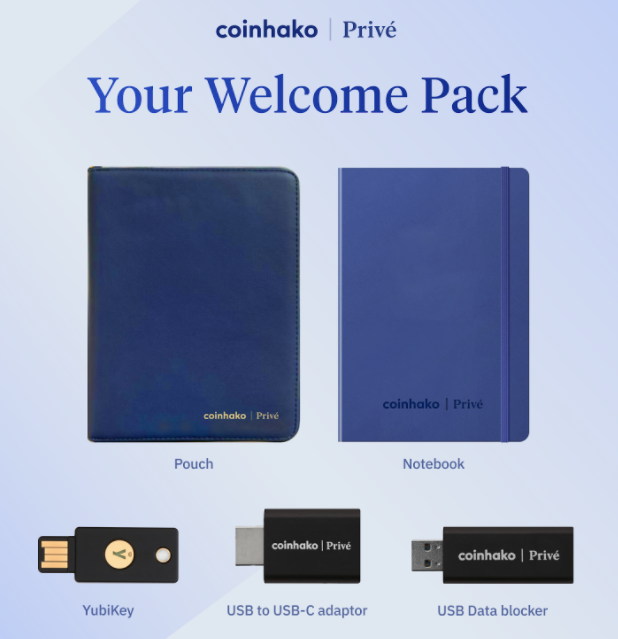
Upon the creation of a new Coinhako Privé account, clients will be gifted a welcome pack (shown below) to make the onboarding experience a special one. Moreover, those who are among the first 25 to register their interest for Coinhako Privé until November 12th will receive a $200 sign-up bonus.
 Source:
prive.coinhako.com[ad_2]
Source link -

RFOX Media Introduces Play-to-Eat Gaming Model in Myanmar with New Mobile Game RFOX Run | by Bit Media Buzz | Sep, 2021
[ad_1]


MANILA, Philippines — RFOX Media, a subsidiary of Southeast Asia based RedFOX Labs, has launched RFOX Run, a new jump-and-run casual game in Myanmar, powered by prolific tournament game platform Goama. RFOX Run introduces a new gaming rewards model called Play-to-Eat, an innovation of the increasingly popular Play-to-Earn model, where players that are identified as winners and have signed up for an RFOX ID can redeem food vouchers from foodpanda, the leading food delivery service in Myanmar.
At RedFOX Labs, we believe that blockchain companies have a responsibility to explore humanitarian approaches to the innovations they produce. Through our Play-to-Eat model, we believe that RFOX Run users will gain the dual benefits of food rewards and blockchain education, providing them with both immediate- and long-term solutions.
The top RFOX Run players can claim their prizes through the RFOX Media website by registering for an RFOX ID. Winners will receive foodpanda vouchers redeemable with a unique voucher ID, and get their choice of food delivered to their doorstep. To kickstart the campaign, RFOX Media has allocated $22,000 worth of vouchers as rewards.
The global play-to-earn market, mainly driven by blockchain-based companies, has experienced exponential growth this year, with a total market capitalization of $9.21 billion and average year-to-date growth rates of 1,604.12%, according to analysis from CoinMarketCap data on 36 identified play-to-earn companies. From a larger perspective, the video game industry is currently valued at around $170 billion and is expected to grow to $268 billion after five years, according to CoinTelegraph.
In this context, RFOX Media can become a crucial participant in the high-growth play-to-earn market through RFOX Run. Its unique approach to encourage further adoption through play-to-eat and other models reflects RedFOX Labs’ endeavors in empowering blockchain-related growth in Southeast Asia. RedFOX Labs also operates RedFOX Games, which currently runs the KOGs Slam! NFT game on closed beta testing, with more products about to launch.
Earlier this month, RFOX Media and Goama entered a partnership for the launch of RFOX Run in Myanmar, with plans to extend the relationship across the Southeast Asia region. This collaboration brings together an audience of more than 20 million Southeast Asian residents and aims at serving the largely untapped gaming market in Myanmar.
Ben Fairbank, CEO, and Co-founder of RedFOX Labs commented:
“Just weeks after we revealed the partnership between RFOX Media and Goama, I’m happy to see that it has delivered innovative results through the new RFOX Run game and the first-of-its-kind Play-to-Eat model in Myanmar. The Myanmar market is still so young, with a lot of potential, and through this collaboration we have quickly launched a new casual game that has an added benefit of rewarding top players with food. We look forward to serving millions in Myanmar with innovative gaming solutions like this, among other things we are planning to launch in the future for the country.”
Wayne Kennedy, CPO and Co-founder of Goama said:
“We at Goama are very thrilled to work with RedFOX Labs to be the first ones to bring both NFTs and tournament prizes to Myanmar! This furthers our ambition of bringing a casual eSports platform to leading apps throughout Southeast Asia. We’re also very happy to have created RFOX Run, where users can compete for the top spot and at the same time be compensated with food vouchers!”
About RedFOX Labs
RedFOX Labs is a Southeast Asian venture builder that identifies and builds successful business models for the region’s emerging markets. It is focused on unlocking the true market value of the Southeast Asian digital economy for high consumer demand services such as e-commerce, e-media, e-travel, and esports/gaming and focuses on adding value to the digital economy using emerging technologies such as blockchain. As a company, its value is tradable through its native token ($RFOX).
RedFOX Labs Official Channels:
Buy RFOX: https://www.redfoxlabs.io/rfox
Website: https://www.redfoxlabs.io/rfox
Facebook: https://www.facebook.com/redfoxlabs.io
Twitter: https://twitter.com/redfoxlabs_io
YouTube: https://www.youtube.com/channel/UCjSvr6RFSMlN00mWRiU0mSQ
RFOX Games Twitter: https://twitter.com/RFOX_GAMES
KOGS Twitter: https://twitter.com/KOGS_GG
KOGS Facebook: https://www.facebook.com/kogs.gg/
KOGS Discord: https://discord.gg/5kNdg7U9bU
About foodpanda
foodpanda is a leading delivery platform in Asia dedicated to bringing consumers a wide range of food, groceries and more, quickly and conveniently. Powered by technology and operational excellence, foodpanda is spearheading the growth of quick-commerce (q-commerce) across the region with its network of retail partners, as well as pandamart cloud stores to provide more on-demand options beyond the millions of food delivery options. foodpanda operates in more than 400 cities across 12 markets in Asia — Singapore, Hong Kong, Thailand, Malaysia, Pakistan, Taiwan, Philippines, Bangladesh, Laos, Cambodia, Myanmar, and Japan. foodpanda is a subsidiary of Delivery Hero, a global leader of the food delivery industry. www.foodpanda.com
About Goama
Goama is a leader in platform gamification, setting the benchmark in digital innovation and user engagement, working with some of the world’s biggest superapps and brands. Its turnkey solution offers a plug and play platform that creates unique gamified experiences that empower its business partners to build engaged communities. Goama has partnerships with the leading apps across 24+ countries to help them drive user engagement, increase monetization opportunities, and acquire new users. https://goama.com
[ad_2]
Source link