Tag: Infrastructure

  • Visa Teams Up With Consensys To Build Payment Infrastructure For CBDCs

    Visa Teams Up With Consensys To Build Payment Infrastructure For CBDCs

    [ad_1]

    Visa and ConsenSys, a blockchain software startup, are working to develop a central bank digital currency (CBDC) pilot program to explore retail applications such as cards and wallets.

    Both firms will first meet with an estimated 30 central banks to discuss the goals that governments hope to achieve with government-backed digital currency. The pilot program is scheduled to begin in the spring of this year.

    Visa To Pilot CBDC In Select Countries

    Visa (V) announced on Thursday that it will take its crypto services to the next level by teaming with blockchain software company Consensys to create a central bank digital currency onramp (CBDC).

    The payments giant plans to launch a “CBDC sandbox” in the spring, where central banks can try out the technology after minting it on Consensys’ Quorum network.
    visa

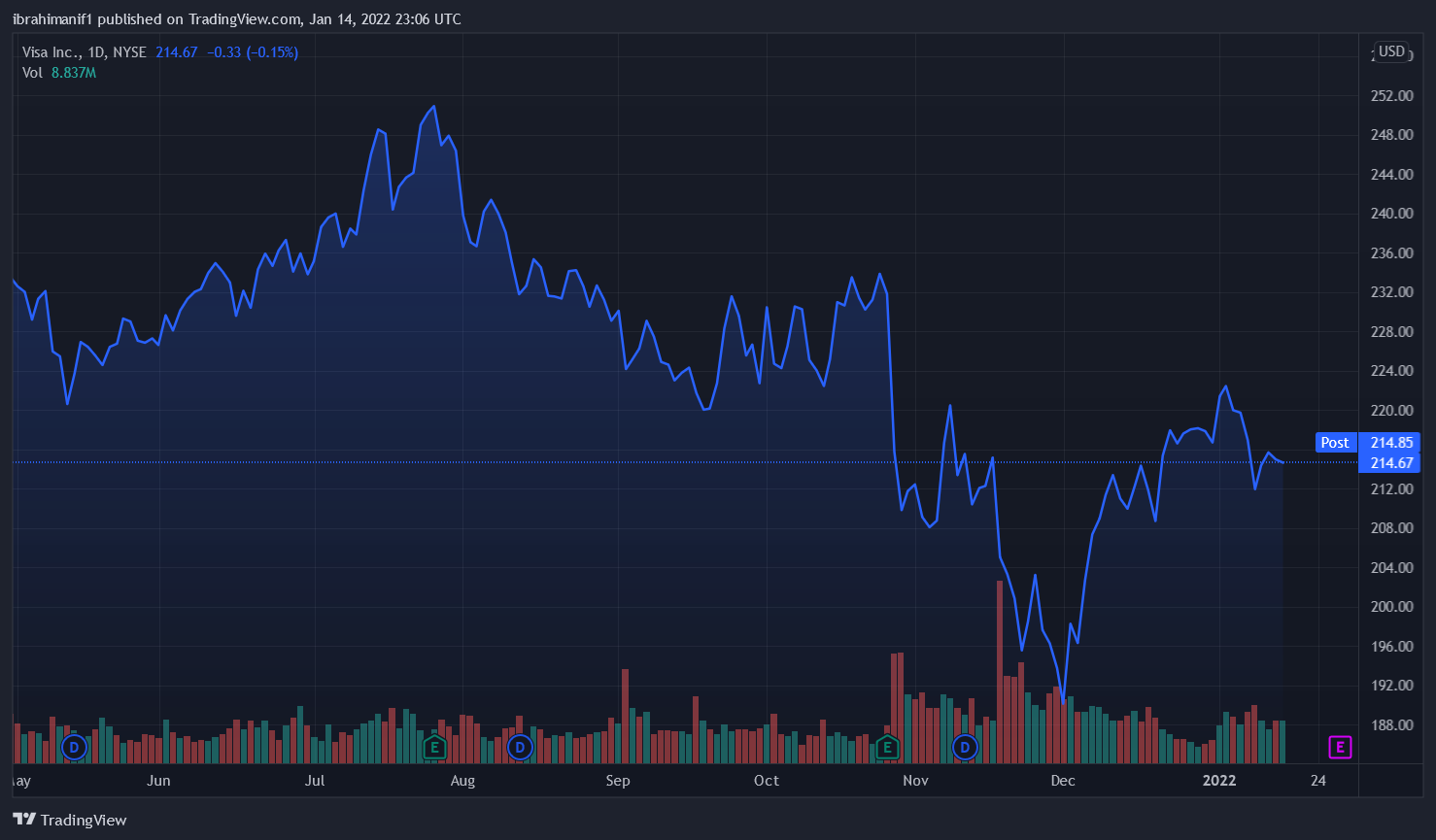
    Visa Trades At $214. Source: TradingView

    Customers will be able to use their CBDC-linked Visa card or digital wallet anyplace Visa is accepted globally, according to Catherine Gu, Visa’s head of CBDC, who spoke with ConsenSys in a blog post Q&A.

    Gu Said:

    “If successful, CBDC could expand access to financial services and make government disbursements more efficient, targeted and secure – that’s an attractive proposition for policy makers.”

    A CBDC is a type of central bank obligation that is issued in digital form and can be used by the general public, comparable to the US dollar.

    Related article | Visa Survey Shows Crypto Payments Could Boom In 2022

    Countries Are Launching CBDCs

    The decision comes as regulators around the world struggle to figure out how to treat CBDCs in a changing financial landscape dominated by cryptocurrencies. The notion that crypto and digital money will upend financial markets or replace fiat currency is a major issue.

    Mastercard also announced the launch of a CBDC test platform in 2020, which allowed banks to simulate the issuance, distribution, and exchange of CBDCs amongst banks, financial service providers, and consumers.

    “Central banks are moving from research to actually wanting to have a tangible product they can experiment with,” Chuy Sheffield, Visa’s head of crypto.

    If Visa is successful, it might help bridge the gap between central banks and financial institutions. Visa is accepted by over 80 million merchant locations worldwide.

    In the last year and a half, the number of countries investigating CBDCs has more than doubled. According to the Atlantic Council’s CBDC tracker, at least 87 different countries — accounting for 90% of global GDP — are considering financial technology in some way.

    China has already started a number of digital yuan pilot initiatives and plans to accept the currency for the Beijing Winter Olympics. Nigeria and the Bahamas have their own CBDCs in circulation.

    In early December, Visa announced the formation of a worldwide crypto advisory practice to assist financial institutions in developing their cryptocurrency operations as demand for crypto goods grows.

    Related article | Visa Is Building A Payment Channel Network On Ethereum

    Featured image from Pixabay, chart from TradingView.com

    [ad_2]

    Source link

  • IOTA selected for European Blockchain Services Infrastructure network

    IOTA selected for European Blockchain Services Infrastructure network

    [ad_1]

    The IOTA Foundation, the non-profit supporting the research and development of new distributed ledger technologies (DLT), including the IOTA Tangle, announced today it been selected to participate in the pre-commercial procurement process for the European Blockchain Services Infrastructure (EBSI), a network of blockchain nodes across the European Union (EU).

    Established in 2019 by the European Blockchain Partnership, the EBSI aims to develop a distributed ledger network across the European community to support cross-border services between governments, businesses, and individuals. Its goals are to enhance cross-border mobility, reduce waste of resources, enforce compliance with EU regulations, and encourage the growth of tech hubs and projects. Thanks to EBSI, verified information will flow quickly and reliably Europe-wide.

    The EBSI network’s nodes will be run on both by the European Commission and by individual member states. Current and planned use cases include the digital management of educational credentials, the establishment of trusted digital audit trails in notarization, SME financing, data sharing among authorities, and European digital identity. After initial implementation in the EU, the technology will also have the potential to extend beyond the 27 member states.

    IOTA is well-positioned to enable EBSI’s vision of secure ledger-based transactions for an EU digital single market. IOTA’s technology fits EBSI’s goals of being scalable, open, decentralized, and interoperable. Permissionless by nature, still IOTA can grant permission to some resources and control data distribution to ensure EU data-sharing compliance. It also supports high throughput and a large number of nodes.

    In addition, IOTA’s feeless nature makes micropayments possible and opens up the network to a broad audience. Anyone can afford to use it, whereas the cost of transactions on other blockchains makes notarizing small information exchanges, such as the cost of stamping a single document, prohibitive. IOTA is also energy-efficient and complements the European Green Deal, the EU’s overarching aim of making Europe carbon-neutral by 2050.

    “We are very excited about moving forward in the rigorous EBSI procurement process, and we feel great about our chances to play a central role in bringing distributed ledger technology to European administrations. EBSI is an excellent fit, both technologically and ideologically. We do not need to adapt an existing blockchain or to start developing a new solution that fits EBSI’s needs. Our core technology already offers a near-perfect match to the strict requirements and precise specifications for a European ledger infrastructure, and it is ready for widespread adoption with only minimal adjustment.”
    – Dominik Schiener, Co-Founder & Chairman of the IOTA Foundation

    Since 2018, 29 countries (All EU Member States, Norway, and Lichtenstein) and the European Commission have joined forces to form the European Blockchain Partnership (EBP). They have committed to working together towards realizing the potential of blockchain-based services for the benefit of citizens, society, and the economy.

    [ad_2]

    Source link