hacklink hack forum hacklink film izle hacklink mamibet loginmamibetmamibet loginqqmamibetjojobetbetciobetcioholiganbetmegabahisjojobet

Tag: Game

  • Top-selling Devilman Manga Launch NFTs on PlayMining Platform in Collaboration with JobTribes Game | by BitMedia Buzz

    Top-selling Devilman Manga Launch NFTs on PlayMining Platform in Collaboration with JobTribes Game | by BitMedia Buzz

    [ad_1]

    BitMedia Buzz

    The limited edition Devilman NFTs can be bought with PlayMining’s DEP token which is leading in the current gamefi rally ahead of Immutable ($IMX), Oasys ($OAS), Guild of Guardians ($GOG) and Axie Infinity ($AXS) in terms of one-month and three-month gains in both token price and market cap.

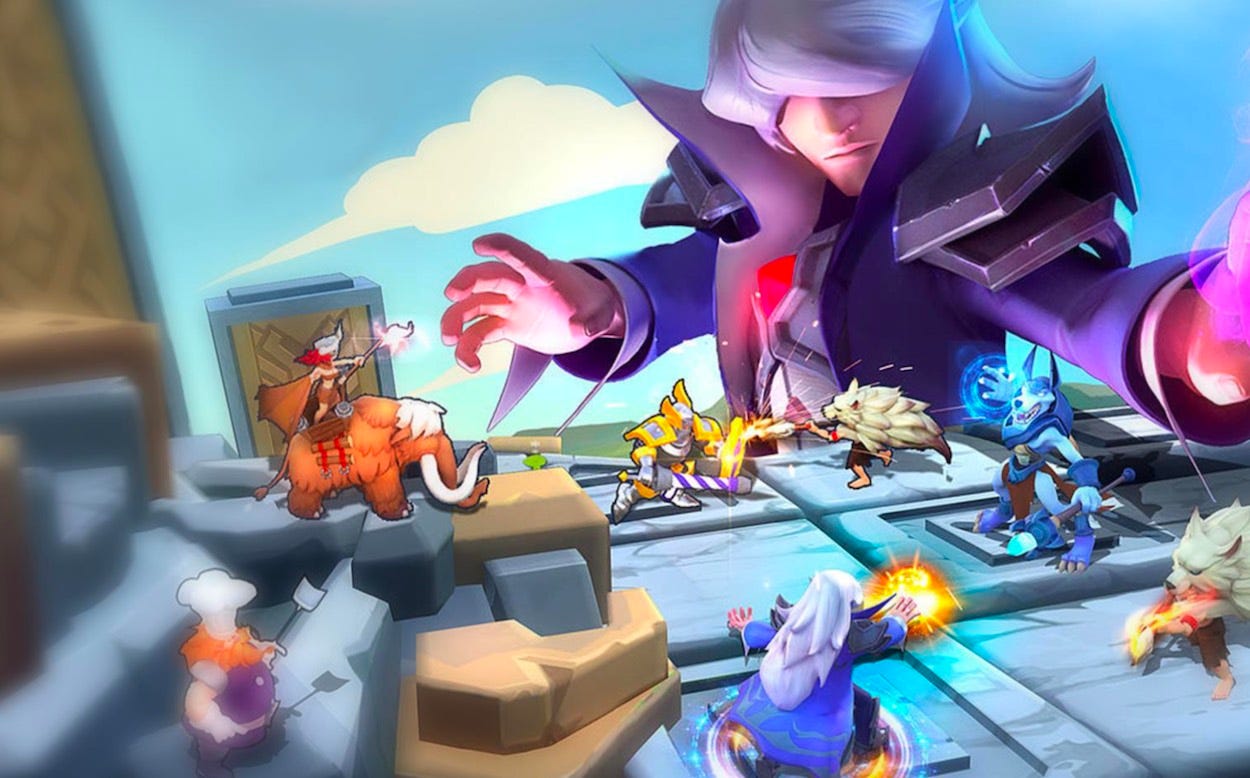
    SINGAPORE, Jan. 24, 2024 — Digital Entertainment Asset Pte. Ltd. (DEA), a Singapore-based global GameFi company and owner of the PlayMining gaming platform, has announced the launch of a limited edition NFT collection for the Job Tribes Play-and-Earn (P&E) card battle game in collaboration with the popular Devilman manga and anime series. The announcement comes at the height of PlayMining’s DEAPcoin ($DEP) rebound, with prices and market cap up 115% and 166% respectively from where they stood when the GameFi market rally began three months ago.

    Limited quantities of six different Devilman NFTs will be available for purchase from the PlayMining NFT marketplace from Jan. 24 at 14:00 to Jan. 31 at 10:59 (UTC+8). The limited edition collaboration NFTs will feature artwork of characters from the Devilman series across three Epic and three Legendary cards. After the sale ends, a limited quantity of cards will still be available to win via random draw by spending DEP to purchase “Premium Recruitment” tickets in the Job Tribes game. Premium Recruitment will be available from Jan. 31 at 16:00 until Feb. 14 at 10:59 (UTC+8), or while supplies last. As a special incentive, a one-of-a-kind “Rage of Fire Devilman” Legendary collaboration NFT will be awarded as a bonus prize to the player who draws the very last Premium Recruitment NFT.

    To commemorate the Devilman collaboration, JobTribes will feature an in-game event called “Devilman’s Invasion!” from Jan. 31 at 16:00 until Feb. 14 at 10:59 (UTC+8). The tie-in event will see players competing to win Devilman’s amulet in the form of a Legendary collaboration NFT. Other game items will also be available to be won.

    Devilman is a well-known manga and anime series that has had numerous iterations since it first launched in 1972. Over 50 million copies of the manga have been sold worldwide, placing it as a top-60 best selling manga series.

    Sales Information

    Legendary NFTs:

    • 3 types, each limited to 10 pieces (total 30 pieces)
    • Immediate sale price: 360,000 DEAPcoin
    • One bonus Legendary NFT exclusively available through “Premium Recruitment”

    Epic NFTs:

    • 3 types, each limited to 10 pieces (total 30 pieces)
    • Immediate sale price: 60,000 DEAPcoin

    $DEP: Dominating the GameFi Market Rally for Over Three Months

    Late October 2023 saw a massive spike in many GameFi token prices, and the bullish market performance continued in a sustained GameFi rally through the new year. PlayMining’s DEP is one of the strongest performing high-profile GameFi tokens on the market today, surpassing Immutable ($IMX), Oasys ($OAS), Guild of Guardians ($GOG) and Axie Infinity ($AXS) in terms of one-month and three-month gains in both token price and market cap.

    DEP is the proprietary token used to purchase NFTs on PlayMining’s marketplaces, and can be earned as a reward for playing PlayMining GameFi games. With DEP’s rising market price, PlayMining NFTs are also increasing in intrinsic value.

    DEP listed on Tokenize Xchange recently where it is tradable with USD and SGD, and can also be traded on other popular cryptocurrency exchanges including OKX, Uniswap, Gate.io, Bitrue and Bitmart.

    Boasting a Brand New Business Model: #GamifyingWork Across All Industries

    DEP’s strong rebound immediately followed an official announcement by PlayMining of multiple high-profile partnerships with whom PlayMining is co-developing a new business model called “Gamifying Work”. The initiative will see new P&E games developed for the PlayMining GameFi platform that gamify work tasks for real-world companies.

    “There are serious labor shortages across many industries all around the world these days, but many of these jobs feature work tasks that could be performed remotely. We can help alleviate labor shortages by gamifying some of these work tasks in PlayMining games, where players are incentivized with DEP tokens in exchange for ‘doing the work’ as in-game quests,” said DEA co-founder and co-CEO Kozo Yamada.

    PlayMining’s labor shortage solution tackles a severe problem — four out of five companies suffer from a lack of talent worldwide, according to a 2023 ManpowerGroup report. In addition, a significant proportion of businesses suffering from labor shortages are in the heavy industries — a space that PlayMining is specifically addressing with a number of their recent partnerships.

    For example, a pilot project is launching in Japan this spring for PlayMining’s partnership with TEPCO Power Grid, the fourth-largest electric power company in the world. TEPCO has had a hard time employing enough power pole inspectors to maintain their aging power infrastructure around Japan. But soon, PlayMining gamers will be able to fill this demand — a new game will send teams of players out into their local communities to photograph power poles, with winning teams earning DEP rewards.

    Another ‘gamifying work’ collaboration underway is PlayMining’s novel solution for the waste management industry — a game that will allow players to remotely control actual physical waste-sorting robots at Japanese waste-processing facilities, thus alleviating a labor shortage in that space. Additionally, DEA has secured investment from KDDI, the second-largest telecom operator in Japan, opening the company up to business collaborations through their network. New projects revealed in PlayMining’s October announcement included initiatives across a wide range of industries, ranging from disaster prevention, local revitalization and CO2 reduction to social good projects targeting elderly quality-of-life, animal welfare, employment for people with disabilities and inheritance.

    The PlayMining GameFi platform’s catalog of P&E games includes: JobTribes, Menya Dragon Ramen, Cookin’ Burger, Lucky Farmer, Graffiti Racer, SOUL Fusers and Rogue Roll Ruler’s. The platform also has two NFT marketplaces, a manga-integrated metaverse project and a ‘Watch-and-Earn’ streaming video application. And soon, it will feature a growing number of ‘gamifying work’ games!

    Businesses and individuals interested in discussing collaboration opportunities with PlayMining can use the following email address to get in touch with the PlayMining business development team: recruit@dea.sg

    About Digital Entertainment Asset

    Digital Entertainment Asset Pte. Ltd. (DEA) is a Singapore-based global Web3 entertainment company founded in August 2018. DEA is a developer of Play-to-Earn (P2E) games — also referred to as Play-and-Earn (P&E) games. DEA also operates the PlayMining gamefi platform, NFT marketplace and ‘Verse’ metaverse project as well as DEAPcoin ($DEP) — the first P&E token approved by the Financial Service Agency (FSA) of Japan. The team is headed by two co-CEOs — Naohito Yoshida and Kozo Yamada — who together bring decades of experience in founding successful startups (with 3 IPOs), creating hit video games, producing Web TV programs and displaying a deep understanding of NFT gaming.

    About PlayMining

    PlayMining is a GameFi and metaverse platform that empowers creators who would otherwise benefit very little in the traditional IP creation industry. The PlayMining platform is a new business model for content creation, featuring an NFT Marketplace powered by the PlayMining DEAPcoin ($DEP), paired with an NFT gaming and Metaverse platform. Featuring both in-house games as well as third-party projects with their own native tokens that allow creators to capture much of the value they create, the PlayMining platform has 2.7 million users and a catalog of P&E game titles including Job Tribes, Cookin’ Burger, Menya Dragon Ramen, Graffiti Racer, Lucky Farmer, Rogue Roll Ruler’s and SOUL Fusers, as well as the metaverse project Fujiwara Kamui Verse.

    About JobTribes

    JobTribes is a card battle game themed around various occupations, featuring characters that personify different jobs. NFTs can be used as powerful battle cards significantly influencing the outcome of battles. The game’s story is handled by Shin Kibayashi, one of the top six creators in Japan selected by Netflix, offering a grand world view.

    Official Channels

    PlayMining Website: https://playmining.com

    PlayMining Discord: https://discord.com/invite/xWeHGdt

    PlayMining X (formerly Twitter): https://twitter.com/PlayMining_SG

    PlayMining Facebook: https://www.facebook.com/PlayMining/

    PlayMining Medium: https://medium.com/playmining-game

    PlayMining Youtube: https://www.youtube.com/channel/UCGWmK0RLV4SB_PSXpj2j6dw

    JobTribes Website: https://jobtribes.playmining.com/

    JobTribes X (formerly Twitter): https://twitter.com/JobtribesJP

    JobTribes Discord: https://discord.com/invite/UcEAuyZGCV

    DEA Website: https://dea.sg

    About Devilman

    Devilman is one of the representative works of manga artist Go Nagai. It depicts a fierce battle between a demon army intent on destroying humanity and Devilman, who betrays them to side with the humans. This work, which was simultaneously serialized in manga and broadcast as a TV anime series, was a pioneer of mixed media projects in Japan.


    [ad_2]

    Source link
  • Play to Earn Game Edensol Integrates Secretum Messaging and Trading dApp

    Play to Earn Game Edensol Integrates Secretum Messaging and Trading dApp

    [ad_1]

    With the appearance of Metaverse, GameFi projects’ popularity is increasingly growing in the blockchain space whereas Web 2.0 traditional tools seem to be obsolete and not adapted to the Web 3.0 conceptual step up. This instrumental gap is filled by a unique partnership between Secretum and Edensol. Security, transparency, decentralization and immediacy as fundamental values of Web 3.0 meet safety and stability, menaced in other gameFi projects using traditional messengers.

    What is Edensol?

    Edensol is a revolutionary gaming Metaverse that combines fantasy action with the use of groundbreaking NFTs on the Solana blockchain. It’s play-to-earn gaming, easy to understand, exciting, and fast-paced. The main characters of the game are heroes, warriors, rangers, mages and pets. The value of an NFT character depends on its level of personalization (special cosmetic characteristics, number of types of pets owned etc.), as well as the frequency and success of the battles.

    To sell and purchase NFTs players can use NSOL tokens and go trade on the Edensol marketplace. Edensol includes various types of NFTs, among which are heroes, whose value depends on its level of personalization and strength, gear (swords, axes, traps, fireballs, magic spells and battle outfits), eggs and pets.

    The prices of these NFTs vary depending on the value of their superpowers, their looks, their not-yet-unlocked potential, and the rarity of their species. Some ultra-rare gear NFT items with completely unique artistic features and effects will be also tradable on secondary marketplaces in the future.

    Significant advantages of financial gaming with NFTs in Edensol

    A fusion of virtual gaming with NFTs is a confluence of crypto, gaming and money. Gamification of financial systems is disrupting the traditional gaming industry as we know it. It is the next step for the cryptomarket and it has various strengths and advantages. The total value of NFTs rocketing to a new record high of $43 billion in October 2021.

    • In contrast to traditional gaming, where users play to win, Edensol adopts a play-to-earn model and permits the revenue capacity of NFT, which is proven to be significant.
    • Edensol takes advantage of the popularity of video games, combined with unique features of cryptocurrencies
    • Edensol provides verifiable and constant ownership for the players. All data is stored on the decentralized public Solana blockchain, which keeps track of what everyone owns. This means that players, not the game developers, own all of the in-game assets, even if a server is turned off or the gaming company suffers technical downtime. Edensol allows players to maintain ownership of all their in-game items and currency, thanks to tokenization.
    • The game becomes reality. Due to blockchain technology, Edensol adds real-world value to in-game purchases. Interior tokens and items can be traded for cryptocurrencies and, ultimately, actual cash. When a user creates an in-game account, Edensol automatically creates and links a crypto wallet to that account, which is used to store NFTs, in addition to NSOL and any other cryptocurrency. At any time, players can transfer all their in-game NFTs to their crypto wallets, and then sell them on decentralized marketplaces

    These aspects make crypto gaming with Edensol a source of real income for players. It could be a passive income or even a full-time one.

    Although blockchain-based crypto gaming is still vulnerable to attacks. Players can lose all of their assets in a hacking incident. For example, a Discord server by NFT marketplace Fractal got hacked, swindling members over $150,000 in crypto assets. And here comes Secretum as a perfect game-changer for crypto trading.

    What is Secretum?

    Secretum is unique, fully decentralized, end-to-end encrypted and secure trading on the Solana Blockchain. The major innovation of Secretum is enabling the trading of all crypto assets (fungible and NFTs) directly between users, via a hybrid messaging and trading function.

    Secretum possesses a completely anonymous and secure sign-up process with only a user’s crypto wallet address. It is DeFi, metaverse compatible, OTC, P2P trading dApp with access to smart public channels. All data is safely stored on the independent and verified nodes in the Secretum network, with no central point of failure.

    Secretum is just like Edensol based on the Solana blockchain. So it is fast and cheap, with low fees and instant trades due to Solana’s capability of 50,000 transactions per second and an average cost per transaction of only $0.00025.

    As gameFi projects and Edensol, in particular, are sensitive to cyber-attacks Secretum is a perfect detail to solve this problem and ensure the safety of users and their assets from scammers. Secretum provides a safe connection in the web 3.0 world and keeps players’ possessions secure and private.

    Edensol + Secretum: complementary partnership

    Thus, Edensol will use Secretum dApp to ensure safe and end-to-end communications for users, whereas Edensol will be a perfect addition to the Secretum community as a fantasy metaverse and an actual play-to-earn income possibility, combining fun-packed action with P2E features and the use of collectible NFTs on the Solana blockchain. Edensol community members will benefit from OTC, P2P trading functionality in the Secretum dApp. They will be able to trade their $NSOL tokens and NFT gaming assets without intermediaries.

    This highly qualitative partnership allows gamers to avoid scammers. All thanks to verification of $NSOL tokens possession, safety and security of Secretum, a brand new Web 3.0 era messenger and trading solution. Being a solution to most of the insecurity problems of DEXs, Secretum perfectly complements the Solana metaverse and Edensol gameFi project.


    [ad_2]

    Source link

  • Blockchain and the evolution of business models in the game industry

    Blockchain and the evolution of business models in the game industry

    [ad_1]

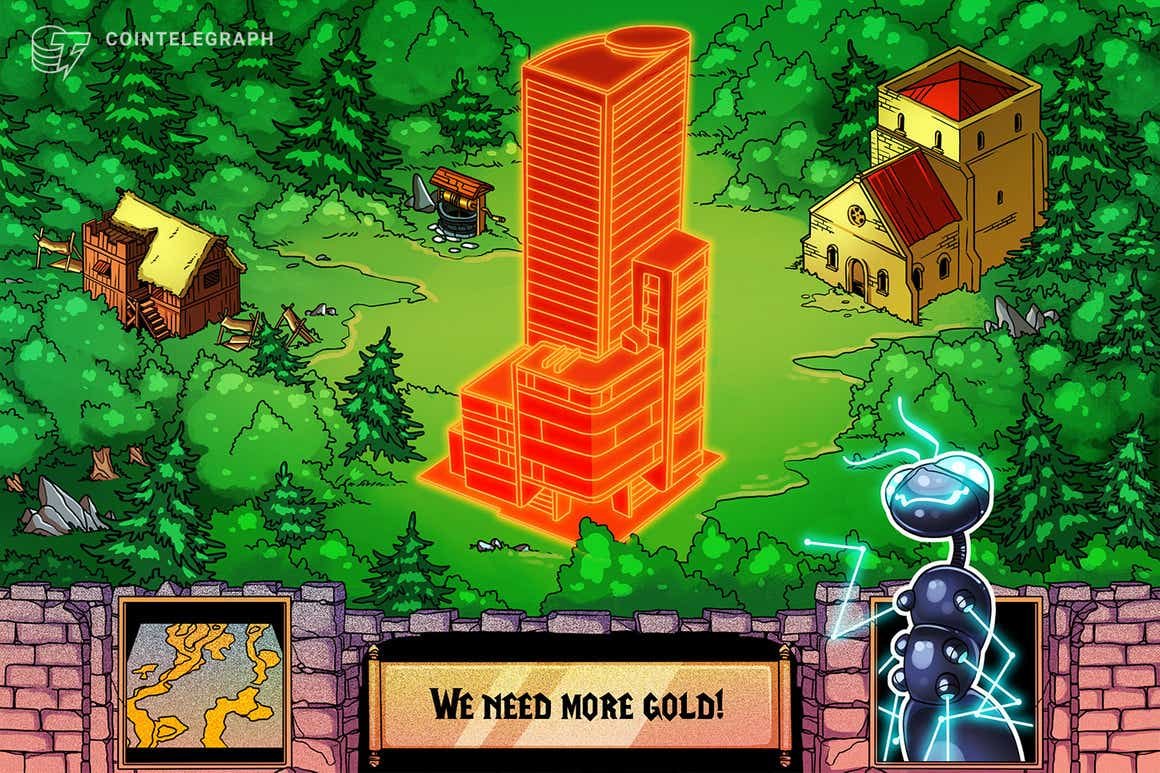
    The first computer games were developed in the late 20th century with the sole purpose of entertaining their audience. One of the first goals was to distract players from their routine work and provide them access to a fantasy world. Very soon, games began to compete for users’ time against traditional forms of entertainment, such as movies, circuses, theater performances, zoos, etc.

    Planet Earth entered the new millennium with a population of over 6 billion people, and the forecast is that this number will reach 8 billion as early as 2023. If we assume that computer games will cease to be an alternative to work and become complementary to it, there will be 4 billion gamers in the world by then.

    Not surprisingly, the traditional boundaries between games, media, sports and communication are rapidly disappearing, creating new business partnerships and causing more and more mergers and acquisitions around the world.

    The still-active virtual world Second Life, which represented a first attempt at a portal to the metaverse with its own in-platform virtual currency, was an important example of this process between 2003 and 2006, during its most rapid period of growth. Players in many countries quit their jobs and dedicated 100% of their time to the virtual world.

    But why is the use of blockchain in games causing a real revolution in the gaming industry? That is what this article seeks to answer.

    The gaming markets

    According to data from mid-2021, there were 3.2 billion people playing computer games, and as a report by Newzoo states, the global gaming revenues in 2021 were about $180.3 billion — 20% more than before the pandemic began in 2019.

    Digital distribution channels are responsible for most of this revenue. Mobile games act as the main growth engine for the games industry, driving this segment to $93.2 billion dollars.

    The game development industry has experienced a profound transformation over the past five years. With the emergence of mobile app stores and digital distribution platforms, even smaller studios have gained the ability to create games for the global market.

    China remains the largest regional segment in terms of both revenue and number of players, accounting for more than a quarter of all sales. The Asia-Pacific region as a whole holds 55% of all players and offers the highest profits and fastest growth rates.

    The introduction of new technologies, such as artificial intelligence (AI), virtual reality (VR) and blockchain, has become a major trend in the market. In recent years, numerous blockchain-enabled gaming apps and services have emerged, and the number of such projects promises to cause a boom in the market by 2022.

    The evolution of business models in the games industry

    Pay-to-play (P2P) model

    From the 1970s until the 2000s, the most prevalent business model for the games industry was “pay-to-play.” In this model, development studios and publishers generate revenue from initial game sales and, in some cases, subscriptions. Collaborations with advertisers for in-game ads were few and far between.

    In this model, players have little or no opportunity to extract value from games, except the satisfaction and enjoyment gained from the in-game experience.

    Free-to-play (F2P) model

    In the late 2000s and early 2010s, the “free-to-play” gaming model gained traction. This model was once considered a disastrous business model that would, at best, bring in lower revenues for a given game and, at worst, cannibalize the entire gaming industry. However, it has instead proven to be the best way to monetize, as well as being a main reason behind the cultural rise of games.

    In the free-to-play model, games are offered to players at no upfront cost. In this type of model, in-game purchases (items and upgrades that improve features in the game) and ads make up the vast majority of the publishing studios’ revenues. Streaming and esports services act as monetization levers for players, while allowing “elite” players to receive rewards.

    A perfect example of how some of these free-to-play business models have become successful is Fortnite. The game, launched in July 2017, generated over $5 billion in revenue in its first year of production. In addition, its userbase climbed to approximately 80 million monthly active users in 2018.

    Play-to-earn (P2E) model

    The “play-to-earn” model is exactly what the name suggests: A model where users can play and earn tokens or crypto while playing. This model has a very powerful psychological incentive, because it combines two activities that have driven humanity since the beginning of time: reward and entertainment.

    The main idea in P2E is that players are rewarded as they invest more time and more effort in the game, and thus become part of the in-game economy (tokenomics), creating value for themselves, for other participants in the game ecosystem, and also for the developers. They receive an incentive/reward for their participation and playing time in the form of digital assets with potential appreciation over time.

    Note that the use of blockchain technology in such assets has brought scarcity to digital assets in games, which can take the form of NFTs and can represent absolutely anything from characters like the kittens in CryptoKitties to cryptocurrencies like Bitcoin (BTC) or Ether (ETH).

    Related: The Metaverse, play-to-earn and the new economic model of gaming

    Along these lines, the key component in this model is to give players “ownership” over certain “digital assets” in the game, allowing them to increase their value by actively participating. This is where blockchain technology has become decisive for gaming business models.

    Many concepts come from traditional games

    The blockchain-based gaming industry is still in its early stages and it is still centered around many concepts coming from traditional gaming. NBA Top Shot, for example, is building on the “collect and trade model” that has prevailed in baseball cards and other collectibles for decades.

    Axie Infinity, currently the most famous blockchain-based game, uses the “breed and battle” game model that Pokémon launched in the 1990s.

    Related: How blockchain technology might bring triple-A games to metaverses

    Sorare, on the other hand, a game in which players buy and trade soccer cards and build competing soccer teams, is based on the “recruit and compete” model. Similarly, virtual worlds like Decentraland and Somnium Space are immersing people in alternative realities, like Second Life and The Sims before them.

    Thus, although many games that use blockchain technology (such as The Sandbox, Gods Unchained and Star Atlas) often fall into the same categories as games that do not use such technology, the most important feature that distinguishes them from their counterparts in the traditional market is the use of blockchain-based cryptocurrency support.

    Overview of blockchain gaming

    Advantages of blockchain games for players

    With the introduction of blockchain technology, native game assets go to global, non-permitted blockchain platforms, rather than being tied up and locked in the particular game’s platform or in local environments controlled by video game development companies. We’ve talked about this before, when we covered the role of blockchain in NFTs in this column.

    Here, it is important to highlight how blockchain technology has enabled digital assets, such as nonfungible tokens, to be interoperable and immediately viewable across dozens of different wallet providers, tradable on other gaming platforms and required in various virtual worlds of the Metaverse. And interoperability, in turn, has extended the negotiability of digital assets by enabling their free trade on other gaming platforms, thanks to blockchain technology. This puts users in direct ownership of their in-game items, giving them full and irrevocable control over their use.

    That is, blockchain game players can access NFT marketplaces and crypto-active brokers and extract value from their in-game experiences by buying and trading digital assets obtained in games, 24/7, globally. In addition, tokenization of in-game assets opens up numerous other opportunities.

    Related: Ready Player Earn: Where NFT gaming and the virtual economy coincide

    The decentralized finance marketplace is a place where some players can put their acquired in-game assets to yield. Platforms like Yield Guild Games facilitate, for example, the lending and borrowing activities of in-game assets, so that players who do not have the initial capital needed to purchase in-game items can, through DeFi, participate in a given game by ceding a portion of the monetization and their earnings to “in-game item lenders.”

    The advantage of blockchain games for developers

    In addition to increasing monetization opportunities for gamers, the use of blockchain-based assets can also be beneficial for game developers.

    Under the current structure of in-game item exchange, the practice known as “gold mining” has become prevalent. Gold mining involves players selling accounts or game “coins” on dark markets or over-the-counter markets, limiting secondary market monetization opportunities for developers and making players vulnerable to fraud.

    With the expansion of marketplaces for digital assets obtained in blockchain games, developers can obtain information about the trading volumes of these assets and encode royalties into NFTs, so that with each subsequent sale, they receive a portion of the sale price as a royalty fee. This represents a real evolution in the way intellectual property and copyrights are thought of in the digital world.

    The game industry and the property dispute

    Games that use blockchain are fundamentally different from traditional games because of the way they approach ownership. Blockchain games give players full control over the digital assets they earn or acquire through their participation in the games.

    In traditional games, even though players pay real money for their digital assets, they can no longer access them if the server is down. That is, in traditional games, the money and assets remain the property of the publisher or developer.

    Ultimately, blockchain game players retain full ownership of their digital assets, allowing them to trade them freely with other players, sell them for real money, and potentially use them in other games or virtual worlds in the Metaverse.

    Related: Nonfungible tokens from a legal perspective

    The trend in the games industry is towards the adoption of blockchain in games as a path of no return, and at the moment, the P2E model is the driver of this adoption. However, over time, the use of blockchain in games will likely span a variety of use cases beyond the play-to-earn model. This is because the technology enables a myriad of combinations and incentives.

    Against this backdrop, it’s no wonder that, in the last four months alone, hundreds of millions of dollars have flowed into blockchain or NFT-centric games, with investors allocating large amounts of funds to startups that, in turn, are looking for expert developers to build their teams.

    Parallel to this, governments are already considering taxing the profits made by the more than two million players of Axie Infinity, currently the most popular game on blockchain and using the P2E model.

    What about you? Would you invest your time to compete and be rewarded with digital assets in a game, including it as work experience on your resume?

    This article does not contain investment advice or recommendations. Every investment and trading move involves risk, and readers should conduct their own research when making a decision.

    The views, thoughts and opinions expressed here are the author’s alone and do not necessarily reflect or represent the views and opinions of Cointelegraph.

    Tatiana Revoredo is a founding member of the Oxford Blockchain Foundation and is a strategist in blockchain at Saïd Business School at the University of Oxford. Additionally, she is an expert in blockchain business applications at the Massachusetts Institute of Technology and is the chief strategy officer of The Global Strategy. Tatiana has been invited by the European Parliament to the Intercontinental Blockchain Conference and was invited by the Brazilian parliament to the public hearing on Bill 2303/2015. She is the author of two books: Blockchain: Tudo O Que Você Precisa Saber and Cryptocurrencies in the International Scenario: What Is the Position of Central Banks, Governments and Authorities About Cryptocurrencies?