[ad_1]

Crypto markets are expected to remain volatile for the foreseeable future, but BTC’s battle to reclaim $40,000 could be followed with rallies from LUNA, AVAX, ATOM and FTM.
[ad_2]
Source link

[ad_1]
Crypto markets are expected to remain volatile for the foreseeable future, but BTC’s battle to reclaim $40,000 could be followed with rallies from LUNA, AVAX, ATOM and FTM.
[ad_2]
Source link

[ad_1]

BTC continues to lose ground, but if the $40,000 level is reclaimed, LEO, MANA, KLAY and XTZ could be the first to recover.
[ad_2]
Source link

[ad_1]
By Philip Martin, Chief Security Officer, Coinbase

The recent high profile ransomware attacks on Colonial Pipeline and food processing giant JBS have led to knee jerk calls to ban cryptocurrencies because the attackers demanded to be paid in Bitcoin. But if cryptocurrency went away tomorrow would ransomware end? In a word, no. Ransomware existed before cryptocurrency was popular and, if cryptocurrency was outlawed tomorrow, criminals would simply seek alternative payment methods, of which there are many.
The rise of ransomware has been horrible to behold. It is one of the rare online crimes where the impact is felt broadly by everyone. Hospitals unable to service patients. Local governments unable to support citizens. Workers losing jobs because their employers go bankrupt.
But blaming crypto for ransomware is like holding email accountable for ransomware because that’s a vector criminals use to infect victims. Neither are the cause of ransomware. What we need to eradicate this scourge is a more nuanced, multi-pronged strategy that gets to the root cause of the problem.
The growth of ransomware can be attributed to the rate at which companies are shifting critical systems online and the poor level of controls many companies have over their IT systems. When you couple those factors with ransomware gangs operating from foreign jurisdictions with relative impunity and little ability for law enforcement to drive an international response, you get a recipe for trouble.
This has led some pundits to throw up their hands and conclude the only way to fight back is to ban cryptocurrencies. But if cryptocurrencies are banned, attackers will simply fall back to traditional money laundering methods like prepaid gift cards, money-mules, bulk cash smuggling, funnel accounts or requiring air-dropped cash payments.
What’s more, there are many reasons cryptocurrency is good for law enforcement. Talk to law enforcement agents and those prosecuting crimes like this and they’ll tell you that cryptocurrencies are much easier to track than traditional, harder to trace forms of payment, such as cash.
In the world of Bitcoin, while you might not be able to immediately attach a name to a transfer, the whole history of transfers, for every address on the cryptocurrency network, is preserved forever and accessible to all. Law enforcement can use these “digital breadcrumbs” to track spending patterns. Where that cryptocurrency touches an exchange like Coinbase, which collects KYC (Know Your Customer) data for customers, a subpoena or a warrant will get them a real-world identity. That stands in stark contrast to traditional money laundering using cash or commodities.
If banning use of cryptocurrency isn’t the answer, what is?
That will take time, of course, so in the meantime companies in the trenches should actively review their own security posture and figure out if and how they could recover if attacked. Most companies have backup policies, but few organizations have restore policies or regularly test their ability to restore in a real-world scenario.
Ransomware isn’t going away even if cryptocurrencies are banned. So don’t be tempted by the “easy answer” given it isn’t really an answer at all. Let’s take the bull by the horns and focus on the hard work of putting ransomware in its place.
This piece originally appeared in Morning Consult.
Ransomware is a scourge, but eliminating cryptocurrencies won’t make it go away was originally published in The Coinbase Blog on Medium, where people are continuing the conversation by highlighting and responding to this story.
[ad_2]
Source link
[ad_1]
The cryptocurrency market started 2021 on the back of substantial gains in December 2020. The overall market cap of cryptocurrencies jumped from approximately $500 billion to $752 billion in the last month of 2020.
2021 started as a ‘game-changing’ year for the cryptocurrency market as a dramatic surge in demand for cryptocurrencies led to a substantial jump in the value of digital assets. The overall market cap of digital currencies jumped from $750 billion in January to a record high of approximately $2.5 trillion in May 2021. Despite the latest dip, the total market cap of cryptocurrencies is hovering near $1.4 trillion, which is up by more than 85% in the last six months.
While some of the cryptocurrencies spiked by more than 10,000% in 2021, we have compiled a list of the top cryptocurrency assets which is not only focused on price gains. We have ranked the top 5 cryptocurrencies on the basis of retail and institutional adoption, popularity and market cap.
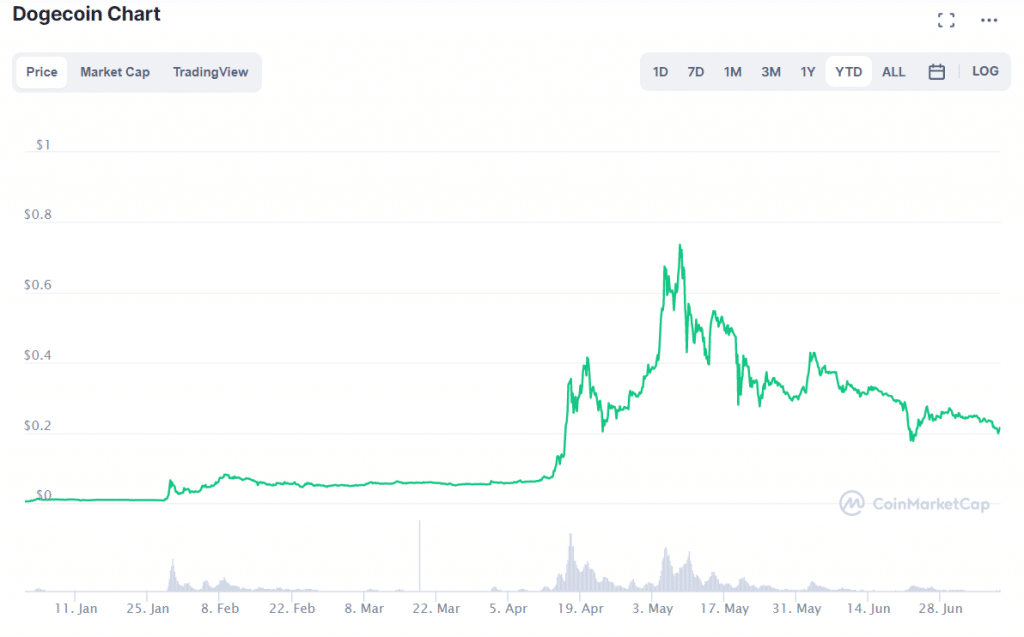
Started as a joke cryptocurrency in 2013, Dogecoin became the most popular digital currency in 2021. Driven by the Redditt frenzy in January this year, DOGE spiked by nearly 900% within 24 hours on 29 January. Additionally, Dogecoin received support from celebrities, including Elon Musk and Snoop Dogg. In terms of adoption, several global organizations started accepting DOGE as a mode for payments. As of the time of writing, Dogecoin is trading above $0.21 with a market cap of more than $27 billion. DOGE is up by more than 4,500% since the start of 2021.
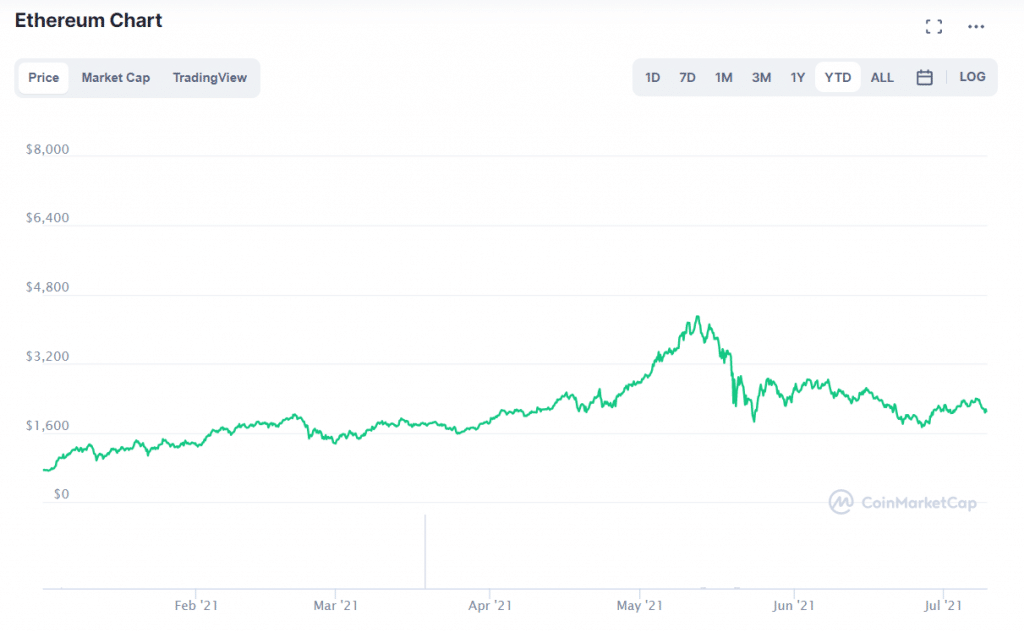
ETH is the second-most valuable cryptocurrency in the world after Bitcoin. Institutional interest in Ethereum jumped substantially in 2021 as large organizations started adding Ethereum to their balance sheets. According to CoinShares, Europe’s largest crypto asset manager, ETH-related investment products attracted more than $1 billion in the first six months of 2021. Grayscale, the US-based digital asset management firm, expanded its ETH assets significantly this year. The company now holds more than 3.1 million ETH. In terms of price, Ethereum remained the best performing cryptocurrency among the top 3 with a jump of nearly 190% in H1 of 2021. ETH currently has a market cap of $254 billion.
Swiss Fintech Set to Change the Landscape of Isolated Financial ServicesGo to article >>
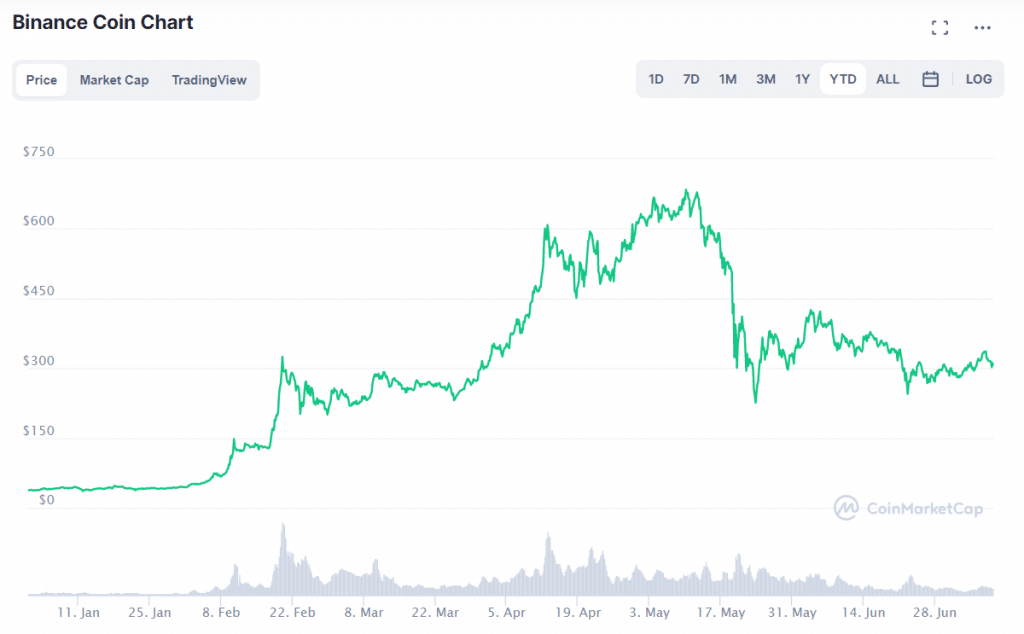
BNB surprised everyone in 2021 with substantial gains. The cryptocurrency became popular among retail traders due to its limited supply. One of the main reasons behind the surge in the popularity of BNB in 2021 is that a record number of BNB tokens were burnt this year. “When you burn coins, they are taken out of circulation forever. It increases the value of the remaining coins,” Binance CEO, Changpeng Zhao mentioned on Twitter in April. Binance Coin started this year with a price level of $37. The cryptocurrency spiked by more than 700% to reach $300 by the end of June 2021. BNB’s current market cap stands at around $47 billion.
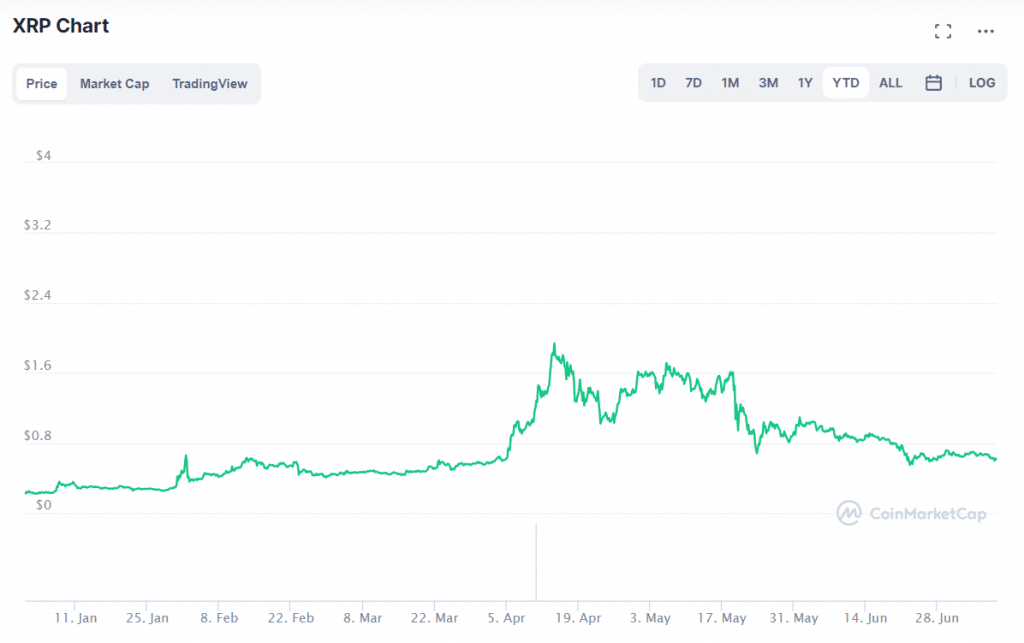
In December 2020, XRP lost nearly 60% of its value after the US Securities and Exchange Commission (SEC) filed a lawsuit against Ripple. However, the adoption of XRP Ledger (XRPL) has increased rapidly since the start of 2021. Ripple formed several partnerships with some of the leading cross-border payment firms around the world to enhance the use of XRP in global payments. XRP-related investment products also saw large institutional inflows this year. XRP’s retail demand and the total number of whale addresses have increased substantially over the last six months. As a result, the price of XRP has jumped from $0.22 to $0.60 in the first half of 2021. XRP is the 6th most valuable cryptocurrency in the world with a market cap of over $28 billion.
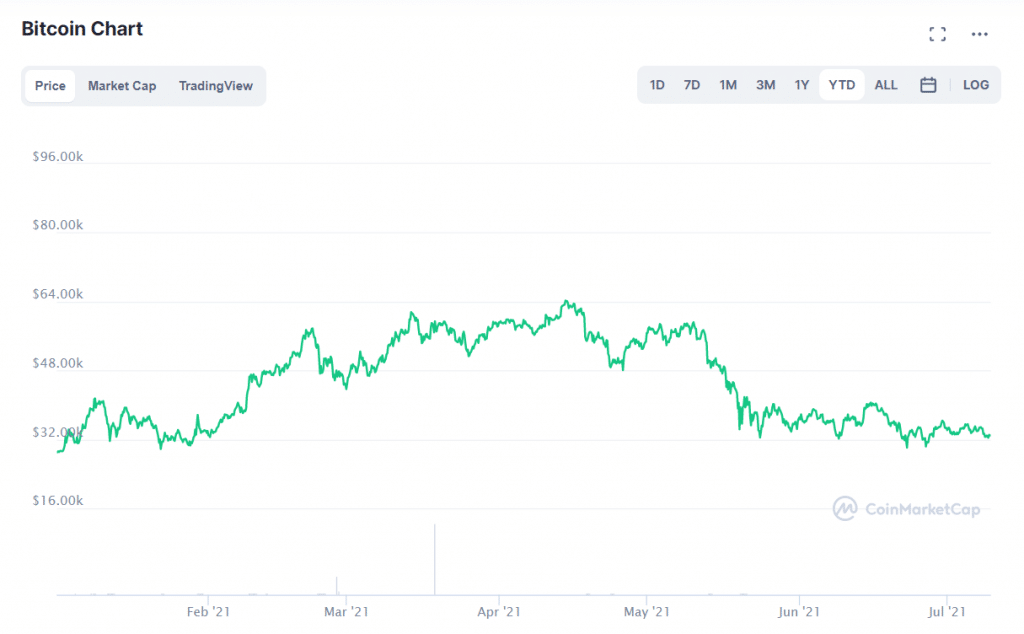
Despite the reason that BTC lagged behind other cryptocurrencies like Ethereum, XRP and Dogecoin in terms of price gains, Bitcoin received immense support from large hedge fund managers and institutional investors. In February 2021, Tesla, the world’s largest electric car maker, purchased $1.5 billion worth of Bitcoin. Moreover, MicroStrategy and Square increased their BTC holdings during the first half of 2021. CoinShares mentioned that the overall investment into BTC-related investment products in H1 of 2021 has already jumped above the total investment of the entire 2020. According to the latest data published by crypto analytics firm, Santiment, Bitcoin whales holding between 100 and 10,000 BTC now have more than 9.13 million coins, which is the highest level on record. This shows that BTC remained the preferred choice of large investors in 2021.
Bitcoin is still the most valuable cryptocurrency in the world with a market cap of over $600 billion.
[ad_2]
Source link