Crypto trading platform, Gemini confirmed the availability of its crypto rewards credit card in the US yesterday. According to the exchange, users will be able to earn crypto rewards on purchases.
Dubbed ‘Gemini Credit Card’, the product has been issued by WeBank and features Mastercard, the US-based financial services provider, as the exclusive card network. Gemini noted that its crypto rewards credit card received more than 500,000 sign-ups since the launch of its waitlist.
“Last year, the crypto industry had its breakout moment with 44% of crypto owners in the U.S. reported first buying crypto in the last year. Gemini is committed to helping drive more education and offer innovations that remove barriers of entry for consumers who want access to crypto such as bitcoin,” said Pravjit Tiwana, the Chief Technology Officer (CTO) of Gemini. “In partnership with Mastercard and WebBank, we developed the Gemini Credit Card to offer a simplified way to invest in crypto without asking consumers to change their daily behavior.”
Gemini is one of the most valuable digital exchanges in the world. In November last year, the crypto trading platform raised $400 million in growth equity funding and reached a valuation of more than $7 billion.
Crypto Rewards
Sherri Haymond, the Executive Vice President of Digital Partnerships at Mastercard, said that the latest partnership with Gemini will provide an efficient crypto reward experience to the users. Furthermore, Haymond highlighted the growing global popularity of the cryptocurrency ecosystem.
“Mastercard and Gemini share in the belief that providing relevant and innovative crypto rewards experiences will not only empower consumers but also unlock access to the digital currencies ecosystem. We’re honored to work hand in hand with Gemini to deliver these one-of-a-kind rewards offering and make it even easier for consumers to experience crypto,” Haymond added in the press release.
Crypto trading platform, Gemini confirmed the availability of its crypto rewards credit card in the US yesterday. According to the exchange, users will be able to earn crypto rewards on purchases.
Dubbed ‘Gemini Credit Card’, the product has been issued by WeBank and features Mastercard, the US-based financial services provider, as the exclusive card network. Gemini noted that its crypto rewards credit card received more than 500,000 sign-ups since the launch of its waitlist.
“Last year, the crypto industry had its breakout moment with 44% of crypto owners in the U.S. reported first buying crypto in the last year. Gemini is committed to helping drive more education and offer innovations that remove barriers of entry for consumers who want access to crypto such as bitcoin,” said Pravjit Tiwana, the Chief Technology Officer (CTO) of Gemini. “In partnership with Mastercard and WebBank, we developed the Gemini Credit Card to offer a simplified way to invest in crypto without asking consumers to change their daily behavior.”
Gemini is one of the most valuable digital exchanges in the world. In November last year, the crypto trading platform raised $400 million in growth equity funding and reached a valuation of more than $7 billion.
Crypto Rewards
Sherri Haymond, the Executive Vice President of Digital Partnerships at Mastercard, said that the latest partnership with Gemini will provide an efficient crypto reward experience to the users. Furthermore, Haymond highlighted the growing global popularity of the cryptocurrency ecosystem.
“Mastercard and Gemini share in the belief that providing relevant and innovative crypto rewards experiences will not only empower consumers but also unlock access to the digital currencies ecosystem. We’re honored to work hand in hand with Gemini to deliver these one-of-a-kind rewards offering and make it even easier for consumers to experience crypto,” Haymond added in the press release.
The Wiki Community has voted against accepting cryptocurrency donations and unveiled at least three reasons to take such a decision. According to The Register, the proposal was made by Wikipedia administrator checkuser, who encouraged to Wikimedia Foundation to stop accepting crypto donations.
The vote was based on three points, the media outlet noted: it could be seen as an endorsement of cryptocurrency by the organization; the tech is not environmentally sustainable; and, last of all, accepting crypto could damage the Foundation’s reputation.
As of press time, the Wikimedia Foundation accepts donations in Bitcoin (BTC), Bitcoin Cash (BCH), and Ether (ETH), among other traditional payment methods in fiat currencies. However, crypto donations only represent a small amount in terms of revenues, only having a 0.08% of 2021 revenue, which is $130,100. Total revenue for the Foundation during that period was around $162 million.
“We never should have started accepting them in the first place. Many years later, they represent not even 1 percent of annual donations. Wikimedia is legitimizing a series of environmentally unfriendly Ponzi schemes by accepting Bitcoin and is getting almost nothing back financially in return,” one community member commented at the time of voting.
According to the Foundation’s policy, it converts crypto to US dollars immediately through the bitcoin payment service provider BitPay, a practice that has also raised concerns since it may be interpreted as an endorsement of the vendor.
71% (232) of the 326 votes cast between January 10 and April 12 this year supported the proposal to stop accepting cryptocurrency, while roughly 29% wanted to continue. However, the results are not binding.
Republican Congressional Committee and Cryptos
Last year, the National Republican Congressional Committee (NRCC) decided to accept cryptocurrency donations to support its candidates for the next year’s elections. The committee has become the first national party to take contributions in digital assets such as Bitcoin (BTC) in the midst of growing adoption in different sectors.
The Wiki Community has voted against accepting cryptocurrency donations and unveiled at least three reasons to take such a decision. According to The Register, the proposal was made by Wikipedia administrator checkuser, who encouraged to Wikimedia Foundation to stop accepting crypto donations.
The vote was based on three points, the media outlet noted: it could be seen as an endorsement of cryptocurrency by the organization; the tech is not environmentally sustainable; and, last of all, accepting crypto could damage the Foundation’s reputation.
As of press time, the Wikimedia Foundation accepts donations in Bitcoin (BTC), Bitcoin Cash (BCH), and Ether (ETH), among other traditional payment methods in fiat currencies. However, crypto donations only represent a small amount in terms of revenues, only having a 0.08% of 2021 revenue, which is $130,100. Total revenue for the Foundation during that period was around $162 million.
“We never should have started accepting them in the first place. Many years later, they represent not even 1 percent of annual donations. Wikimedia is legitimizing a series of environmentally unfriendly Ponzi schemes by accepting Bitcoin and is getting almost nothing back financially in return,” one community member commented at the time of voting.
According to the Foundation’s policy, it converts crypto to US dollars immediately through the bitcoin payment service provider BitPay, a practice that has also raised concerns since it may be interpreted as an endorsement of the vendor.
71% (232) of the 326 votes cast between January 10 and April 12 this year supported the proposal to stop accepting cryptocurrency, while roughly 29% wanted to continue. However, the results are not binding.
Republican Congressional Committee and Cryptos
Last year, the National Republican Congressional Committee (NRCC) decided to accept cryptocurrency donations to support its candidates for the next year’s elections. The committee has become the first national party to take contributions in digital assets such as Bitcoin (BTC) in the midst of growing adoption in different sectors.
With the recent crypto market decline, investors have become more fearful of the market. Recorded on the Fear & Greed Index, it shows that this remains an incredibly frightening time for users of cryptocurrencies. In times like these when the prices of digital assets continue to slide down, it is expected that investors become warier. However, this time around, the market had quickly gone into “Extreme Fear” territory with no sign of emerging anytime soon.
Scared Of Investing?
At the start of the month, top cryptocurrencies such as Bitcoin and Ethereum had begun a recovery trend that would eventually wash over the rest of the market. As prices rose, so did positive sentiment among investors who had flooded back into the market. Not long after though, the market had started one of its signature correction trends that comes with the bull rally and now investors have chosen to retreat instead of risk further downside.
Related Reading | CeFi Platform Celsius Restricts Yield Rewards To Only Accredited Investors In U.S.
The Fear & Greed Index shows that the market had been on a downward sliding scale since coming out of last week which had ended with a neutral sentiment from both sides of the market. By Monday however, this had quickly turned into fear with bitcoin finally falling to the $43K territory. Tuesday in itself proved to be worse as the market had indeed fallen into extreme fear, leading to a low score of 20.
Now, while Wednesday is starting out better than what Tuesday ended with at a score of 25, it still does not spell good news for the short term. When investors are scared of the market, they tend to not put any money into it for fear of losing more. This also triggers people taking profits from the market due to fear of their coins dropping further in value. With such low momentum, prices can suffer more instead of staging another recovery.
Is Fear Good For Crypto?
When it comes to how the market is feeling towards cryptocurrencies, it can often be a matter of personal perspective. There are those who believe that steering clear of the market while it is fearful is the best bet and to only invest once the prices start recovering. However, there are those who believe the opposite.
Related Reading | The Ronin Hack Aftermatch: Axie Infinity’s $1M Bug Bounty
Those who subscribe to the “buy the blood” school of thought often welcome downtrends like these since it gives them the opportunity to purchase coins at a “discount.” This mainly comes down to the risk appetite of the investor.
Nevertheless, it still stands to reason that some of the largest rallies have come after the market has consolidated from a price drop. This was the case in late February/early March which had seen the market in extreme fear turn greedy very fast as prices began to recover.
Total market cap falls to $1.8 trillion | Source: Crypto Total Market Cap on TradingView.com
Featured image from Psychology Today, chart from TradingView.com
In part one of this quant research piece, we introduce the decentralized finance (DeFi) collateralized lending platform known as Compound Finance and discuss its use case for stablecoins, in comparison to the notion of a “risk-free” interest rate from traditional finance (TradFi). Our goal is to tie these concepts together to educate on how different types of low-risk investment work within the TradFi and crypto markets.
This introduction examines stablecoin lending yield and shares insights on yield performance, volatility, and the factors driving lending yield. Part two of this piece will examine the factors that drive lending yield in more detail.
Stablecoins are a niche part of the ever-growing crypto ecosystem, primarily used by crypto investors as a practical and cost-efficient way to transact in cryptocurrency. The invention of stablecoins in the crypto ecosystem is brilliant because of the following properties:
Similar to the fiat currencies used in model economies, stablecoins provide stability in price for people transacting across digital currencies or between fiat and digital currencies.
Stablecoins are native crypto tokens that can be transacted on-chain in a decentralized manner without involvement of any central agency.
With the growing adoption of cryptocurrencies by investors from the TradFi world, stablecoins have become a natural exchange medium between the traditional and crypto financial worlds.
Two of the shared core concepts in the traditional and crypto financial worlds are the concepts of risk and return. Expectedly, investors are likely to demand higher return for higher risk. During the current Russia-Ukraine war, the Russian interest rate increased from an average of approximately 9% to 20% in 2 weeks, which is a clear indication of how the financial market reacts to risk.
Central to the framework of risk and return is the notion of a “risk-free” rate. In TradFi, this rate serves as a baseline in judging all investment opportunities, as it gives the rate of return of a zero-risk investment over a period of time. In other words, an investor generally considers this baseline rate as a minimum rate of return he or she expects for any investment, because rational investors would not take on additional risk for a return lower than the “risk-free” rate.
One example of a “risk-free” asset is the U.S. Treasury debt asset (treasury bonds, bills, and notes), which is a financial instrument issued by the U.S. government. When you buy one of these instruments, you are lending the U.S. government your money to fund its debt and pay the ongoing expenses. These investments are considered “risk-free” because their payments are guaranteed by the U.S. government, and the chance of default is extremely low.
A “risk-free” rate is always associated with a corresponding period/maturity. In the example above, treasury debt assets could have different maturities, and the corresponding risk-free rate (also called treasury yield) are different as well.
The duration could be as short as one day, in which case we call it overnight risk-free rate or general collateral rate. This rate is associated with the overnight loan in the money market and its value is decided by the supply and demand in this market. The loans are typically collateralized by highly rated assets like treasury debt, and are thus deemed risk-free as well.
Source: WallStreetMojo
With the growth in acceptance of crypto assets and the corresponding market globally, crypto based investing has become a popular topic for people who have been previously exposed only to the traditional financial market. When entering into a new financial market like this, the first thing these investors generally observe is the risk-free rate, as it will be used as the anchor point for evaluating all other investment opportunities.
There is no concept of treasury debt in the crypto world, and as such, the “low-risk” (rather than risk-free) interest rate is achieved in DeFi collateralized lending platforms such as Compound Finance. We use the term “low-risk” here, because Compound Finance, along with many other DeFi collateralized lending platforms, are not risk-free, but rather subject to certain risks such as smart contract risk and liquidation risk. In the case of liquidity risk, a user who has negative account liquidity is subject to liquidation by other users of the protocol to return his/her account liquidity back to positive (i.e. above the collateral requirement). When a liquidation occurs, a liquidator may repay some or all of an outstanding loan on behalf of a borrower and in return receive a discounted amount of collateral held by the borrower; this discount is defined as the liquidation incentive. To summarize risk in DeFi, the closest we can get to risk-free is low-risk.
To clarify, for the sake of this post (and part two), we are looking into Compound V2. On Compound, users interact with smart contracts to borrow and lend assets on the platform. As shown in the example diagram above:
Lenders first supply stablecoins (or other supported assets) such as DAI to liquidity pools on Compound. Contributions of the same coin form a large pool of liquidity (a “market”) that is available for other users to borrow.
The borrower can borrow stablecoins (take a loan) from the pool by providing other valuable coins like ETH as collateral in the above diagram. The loans are over-collateralized to protect the lenders such that for each $1 of the ETH used as the collateral, only a portion of it (say 75 cents) can be borrowed in stablecoins.
Lenders are issued cTokens to represent their corresponding contributions in the liquidity pool.
Borrowers are also issued cTokens for their collateral deposits, because these deposits will form their own liquidity pools for other users to borrow as well.
How much interest a borrower needs to pay on their loans, and how much interest a lender can receive in return, is determined by the protocol formulas (based on supply/demand). It is not the intention of this blog to give a comprehensive introduction to the Compound protocol and the many formulas involved (interested parties please refer to the whitepaper for an in-depth education). Rather, we would like to focus on the yield that an investor can generate by providing liquidity to the pool, which will facilitate our yield comparison between the two financial worlds.
A Compound user receives cTokens in exchange for providing liquidity to the lending pool. While the amount of cTokens he holds stays the same through the process, the exchange rate that each unit of cToken can be redeemed with to get the fund back keeps going up. The more loans are taken out of the pool, the more interest rate will be paid by the borrowers, and the quicker the exchange rate will go up. So in this sense, the exchange rate is an indication of the value of the asset that a lender has invested over time, and the return from time T1 to T2 can be simply obtained as
R(T1,T2)=exchangeRate(T2)/exchangeRate(T1)-1.
Additionally, annualized yield for this investment (assuming continuous compounding) can be calculated as
While the Compound pools support many stablecoin assets such USDT, USDC, DAI, FEI etc, we are only going to analyze the yields on collateralized lending for the top 2 stablecoins by market cap, i.e. USDT and USDC, with market capitalizations of $80B and $53B respectively. Together, they make up over 70% of the total market for stablecoins.
Here below are the plots of the annualized daily, weekly, monthly, and biannual yields generated according to the formulas in the previous section. As one can see, the daily yield is pretty volatile, while the weekly, monthly, and biannual yields are respectively the smoothed version of the prior granular plot. USDT and USDC have pretty similar patterns in the plot, as lending of both of these assets experienced high yield and high volatility for the start of 2021. This indicates there are some systematic factors there that are affecting the DeFi lending market as a whole.
Source: The Graph
One hypothesis of the systemic factors that could affect the lending yield involves crypto market data such as BTC/ETH prices and their corresponding volatilities. To illustrate an example (higher risk in this case), when BTC and ETH are in an ascending trend, it is believed that many bull-chasing investors will borrow from the stablecoin pools to buy BTC/ETH and then use the purchased BTC/ETH as collateral to borrow more stablecoins, and then repeat this cycle until the leverage is at a satisfying high level. This leverage effect helps the investors to magnify their returns as BTC/ETH keeps going up. We will explore this analysis more in part two of this blog post.
Future Directions
This blog has given a broadly applicable introduction to DeFi collateralized lending through the lens of Compound Finance and how it compares to “risk-free” rates from TradFi. As mentioned above, in part two of this blog post, we will further examine collateralized lending yields and share our insights on yield performance, volatility, and driving factors.
We, as part of the Data Science Quantitative Research team, aim to get a good holistic understanding of this space from a quantitative perspective that can be used to drive new Coinbase products. We are looking for people that are passionate in this effort, so if you are interested in Data Science and in particular Quantitative Research in crypto, come join us.
The analysis makes use of the Compound v2 subgraph made available through the Graph Protocol. Special thanks to Institutional Research Specialist, David Duong, for his contribution and feedback.
The Tennessee Titans will be the first NFL team in the league to accept cryptocurrency payments, according to emerging reports. While details are limited, it’s now known that the club will utilize a third-party payments provider to allow for larger, recurring purchases via Bitcoin.
It’s unknown who exactly that payment provider is, if other crypto token payments will be supported now or in the future, and a timeline for such support (as well as potential timelines for broader support for more simple transactions like one-game tickets). Nonetheless, it’s still substantial news for a league that has historically been hesitant in allowing crypto integration.
The NFL’s Opening Up?
In recent weeks, new reports emerged that the NFL would lighten it’s restrictions around cryptocurrency deals for clubs, while still keeping some gates involved; while teams could now form cryptocurrency partners, there would still be restrictions around stadium signage and deal-length (capped at three years). Nonetheless, this still showed a signal that the league was warming up to crypto-related deals. To date, the NFL has sought out a stiffer stance on crypto deals, relative to most other leagues, that have engaged through a variety of sponsorship channels – from league-wide deals to individual team jersey sponsorships.
For the Tennessee Titans, while the functionality of Bitcoin-supported payments will only be available for large and recurring payments, the team has expressed a desire to have payment support for everything from tickets to merchandise and in-game food and beverage. Nonetheless, the move still secures the Titans as the first team in the NFL to accept crypto payments in any capacity. In the near-term, expect major payments for things like season tickets, suites, etc. to be the major crypto-related revenue for the team.
Adoption news has left BTC charts unbothered. | Source: BTC-USD on TradingView.com
Related Reading | TA: Bitcoin Steadies Above $43K, Why BTC Could Recover Higher
Tennessee Titans Joining The Short List
The Tennessee Titans join an exceptionally short list of professional teams in the ‘big four’ of sports leagues (NFL, NBA, NHL, and MLB) that accept crypto payments; the MLB’s Oakland Athletics and the NBA’s Dallas Mavericks and Sacramento Kings are the only major league clubs in the U.S. to make active strides in accepting crypto payments.
Expect this list to continue to grow, particularly as broader industry partnerships come to life – such as the recently announced Strike & Shopify deal. As crypto payments continue to see broader adoption, and as crypto exchange and blockchain technology sponsorship deals continue to grow and evolve, there be an increasing amount of clubs and even leagues that feel that there is a slice of the pie that they’re missing out on.
Related Reading | Mike Novogratz Doubles Down On $500,000 Bitcoin Prediction
Featured image from Pixabay, Charts from TradingView.com
The writer of this content is not associated or affiliated with any of the parties mentioned in this article. This is not financial advice.
GENERAL BYTES, a bitcoin and crypto ATM manufacturer, has announced this week the launch of its newest model, the BATMTwoUltra. This latest machine is loaded with the newest features while offering operators the same qualities they are familiar with from the BATMTwo series.
Benefits
The BATMTwoUltra comes with the additional option to configure the ATM for bidirectional (cash to crypto, crypto to cash) operations.
Another advantage is that it is no longer required to manually assemble the unit upon delivery because the head and the stand are no longer separate units, saving the operator, valuable time when deploying machines to new locations.
Also, the new BATMTwoUltra offers an optional extended recycler system called BNR that will be able to dispense up to 15 bills simultaneously. Furthermore, support for S&G or Kaba Mas auditable locks is standard, a necessity for operators relying on 3rd-party armored vehicles for cash collection.
There is also a choice to select 600, 1,200, and 1,400 acceptor/recycler capacities so that the BATMTwoUltra can serve the busiest of locations. Bidirectional support is available when opting for a configuration with a recycler, opting for the BNR extended recycler offers both high speed and security.
The recycler module enables dispensing banknotes inserted into the BATMTwoUltra by other customers and can recycle up to 180 banknotes. Adding a recycler to a configuration increases the initial price of the BATMTwoUltra, but it reduces operator visits to the ATM by up to 50%, saving on expenses in the long run.
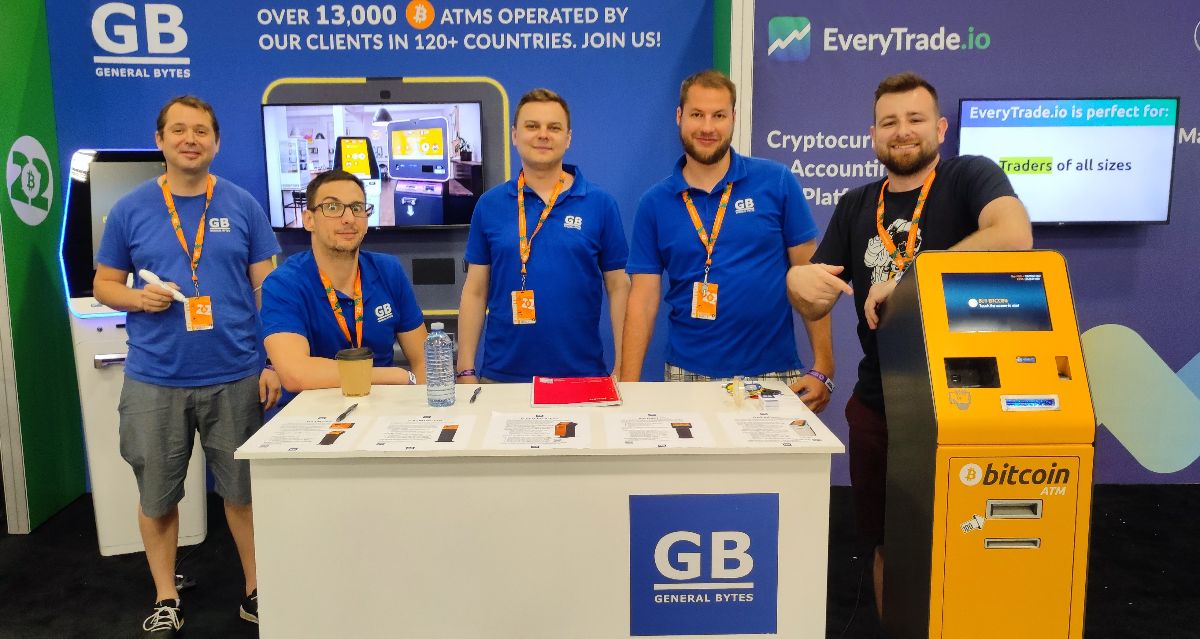
The GENERAL BYTES team presenting its newest BATMTwoUltra at the Bitcoin 2022 conference
“We’ve collected client and end-user feedback for years and incorporated it into our latest model, the BATMTwoUltra. A workhorse designed to be a perfect fit for any location that offers optional bidirectional operations using the latest in recycler technology. Many Bitcoin 2022 conference attendees already had the opportunity to test it live, and they gave us some raving reviews, but now it’s your turn to discover this brand new Bitcoin ATM!” – GENERAL BYTES CEO, Vojtech Fryal
Crypto bulls are back in the race with substantial transactions. On 1 April 2022, a leading XRP wallet transferred 40 million coins worth over $32 million from an unknown wallet to the digital exchange Bitstamp.
While the crypto market cap jumped by more than $100 billion in the past 24 hours, transactions with a value of at least $1 million have also increased significantly. “Both Bitcoin and Ethereum saw transaction spikes at their tops a couple of days ago. We can see whether transactions are taken while a position is in profit or at a loss. For the first time since November, there were 3x as many profitable transactions vs losing transactions,” Santiment noted.
On-chain movements of crypto whales saw an uptick during the recent market rally. In addition to the $32 million XRP transfer, several other $100 million+ crypto transactions were observed during the last 24 hours. A crypto millionaire address moved 3,000 Bitcoin worth over $138 million from Coinbase to an unknown wallet on 1 April at 16:57 UTC.
Ethereum
While the recent large crypto transfers were mainly focused on Bitcoin, USDT, and XRP, the Ethereum network also witnessed a rise in whale movements. On 31 March 2022, someone sent over 35,500 ETH worth more than $119 million from crypto trading platform Bitfinex to an unknown wallet. ETH’s price boom has played an important role in its surging whale movements. As a result of the latest developments, Ethereum’s dominance against Bitcoin is increasing.
“Ethereum has been gaining in price dominance against Bitcoin, and the ETH / BTC price ratio of 0.074762 on Friday came within millimeters of an 8-week high of 0.074878. The top 10 whale addresses remain to hold a significant percentage of supply,” Santiment added.
Yesterday, the deposit contract of Ethereum 2.0 topped 11 million ETH.
Crypto bulls are back in the race with substantial transactions. On 1 April 2022, a leading XRP wallet transferred 40 million coins worth over $32 million from an unknown wallet to the digital exchange Bitstamp.
While the crypto market cap jumped by more than $100 billion in the past 24 hours, transactions with a value of at least $1 million have also increased significantly. “Both Bitcoin and Ethereum saw transaction spikes at their tops a couple of days ago. We can see whether transactions are taken while a position is in profit or at a loss. For the first time since November, there were 3x as many profitable transactions vs losing transactions,” Santiment noted.
On-chain movements of crypto whales saw an uptick during the recent market rally. In addition to the $32 million XRP transfer, several other $100 million+ crypto transactions were observed during the last 24 hours. A crypto millionaire address moved 3,000 Bitcoin worth over $138 million from Coinbase to an unknown wallet on 1 April at 16:57 UTC.
Ethereum
While the recent large crypto transfers were mainly focused on Bitcoin, USDT, and XRP, the Ethereum network also witnessed a rise in whale movements. On 31 March 2022, someone sent over 35,500 ETH worth more than $119 million from crypto trading platform Bitfinex to an unknown wallet. ETH’s price boom has played an important role in its surging whale movements. As a result of the latest developments, Ethereum’s dominance against Bitcoin is increasing.
“Ethereum has been gaining in price dominance against Bitcoin, and the ETH / BTC price ratio of 0.074762 on Friday came within millimeters of an 8-week high of 0.074878. The top 10 whale addresses remain to hold a significant percentage of supply,” Santiment added.
Yesterday, the deposit contract of Ethereum 2.0 topped 11 million ETH.
Reactions have been pouring in from stakeholders in the crypto and digital assets industry in India following the approval of the country’s Finance Bill 2022 on Friday by Lok Sabha, the lower house of India’s bicameral parliament.
While some stakeholders were pessimistic of the section of the Bill mandating a capital gains tax of 30% on crypto transactions, others were optimistic that the law would relax with time.
Nirmala Sitharaman, India’s Finance Minister, during a budgetary speech delivered before the House in February had said the government would impose 30 percent taxation on the transfer of virtual assets from the financial year 2022-2023.
She also disclosed the government’s intention to lay a 1% tax deducted at source (TDS) on the purchase and sale of cryptocurrencies in the country. She added that any gifts made in digital currencies will also be taxed at the hands of the recipient.
The finance minister had also confirmed that crypto holders cannot offset their losses from cryptocurrencies with the capital gains tax, which is allowed for stock investors.
However, despite the industry’s call for the government to tone down the crypto taxation, the bill was passed into law, with Sitharaman insisting that the government was taxing crypto because people are profiting from it.
With the passage, the crypto taxes will come into effect on April 1, while the TDS will start on July 1.
Mixed Industry Reactions
Nischal Shetty, the Chief Executive Officer of WazirX, one of India’s biggest cryptocurrency exchanges, said the passage “is poised to do more harm than good,” adding that the law could shoot down patronage of Indian exchanges and a subsequent increase in capital outflow to foreign ones.
Sathvik Vishwanath, co-founder and CEO of Unocoin, was particularly concerned about the effect the law will have on crypto traders in the country.
“This will have some repercussions on traders, especially the 1% TDS assessment. This will not only affect traders but also tax collections. We hope that in the subsequent years the crypto industry gets treated like other investment-related industries,” he explained.
Abhay Aggarwal, CEO and founder of non-fungible token (NFT) marketplace, Colexion, said the law will hamper the overall growth of the sector by reducing countrywide adoption and credibility.
On the positive side, however, Coinstore, a Singapore-based crypto exchange
Exchange
An exchange is known as a marketplace that supports the trading of derivatives, commodities, securities, and other financial instruments.Generally, an exchange is accessible through a digital platform or sometimes at a tangible address where investors organize to perform trading. Among the chief responsibilities of an exchange would be to uphold honest and fair-trading practices. These are instrumental in making sure that the distribution of supported security rates on that exchange are effectively relevant with real-time pricing.Depending upon where you reside, an exchange may be referred to as a bourse or a share exchange while, as a whole, exchanges are present within the majority of countries. Who is Listed on an Exchange?As trading continues to transition more to electronic exchanges, transactions become more dispersed through varying exchanges. This in turn has caused a surge in the implementation of trading algorithms and high-frequency trading applications. In order for a company to be listed on a stock exchange for example, a company must divulge information such as minimum capital requirements, audited earnings reports, and financial reports.Not all exchanges are created equally, with some outperforming other exchanges significantly. The most high-profile exchanges to date include the New York Stock Exchange (NYSE), the Tokyo Stock Exchange (TSE), the London Stock Exchange (LSE), and the Nasdaq. Outside of trading, a stock exchange may be used by companies aiming to raise capital, this is most commonly seen in the form of initial public offerings (IPOs).Exchanges can now handle other asset classes, given the rise of cryptocurrencies as a more popularized form of trading.
An exchange is known as a marketplace that supports the trading of derivatives, commodities, securities, and other financial instruments.Generally, an exchange is accessible through a digital platform or sometimes at a tangible address where investors organize to perform trading. Among the chief responsibilities of an exchange would be to uphold honest and fair-trading practices. These are instrumental in making sure that the distribution of supported security rates on that exchange are effectively relevant with real-time pricing.Depending upon where you reside, an exchange may be referred to as a bourse or a share exchange while, as a whole, exchanges are present within the majority of countries. Who is Listed on an Exchange?As trading continues to transition more to electronic exchanges, transactions become more dispersed through varying exchanges. This in turn has caused a surge in the implementation of trading algorithms and high-frequency trading applications. In order for a company to be listed on a stock exchange for example, a company must divulge information such as minimum capital requirements, audited earnings reports, and financial reports.Not all exchanges are created equally, with some outperforming other exchanges significantly. The most high-profile exchanges to date include the New York Stock Exchange (NYSE), the Tokyo Stock Exchange (TSE), the London Stock Exchange (LSE), and the Nasdaq. Outside of trading, a stock exchange may be used by companies aiming to raise capital, this is most commonly seen in the form of initial public offerings (IPOs).Exchanges can now handle other asset classes, given the rise of cryptocurrencies as a more popularized form of trading. Read this Term that recently started operations in India, believes that the crypto tax is a good move that “will open the doors for crypto regulation in one of the largest democracies in the world.”
“India is a tech powerhouse and it has the potential to lead the world in the crypto and blockchain revolution. Some may feel that the tax structure is on the heavy side but it may undergo adjustments to match global expectations as the crypto industry in India enters a more mature phase. We are hopeful that Indian regulators will reach a consensus with the crypto industry soon,” said Charles Tan, Head of Marketing at Coinstore.
Lennix Lai, Director of OKX, formerly known as OKEx, the Seychelles-based cryptocurrency exchange
Cryptocurrency Exchange
A cryptocurrency exchange is an online platform that supports the exchange of various currencies for a cryptocurrency or digital asset.Comparable to a generalized financial exchange, a crypto exchange’s core function is to permit and encourage the buying and selling of cryptos.This is accomplished by producing a stable trading environment suitable for traders nested through different locations around the world. Sometimes a crypto exchange may be referred to as a digital currency exchange (DCE) for short.How Does Trading Take Place on a Crypto Exchange?Cryptocurrency trading occurs over a centralized exchange, although these crypto exchanges should be used with caution given the implications that surround the custody of new assets. Similar to the banking industry, when a crypto exchange holds cryptocurrencies of users they accrue interest and are no longer classified as client money.These provide an accessible platform for not only companies, hedge funds, and retail traders for exchanging digital currencies.Additionally, crypto exchanges serve a critical role in producing stability within the cryptocurrency sector given how the sourcing and pricing of these assets are innately volatile. One could think of a crypto exchange as an intermediary who provides a service by connecting buyers and sellers from various markets under one roof. In exchange for facilitating trades and for services rendered, a digital currency exchange generally collects a fee of an outgoing transaction that averages between 0.20% to 0.25% or will request a deposit fee that has been known to be as high as 11% for credit card deposits. Crypto exchanges may also support the exchange of crypto tokens, such as the Binance Token, which is ranked as the 9th most valuable cryptocurrency in the world.
A cryptocurrency exchange is an online platform that supports the exchange of various currencies for a cryptocurrency or digital asset.Comparable to a generalized financial exchange, a crypto exchange’s core function is to permit and encourage the buying and selling of cryptos.This is accomplished by producing a stable trading environment suitable for traders nested through different locations around the world. Sometimes a crypto exchange may be referred to as a digital currency exchange (DCE) for short.How Does Trading Take Place on a Crypto Exchange?Cryptocurrency trading occurs over a centralized exchange, although these crypto exchanges should be used with caution given the implications that surround the custody of new assets. Similar to the banking industry, when a crypto exchange holds cryptocurrencies of users they accrue interest and are no longer classified as client money.These provide an accessible platform for not only companies, hedge funds, and retail traders for exchanging digital currencies.Additionally, crypto exchanges serve a critical role in producing stability within the cryptocurrency sector given how the sourcing and pricing of these assets are innately volatile. One could think of a crypto exchange as an intermediary who provides a service by connecting buyers and sellers from various markets under one roof. In exchange for facilitating trades and for services rendered, a digital currency exchange generally collects a fee of an outgoing transaction that averages between 0.20% to 0.25% or will request a deposit fee that has been known to be as high as 11% for credit card deposits. Crypto exchanges may also support the exchange of crypto tokens, such as the Binance Token, which is ranked as the 9th most valuable cryptocurrency in the world. Read this Term, also toed Tan’s line, noting that taxing an certain asset class indicates that those assets are recognized as a tradable asset class by country’s regulator.
“That gives the industry a lot more clarity on the legal status of crypto and its derived income. Hence it’s good news for the industry in India with respect to building a more regulated operating environment for crypto,” Lai added.
Distrust in Cryptocurrencies?
For some time now, the Indian government has been mulling over the possibility of launching its own central bank digital currency (CBDC). In a budgetary speech in February, Shitaraman had said the Reserve Bank of India (RBI) was going to introduce the CBDC in the country’s next financial year.
Meanwhile, the Indian government had initially made efforts to impose a complete ban on cryptocurrencies as a payment mode with a bill that recommended strict jail terms for violators who could be arrested without any warrant.
The Cryptocurrency and Regulation of Official Digital Currency Bill had also sought to ban all private cryptocurrencies in the country, although it wanted to allow for “certain exceptions to promote the underlying technology of cryptocurrency and its uses.”
Tax evasion has also been a problem in the Indian cryptocurrency space. A raid on six Indian crypto exchanges earlier this year had uncovered $9.4M in unpaid taxes with WazirX alone evading $6 million in taxes.
Reactions have been pouring in from stakeholders in the crypto and digital assets industry in India following the approval of the country’s Finance Bill 2022 on Friday by Lok Sabha, the lower house of India’s bicameral parliament.
While some stakeholders were pessimistic of the section of the Bill mandating a capital gains tax of 30% on crypto transactions, others were optimistic that the law would relax with time.
Nirmala Sitharaman, India’s Finance Minister, during a budgetary speech delivered before the House in February had said the government would impose 30 percent taxation on the transfer of virtual assets from the financial year 2022-2023.
She also disclosed the government’s intention to lay a 1% tax deducted at source (TDS) on the purchase and sale of cryptocurrencies in the country. She added that any gifts made in digital currencies will also be taxed at the hands of the recipient.
The finance minister had also confirmed that crypto holders cannot offset their losses from cryptocurrencies with the capital gains tax, which is allowed for stock investors.
However, despite the industry’s call for the government to tone down the crypto taxation, the bill was passed into law, with Sitharaman insisting that the government was taxing crypto because people are profiting from it.
With the passage, the crypto taxes will come into effect on April 1, while the TDS will start on July 1.
Mixed Industry Reactions
Nischal Shetty, the Chief Executive Officer of WazirX, one of India’s biggest cryptocurrency exchanges, said the passage “is poised to do more harm than good,” adding that the law could shoot down patronage of Indian exchanges and a subsequent increase in capital outflow to foreign ones.
Sathvik Vishwanath, co-founder and CEO of Unocoin, was particularly concerned about the effect the law will have on crypto traders in the country.
“This will have some repercussions on traders, especially the 1% TDS assessment. This will not only affect traders but also tax collections. We hope that in the subsequent years the crypto industry gets treated like other investment-related industries,” he explained.
Abhay Aggarwal, CEO and founder of non-fungible token (NFT) marketplace, Colexion, said the law will hamper the overall growth of the sector by reducing countrywide adoption and credibility.
On the positive side, however, Coinstore, a Singapore-based crypto exchange
Exchange
An exchange is known as a marketplace that supports the trading of derivatives, commodities, securities, and other financial instruments.Generally, an exchange is accessible through a digital platform or sometimes at a tangible address where investors organize to perform trading. Among the chief responsibilities of an exchange would be to uphold honest and fair-trading practices. These are instrumental in making sure that the distribution of supported security rates on that exchange are effectively relevant with real-time pricing.Depending upon where you reside, an exchange may be referred to as a bourse or a share exchange while, as a whole, exchanges are present within the majority of countries. Who is Listed on an Exchange?As trading continues to transition more to electronic exchanges, transactions become more dispersed through varying exchanges. This in turn has caused a surge in the implementation of trading algorithms and high-frequency trading applications. In order for a company to be listed on a stock exchange for example, a company must divulge information such as minimum capital requirements, audited earnings reports, and financial reports.Not all exchanges are created equally, with some outperforming other exchanges significantly. The most high-profile exchanges to date include the New York Stock Exchange (NYSE), the Tokyo Stock Exchange (TSE), the London Stock Exchange (LSE), and the Nasdaq. Outside of trading, a stock exchange may be used by companies aiming to raise capital, this is most commonly seen in the form of initial public offerings (IPOs).Exchanges can now handle other asset classes, given the rise of cryptocurrencies as a more popularized form of trading.
An exchange is known as a marketplace that supports the trading of derivatives, commodities, securities, and other financial instruments.Generally, an exchange is accessible through a digital platform or sometimes at a tangible address where investors organize to perform trading. Among the chief responsibilities of an exchange would be to uphold honest and fair-trading practices. These are instrumental in making sure that the distribution of supported security rates on that exchange are effectively relevant with real-time pricing.Depending upon where you reside, an exchange may be referred to as a bourse or a share exchange while, as a whole, exchanges are present within the majority of countries. Who is Listed on an Exchange?As trading continues to transition more to electronic exchanges, transactions become more dispersed through varying exchanges. This in turn has caused a surge in the implementation of trading algorithms and high-frequency trading applications. In order for a company to be listed on a stock exchange for example, a company must divulge information such as minimum capital requirements, audited earnings reports, and financial reports.Not all exchanges are created equally, with some outperforming other exchanges significantly. The most high-profile exchanges to date include the New York Stock Exchange (NYSE), the Tokyo Stock Exchange (TSE), the London Stock Exchange (LSE), and the Nasdaq. Outside of trading, a stock exchange may be used by companies aiming to raise capital, this is most commonly seen in the form of initial public offerings (IPOs).Exchanges can now handle other asset classes, given the rise of cryptocurrencies as a more popularized form of trading. Read this Term that recently started operations in India, believes that the crypto tax is a good move that “will open the doors for crypto regulation in one of the largest democracies in the world.”
“India is a tech powerhouse and it has the potential to lead the world in the crypto and blockchain revolution. Some may feel that the tax structure is on the heavy side but it may undergo adjustments to match global expectations as the crypto industry in India enters a more mature phase. We are hopeful that Indian regulators will reach a consensus with the crypto industry soon,” said Charles Tan, Head of Marketing at Coinstore.
Lennix Lai, Director of OKX, formerly known as OKEx, the Seychelles-based cryptocurrency exchange
Cryptocurrency Exchange
A cryptocurrency exchange is an online platform that supports the exchange of various currencies for a cryptocurrency or digital asset.Comparable to a generalized financial exchange, a crypto exchange’s core function is to permit and encourage the buying and selling of cryptos.This is accomplished by producing a stable trading environment suitable for traders nested through different locations around the world. Sometimes a crypto exchange may be referred to as a digital currency exchange (DCE) for short.How Does Trading Take Place on a Crypto Exchange?Cryptocurrency trading occurs over a centralized exchange, although these crypto exchanges should be used with caution given the implications that surround the custody of new assets. Similar to the banking industry, when a crypto exchange holds cryptocurrencies of users they accrue interest and are no longer classified as client money.These provide an accessible platform for not only companies, hedge funds, and retail traders for exchanging digital currencies.Additionally, crypto exchanges serve a critical role in producing stability within the cryptocurrency sector given how the sourcing and pricing of these assets are innately volatile. One could think of a crypto exchange as an intermediary who provides a service by connecting buyers and sellers from various markets under one roof. In exchange for facilitating trades and for services rendered, a digital currency exchange generally collects a fee of an outgoing transaction that averages between 0.20% to 0.25% or will request a deposit fee that has been known to be as high as 11% for credit card deposits. Crypto exchanges may also support the exchange of crypto tokens, such as the Binance Token, which is ranked as the 9th most valuable cryptocurrency in the world.
A cryptocurrency exchange is an online platform that supports the exchange of various currencies for a cryptocurrency or digital asset.Comparable to a generalized financial exchange, a crypto exchange’s core function is to permit and encourage the buying and selling of cryptos.This is accomplished by producing a stable trading environment suitable for traders nested through different locations around the world. Sometimes a crypto exchange may be referred to as a digital currency exchange (DCE) for short.How Does Trading Take Place on a Crypto Exchange?Cryptocurrency trading occurs over a centralized exchange, although these crypto exchanges should be used with caution given the implications that surround the custody of new assets. Similar to the banking industry, when a crypto exchange holds cryptocurrencies of users they accrue interest and are no longer classified as client money.These provide an accessible platform for not only companies, hedge funds, and retail traders for exchanging digital currencies.Additionally, crypto exchanges serve a critical role in producing stability within the cryptocurrency sector given how the sourcing and pricing of these assets are innately volatile. One could think of a crypto exchange as an intermediary who provides a service by connecting buyers and sellers from various markets under one roof. In exchange for facilitating trades and for services rendered, a digital currency exchange generally collects a fee of an outgoing transaction that averages between 0.20% to 0.25% or will request a deposit fee that has been known to be as high as 11% for credit card deposits. Crypto exchanges may also support the exchange of crypto tokens, such as the Binance Token, which is ranked as the 9th most valuable cryptocurrency in the world. Read this Term, also toed Tan’s line, noting that taxing an certain asset class indicates that those assets are recognized as a tradable asset class by country’s regulator.
“That gives the industry a lot more clarity on the legal status of crypto and its derived income. Hence it’s good news for the industry in India with respect to building a more regulated operating environment for crypto,” Lai added.
Distrust in Cryptocurrencies?
For some time now, the Indian government has been mulling over the possibility of launching its own central bank digital currency (CBDC). In a budgetary speech in February, Shitaraman had said the Reserve Bank of India (RBI) was going to introduce the CBDC in the country’s next financial year.
Meanwhile, the Indian government had initially made efforts to impose a complete ban on cryptocurrencies as a payment mode with a bill that recommended strict jail terms for violators who could be arrested without any warrant.
The Cryptocurrency and Regulation of Official Digital Currency Bill had also sought to ban all private cryptocurrencies in the country, although it wanted to allow for “certain exceptions to promote the underlying technology of cryptocurrency and its uses.”
Tax evasion has also been a problem in the Indian cryptocurrency space. A raid on six Indian crypto exchanges earlier this year had uncovered $9.4M in unpaid taxes with WazirX alone evading $6 million in taxes.
It can be overwhelming trying to figure out what to put in your crypto portfolio. Which layer 1 alternatives should you place in there? Is LUNA eclipsing SOL? What is your metaverse play, and do you have any gaming coins?
Not everyone wants to go down the metaverse and gaming rabbit holes, admittedly. There are 100X possibilities, perhaps, but it can feel like a casino, and scratch cards are available if you like gambling, which is not to discourage anyone from playing, but it’s not for everyone.
When it comes to the larger contenders, the layer 1 alternatives, the landscape, although still crowded, becomes a little more inviting. By layer 1 alternatives, what is meant is competitors to Ethereum (less so Bitcoin, which is in a category of its own), that are built to run decentralized applications and handle things like DeFi and NFTs.
Here, you are looking at networks such as Cardano, Solana, Avalanche, Fantom, Cosmos and there are more too. These are names that are big enough that any newcomer will come across them soon enough. And, in terms of what they actually do, that makes sense quickly too. As mentioned, they are, basically, competing with Ethereum (although Cosmos is a little different, as it goes about constructing an internet of blockchains).
You see praise and criticism, and it is not always clear what is true, and what is deliberately meant to steer investors in a certain direction, put out there by commenters with ulterior motives. Cardano is meticulous but takes an age to progress. Solana is speedy but not sufficiently decentralized. Fantom just had a key advisor walk away. And, so on.
It is at this point that you might decide to try some networks out and see how they work. There is nothing better than first-hand experience, but in the end that doesn’t always clear matters up, because the thing is, the contenders all work well.
You pick up some nice-looking NFTs on Cardano and Solana. Play around with the Osmosis DEX on Cosmos. Tour through various DeFi landscapes. All the wallets you’ve downloaded operate smoothly, transactions are quick, sometimes impressively speedy, rarely delayed to any greatly troubling extent.
What you find is, they all seem to function impressively and be solidly put together, and after a while, they even start to feel relatively user-friendly. And, it’s at exactly this point that it can make sense to think about changing direction and becoming a crypto conservative.
To be clear, a crypto conservative’s portfolio contains two things: Bitcoin and Ethereum.
It is instructive to look at snapshots of the top ten (or twenty or thirty) cryptos over the past few years. You’ll notice something. From position three and lower, there is constant change, names come and go, and projects appear, ascend, and then disappear into obscurity.
By contrast, the top two are ever-present and never move, except for their rapidly growing numbers, market cap and price, which constantly spin larger and larger. The top two, of course, are Bitcoin and Ethereum.
In the end, you can’t help but wonder, is it worth investing in crypto aside from these two? Sure, perhaps you can make some quick gains on the small caps and get out when you’re on top. And, then you can put your gains into, well, the top two.
At this point in what may, conceivably, be a critical stage in a global crypto transition, a multitude of projects can be skillfully built out and project all the right signals, but still, is it worthwhile challenging Bitcoin and Ethereum, and what would be the point in doing so? In this field perhaps more than any other, network effects are critical, and by that measure, there is an increasingly unassailable gap opening up.
And, besides which, although we ought to be emotionless and analytical when it comes to investing, it is difficult not to get attached to those top two, on levels that go beyond just investment and returns. Bitcoin created all this, the entire landscape, and its earliest believers are among the most dedicated and driven people around, operating with true conviction from the very start.
And, then there is Ethereum, committed, as much so as bitcoiners are, to decentralization and neutrality, and to the creation of a global computing network that enables fairness and freedom through technology and code.
We must not be overly romantic, but these seem like noble, admirably eccentric enterprises that, self-starting and deliberately out of step with all established, power-wielding structures, just might work. And, if that isn’t worth buying into for the long haul, then I don’t know what is.
Sometimes it appears, simultaneously, that Bitcoin will decentralize money, while Ethereum is decentralizing the web, and that neither of these changes can come a moment too soon. In that case, if you want to peacefully fix what is broken and at the same time have a portfolio you can feel relaxed about, then it pays to be a crypto conservative.
It can be overwhelming trying to figure out what to put in your crypto portfolio. Which layer 1 alternatives should you place in there? Is LUNA eclipsing SOL? What is your metaverse play, and do you have any gaming coins?
Not everyone wants to go down the metaverse and gaming rabbit holes, admittedly. There are 100X possibilities, perhaps, but it can feel like a casino, and scratch cards are available if you like gambling, which is not to discourage anyone from playing, but it’s not for everyone.
When it comes to the larger contenders, the layer 1 alternatives, the landscape, although still crowded, becomes a little more inviting. By layer 1 alternatives, what is meant is competitors to Ethereum (less so Bitcoin, which is in a category of its own), that are built to run decentralized applications and handle things like DeFi and NFTs.
Here, you are looking at networks such as Cardano, Solana, Avalanche, Fantom, Cosmos and there are more too. These are names that are big enough that any newcomer will come across them soon enough. And, in terms of what they actually do, that makes sense quickly too. As mentioned, they are, basically, competing with Ethereum (although Cosmos is a little different, as it goes about constructing an internet of blockchains).
You see praise and criticism, and it is not always clear what is true, and what is deliberately meant to steer investors in a certain direction, put out there by commenters with ulterior motives. Cardano is meticulous but takes an age to progress. Solana is speedy but not sufficiently decentralized. Fantom just had a key advisor walk away. And, so on.
It is at this point that you might decide to try some networks out and see how they work. There is nothing better than first-hand experience, but in the end that doesn’t always clear matters up, because the thing is, the contenders all work well.
You pick up some nice-looking NFTs on Cardano and Solana. Play around with the Osmosis DEX on Cosmos. Tour through various DeFi landscapes. All the wallets you’ve downloaded operate smoothly, transactions are quick, sometimes impressively speedy, rarely delayed to any greatly troubling extent.
What you find is, they all seem to function impressively and be solidly put together, and after a while, they even start to feel relatively user-friendly. And, it’s at exactly this point that it can make sense to think about changing direction and becoming a crypto conservative.
To be clear, a crypto conservative’s portfolio contains two things: Bitcoin and Ethereum.
It is instructive to look at snapshots of the top ten (or twenty or thirty) cryptos over the past few years. You’ll notice something. From position three and lower, there is constant change, names come and go, and projects appear, ascend, and then disappear into obscurity.
By contrast, the top two are ever-present and never move, except for their rapidly growing numbers, market cap and price, which constantly spin larger and larger. The top two, of course, are Bitcoin and Ethereum.
In the end, you can’t help but wonder, is it worth investing in crypto aside from these two? Sure, perhaps you can make some quick gains on the small caps and get out when you’re on top. And, then you can put your gains into, well, the top two.
At this point in what may, conceivably, be a critical stage in a global crypto transition, a multitude of projects can be skillfully built out and project all the right signals, but still, is it worthwhile challenging Bitcoin and Ethereum, and what would be the point in doing so? In this field perhaps more than any other, network effects are critical, and by that measure, there is an increasingly unassailable gap opening up.
And, besides which, although we ought to be emotionless and analytical when it comes to investing, it is difficult not to get attached to those top two, on levels that go beyond just investment and returns. Bitcoin created all this, the entire landscape, and its earliest believers are among the most dedicated and driven people around, operating with true conviction from the very start.
And, then there is Ethereum, committed, as much so as bitcoiners are, to decentralization and neutrality, and to the creation of a global computing network that enables fairness and freedom through technology and code.
We must not be overly romantic, but these seem like noble, admirably eccentric enterprises that, self-starting and deliberately out of step with all established, power-wielding structures, just might work. And, if that isn’t worth buying into for the long haul, then I don’t know what is.
Sometimes it appears, simultaneously, that Bitcoin will decentralize money, while Ethereum is decentralizing the web, and that neither of these changes can come a moment too soon. In that case, if you want to peacefully fix what is broken and at the same time have a portfolio you can feel relaxed about, then it pays to be a crypto conservative.
In a bipartisan letter put forward by Republican Minnesota Congressman Tom Emmer, a cohort of Congress members has written to Securities and Exchange Commission (SEC) Chairman Gary Gensler, challenging the regulator’s scrutiny of cryptocurrency firms and expressing concern that “overburdensome” investigation may be suffocating the crypto industry.
They suggest the SEC is drowning companies in paperwork in contravention of the SEC’s stated aims and mandated jurisdiction.
Emmer tweeted to his 51,000 followers:
“My office has received numerous tips from crypto and blockchain firms that SEC Chair @GaryGensler’s information reporting ‘requests’ to the crypto community are overburdensome, don’t feel particularly… voluntary… and are stifling innovation.”
In the letter, which was co-signed by four Democrats and three Republicans, all of whom are members of the bipartisan Congressional Blockchain Caucus, Emmer asserts that the Gary Gensler-led SEC is abusing its investigative powers and overburdening crypto firms — claiming that the regulator has been using the Division of Enforcement and Division of Examination authorities to unfairly bog down crypto and blockchain companies in excessive paperwork.
The legislators believe the regulator has been misusing these divisions and pointed out limitations in the SEC’s mandated jurisdiction,
“It appears there has been a recent trend towards employing the Enforcement Division’s investigative functions to gather information from unregulated cryptocurrency and blockchain industry participants in a manner inconsistent with the Commission’s standards for initiating investigations.”
The Congress members believe the SEC could be violating the Paperwork Reduction Act (PRA) of 1980, which regulates the volume of paperwork that any individual or private entity needs to provide to a federal agency.
Managing Partner at emerging technologies legal firm Brookwood, Collins Belton lauded Emmer’s work on Twitter, saying that the requests in the letter “will not paint the commission in a good light.”
This is actually an interesting move I wasn’t expecting, clearly some of y’all in DC have gone to work. The requests in the letter are particularly on point and will *not* paint the commission in a good light imo, and that’s solely off of the requests I’m personally aware of. https://t.co/ElguJ77sEa
Belton also shared that he was “really glad” the issues raised by Emmer and the other Congress members were coming to light, as legal privilege had made it difficult for him to express concerns about the SEC publicly.
“I haven’t been able to discuss much in public as much as I would like to due to privilege issues, but with answers to some of these, I think the public will see just how absurdly broad some of these requests have been.”
Related: Motions denied for both SEC and Ripple as battle continues
Emmer has been a staunch defender of blockchain technology and cryptocurrency in the past, introducing the Security Clarity Act in Jul. 2021, which aimed to provide a clear legal definition for digital assets. Emmer hopes that the bill will allow blockchain entrepreneurs to distribute their assets without fear of any additional regulatory burdens, after meeting the requirements set out in the bill. The bill is still in its introduction phase and is yet to pass through the House of Representatives.