Singapore, Sep 10, 2021 — Bitkub Capital Group Holdings, a leading Thai blockchain & cryptocurrency company has officially partnered with Miss Universe Thailand 2021 as the world’s first blockchain & cryptocurrency firm to bring NFT and Digital Asset solutions, as well as other cryptocurrency trends to beauty pageants.
Steven Ehrlich, director of research for digital assets at Forbes, discusses the FTX.US-LedgerX merger, what to expect from FTX going forward, DeFi regulation, and more. Show highlights:
why the FTX.US acquisition of derivatives platform LedgerX is significant
how FTX.US stacks up against other US cryptocurrency exchanges
who should use crypto derivative products
how regulators might handle FTX.US and crypto derivative ETFs
what to expect from FTX going forward
how long FTX CEO Sam Bankman-Fried spends talking to regulators every day
why Steven thinks crypto mergers and acquisitions will be a trend going forward
what Steven learned from his conversations with Polygon and Hermez
how Fereshteh Forough, a woman living in Afghanistan, is using crypto to help teach women to build dapps, smart contracts, and use crypto
Melbourne, Australia, Aug. 30, 2021 — The world’s first halal DeFi ecosystem MRHB DeFi is collaborating with leading Indian cryptocurrency trading platform Coinsbit to bring crypto-asset opportunities to India’s huge population of 200 million Muslims, driving further participation in the blockchain economy.
MRHB DeFi’s vision of an inclusive crypto-verse, follows Islamic ethical finance principles but is suitable for those looking for a socially conscious blockchain that avoids interest, usury, exploitation and other business practices deemed unethical.
Being Halal means that MRHB DeFi operates within the highly ethical constraints of Shariah law which broadly implies that all business decisions are conducted in conjunction with Islamic teachings which promote inclusion, access, and faith, and function simply and transparently for the benefit of its users.
A Visionary Partnership to Serve 200 Million Muslims
India is home to 200 million Muslims constituting 10% of the global population and is the world’s third-largest Muslim community. This group is often excluded from the cryptoverse due to their faith-driven principles regarding financial and business conduct.
What this partnership means:
Coinsbit would be the first Indian exchange to introduce a certified Shariah-compliant project to the Muslim Community. MRHB will conduct an initial exchange offering (IEO) on the Coinsbit Exchange during launch and introduce the blockchain’s native token, $MHB (Marhaba Token), to the global community
Coinsbit is headquartered in Hyderabad which is geographically close to the large metropolitan community of Hyderabad & Bangalore that has a sizable of Muslim population
MRHB DeFi will integrate Coinsbit’s portal with its app (Sahal Wallet), enabling users to directly use Coinsbit for trading crypto-assets.
Coinsbit will give the users a trading platform, where $MHB (Marhaba Token) would be available to the Indian Community
MRHB DeFi would also lead marketing activities for the exchange in the fast-growing Australian market
Both the partners will gain substantially from each other’s marketing and community growth activities
A Shared Mission for an Inclusive Cryptoverse
“Blockchain and DeFi have exploded in popularity in 2021, and we forecast this stratospheric growth to continue. That’s why we’re excited to be teaming up with one of India’s premier cryptocurrency exchanges to offer MRHB DeFi products and services to everyone across the Indian subcontinent who are looking for a true, ethical alternative to the existing platforms in the cryptoverse,” says Naquib Mohammed, MRHB DeFi Founder & CEO.
“Blockchain offers amazing potential for all communities. We aim to deliver this potential to those who may have previously struggled to access or been cautious to use DeFi products and services. We also hope to provide them with all of the rich opportunities for growth, expansion and development that DeFi offers,” adds Naquib.
“We’re excited about embarking on this shared journey with MRHB. Islamic DeFi and Shariah-based crypto financial products are an area of extraordinary growth and potential for India. We’re committed to delivering MRHB DeFi’s visionary range of services and products to our clients across our continent,” says Ravneet Kaur, CEO of Coinsbit India.
She continues, “The time is right for a blockchain project that is based on the tenets of faith, inclusion and access for all, while being transparent and simple to use. MRHB DeFi has demonstrated to us that they are committed to a long-term vision for ethical people around the world no matter what their faith is.”
Asian countries are outpacing the rest of the world in terms of cryptocurrency adoption and India has ranked second in the global cryptocurrency adoption index, according to the 2021 Global Crypto Adoption Index by blockchain data platform Chainalysis. Indians have invested more than five times the amount of the previous year and the momentum is encouraging.
Crypto adoption is on the rise in India and the Indian exchanges WazirX, CoinDCX and Coinswitch Kuber have doubled their user base between January and March 2021.
Coinsbit India started its operations recently and has already captured market attention by onboarding a million users in around three months.
About MRHB DeFi
MRHB DeFi is a halal, decentralised finance platform built to embody the true spirit of an “Ethical and Inclusive DeFi” by following faith-based financial and business principles, where all excluded communities can benefit from the full empowerment potential of DeFi.
Based on the tenets of blockchain such as trust, transparency, and security, MRHB DeFi has encapsulated universally applicable principles of Shariah into those tenets of blockchain to render a suite of offerings. It is a complete DeFi ecosystem whose products, protocols and crypto-assets are governed primarily by the ethical, inclusive, sustainable and charitable investment principles associated with the Islamic faith or ‘Islamic Finance’ (‘IF’ as it is commonly known).
The diverse team is comprised of researchers, technocrats, influencers, Islamic fintech experts & business entrepreneurs, who came together to ensure that MRHB DeFi prevails in a manner that will impact society as a whole, essentially bridging the gap between the faith-conscious communities and the blockchain world.
Read more about MRHB DeFi’s Shariah Concept Paper, Lite and White Paper here.
Since its inception in 2017, Coinsbit has been one of the most trusted exchange platforms for cryptocurrency traders from around the world. Coinsbit India aims to become the leading trading platform for the Indian market, which is just beginning to realize the potential of cryptocurrencies. It always works according to the guidelines set by the government of India. Coinsbit India is committed to providing a service, reliability and convenience that cannot be matched by any other platform, and as one of the world’s largest cryptocurrency exchanges, is proud to represent India.
“One of the greatest tragedies in life,” according to author K. L. Toth, “is to lose your own sense of self and accept the version of you that is expected by everyone else.” For the people of Afghanistan — almost 40 million of them — the loss of self, as well as the loss of life, has become a brutal reality. With the Taliban in control, chaos now reigns supreme. As businesses shut down, tens of thousands of people are desperately trying to flee the country. Moreover, as the political system collapses, so too does the financial one.
As CNBC’s MacKenzie Sigalos recently noted, Afghanistan is “a country running on legacy financial rails.” This painful reckoning, 20 years in the making, has resulted in a “nationwide cash shortage,” as well as “closed borders, a plunging currency, and rapidly rising prices of basic goods.” The people are desperate as the country quickly descends into the deepest depths of despair.
According to Sigalos, many of the country’s banks, obviously affected by the country’s swift demise, have been “forced to shutter their doors after running out of cash.” To make matters even worse, Western Union has suspended its services. As Sigalos writes, “even the centuries-old ‘hawala’ system — which facilitates cross-border transactions,” has been closed. The desperation is palpable. The people of Afghanistan require assistance.
Thankfully, grassroots nonprofits are doing their best to offer assistance. They are currently assisting some 20,000 Afghan citizens “still in the country waiting for United State authorities to process special immigrant visas.” This is where the importance of cryptocurrencies comes into play. To raise enough funds to relocate Afghan families, nonprofits are currently accepting Bitcoin (BTC), Ether (ETH), Bitcoin Cash (BCH), Litecoin (LTC), Zcash (ZEC), Gemini dollar (GUSD), Balancer’s BAL, Yearn.finance’s YFI, Polygon’s MATIC, Synthetix Network Token (SNX) and Bancor Network Token (BNT).
For the critics of crypto, many of whom have questioned if it serves any purpose, the events in Afghanistan demonstrate how it can quite literally save lives. This might sound hyperbolic — but it’s not. Besides nonprofits, more and more Afghan citizens are turning to crypto. In the CNBC article, Sigalos spoke with a young Afghan who believes that “a Venezuela-type situation” is on the horizon. It may very well be. According to a Bloomberg report, as the Taliban seized control of Kabul in mid-August, the Afghan afghani — the country’s currency — dropped to an all-time low.
Venezuela may provide a telling blueprint for Afghanistan’s future. The South American country — ravaged by hyperinflation, political instability and United States sanctions — is in a dire state. With the country in the grip of an economic crisis, cryptocurrencies like Bitcoin and Ether have shown their worth. According to Venezuela-based cryptocurrency consultant and Cointelegraph en Español contributor Jhonnatan Morales: “Many people are mining and trading Bitcoin not to acquire products, but to protect themselves from hyperinflation.”
Related: Exploring Venezuela’s crypto ecosystem since the start of the pandemic
Speaking of Venezuela, the nation’s government recently announced plans to remove six zeros from the bolivar. One needn’t be an economist to recognize that the Venezuelan government is doing everything in its power to save a currency that has been in a hyperinflation coma for years. Could the same fate await Afghanistan? If a government isn’t formed soon, don’t bet against it.
In Afghanistan, as the Taliban scramble to impose some political order, cryptocurrencies are also offering Afghans hope. In fact, across this region — in places like Lebanon and Palestine — cryptocurrencies are very much in demand. An increasing number of people from Lebanon and Palestine, all too familiar with depreciating currencies and political instability, are finding solace in crypto. According to Arabian Business, as the Lebanese pound “continues its downward plummet and the economic situation worsens,” people are turning to crypto, both as an investment and as a means of transferring their funds abroad. Furthermore, according to the report, a “growing number of local small businesses, ranging from grocery stores to fashion boutiques,” are accepting payment in Bitcoin.
Related: Why Pakistan and the Middle East can bet on crypto mining
Again, for those who are quick to question why cryptocurrencies are necessary, Lebanon provides more than a few answers. Since 2019, the Lebanese pound has lost around 90% of its value. The political analyst and journalist Marwan Bishara, who has written extensively on the demise of Lebanon, told readers that the Lebanese people have become accustomed to the “shawarma paradox”: Two years ago, “the national sandwich” cost 5,000 Lebanese pounds, or about $2; today, it is priced at 20,000 pounds, less than $1. This may seem darkly humorous, but there is little humor in the demise of the nation’s currency, which is essentially worthless.
Some 120 miles away in Palestine, the independent state’s monetary authority is currently debating whether or not to issue a digital currency of its own. As Palestine seeks to gain further independence from Israeli rule, a digital currency would at least offer it a form of monetary independence. With so many uninformed commentators fixated on the bad actors who use crypto, too few focus on the desperate people who use it to survive. This brings us back to Afghanistan, a volatile place plagued by acts of terrorism and political instability. The future of the country is uncertain, but cryptocurrencies are offering a lifeline to the millions of Afghans whose lives are very much on the line.
The views, thoughts and opinions expressed here are the author’s alone and do not necessarily reflect or represent the views and opinions of Cointelegraph.
John Mac Ghlionn is a researcher and cultural commentator. His work has been published by the likes of the New York Post, The Spectator, The Sydney Morning Herald and National Review.
When Millenials and Gen Z representatives gather on social media to speculatively increase Dogecoin (DOGE) prices or Wall Street stocks (remember GameStop?), your CFD offering. limited to the tired MetaTrader 4. may not be enough. Today’s trading for younger generations is all about memes, simple mobile apps, gamification, following trends seen on TikTok and Twitter and seamlessly adapting to dynamic market changes.
CFD Offering: Give Volatility to Those who Seek Volatility
Since November 2020, Bitcoin grew by an average of 30%, falling 35% in one month in May 2021, and the volatility spurred investor activity and boosted the earnings of cryptocurrency exchanges. However, June brought stagnation while BTC and other digital assets which were wildly volatile became very quiet: the oldest cryptocurrency closed the last month of Q2 with a decline of less than 6%, and in July, it decreased again to the $30,000 level completely resetting this year’s appreciation
. According to Filip Kaczmarzyk, Director of Trading Department, Member of the Management Board of XTB, “Cryptocurrency investors are divided into two groups. Let’s call the first one ‘crypto buyers’ and the second ‘volatility seekers’.” The second group is permanently looking for volatility.
“They might have been trading cryptos during turbulent times, or cryptos might have even been their first traded instrument, but now they have switched to the markets where the action is, such as bullion or indices. At XTB we feel it is of utmost importance to allow clients to swiftly move between all asset classes in seconds to exploit all possible chances for profit,” Kaczmarzyk added.
Many other asset classes have turned out to be more volatile than Bitcoin during this period, e.g., the shares of the US stock giants (for example, Amazon rose by 6.7%), or the quotes of the commodity market (gold lost more than 7%, and oil rose by 9%).
Indirect Exposure to Cryptocurrencies and Leverage Can be Your Edge
The stocks of publicly traded companies might be another good direction in the search for market volatility. They will undeniably encourage many investors to abandon the cryptocurrency exchanges offerings in favor of a CFD broker. The list of publicly traded companies (e.g., on Wall Street) that are indirectly or directly linked to the digital asset market is currently quite significant and still growing.
Suggested articles
Connect to the Markets with Exclusive Capital’s Bridging SolutionsGo to article >>
One of the most famous examples besides Elon Musk’s Tesla (which at one point in 2020 was more volatile than Bitcoin itself) is MicroStrategy (ticker: MSTR). The company, whose CEO is Michael Saylor, has invested billions of dollars in buying BTC in the last 12 months.
You can also add Riot Blockchain, Hut 8 Mining, Bitcoin group, Coinbase Global, Marathon Digital Holdings, Square, Voyager Digital, Galaxy Digital Holdings, and many more to the long list. They are among the publicly listed companies that hold the most BTC in their accounts.
“CFD brokers already have an advantage as CFDs allow traders to trade both rising and falling markets. CFDs essentially involve speculating on the future price of a specific asset, which means you can go long when you expect prices to rise and go short when prices are expected to fall. This means more trading opportunities. Millennials make up the largest demographic of traders today, with Gen Z hot on their heels. Once you understand your target audience and region, pitching your services to them becomes easier,” said Charlotte Day, Director at Contentworks Agency.
Promoting leverage and focusing on education about what it is and how it works (a cryptocurrency trader often has less experience and knowledge than a trader from a more traditional CFD market) can be an additional positive factor.
To get the full article and the bigger picture on the opportunities among cryptocurrency traders, get our latest Quarterly Intelligence Report.
Singapore-based crypto exchange KuCoin is launching a mining pool aimed at providing revenue to proof-of-work miners after integrating their rigs.
In a Wednesday announcement, the exchange said its KuCoin Pool product would allow miners around the world to contribute to the Bitcoin (BTC) and Bitcoin Cash (BCH) and share rewards. At the moment, miners are required to install and run the necessary hardware themselves to join the pool, but KuCoin said it would introduce mining in the cloud in the future.
KuCoin CEO Johnny Lyu also claimed the pool would be encouraging miners to participate in environmentally-friendly solutions — people using renewable energy sources for mining will receive discounts on fees. The move is seemingly part of a shift in many mining firms beginning to transition to cleaner or renewable energy.
“For existing KuCoin users, it will become straightforward to set up their mining devices to generate passive income right away,” said Lyu. “Miners can benefit from the one-stop mining service platform and its features to get up and running very quickly.”
The exchange is coming in late to mining when compared with major firms like Binance, which launched its mining pool in April 2020. According to blockchain data, some of the largest BTC miners include Antpool — owned by Chinese mining giant Bitmain — Poolin, ViaBTC, and F2Pool.
Related: Are KuCoin Shares overvalued after KCS price gains 100% in one month?
Launched in 2017, KuCoin reported this week that it had reached 10 million users, having risen by 1,114% in the last year. Last year, hackers stole roughly $275 million from the exchange before KuCoin was able to recover the majority of the funds.
As Global Head of Tax for one of the largest crypto exchanges, while I appreciate the Bloomberg Editorial Board’s perspective on the crypto tax provision in the Senate infrastructure bill, I would like to respectfully offer the following critique from a real-world actor in the crypto space. I disagree with the timing and need for the unexpected and new crypto tax provision in the bill and how it was drafted. The best first step would be to issue regulations so that digital asset brokers would be permitted to issue the same third-party reporting that brokerage firms, like Fidelity and Charles Schwab, issue today. It is not a good first step, and certainly not good tax policy, to require non-brokers to report on transactions for people who are not even their customers.
First, some facts —
The IRS already has the authority to require crypto brokers to provide regular reporting of the gains and losses of their customers’ accounts. But they haven’t. For years, the crypto industry has asked for those regulations, and we are still waiting.
The Editorial Board cites the IRS Commissioner’s estimate of the tax gap as $1T to underscore the urgency for including the crypto tax requirement in the infrastructure bill. Meanwhile, Congress’ Joint Committee on Taxation estimates that the crypto tax gap is approximately $28B over 10 years. In effect, crypto is a drop in the bucket when it comes to the tax gap. The Editorial Board neglects to mention this discrepancy, or that neither figure has ever been accompanied with further explanation or additional data. Without supporting data, both figures only serve to create hype and drama.
And while it’s true that the Senate infrastructure bill’s overbroad and unworkable language alarmed us, it also roused a public outcry well beyond the crypto industry. According to public reports, Senate offices were “swamped” with phone calls and emails, with almost 80 thousand people contacting their senators in just a few days. This wave of public advocacy was diverse, ranging from civil liberties organizations like the Electronic Frontier Foundation (EFF) to the Americans for Tax Reform. Social media lit up with citizens from all walks of life protesting this threat to crypto’s future, including non-apparent champions such as TikTok influencers and rock stars.
The Bloomberg Editorial Board says that the IRS needs a broad statute to include non-brokers right now because we don’t know what we don’t know. But why would we impose reporting requirements on intermediaries who are wholly unrelated to brokering a transaction and have no customer relationship? The IRS doesn’t do that outside of crypto and it shouldn’t do that here.
It is disingenuous to suggest that the IRS will take time to issue these regulations and that non-brokers should have no fear of the law until then. Tax policy should be thoughtful and deliberate. Broad overreach is a regulatory mistake. As long as the statute says that software developers, miners, stakers must do the impossible, there is no lawyer who would advise them to risk operating in violation of laws whose penalties for non-compliance would easily bankrupt them. This will harm innovation and stifle the potential of a hugely important technology at its earliest stages of development.
The one thing on which I do agree with the Editorial Board is that the requirements should “apply to entities that can provide the necessary information.” The Editorial Board also should have acknowledged that crypto brokers, like Coinbase, are currently precluded from reporting sales and exchange related information to the IRS. Without a specific legal mandate (such as the IRS regulations), we cannot compromise or disclose customer information to the government.
Now, some suggestions-
“Brokers” of digital assets should be defined as it is understood in the real world today. It is well established that the predominant number of crypto transactions occur with brokers. If Congress decides that it must create a new definition of “broker” within the infrastructure bill for “digital assets,” then it should define brokers as persons who act as middlemen for compensation, with customers as counterparties. This is a traditional definition of broker and would cover entities like Coinbase.
Propose regulations to define the parameters of tax information reporting for crypto. We would welcome the rules of the road so that we can have a meaningful discussion on how it should be introduced and applied in the real world. The IRS has this authority today.
Hold hearings in Congress on tax oversight for crypto so that there is robust debate on the issue. Today, around 60 million Americans own crypto — roughly one-fifth of the entire U.S. population. Those Americans, and the entire crypto ecosystem, deserve more dialogue than midnight provisions inserted at the last minute.
We should not draft legislation that focuses on crypto ghosts that don’t exist now and have no roadmap to exist in the future. If we focus our laws on problems that don’t actually exist, we will erode America’s leadership in crypto. Why chill the industry in its infancy and send it (and the taxes associated with it) offshore?
Coinbase, as the largest U.S. exchange, agrees with the need for information reporting of crypto. We want people to pay all taxes required under the law. We are building systems and protocols for information reporting in response. While we continue to wait on Congress and the IRS to act, we will do our best to provide our customers with the information they need to comply with their personal reporting obligations.
We are rolling out a Tax Center for our customers in the coming month, with the goal of providing education, guidance, support, data, and historical transactional information. It’s hard to do this in practice, and it can’t be done overnight, but we are confident that we will get there and be best in class. Our customers want to be compliant with their tax obligations and have asked for this guidance and support.
We invite meaningful dialogue and discussion to set the appropriate regulatory parameters for our industry. We have offered this at every turn to both legislators and the IRS. The bipartisan leadership demonstrated by Senators Wyden, Lummis, and Toomey in offering their amendment to help resolve this unnecessary confusion underscores exactly how impactful meaningful dialogue can be.
Our response to a recent editorial from Bloomberg on Congress’s crypto tax proposal was originally published in The Coinbase Blog on Medium, where people are continuing the conversation by highlighting and responding to this story.
We believe in the cryptoeconomy, a future where economic transactions — buying, selling, spending, earning — will be based on crypto assets. Our products strive to make that vision a reality by making crypto trusted and easy to use for customers around the world.
Today, the majority of Coinbase corporate financial transactions, such as how we pay our vendors, employees, or invest corporate cash, remain heavily weighted in fiat. We’re in a strong position to lead by example and double down on how we can enable crypto adoption and utility, starting with how we operate our business.
Towards that goal, we are announcing a change in our investment policy. We have committed to invest $500 million of our cash and cash equivalents into a diverse portfolio of crypto assets. Going forward, we will also allocate 10% of quarterly net income into this same portfolio. This means we will become the first publicly traded company to hold Ethereum, Proof of Stake assets, DeFi tokens, and many other crypto assets supported for trading on our platform, in addition to Bitcoin, on our balance sheet.
Our crypto asset investment allocation will be driven by our aggregate custodial crypto balances — meaning our customers will drive our investment strategy. Our investments will be continually deployed over a multi-year window using a dollar cost averaging strategy. We are long term investors and will only divest under select circumstances, such as an asset delisting from our platform. All trades will be executed via our over the counter desk or away from our exchange to avoid any conflict of interest with our customers.
We may increase our allocation over time as the cryptoeconomy matures. We believe that in the future, more and more companies will hold crypto assets on their balance sheet. We hope by incorporating more crypto assets into our own corporate financial practices, we can take another step towards building a more open cryptoeconomy.
Coinbase updates investment policy to increase investments in crypto assets was originally published in The Coinbase Blog on Medium, where people are continuing the conversation by highlighting and responding to this story.
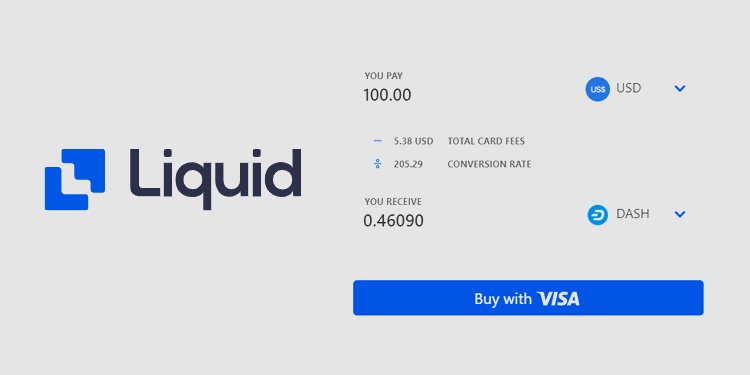
Today, the Dash Core Group announced it has integrated crypto exchange Liquid.com’s ‘Quick Exchange’ feature into Dash’s official wallet app for Android. Users can now purchase Dash within the Dash Wallet by a VISA card with support for over 100 countries and more than 50 national currencies.
Liquid’s Quick Exchange was designed to make buying and swapping cryptocurrency quick and easy. Users purchasing cryptocurrency using Quick Exchange will receive a price quote in their national currency; or can select any of 50+ fiat currencies to view their price quotes.
3 Integration Phases
This is the first of three release phases that the integration will bring to both Dash & Liquid.com users. All Quick Exchange purchases of Dash with VISA in the app will take minutes. This is due to Liquid’s integration of InstantSend, one of Dash’s unique features.
Then the highly-anticipated second phase of this integration is the Swaps feature of Quick Exchange, which is scheduled to be released in the near future. Users can use Quick Exchange’s Swap feature to swap one crypto to another seamlessly, including cross-chain transactions.
The third and final phase is the ability for users to transfer Dash between their Liquid account and the Dash Wallet, which is to be released in Q4 2021.
“It’s been great working with the Dash team on something truly great for the community. Liquid Quick Exchange offers best-in-class exchange rates with an industry-leading user experience. Combined with the high-quality Dash ecosystem and the app; we have quite a formidable use-case.” – Jered Masters, Head of Frontend & Quick Exchange Lead at Liquid
Liquid.com + DASH
Dash constantly strives to ensure a high level of user experience within the Dash Wallet, focusing on the speed and usability of the wallet over other features. The ability to add more features to the Wallet has allowed for increased user retention and increased usage.
“The inclusion of Liquid’s Quick Exchange is a crucial step forward in our mutual dedication to user experience and ease of acquisition. With Liquid’s global coverage; users in every corner of the world will be able to participate in and benefit from this integration. Liquid is a recognized Dash FastPass partner; which means Dash can be quickly purchased, deposited, and withdrawn to be used however and whenever the user sees fit.” – Omar Hamwi, Business Development Manager at Dash Core Group
The Dash community has seen an improvement in the Dash trading ecosystem since the Dash Core Group’s Business Development team began implementing its FastPass strategy.
What began as an effort to promote businesses in the trading ecosystem that have implemented InstantSend; is now an interconnected network of partners where users can utilize the power of the FastPass network. This has allowed new use-cases including arbitrage. The Dash Investment Foundation further made an investment in Quadency; an automated trading solution and also a FastPass partner. Quadency is too integrated with Liquid for automated and instant trading of Dash.
Though Okcoin chief compliance officer Megan Monroe said that there are still certain grey areas over cryptocurrencies in the United States, further regulation may not be the best solution.
In a statement to Cointelegraph, Monroe said current U.S. regulations are sufficient to police cryptocurrency exchanges, token issuers and custody wallet providers, but “jurisdictional boundaries of these federal financial regulators are neither clear nor collaborative.” Rather, she advocated for a framework with greater clarity to determine which crypto firms should be subject to regulation and let investors know which protections are available.
“A clear regulatory framework with established jurisdictional boundaries, flexible compliance standards and open communication channels with registrants (as well as with state regulators) would be a good way to initiate an evolving framework for market participants to grow their businesses,” said the Okcoin chief compliance officer. “[This] would provide retail customers that seek to work with regulated entities a clearer understanding of the investor protections that would be available to them.”
She added:
“We do not believe that further regulation will necessarily prevent fraud and platform abuse […] Fraud should not be limited to focusing on retail customer regulatory compliance issues in the securities markets.”
Two of the major government agencies handling digital asset regulation in the United States, the Securities and Exchange Commission, or SEC, and the Commodity Futures Trading Commission, or CFTC, have different jurisdictional claims regarding crypto.
The SEC often determines whether tokens are securities using the Howey Test, with Chairperson Gary Gensler arguing the crypto industry, including decentralized exchanges, falls within the regulatory purview of the federal agency. However, former CFTC Chair Christopher Giancarlo has claimed that cryptocurrencies are commodities and thus would be subject to regulation by the CFTC.
The apparent lack of clarity can be seemingly confusing to crypto firms that are considering relocating to the U.S., or local ones making the transition to the digital space. David Schwartz, chief technology officer of Ripple Labs, told Cointelegraph earlier this year that it was “difficult to figure out which laws apply and how they apply to something new,” like cryptocurrencies or blockchain technology.
“Over time, the regulators have educated themselves about the industry and expanded their scope to incorporate new blockchain technology, such as decentralized exchanges and DApps,” said Monroe. “But, the regulations still lag behind the industry innovation, which is why the regulators have yet to provide comprehensive regulatory guidance on decentralized finance technology.”
Related: Will regulation adapt to crypto, or crypto to regulation? Experts answer
The Okcoin chief compliance officer said that an “incubator” approach might be one possible solution to this “patchwork of financial regulations,” wherein crypto traders and businesses could operate without fear of legal action for a set period of time. She also encouraged projects to clearly identify the risks to both investors and users, and for greater communication and collaboration between agencies like the CFTC, SEC and Financial Crimes Enforcement Network.