Tag: CBDCs

  • Central Bank of Kenya Releases Discussion Paper on CBDCs

    Central Bank of Kenya Releases Discussion Paper on CBDCs

    [ad_1]

    Central Bank Digital Currencies (CBDCs), a phenomenon that took over the global financial system in 2021, is now getting popular among African economies. Recently, the Central Bank of Kenya (CBK) published a discussion paper on CBDCs to highlight different opportunities and risks associated with the central bank digital currencies.

    CBK noted that AML, technology risks, and infrastructure costs are some of the major risks associated with CBDCs. However, the bank also outlined a few prominent features of the digital currencies including the expansion of cross-border payments, financial stability, innovation, and financial inclusion.

    The Kenyan central bank highlighted the rising popularity of digital tools in the global payments industry. “Following the outbreak of the coronavirus (COVID-19) pandemic, digital platforms have emerged as important financial inclusion tools across the world. To reap the full benefits and manage risks, policymakers are looking to step up. Central banks are exploring the possibility of rolling out CBDC solutions to meet their future payments needs in a digital economy,” CBK mentioned.

    According to a recent survey conducted by the Bank for International Settlements, nearly 86% of central banks around the world are exploring the possibilities of CBDCs.

    Risks

    The Central Bank of Kenya said that it is monitoring the ongoing developments in the global CBDC ecosystem. While the bank outlined the potential advantages of CBDCs, it added that the disadvantages of digital assets must be considered before further developments.

    “There are significant potential risks with CBDC issuance. These include financial exclusion, technology risks, competing with bank deposits and undermining bank intermediation, hampering monetary policy transmission, Anti-Money Laundering and Combating the Financing of Terrorism (AML/CFT), and data privacy balance and infrastructure costs,” the Central Bank of Kenya added.

    Recently, the Bank of Korea announced the completion of the first phase of its central bank digital currency testing.

    Central Bank Digital Currencies (CBDCs), a phenomenon that took over the global financial system in 2021, is now getting popular among African economies. Recently, the Central Bank of Kenya (CBK) published a discussion paper on CBDCs to highlight different opportunities and risks associated with the central bank digital currencies.

    CBK noted that AML, technology risks, and infrastructure costs are some of the major risks associated with CBDCs. However, the bank also outlined a few prominent features of the digital currencies including the expansion of cross-border payments, financial stability, innovation, and financial inclusion.

    The Kenyan central bank highlighted the rising popularity of digital tools in the global payments industry. “Following the outbreak of the coronavirus (COVID-19) pandemic, digital platforms have emerged as important financial inclusion tools across the world. To reap the full benefits and manage risks, policymakers are looking to step up. Central banks are exploring the possibility of rolling out CBDC solutions to meet their future payments needs in a digital economy,” CBK mentioned.

    According to a recent survey conducted by the Bank for International Settlements, nearly 86% of central banks around the world are exploring the possibilities of CBDCs.

    Risks

    The Central Bank of Kenya said that it is monitoring the ongoing developments in the global CBDC ecosystem. While the bank outlined the potential advantages of CBDCs, it added that the disadvantages of digital assets must be considered before further developments.

    “There are significant potential risks with CBDC issuance. These include financial exclusion, technology risks, competing with bank deposits and undermining bank intermediation, hampering monetary policy transmission, Anti-Money Laundering and Combating the Financing of Terrorism (AML/CFT), and data privacy balance and infrastructure costs,” the Central Bank of Kenya added.

    Recently, the Bank of Korea announced the completion of the first phase of its central bank digital currency testing.

    [ad_2]

    Source link

  • Visa Teams Up With Consensys To Build Payment Infrastructure For CBDCs

    Visa Teams Up With Consensys To Build Payment Infrastructure For CBDCs

    [ad_1]

    Visa and ConsenSys, a blockchain software startup, are working to develop a central bank digital currency (CBDC) pilot program to explore retail applications such as cards and wallets.

    Both firms will first meet with an estimated 30 central banks to discuss the goals that governments hope to achieve with government-backed digital currency. The pilot program is scheduled to begin in the spring of this year.

    Visa To Pilot CBDC In Select Countries

    Visa (V) announced on Thursday that it will take its crypto services to the next level by teaming with blockchain software company Consensys to create a central bank digital currency onramp (CBDC).

    The payments giant plans to launch a “CBDC sandbox” in the spring, where central banks can try out the technology after minting it on Consensys’ Quorum network.

    visa

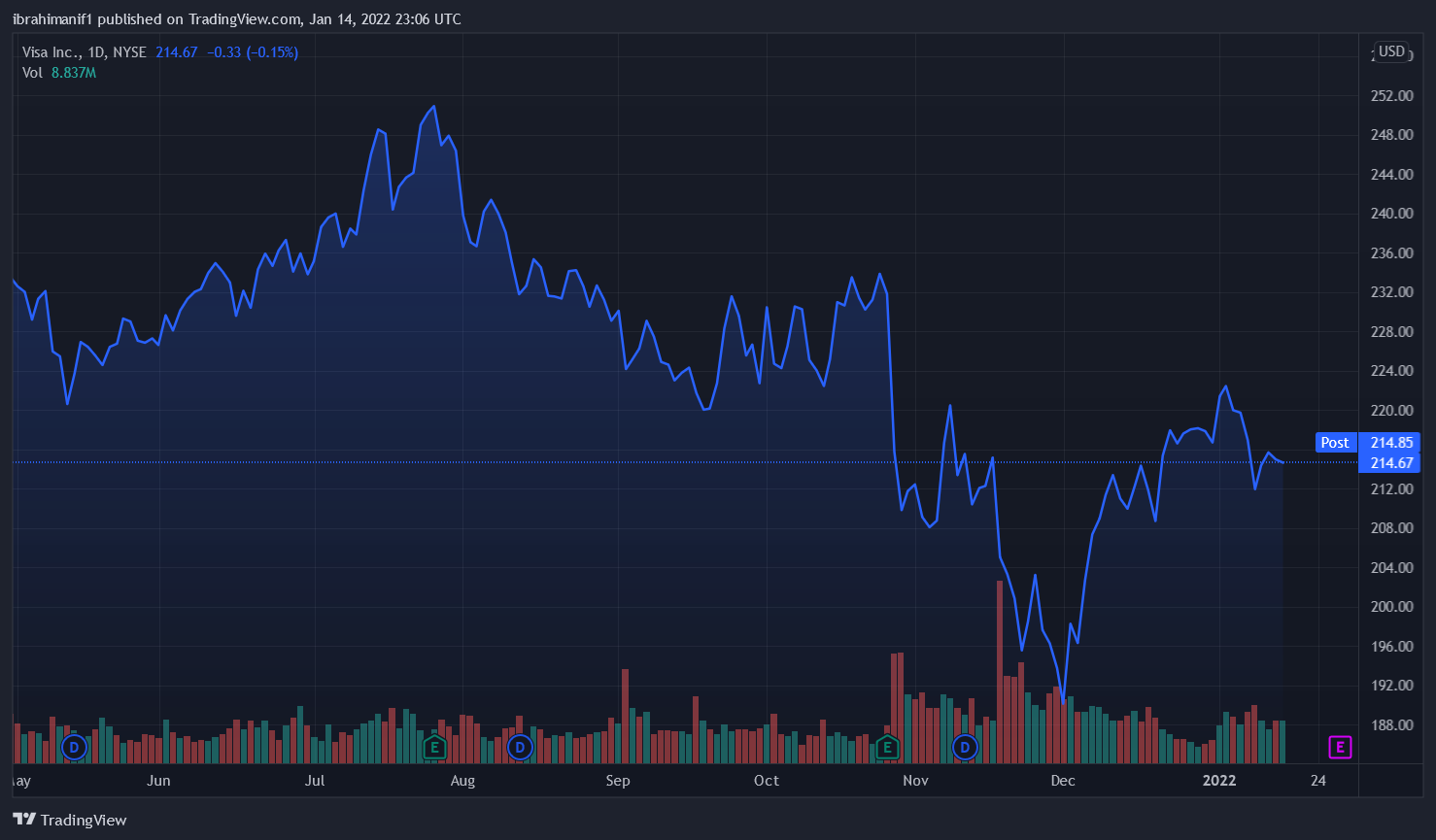
    Visa Trades At $214. Source: TradingView

    Customers will be able to use their CBDC-linked Visa card or digital wallet anyplace Visa is accepted globally, according to Catherine Gu, Visa’s head of CBDC, who spoke with ConsenSys in a blog post Q&A.

    Gu Said:

    “If successful, CBDC could expand access to financial services and make government disbursements more efficient, targeted and secure – that’s an attractive proposition for policy makers.”

    A CBDC is a type of central bank obligation that is issued in digital form and can be used by the general public, comparable to the US dollar.

    Related article | Visa Survey Shows Crypto Payments Could Boom In 2022

    Countries Are Launching CBDCs

    The decision comes as regulators around the world struggle to figure out how to treat CBDCs in a changing financial landscape dominated by cryptocurrencies. The notion that crypto and digital money will upend financial markets or replace fiat currency is a major issue.

    Mastercard also announced the launch of a CBDC test platform in 2020, which allowed banks to simulate the issuance, distribution, and exchange of CBDCs amongst banks, financial service providers, and consumers.

    “Central banks are moving from research to actually wanting to have a tangible product they can experiment with,” Chuy Sheffield, Visa’s head of crypto.

    If Visa is successful, it might help bridge the gap between central banks and financial institutions. Visa is accepted by over 80 million merchant locations worldwide.

    In the last year and a half, the number of countries investigating CBDCs has more than doubled. According to the Atlantic Council’s CBDC tracker, at least 87 different countries — accounting for 90% of global GDP — are considering financial technology in some way.

    China has already started a number of digital yuan pilot initiatives and plans to accept the currency for the Beijing Winter Olympics. Nigeria and the Bahamas have their own CBDCs in circulation.

    In early December, Visa announced the formation of a worldwide crypto advisory practice to assist financial institutions in developing their cryptocurrency operations as demand for crypto goods grows.

    Related article | Visa Is Building A Payment Channel Network On Ethereum

    Featured image from Pixabay, chart from TradingView.com

    [ad_2]

    Source link

  • Countries representing over 90% of global GDP are exploring CBDCs

    Countries representing over 90% of global GDP are exploring CBDCs

    [ad_1]

    The quest to understand the opportunities and challenges of a central bank digital currency, or CBDC, is underway in 81 countries, with five nations fully implementing a digital version of their currency, according to a new tracker from the Atlantic Council. 

    The Caribbean region is home to all five CBDCs that are currently in use, with The Bahamas, Saint Kitts and Nevis, Antigua and Barbuda, Saint Lucia and Grenada all implementing their digital cash systems.

    CBDCs are in their pilot stage in 14 other countries, including South Korea and Sweden, the tracker shows.

    Established in 1961, the Atlantic Council describes itself as a nonpartisan organization that seeks to promote U.S. leadership on various world issues. The CBDC tracker, which was unveiled July 22, currently monitors 83 countries and currency unions.

    Among the countries with the four largest central banks — United States Federal Reserve, European Central Bank, Bank of Japan and Bank of England — the U.S. is furthest behind in terms of CBDC development.

    Related: Reserve Bank of India mulls first steps toward an eventual CBDC

    The Federal Reserve has been researching CBDCs for several years now, with Chairman Jerome Powell indicating in January that digital-dollar development is a “very high priority” to combat financial crime. Meanwhile, New York Fed Bank President John Williams believes that the emergence of cryptocurrencies raises challenging questions for central banks.

    Related: Fed and Yale researchers lay out 2 regulatory frameworks for stablecoins

    China recently indicated that foreign visitors will be allowed to use the digital yuan during the 2022 Winter Olympics — provided they share their passport information with the central bank. A group of U.S. senators that includes Bitcoin proponent (BTC) Cynthia Lummis has urged American Olympians to boycott the digital yuan. According to the South China Morning Post, Beijing responded by telling the U.S. senators to “stop making trouble.”

    The People’s Bank of China claims that nearly 21 million people have already opened a virtual wallet for the purpose of using the digital yuan.