Japan’s largest lender, Mitsubishi UFJ Financial Group (MUFG) announced on Tuesday the decision to shut down the blockchain-based online payments network, Global Open Network Japan that was developed in collaboration with Akamai Technologies.
The bank has already started the preparation of the stuttering and cited a tough environment in the payments
Payments
One of the bases of mediums of exchange in the modern world, a payment constitutes the transfer of a legal currency or equivalent from one party in exchange for goods or services to another entity. The payments industry has become a fixture of modern commerce, though the players involved and means of exchange have dramatically shifted over time.In particular, a party making a payment is referred to as a payer, with the payee reflecting the individual or entity receiving the payment. Most commonly the basis of exchange involves fiat currency or legal tender, be it in the form of cash, credit or bank transfers, debit, or checks. While typically associated with cash transfers, payments can also be made in anything of perceived value, be it stock or bartering – though this is far more limited today than it has been in the past.The Largest Players in the Payments IndustryFor most individuals, the payments industry is dominated currently by card companies such as Visa or Mastercard, which facilitate the use of credit or debit expenditures. More recently, this industry has seen the rise of Peer-to-Peer (P2P) payments services, which have gained tremendous traction in Europe, the United States, and Asia, among other continents.One of the biggest parameters for payments is timing, which looms as a crucial element for execution. By this metric, consumer demand incentivizes technology that prioritizes the fastest payment execution.This can help explain the preference for debit and credit payments overtaking check or money orders, which in previous decades were much more commonly utilized. A multi-billion-dollar industry, the payments space has seen some of the most innovation and advances in recent years as companies look to push contactless technology with faster execution times.
One of the bases of mediums of exchange in the modern world, a payment constitutes the transfer of a legal currency or equivalent from one party in exchange for goods or services to another entity. The payments industry has become a fixture of modern commerce, though the players involved and means of exchange have dramatically shifted over time.In particular, a party making a payment is referred to as a payer, with the payee reflecting the individual or entity receiving the payment. Most commonly the basis of exchange involves fiat currency or legal tender, be it in the form of cash, credit or bank transfers, debit, or checks. While typically associated with cash transfers, payments can also be made in anything of perceived value, be it stock or bartering – though this is far more limited today than it has been in the past.The Largest Players in the Payments IndustryFor most individuals, the payments industry is dominated currently by card companies such as Visa or Mastercard, which facilitate the use of credit or debit expenditures. More recently, this industry has seen the rise of Peer-to-Peer (P2P) payments services, which have gained tremendous traction in Europe, the United States, and Asia, among other continents.One of the biggest parameters for payments is timing, which looms as a crucial element for execution. By this metric, consumer demand incentivizes technology that prioritizes the fastest payment execution.This can help explain the preference for debit and credit payments overtaking check or money orders, which in previous decades were much more commonly utilized. A multi-billion-dollar industry, the payments space has seen some of the most innovation and advances in recent years as companies look to push contactless technology with faster execution times. Read this Term space behind the move. “Slow growth of payment transaction numbers caused by the impact of the COVID-19 pandemic and other factors, made it difficult to develop its business on the scale originally anticipated,” the official press release stated.
Death of an Ambitious Project
MUFG and Akamai first announced their plans to form a joint venture in 2019 for the development of a blockchain payments system. However, the project faced delays before its launch in April 2021.
The Japanese bank owned 80 percent of the joint venture, and the rest was with Akamai.
One of the primary goals of the project was to provide a platform with high scalability
Scalability
Scalability is a term that describes the constraints of a network via hash rates to meet increased demand. In the context of Bitcoin, scalability reflects the issue in which a limited rate can process transactions adequately.Blocks within the Bitcoin blockchain are limited in both size and frequency. The overall transaction processing capacity of the network is dictated by the average block creation time of 10 minutes as well as a block size limit of 1 megabyte. Consequently, this leads to pain points in transaction processing, relative to other cryptos or traditional payments options. Inherent Scalability Issues with BitcoinBitcoin’s block size limit represents a true bottleneck in its design. This reflects the potential downside of a Proof-of-Work (PoW) system with Bitcoin’s consensus protocol.Lags in transaction processing capacity can result in increasing transaction fees and delayed processing of transactions that cannot be fit into a block.This is perhaps one of Bitcoin’s most pressing issues long term, an issue that has since head to the creation of other altcoins or networks to remedy this concern.There have also been many attempts to solve Bitcoin’s scalability problem through software upgrades.Increasing the network’s transaction processing limit requires making changes to the technical workings of bitcoin. This is where forks in the network can come into play, be it soft or hard forks.However, forks have resulted in the creation of entirely new cryptocurrency networks such as Bitcoin Cash, among others. Technical optimizations have also been floated to decrease the amount of computing resources required to process and record Bitcoin transactions. Presently there is no consensus on what the best solution to Bitcoin’s scalability is.
Scalability is a term that describes the constraints of a network via hash rates to meet increased demand. In the context of Bitcoin, scalability reflects the issue in which a limited rate can process transactions adequately.Blocks within the Bitcoin blockchain are limited in both size and frequency. The overall transaction processing capacity of the network is dictated by the average block creation time of 10 minutes as well as a block size limit of 1 megabyte. Consequently, this leads to pain points in transaction processing, relative to other cryptos or traditional payments options. Inherent Scalability Issues with BitcoinBitcoin’s block size limit represents a true bottleneck in its design. This reflects the potential downside of a Proof-of-Work (PoW) system with Bitcoin’s consensus protocol.Lags in transaction processing capacity can result in increasing transaction fees and delayed processing of transactions that cannot be fit into a block.This is perhaps one of Bitcoin’s most pressing issues long term, an issue that has since head to the creation of other altcoins or networks to remedy this concern.There have also been many attempts to solve Bitcoin’s scalability problem through software upgrades.Increasing the network’s transaction processing limit requires making changes to the technical workings of bitcoin. This is where forks in the network can come into play, be it soft or hard forks.However, forks have resulted in the creation of entirely new cryptocurrency networks such as Bitcoin Cash, among others. Technical optimizations have also been floated to decrease the amount of computing resources required to process and record Bitcoin transactions. Presently there is no consensus on what the best solution to Bitcoin’s scalability is. Read this Term and multi-connectivity data processing to meet the rising demand for the Internet of Things (IoT). In the shutdown notice, the bank pointed out that it struggled to fit its solution with the IoT growing market needs.
The joint venture, GO-NET Japan, is now coordinating with its clients and partners, and will eventually close all operations and then start the liquidation process. However, the Japanese bank highlighted that the shutdown of the project will not impact its financial results in the ongoing financial year.
Despite the shuttering of the project, MUFG is still bullish with plans of its other digital strategies and is discussing further collaboration with Akamai.
“MUFG is discussing further opportunities of collaboration with Akamai and seeking to drive momentum in open innovation through alliances with global business partners and by utilizing the latest technologies based on experience from the GO-NET project,” the lender added.
Japan’s largest lender, Mitsubishi UFJ Financial Group (MUFG) announced on Tuesday the decision to shut down the blockchain-based online payments network, Global Open Network Japan that was developed in collaboration with Akamai Technologies.
The bank has already started the preparation of the stuttering and cited a tough environment in the payments
Payments
One of the bases of mediums of exchange in the modern world, a payment constitutes the transfer of a legal currency or equivalent from one party in exchange for goods or services to another entity. The payments industry has become a fixture of modern commerce, though the players involved and means of exchange have dramatically shifted over time.In particular, a party making a payment is referred to as a payer, with the payee reflecting the individual or entity receiving the payment. Most commonly the basis of exchange involves fiat currency or legal tender, be it in the form of cash, credit or bank transfers, debit, or checks. While typically associated with cash transfers, payments can also be made in anything of perceived value, be it stock or bartering – though this is far more limited today than it has been in the past.The Largest Players in the Payments IndustryFor most individuals, the payments industry is dominated currently by card companies such as Visa or Mastercard, which facilitate the use of credit or debit expenditures. More recently, this industry has seen the rise of Peer-to-Peer (P2P) payments services, which have gained tremendous traction in Europe, the United States, and Asia, among other continents.One of the biggest parameters for payments is timing, which looms as a crucial element for execution. By this metric, consumer demand incentivizes technology that prioritizes the fastest payment execution.This can help explain the preference for debit and credit payments overtaking check or money orders, which in previous decades were much more commonly utilized. A multi-billion-dollar industry, the payments space has seen some of the most innovation and advances in recent years as companies look to push contactless technology with faster execution times.
One of the bases of mediums of exchange in the modern world, a payment constitutes the transfer of a legal currency or equivalent from one party in exchange for goods or services to another entity. The payments industry has become a fixture of modern commerce, though the players involved and means of exchange have dramatically shifted over time.In particular, a party making a payment is referred to as a payer, with the payee reflecting the individual or entity receiving the payment. Most commonly the basis of exchange involves fiat currency or legal tender, be it in the form of cash, credit or bank transfers, debit, or checks. While typically associated with cash transfers, payments can also be made in anything of perceived value, be it stock or bartering – though this is far more limited today than it has been in the past.The Largest Players in the Payments IndustryFor most individuals, the payments industry is dominated currently by card companies such as Visa or Mastercard, which facilitate the use of credit or debit expenditures. More recently, this industry has seen the rise of Peer-to-Peer (P2P) payments services, which have gained tremendous traction in Europe, the United States, and Asia, among other continents.One of the biggest parameters for payments is timing, which looms as a crucial element for execution. By this metric, consumer demand incentivizes technology that prioritizes the fastest payment execution.This can help explain the preference for debit and credit payments overtaking check or money orders, which in previous decades were much more commonly utilized. A multi-billion-dollar industry, the payments space has seen some of the most innovation and advances in recent years as companies look to push contactless technology with faster execution times. Read this Term space behind the move. “Slow growth of payment transaction numbers caused by the impact of the COVID-19 pandemic and other factors, made it difficult to develop its business on the scale originally anticipated,” the official press release stated.
Death of an Ambitious Project
MUFG and Akamai first announced their plans to form a joint venture in 2019 for the development of a blockchain payments system. However, the project faced delays before its launch in April 2021.
The Japanese bank owned 80 percent of the joint venture, and the rest was with Akamai.
One of the primary goals of the project was to provide a platform with high scalability
Scalability
Scalability is a term that describes the constraints of a network via hash rates to meet increased demand. In the context of Bitcoin, scalability reflects the issue in which a limited rate can process transactions adequately.Blocks within the Bitcoin blockchain are limited in both size and frequency. The overall transaction processing capacity of the network is dictated by the average block creation time of 10 minutes as well as a block size limit of 1 megabyte. Consequently, this leads to pain points in transaction processing, relative to other cryptos or traditional payments options. Inherent Scalability Issues with BitcoinBitcoin’s block size limit represents a true bottleneck in its design. This reflects the potential downside of a Proof-of-Work (PoW) system with Bitcoin’s consensus protocol.Lags in transaction processing capacity can result in increasing transaction fees and delayed processing of transactions that cannot be fit into a block.This is perhaps one of Bitcoin’s most pressing issues long term, an issue that has since head to the creation of other altcoins or networks to remedy this concern.There have also been many attempts to solve Bitcoin’s scalability problem through software upgrades.Increasing the network’s transaction processing limit requires making changes to the technical workings of bitcoin. This is where forks in the network can come into play, be it soft or hard forks.However, forks have resulted in the creation of entirely new cryptocurrency networks such as Bitcoin Cash, among others. Technical optimizations have also been floated to decrease the amount of computing resources required to process and record Bitcoin transactions. Presently there is no consensus on what the best solution to Bitcoin’s scalability is.
Scalability is a term that describes the constraints of a network via hash rates to meet increased demand. In the context of Bitcoin, scalability reflects the issue in which a limited rate can process transactions adequately.Blocks within the Bitcoin blockchain are limited in both size and frequency. The overall transaction processing capacity of the network is dictated by the average block creation time of 10 minutes as well as a block size limit of 1 megabyte. Consequently, this leads to pain points in transaction processing, relative to other cryptos or traditional payments options. Inherent Scalability Issues with BitcoinBitcoin’s block size limit represents a true bottleneck in its design. This reflects the potential downside of a Proof-of-Work (PoW) system with Bitcoin’s consensus protocol.Lags in transaction processing capacity can result in increasing transaction fees and delayed processing of transactions that cannot be fit into a block.This is perhaps one of Bitcoin’s most pressing issues long term, an issue that has since head to the creation of other altcoins or networks to remedy this concern.There have also been many attempts to solve Bitcoin’s scalability problem through software upgrades.Increasing the network’s transaction processing limit requires making changes to the technical workings of bitcoin. This is where forks in the network can come into play, be it soft or hard forks.However, forks have resulted in the creation of entirely new cryptocurrency networks such as Bitcoin Cash, among others. Technical optimizations have also been floated to decrease the amount of computing resources required to process and record Bitcoin transactions. Presently there is no consensus on what the best solution to Bitcoin’s scalability is. Read this Term and multi-connectivity data processing to meet the rising demand for the Internet of Things (IoT). In the shutdown notice, the bank pointed out that it struggled to fit its solution with the IoT growing market needs.
The joint venture, GO-NET Japan, is now coordinating with its clients and partners, and will eventually close all operations and then start the liquidation process. However, the Japanese bank highlighted that the shutdown of the project will not impact its financial results in the ongoing financial year.
Despite the shuttering of the project, MUFG is still bullish with plans of its other digital strategies and is discussing further collaboration with Akamai.
“MUFG is discussing further opportunities of collaboration with Akamai and seeking to drive momentum in open innovation through alliances with global business partners and by utilizing the latest technologies based on experience from the GO-NET project,” the lender added.
Harmony is getting a lot of traction because it addresses core blockchain concerns, is energy-efficient, has cross-chain capabilities, offers lower gas fees and has a huge potential for nonfungible tokens (NFTs).
Maintain decentralization and security
Harmony thinks its network can scale while maintaining decentralization and security because it uses sharding, which divides validators into multiple groups and allows them to approve transactions and new blocks simultaneously. Harmony can now process 2,000 transactions per second (TPS), which is comparable to Visa, ONE of the world’s largest payment networks. Harmony believes it will process 10 million TPS in the long run.
On the other hand, Harmony does not compromise security or decentralization even as it scales. For example, the network assigns nodes or computers that join the network and validate transactions, to distinct shards via a distributed randomness generation mechanism. Harmony also keeps the minimum number of ONE tokens required for nodes to join the network as validators and preserve decentralization at a low level.
Energy-efficient
Many blockchain networks are now adopting the proof-of-stake model, which Harmony has employed since its inception. As a result, nodes put up existing tokens as collateral in this procedure to have a chance to be chosen at random to validate transactions. For a block to be approved, several validators must check transactions. Harmony stands out from other networks because its architecture and proof-of-stake consensus method allow it to complete blocks in under two seconds.
Cross-chain capabilities
Additionally, Harmony introduced Horizon, a cross-chain interoperability bridge with Ethereum, allowing assets to be exchanged between the two networks. This innovation can revolutionize cross-border payments and make cryptocurrency exchanges more convenient. Harmony has also established connections with other blockchains, such as Binance.
By allowing nodes on other blockchain networks to validate transactions, Harmony’s platform can transfer data across various blockchain networks, regardless of whether they use proof-of-stake or proof-of-work governance.
Lower gas fees
Harmony’s network seldom becomes clogged, thanks to its high TPS and usage of proof-of-stake validation. As a result, it does not have high gas fees, which are now a fraction of a penny per transaction on Harmony.
On the other hand, a network like Ethereum sees far more overall demand and transactions than Harmony. Still, Harmony claims that it can alleviate congestion issues by simply adding additional shards, even if the network is fully utilized and witnessing exceptionally high demand.
Huge potential for NFTs
The network’s cross-chain capabilities open up some exciting possibilities for NFTs, which are secure digital art, video and audio assets that may be transmitted on a blockchain network. Moreover, cheaper gas expenses may make the network appealing to developers interested in minting NFTs.
According to Harmony, bridging NFTs from ONE network to another may be costly at first, but subsequent transactions will be inexpensive. Harmony also announced on Twitter that it is working on NFT lending, NFT verification and fractionalization, among other features.
The Boston Security Token Exchange (BSTX), a new facility of the Boston-based BOX exchange, received regulatory approval from the United States Securities and Exchange Commission (SEC) to operate as a blockchain-based securities exchange.
BSTX was launched jointly by BOX and Overstock’s blockchain arm tZERO, originally seeking approval for launching publicly-traded registered security tokens. However, the SEC approval to operate as a national securities exchange allows BSTX to use blockchain technology for faster settlements in traditional markets. According to the SEC,
“The Commission notes that the [BSTX] Exchange’s current proposal does not involve the trading of digital tokens and such a proposal, or any other additional use of blockchain technology.”
While the SEC has previously denied BSTX permission to offer crypto-focused services, the latest approval allows the facility to use a proprietary market data feed, BSTX Market Data Blockchain.
In addition, BSTX will also use blockchain technology to help investors experience faster transaction times on the same day (“T+0”) or the next day (“T+1”), instead of the standard two business-day (“T+2”) settlement cycle sported by traditional markets.
Along with the regulatory approval based on BSTX’s rule change proposals (SR-BOX-2021-06), the SEC placed four conditions for BOX in line with BSTX’s operations.
The requirement includes joining all relevant national market system plans related to equities trading, ensuring Regulatory Services Agreement with FINRA, Intermarket Surveillance Group membership for the BSTX facility, and an applicable governance structure.
Related: SEC reportedly probing crypto lending products by Gemini and Celsius
In line with the above developments, the SEC is also reportedly reviewing some of the high-yield crypto lending products offered by Gemini, Celsius Network and Voyager Digital.
As Cointelegraph reported, the SEC is conducting an inquiry into considering registering crypto lending services as securities. A Bloomberg report on the matter suggests that the SEC’s main concern lies with the high-yield offering by crypto lending services.
Billion-dollar companies are taking the Metaverse by storm as consumers have shown heightened interest in virtual, interactive, three-dimensional experiences that take place online.
While the “Metaverse” is still a new concept, research firm Strategy Analytics found that the global Metaverse market is forecasted to hit nearly $42 billion by 2026. This very well may be the case, as a handful of businesses including Nike and Walmart have begun exploring consumer experiences in metaverse environments.
NFT utility for brands launching in the Metaverse
To understand how and why brands are leveraging the Metaverse, it’s key to point out the role that NFTs, or nonfungible tokens, play within these ecosystems. While the year 2021 saw an influx of NFTs, the rise of the Metaverse is predicted to highlight the importance of utility behind NFTs.
Adrian Baschuk, founding partner at Ethernity Chain — an authenticated and licensed NFT platform — told Cointelegraph that every brand, company and notable figure will eventually have a metaverse and NFT integration:
“This is the “Myspace days” of the NFT-metaverse interactivity layer. Just as every company and individual has adopted some form of social media, this will also be the case for NFTs and the Metaverse.”
Given this, Baschuk shared that Ethernity recently brought its IP to The Sandbox, a blockchain-based metaverse ecosystem. Specifically speaking, Ethernity has acquired a desirable plot of land in The Sandbox to host a gallery and fully licensed NFT store. Baschuk explained that this will allow The Sandbox users to purchase Ethernity NFT wearables and collectibles.
According to Baschuk, these wearable NFTs include athlete jerseys, which will be used to dress and provide special powers to The Sandbox avatars. “Dallas Cowboys’ Zeke and Dak will kick this off, as the players’ wearable jerseys and shoulder pads will boost a user’s avatars’ skills and powers,” he said.
While this specific example may appeal to The Sandbox gaming community, the concept behind it is universal for brands entering the Metaverse. For instance, Baschuk explained that NFTs within virtual ecosystems allow for companies to monetize assets across a blockchain network, enhancing interactivity for consumers and fans.
To put this in perspective, consumer electronics giant Samsung recently announced that it will have a virtual replica of its New York physical store located within Decentraland, another leading metaverse ecosystem. The store, known as the “Samsung 837X shop,” will be accessible in Decentraland for a limited time.
Samsung 837X shop in Decentraland. Source: Samsung
A Samsung spokesperson told Cointelegraph that establishing Samsung 837X as a metaverse brand will provide limitless possibility for consumers to connect with Samsung and its products in an immersive way:
“In our metaverse, the brand pillars of sustainability, customization and connectivity will come to life in experiences that showcase the cutting-edge technology embedded in the Samsung family of products. This virtual hub will become a place for our community to celebrate the convergence of technology, art, culture, fashion and music.”
Samsung’s spokesperson further mentioned that Decentraland specifically gave the company a platform to enable a true Web3 metaverse experience. They noted that the Samsung community wanted a metaverse store to feature interactive quests that would allow participants to earn wearables like NFT badges or opportunities to win exclusive Samsung branded clothing for avatars.
Samsung 837X wearables in Decentraland. Source: Samsung
Overall, Samsung explained that its 837X store will serve as a foundation for the future, which will offer significant utility to its visitors. In turn, the company is looking at ways in which badges earned at 837X will offer access and utility for future events and experiences in its virtual space. “In the future, it’s our hope that everyone who visits our world will be able to enhance their online experience in the metaverse and their real-world experience with Samsung products,” commented Samsung’s spokesperson.
While Samsung was one of the first major brands to launch a virtual store in Decentraland this year, other organizations are following suit. Most recently Tennis Australia, the organizer of the Australian Open (AO), partnered with Decentraland to host the AO in the metaverse. This virtual environment contains key areas in Melbourne Park, including the Rod Laver Arena and Grand Slam Park. AO Decentraland 2022 will take place Jan. 17–30, mirroring the in-real-life tournament schedule.
An avatar watching the Welcome Address at the AO in Decentraland. Source: Decentraland
Ridley Plummer, Tennis Australia NFT and metaverse project lead, told Cointelegraph that it was a natural progression for the event to expand into the metaverse. Plummer shared that this was also the case due to border closures brought about by the COVID-19 pandemic, which has made it more difficult for fans to attend the event in person:
“We can only have a certain number of people in the area and the arenas, so we are bringing the AO to the world by allowing fans to partake in a virtual, interactive experience on Decentraland. This will enhance our fans’ viewing experience at home from their television by providing users with a more voyeuristic look at what’s happening at Melbourne Park.”
Plummer elaborated that AO’s metaverse environment features entertainment hubs where fans can watch replays of tennis matches, along with historical footage of past tournaments. He noted that during the final weekend of the event, fans will have access to behind-the-scenes footage that will show players during practice sessions and more.
Ariel image of the AO arena in Decentraland. Source: Decentraland
Plummer added that users on Decentraland can walk around Melbourne Park with their avatars to collect wearables and play virtual games to earn NFTs. “There are items and branding we can add within Decentraland that enhance experiences for our partners as well from a play-to-earn perspective. We have a series of gamification within Decentraland.”
Blockchain-based metaverse offers more, but will the mainstream catch on?
Given the unique experiences NFTs can bring to consumers and fans, it’s equally important to highlight the benefits offered by a blockchain-based metaverse ecosystem. For instance, while many brands have started to engage users through connected environments, blockchain networks enable digital asset ownership while demonstrating the true power of Web3.
Elaborating on this, Adam De Cata, head of partnerships at Decentraland, told Cointelegraph that the difference between a blockchain-based metaverse and a non-blockchain metaverse is interoperability:
“When it comes to interoperability and what this means to users in blockchain, it can provide countless utilities and benefits. You can buy your digital garments, trade and sell them and receive these funds via crypto (that can be transferred into fiat if need be). As a creator, you can receive a trailing commission on wearable sales too.”
De Cata added that open source platforms like Decentraland further allow users to connect their digital wallets to the platform to access particular builds and scenes that might be exclusive to a particular NFT they already hold: “We are still in the infancy of exploration, and it’s exciting to think of the possibilities moving forward with Web3.”
In regards to interoperability, Sebastien Borget, co-founder of The Sandbox, told Cointelegraph that the Metaverse enables a digital economy, noting that a true virtual ecosystem should allow for an avatar to be used across a variety of platforms: “The Metaverse means that your avatar can function across a myriad of virtual worlds, with the same identity. This is only possible through blockchain technology, which puts the users in control of their identity, data and currency.”
Borget further remarked that virtual worlds have existed for over 20 years, adding that many current metaverses are just centralized platforms:
“The value centralized platforms bring by creating or being present is locked into the platform, and even worse, captured mostly by the platform rather than going back to the users. For me, the Metaverse’ true potential can only happen if there is a technology that supports this digital economy and users’ sovereignty.”
Yet while blockchain-based metaverse environments are capable of offering more to both companies and their users, the question as to whether this concept will catch on with the mainstream remains. De Cata remarked that he is optimistic about mainstream adoption, noting that Decentraland has seen an almost equal number of guest wallets and users with existing digital wallets utilize the platform. He shared that he is looking forward to the feedback from the AO event. “I’m keen to see what happens during the course of the AO on Decentraland. There is just enough market research to find out the retention rate and user experience for events like the AO, and if these users are crypto native or not.”
It’s also notable to point out that Samsung shared that the company has had an overwhelmingly positive response from visitors coming to Samsung 837X. “Based on the response we’ve received, we’ve seen attendance to Samsung 837X from both experienced users and new explorers alike. For us, that’s very exciting.”
Will metaverse experiences replace real life?
Metaverse experiences may be the next big innovation for brands and users, but some may be wondering if virtual environments will replace real-life experiences entirely. After all, this could very well be the case due to the advanced capabilities provided within blockchain-based metaverse environments.
For instance, while NFT utility has been brought to life through the Metaverse, the trillion-dollar e-commerce sector is being disrupted overall. To understand the scope of this, Justin Banon, co-founder of Boson Protocol — a decentralized commerce protocol — told Cointelegraph that brands are ultimately seeking commerce opportunities. “The whole point of the Metaverse is that it’s programmable and gameable, therefore offering full capabilities for a new wave of commerce.”
In turn, Banon explained that Boson Protocol has purchased one of the largest plots of land in Decentraland to host virtual shops that allow for NFT wearables to be purchased and then redeemed for physical items either online or at store locations. For example, Boson Protocol recently launched a virtual store with DressX, a retailer for digital fashion clothing, allowing the company to sell items to users in the metaverse that can be redeemed for physical versions. “We are getting more demand for Web3 features, like “digiphysical” offerings. There is no longer the demand for vanilla e-commerce,” he remarked.
Boson Protocol’s DressX shop in Decentraland. Source: Boson Protocol
While this may be, De Cata commented that time spent in the Metaverse depends on individual users:
“Metaverse events will be complementary to real-life events and experiences. We are already seeing a blended mix of both. Social content is key in the digital age we live in. I draw from the tech adoptions curves — the early adopters may spend increasingly more time in the Metaverse whereas the late majority less time.”
Although it’s hard to predict the future traction of the Metaverse, industry experts remain confident that all brands will eventually adopt a metaverse model. Borget commented that he expects this trend to accelerate because brands are looking for new ways to engage with users digitally. “It makes sense for brands to give more value back to the users directly, rather than spending on advertising,” he remarked. And De Cata added that although “the Metaverse” is trending as a topic, he believes that these virtual worlds are just an extension of social media platforms:
“The Metaverse allows us to connect with like minded individuals in a way that we don’t currently get from swiping up and down in a mobile app. For the crypto community, interoperability is key. For non-crypto users entering these environments, it’s clear that they are enjoying them now more than YouTube.”
The first computer games were developed in the late 20th century with the sole purpose of entertaining their audience. One of the first goals was to distract players from their routine work and provide them access to a fantasy world. Very soon, games began to compete for users’ time against traditional forms of entertainment, such as movies, circuses, theater performances, zoos, etc.
Planet Earth entered the new millennium with a population of over 6 billion people, and the forecast is that this number will reach 8 billion as early as 2023. If we assume that computer games will cease to be an alternative to work and become complementary to it, there will be 4 billion gamers in the world by then.
Not surprisingly, the traditional boundaries between games, media, sports and communication are rapidly disappearing, creating new business partnerships and causing more and more mergers and acquisitions around the world.
The still-active virtual world Second Life, which represented a first attempt at a portal to the metaverse with its own in-platform virtual currency, was an important example of this process between 2003 and 2006, during its most rapid period of growth. Players in many countries quit their jobs and dedicated 100% of their time to the virtual world.
But why is the use of blockchain in games causing a real revolution in the gaming industry? That is what this article seeks to answer.
The gaming markets
According to data from mid-2021, there were 3.2 billion people playing computer games, and as a report by Newzoo states, the global gaming revenues in 2021 were about $180.3 billion — 20% more than before the pandemic began in 2019.
Digital distribution channels are responsible for most of this revenue. Mobile games act as the main growth engine for the games industry, driving this segment to $93.2 billion dollars.
The game development industry has experienced a profound transformation over the past five years. With the emergence of mobile app stores and digital distribution platforms, even smaller studios have gained the ability to create games for the global market.
China remains the largest regional segment in terms of both revenue and number of players, accounting for more than a quarter of all sales. The Asia-Pacific region as a whole holds 55% of all players and offers the highest profits and fastest growth rates.
The introduction of new technologies, such as artificial intelligence (AI), virtual reality (VR) and blockchain, has become a major trend in the market. In recent years, numerous blockchain-enabled gaming apps and services have emerged, and the number of such projects promises to cause a boom in the market by 2022.
The evolution of business models in the games industry
Pay-to-play (P2P) model
From the 1970s until the 2000s, the most prevalent business model for the games industry was “pay-to-play.” In this model, development studios and publishers generate revenue from initial game sales and, in some cases, subscriptions. Collaborations with advertisers for in-game ads were few and far between.
In this model, players have little or no opportunity to extract value from games, except the satisfaction and enjoyment gained from the in-game experience.
Free-to-play (F2P) model
In the late 2000s and early 2010s, the “free-to-play” gaming model gained traction. This model was once considered a disastrous business model that would, at best, bring in lower revenues for a given game and, at worst, cannibalize the entire gaming industry. However, it has instead proven to be the best way to monetize, as well as being a main reason behind the cultural rise of games.
In the free-to-play model, games are offered to players at no upfront cost. In this type of model, in-game purchases (items and upgrades that improve features in the game) and ads make up the vast majority of the publishing studios’ revenues. Streaming and esports services act as monetization levers for players, while allowing “elite” players to receive rewards.
A perfect example of how some of these free-to-play business models have become successful is Fortnite. The game, launched in July 2017, generated over $5 billion in revenue in its first year of production. In addition, its userbase climbed to approximately 80 million monthly active users in 2018.
Play-to-earn (P2E) model
The “play-to-earn” model is exactly what the name suggests: A model where users can play and earn tokens or crypto while playing. This model has a very powerful psychological incentive, because it combines two activities that have driven humanity since the beginning of time: reward and entertainment.
The main idea in P2E is that players are rewarded as they invest more time and more effort in the game, and thus become part of the in-game economy (tokenomics), creating value for themselves, for other participants in the game ecosystem, and also for the developers. They receive an incentive/reward for their participation and playing time in the form of digital assets with potential appreciation over time.
Note that the use of blockchain technology in such assets has brought scarcity to digital assets in games, which can take the form of NFTs and can represent absolutely anything from characters like the kittens in CryptoKitties to cryptocurrencies like Bitcoin (BTC) or Ether (ETH).
Related: The Metaverse, play-to-earn and the new economic model of gaming
Along these lines, the key component in this model is to give players “ownership” over certain “digital assets” in the game, allowing them to increase their value by actively participating. This is where blockchain technology has become decisive for gaming business models.
Many concepts come from traditional games
The blockchain-based gaming industry is still in its early stages and it is still centered around many concepts coming from traditional gaming. NBA Top Shot, for example, is building on the “collect and trade model” that has prevailed in baseball cards and other collectibles for decades.
Axie Infinity, currently the most famous blockchain-based game, uses the “breed and battle” game model that Pokémon launched in the 1990s.
Related: How blockchain technology might bring triple-A games to metaverses
Sorare, on the other hand, a game in which players buy and trade soccer cards and build competing soccer teams, is based on the “recruit and compete” model. Similarly, virtual worlds like Decentraland and Somnium Space are immersing people in alternative realities, like Second Life and The Sims before them.
Thus, although many games that use blockchain technology (such as The Sandbox, Gods Unchained and Star Atlas) often fall into the same categories as games that do not use such technology, the most important feature that distinguishes them from their counterparts in the traditional market is the use of blockchain-based cryptocurrency support.
Overview of blockchain gaming
Advantages of blockchain games for players
With the introduction of blockchain technology, native game assets go to global, non-permitted blockchain platforms, rather than being tied up and locked in the particular game’s platform or in local environments controlled by video game development companies. We’ve talked about this before, when we covered the role of blockchain in NFTs in this column.
Here, it is important to highlight how blockchain technology has enabled digital assets, such as nonfungible tokens, to be interoperable and immediately viewable across dozens of different wallet providers, tradable on other gaming platforms and required in various virtual worlds of the Metaverse. And interoperability, in turn, has extended the negotiability of digital assets by enabling their free trade on other gaming platforms, thanks to blockchain technology. This puts users in direct ownership of their in-game items, giving them full and irrevocable control over their use.
That is, blockchain game players can access NFT marketplaces and crypto-active brokers and extract value from their in-game experiences by buying and trading digital assets obtained in games, 24/7, globally. In addition, tokenization of in-game assets opens up numerous other opportunities.
Related: Ready Player Earn: Where NFT gaming and the virtual economy coincide
The decentralized finance marketplace is a place where some players can put their acquired in-game assets to yield. Platforms like Yield Guild Games facilitate, for example, the lending and borrowing activities of in-game assets, so that players who do not have the initial capital needed to purchase in-game items can, through DeFi, participate in a given game by ceding a portion of the monetization and their earnings to “in-game item lenders.”
The advantage of blockchain games for developers
In addition to increasing monetization opportunities for gamers, the use of blockchain-based assets can also be beneficial for game developers.
Under the current structure of in-game item exchange, the practice known as “gold mining” has become prevalent. Gold mining involves players selling accounts or game “coins” on dark markets or over-the-counter markets, limiting secondary market monetization opportunities for developers and making players vulnerable to fraud.
With the expansion of marketplaces for digital assets obtained in blockchain games, developers can obtain information about the trading volumes of these assets and encode royalties into NFTs, so that with each subsequent sale, they receive a portion of the sale price as a royalty fee. This represents a real evolution in the way intellectual property and copyrights are thought of in the digital world.
The game industry and the property dispute
Games that use blockchain are fundamentally different from traditional games because of the way they approach ownership. Blockchain games give players full control over the digital assets they earn or acquire through their participation in the games.
In traditional games, even though players pay real money for their digital assets, they can no longer access them if the server is down. That is, in traditional games, the money and assets remain the property of the publisher or developer.
Ultimately, blockchain game players retain full ownership of their digital assets, allowing them to trade them freely with other players, sell them for real money, and potentially use them in other games or virtual worlds in the Metaverse.
Related: Nonfungible tokens from a legal perspective
The trend in the games industry is towards the adoption of blockchain in games as a path of no return, and at the moment, the P2E model is the driver of this adoption. However, over time, the use of blockchain in games will likely span a variety of use cases beyond the play-to-earn model. This is because the technology enables a myriad of combinations and incentives.
Against this backdrop, it’s no wonder that, in the last four months alone, hundreds of millions of dollars have flowed into blockchain or NFT-centric games, with investors allocating large amounts of funds to startups that, in turn, are looking for expert developers to build their teams.
Parallel to this, governments are already considering taxing the profits made by the more than two million players of Axie Infinity, currently the most popular game on blockchain and using the P2E model.
What about you? Would you invest your time to compete and be rewarded with digital assets in a game, including it as work experience on your resume?
This article does not contain investment advice or recommendations. Every investment and trading move involves risk, and readers should conduct their own research when making a decision.
The views, thoughts and opinions expressed here are the author’s alone and do not necessarily reflect or represent the views and opinions of Cointelegraph.
Tatiana Revoredo is a founding member of the Oxford Blockchain Foundation and is a strategist in blockchain at Saïd Business School at the University of Oxford. Additionally, she is an expert in blockchain business applications at the Massachusetts Institute of Technology and is the chief strategy officer of The Global Strategy. Tatiana has been invited by the European Parliament to the Intercontinental Blockchain Conference and was invited by the Brazilian parliament to the public hearing on Bill 2303/2015. She is the author of two books: Blockchain: Tudo O Que Você Precisa Saber and Cryptocurrencies in the International Scenario: What Is the Position of Central Banks, Governments and Authorities About Cryptocurrencies?
Paris, France, January 13th, 2022 — Archethic, the world’s fastest and most secure blockchain network, has launched the Archethic Lab web portal, featuring a series of tools that make it easier for users and developers to join the project’s growing ecosystem.
The website contains links to Archethic’s testnet and mainnet beta, regular video tech updates, as well as all the tools and documentation a newcomer will need to get started.
“We’re embracing the spirit ofcommunity-led scalable initiatives with an open invitation to developers looking for an exciting blockchain project to get involved with from an early stage,” said Sebastien Dupont, Chairman, Archethic Foundation. “This initiative is led by Web3 builders for Web3 builders. With Archethic’s highly scalable blockchain being perfectly primed for real-world use in high-traffic use-cases such as content publication (or website hosting), mailing solutions, we’re very excited to watch this project evolve as crypto and blockchain are finally being adopted into the mainstream.”
Test how to safely store $UCO in the Archethic Mobile Wallet
One of the tools that will be of use for anybody interested in supporting the project (not just developers) is the Archethic Mobile Wallet. The wallet supports transactions of Archethic’s $UCO tokens and is also compatible with NFT transfers on the Archethic testnet.
A GitHub page is available with APKs for downloading a mobile wallet on Android devices. The page also includes a repo for developers to build their own wallets and a beta version of a web app wallet.
The wallet is highly secure, with no funds being lost should the wallet be deleted from a device. A 24-word mnemonic recovery password is all that’s needed to re-access the wallet on any compatible device. Users must make sure to keep their recovery password safely recorded in an offline or analog format for the highest security.
Build a one-page website (any website), explore the network and more
The other three tools are aimed at developers looking to get started building on the Archethic blockchain. In all cases, complete documentation has been provided — usually in both written and video form — to make it easy to learn the ropes.
AEWeb is a tool that helps web developers deploy websites on the blockchain. Boasting a decentralized security layer that is on par with aviation security standards, Archethic is a top choice for deploying a website that is as secure as can be from hacking and all other possible security failures.
A lot of websites get created globally every day where 99% of them are very small, and medium-sized websites, its maintenance, security risks & costs are very high.
AEWeb provides a single solution to all these problems within a fraction of the total cost.
Plus it’s simple to use and saves a lot of time and is secure.
Beacon Chains
The Beacon Explorer is a blockchain explorer that makes it possible to examine the “beacon chains” used to coordinate and synchronize the Archethic network. Archethic uses a unique consensus protocol called ARCH that runs multiple grouped beacon chains in parallel, with each chain being composed of blocks containing a single validated transaction each. The ARCH consensus protocol is what allows Archethic to operate so blazingly fast, capable of processing up to 1 million transactions per second.
Testnet Faucet
Lastly, developers looking to build DApps that interface with UCO will need a way to test their projects. The Archethic testnet comes equipped with a UCO faucet that supplies 100 UCO at a time, strictly for testing purposes. This allows developers to build projects without burning their own funds to validate code. Being a naturally eco-friendly blockchain, Archethic is also cost-efficient, and the UCO faucet is yet another step toward saving resources of all kinds.
The Archethic mainnet beta launched in June of 2021 after four years of research and development aimed at solving limitations and challenges faced by other blockchains. The project aims to disrupt mainstream industries such as retail and finance, giving interested developers ample opportunity to build innovative new technologies with the potential to make a real impact.
About Archethic Public Blockchain
Archethic is a highly scalable, tamper-proof Blockchain with scalability greater than 1 Million TPS, and a validation time of fewer than 5 seconds. The blockchain has the capacity to handle up to 90% maliciousness, 3.6 billion times less energy consumption than Bitcoin, and 0.1% of the transaction fees.
The platform aims to replace and improve all current applications with a comprehensive and open ecosystem, allowing people to move from the trust imposed by centralized to decentralized systems while keeping identity and privacy under the control of the user.
With Archethic, you can access your identity but no one owns it. The security and threat issues that centralized systems pose helped us realize that self-sovereign identity is needed now more than ever. An Open Source autonomous & Decentralized network in the hands of the world population created by the people, for the people.
Liechtenstein-based crypto exchange LCX has confirmed the compromise of one of its hot wallets after temporarily suspending all deposits and withdrawals on the platform.
The hack was first identified by PeckShield, a blockchain security company, based on the suspicious transfer of ERC-20 tokens from LXC to an unknown Ethereum (ETH) wallet.
hot wallet compromised? @lcx https://t.co/uL5a7oCFfM
The probable hot wallet compromise was soon confirmed by the exchange as it announced the loss of numerous tokens including ETH, USD Coin (USDC) and other tokens including its in-house LCX token.
Ethereum blockchain based assets such as ETH, USDC, EURe, LCX and other assets have been moved to the
Hacker ETH Wallet: 0x165402279F2C081C54B00f0E08812F3fd4560A05
Based on PeckShield’s investigation, LCX lost a cumulative of $6.8 million after the hacker successfully transferred eight types of tokens that included Sandbox (SAND), Quant (QNT), Chainlink (LINK), Enjin Coin (ENJ) and Maker (MKR).
Details of the stolen funds on LCX. Source: PeckShield.
At the time of writing, LCX has not shared any plans to help return the stolen funds. However, the company has confirmed to take security measures to protect other wallets and assets:
“During this difficult period, we greatly appreciate the support from our customers, other exchanges, security experts, and the broader crypto community.”
LCX has not yet responded to Cointelegraph’s request for comment.
Related: ImmuneFi report $10B in DeFi hacks and losses across 2021
A recent report from security platform ImmuneFi found that crypto companies incurred losses of over $10.2 billion in 2021 due to hacks, scams and other malicious activities.
As Cointelegraph reported, ImmuneFi identified 120 instances of crypto exploits and rug-pulls, the highest-valued hack being Poly Network at $613 million, followed by Venus and BitMart with $200 million and $150 million, respectively.
Analysts believe that a ‘wave of decentralization’ is approaching, thanks to exponential growth in blockchain adoption across the globe. Multiple sectors, particularly the financial ones, are converging to adapt the underlying technology behind cryptocurrency, aka ‘blockchain.’ Interestingly, the federal authorities are certain about blockchain adoption, but they are wary of crypto as an investment class.
While digital assets have become a global phenomenon, they have received brutal scrutiny from global watchdogs. Regions such as China and the United States, including several others, take a tough stance on crypto. They do not consider crypto as any financial instrument or investment opportunity but deem it illegal and fraudulent. However, Commonwealth Bank (CBA.AX), one of Australia’s leading Main Street banks, has offered a very different outlook on the ongoing situation.
A CBA research found that the craze for digital assets is reaching new heights. The majority of its customers prefer to access crypto as an investment class and are already involved in crypto trading via various exchanges. Upon assessing this, the bank decided to introduce cryptocurrency trading and services on its platform. The bank believes that crypto is a good investment opportunity and is more concerned about the risks of missing out on crypto rather than those associated with its adoption.
In a statement with Bloomberg TV, Commonwealth bank CEO Matt Comyn noted, “We see risks in participating, but we see greater risks in not participating. It’s important to admit that we don’t have a view of the asset price itself. We see it as a very volatile and speculative asset, but we also don’t think that the sector and the technology are going away anytime soon.” To be noted, CBA is one of Australia’s four largest banks. While the bank’s move could spark a tremendous bullishness in cryptocurrency affinity among 25.7 million Australians, it will also create many income opportunities for them.
Despite continued regulatory clampdowns, cryptocurrency has become a global phenomenon
The world is undergoing a significant shift towards the next stage of Internet evolution – ‘the Web 3.0.’ Web 3.0 strives for decentralization, openness, and transparency. Therefore, blockchain-based products – decentralized finance (DeFi), decentralized applications (DApps), non-fungible tokens (NFTs), including others will grow rapidly and undergo mass adoption. It is worth stating that Defi is already a $155 billion industry, and games like Axie Infinity are ruling the metaverse.
From the financial sector to Hollywood, the global bias shift is so significant that nearly every industry is getting on the path of decentralization. Here are some top projects that have driven blockchain adoption in different industries.
Given the global bias shift travel industry adopts cryptocurrency
Not long back, booking travel tickets was a dull experience. It involved numerous middlemen, and the payment currency was only fiat. However, Travala.com is striving to enhance a customers’ experience by disrupting the traditional travel market. To be noted, Travala has emerged as a leading blockchain-based travel platform that enables users to make payments in over 50 virtual currencies, including its native token $AVA.
As per the U.S. Travel Association, the domestic travel industry lost over $492 billion in revenue compared to 2019, “an unprecedented 42% decline.” While the industry suffered a significant loss, Travala reported an “explosive growth” during Q3 2021, with over $1 million gains every week. CEO Juan Otero attributed this growth to cryptocurrencies and noted, “With more people holding cryptocurrencies and more businesses accepting them for real-world things, travel is naturally a desirable experience to use crypto.”
Besides this, Travala offers 3,000,000+ travel products, including accommodations, flights, and activities in 90,124 destinations in 230 countries around the world. While $AVA – the platform’s native token is a good long-term investment, it offers an unmatched loyalty program with real value token rewards that can be saved or spent for all types of travel.
Crypto.com rewards visa debit cards holders
With over 10 million users and 3,000 employees, Crypto.com is another leading player in the cryptosphere. The Singapore-based cryptocurrency exchange gained critical acclaim from enthusiasts after it signed a 20-year contract deal worth $700 million with the Anschutz Entertainment Group (AEG) to buy the naming rights to the Staples Center in Los Angeles. On November 16, when the deal was announced, $CRO, the platform’s native token, rallied 24% within 24 hours. Worth noting is that the coin has been up 2500% since its launch in November 2018 and is trading at $0.738 at the time of writing.
“We are community-building the future of the internet: Web3.” Per Crypto.com’s website. The platform seeks to take cryptocurrency adoption to new heights. In keeping with the motive and Web3 wave, the exchange allows users to trade digital assets, store them in an online account and access them with a Visa Rewards debit card. The platform also has an NFT wing and several other products in the works.
Rewards Visa Card allows cardholders to earn cashback in the form of CRO tokens. CRO rewards can be exchanged on Crypto.com’s platform with other crypto or fiat currency. These visa debit cards are a series of cards. Each level of card is dependent on how much you stake – the higher the stake, the more the profit. Interestingly, the highest card, Obsidian, claims to give back 8% CRO on most purchases.
Brave Browser, the eldest kid of Web3.0
Another project that is disrupting Web 2.0 and providing additional income opportunities is the Brave browser. The browser embodies Web 3.0 as it is a decentralized, interoperable, optimized, secure, seamless, and innovation-fueled version of the Internet. Gone are the days when multiple ads popped up on every website a user visited, making their online experience a miserable one.
With Brave, a user can choose the ads they want to see and get paid for their attention with the Basic Attention Token, $BAT. Interestingly, this speedy privacy-focused browser rewards users for browsing. According to the browser team, participating users can earn up to 100 $BAT tokens per year. At the current price of around $1.46 per BAT, users can earn up to $146 a year.
Being one of a kind, the Brave browser gained severe traction after its inception. It has more than 40 million active monthly users and more than a million content creators. Recently, Brave browser announced its partnership with Solana. The merger aims to bring wallet features for the Solana blockchain into Brave’s Web3 desktop and mobile browsers in the first half of 2022.
The food traceability market may strike the $9.75 Billion mark till 2028
As food safety problems become serious for many countries, the demand for food traceability systems reaches new heights. According to a recent Emergen report, the global food traceability market has already achieved a capitalization of $4.54 billion in 2020 but is expected to reach $9.75 billion by 2028.
Launched in 2016, TE-FOOD, the blockchain-based farm-to-table food traceability ecosystem, has proven to be a great solution against problems like counterfeiting. Being an end-to-end solution, TE-FOOD provides multiple components for the entire supply chain. While the system keeps a track of items and records their data, it stores it on the blockchain for further processing and delivering it to the consumers.
TE-Food’s Blockchain (FoodChain) is a public permissioned blockchain, which facilitates both supply chain participants and consumers to maintain masternodes for decentralized traceability information. Besides this, the company currently serves approximately 6,000 business customers and conducts 400,000 business operations per day. The team also claims that food products tracked with TE-Food are available to more than 150 million consumers worldwide.
Bistroo leads the decentralized food takeaway industry
According to Bistroo’s whitepaper, it aims to be a “facilitator, never a dictator” between restaurants and their customers. Simply put, Bistro has emerged as one of the best-decentralized solutions that are revamping the game for the online food ordering and takeaway industry. It is an end-to-end marketplace where users can order food from restaurants, cafes, and other similar merchants at a low cost with cryptocurrency as a payment mode other than fiat.
Unlike other ‘supply food chains,’ Bistroo is a food takeaway startup that not only encourages the use of cryptocurrency but also pulls non-crypto users into the crypto market. To be noted, Bistroo employs its blockchain token, $BIST, to facilitate payments, gain liquidity, create loan structures for businesses, offer $BIST as a reward, and much more. At the time of writing, $BIST is trading at $0.157.
Like the Brave browser reward mechanism, the BIST token will be used as a reward for many different community actions, including – customers sharing data (enabling optimization and smart advertising). Providing ratings and reviews (blockchain transparency ensures these are not sponsored). Affiliate and ambassador perks (bringing other customers or restaurants to the platform).
According to analysts, a significant problem with other takeaway platforms is that they charge high fees for restaurants and seek overbearing controls. However, Bistroo allows restaurants to quickly onboard the system, offer the menu items and prices they desire. It currently offers much lower transaction fees than competitors (5% vs.>13%) and promises to keep fees low for restaurants in this razor-margin industry.
Given the unique features of the platform and its motto of encouraging cryptocurrency adoption, the platform has seen incredible growth in the Netherlands, their home market. Moreover, on witnessing the growing demand for blockchain in the food industry, Bistroo also plans expansion into Belgium, France, Hungary, Croatia, and eventually the global market.
The cryptocurrency market has registered incredible growth over the years. According to blockchain data analytics firm, Chainalysis, global cryptocurrency adoption has increased by over 2300% since the third quarter of 2019 and by over 881% during the last year. The above-mentioned leaders are driving the growth of the crypto market significantly. In particular, the food sector that did not use blockchain for a long time is revolutionizing and attracting new users with the help of Bistroo.
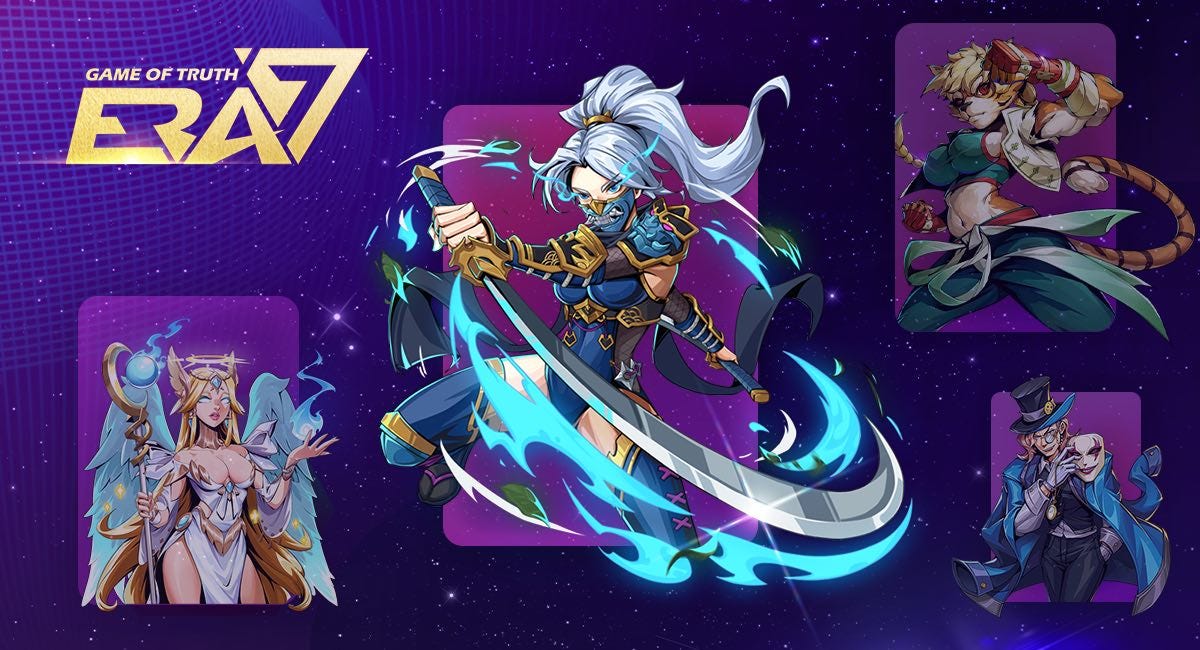
Singapore, December 6th, 2021 — BSC-based (Binance Smart Chain) Era7: Game of Truth is set to open the sales of its first batch of NFT Mystery Boxes on 20th December 2021, paving the way for the launch of Era7’s most anticipated Play-to-Earn NFT Trading Card Game in the first quarter of 2022.
Era7’s journey into the blockchain gaming space is backed by some of the biggest names in the industry, who have rallied behind its vision and mission. To date, Era7 has completed its seed round and an initial private round of financing, led by Hashkey and MOBOX, and a dozen other renowned VCs and institutions including Huobi Ventures, OKEx Blockdream Ventures, Good Games Guild (GGG), AU21 Capital, AlphaCoin Fund, Waterdrip Capital and more.
Funds will be directed towards the ongoing game development as well as marketing and operations. Notably, besides investing, MOBOX will also come on board Era7 as co-developer consultants, providing technology support towards the development of Game of Truth.
An Excellent Opportunity to Access Privileged NFT Prices
The upcoming NFT sale provides a good opportunity for early supporters to benefit from the privileged pricing of the unique trading cards. In the first batch of NFTs on sale, while the Mystery Boxes are priced the lowest, buyers will be able to enjoy privileged pricing across all NFT trading cards. Endowed with different features, all cards have intrinsic in-game value and can hold considerable upside potential in the TCG market as the trading cards gain increasing value alongside growth in the game’s popularity and a corresponding scarcity of the NFT cards on open markets.
Indeed, for fans of the game, this is the perfect opportunity to strategically collect cards and position themselves early in the game, not to mention an excellent opportunity to invest early at the lowest NFT prices for future returns.
According to Era7, they will also implement an NFT airdrop right before the NFT sales to reward the community for their continued support and commitment to Game of Truth.
Game of Truth aims to be a Benchmark for NFT trading card games
Era7: Game of Truth is the first trading card game to deploy the concept of NFTs and DeFi to captivate gamers with its unique Play2Earn features. Designed to drive traditional gamers to GameFi, Era7 gives them and blockchain gamers the opportunity to earn, own, and exchange in-game items with real-world monetary value.
By providing modestly competitive and fast-paced gameplay, combining combat and strategy, Game of Truth hopes to become every gamer’s choice. In a three-minute game, players may think about how to configure and strategize their greatest decks in PVP (player-versus-player), PVE (player-versus-environment), and other tournament types to win the game as well as token rewards.
The Era7 developers aim to establish a market-oriented approach for the Game of Truth. By combining cutting-edge technology and ground-breaking new gaming innovations, Game of Truth’s target of being a TCG benchmark in the world of GameFi looks poised to take off.
About Era7: Game of Truth
Era7: Game of Truth is a Play-To-Earn NFT-based trading card game (TCG). It offers the perfect combination of traditional gaming and decentralized finance (DeFi) to gamers, bringing an entertaining gaming experience while providing an avenue to earn.
According to Era7 ancient folklore, the seven races on the continent of Truth battle against each other for supremacy all year long, to vie for the title “King of Truth”. The victor from the Game of Truth emerges as the ruler of the continent whereby he and his race then enjoy the highest honors in the land.
Founded by core team members from internationally renowned game developers with over 15 years of valuable experience such as Com2uS, NCsoft, Nexon, and Netmarble, Era7 is backed by heavyweight VCs and blockchain institutions such as Hashkey, MOBOX, Huobi Ventures, OKEx Blockdream Ventures, Good Games Guild (GGG), AU21 Capital, AlphaCoin, Fund Waterdrip Capital and more.
Following the tech journeys of four noteworthy Odisha personalities making their mark in the fast-developing blockchain space.
Blockchain technology offers a great many advantages to many industries, with the financial sector being one of the most notable examples. It has the potential to have an even greater impact in developing countries, where blockchain-enhanced fintech can help improve financial accessibility for the 1.7 billion unbanked people around the world through services such as peer-to-peer loans and alternative currency payments and investments.
This Is why it should come as no surprise that, while most of the first wave of cryptocurrency influencers such as Erik Voorhees, Charlie Lee, Tim Draper, Andreas Antonopoulos and many more all hail from first-world Western countries, it is from the developing countries that some of the technology’s biggest thought leaders can be found.
In fact, four highly respected champions of blockchain technology are Odia, referring to people who originate from Odisha, a state in the Indian subcontinent. Despite being one of the poorest states of the country, Odisha has produced four trailblazing journeys, united by both geographic origin as well as their respective challenges in the tech industry. In particular, these personalities are making their mark in the world of blockchain, in remarkably exciting times for disruptive technology.
Sopnendu Mohanty
Sopnendu Mohanty got his start in the IT industry back in 1995, following both a Bachelor’s and Master’s degree in information science. In 1997, he moved to Japan to join Citigroup’s product and services development division. He would stay with the company for 18 years, eventually being promoted to Head of Citigroup’s Asia Pacific Branch Operations, and then later to Head of Citigroup’s Global Consumer Lab.
In 2015, Sopnendu Mohanty left Citigroup and joined the Singapore government-run Monetary Authority of Singapore (MAS) as Chief Financial Officer. At MAS, he has helped contribute to Singapore’s rise as one of the world’s top fintech hubs.
In addition to his work at MAS, Sopnendu is also an avid speaker and global thought leader in fintech, and an outspoken advocate for an accelerated transformation to a digital blockchain-based economy.
“Having a distributed ledger by design takes away the whole complexity behind settling things, checking things. And it allows some of the business rules to be built into the use cases — the payment process, the settlement process, the underlying business rules can be encoded to a single stream,” said Sopnendu Mohanty.
“There are two different processes in today’s world. There’s a process where you pay each other and there’s a process in which we exchange goods and services. Blockchain digital currency brings together these two processes into a single process in which you’re not only paying each other but also ensuring that goods and services are exchanged at the point of payment.”
In September 2021, the MAS granted DBS Vickers — a subsidiary of DBS Bank, the largest bank in Southeast Asia — a license to officially offer cryptocurrency services.
“This is a natural progression in any innovation and there has been a very clear growing interest in digital assets,” Sopnendu Mohanty said.
“Fintechs are always pushing banks out of their comfortable traditional finance space. It’s very encouraging for us to see DBS think about such new areas where they can add value and create a new service. This is truly a sign of the maturity of the Singaporean fintech sector. Here, we don’t see a difference between fintechs and banks. Both are complimentary, they come together and work together.”
Mriganka Pattnaik
Hailing from the ancient city of Bhubaneswar in Odisha, Mriganka Pattnaik got his fintech career off the ground with numerous internships even before he finished his technology Bachelor’s degree from ITT Guwahati in 2013. Upon graduation, Mriganka went straight to work at Bank of America as an analyst in their Mumbai branch.
Two years later, he left to found his first company, Datatrix Healthcare Technologies, to help people remotely order medication and home diagnostic tests from nearby pharmacies.
“I saw an opportunity to address a need and to this day, I believe that entrepreneurship is the most direct way to bridge these gaps,” Pattnaik said
“Unfortunately, there was a lot of regulatory ambiguity in the area of online pharmacies. It was difficult to understand the full picture in terms of risk. Through this experience, I understood how regulatory ambiguity can really hinder innovation and hurt early startups. Afterward, I moved to Singapore in 2016 to work at Luno, a prominent crypto exchange, to support strategy and country-specific execution across three continents.”
During his time at Luno, he witnessed firsthand the compliance challenges faced by digital asset businesses in diverse jurisdictions and the key role regulations play in the industry’s health and sustainable growth. He then joined the Entrepreneur First tech incubator where he met Nirmal Aryath Koroth, with whom he co-founded his second company, Merkle Science, in 2018.
Merkle Science is a risk and intelligence platform that helps companies and government organizations detect, investigate and prevent illegal activities involving cryptocurrencies.
“As blockchain and cryptocurrency gained popularity, more financial institutions, retail platforms and governments started adopting the technology. Unfortunately, as the legitimate use cases rise, so does its illegal use,” Pattnaik said. “In 2020 alone, it is estimated that more than 12 billion dollars worth of crypto was involved in illicit transactions.”
“Unsurprisingly, this has led to many governments around the world introducing new laws and regulations that govern how cryptocurrency businesses can operate. These new regulations seek to mitigate the risk that comes with cryptocurrencies. However, these new laws and regulations have made it difficult for companies to work with cryptocurrencies and they struggle to figure out how to comply. With these new laws, there is then a need for new-age solutions and this is where Merkle Science comes in. We have developed a suite of solutions designed to make use of the blockchain’s transparent and traceable nature in order to help businesses identify and protect themselves against criminal use,” commented Pattnaik.
Debajani Mohanty
Debajani Mohanty is the bestselling author of five books on blockchain and was ranked among the top 30 Blockchain influencers from India on Singapore Fintech news as well as the world’s top 100 blockchain social influencers by Piktale awards. Born in coastal Odisha, she studied Electronics and Telecommunications Engineering at Sambalpur University before launching straight into what would become a 24-year career (and counting) devising software solutions for companies from India and, since 2020, England.
She got her feet wet with blockchain in 2017, from which point she has worked in development using numerous blockchain technologies. “The true potential of blockchain is yet to be realized,” Debajani Mohanty said. “We need much more dedicated research.”
Debajani Mohanty’s books range from broad blockchain overviews for new students on the subject, such as her five-star books “Blockchain for Self Sovereign Digital Identity” and “Ethereum for Architects and Developers”, to deep-dive courses on the specific blockchain technologies R3 Corda, Ripple and Ethereum. She has also published a novel focused on themes of the empowerment of women, titled “The Curse of Damini”, for which she was honored with the Arya award by Nobel Peace prize winner Kailash Satyarthi.
Since the beginning of her blockchain career, she has tried to share her learning through books, blogs, videos and live sessions at numerous blockchain summits in India and abroad. She stresses that “propagating knowledge especially to business leaders and decision-makers is the need of the hour, as they have the authority to carry forward this blockchain journey to the next level.”
According to Debajani Mohanty, the next big trends in blockchain are expected to be CBDC, Decentralized Identity and enforcement of data acts (GDPR, CCPA, PDPA etc.) in handling personal data leading to privacy-preserving solutions.
Naquib Mohammed
Born in the city of Cuttack, Naquib Mohammed studied information technology at the Kalinga Institute of Industrial Technology in Bhubaneswar. He then spent more than a decade in information technology, starting as a software engineer then later as a business architect, working for companies across the globe.
“My interest in cryptocurrency really started to get serious after spending a few years learning and working on enterprise use cases of distributed ledger technology in the bull run of late 2019,” said Naquib Mohammed.
“As an enterprise architect, researching the growing IT market was a natural move, and this is where I noticed blockchain as an important part of Industry 4.0 technologies.”
Mohammed was invited to Australia in 2020 by invitation of the Australian government as a “Distinguished Global Fintech Talent”. There, he dove headfirst into blockchain technology, devoting 7–8 hours a day to study and learn the technology.
“During this tenure, I completed over 15 certifications in different areas of blockchain within a six-month span.”
In April of 2021, after working at another startup he decided to launch his own pioneering decentralized finance startup, MRHB (pronounced Marhaba) DeFi. This was to address what he felt was a major gap in a crypto space that excluded many communities due to their faith (in particular himself as a Muslim), lack of access and technological complexity. The demand for financial services which are consistent with faith principles is evidenced by the Islamic Finance industry, currently worth around $3 trillion USD.
In addition, Mohammed wanted to build a more empowering, ethical and community focussed project that would cater to those new to crypto and also address the negative perception created by extensive instances of fraud, risk and opacity in the sector. As such, he hopes to create a more ethical and inclusive project that benefits everyone regardless of faith.
“As our platform is based on very high ethical standards, one of our product offerings is a crypto-based donations platform, the DePhi, a decentralized philanthropy protocol, planned in Phase 2. We sincerely hope to attract investors from all walks of life who are interested in making sure their investments have some form of social impact in addition to benefiting from the wealth opportunities of the cryptoverse,” explained Mohammed.
“By approaching the new crypto economy with a more ethical approach from the very start, we can all do our part to create a more equitable and more inclusive future for all.”
A landmark project in the DeFi ecosystem, being the first to target the USD 3 trillion Islamic Finance ecosystem and other excluded communities, MRHB DeFi is notably backed by Polygon Technology. A prominent Layer-2 blockchain, Polygon is supporting the development of the first dApp focussed on the Islamic and ethical finance sector.
With their blockchain stories impacting different industries and use-cases, from regulations, compliance, intelligence gathering and security to education, ethics, inclusion, and philanthropy, these blockchain personalities are an inspiration to people all over the world who wish to be involved in the revolutionary technology.
As the blockchain and decentralized finance movements sweep across the world, we will undoubtedly see more professional representation from everywhere. Hopefully, blockchain innovators and startup founders from underdeveloped economies especially will find great success, for these are the regions where the technology can do the most social good. Financial services such as zero-fee payments and transactions, peer-to-peer loans and all manner of banking transactions for excluded communities are possible in the realms of blockchain and cryptocurrency.
We need only for more pioneers to step up and seize the opportunity.