Bitcoin on-chain analysis can be a good way to try to guess where the market is headed. The market tends to repeat itself with metrics looking the same before a bull or a bear rally, thus making this data a pretty good indicator of what’s to come. Analyst Willy Woo uses this same data to demonstrate a pattern that occurs before the bull rally, the criteria which are being met once again.
Start Of A Bull Run?
In a recent string of tweets, analyst Willy Woo presents data from on-chain analysis that points to the bitcoin dump having reached its bottom. According to him, “Price in relation to on-chain demand from both speculative and hodl category of investors are now both at peak oversold levels.” Woo points out that the last time that something like this had happened was when bitcoin reached its bottom following the COVID crash.
Price in relation to on-chain demand from both speculative and hodl category of investors are now both at peak oversold levels.
The last time this happened was October 2020. The time before that was at the bottom of the COVID crash.
The analyst further outlines the times where this has happened in the past. Going as far back as 2012, he points out the same had been the case in February of that year. What followed had been the memorable 2021-2013 bull run that saw bitcoin gain more popularity among investors.
Related Reading | Bitcoin Halving To Bring The Subsequent Crypto Frenzy
Fast forward to 2015 and the same had been the case in January of that year. This time, the on-chain metric spelled the bottom of the bear market that had begun previously in 2014, putting an end to the onslaught.
If Woo is right and the on-chain metric continues the way it has historically, then bitcoin may very well have reached the bottom, suggesting that this is the end of the downtrend. However, there is no telling if this is actually the case given that bitcoin had recorded back-to-back bull rallies in 2021.
Bitcoin On The Charts
Bitcoin has lost almost 50% from its all-time high of $69k which it hit in November of last year. This has however not affected the profits of the majority of holders. The digital asset remains one with the highest volume of holders that remain in profit after the market crash.
Related Reading | El Salvador Chivo Bitcoin Wallet Relaunch To Serve 4 Million Users
According to data from IntoTheBlock, 60% of all bitcoin holders are still in profit at current prices. It is important to note that the cryptocurrency was subject to massive sell-offs when investors panicked that the downtrend will continue. Most however have still kept their highly profitable status, with only 35% of all holders currently losing at market prices.
Bulls struggle to pull BTC up as bears take hold | Source: BTCUSD on TradingView.com
The majority are long-term holders and indicators point to investors still being very bullish on the digital asset despite the downtrend. With its current growth curve, it is expected that the cryptocurrency will see 1 billion holders in the next four years, making it a highly sought-after asset.
Featured image from Bitcoin News, chart from TradingView.com
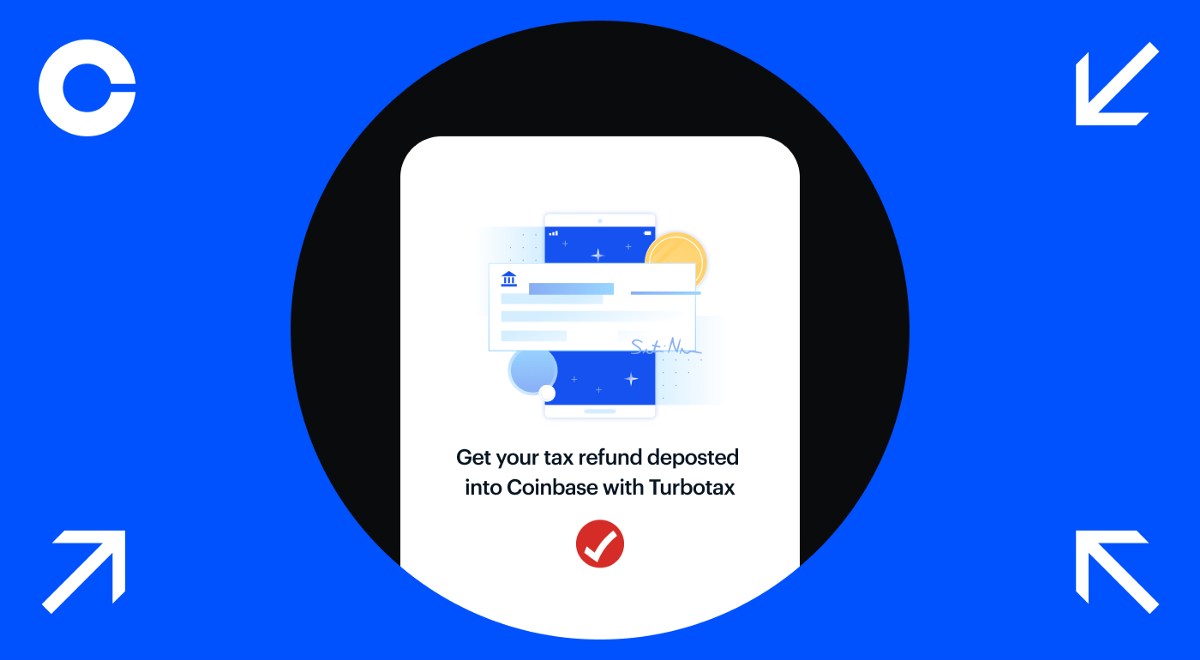
With tax season officially underway, customers expecting a refund might be wondering what to do with their extra cash. Now, Coinbase customers can get tax refunds automatically deposited into Coinbase as USD, where it can be immediately converted into crypto, when they file with TurboTax. Customers will receive their full refund and can choose to save, invest, or spend it. Tax season can be stressful, but now there’s an easy way to put refunds to work.
Put your refund to work on Coinbase
According to the National Retail Federation, 62% of US taxpayers who expect to receive a refund this year plan to put the money towards savings, while 27% plan to use it for everyday spending. Our customers are increasingly thinking about how to incorporate crypto in their savings and everyday spending: putting money towards assets they think will increase in value, holding yield-bearing assets, and spending and earning with Coinbase. This year, customers can deposit refunds into Coinbase fee-free to start immediately putting their money to work. They can choose to get refunds deposited into 100+ cryptocurrencies from stablecoins to yield-bearing assets so they can trade or earn interest. Or, they can choose to receive refunds in USD so they can be ready for any trade or to spend with their Coinbase Visa® Card (if they choose to spend USD). All incoming tax refunds will be deposited without any fees².
File with TurboTax to deposit your refund into Coinbase
You can deposit your refund into Coinbase when you file with TurboTax. Here’s how:
Begin filing your taxes from the Coinbase section of the TurboTax website
Login using your TurboTax credentials and complete your tax return (plus, Coinbase customers get up to $20 off)
After your tax refund has been calculated, TurboTax will ask you to enter account details to receive your refund. Find and tap on the Coinbase option and we’ll help you set up your direct deposit account³
You will follow a few simple steps to activate your account and select the crypto (or USD) in which you want to receive your tax refund
When prompted, tap on the Manual option to view your Coinbase account and routing number⁴
Go back to TurboTax and enter your Coinbase account and routing number as the destination for your tax refund. You’ll use MetaBank as the name of the bank
You can manage your direct deposit settings and view your account and routing number at any time from coinbase.com/direct-deposit
Coinbase is committed to giving everyone instant and easy access to the cryptoeconomy. Last year, we started helping customers get paid in crypto and receive expense reimbursements in crypto. We’ll continue to enable new use cases that allow customers to transition more of their financial lives to the cryptoeconomy.
We’re also committed to making tax season as easy as possible. Visit www.coinbase.com/taxes for a personalized guide to your crypto taxes⁵.
¹If you choose to receive your refund in crypto, Coinbase will automatically convert the amount from US dollars to crypto with no trading fees. Choosing to receive your refund in crypto is an optional Coinbase offer.
²No Coinbase trading fees but a spread applies when we buy, sell, or trade cryptocurrencies. Other standard fees may apply, and will be shared during direct deposit sign-up.
³You can deposit a maximum of $25,000 per day.
⁴Coinbase account and routing number is for deposits only, withdrawals will be rejected.
⁵Coinbase doesn’t provide tax advice. Information here is provided to help you understand your taxes, but should be reviewed before you use it to file your taxes. Please work with a professional.
The Coinbase Card is issued by MetaBank®, N.A., Member FDIC, pursuant to a license from Visa U.S.A. Inc. The Coinbase Card is powered by Marqeta. You may use Coinbase Card to make purchases anywhere Visa Debit cards are accepted.
Solana (SOL), one of the most active proof-of-stake (PoS) blockchains, appears to be a PoS protocol consuming the lowest amount of electricity per transaction, according to a new report.
The Crypto Carbon Ratings Institute (CCRI), a research startup focused on the environmental impact of cryptocurrencies, released on Wednesday a new report calculating the electricity consumption and carbon footprint of major PoS blockchains.
The CCRI specifically analyzed PoS networks including Cardano, Solana, Polkadot, Avalanche, Algorand and Tezos.
According to the CCRI’s findings, the Solana blockchain consumed 0.166 watt-hours (Wh) of electricity per transaction within the study, becoming the most energy-efficient PoS protocol in terms of energy used per transaction among the six analyzed networks.
Cardano, a PoS network that has the biggest market capitalization at the time of writing, consumes the biggest amount of electricity per transaction, which is 52 Wh, according to the report. However, when it comes to a “per-node” comparison, Cardano uses the least amount of electricity per node, the CCRI found.
Electricity consumption per transaction for PoS systems and Visa. Source: CCRI
“This metric depends on the amount of transactions taking place on the respective blockchain, also the overall electricity consumption per transaction further depends on the number of nodes connected to the respective network. Generally, these numbers are expected to go down with an increase in the transaction rate, regardless which blockchain is in use,” the study reads.
Despite Solana’s low energy consumption per transaction, the PoS protocol still consumes a lot of energy due to the network’s massive usage, compared to other PoS networks. According to the CCRI’s study, the Solana blockchain emits 934 tonnes of carbon dioxide equivalent per year, compared to 33 tonnes for Polkadot.
At the time of writing, Solana is the most-traded PoS protocol, with $2.9 billion in daily trading volumes, while Polkadot has about $900,000 in daily trading volumes, according to data from CoinGecko.
Yearly carbon footprint of PoS networks compared to a roundtrip flight in business class. Source: CCRI
Related: Fossils vs Renewables, PoW vs PoS: Key policy issues around crypto mining in US
Unlike major blockchain networks like Bitcoin and Ethereum, which use mining operations to confirm transactions based on a proof-of-work (PoW) mechanism, PoS blockchains rely on users simply locking up tokens. As PoS blockchains do not need extra energy from miners in order to validate transactions, they are considered as being more energy efficient.
As previously reported, many global financial regulators have used PoW’s high energy consumption rates as yet another reason to ban the use of cryptocurrencies like BTC. They would probably also want to ban global banks as the traditional banking system was reportedly consuming twice more energy than the entire Bitcoin network as of March 2021.
Swing, a cross-chain infrastructure platform to trade and move crypto between blockchains, has announced that its cross-chain liquidity and bridging protocol, is now live on Binance Smart Chain (BSC).
Originally built on the Polkadot blockchain, Swing has recently expanded to several different blockchain networks, including Avalanche, Polygon, and Solana.
Acting as liquidity and bridging aggregator of the most popular decentralized finance platforms and DEXs (decentralized exchanges), with Swing, users can access the full range of popular DeFi platforms and trade seamlessly across them all without surrendering control of their funds to any third party.
Integration of Binance Smart Chain will broaden Swing’s access DeFi apps, and specifically, will allow the platform to aggregate liquidity and bridging opportunities across the most popular DEXs on BSC, including PancakeSwap, BurgerSwap, BiSwap, and more.
Binance Smart Chain is the Ethereum Virtual Machine (EVM) compatible dApp and smart contract platform from the world’s largest crypto exchange, Binance. Although created by a centralized exchange, Binance Smart Chain is a decentralized platform that hosts a number of decentralized applications.
“We are thrilled to become a part of the Binance Smart Chain (BSC) network. The number and variety of decentralized applications on Binance Smart Chain gives our protocol a chance to show what it can do. Users and traders will feel an immediate benefit by having all of the best liquidity and bridging options available in one place.” – Swing Founder, Viveik Vivekanantha
The Swing protocol is currently live on Ethereum, Polygon, Avalanche, Fantom, xDai, and now Binance Smart Chain, where it aggregates bridges and liquidity sources to find the lowest slippage on cross-chain token swaps and liquidity transfers.
Ideal, a US-based
technology provider company, has announced the launch of its crypto analytics
application programming interface (API), Impact API, using Pyth Network’s
real-time on-chain market data.
By using the Pyth
Network, Impact API provides cryptocurrency trading companies with
institutional-grade analytics and complete transparency on their profitability and
transaction costs.
Ideal s decision
intelligence solutions help to turn data analytics into clear actions for trading
success, and, therefore, it provides traders in traditional finance and cryptocurrency
markets with performance insights that help them better understand their true
execution costs and enhance their trading decisions. Impact API helps to bring transparency
on the crypto transactions, a market where costs and spreads are mostly opaque.
John Crouch, the Ideal
CEO, said: “The high-quality, real-time market
data provided by the Pyth Network opens up a world of opportunity for crypto
trading firms. We are thrilled to build upon Pyth’s innovation with our
plug-and-play analytics. Our Impact API uses Pyth’s data to instantly calculate
market impact costs and reveal what spreads traders are actually paying. We’ve
seen cases where crypto spreads are 10 to 100 times higher than they would be
in traditional markets. In the coming months, we’ll expand the range of
available market data sources and add new analytics functionality.”
Adding to that, Michael Cahill, the Director at Pyth Data Association, stated: “As the Pyth ecosystem continues to gain momentum with over 40
data providers contributing real-time pricing, and over 120 projects using the
oracle, we are thrilled to see Ideal building advanced analytics using Pyth
Network data. With our network of the world’s most prominent trading firms,
several regulated exchanges and foundational crypto companies, we are proud to
make financial data freely accessible to all. Ideal shares our desire to bring
greater transparency and insight to both crypto and traditional markets.”
Financial
Institutions Are Embracing APIs
The announcement by
Ideal comes at a time when the number of API-led
financial services companies continue
to proliferate around the world. Fintechs such as Plaid, Tink, Belvo and
Truelayer are providing their API-related services in the US, Europe, Latin
America and the UK, respectively. These firms offer developer and engineering tools
that reduce the operational and technical effort needed for apps to connect to
their users’ financial accounts.
The use of APIs is
making it possible for other firms to integrate what are otherwise complex
services to develop from scratch simply by adding in a few lines of code. Financial
infrastructure companies are enabling developers and firms to innovate around services
such as wealth management, insurance, personal finance, lending and payments.
Ideal, a US-based
technology provider company, has announced the launch of its crypto analytics
application programming interface (API), Impact API, using Pyth Network’s
real-time on-chain market data.
By using the Pyth
Network, Impact API provides cryptocurrency trading companies with
institutional-grade analytics and complete transparency on their profitability and
transaction costs.
Ideal s decision
intelligence solutions help to turn data analytics into clear actions for trading
success, and, therefore, it provides traders in traditional finance and cryptocurrency
markets with performance insights that help them better understand their true
execution costs and enhance their trading decisions. Impact API helps to bring transparency
on the crypto transactions, a market where costs and spreads are mostly opaque.
John Crouch, the Ideal
CEO, said: “The high-quality, real-time market
data provided by the Pyth Network opens up a world of opportunity for crypto
trading firms. We are thrilled to build upon Pyth’s innovation with our
plug-and-play analytics. Our Impact API uses Pyth’s data to instantly calculate
market impact costs and reveal what spreads traders are actually paying. We’ve
seen cases where crypto spreads are 10 to 100 times higher than they would be
in traditional markets. In the coming months, we’ll expand the range of
available market data sources and add new analytics functionality.”
Adding to that, Michael Cahill, the Director at Pyth Data Association, stated: “As the Pyth ecosystem continues to gain momentum with over 40
data providers contributing real-time pricing, and over 120 projects using the
oracle, we are thrilled to see Ideal building advanced analytics using Pyth
Network data. With our network of the world’s most prominent trading firms,
several regulated exchanges and foundational crypto companies, we are proud to
make financial data freely accessible to all. Ideal shares our desire to bring
greater transparency and insight to both crypto and traditional markets.”
Financial
Institutions Are Embracing APIs
The announcement by
Ideal comes at a time when the number of API-led
financial services companies continue
to proliferate around the world. Fintechs such as Plaid, Tink, Belvo and
Truelayer are providing their API-related services in the US, Europe, Latin
America and the UK, respectively. These firms offer developer and engineering tools
that reduce the operational and technical effort needed for apps to connect to
their users’ financial accounts.
The use of APIs is
making it possible for other firms to integrate what are otherwise complex
services to develop from scratch simply by adding in a few lines of code. Financial
infrastructure companies are enabling developers and firms to innovate around services
such as wealth management, insurance, personal finance, lending and payments.
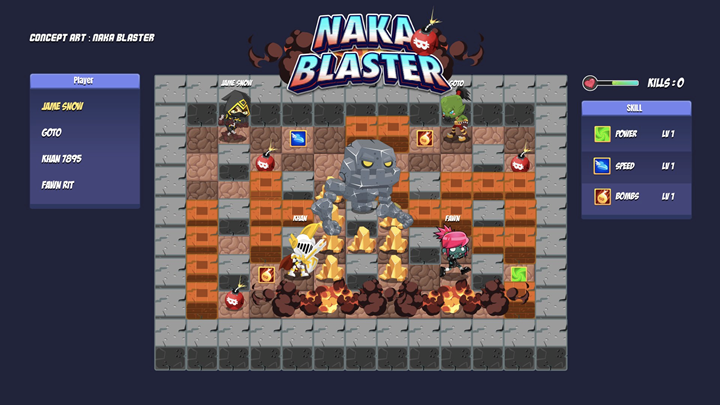
Play-to-earn games are seeing drastic improvements with the release of three new titles by Nakamoto Games. The developer already released the immersive NAKA Galactic, a space-themed action game, and Naka Blaster, its first multiplayer interactive shooting game that is currently its most popular title.
Nakamoto Games will follow their success with its first 3D game, Escape, in Q1 2022. It’s the most ambitious release to date with the inclusion of advanced computer graphics and fully-featured game mechanics and multiplayer features aside from the traditional play-to-earn in-game dynamics that have taken the gaming world by storm. Escape will be one of the first AAA games to be released in the Web3 gaming space.
Nakamoto Games CEO Tor shared the team’s excitement about the new releases: “Our team constantly strives to push hard and deliver high-quality games to our passionate user base. We are thrilled about the upcoming release of Escape and are proud of the release of Naka Galactic and Naka Blaster and we look forward to hearing from the community about these titles.”
The team at Nakamoto Games is also enabling a fast-growing suite of Web3 games that provides players with gameplay experiences at the level of traditional titles. The release of new titles such as Naka Galactic, Naka Blaster, and Escape, as well as already successful ones like Duck Hunter, NAKA Runner, NAKA DUI, and Alien Apocalypse, are part of Nakamoto Games’ plan to build what it calls the NAKAVERSE.
The ambitious plan consists of a gaming ecosystem with its own economy powered by NAKA tokens. These will be used across games to purchase NFTs that represent digital land and game items as well as to have the ability to customize elements in the NAKAVERSE.
Nakamoto Games aims to become a solution that enables other game developers to thrive. It has chosen to build on the Polygon scaling solution for Ethereum to guarantee the scalability, security, and cost-effectiveness of these releases. In this way, Nakamoto Games seeks to provide independent game developers with the necessary infrastructure to build a gaming ecosystem that makes the most of Web3’s advantages. Eventually this will lead to a healthier industry with democratized earnings and improved monetization.
As most of us were enjoying some R&R over Christmas break, Coinbase Cloud protocol specialist Elias Simos was scouring the web for the most interesting crypto charts of 2021: 69 of them to be exact.
In the latest Around The Block podcast, we sit down with Elias and discuss some of the most interesting data points from the year, and what it all means for the future. (High level takeaways below)
Metaverse and smart contract assets outperform
Price isn’t everything, but the two top performing assets in 2021 are indicative of broader trends throughout the year. 2021’s best performing assets were:
Metaverse gaming tokens
Smart contract platform tokens
The governance tokens of gaming worlds Axie Infinity (AXS) and The Sandbox (SAND) each posted 16,000 and 13,000 percent gains respectively. Meanwhile, platform tokens from Polygon, Terra, Solana, and Fantom, all posted 8,000% gains or more.
Given that play-to-earn gaming had a breakout year, and layer 1s not named Ethereum saw strong adoption, these trends should be of no surprise. Now let’s dig a bit deeper.
The state of Layer 1s
Ethereum’s native token (ETH) did a modest 2X over the year, while it was somewhat of a rough year for Ethereum DeFi blue chips, with the DeFiPulse index down 80% over the year vs ETH.
The price of DeFi assets doesn’t tell the entire story, however. TVL of Ethereum DeFi applications showed tremendous growth over the year, and the number of unique Ethereum addresses interacting with DeFi protocols 4x’ed.
DefiLlama and Decentral Park Capital
Regardless, ETH killers and sidechains won the year when measured by growth of overall market share.
DefiLlama and Decentral Park Capital
The great migration & the EVM standard
In May, there was $200M sitting in Ethereum bridges. That number climbed to $20B by the end of the year, underscoring the great migration of value from Ethereum to other ecosystems.
Remember that the EVM is essentially the brain of Ethereum that performs computations for the network. When other Layer 1s adopt the EVM, it makes deploying existing applications on new networks easier for developers, in addition to making it easier for users to migrate to these new chains.
The dominance of value on EVM compatible chains (Avalanche, Polygon, etc) suggest that a standard is forming around the EVM. This should ultimately keep Ethereum as the gravitational center of the smart contracting world, as ETH applications and assets will be natively interoperable with most other chains.
Rise of the app chains
While EVM chains still dominate the landscape, the end of 2021 saw a rise in value on Tendermint chains. Recall that Tendermint is a standard popularized by Cosmos, that lets developers build application specific blockchains that are capable of interoperating with one another.
Building app-specific chains in the past came with significant opportunity cost, because they were cut off from most liquidity and users. With the growth of Tendermint chains like Osmosis (AMM), Umee (lending), and Stargaze (NFTs), that’s becoming less of an issue.
Now that these app specific chains have a widening array of use cases and liquidity that they can interoperate with, look for more builders to take advantage of customizability that these chains offer in 2022.
The ENS airdrop + DAOs
In 2021, ENS reminded everyone of Web3’s native user acquisition strategy: the airdrop.
ENS (Ethereum Name Service) addresses are best thought of as email addresses that you can send money to (e.g. Jimbo.eth). After 5 years in development, the project shifted to a DAO model, and airdropped ENS governance tokens to every user with an ENS address.
Since the ENS DAO treasury collects revenue from new .eth registrations, revenue for the newly minted ENS DAO treasury ramped up significantly: another testament to how much a well orchestrated airdrop can move the needle.
Dune Analytics, matoken.eth
Beyond ENS, DAOs had a strong year, evident by the growing usage in key pieces of DAO infrastructure. Gnosis Safe, which is the most popular multisig wallet DAOs use to manage their treasuries, saw 3x growth in both the number of Safes and transactions executed in 2021. Snapshot, a tool that helps DAOs execute off-chain votes with on-chain verification, exhibited strong growth as well.
EN-EFF-TEES
Activity on the dominant platform for NFTs tells you all you need to know about the breakout year NFTs enjoyed.
Dune Analytics, Richard Chen
OG NFT CryptoPunks saw 60x YoY growth, reaching a total volume of 650K ETH, or $1.7B at current prices. This figure however, includes a flashloan powered $500M wash sale — a powerful reminder of how much subjectivity there is in on-chain data.
The second most notable NFT project of the year was Bored Ape Yacht Club, which went from a niche community to the celebrity NFT of choice, including the likes of Steph Curry, Shaq, Justin Bieber, Jimmy Fallon, Paris Hilton, among others. At one point the BAYC floor (price of the cheapest NFT in the collection) momentarily flipped the CryptoPunks floor.
In the heat of new issuances flooding the market, and older NFT collections achieving billion dollar market caps, the average price of NFTs changing hands did a 150x from 0.1 ETH to roughly 15 ETH by year end.
Dune Analytics, Richard Chen
One of the most interesting NFT launches of the year was Loot (covered here), which let anyone mint 1 of 8,000 NFTs that could form the basis of a Dungeons and Dragon style RPG game. Initial excitement was skyhigh, before fizzling out as time went on.
Dune Analytics
While Loot’s flame may have dimmed, it was still a landmark year for NFT based gaming, with the breakaway success of Axie Infinity bringing play-to-earn and GameFi narratives to the forefront. As the data shows, Axie Infinity NFT volume dwarfs that of any prior NFT based game.
CryptoSlam and The Block
Lastly, while Ethereum was the center of the NFT show, marketplaces appear to be springing up across multiple chains. The data shows that lower fee environments are enabling different types of user activity. Solana’s Magic Eden, for example, has more transactions than OpenSea since users are unencumbered by exorbitant gas fees.
More in Elias’s epic thread
Beyond being chock-full of illuminating data points on the year in crypto and Web3, the full thread underscores the beauty of on-chain data and the increased maturity of the industry. The ability for one person to put together a dataset this rich is a testament to all of the great data providers the industry now has at our disposal.
With roughly nine months until major federal and state elections, New York State gubernatorial candidate Jumaane Williams is making crypto mining an issue in his campaign, criticizing the lack of regulatory clarity.
Speaking to climate activists and protestors at Seneca Lake in upstate New York on Monday, Williams called on current Governor Kathy Hochul to deny permits for proof-of-work crypto mining firms seeking to operate in the state, citing potential environmental concerns as well as any “harmful” economic impact. The gubernatorial candidate cited China’s crackdown on proof-of-work miners to back his claims.
“Twenty percent of America’s mines operate in New York state without any oversight or regulation,” said Williams. “We need to ask questions now rather than dealing with the fallout later by creating the right infrastructure to protect Seneca Lake and all of New York state from harmful economic and environmental impacts.”
Bitcoin mines that use a ‘proof-of-work’ process have the potential to devastate the environment & local economy, so today I joined advocates & community members on #SenecaLake to call on @GovKathyHochul to declare a moratorium on this type of mining. (1/3) pic.twitter.com/DHWFmmuv72
Politicians and activists have often targeted crypto mining operations around Seneca Lake and across the state. In June, a bill that would have required miners in New York to halt operations for three years — but exempted certain projects operating on renewable energy — in an effort to slow the environmental impact of crypto was defeated in the state’s legislature.
Greenidge Generation’s Bitcoin (BTC) plant operates in the area and aims to dedicate 85 megawatts to crypto mining in 2022. Residents near Seneca Lake have previously claimed that Greenidge’s plant was heating up the body of water and releasing greenhouse gases, threatening the ecosystem of several species of fish and otherwise damaging the environment.
The company has repeatedly denied such claims and threatened to consider “all legal remedies available” against thactivists pushing them. However, New York Commissioner of Environmental Conservation Basil Seggos has also criticized Greenidge, saying in September the firm “has not shown compliance with NY’s climate law” in regards to its BTC mining operations.
Related: New York businesses ask governor to deny permits for crypto mining
Hochul has only been in office since August following the departure of former governor Andrew Cuomo, but will face Williams and other gubernatorial candidates in a November 2022 election. During her time as governor, Hochul has nominated Adrienne Harris to lead New York State’s Department of Financial Services.
Dubai, UAE, Jan 31st, 2022 — MRHB DeFi, the world’s first decentralized finance ecosystem platform focused on ethical, sustainable and halal crypto opportunities, has successfully raised a total of USD 5.5 million through a series of private and public funding rounds which culminated in an initial DEX offering (IDO) that was oversubscribed on the DODO and ZeeDO launchpads.
Prior to its IDO, the startup gave the community direct access through two public sales on its official website, which saw tremendous support from its community of over 50,000 members.
“Our fundingrounds have surpassed our expectations and prove beyond doubt the huge demand for ethics in the cryptoverse,” said MRHB DeFi CEO Naquib Mohammed. “We want to take the opportunity to express our heartfelt appreciation for our valued partners and loyal supporters, without whom we would not have made it this far. These are just the first steps of our ambitious multi-year journey that we have begun, together with our community, to ensure that everyone can participate in building an ecosystem where trust and values matter — hence giving access to the growing opportunities of the crypto-economy.”
The ethical startup is also backed by investors and partners which include Polygon Technology, Sheesha Finance, Australian Gulf Capital, Mozaic, NewTribe Capital, Blockchain Australia, Contango Digital Assets, Masary Capital, ZKSync, Acreditus Partners, EMGS Group, Sinofy Group, Sukhavati Protocol and MKD Capital amongst others.
“It always seems impossible until it’s done.” — Nelson Mandela
MRHB began as an idea 15 months ago, when Naquib, who was at that time working on Enterprise Blockchain use cases, was interviewed by a crypto news agency about the general trends of DLT.
The questions came around to the acceptance of crypto within the muslim communities in the Middle East, an interesting angle which led Naquib to delve further into the DeFi world, where he noticed the absence of halal projects. Understanding that there was a gap, he started putting down ideas and developing conversations with tech friends and like-minded connections, all of whom saw the immense possibilities with crypto but were disheartened by the absence of projects and protocols that were halal and consistent with their financial and ethical principles. The immense complexity of the cryptoverse as a whole also stood out as a further deterrent.
Resident in Saudi Arabia, he soon realised through various community discussions — both in the middle east and farther afield — that many fellow Millennials and Gen Z’ers were facing the same challenges and were hence avoiding the entire cryptoverse. This meant that many communities — especially Muslims — were excluded from the opportunities in this new tech frontier. Thus began his journey of taking on the challenge and goal of building a landmark halal project in the DeFi ecosystem.
Over the course of six months, Naquib assembled a team that included not just developers but reputable industry professionals and Shariah experts, all of whom shared his vision of creating an ethical DeFi ecosystem that reflects community values and beliefs. It would be the first to fill a major gap in the crypto space and address the needs of communities that number more than a billion, who have all thus far been excluded due to ethics, faith, fear and complexity.
While the DeFi offerings were aimed at adhering to ethical investment and financing principles rooted in Islamic Finance (primarily the prohibition on interest-based lending and income, and sectors deemed unethical or exploitative like gambling, pornography etc), MRHB would also be focused on removing technological complexity. Thus the overall objective was to build a more empowering and ethical community-focused platform that would also cater to those new to crypto while addressing the negative perception created by extensive instances of fraud, risk and opacity in the crypto space.
The Islamic Finance sector is the first target and is the largest and most active faith-based market. It is currently sized at around USD 3 trillion — attracting even a small portion of Islamic liquidity into DeFi will represent a major boost to the total value of the DeFi sector worldwide.
Community Focused and Community Supported
Approximately 85% of the funds raised came from the MRHB global community which spans from Canada to Australia — all of whom are looking for an ethical and halal entry into the cryptoverse. The inclusive startup is aptly named, with MRHB being short for “Marhaba”, which means “welcome” in Arabic, as the project ushers in entire crypto newbie communities.
The platform’s $MRHB token is now available for trades on PancakeSwap, one of the leading decentralized exchanges on the Binance Smart Chain (BSC) network and remains above the launch price in spite of overall bearish markets.
To reward the community and encourage more market liquidity, a 5 million pool of MRHB token rewards has been set aside for token holders who provide liquidity to the MRHB/BNB pool on PancakeSwap. These rewards are for the next two months and apply on top of their share of trading fees earned. Token lockups for early project supporters will begin soon, allowing liquidity providers to invest their $MRHB tokens and receive additional rewards.
MRHB DeFi is already moving forward with their production roadmap, having recently launched its Souq NFT Marketplace, the first NFT marketplace guaranteed to contain halal-only content. The launch of Sahal Wallet, a non-custodial mobile wallet featuring filtering technology that will allow for frictionless access to halal tokens, is slated for the middle of next month. The pioneering Liquidity Harvester, MRHB’s passive and stable crypto income product, will be launching in Q2 and the project is currently in advanced discussions with pioneering regulated institutional partners to offer halal crypto-wealth products. More decentralized and centralized exchange listings are also coming up in the near future, welcome news for the MRHB community.
About MRHB DeFi
MRHB DeFi is a halal, decentralised finance platform built to embody the true spirit of an “Ethical and Inclusive DeFi” by following faith-based financial and business principles, where all excluded communities can benefit from the full empowerment potential of DeFi.
The diverse team is comprised of researchers, technocrats, influencers, Islamic fintech experts & business entrepreneurs, who came together to ensure that MRHB DeFi prevails in a manner that will impact society as a whole, essentially bridging the gap between the faith-conscious communities and the blockchain world.
The crypto market seems to have lost its luster for a while now, with the overall market valuation falling below $2-trillion. Despite Bitcoin’s 13th birthday celebrations, the crypto carnage has persisted. The blue-chip cryptos are now battling for action with a dramatic drop in volumes. However, the current drop has not affected some tokens and has not deterred investors, who are now looking for tokens to fill their bags. Here are a few expert-picked crypto tokens that are showing great potential.
Axie Infinity ($AXS)
Axie Infinity is a play-to-earn game that allows users to buy, breed, and sell Axies (pets) against one another in order to win in-game crypto called the smooth love potions, which you can convert into real money.
Players can cash out their tokens regularly. Smooth Love Potion ($SLP) and Axie Infinity Shard ($AXS) are the two types of tokens in the game, and both are tradable on crypto exchanges. $SLP is used for in-game transactions and rewards whereas $AXS is the governance token that powers the entire ecosystem. Axie Infinity, which runs on its own sidechain Ronin, has gained enormous popularity in 2021.
Decentraland ($MANA)
$MANA is the native token of Decentraland, a growing blockchain-powered virtual world based on the Ethereum blockchain. This project began in 2017 as a foundation for developing multiplayer games, but it quickly gained traction due to the metaverse buzz in 2021. The Decentraland Builder contains hundreds of 3D objects that players can use to build or manufacture nearly anything in this virtual environment as game tokens.
Players can use free and open marketplaces to buy and sell virtual parcels built inside Decentraland. It comes as no surprise that $MANA is one of the most popular cryptocurrencies of 2021. Players can also use $MANA to buy in-game items like avatar costumes, as well as vote on future Decentraland developments where a single $MANA token represents a single vote.
Gala ($GALA)
Gala is a P2E game based on the Ethereum network with its own native token called $GALA. It was founded in 2019 by Eric Schiermeyer, one of the co-founders of the leading mobile game company Zynga, that created popular games like Mafia Wars and Farmville. The game already has 1.3 million registered users and its goal with blockchain is to give users more power over their gaming experiences.
The game aims to change the reality in which players spend thousands of dollars on in-game items and spend countless hours playing the game, only to have it all taken away with the click of a button. Gala leverages NFTs that allow users to vote on new games and influence how they operate. $GALA token is the heart of the system that can be used to purchase NFTs as well as in-game items. Gala One has already released their flagship game Town Star, and there are many more games in the works that are expected to launch in 2022.
The Sandbox ($SAND)
The Sandbox is an Ethereum-based project that allows users to construct and explore galaxies in a virtual cosmos. Initially, it launched as a normal mobile and PC game but Animoca Brands then turned into a blockchain gaming ecosystem powered by crypto and NFTs.
Players in the system create and design their own characters in order to access the Sandbox metaverse’s many landscapes, games, and centers. The produced digital objects may then be monetized with NFTs and sold for $SAND tokens on the Sandbox Marketplace. Unlike other popular play-to-earn games, the Sandbox does not have a preset gameplay universe. Instead, it takes a dynamic approach, allowing users to personalize anything using free and easy design tools.
FireZard ($ZARD)
FireZard is a new P2E game based on the Binance Smart Chain (BSC) network. It is the first Trading Card Game that passively and instantly rewards investors in an attractive and collectible way through NFTs. The game revolves around the major five dragons that are employed to compete with other players. Each FireZard NFT Card represents a dragon and has its own set of features.
Moreover, the Cards are not only collectible, but they have an instant win prize attached to them that is worth anything from 0.1 BNB to 5 BNB. Players of this game are massively rewarded with the game’s native tokens, $ZARD, and $FLAME. $FLAME tokens will only be used for in-game activities, whereas $ZARD tokens will play a much larger role in propelling the platform. With the game still in its early stages, $ZARD is expected to explode in the coming months.
2022 Will be the Year of Gaming Crypto
Blockchain gaming is a rapidly expanding area within the crypto and blockchain sectors, and it is likely to expand more in the coming months. These are some of the projects that have a lot of potential and should be looked into further for 2022 and beyond.