Ever since Bitcoin appeared back in 2009, the subject of cryptocurrency has been captivating risk-takers and entrepreneurs. However, these days even regular people are considering this investment opportunity. People with money to spare who are usually fans of anonymous betting are willing to buy cryptos in order to make a profit. If you too are interested, you might be wondering whether or not now is the right time for this investment and what is the best way to do it.
In case you are new to the cryptocurrency subject and you have a lot of questions, you’ve come to the right place. Make sure to stay on the page if you want to find out whether or not to invest in crypto in 2021 and what is the best and safest way to do this.
Should You Invest?
This is a question a lot of adult citizens have. Unfortunately, there’s no sure answer when it comes to this question. This is simply because, like other investments, cryptocurrency is also unpredictable.
However, even though only 14% of U.S. adults own crypto, around 63% of Americans are “crypto curious.” This is based on a 2021 report done by crypto exchange Gemini. If you too are curious about cryptos, here are the essential things you need to know.
How safe is cryptocurrency?
Cryptocurrency is one of those “high risk, high reward” types of investments. It’s even riskier to invest in crypto than in regular stocks.
The main reason for this is the fact that no one knows for certain whether or not crypto will become a part of our society in the future. Of course, this doesn’t mean this investment can’t bring you a lot of money. However, before you invest, you should consider how much you can risk.
If you’re not one for taking risks, maybe this isn’t your cup of tea. This is especially true if you don’t have the nerves for unpredictable fluctuations.
For example, Bitcoin has lost roughly 80% of its value in the past, and Ethereum once lost nearly 95% of its value during one year. This can be pretty stressful and if you don’t have the nerves for this, you might not want to invest in crypto. If, however, you find this thrilling and fun, buying cryptos might be the best decision you ever made.
How To Invest Safely?
If you want to invest in crypto, you have to be careful. In other words, only invest money you can afford to lose. Also, try to build an emergency fund that will help you to survive if the prices of crypto go down. Whatever you do, try not to sell your crypto tokens while the prices are down.
Cryptocurrency traders are scrambling and scratching their heads after a sharp drop in Bitcoin (BTC) price triggered a market-wide sell-off that has nearly every token in the top-200 flashing red today.
Data from Cointelegraph Markets Pro and TradingView shows that Bitcoin price dropped as low as $58,609 before finding buyers who bid the price back to $60,500.
BTC/USDT 4-hour chart. Source: TradingView
Here’s a look at what some traders and market analysts are saying about this recent downside move and whether or not it is simply a shakeout or a sign that darker clouds are gathering.
BTC is exploring support and resistance levels
Insight into BTC’s daily price action was offered by options trader and pseudonymous Twitter user ‘John Wick’, who posted the following chart highlighting some important support and resistance zones.
BTC/USD 1-day chart. Source: Twitter
Wick said that Bitcoin is just exploring the resistance zone around its new all-time high and he highlighted the possibility of a drop into the $58,000 to $59,500 range, similar to the move that was seen in the early trading hours on Nov. 15.
Wick said,
“We are simply testing the range low of the resistance zone. If we break it on the close may test support zone.”
Similar observations were made by market analyst and pseudonymous Twitter user ‘Rekt Capital’, who posted the following tweet that zoomed out and looked at the price action for BTC on the monthly chart.
As mentioned by the analyst, the price action on Nov. 16 was a retest of the monthly support/resistance level at $58,700. Now that BTC has successfully rebounded near the monthly $61,000 level, a bullish case can be made in the weeks ahead if the price manages to close the month above the level.
There’s still a chance that $54,000 will be hit
A level-headed view of the latest price action was provided by market analyst and Cointelegraph contributor Michaël van de Poppe, who posted the following chart of a possible BTC price trajectory over the next week.
BTC/USD 1-hour chart. Source: Twitter
van de Poppe said,
“So far, so good on Bitcoin. Bouncing from support, but still needing to break some crucial areas here, which didn’t happen yet. Let’s go for that first. $63,000 is important. No breakout there [leads to] further downwards momentum.”
According to the chart provided by van de Poppe, if the downward momentum continues, the price of BTC could drop to its next support level at $54,000.
Related: Bitcoin stages ‘picture-perfect rebound’ at $58.5K as crypto liquidations top $875M
Fractal patterns suggest an approaching price rally
Crypto Twitter analyst ‘Allen Au’ posted the following side-by-side charts of Bitcoin from 2013, 2017 and 2021 in response to concerns about $69,000 being the cycle peak.
BTC/USD 1-day charts from 2013, 2017 and 2021. Source: Twitter
According to the analyst, the latest downturn is not the cycle top, but was in fact the Wave 6 move seen in previous cycles. This means that “if its low is in, BTC could be onto Wave 7 soon!”
Should the outlined wave sequence play out, then a Wave 5 peak could be $69,000, a Wave 6 low near $58,600 with the potential to drop as low as $53,000 and a cycle peak somewhere between $190,000 and $260,000 happening sometime in December 2021.
The overall cryptocurrency market cap now stands at $2.651 trillion and Bitcoin’s dominance rate is 43.2%.
The views and opinions expressed here are solely those of the author and do not necessarily reflect the views of Cointelegraph.com. Every investment and trading move involves risk, you should conduct your own research when making a decision.
Paris, France, November 16th, 2021 — Following 4 years of research and period of development, ARCHEthic Mainnet Beta launched on the 30th of June, 2021. The testnet which was launched this year will run simultaneously with the mainnet on the same infrastructure. The launch has set the ball rolling for ARCHEthic whose mission is to solve the impending challenges rocking the blockchain sector.
ARCHEthic is a decentralized consensus protocol blockchain built from the ground up, designed with cutting-edge technology to stay ahead of other blockchains in terms of scalability, security, sustainability, and simplicity.
Commenting on the significance of the launch, the ARCHEthic team stated that: “We have been patient and transparent in our approach, we have taken the time to get academic validation of research concepts, building and testing the ARCHEthic Blockchain protocol before making a foray into the market. Today with the launch of our Mainnet Beta, we are confident about offering true value to the community.”
Since blockchain has become a revolutionary technology, the growth and adoption of the technology have maintained an upward trajectory. With a cumulative annual growth rate (CAGR) of 56.9%, the global blockchain industry is predicted to hit $56.7 billion by 2026, up from $6.0 billion in 2021. This giant growth rate is a testament to the widespread adoption occurring at break-neck speed.
With Bitcoin being the pioneer, Blockchain technology has continued to find increased adoption in various fields even outside of the cryptocurrency terrain.
While adoption stays on the rise, the issues of blockchain scalability and security have been a hot topic as many of the existing blockchain technologies fall below an optimum threshold. These issues form a focal point and a building block on which the ARCHEthic blockchain is built upon.
ARCHEthic Design Stands Tall Among Existing Blockchains
ARCHEthic blockchain design infrastructure deploys a unique consensus protocol built from the ground up called ARCH Consensus Mechanism. The ARCHEthic Blockchain uses the concept of “transaction chain”. Unlike other blockchains that require blocks containing multiple transactions to be linked together by chains, in ArchEthic, blocks are reduced to their atomic version (the smallest). Thus, a block represents only one transaction with its own validation proofs.
According to its whitepaper, once a transaction is validated, it will be synchronized and saved on its own transaction chain. All transactions of the same nature are grouped together in the same transaction chain. This principle of operation makes it possible for transactions to run parallel thereby fostering the scalability of the network.
The brainchild of years of research done by the team, the ARCHEthic blockchain is designed with the end-user in mind which makes it well suited for retail and mainstream enterprise adoption.
Taking the Bitcoin network, for instance, it currently runs with a validation time of 10 minutes while handling 7 transactions per second, while Ethereum has a validation time of 15 seconds, processing 20 transactions per second. Newer generation blockchains like Harmony can handle up to 10 million transactions per second.
Despite the improvement made by Harmony blockchain, the network is still limited to the number of transactions it can handle per second. This unarguably is a prime reason why the ARCHEthic network infrastructure is unique. The “transaction chain” mechanism deployed by ARCHEthic makes it possible to handle an unlimited number of transactions per second, thereby leaving room for scalability and seamless handling of high network traffic.
ARCHEthic’s Ability to Scale Does Not Compromise the Security of the Network
The ARCHEthic security layer makes it possible to support an infinitesimal risk of network corruption, even if 90% of available nodes are malicious.
As contained in the whitepaper, if the number of nodes in the network increases, the probability of detecting an anomaly among the nodes selected to perform a transaction, if at all, increases drastically. Compared to other blockchains, the ARCHEthhic blockchain could continue to function properly, even with 90% of the network being malicious.
ARCHEthic also handles data efficiently. When transactions are broadcast, a pool or set of storage nodes is determined and receives a copy of the transaction made in order to save it. This is accomplished through sharding, which ensures that the nodes are less loaded with data and can store at least between 190 and 9000 times the number of transactions of the Bitcoin network.
This mechanism of unique node operation reduces the power consumption of the ARCHEthic blockchain. The ARCHEthic Yellow Paper compares the power consumption of ARCHEthic to Bitcoin in an interesting way.
“Considering that 10 nodes are dedicated for 10 seconds to validate and replicate a transaction and that Bitcoin processes 93 million transactions per year, it would take 295 ArchEthic nodes to cover the current mining power of the Bitcoin network. Knowing that a node spends 15 Wh, over a year, the technology would consume 38,805 kWh/year or 3.6 billion times less than Bitcoin itself.”
It is intriguing to see the massive innovation going on in the blockchain and cryptocurrency industry. More fascinating is the fact that innovations like ARCHEthic are rising to the occasion at a time when the blockchain scalability hurdle has been a bane on the industry.
About ARCHEthic Public Blockchain
ArchEthic is a highly scalable, tamper-proof Blockchain with scalability greater than 1 Million TPS, and validation time of less than 5 seconds. The blockchain has the capacity to handle up to 90% maliciousness, 3.6 billion times less energy consumption than Bitcoin, and 0.1% of the transaction fees.
The platform aims to replace and improve all current applications with a comprehensive and open ecosystem, allowing people to move from the trust imposed by centralized to decentralized systems while keeping identity and privacy under the control of the user.
With ARCHEthic, you can access your identity but no one owns it. The security and threat issues that centralized systems pose helped us realize that self-sovereign identity is needed now more than ever. An Open Source autonomous & Decentralized network in the hands of the world population created by the people, for the people.
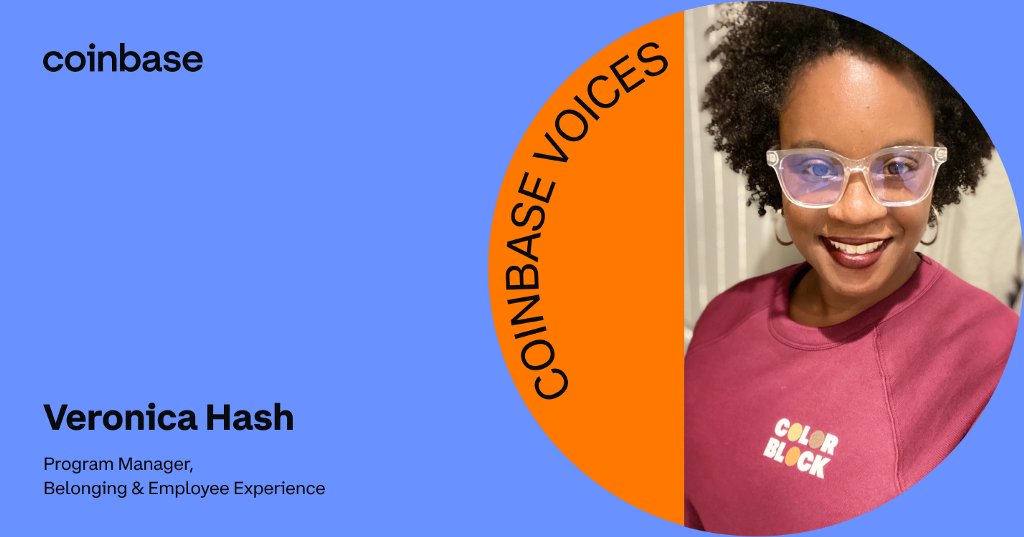
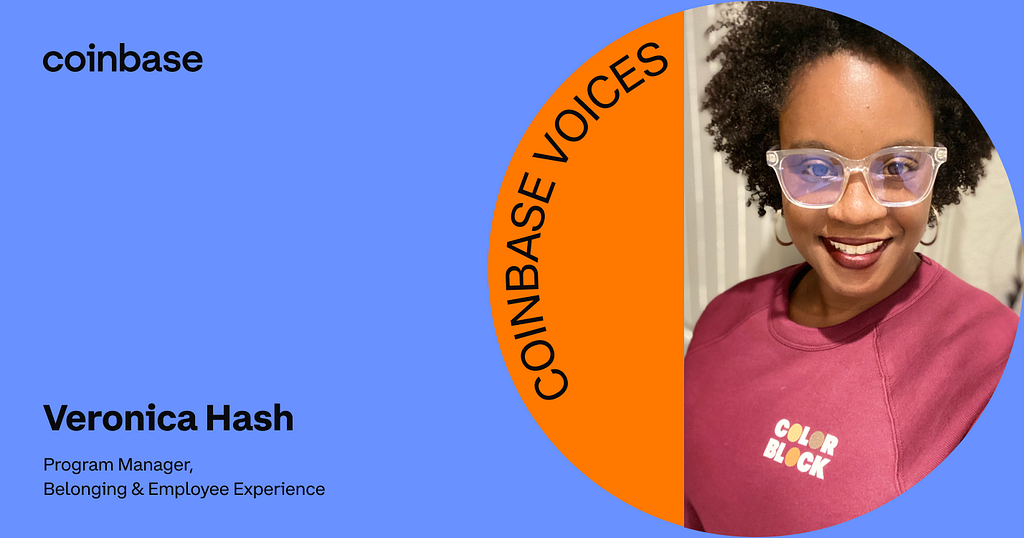
Veronica Hash, Program Manager for Belonging, Inclusion and Diversity, shares her crypto journey and gives insight into her path at Coinbase
Tell us about what you do. What does it mean to be the Program Manager for Belonging, Inclusion and Diversity (BID) at Coinbase?
My day to day varies (which I absolutely love), but it always starts with coffee and organizing/prioritizing my workday.
As the Program Manager for Belonging, Inclusion and Diversity (BID), my goal is to make sure that Coinbase is a place where people of all walks of life can see themselves thriving and growing. I consider myself a master connector, an empathetic listener, and someone who uses creativity and emotional intelligence to achieve my program’s goals. I partner closely with our phenomenal Employee Resource Groups, People and Marketing & Comms teams on projects around recruiting, mentorship, retention and community building within Coinbase.
How did you first get interested in crypto?
I got interested in crypto through my husband. He used to trade in the stock exchange years ago and became fascinated with crypto’s ability to change the game. We bought some bitcoin back in 2015 at the whopping price of $280 a coin and held on to it. When the bull run came in 2017, we cashed out and bought our first house! Quite a feat in the San Francisco Bay Area, where real estate is shall we say, not the most affordable. Then, we bought back in at the bottom — held — and in 2020, we did it AGAIN!
What’s the story of how you started working at Coinbase?
In early 2019, I got laid off from my dream job while I was six months pregnant, but it turned out to be a blessing in disguise. I got to spend six months with my baby girl and reevaluate my priorities. I wanted a role with work-life balance, the ability to grow in my career, and a really great team.
When I was ready to return to work, a recruiter introduced me to the opportunity at Coinbase. Once I heard the company name, I WAS IN! I mean, crypto was kinda my thing because of my earlier success investing in crypto, but funny enough, I never actually considered working in the industry.
You came in as an executive assistant, so how did you make the switch to a new career path? Any advice for others who would like to do the same?
Being an executive assistant for 10+ years absolutely prepared me for this role. Organization, people skills, project management — those are all things EAs have in spades. I was open about my aspirations with my manager, and around the one year mark, I started getting more serious about what internal mobility might look like for me. I also have an amazing mentor through our Growth, Empowerment and Mentorship, aka GEM program, who suggested — given my passion for BID — that I look into the program manager role.
My advice: first of all, make sure you are killing it in your current role — document and share your wins and be proactive in asking for feedback. Second, meet as many people in the company that you can — have informal coffee chats and informational interviews. Those relationships may turn into formal mentorships or they may alert you when they know a role in their org is going to open. And last, when you apply, make sure you are competitive — Coinbase hires top talent for every seat — make sure you’re clear about the value you will bring to the team.
What inspires you to log on every day? Do you ever fear burning out, given the somewhat emotional nature of your role?
My team is super supportive and collaborative. I get energy from the intellectual side of my work — when I am writing, reading, and researching. I also thrive on the partnerships we are building right now.
Burnout is real, so yes, I can for sure get afraid of that. One thing I have learned is to not let myself become siloed. My BID team may be small, but we have allies and champions at all levels and in varied orgs within the company. I am not in this alone.
What are you most proud of (can be little things or a major moment)?
I am most proud of an internal talk I gave during Black History Month called, “Authentic Leadership in the Black Community.” I shared vulnerably the pros and cons of growing up in a predominantly white community; my early years of addiction and how I approached the deep work required to bring out my authentic self. It was so powerful and real. I remember feeling so supported by everyone’s comments in the chat and Slack messages afterwards.
I am also incredibly proud of the work I do to spread the message about our BID work. I love challenging narratives and misconceptions folks may have about Coinbase. I am a deep believer in face to face conversation and being candid. When we recently acquired a company, I hosted a “Keepin’ it Real” session so we could answer any questions or address any concerns they may have had from an employee experience standpoint. This is one reason why we created this “Coinbase Voices” series. I want our voices to be heard.
What are you currently excited about in the crypto ecosystem?
I recently started learning about staking and earning yield on our holdings and wow — that’s been an awesome passive income stream. I’m a creative so I absolutely love the intersection of art and crypto: a great example is the real adrenaline rush I got from watching “Love is in the Air” by Bansky get auctioned off at Sotheby’s. Not only was it a Banksy (I was waiting to see if it would self-destruct), but it was also the first time the auction house would accept crypto (BTC and ETH) as a form of payment.
What are you passionate about outside of work?
Family is everything! Super grateful for mine!
Coinbase Voices: Creating her own path in crypto was originally published in The Coinbase Blog on Medium, where people are continuing the conversation by highlighting and responding to this story.
TLDR: Coinbase is now hiring in Brazil and Singapore, building upon remote-first and timezone based regions of work.
By Manish Gupta, EVP of Engineering
Coinbase continues to rapidly grow our Engineering team around the world. As a global company, we need deep technical and market-specific expertise across the key regions we serve. Earlier this year, we established our first tech hub in India, and we continue to aggressively hire in the region across product, engineering, design as well as other roles.
Today we’re announcing that we’re opening up tech hubs and actively building out our Engineering teams in two more countries: Brazil and Singapore. Like India, each has an incredible talent pool of engineers, and we look forward to connecting with world-class talent that can help us achieve our mission. We have already hired senior engineering leaders in both Brazil and Singapore who will act as engineering site leads in these countries, and we are now opening up engineering hiring in both these countries.
Driving Efficiencies Through our New Regions Framework
As a remote-first company, our ambition is to be able to hire anywhere in the world where talent resides. Yet, we also recognize the challenges facing distributed teams, and we work hard at maximizing efficiencies across communications, collaboration, and execution.
That’s why we recently established three distinct regions of work for our Product and Engineering teams — Americas, EMEA and APAC. This regional framework allows us to think about allocating work and creating communities within similar time zones. Our goal is to have team members all work within a single region, meaning one product team may have members in Brazil, the US and Canada. This model provides managers with increased autonomy, and ensures all team members are working in relatively close time zones.
Brazil will align to the Americas region, and Singapore to the APAC region. We plan to continue building hubs in various countries across each region, of various sizes, to help us attract top talent from around the world.
If you’re passionate about solving challenging engineering problems, please consider joining us in our mission to increase economic freedom around the world. Come build with us. For jobs specifically in Brazil, click here. And, for jobs in Singapore, click here.
How Coinbase is Building our Global Engineering Team was originally published in The Coinbase Blog on Medium, where people are continuing the conversation by highlighting and responding to this story.
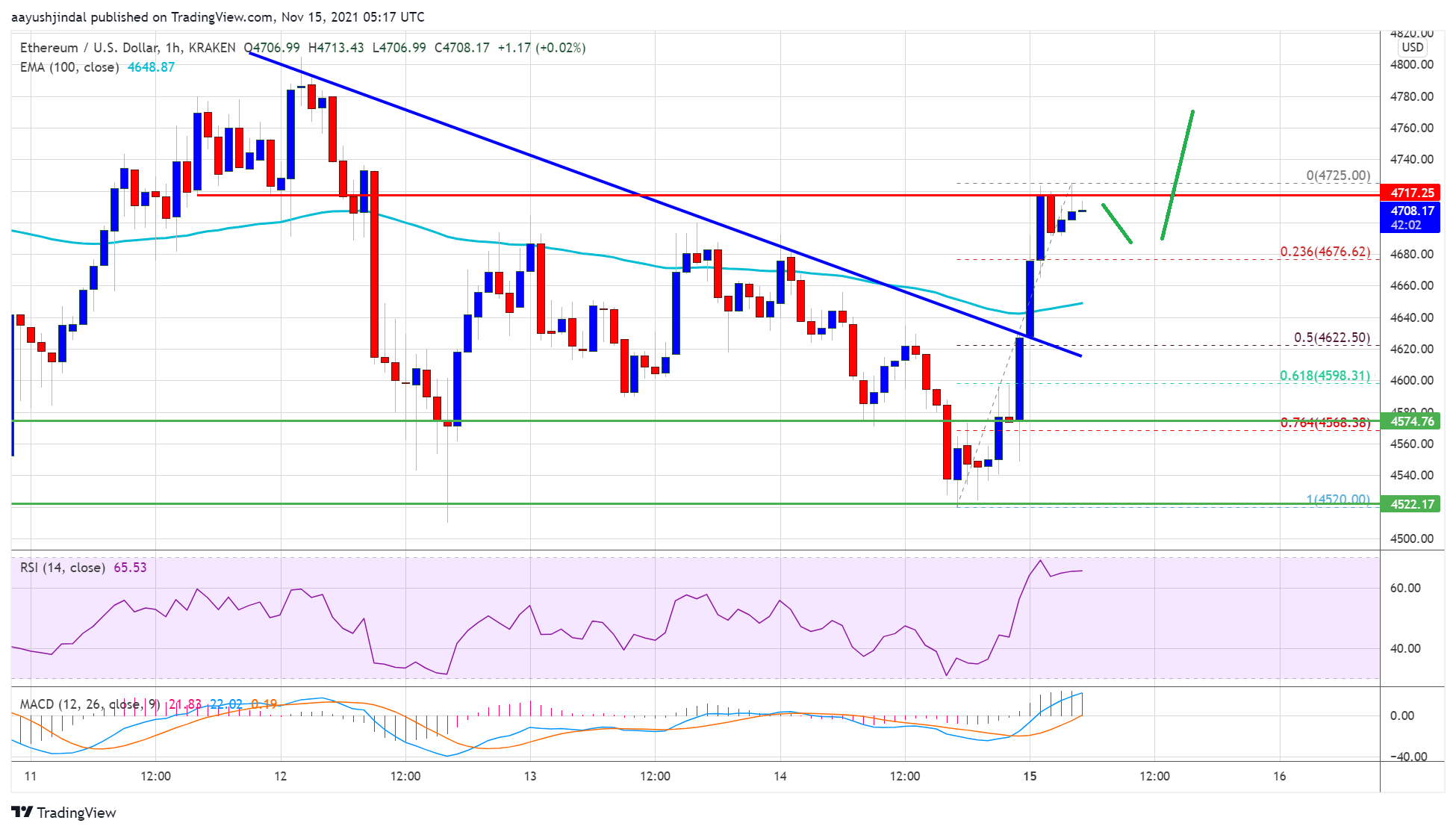
Ethereum started a fresh increase from the $4,500 zone against the US Dollar. ETH could extend upsides towards $4,850 unless it fails to stay above the 100 hourly SMA.
Ethereum started a fresh increase above the $4,600 and $4,700 levels.
The price is now trading above $4,650 and the 100 hourly simple moving average.
There was a break above a major bearish trend line with resistance near $4,630 on the hourly chart of ETH/USD (data feed via Kraken).
The pair could extend gains above the $4,800 resistance zone in the near term.
Ethereum Price Eyes More Upsides
Ethereum formed a decent support base above the $4,500 level. As a result, ETH price started a fresh increase above the $4,600 resistance zone and the 100 hourly simple moving average.
There was a break above a major bearish trend line with resistance near $4,630 on the hourly chart of ETH/USD. The pair climbed above the $4,700 level, but it is now facing resistance near the $4,725 level.
Ether is now consolidating gains and trading near $4,700. It is also well above the 23.6% Fib retracement level of the upward move from the $4,520 swing low to $4,725 high. An immediate resistance on the upside is near the $4,725 level.
Source: ETHUSD on TradingView.com
The next major resistance is near the $4,750 level. A break above the $4,750 level may possibly spark a fresh rally. The next key resistance is near the $4,850 level. Any more gains could lead the price towards the $5,000 level in the near term.
Dips Supported in ETH?
If ethereum fails to climb above the $4,725 and $4,750 resistance levels, it could extend its downside correction. An initial support on the downside is near the $4,675 level.
The first major support is near the $4,650 level and the 100 hourly SMA. The next major support is near the $4,620 level. It is near the 50% Fib retracement level of the upward move from the $4,520 swing low to $4,725 high. Any more downsides could lead the price towards the $4,550 support. The next major support for the bulls is near the $4,500 level.
Technical Indicators
Hourly MACD – The MACD for ETH/USD is slowly losing pace in the bullish zone.
Hourly RSI – The RSI for ETH/USD is now well above the 50 level.
This year has seen a number of high profile partnerships formed between the cryptocurrency sector and major sports leagues, teams and individual players. Nowadays players engage with their fans by issuing limited edition NFTs and other perks that are associated with crypto and blockchain technology.
Crypto companies are also making their presence known stitching their names on jerseys, buying stadium naming rights and paying for cleverly placed primetime commercials between game breaks.
One project that has seen a recent surge in interest thanks to its focus in the world of sports and helping fans interact with their favorite teams and players is Chiliz (CHZ), the blockchain network behind the Socios.com fan engagement platform.
Data from Cointelegraph Markets Pro and TradingView shows that since hitting a low of $0.243 on Sept. 29 the price of CHZ spiked 171% to a daily high at $0.657 on Oct. 31 and recent developments are now pushing the price back towards the swing high.
CHZ/USDT 4-hour chart. Source: TradingView
Three reasons for the growing strength of CHZ include the launch of live in-game NFTs, recent exchange listings for CHZ as well as its newly released fan tokens and the protocol’s rapidly expanding ecosystem of partners.
Live in-game NFT drops
The development that kicked off the current rally was the rollout of the platform’s first live, in-game NFT drop which took place a match between A.C. Milan and A.S. Roma.
This Sunday, history will be made as we release the first ever @acmilan NFT.
With this design, new NFTs are minted as they happen based on key moments in live matches and then they are dropped to the wallet of fan token holders who correctly predict the outcome of the game.
The announcement that this new method of distributing NFTs was followed by a spike in demand for the token which has continued to build in the following weeks.
CHZ and fan token support
Another reason for the building momentum of CHZ has been the addition of new exchange listings, as well as its newly released fan tokens for clubs like São Paulo FC, AC Milan and Manchester City.
Introducing Manchester City @ManCity Fan Token $CITY on Binance Launchpool! Farm $CITY by Staking #BNB, $CHZ and $BUSD Tokens
In addition to the listings, Binance is also allowing fans to earn tokens from their favorite teams by staking Binance Coin (BNB), Binance USD (BUSD) and CH.
OKEx also announced that it will support tokens from the Chiliz ecosystem and CHZ appears to have benefited from a new listing eToro’s crypto exchange on Nov. 9.
Expanding ecosystem backs the current rally
Ecosystem expansion could be another recent development that is strengthening CHZ’s fundamentals.
More than 80 sports properties announced partnerships with @chiliz x @socios, more than +100 already signed. While improving our product and starting to prepare a global marketing campaign, we focus on building a leading new fan ecosystem (engagement x monetization). #innovationpic.twitter.com/mZKOL6IyDH
Recently, the platform unveiled a partnership with Kraft Sports and Entertainment which will see the National Football League’s (NFL) New England Patriots and Major League Soccer’s (MLS) New England Revolution join the Chiliz and Socios ecosystem.
This partnership marks the first foray for Chiliz into the NFL and MLS and indicates that the protocol has its sights set on expanding to cover all major sports leagues where there is a demand from fans for more engagement.
VORTECS™ data from Cointelegraph Markets Pro began to detect a bullish outlook for CHZ on Oct. 28, prior to the recent price rise.
The VORTECS™ Score, exclusive to Cointelegraph, is an algorithmic comparison of historical and current market conditions derived from a combination of data points including market sentiment, trading volume, recent price movements and Twitter activity.
VORTECS™ Score (green) vs. CHZ price. Source: Cointelegraph Markets Pro
As seen in the chart above, the VORTECS™ Score for CHZ began to pick up on Oct. 27 and reached a high of 70 on Oct. 28, just as its price began to increase 125% over the next two weeks.
The views and opinions expressed here are solely those of the author and do not necessarily reflect the views of Cointelegraph.com. Every investment and trading move involves risk, you should conduct your own research when making a decision.
Did Steve Hanke find a way out of the hole he’s been digging himself into for all these years? The economist holds the world record for the person with the highest number of terrible Bitcoin takes, with almost 13 years of failed predictions. And now, out of nowhere, he seems to like the world’s second cryptocurrency by market capitalization. What does he like about Ethereum, though? The “560% price surge this year,” of course. But there’s more…
Ethereum is giving Bitcoin a run for its money. Ethereum has become increasingly popular amongst DeFi and NFTs, resulting in a 560% price surge this year. Has the look of a bubble. But, is it?https://t.co/2fkvuNoRWz
Wait… is Steve Hanke into NFTs? The man said, “Ethereum has become increasingly popular amongst DeFi and NFTs” without a hint of irony. He also said, “Ethereum is giving Bitcoin a run for its money,” which is the most positive thing Steve Hanke has said about Bitcoin in over a decade. And, in the end there, he leaves space for possible deniability, “Has the look of a bubble. But, is it?”
The economist also links to an extremely basic and clumsy CNN article. Is Steve Hanke warming up to cryptocurrencies? Or is there some other dynamic at play here?
The Article Steve Hanke Linked To
This run-of-the-mill article doesn’t really say much. Its main message is the price action anyone reading NewsBTC is probably already familiar with.
“Ethereum, or ether for short, is also trading at record levels. It’s now hovering around $4,850, having soared more than 560% this year, compared to the “mere” 135% pop for bitcoin. Crypto investors are betting that ether will continue to be used as the backbone for even more non-fungible tokens, or NFTs, as well as so-called smart contracts.”
Ok, what else do you got for us? Not much. It’s all over the place. It breaks down the total cryptocurrency market capitalization, introduces the concept of the mythical “flippening,” and tries to keep people away from meme coins. To accomplish this, CNN quotes Paxfull’s Ray Youssef saying, “Ether and bitcoin versus meme coins are like the difference between blue chips and penny stocks you get a call about from a guy in a boiler room.” The article also talks about inflation, how could it not?, and introduces ETFs into the picture.
“The rise of bitcoin ETFs also could be good news for ethereum, because experts predict that similar ether ETFs could soon launch. That will make it even easier for average investors and big money management firms to buy into the crypto.”
So, all in all, it doesn’t say much and the only clear fact it presents is that Ethereum had a better year than Bitcoin. Why did Steve Hanke link to it, then?
ETH price chart for 11/13/2021 on Bitfinex | Source: ETH/USD on TradingView.com
Is Hanke Trying To Find A Lifeboat?
Here at NewsBTC, we constantly argue with Steve Hanke. Just in the last year, we responded to him calling Bitcoin not legitimate, not a currency, and the concept of it being legal tender “stupid.” And now, Hanke seems to like Ethereum. Why? Is it because Ethereum’s internal policies are more akin to the traditional banking system he’s accustomed to? Or did Hanke realize that cryptocurrencies are here to stay and is too afraid to admit he was wrong about Bitcoin for all these years?
In any case, the main reaction in his replies so far is mockery. Even notorious Ethereum defender Udi Wertheimer said, “this is the most bearish ethereum signal i’ve seen in my entire life.” Let’s keep an eye on Hanke’s Twitter feed and see what the economist says about Ethereum in the next few days. This is going to be interesting.
Featured Image: RobinHiggins at Pixabay | Charts by TradingView
The proof-of-work (PoW) consensus model is the mechanism that kicked off the revolution that launched Bitcoin (BTC) in 2009 and it was the model of choice behind many of the popular projects in the early fledgling years of the crypto ecosystem.
As time progressed, other consensus models like proof-of-stake (PoS) rose in popularity, especially as the cost of running mining rigs, the constant need to update equipment and environmental concerns led to the PoW model falling out of favor with many.
As a result, projects looking to employ a proof-of-work model have had to adapt to stay aligned with the demands of the wider market. This has led to the emergence of projects that offer a more environmentally and economically friendly approach to PoW, while also aiming to build Web 3.0.
Let’s take a look at some of the projects that allow people to contribute their resources toward securing the network and earn a yield in the process.
Helium
Helium is a decentralized blockchain-powered network for the Internet of Things (IoT) devices that utilizes a global network of low-energy wireless “hotspots” that broadcast data via radio waves to be recorded on its blockchain.
The network uses a new work algorithm that has been dubbed “proof-of-coverage” to validate that hotspots are providing legitimate wireless coverage and that miners receive the platform’s native HNT token for helping to provide coverage for the network.
The Helium network saw tremendous growth throughout 2021. Currently, there are more than 309,000 nodes in operation.
Helium network statistics. Source: Helium
More recently, the Helium network expanded its capabilities by adding support for 5G wireless capabilities which included the launch of a new line of miners capable of transmitting the 5G signal.
On Oct. 26, Helium announced that it had partnered with the satellite television company Dish Network, making Dish the first major carrier to join the Helium network and offer its subscribers the opportunity to run Helium nodes in exchange for HNT tokens.
HNT/USDT 1-day chart. Source: TradingView
Shortly after these developments, HNT price rallied to a new all-time high at $53.11 on Nov. 9.
Kadena
Kadena (KDA) is a scalable PoW layer-one blockchain protocol that claims to be capable of processing up to 480,000 transactions per second (TPS) thanks to the use of braided chains.
Unlike the top PoW cryptocurrency Bitcoin, Kadena also offers smart contract capabilities similar to those found on Ethereum and features its own smart contract programming language called Pact.
Being smart contract capable means that the Kadena network is capable of hosting decentralized finance (DeFi) and nonfungible token (NFT) protocols, as well as a host of other specialized projects from stablecoins to payment processors.
Some of the goals of the project have been to address the major issues plaguing the Ethereum network such as high transaction costs and network congestion, and claims to offer marginal transaction fees for consumers while also introducing a “crypto gas station” feature that lets businesses create accounts that exist to fund gas payments on behalf of its user base when certain conditions are met.
Kadena utilizes the Blake (2s-Kadena) algorithm as its consensus model which requires native ASIC miners and cannot be mined using GPUs or CPUs.
Recently, KDA launched a wrapped version of its token called wKDA that is capable of interacting with all Ethereum Virtual Machine- (EVM-) compatible networks and their associated DeFi protocols.
In the future, the team behind Kadena also has plans to add cross-chain support for other popular blockchain networks including Terra, Polkadot, Celo and Cosmos.
KDA/USD 4-hour chart. Source: TradingView
Data from Cointelegraph Markets Pro and TradingView shows that as a result of the recent developments, the price of KDA had surged 1,280% from a low of $2.05 on Oct. 17 to a new all-time high at $28.44 on Nov. 11.
Flux
Flux (FLUX) is a native GPU mineable PoW protocol that is focused on scalable decentralized cloud infrastructure for Web 3.0 applications.
According to the project, the Flux ecosystem is comprised of a suite of decentralized computing services and blockchain-as-a-service solutions which offer an Amazon Web Services-like development environment, as well as the FluxOS second-layer operating system that is capable of running “any hardened dockerized application.”
The Flux network uses the ZelHash algorithm, which is a GPU minable implementation of Equihash 125,4 and can be mined through a Flux community pool or on a variety of third-party pools created by teams that support the Flux mining ecosystem.
The block time on the Flux network is two minutes and the current block reward is 75 Flux, with 50% going to node operators and 50% going to miners.
On Nov. 9, the project introduced “Light Nodes,” which enable Flux nodes to be managed using light wallets so that operators can start and monitor node metrics from any device capable of running the FluxNodes app.
FLUX/USD 4-hour chart. Source: TradingView
Data from Cointelegraph Markets Pro and TradingView shows that since Oct. 24 when it was revealed that Apple Pay would be integrated with the Flux network’s Zelcore wallet, the price of FLUX has surged 802% from $0.33 to a new all-time high at $2.96 on Nov. 12.
While the PoW model of consensus is no longer the dominant model used by major projects in the crypto ecosystem, these three examples show that it still has a lot to offer because the new platforms are environmentally friendly and economically sustainable.
Want more information about trading and investing in crypto markets?
The views and opinions expressed here are solely those of the author and do not necessarily reflect the views of Cointelegraph.com. Every investment and trading move involves risk, you should conduct your own research when making a decision.
By Rishav Mukherji, Senior Product Manager, Coinbase
Many of our customers are looking for ways to better understand crypto both as an investment and as an app platform, but it can sometimes be challenging to find relevant information at the right time. Coinbase wants the crypto community to be an active part of this education effort. We want to help self-empower the community with easy-to-use sharing tools making it simpler and more fun to share information on your portfolio allocations or key crypto topics such as emerging new assets.
Sharing made simple
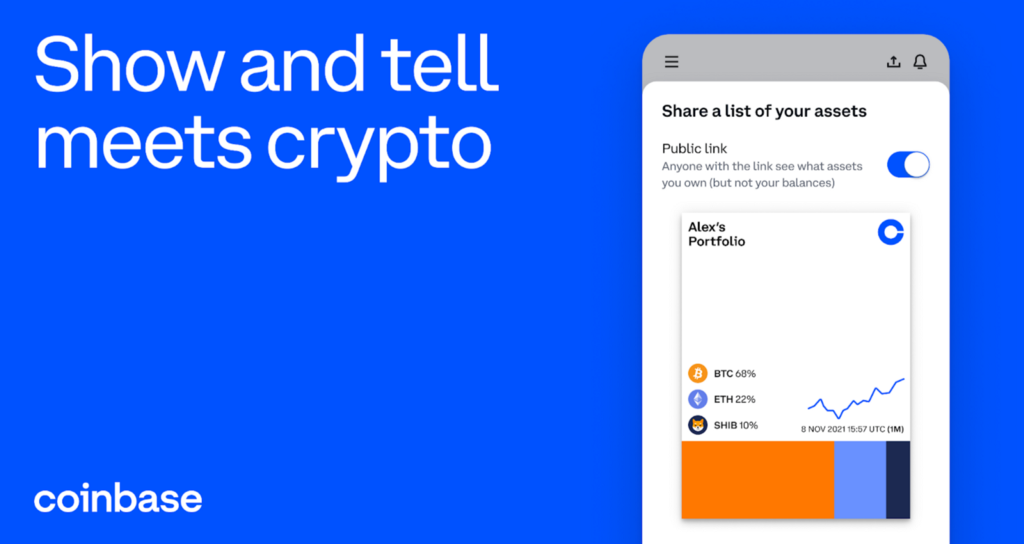
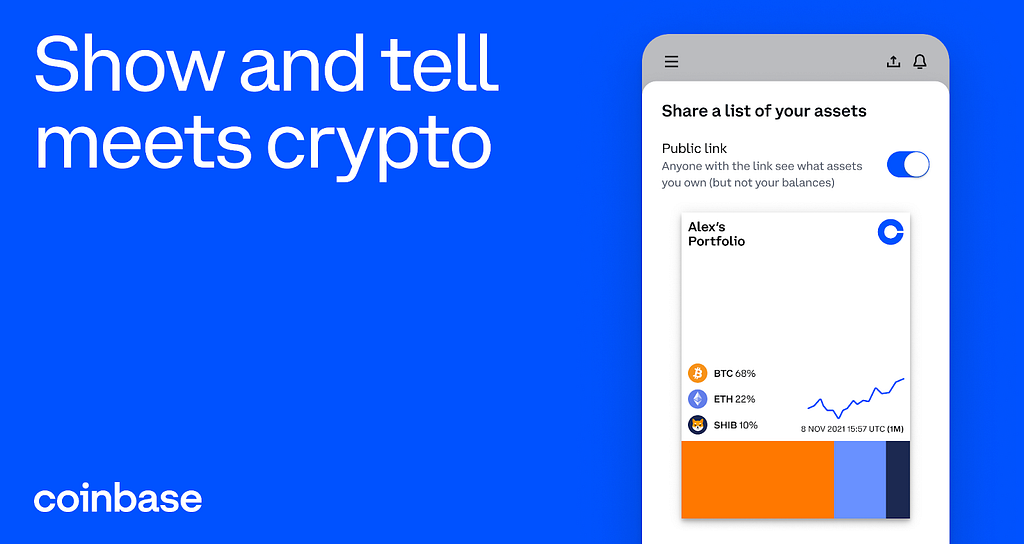
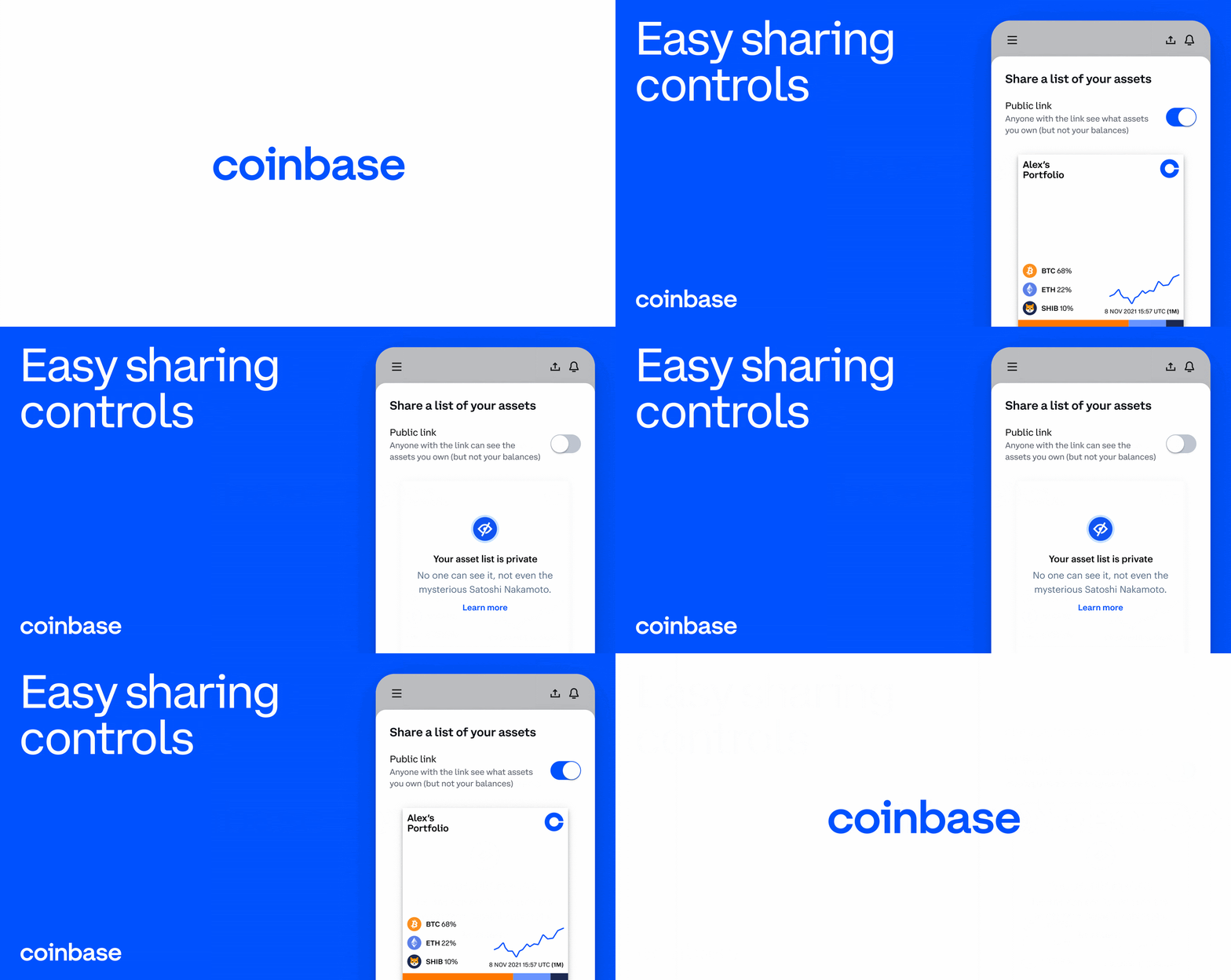
We’re making it easier to share information around your assets, such as price changes or portfolio allocations. Simply tap the Share button in the Coinbase app on any asset price page or your portfolio page and share these asset pages with your private network or on your social network. The choice is yours. When you share your portfolio with someone, you will only share your allocation percentages, never your portfolio balance.
You’re always in control
It’s easy to change your sharing settings and you can choose to stop sharing your portfolio allocations publicly anytime. Just go back to your portfolio, select Share and toggle to Private. Now, your portfolio is only visible to you. You’ll see a screen confirming your portfolio is no longer visible to anyone. You can always choose to share your portfolio again in the future by just toggling to Public.
More ways to learn and share, coming soon
We want to empower the cryptoeconomy to share knowledge and information and learn from each other. In the coming weeks, we’re launching new ways for you to share details about your trades. In the meantime, you can always check out our existing resources (Coinbase Learn, Bytes, Earn) to learn more about crypto.
Empowering the crypto community with new ways to learn and share was originally published in The Coinbase Blog on Medium, where people are continuing the conversation by highlighting and responding to this story.