2

Blog

  • We Talk to Marhaba DeFi about Ethical Issues and Faith Based DeFi Ecosystem | by Bit Media Buzz | Nov, 2021

    We Talk to Marhaba DeFi about Ethical Issues and Faith Based DeFi Ecosystem | by Bit Media Buzz | Nov, 2021

    [ad_1]

    Bit Media Buzz

    Faith-based decentralized finance (DeFi) solutions are rare.

    We had never come across a faith-based DeFi ecosystem until we discovered Marhaba DeFi.

    The Shariah-compliant decentralized finance (DeFi) ecosystem caught our interest as another use-case scenario that holds the keys to unlocking liquidity.

    We reached out to Deniz Dalkilic who is the CTO at MRHB (Marhaba) DeFi for more explanations on how this works.

    Here is what he told us.

    Deniz Dalkilic is the CTO of MRHB (Marhaba) DeFi and is an experienced Software Engineer with a decade of experience in developing small to large (distributed) systems, primarily focusing on backend development.

    Deniz has been involved in the blockchain space for the past 5 years and has been building (and co-founding) decentralized platforms. He is interested in expanding blockchain (and decentralization) ideas beyond its boundaries and always looking out for opportunities to offer cryptocurrencies to the masses.

    Deniz has earlier co-founded Bounty0x, which is an automated cryptocurrency bounty hunting platform. The platform now has distributed assets, across borders, close to $5m notional-value to its end-users.

    E-Crypto News:

    • Please, can you tell us more about the general concept behind MRHB DeFi (pronounced ‘Marhaba’)?

    Marhaba is built around the foundational concept of promoting ethical finance in the cryptocurrency space. We are building a platform where Muslims and other faith constrained people can be assured they are using only ethical, Sharia-compliant products and services.
    It will also be a platform that promotes equality by bringing unbanked, under-represented populations, primarily from poorer countries, into the empowering world of decentralized finance.

    E-Crypto News:

    • How does the Halal concept work in finance?

    Sharia law prohibits Muslims from using unethical products or services. So, for example, the buying and selling (and consumption) of alcohol is deemed “haram”, or sinful and against Sharia law.

    Specifically, concerning finance, Islam has strict injunctions against usury — interest is considered to be an inequitable, exploitative form of financial conduct that only serves to spread the state of indebtedness and inequality at the socio-economic level.

    E-Crypto News:

    • What are the basic elements of Islamic finance? Please, can you tell us more about this?

    The basic elements of Islamic finance revolve primarily around making sure one’s investments and financial activities only promote ethical, Sharia-compliant businesses, people and products. As usury is considered unethical, Islamic finance bans interest on loans. Furthermore, Islamic finance requires that ambiguity and deception should be avoided at all costs.
    Blockchain is truly the perfect tool for Islamic finance to ensure transparency and fairness for all.

    E-Crypto News:

    • What are Halal crypto assets? Please, can you tell us more about this?

    “Halal” crypto assets are those that have been determined to be Sharia-compliant.
    The process of determining whether an asset is halal or not requires an intermediary, in many cases, as the judgement requires a deep knowledge and understanding of both theology and the financial industry.

    E-Crypto News:

    • How does the Shariah validator work?

    Marhaba employs a team of finance experts and a team of theology experts to deliberate and vote on every single asset or service we intend to include on our platform.
    In order to be deemed Sharia compliant, and therefore permissible to include under Islamic finance, both our finance and theology teams must have consensus amongst them that the product or service is halal.
    The team is independent from the inner-workings of Marhaba in order to stay objective and get rid of any bias.
    The Shariah team has their own dashboard they review, scrutinize and make decisions on.
    The rest of the applications within MRHB Network simply consume a list of coins that are deemed to be Shariah compliant and allow our end users to trade and/or interact with these coins.

    E-Crypto News:

    • Can you tell us more about the Souq NFT Platform?

    The Souq NFT Platform (sNFT for short) will be an open, “no-code” marketplace hosted by Marhaba where individual creators can mint their own NFTs. The platform will make use of AI to detect and filter out non-Shariah compliant content i.e. NSFW content such as nudity, adult content, hate speech and racism.
    Aside from NSFW filtering, the marketplace place will be cross-chain (EVM based chains initially) and will have a built-in “uniqueness” checker to ensure no copyrighted or already existing NFTs can be re-minted.
    sNFT will also team up with orphanages and special schools to teach kids how to mint and sell their own NFT artworks, with the proceeds of these sales going directly to the participating institutions.

    E-Crypto News:

    • Can you tell us more about the liquidity harvester?

    The liquidity harvester will be a cross-chain liquidity harvesting protocol hosted in the MRHB ecosystem. It will essentially operate similar to a Savings Accounts whereby users will generate passive income 5–15% EAPR/annum*** (on stablecoins initially).

    The idea at a bird’s eye view is simple; the tool will scan the crypto universe and find the most lucrative liquidity pools across chains and protocols and offer it as an option to the end-user.

    V2 of the dApp will behave similarly to a fund where we move users funds on their behalf to most lucrative pools periodically to maximize their gains as well as open the doors to beyond stablecoins where returns can range from 30–60% EAPR whilst of course increased risk due to volatility of altcoins and impermanent loss.

    In order to remain Sharia-compliant, liquidity harvesting will be focused on profit sharing and joint ventures under a contract called Mudarabah and will only allow users to deposit Shariah-compliant tokens as well as only utilize Shariah-compliant methods such as liquidity mining as opposed to interest gains via lending, etc.

    In short, users will be able to deposit their supported Sharia-compliant tokens into supported DEX liquidity trading pools and earn returns through trading fees.

    E-Crypto News:

    • How much money is locked within the Islamic financial ecosystem? How can the cryptocurrency space help unlock this liquidity?

    Total liquidity/assets locked in the Islamic finance sector are around USD 3 trillion in value, which is around 20 times the total value of assets locked in DeFi. Currently, $0 of this Islamic liquidity is locked in DeFi, showing an enormous potential for growth once halal DeFi options are made available.
    MRHB aims to capture just 1% of this total liquidity which will set it at $30B TVL, larger than any major player like Compound or AAVE TVL.

    E-Crypto News:

    • Please, can you tell us more about governance within the MRHB DeFi ecosystem?

    It is our hope that in the future MRHB will completely decentralize and be governed entirely by its community. If you hold MRHB you can raise proposals and allow other MRHB holders to vote on protocol level changes such as fee mechanism, burn rates, buy-backs, integration of chains or pools and so on.
    Until DAO governance is released, we have two governance boards — one group that governs the protocol and one group that ensures Sharia compliance — to guide MRHB’s evolution.

    E-Crypto News:

    • Tell us more about your cross-chain DEX aggregator.

    Our DEX aggregator, or ‘The Dexregator’ as we like to call it, will be a hybrid platform that uses both on and off-chain methods for connecting to and analyzing several approved DEXes.
    It also works across blockchains, so our users will not be stuck within any single ecosystem.
    Idea of the Dexregator is to provide users with a single point of entry to the entire liquidity available across all chains thus get the best rates with minimal slippage. Dexregator will only charge a small fee if POSITIVE slippage is achieved otherwise completely feeless.

    E-Crypto News:

    • Can you tell us more about the concept behind decentralized philanthropy (De-Phi)?

    Our vision is to build the world’s first dedicated protocol for decentralized philanthropy.
    MRHB DeFi Platform users will have the option to send a portion of their crypto portfolios to approved charity organizations with full traceability and transparency while preserving donors data.
    In addition to voluntary donations and general philanthropy, we will include a system to help users make automated donations at set intervals — this is useful for Muslims to fulfill their “Zakat” obligations but at the same time help non-Muslims to fulfill their obligations as a human to help one another without compromising their privacy.

    E-Crypto News:

    • More about the $MRHB token?

    $MRHB is a digital utility token with a total supply of 1 billion.
    In addition to having monetary value when traded on exchanges, $MRHB has many uses on our platform (check our whitepaper for full list), and will have many further uses added as Marhaba grows.

    E-Crypto News:

    • What are the various functions of the $MRHB token within the Marhaba DeFi ecosystem?

    Intended uses include:

    • A $MRHB fee must be paid for a project to apply for Sharia approval
    • Fees for minting NFTs on our marketplace
    • Buying and selling NFTs on our marketplace with lower transaction fees than other cryptocurrencies
    • Fees for use of the liquidity harvester
    • Fees paid to boost a cryptoasset’s exposure in the Sahal wallet
    • Paid to users who opt in to view advertisements
    • Fees for DApps to go public on our Launchpad
    • Transaction fees on the MRHB DEX
    • Incentivization strategies to promote $MRHB on other Shariah approved projects
    • People who hold 10,000 $MRHB or more will have voting rights on our DAO
    • MRHB will be compulsory for API integrations with B-2-B customers and any payments to utilise any MRJB product

    E-Crypto News:

    • What is the general idea behind your decentralized autonomous organization (DAO)?

    DAO

    All products will have a fee that can only be paid in $MRHB. Our DAO will include a smart contract holding a pool of all fees paid.

    Our community of token holders will have voting rights on proposals, which will all be regulated through smart contracts and automatically paid out from the pool. It will be a truly automated blockchain-based system — no human interaction involved.

    E-Crypto News:

    • What are the para-chain capabilities within the MRHB DeFi ecosystem? Can you tell us more about this?

    The final phase of our platform rollout will be to migrate to the Polkadot ecosystem as a parachain.

    We are aiming to do this in order to become a truly frictionless platform bridging across a range of networks.

    E-Crypto News:

    • What is the DAO Treasury? How does it work?

    All products will have a fee that can only be paid in $MRHB.

    Our DAO Treasury which is a chain of Smart contracts will be holding a pool of all fees paid across all our products. The pooled funds will be utilized for many things including buy-back, marketing, burns, subsidization of TX fees where possible, and more.

    E-Crypto News:

    • Please, can you tell us more about the entrepreneur launchpad?

    The launchpad will be an initiative to help fund entrepreneurial dreams and goals in a Shariah compliant manner whilst utilising Quadratic Funding model.
    We aim to finance entrepreneurs from around the world, regardless of their backgrounds, to onboard Shariah approved projects to our platform.
    The projects have to be cryptocurrency-focussed.
    The launchpad will have built-in features to deter bots, “sniping” and any other exploit that puts “whales” at an advantage and will set a fair playing field for all.

    E-Crypto News:

    • How do you think MRHB DeFi will change the world?

    First and foremost, we will bring DeFi to the Islamic Finance community, representing USD 3 trillion in value. This will undoubtedly make the DeFi and cryptocurrency industry, in general, grow rapidly.

    Secondly, our hope is that the ethical, moral standards of Shariah-approved finance will be recognized by an even larger demographic, and thereby help to reposition the financial industry in many ways to become more ethical itself and not make the same mistakes fuelled by greed we see in Wall St today.

    Through blockchain technology, we can fight against injustices such as money laundering, human trafficking, excessive fees, and the opaqueness of the financial world.

    E-Crypto News:

    • Please, can you tell us more about your tokenomics?
    • From a total supply of 1 billion tokens, our tokenomics break down thus:
    • Seed: 30%
    • Treasury: 20%
    • Team: 15%
    • Platform rewards: 10%
    • Strategic partnerships: 7%
    • Advisors: 5%
    • Private whitelist: 5%
    • Exclusive entry sale: 5%
    • Public sale: 3%

    Notably, we have chosen to implement a long vesting schedule to all but the public sale tokens.
    We are committed to building a platform that brings value to the Muslim community and the world at large.
    We are steadfastly against ‘pump and dump’ schemes!

    Source

    [ad_2]

    Source link

  • UK digital services tax targets crypto exchanges

    UK digital services tax targets crypto exchanges

    [ad_1]

    A recent update to Her Majesty’s Revenue and Customs (HMRC) regulations has introduced a digital services tax that will be levied on cryptocurrency exchanges operating in the United Kingdom.

    Crypto exchanges in the UK will now have to pay a 2% digital services tax according to a Telegraph report. Britain’s tax authority, HMRC, does not recognize digital assets as financial instruments and therefore exchanges are not eligible for financial exemptions.

    On Nov. 28, the authority included cryptocurrency exchanges under the Treasury’s tech tax. The digital services tax on revenue was introduced in April 2020 targeting social media and search giants such as Facebook and Google.

    The latest blow to crypto exchanges is a result of the HMRC’s classification of crypto assets, as the regulator explained:

    “There are a wide variety of crypto assets, each with different characteristics. It said that because cryptocurrencies do not represent commodities, financial contracts, or money, it is unlikely that crypto-asset exchanges can benefit from the exemption for online financial marketplaces.”

    According to CryptoUK, the trade body representing the digital asset sector in Britain, the tax is unfair and is likely to be passed on to investors and traders.

    Executive Director Ian Taylor stated that treating cryptocurrencies differently to other financial instruments such as stocks or commodities is detrimental to the crypto sector.

    He added that it is another heavy blow to the industry following the arduous licensing system introduced by the Financial Conduct Authority (FCA) for exchanges. Since January, all UK-based crypto-asset companies have had to comply with AML (anti-money laundering) regulations and register with FCA.

    The regulator imposed a ban on crypto derivatives in January, and in June, the FCA warned consumers against 111 crypto firms that had yet to register with it.

    Related: UK revenue authority to target cryptocurrency tax evaders

    In April, Cointelegraph reported that HMRC was ramping up its efforts to snare crypto tax evaders and introduced explicit demands on details of digital asset holdings on self-assessment forms.

    Britain’s tax authorities reportedly demanded that several crypto asset exchanges hand over details on customers from transactions and holdings in August 2019.

    [ad_2]

    Source link

  • Solana Could Become The Next Bitcoin, According To FTX’s Sam Bankman-Fried

    Solana Could Become The Next Bitcoin, According To FTX’s Sam Bankman-Fried

    [ad_1]

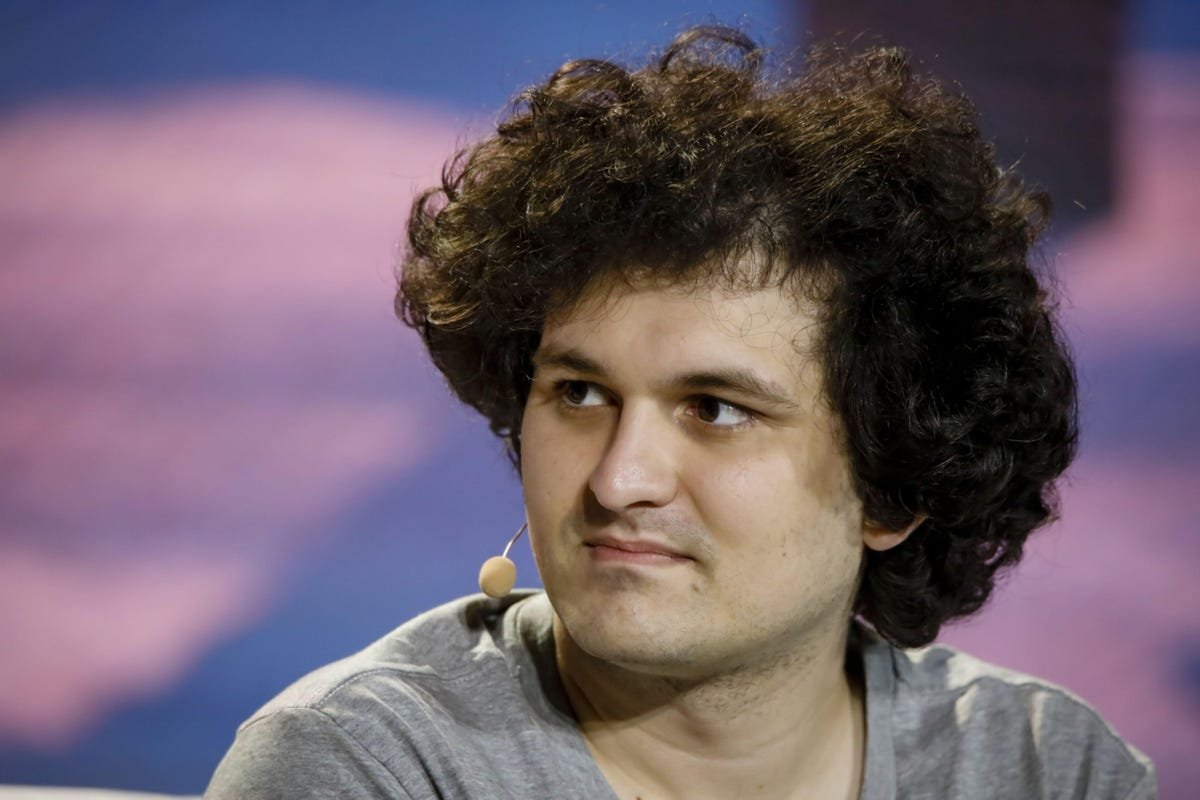
    Sam Bankman-Fried, the founder of the crypto exchange FTX, is optimistic about Solana (SOL). He believes that Solana has the potential to scale to Bitcoin’s (BTC) mass adoption level. Bankman-Fried added that Avalanche (AVAX) also has the potential to climb to the top.

    He also believes Solana is better than ethereum as it’s one of the few blockchains with a plan to accommodate mass adoption.

    Related Reading | Solana Hits New All-Time High, Surpasses Cardano And Tether To Fourth Place

    The 29-year old crypto founder has a net worth of $22.5 billion, making him the youngest person to enter the Forbes rich list after Mark Zuckerberg.

    Cryptos With The Potential For Real Adoption

    In an interview with Kitco News on Thursday, Bankman-Fried talked about bull and bear runs. And which projects would see mass institutional adoption.

    When asked if he thinks Bitcoin would see its last Bull run in December before eventually crashing, Bankman-Fried responded that he could not predict the future. However, there will always be more crashes as well as more bull runs. And in the next few years, he expects to see “see substantial institutional adoption of cryptocurrencies.”

    In the event of a crash, however, he says that projects with loyal followers and important use-cases are more likely to survive. Hype-driven projects, like meme coins, often crash the hardest. “Projects that have real adoption, or potential for real adoption are the ones that loyalists will be backing, even during bear markets.”

    Bankman-Fried also believes that Solana could be the next Bitcoin. And that there is a possibility that it could see mass adoption very soon. As he has previously said, Solana has a plausible roadmap to scale millions of transactions per second. And that is the most important indicator.

    SOLUSD on TradingView.com

    SOL trading at $196.5 | Source: SOLUSD on TradingView.com

    “I think Solana has a shot at doing so, which is really exciting. I think that there are other tokens out there as well that are aiming to scale a bit, and Avalanche is one of them.” He emphasized that the core technology of every blockchain is something that is hard to overhaul. Furthermore, he says that Solana could potentially be the base for more DeFi applications in the future.

    Bankman-Fried adds that Solana’s market cap could exceed Ethereum’s market. However, it is hard to make a concrete prediction. But one thing that cannot be disputed is that Solana fixes a lot of problems with Ethereum. These include high gas fees and low transaction rates. Subsequently, many have dubbed the network “ethereum killer.”

    Solana Is Better Than Ethereum

    Bankman-Fried believes that in terms of scale, not many blockchains could compare to Solana. Earlier this month, he spoke at Yahoo Finance and Decrypts’s “Crypto Goes Mainstream” conference.

    Related Reading | Why Billionaire Chamath Palihapitiya Invested In The Solana Ecosystem

    “Solana is one of the few currently existing public blockchains that has a really plausible roadmap to scale millions of transactions per second at you know, fractions of a penny per transaction, which is a scale that you need for this,” Bankman-Fried said.
    “That is not where a lot of other blockchains have been focusing, including ethereum.”

    Featured image by Forbes, Chart from TradingView.com

    [ad_2]

    Source link

  • Facebook’s centralized metaverse a threat to the decentralized ecosystem?

    Facebook’s centralized metaverse a threat to the decentralized ecosystem?

    [ad_1]

    Facebook has been planning its foray into the metaverse for some time now — possibly even several years. But it’s only recently that its ambitious expansion plans have catapulted the concept into mainstream headlines across the globe. Renaming the parent company to Meta was perhaps the biggest, boldest statement of intent the firm could make. Suddenly, major news outlets were awash with explainer articles, while finance websites have been bubbling with excitement about the investment opportunities in this newly emerging sector. 

    However, within the crypto sphere, the response has been understandably more muted. After all, decentralized versions of the metaverse have been in development around these parts for several years now. Even worse, the tech giants’ cavalier attitude to user privacy and data harvesting has informed many of the most cherished principles in the blockchain and crypto sector.

    Nevertheless, metaverse tokens such as Decentraland (MANA) and Sandbox (SAND), enjoyed extensive rallies on the back of the news, and within a few days of Facebook’s announcement, decentralized metaverse project The Sandbox received $93 million in funding from investors, including Softbank.

    But now that the dust has settled, do the company-formerly-known-as-Facebook’s plans represent good news for nonfungible token (NFT) and metaverse projects in crypto? Or does Meta have the potential to sink this still-nascent sector?

    What is known so far?

    Facebook hasn’t released many details about what can be expected from its version of the metaverse. A promotional video featuring the company co-founder and CEO Mark Zuckerberg, himself, along with his metaverse avatar, looked suitably glossy. Even so, it was scant with information about how things will actually work under the hood. However, based on precedent and what is known, some distinctions can be made between what Facebook is likely to be planning and the established decentralized metaverse projects.

    Facebook has some form when it comes to questions over whether it will adopt decentralized infrastructure based on its efforts to launch a cryptocurrency. Diem, formerly Libra, is a currency run by a permissioned network of centralized companies. David Marcus, who heads up Diem, has also confirmed that the project, and by extension Facebook, is also considering NFTs integrated with Novi, the Diem-compatible wallet.

    Based on all this, it’s fair to say that the Facebook metaverse would have an economy centered around the Diem currency, with NFT-based assets issued on the permissioned Diem network.

    The biggest difference between Facebook’s metaverse, and crypto’s metaverse projects, is that the latter operates on open, permissionless, blockchain architecture. Any developer can come and build a metaverse application on an open blockchain, and any user can acquire their own virtual real estate and engage with virtual assets.

    Critically, one of the biggest benefits of a decentralized, open architecture is that users can join and move around barrier-free between different metaverses. Interoperability protocols reduce friction between blockchains, allowing assets, including cryptocurrencies, stablecoins, utility tokens, NFTs, loyalty points, or anything else to be transferable across chains.

    So the most crucial question regarding Facebook’s plans is around the extent to which the company plans for its metaverse to be interoperable, and metaverse assets to be fungible with other, non-Facebook issued assets.

    From the standpoint of the decentralized metaverse, it doesn’t necessarily sound like great news. After all, Meta’s global user base dwarfs crypto’s. But there’s another way of looking at it, according to Robbie Ferguson, co-founder of Immutable, a layer two platform for NFTs:

    “Even if [Meta] decides to pursue a closed ecosystem, it is still a fundamental core admission of the value that digital ownership provides — and the fact that the most valuable battleground of the future will be who owns the infrastructure of digital universes.”

    Centralization could be the most limiting factor

    Based on the fact that Diem is already a closed system, it seems likely that the Facebook metaverse will also be a closed ecosystem that won’t necessarily allow direct or easy interaction with decentralized metaverses. Such a “walled garden” approach would suit the company’s monopolistic tendencies but limit the potential for growth or Facebook-issued NFTs to attain any real-world value.

    Furthermore, as Nick Rose Ntertsas CEO and founder of an NFT marketplace Ethernity Chain pointed out, users are becoming weary of Facebook’s centralized dominance. He added in a conversation with Cointelegraph:

    “Amidst [the pandemic-fuelled digital] transition, crypto adoption rose five-fold. At the same time, public opinion polling worldwide shows growing distrust of centralized tech platforms, and more favorable ratings of the very nature of what crypto and blockchain offer in protecting privacy, enabling peer-to-peer transactions, and championing transparency and immutability.”

    This point is even more pertinent when considering that the utility of Diem has been preemptively limited by regulators before it has even launched. Regardless of how Diem could eventually be used in a Facebook metaverse, regulators have made it clear that Diem isn’t welcome in the established financial system.

    So it seems evident that a closed Facebook metaverse will be limited to the point that it will be a completely different value proposition to what the decentralized metaverse projects are trying to achieve.

    Meanwhile, decentralized digital platforms are already building and thriving. Does that mean there’s a risk that blockchain-based platforms could fall prey to the same fate as Instagram and WhatsApp, and get swallowed up as part of a Meta acquisition spree? Sebastien Borget, co-founder and chief operating officer of the Sandbox, believes that decentralized projects can take a different approach:

    “Typically, big tech sits on the sidelines while new entrants fight for relevance and market share — and then swoops in to buy one of the strongest players. But that strategy only works if startups sell. So there has to be a different economic incentive, which is exactly why Web 3.0 is so powerful. It aligns the platform and the users to build a platform that stands on its own, where users have ownership over its governance — and ultimate success.”

    A metaverse operated by tech giants?

    Rather than attempting to dominate, Facebook may decide to integrate with established metaverses, games and crypto financial protocols — a potentially far more disruptive scenario. It could be seriously transformative for the crypto space, given the scale of Facebook’s user base.

    Therefore, could there be a scenario where someone can move NFT assets between a Facebook metaverse and a decentralized network of metaverses? Sell Facebook-issued NFT assets on a DEX? Import a $69 billion Beeple to the Facebook metaverse to exhibit in a virtual gallery?

    This seems to be an unlikely scenario as it would entail substantial changes in mindset from Facebook. While it would create exponentially more economic opportunity, regulatory concerns, risk assessments, and Facebook’s historical attitude to consuming competitors rather than playing alongside them are likely to be significant blockers.

    Related: As Patreon tests the waters, can crypto open doors for content creators?

    The most likely outcome seems to be that Facebook will attempt to play with established centralized tech and finance firms to bring value into its metaverse. Microsoft has already announced its own foray into the metaverse, but perhaps not as a direct competitor to what Facebook is attempting to achieve. Microsoft’s metaverse is focused on enhancing the “Teams” experience in comparison to Facebook’s VR-centric approach.

    But it seems more plausible that the two firms would offer some kind of integration between their metaverse platforms than either of them would rush to partner with decentralized, open-source competitors. After all, Facebook’s original attempt to launch Libra involved other big tech and finance firms.

    Make hay while the sun shines

    Just as Libra created a lot of hype, which ultimately became muted by regulators, it seems likely that the development of a Facebook metaverse can play out in the same way with regards to its impact on the cryptocurrency sector.

    Regulators will limit Facebook’s ability to get involved with money or finance, and the company isn’t likely to develop a sudden desire for open-source, decentralized, solutions.

    However, the one positive boost that Libra brought to crypto was publicity. Ntertsas believes that this, alone, is enough to provide a boost to the decentralized NFT sector, explaining:

    “Meta’s plans will enable a surge in utility for NFT issuers and minters. NFTs can then be used as metaverse goods — from wearables to art, to collectibles, and even status symbols — there is an infinite use case and utility to NFTs and what they can become in the ever-growing NFT ecosystem.”

    In this respect, there are plenty of opportunities for decentralized metaverse projects to muscle into the limelight with their own offerings and showcase how decentralized solutions are already delivering what Facebook is still developing. Borget urges the community to seize the moment:

    “Now is the time for us to double down on building our vision of the open, decentralized and user-driven metaverse. We also have to invest time and money in explaining the benefits of our vision over what the Facebooks of the world have offered thus far.”