Geneva, Switzerland, Aug. 17, 2021 — Liti Capital, the Swiss-based litigation financing company that makes private equity investing accessible to everyone through blockchain technology, listed its wLITI token for the first time on HitBTC, a centralized exchange (CEX).
Up almost 20% in the past 24 hours, Solana (SOL) has been on an incredible rally across the board. In higher timeframes, the cryptocurrency records a 70% and 141% profit in the 7 day and monthly chart.
SOL on a rally in the daily chart. Source: SOLUSDT Tradingview
Perceived as one of Ethereum’s potential killer ecosystems, Solana continues to grow and attract attention from the crypto space. DeFi investor Daniel Cheung recently published a report on the fundamentals that support further appreciation for SOL’s price.
Cheung believes this cryptocurrency offers one of the “best” reward/risk scenarios for any crypto investments and predicted the arrival of the “Solana Summer”. This project has a straightforward pitch due to its high scalability and low-cost smart contract platform.
In addition, it provides a high level of scalability in an ecosystem without solutions such as sharding. Cheung believes that these features allow the application build on Solana to have “synchronous composability”.
This matters because with a single shared state and synchronous composability every application on Solana can communicate with each other atomically.
As Ethereum moves forwards with its migration from a Proof-of-Work consensus algorithm to Proof-of-Stake, its DeFi ecosystem could lose this property. Thus, some applications could become less interoperable with each other or stop working altogether.
The Bearish Case For Solana, What Could Prevent More Gains
As NewsBTC reported, the Solana Foundation launched stake pools with the purpose of increasing the security of its network, make it more censorship-resistant, and provide SOL holders with more incentives to participate in the ecosystem.
The latter has been one of the heaviest criticisms made by the project’s detractors in addition to the network’s level of centralization. Cheung believes this is part of the bearish thesis for Solana claiming the network “may never decentralize enough in the future”.
The second part that could prevent this ecosystem to gain further traction is Ethereum itself. This competitor still supports the majority of DeFi projects, has a high number of developers working on dApps and the development of the ecosystem, second layer solutions, and more.
Source: Daniel Cheung via Twitter
Cheung claimed Solana “faces a steep uphill battle vs Ethereum”. However, DeFi is one of the sectors where it’s more visible than the crypto industry is still in its early phase and could inevitably be heading towards a “multichain world”, as Cheung called it while he added the following:
It is still unclear whether smart contracts will be a winner-take-all market. While Ethereum is currently in the lead, data points increasingly point towards a multi-chain future, at the very least for the foreseeable future as this market plays out.
Moreover, on the centralization issue, the investor said that there is a lot of debate around when a blockchain has the right balance of decentralization. Cheung estimates that 1,000 or 10,000 nodes could be sufficient, this would make the criticism towards this network “invalid”.
Data presented by the investor claim that development activity in the SOL ecosystem are “trending very well” and has accompanied its price appreciation. The trend seems poised to continue in the coming months, as relevant figures in the crypto space, such as FTX CEO Sam Bankman Fried, are “heavily involved” with Solana.
Cheung claims that Bankman Fried has been making serious investments into this ecosystem. The exchange and its CEO have been making external investments in traditional finances, sports, and consolidating partnerships with other investors, politicians, celebrities, and others.
Thus, institutions from Wall Street are keener to jump into Solana and its ecosystem. Cheung concluded:
So with the bear arguments nullified, you are left with an asset that offers one of the best R/R in crypto right now, and one that offers practically unlimited upside in a bubble given its comped to $ETH which trades like its running to become the internet’s reserve currency.
Today, the Dash Core Group announced it has integrated crypto exchange Liquid.com’s ‘Quick Exchange’ feature into Dash’s official wallet app for Android. Users can now purchase Dash within the Dash Wallet by a VISA card with support for over 100 countries and more than 50 national currencies.
Liquid’s Quick Exchange was designed to make buying and swapping cryptocurrency quick and easy. Users purchasing cryptocurrency using Quick Exchange will receive a price quote in their national currency; or can select any of 50+ fiat currencies to view their price quotes.
3 Integration Phases
This is the first of three release phases that the integration will bring to both Dash & Liquid.com users. All Quick Exchange purchases of Dash with VISA in the app will take minutes. This is due to Liquid’s integration of InstantSend, one of Dash’s unique features.
Then the highly-anticipated second phase of this integration is the Swaps feature of Quick Exchange, which is scheduled to be released in the near future. Users can use Quick Exchange’s Swap feature to swap one crypto to another seamlessly, including cross-chain transactions.
The third and final phase is the ability for users to transfer Dash between their Liquid account and the Dash Wallet, which is to be released in Q4 2021.
“It’s been great working with the Dash team on something truly great for the community. Liquid Quick Exchange offers best-in-class exchange rates with an industry-leading user experience. Combined with the high-quality Dash ecosystem and the app; we have quite a formidable use-case.” – Jered Masters, Head of Frontend & Quick Exchange Lead at Liquid
Liquid.com + DASH
Dash constantly strives to ensure a high level of user experience within the Dash Wallet, focusing on the speed and usability of the wallet over other features. The ability to add more features to the Wallet has allowed for increased user retention and increased usage.
“The inclusion of Liquid’s Quick Exchange is a crucial step forward in our mutual dedication to user experience and ease of acquisition. With Liquid’s global coverage; users in every corner of the world will be able to participate in and benefit from this integration. Liquid is a recognized Dash FastPass partner; which means Dash can be quickly purchased, deposited, and withdrawn to be used however and whenever the user sees fit.” – Omar Hamwi, Business Development Manager at Dash Core Group
The Dash community has seen an improvement in the Dash trading ecosystem since the Dash Core Group’s Business Development team began implementing its FastPass strategy.
What began as an effort to promote businesses in the trading ecosystem that have implemented InstantSend; is now an interconnected network of partners where users can utilize the power of the FastPass network. This has allowed new use-cases including arbitrage. The Dash Investment Foundation further made an investment in Quadency; an automated trading solution and also a FastPass partner. Quadency is too integrated with Liquid for automated and instant trading of Dash.
When I joined Coinbase in Spring 2018, I spoke with our founder and CEO, Brian Armstrong, about booting up Coinbase Ventures. Brian said, “Write a blog post about what you intend to do.” I did, sent it to him, and he said, “Looks good.” I said, “Now what?” He said: “Go launch it!”
Just over three years later, Coinbase Ventures has more than 150 investments in our portfolio. These investments include bets across all sorts of compelling areas in crypto, from international plays (Bitso, a Latin American exchange) to crypto tax players (CoinTracker and TaxBit) to marketplaces (Dapper Labs and OpenSea) to infrastructure plays (Spacemesh and Starkware) to decentralized finance, or DeFi (Uniswap and Compound).
Imagine if you were Google or Facebook in the early days and had made investments in some of the most promising emerging internet companies of the time, from Stripe to Shopify. That’s exactly what we’re achieving in the crypto ecosystem via Coinbase Ventures, our investing arm whose structure mirrors our commitment as a company to decentralization — the team, effort, and decision making is decentralized, and we’re investing in companies that are making this decentralized world possible.
Here are some answers to questions I get:
What’s the common theme? Easy. We invest in amazing teams who are executing on the most important new ideas in crypto.
What will success look like? We want the crypto ecosystem to bloom. We don’t solely invest to generate ROI (Return on Investment), but we’re keeping pace with the best VC funds in terms of returns and ultimately, we’re focused on driving innovation that helps us further our mission to increase economic freedom in the world.
Do the companies have to be of strategic interest to Coinbase (M&A, partnership, or other)? Not at all. That can often be a side benefit, but really we want to invest in amazing entrepreneurs and companies that are building the ecosystem, including potential competitors in certain areas.
Do we invest in competitors? Yes! These companies may look competitive to Coinbase from the outset, but these are still-early days of the industry and we’re committed to building out the cryptoeconomy. Also, Coinbase is a multi-product company and competitors of one product can and often are critical partners for another product.
What is Coinbase Ventures’ secret sauce? OK, here’s the real secret. It’s a labor of love. We don’t have any dedicated employees solely responsible for Coinbase Ventures. Shan Aggarwal, our Head of Corp Dev, oversees it in addition to his demanding day job, and we have a group of exceptional, crypto-native employees such as Justin Mart and Ryan Yi, who do this nights and weekends because they love it so much. My theory is that we’re doing so well because of this. We have no LPs (Limited Partners), no committees, no heavy infrastructure, no marketing, nothing. Just a bunch of passionate employees who use their networks, know-how, and love of crypto to find the best players in the space to invest in.
Coinbase Ventures: Investing for a Decentralized World was originally published in The Coinbase Blog on Medium, where people are continuing the conversation by highlighting and responding to this story.
Being a crypto-friendly country has paid off in terms of adoption, as a new study about Singapore revealed.
“The State of Crypto in Singapore Report 2021,” conducted by crypto exchange Gemini in partnership with CoinMarketCap and Seedly, found that more than two-thirds of Singaporeans who have financial investments currently hold crypto.
The report, which sampled 4,348 Singapore-based adults who self-identify as having or being interested in personal finance and investment products, shows that 67% of the respondents currently own crypto assets.
While one in five crypto holders are women, the study profiles the average Singaporean crypto holder as a “29-year-old male with an average annual household income of about 51,968 Singapore dollars ($38,456) a year.”
Regarding the distribution of crypto assets held by Singaporean investors, Ether (ETH), the native cryptocurrency of the Ethereum blockchain, takes a clear lead with 78% as the most popular cryptocurrency, while 69% of crypto holders own Bitcoin (BTC). Cardano (ADA) and Binance Coin (BNB) follow the top two at 40% and 31%, respectively. One in four investors hold XRP and Tether (USDT), according to the survey.
The report reveals that people’s interest in crypto increased partly due to the COVID-19 pandemic, as 67% of crypto holders invested more during the pandemic to hedge against inflation or invest their increased disposable incomes due to lockdowns.
Related: Singapore grants first regulatory in-principle approval to crypto exchange
On the other hand, a lack of knowledge and understanding is the leading factor deterring non-crypto owners from investing in the assets class. The volatility of crypto markets, the risky nature of crypto investments and the lack of regulatory oversight were also noted as barriers to investing.
Another study with a smaller sampling group recently revealed that 46% of Singaporeans plan to buy digital assets in the next 12 months. With a zero capital gains tax on cryptocurrency income, Singapore established itself as a hub for crypto and blockchain in the Asia Pacific region.
Meet “The Bitcoin Family” that lives a decentralized nomad life solely on Bitcoin. 43-year-old Didi Taihuttu has a wife and three kids. They are known as the family that liquidated all their assets in 2017 to buy Bitcoin back when it was trading at around $900. Taihuttu is a true example of a Bitcoin enthusiast. According to him on his website, after losing his mother, and later his father, he “started reflecting life more and more and discovered that the life I was living was not the life I wanted to live. I experienced that Life could go very fast and that I needed to change.”
Related Reading | By The Numbers: What $10 In Bitcoin Each Day Would Net Investors
The Dutchman sold his 11-year-old business along with everything he owned – from his house down to his children’s toys. Then he bought a van hit the road with his family to live a minimalistic nomad life, waiting for a crypto boom to happen. This was in 2017.
Taihuttu’s Long-Running Involvement In Bitcoin
Before he became popular, Didi had learned about Bitcoin as far back as 2013. He, along with two of his friends, started mining for Bitcoin. In Taihuttu’s words: “I am an entrepreneur, so when I first heard about bitcoin, I said: Let’s do this.” Unfortunately, that venture was unsuccessful, so he shut it down. According to him, he lost his faith in BTC during the crash in 2014.
BTC price now trending around $46,000 | Source: BTCUSD on TradingView.com
But that was not the end of his relationship with Bitcoin, as he kept crossing paths with the cryptocurrency. When he saw that more people started to buy Bitcoins, he deduced that what would follow would be a monetary revolution. And he was not wrong. This revelation was what prompted him to go all in. It is estimated that at that time, after selling all his assets, he managed to acquire about 100 Bitcoins valued at roughly $350k.
The family’s Secret Crypto Vaults
The family has made a fortune from their investments and has decided to store this fortune in secret vaults. These vaults are located in different countries on four different continents. Taihuttu has two hiding spots in Europe, another two in Asia, one in South America, and a sixth in Australia, according to this CNBC article.
Related Reading | How Samsung Will Help The Bank Of Korea With CBDC Development
“I have hidden the hardware wallets across several countries so that I never have to fly very far if I need to access my cold wallet to jump out of the market,” said Taihuttu of the Bitcoin Family. The family told CNBC that the crypto stashes are hidden in different ways and a variety of locations, ranging from rental apartments and friends’ homes to self-storage sites. Taihuttu explained: “I prefer to live in a decentralized world where I have the responsibility to protect my capital.”
Didi Taihuttu And His Family’s Nomad Life
In 2017, the Dutch family embarked on a new life, documenting their travels on YouTube and other social media platforms. “My wife agreed that we were very happy as a traveling family and that we needed to teach the kids that they can be very happy without all the luxury we used to have,” explained Taihuttu.
Featured image from yolofamilytravel.com, chart from TradingView.com
Data from Cointelegraph Markets Pro and TradingView showed BTC/USD rising to tackle a giant sell wall during Saturday, only to reverse downwards to Friday’s levels.
As Cointelegraph reported, the area of seller pressure from $47,000 and upwards had been a formidable feature on the daily chart throughout the week, with Bitcoin taking several days to prepare its attack.
In the event, the wall was only partially broken before momentum ran out and BTC/USD returning to more familiar territory.
At the time of writing, BTC price action focused around $46,500, a classic “Bart Simpson” structure characterizing the past 24 hours’ movements.
“Nothing special about this move, it’s just typical for a weekend,” Cointelegraph contributor Michaël van de Poppe summarized.
“However, the heavy resistance zone was hit between $47-49K, and no breakthrough happened for Bitcoin. Remaining cautious.”
Suitable volume would be needed to sustain another run-up and flip fresh resistance levels to support — a breakout without that volume could ultimately fail and cost overly optimistic traders
Fellow trader and analyst Rekt Capital meanwhile eyed the forthcoming daily close for confirmation of the $46,000 support zone reached just a matter of days ago.
#BTC is now in the process of a retest attempt of its Ascending Triangle
A 4HR Close above the top of the triangle would be great (left chart)
After cementing $2 support, ADA/USD thus went on to hit its highest levels since mid May, when it came off $2.50 all-time highs amid a sea of change in Bitcoin.
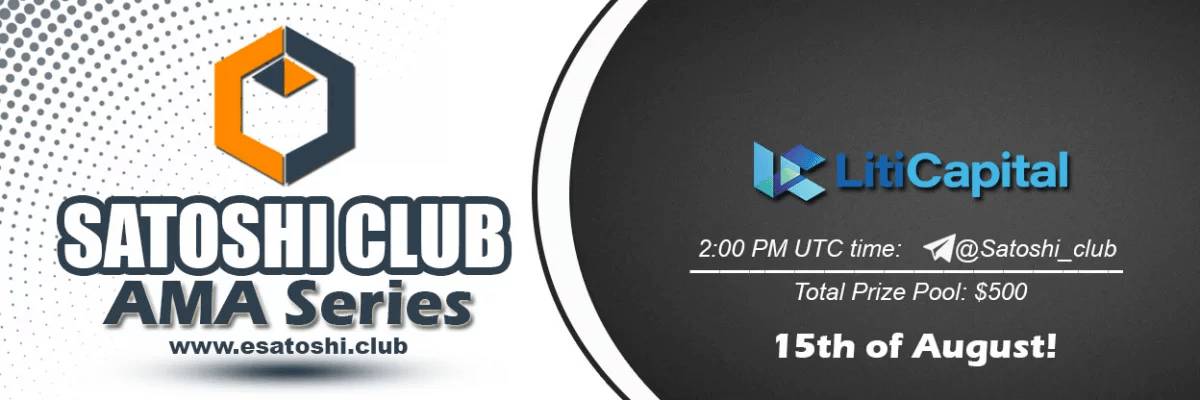
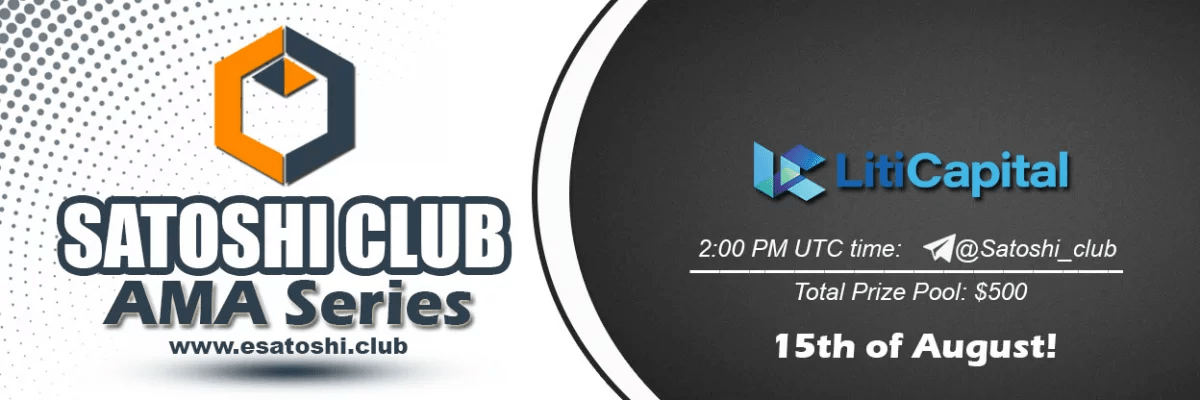
We are pleased to announce our next AMA on August 15th 2021 at 02:00 PM UTC Time: Satoshi Club x Liti Capital
Click to see the hour ️Total Reward pool: $500
️Requirements: 👉 Join Satoshi Club Telegram group 👉 Join Liti Capital Telegram group
We will have the following structure:
Part 1: 100$ /6 users — We’ll select 6 questions from the community. A user can post maximum 3 questions.
Part 2: 100$/10 users — Open chat for 120 seconds. You can post Max 3 questions. Liti Capital Team will select 10 questions and answer them.
Part3: 300$ — A quiz about Liti Capital
For more details: Liti Capital Website — liticapital.com Liti Capital Telegram — @Liti_Capital_Official Satoshi Club — @satoshi_club Russian — @satoshi_club_ru Spanish — @satoshi_club_spanish
The Lightning Network is one of the most bullish developments that the Bitcoin ecosystem has seen so far. And all the available metrics point up, a healthy and vibrant network is brewing. However, investor Kevin Rooke took a deeper look and found out that the Lightning Network is probably even bigger than previously thought. “Inaccurate comparisons and privacy preserving features make it hard to truly understand how big the Lightning Network is.”
Related Reading | Bitcoin Lightning Network Reaches Record Capacity
What does Rooke mean by that? Let’s find out.
The Lightning Network By The Numbers
A casual look at popular analytics platform 1ml tells us that, at the time of writing, The Lightning Network is composed of 24,688 nodes, 64,577 channels, and the network capacity is 2,272.89 BTC. All of those numbers are up. However, “The Lightning Network is not a borrowing protocol, an AMM, or a store of value. Furthermore, the idea that Bitcoin is “locked” on the Lightning Network is misleading at best.”
There are a number of DeFi protocols that have a much higher number of BTC “locked,” and people mistakenly compare that number to the Lightning Network ‘s capacity. In DeFi, usually, the funds are in fact locked and can’t be touched until the contract in question runs its course. In Lightning, things are quite different:
As explained in the book Mastering the Lightning Network, funds that are added to the Lightning Network are not locked, they are unleashed. As soon as a new Lightning channel is opened, those funds can be sent anywhere on the Lightning Network in an instant, and for almost no cost.
And speaking about channels, Kevin Rooke talked about them in an “investor letter” dated June 28th:
There are currently over 51,800 channels routing payments between 22,000 nodes, and 21% of those Lightning Network channels were created in the last 30 days.
On the surface, 21% monthly channel growth seems impressive, but new channel creation is a slightly misleading metric as nodes frequently open and close new channels.
A more accurate measure of growth is that the total number of channels on the Lightning Network is up by 10.8%, or over 5,000 channels in the last month.
Compare that to the more recent figure that we gave you at the beginning of the section and note how the number of channels grew in just a month and a half. That’s not all, take into account that:
Some nodes don’t want their channels to be included in the public Lightning Network graph, and instead choose to open ‘unadvertised’ or ‘private’ channels.
BTC price chart for 08/13/2021 on FTX | Source: BTC/USD on TradingView.com
Privacy Doesn’t Let Us See How Much Money Goes Through Lightning
Most of the transactions that take place inside the Lightning Network are private. Only at the time of settlement between two parties are the final numbers forever registered into the Bitcoin blockchain. That means it’s impossible to know exactly how much money is going through Lightning on any given day. Or in total.
Related Reading | Bitcoin Community Celebrates as Crucial Lightning Network Project Launches
However, Rooke estimates that “annual on-chain volume is almost 6x higher than the value locked into the Bitcoin network, despite the relatively high transaction fees and slow block times that make payments cumbersome.” That’s on the main Bitcoin blockchain. On the other hand:
The Lightning Network is designed for making fast and inexpensive payments, so if $85 million of Bitcoin is already on the Lightning Network, it would make sense for annual payment volume to be at least 6x higher, or at least $510M.
That’s a bare minimum. And things are just getting started. In September, El Salvador’s Bitcoin Law goes into effect and the whole country will start using the Lightning Network. And take into account that roughly a quarter of El Salvador’s GDP comes from remittances, so it’s not a stretch to think that Salvadoreans all over the world will start using it as well. Add to that Jack Dorsey’s projects, both Square and Twitter are looking into Lightning integration.
In fact, Dorsey published this tweet yesterday:
Agreed.
Every account on Twitter being able to link to a Lightning wallet however…