Category: Investment

  • NFTs Are No Longer Just GIFs and JPEGs

    NFTs Are No Longer Just GIFs and JPEGs

    [ad_1]

    Most of us have heard about Beeple’s Everydays: The first 5000 days selling for a whopping $69.3 Million dollars but most of us don’t realize the significance of that astronomical number. To put it into perspective, compared to traditional art, only 100 paintings have sold at a higher price than Everydays. That is all paintings sold ever! The investors in the art world have been around for centuries and NFT investors are just getting started.

    There is no doubt that NFTs are changing the way we think about art, but this paradigm shift is not restricted to GIFs and JPEGs as the popular news might suggest. NFTs mark a turning point for digital transformation, as applications and integrations are spilling to various sectors: from music and gaming to energy and supply chains.

    Understanding the true applications of NFTs

    In essence, NFTs are a unit of data on a blockchain, where each NFT represents a unique digital item such as art, audio, videos, items in video games, and other forms of creative work.

    Transactions in which ownership of something changes hands have usually depended on layers of middlemen to establish trust in the transaction, exchange contracts, and ensure that money changes hands. None of this will be necessary for the future. Transactions recorded on blockchains are reliable because the information cannot be changed. Smart contracts can be used in place of lawyers and escrow accounts to automatically ensure that money and assets change hands and both parties honor their agreements. NFTs convert assets into tokens so that they can move around within this ecosystem.

    Any NFT is simply a piece of digital memorabilia, nothing more, nothing less. It can work like any other speculative asset, where investors make a purchase in hopes of the value increasing, so they can make a profit.

    NFTs outside the art world

    Technically, anything digital can be an NFT. They give musicians the potential to provide enhanced media and special perks to their fans. Kings of Leon and Grimes are some of the leading examples in the music industry. With sports memorabilia, between 50% and 80% of items are thought to be fake. Putting these items into NFTs with a clear transaction history back to the creator could overcome the massive counterfeiting problem that exists in the industry.

    The potential of NFTs goes much further. For instance, San Marino, the tiny nation surrounded by Italy, has reportedly come up with an NFT-based vaccine passport. While still not in use, many believe NFTs provide the perfect opportunity to secure important documents and help prevent any identity thefts.

    Lepasa NFTs

    Content creators of all sorts can be one of the biggest beneficiaries of NFTs. It is now possible to escape the centralized control of platforms like Facebook where the platforms monetize content creator’s work. Lepasa is one such platform centered around creators. Lepasa is a mythological virtual life conceptualized by a team of artists and engineered by blockchain enthusiasts with a vision to establish an ecosystem that allows users to create, experience, and monetize their content and applications.

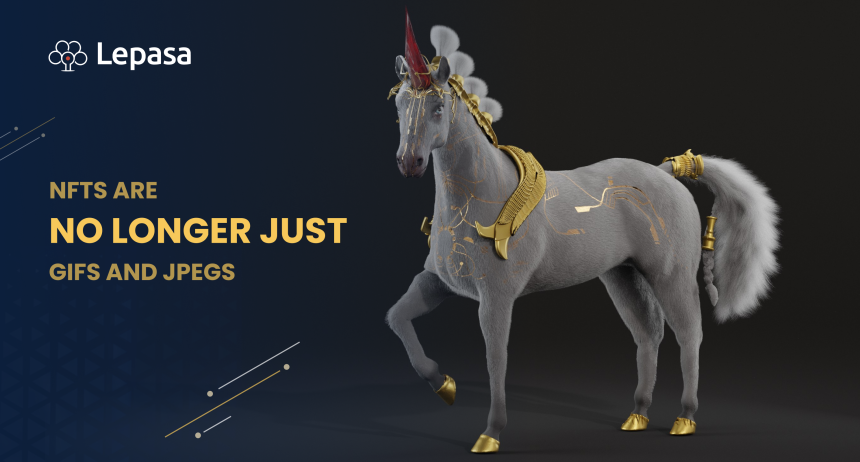
    They provide a social experience with an economy driven by layers of land and unique creatures ownership, with content distribution. Even though NFTs are at the heart of this project, these NFTs are not restricted to just GIFss and JPEGs. They have a value proposition to apps and game developers in that they can fully capitalize and monetize on the economic interactions between their applications and users. The NFT scripting language allows for the NFTs to handle a wide range of capabilities, including applications, games, gambling, dynamic 3D scenes, and much more. These NFTs go beyond the realms of gaming, adding something for advertisers, sith elements of social media and E-commerce.

    In many ways, Lepasa is at the center of most use cases of NFTs that have currently been developed.


    [ad_2]

    Source link
  • These 3 indicators flashed bullish ahead of the recent Bitcoin price pump

    These 3 indicators flashed bullish ahead of the recent Bitcoin price pump

    [ad_1]

    In stock markets and the crypto sector, traders are always looking for a definite reason to explain an asset’s price action, which means it’s important to stress that correlation doesn’t imply causation. 

    While it may be easy to connect a regulatory statement or pending legislation to the outcome of an asset’s price, there’s not always hard proof that these were the exact drivers. Some indicators described below may have happened due to pure luck, even if the coincidence continues throughout history.

    For example, Bitcoin’s (BTC) pump to $48,200 on Oct. 1 could have been related to the Sept. 30 remarks by the U.S. Federal Reserve chairman Jerome Powell. When asked to clarify his comments on Central Bank Digital Currencies (CBDC), Powell affirmed that the FED has no intentions to ban cryptocurrencies.

    Another plausible reason for the current rally is Bitcoin’s 7-day average hash rate jumping to 145 exahashes per second (EH/s), its highest level since the abrupt crash in early June when China’s mining crackdown intensified.

    Finally, increasing expectations of a Bitcoin exchange-traded fund (ETF) approval by the U.S. Securities and Exchange Commission (SEC) might have played an essential part in traders’ recent bullish bets.

    What is clear is that multiple factors could have led last week’s pump to $49,000, and today bulls appear to be making an effort to recapture $50,000. So let’s take a look at 3 indicators that flashed a ‘buy’ signal ahead of the recent price move.

    UNI caught a bid after traders turned their attention to DeFi

    Uniswap (UNI, left) vs. Bitcoin (BTC, right). Source: TradingView

    UNI, the decentralized exchange token for Uniswap, pumped a few hours ahead of the Oct. 1 market rally. The altcoin began its price increase right as the UTC monthly close happened, initially by 5% to $24.20 from $23. This move was followed by another 4% pump to $25.20 three hours ahead of Bitcoin’s breakout above $45,000.

    Curiously, DEX volumes started to soar after China imposed additional restrictions on Bitcoin in the previous week. A reasonable explanation for the move could be investors beginning to understand that China’s action would not impact the trading volume. By migrating to DEX, the possibility for governments to control or limit cryptocurrency adoption goes down significantly.

    Shorts on derivatives exchanges saw an uptick

    Some exchanges provide useful information on clients’ net exposure by measuring their positions or consolidating data from spot and derivatives markets. For example, the OKEx Bitcoin traders’ long-to-short ratio dropped from 1.25 (favoring longs) to 0.72 (favoring shorts) by 28% in less than two days.

    That might sound counterintuitive at first, showing whales increasing bearish bets, but when market expectations are broken, extreme price moves tend to happen. Had most traders expected a positive price swing, the result would likely have been priced in already.

    OKEx Bitcoin derivatives long-to-short ratio. Source: OKEx

    Binance futures open interest grew suddenly

    Regardless of the underlying asset, a futures contract has longs (buyers) and shorts (sellers) matched at all times. This means there is no way to anticipate whether those investors are skewed to either side.

    However, sudden increases in the open interest, which reflects the aggregate number of contracts still in play, reflects confidence. The higher the notional involved, the bigger the stakes.

    Binance Bitcoin futures open interest. Source: Binance

    Notice how, during the 4 hours ahead of the 6:00 am UTC bull run, the spike on both the USDT perpetual and the coin-based contract open interest. Interestingly, even with the $400 million additional bets, Bitcoin price was only noticeably impacted after the open interest peaked.

    The truth is one might never uncover what exactly triggered the rally, but by monitoring similar patterns in the future, traders may be able to predict price pumps. Of course, there’s no guarantee that all three indicators will repeat themselves, but the cost of monitoring the data is minimal.

    The views and opinions expressed here are solely those of the author and do not necessarily reflect the views of Cointelegraph. Every investment and trading move involves risk. You should conduct your own research when making a decision.