Category: Investment

  • MDEX: Overlooked Decentralized Exchange That Pays You to Trade | by Bit Media Buzz | Nov, 2021

    MDEX: Overlooked Decentralized Exchange That Pays You to Trade | by Bit Media Buzz | Nov, 2021

    [ad_1]

    Bit Media Buzz

    Key Takeaways

    • MDEX is a multi-chain decentralized exchange operating across the HEXO, BSC, and Ethereum blockchains.

    Dubbed the “DeFi Golden Shovel” in cryptocurrency circles, MDEX is a leading multi-chain decentralized exchange built on the Huobi Eco-chain (HECO), Binance Smart Chain (BSC), and Ethereum. It employs an innovative dual mechanism of liquidity and transaction mining, the latter of which effectively rewards users in MDX tokens to trade on the platform.

    MDEX Unpacked

    Decentralized exchanges have risen to become one of DeFi’s most popular kinds of platforms, both in actual usage and in generating revenues on the protocol level. In less than two years, the total value locked (TVL) in DeFi protocols has skyrocketed by a factor of 240, from $1 billion in June 2020 to the current staggering $240 billion. According to data from DeFiLlama, a significant portion of this value is locked in various decentralized exchanges operating across more than a dozen blockchains, sidechains, and Layer 2 protocols.

    Based on statistics from DeBank and dapp.com, one of the top-performing decentralized exchanges by TVL and trading volume this year is MDEX — an AMM-based DEX functioning across the Huobi Eco-chain (HECO), Binance Smart Chain (BSC), and Ethereum blockchains. In terms of active users, trading volumes, and TVL, MDEX ranks second only after Pancakeswap on the BSC and is the undisputed leading exchange on HECO. The cumulative number of wallet addresses that have interacted with MDEX is 1,038,840, the current TVL is approximately $2.2 billion, and the current average weekly trading volume is around $1.25 billion.

    The innovative dual mechanism of liquidity and transaction mining is a huge part of its success and what sets MDEX apart from other decentralized exchanges in DeFi. In order to attract and secure sufficient liquidity, DEXes typically incentivize liquidity provisioning by rewarding LPs with their native governance tokens. While MDEX does that too, it is unique in that it also rewards users with its native token, MDX, on every trade. Thanks to this reward mechanism, and by leveraging low-cost and high throughput blockchains like HECO and BSC, MDEX has captured roughly 80% of the entire TVL on HECO.

    Another contributing factor to MDEX’s success was integrating its proprietary project incubator, or a token launchpad for Initial MDEX Offerings (IMO), and the launch of its DAO. The IMO capability allows the platform to incubate new projects on HECO and BSC by providing liquidity as a service and standardizing the fundraising process. Thus far, MDEX has facilitated two massively successful IMOs, one for Coinwind and another for Demeter, allowing these projects to raise more than $385 million and $350 million, respectively.

    Honoring its roadmap goals promptly, on Sep. 2, MDEX initiated its DAO. Again, the team implemented an innovative twist to governance by establishing monthly “director elections,” in which MDX stakers vote and elect nine members of the community to the so-called “board of directors.” Instead of voting on protocol improvement proposals directly, which is how governance in most DAOs works, the MDEX DAO members elect directors with a month-long mandate to select, vote, and implement community proposals.

    MDEX users need to stake their MDX tokens in the Boardroom for 30, 90, 180, or 365 days to participate in governance. In return for staking, the users obtain transferable xMDX “lock-in vouchers” that allow them to participate in IMOs, director elections, voting, making community proposals, and deciding on the allocation ratio and use of the platform’s revenue.

    Speaking of revenue, MDEX implements a revenue-share model more similar to that of centralized exchanges like Binance or FTX than that of decentralized AMMs like Sushi or PancakeSwap. Specifically, the protocol charges a 0.3% fee on token swaps and then splits the income into three parts: 0.1% of the profit it uses to subsidize the development and growth of the ecosystem, 0.14% to buy Huobi Tokens (HT) from the secondary market and reward MDX stakers, and 0.06% to buy back and burn MDX tokens, thus reducing the circulating supply and increasing their value.

    What is Next for MDEX?

    Next on MDEX’s roadmap is growing the platform by adding even more pools or token trading pairs and expanding the ecosystem to new blockchains such as OKExChain, Polkadot, NEAR, and Ethereum sidechain Polygon.

    Besides that, MDEX further wants to expand its product landscape by adding an order book that users can use in combination with its AMM liquidity pools. The idea here is to solve trading limitations caused by insufficient depth in liquidity pools and significantly enhance the user’s trading experience. While the platform currently supports only liquidity, transaction mining, and simple token swaps, in the future, MDEX is expected to launch other services such as lending, insurance, support for options and futures trading, and other DeFi primitives.

    MDEX’s unique approach to DeFi has made it one of the leading decentralized exchanges in the multi-chain world in less than a year since its launch. As one of very few DeFi protocols that cater to the non-English speaking audience, MDEX has managed to establish a strong foothold in the Chinese, Turkish, Korean, Russian, and Japanese crypto communities and has built a loyal audience of users and contributors.

    Source


    [ad_2]

    Source link

  • StorX Offers the Most Reliable Decentralized Cloud Storage Solution

    StorX Offers the Most Reliable Decentralized Cloud Storage Solution

    [ad_1]

    Data is the most important element of today’s information-driven businesses. The better decision-makers understand their staff’s requirements, industry developments, and client expectations. Also, it can more strategically plan future growth. This need has fuelled massive development in decentralized cloud storage.

    StorX aspires to be a decentralized cloud storage leader. Convenient enterprise-grade storage options like Google Drive are combined with solid open source technologies. It wants to democratize the monopolized cloud service industry. Its technology allows consumers to rent storage from individual farms rather than a centralized service provider. Moreover, it is an open-source initiative.

    StorX node is for you if you want to put your empty disc space to work, contribute to the future of cloud storage, and be paid. Anyone may run a node on the network and earn SRX tokens. The network integrates Google Drive with dependable open source technologies. It also promotes good performers and removes bad performers. It uses an AI system to assess node reputation.

    The User, The Star, and The Satellites are the three core parts of StorX Ecosystems. The SRX token is a payment currency on the StorX platform. The user hosting data must pay in SRX, and the farmer hosting node will receive it in SRX.

    Node Operators

    The primary role is to help the network as storage node operators establish storage supplies. The inclusion of nodes in the network and their reputation is based on node reputation.

    Node Reputation

    StorX relies on a scalable and robust node reputation system. The sophisticated StorX AI system quantifies the Node’s stability and performance. The system employs reputation measurements to exclude adversaries from the network, enhancing security, dependability, and durability.

    Network Node Inclusion

    The network offers a unique procedure for adding additional nodes. When a storage node enters the network, its reputation is set to 0. Whenever someone uploads a new file to the StorX network, the Satellite adds unvetted nodes to the target list while maintaining file durability. Satellite is a sequence of machine learning methods that improve payload distribution on a node.

    Unvetted nodes must present proof-of-work to store data. After vetting, the Node is selected for broad upload. A node’s reputation rises over time as it stores data and produces proof-of-work for it.

    Node Selection

    The standard storage nodes are chosen based on throughput, latency, dependability, uptime history, and geographic location. As part of the load-balancing process, all uploads are forwarded to qualified nodes, with a preference for recommended nodes but a possibility for any qualified node. The system monitors the Node’s activity. Its reputation score grows over time if it gives download statistics, passes audits, and maintains uptime.

    Rewards, Penalties, and Node Reputation

    Node reputation is used to determine a node wallet’s reward eligibility. The StorX Governance team has a good reputation. The mark refers to the Node’s reputation as an active network member eligible for $SRX incentives. The StorX Governance team may alter this barrier to accommodate the growing network. Penalties for low-reputation nodes are in the amount of $SRX tokens. AI automatically deducts token staking/reward penalties. The whole procedure is kept within the smart contract for community accountability.

    The StorX Ecosystem functions flawlessly when Storage Node operators maintain Good Node Reputation. Nodes that perform poorly may be disqualified, resulting in no “hosting and staking incentives”. Staked SRX may be burnt as a punishment if it repeatedly harms StorX Storage Network.

    Reasons Backing Good Node Reputation:

    • Provide a solid cloud Infrastructure
    • $SRX Stake increases “Good” Node Reputation
    • Ensure 100% uptime
    • Always keep nodes updated with the newest patches and OS updates.

    Causes for a Node’s Poor Reputation:

    • Incorrect node configuration, such as not accessible on the specified port.
    • Node response time
    • Low traffic on primary app
    • If you correctly configure the Node, it will be considered for storage, and its reputation will rise.

    Maintaining a Good Reputation

    A robust node satisfies all of the readme’s criteria. Its reputation will grow as it stays active in the network. Because a node’s reputation is based on its contribution to the network, greater network activity means a higher reputation. Node owners (farmers) are asked to distribute and utilize the StorX App as much as possible to build a reputation. Access the farmer dashboard to verify repute. The team is working on a dedicated dashboard to show the Node’s data.

    Open Community

    One of the other plus points, StorX is always open for input and ideas to improve the farm node’s reputation-based reward and punishment mechanism. They consider recommendations seriously as it will help establish a better and more simplified node reputation environment.

    Conclusion

    To summarize and conclude, in simple terms, on the StorX mainnet, SRX is a utility token that drives the StorX data storage marketplace. Operators need to set up Node and earn SRX. Also, save data and pay using SRX. Node operators need to maintain Good Node Reputation to ensure StorX Ecosystem works perfectly and operators earn through the Node and its reputation.

    [ad_2]

    Source link

  • Bakkt stock goes parabolic, GBTC outpaces BITO ETF and Tom Brady offers 1 BTC for 600th touchdown ball: Hodler’s Digest, Oct. 24-30

    Bakkt stock goes parabolic, GBTC outpaces BITO ETF and Tom Brady offers 1 BTC for 600th touchdown ball: Hodler’s Digest, Oct. 24-30

    [ad_1]

    Coming every Saturday, Hodler’s Digest will help you track every single important news story that happened this week. The best (and worst) quotes, adoption and regulation highlights, leading coins, predictions and much more — a week on Cointelegraph in one link.

    Top Stories This Week

    Bakkt shares skyrocket after partnering with Mastercard and Fiserv

    On Monday, the share price of the Intercontinental Exchange-backed crypto services company Bakkt (BKKT) surged 120% on the back of two major partnerships with Mastercard and Fiserv. 

    Both partnerships were announced on Monday, with the Mastercard deal enabling Bakkt’s U.S. customers to buy, sell and hold crypto assets via custodial wallets. Meanwhile, the strategic collaboration with global payment provider Fiserv gives Bakkt the chance to offer merchant-facing digital asset services. 

    The news sparked a bullish rally that saw BKKT surge by 120% to sit at $30.60 by the end of trading on Monday.


    ProShares Bitcoin-linked ETF launches on NYSE

    ProShares achieved a major milestone for the crypto sector this week after the firm debuted its Bitcoin (BTC) futures-based exchange-traded fund (BITO) on the New York Stock Exchange (NYSE) on Tuesday. 

    ProShares’ Bitcoin Strategy ETF saw around $1 billion in volume on its opening day, with Bloomberg analysts stating that it was arguably the largest first-day volume for an ETF in terms of “natural” or “grassroots interest.” 

    After two days on the NYSE, ProShares’ ETF became the fastest fund ever to reach $1 billion in assets under management. Following ProShares’ ETF, many onlookers are waiting to see how the next in line performs. At the time of writing on Friday, Valkyrie just launched its Bitcoin futures ETF on the NYSE.


    GBTC delivered better returns than Bitcoin ETFs last week

    While there has been a lot of hype surrounding the long-awaited launch of the first U.S. Bitcoin ETFs, Grayscale’s executives highlighted that the Grayscale Bitcoin Trust (GBTC) actually outperformed them last week. 

    Over a seven-day period starting from Oct. 19, the industry stalwart GBTC returned around 8.8%, while the new and shiny ProShares Bitcoin Strategy ETF dipped around 0.5%.

    Despite Grayscale outlining plans to convert GBTC into an ETF, Barry Silbert, CEO of Grayscale’s parent company Digital Currency Group, was still keen to rub salt in the wound, as he highlighted GBTC’s higher trading volumes compared to BITO. As of Monday, GBTC’s volume totaled $374 million, while BITO managed to generate $286 million.


    Volt Equity’s ‘Bitcoin revolution’ ETF goes live on NYSE

    Speaking of ETFs, Volt Equity’s Bitcoin ETF went live on the New York Stock Exchange on Oct. 28. 

    The Volt Crypto Industry Revolution and Tech ETF, which is trading under the ticker BTCR, opened at $21 in a nod to Bitcoin’s max supply of 21 million BTC. BTCR tracks companies with significant exposure to Bitcoin, such as MicroStrategy, Tesla, Twitter, Square, Coinbase and several BTC mining firms. 

    According to Volt Equity, the ETF is implementing a management approach informed by PlanB’s Bitcoin stock-to-flow model, a quantitative model intending to predict BTC’s price. Volt Equity told Cointelegraph that the firm will gauge the market behavior of Bitcoin and adjust its exposure to mining firms if the asset drops in value significantly.


    NFL quarterback Tom Brady gives fan 1 BTC for his historic 600th-touchdown-pass ball

    Superstar NFL quarterback Tom Brady almost lost the ball he threw for his record 600th touchdown pass this week after wide receiver Mike Evans mistakenly handed it off to a fan after scoring.  

    Evans apparently did not realize that it was the quarterback’s record pass at the time. However, Brady revealed after the game on Monday that he offered the fan 1 BTC as thanks for handing it back quickly.  

    The Tampa Bay Buccaneers also agreed to give the fan two signed team jerseys, a helmet with Brady’s autograph, Mike Evans game cleats as well as a jersey signed by the wide receiver, season tickets for the rest of the year and through 2022, as well as a $1,000 credit towards purchases at the team’s store. Many onlookers have complained that it was a weak offer, as the ball could have sold for a much higher value via auction.


    Someone bought $3,400 worth of SHIB last August. It’s now worth $1.55 billion

    On Thursday, an unknown crypto billionaire was unveiled after their wallet address was shown to be worth $5.63 billion in SHIBA INU (SHIB). 

    The anonymous SHIB hodler’s $3,400 investment in the dog-themed token in August 2020 equated to a value of $1.55 billion. Out of the total of 44 purchases since that time, the investor never spent more than $3,200 on the asset at one time.  

    SHIB has gained around 85,437,459% over the past 12 months, and the asset temporarily ousted Dogecoin (DOGE) as a top-10 ranked coin this week. SHIB surged to a market cap of $40.3 billion on Thursday, while DOGE tallied in at $31.6 billion at the time. 

    SHIB has since seen a sharp pullback, allowing DOGE to briefly regain its status as the number one memecoin. At the time of writing, DOGE’s market cap sits at $36.1 billion, while SHIB’s figure stands close behind at $38.5 billion.


    Winners and Losers


    At the end of the week, Bitcoin (BTC) is at $62,540, Ether (ETH) at $4,420 and XRP at $1.08. The total market cap is at $2.66 trillion, according to CoinMarketCap. 

    Among the biggest 100 cryptocurrencies, the top three altcoin gainers of the week are SHIBA INU (SHIB) at 164.03%, Curve DAO Token (CRV) at 58.39% and Decentraland (MANA) at 54.46%. 

    The top three altcoin losers of the week are OKB (OKB) at -23.74%, XDC Network (XDC) at -12.94% and Stacks (STX) at -9.66%.

    For more info on crypto prices, make sure to read Cointelegraph’s market analysis.


    Most Memorable Quotations


    “Anybody that does the homework […] ends up investing into it. Look at Ray Dalio, a Bitcoin skeptic, now a Bitcoin investor.”

    Anthony Scaramucci, founder and managing partner of SkyBridge Capital


    “#Bitcoin is the most practical solution for a consumer, investor, or corporation seeking inflation protection over the long term.”

    Michael Saylor, CEO of MicroStrategy


    “To a degree, we think rising regulations could be a positive for Coinbase’s competitive positioning, particularly versus business models that predominantly rely on markets being unregulated.”

    Peter Christiansen, Citi analyst


    “As of yesterday, the total size of the digital asset market was $2.7 trillion. Among that $2.7 trillion, nearly 60% were commodities. […] Given the size, the scope and the scale of this emerging market, how it’s interfacing and affecting retail customers, and with the scale of the growth being so rapid, potential financial stability risks in the future, I think it’s critically important to have a primary cop on the beat.”

    Rostin Behnam, acting chairperson of the U.S. Commodity Futures Trading Commission


    “Creators, owners and operators or some other persons who maintain control or sufficient influence in the DeFi arrangements, even if those arrangements seem decentralized, may fall under the FATF definition of a VASP where they are providing or actively facilitating VASP services.”

    Financial Action Task Force


    “GameStop is looking for a unique individual who can help accelerate the future of gaming and commerce. In this future, games are the places to go, and play is driven by the things you bring. Future creators won’t just build games but also the components, characters, and equipment. Blockchains will power the commerce underneath.”

    GameStop job post


    “The conversation has shifted dramatically, where I think there’s a little bit of an understanding [from professional sports organizations] that there’s something here. I meet very little resistance these days that NFTs are a thing.”

    Caty Tedman, head of partnerships at Dapper Labs


    “There may be some parallels here between the 2017 bull run and this 2021 cycle; however, adoption is far greater, open interest is higher, and the utility of crypto is unrecognizably farther along than in 2017.”

    Steven Gregory, CEO of Currency.com


    Prediction of the Week 


    Bitcoin price dip matches October 2017 with BTC ‘explosion’ still forecast before 2022

    Bitcoin’s price sustained a bit of turbulence this week, trading above $63,000 before falling down to around $58,000, based on data from Cointelegraph’s BTC price index. Following the dip, Bitcoin’s price rallied back up past $62,000. 

    Zooming out on a longer time horizon than just this week reveals similarities in price action between 2021 and 2017 (one of the crypto market’s notable bull runs) according to charting from Twitter user Smart Crypto. The Twitter personality posted a tweet showing two charts side by side — one from 2017 and one from 2021. 

    Both charts showed Bitcoin’s price action from July until the end of the year. The charts look as if 2021 rhymes with 2017 in terms of Bitcoin’s price action. If BTC’s chart continues playing out similarly to 2017, the asset could be in for a notable rise in value ahead. Smart Crypto’s tweet was seemingly based on analysis from Twitter user TechDev. 


    FUD of the Week 


    CFTC reportedly investigating decentralized prediction platform Polymarket

    Earlier this week it was reported that the Commodity Futures Trading Commission (CFTC) was investigating Polymarket, a New York-based decentralized prediction market platform. 

    The news was first reported by Bloomberg, citing anonymous sources who claimed that the CFTC was looking to gauge whether the firm was enabling customers to trade binary options and conduct swaps that should be registered with the financial regulatory agency. 

    “Polymarket is firmly committed to complying with applicable laws and regulations and to providing information to regulators that will assist them with any inquiry,” a spokesperson from Polymarket said.


    SEC reportedly knocks back Valkyrie’s leveraged Bitcoin ETF

    It was reported on Thursday that the U.S. Securities and Exchange Commission (SEC) had knocked back two Bitcoin ETF applications from Valkyrie and Direxion. 

    On Tuesday, Direxion filed for a product that would enable investors to buy contracts that short the price of BTC, while Valkyrie applied for a leveraged BTC futures ETF the following day. 

    As many onlookers have pointed out, the SEC appears to specifically favor Bitcoin ETFs that offer direct exposure to futures contracts, as opposed to funds that are directly backed by the asset, or ones that are leverage-based and shorting-focused in this instance.


    US gov attorneys to target individuals and gatekeepers for crypto prosecutions

    A group of high-ranking U.S. government attorneys from the SEC, Department of Justice (DOJ) and CFTC outlined their agencies’ directives for white-collar crypto enforcement on Wednesday. 

    The SEC’s enforcement director, Gurbir Grewal, said the regulator is putting its focus on gatekeepers, as he noted that “they’re the first line of defense more often than not against all manner of misconduct.” Grewal added that the SEC is also keeping an eye on unregistered crypto exchanges, unregistered and fraudulent initial coin offerings, and crypto-lending platforms.

    Nicholas McQuaid, the principal deputy assistant attorney general of the DOJ’s Criminal Division, said that his agency is looking to crack down on fraudulent individuals specifically. While Vincent McGonagle, the acting director of the Division of Enforcement for the CFTC, said that regulators are focusing on the wild west of decentralized finance (DeFi).


    Best Cointelegraph Features

    We haven’t even begun to tap into the potential of NFTs

    Nonfungible tokens will become a critical component of all brands’ marketing and digital strategy initiatives.

    Why now? SEC took eight years to authorize a Bitcoin ETF in the US

    The SEC has been holding steady for years, but the real-world dynamics of crypto adoption and maturation rendered an ETF approval all but inevitable.

    Crypto City: Guide to New York

    The city that never sleeps is one of the major hubs in the crypto world despite the best efforts of regulators.

    [ad_2]

    Source link

  • Incident Post Mortem: October 27, 2021

    Incident Post Mortem: October 27, 2021

    [ad_1]

    Summary

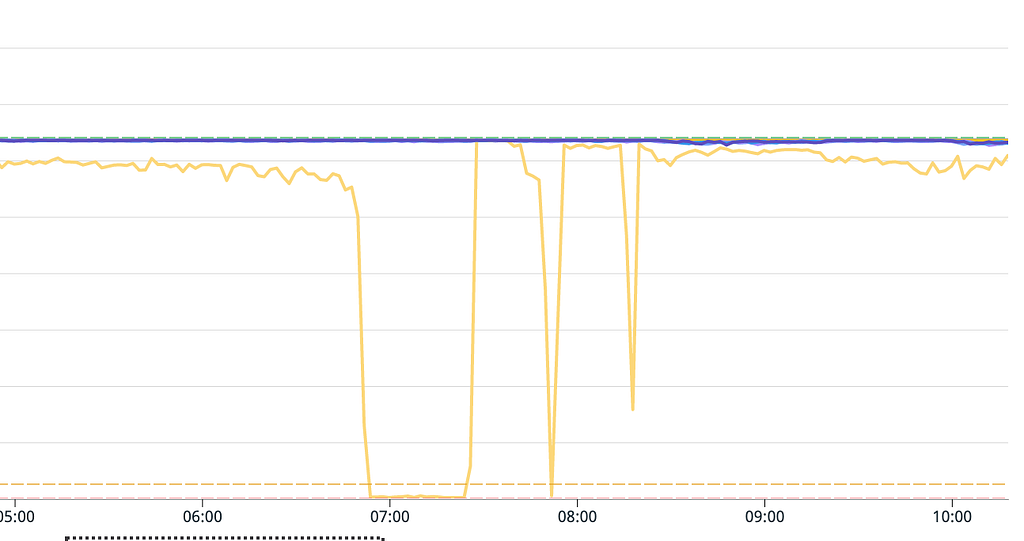
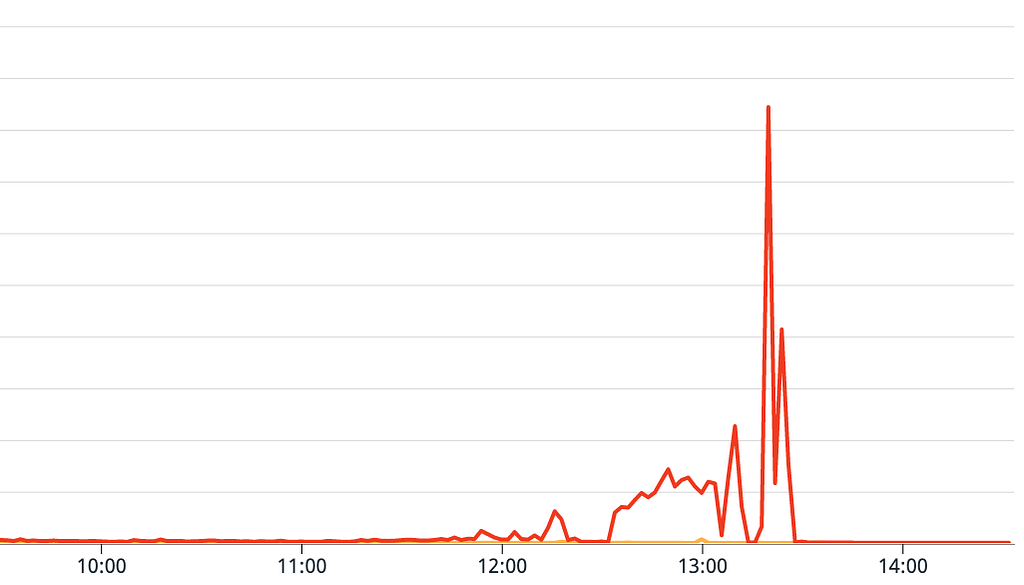
    Between approximately 6:40 am and 10:42 am PT, and again between 12:20 pm and 2:32 pm PT on Wednesday, October 27th, we experienced intermittent outages on Coinbase.com, Coinbase mobile apps, and Coinbase Pro. During these outages, many users experienced slow loading times and errors while attempting to access Coinbase, or were unable to use features like buying, selling, and trading through our Retail and Pro websites and apps. The Exchange itself was not materially impacted. This post is intended to describe what occurred and the causes, and to discuss how we plan to avoid such problems in the future.

    We’re continuing to learn more about these events, and will continue to update this post with additional details that may be of interest.

    The Incident

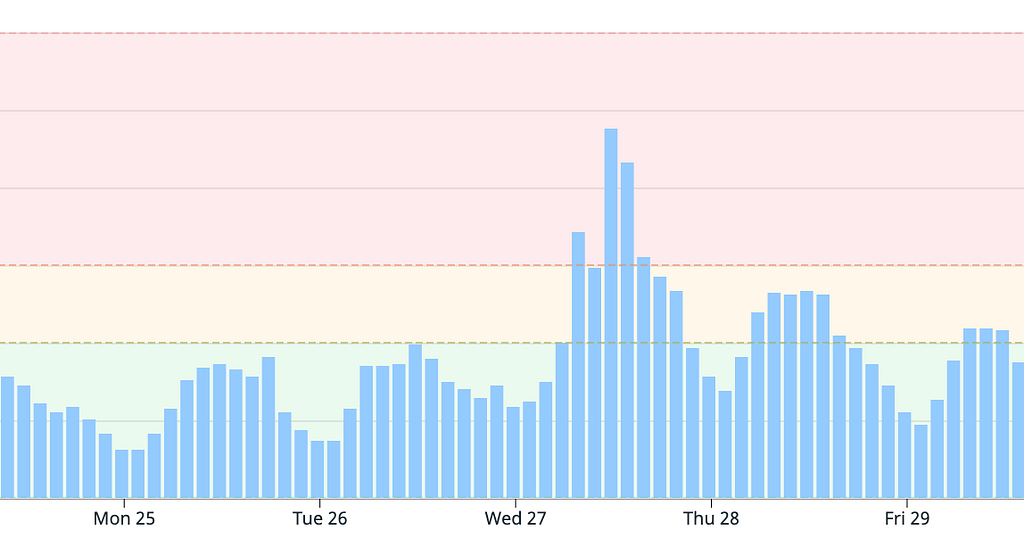
    On the morning of October 27th PT, we experienced a significant increase in traffic. As traffic increased, our engineers were alerted about elevated error rates appearing across a number of services.

    The following functionality was affected:

    • Logged-out experience: users that were not logged in experienced errors when visiting coinbase.com or our mobile apps.
    • Coinbase Pro: users were temporarily unable to log in to Coinbase Pro.
    • Transfers: There was a higher rate of cancelled and refunded transfers during this time, as well as delays in processing on-chain money movements. Users may have been unable to see their latest transfer history.

    Root Cause Analysis

    These issues were caused by two separate but related outages. Both were triggered by system bottlenecks caused by the elevated traffic.

    Traffic to Coinbase — 10/27/2021

    In the first outage, we observed traffic patterns that were several times greater than previous peaks. This increase in traffic began to overload a datastore responsible for our rewards functionality. As latency increased on this database, related services became saturated and started to deplete resources as well. This resulted in a chain of failures and a more widespread outage.

    Query capacity to key database cluster

    The second outage was also triggered by a spike in traffic levels. In the early afternoon, engineers were alerted that our payment processing was being similarly overloaded. Unfortunately, an automated maintenance event that was already underway slowed our ability to scale this cluster up to meet with demand, and a set of failures similar to those that occurred during the first outage followed.

    Elevated query latency for Payments cluster

    In this instance, the servers that power our logged-out experience were also affected. As these servers became overwhelmed, they were unable to serve new traffic and were ultimately marked by our load balancer as unhealthy and removed from its pool, causing coinbase.com to become unavailable to users who were logged out or who were attempting to log in. Other impacted functionality included the ability to buy, sell, and trade in both Coinbase’s retail application as well as Coinbase Pro.

    At 2:32pm PT, our services returned to normal operation.

    Resolution & Improvements

    For the first outage, once the caching changes were deployed, the rewards database was scaled up, and additional replicas became available. Afterwards, our system was able to resume normal operation.

    To resolve the second outage, we upgraded the under-capacity payments cluster to a larger instance size and introduced additional read-only replicas.

    To prevent similar issues in the future, we are taking several additional actions:

    1. Reorganizing our largest services: we will continue to shard and isolate our largest services to avoid hitting limits like those mentioned previously.
    2. Enhanced load testing: we’re enhancing our load testing framework to be more representative of new traffic patterns that we saw during this event.
    3. Additional scaling: we are further scaling several of our databases that we observed operating close to limits at Wednesday’s elevated traffic levels.

    We take the uptime and performance of our infrastructure very seriously, and we’re working hard to support the millions of customers that choose Coinbase to manage their cryptocurrency. If you’re interested in solving scaling challenges like those presented here, come work with us.


    Incident Post Mortem: October 27, 2021 was originally published in The Coinbase Blog on Medium, where people are continuing the conversation by highlighting and responding to this story.

    [ad_2]

    Source link

  • Ethereum To The Upside, Why It Could Hold Price Discovery

    Ethereum To The Upside, Why It Could Hold Price Discovery

    [ad_1]

    Ethereum is leading the charge on this fresh run towards new frontiers. As of press time, the second crypto by market cap trades at $4,432 with a 5.6% profit in the daily and 9.1% profits in the weekly chart.

    Ethereum ETH ETHUSD
    ETH on a rally in the daily chart. Source: ETHUSD Tradingview

    Up 500% Year To Date, Ethereum has rallied on the back of massive adoption of non-fungible tokens (NFTs), decentralized finances (DeFi), and institutional demand.

    Related Reading | TA: Ethereum Outperforms Bitcoin, Why ETH Could Rally To New ATH

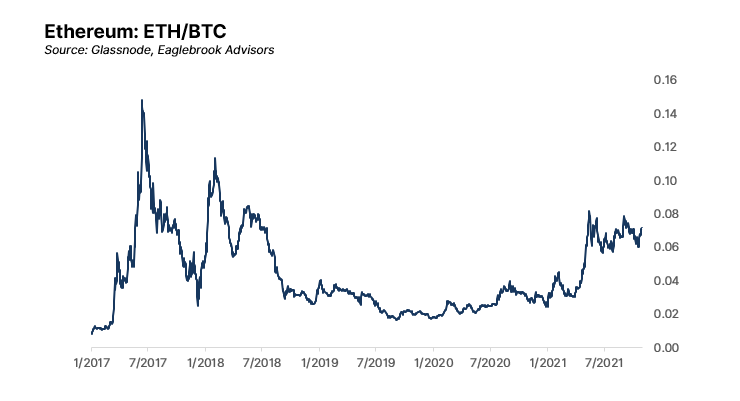
    As seen below, in the chart shared by Joe Orsini research director at Eaglebrook Advisors, Ethereum has gone from under $1,000 to its current levels in record time.

    Additional data provided by Orsini indicates that Ethereum still has a lot of room to continue its room has displayed in the ETH/BTC trading pair. Compared to the 2017 bull run, ETH is far from reaching an all-time high of 0.14 BTC as it currently sits at around 0.08 BTC.

    Ethereum ETH ETHUSD
    Source: Joe Orsini via Twitter

    In support of the bulls’ current push, Delphi Digital records a “leverage wipeout in crypto futures” as yesterday’s session wash charge with volatility to the downside. Thus, Ethereum and other major coins dipped to previous higher lows in less than an hour.

    Ethereum ETH ETHUSD
    Source: Delphi Digital via Twitter

    The fast recovery signals convection on the bulls’ corner. As over-leverage traders were shaken out of their position, prices are more likely to sustain their levels. Delphi Digital claimed:

    The average daily funding rate across exchanges is down from its recent high a few days ago, but it looks like there’s still some room for rates to fall. OI on exchanges like Binance and Huobi experienced a massive wipeout, which confirms the aforementioned deleveraging.

    Related Reading | New Ethereum-to-Cardano Bridge Will Provide NFT Creators Eco-friendly Options

    Ethereum Implements Hard Fork, Closer To The Merge

    The rally in the price of Ethereum could have been driven by the implementation of Hard Fork Altair. The successful deployment of this upgrade puts the network closer to migrating to a Proof-of-Stake consensus.

    In the past months, the amount of ETH locked in the ETH 2.0 deposit contract has soared as developers moved into the PoS based blockchain and the Merger. This event will join both networks and it’s expected to be a potential bullish catalyst for Ethereum’s price.

    Related Reading | TA: Ethereum Rally Gathers Pace, Why Uptrend Isn’t Over Yet

    Investors are drawn to the PoS model because of its alleged higher efficiency in energy consumption and its capacity to generate yield. According to the Eth2 Rewards monitor, this stand at 5.46% since October 27, 2021.


    [ad_2]

    Source link

  • Hackers keep getting smarter, but protecting your crypto is easier than you think

    Hackers keep getting smarter, but protecting your crypto is easier than you think

    [ad_1]

    Cybersecurity awareness month is coming to a close, but good security hygiene is a smart investment all year round. As crypto becomes more mainstream, cybercriminals who target crypto holders are also getting more creative and persistent. That’s why Coinbase’s security team has put together a simple guide for protecting your crypto and all the other valuable data you store online. Here are the takeaways.

    1. Use a password manager. Humans are really bad at remembering passwords, which is why too many of us choose simple phrases and repeat them across multiple websites. Password managers (like 1password and Dashlane) generate strong, secure passwords and store them for you — no memorization required. Use one. (Want to see if your passwords have been exposed by a known data breach? Check out haveibeenpwned.com.)
    2. Enable 2-factor authentication (2FA). 2FA can protect an account even if a hacker steals your password. There are several types of 2FA, ranging from less secure (SMS-based, where a verification code is sent via text message) to more secure (an app that generates verification codes like Google Authenticator) to most secure (a hardware security key like a Yubikey). We strongly recommend choosing a stronger method than SMS, because hackers can steal texts with a common method called “SIM-swapping” — in which your phone number is transferred to another device. If no other option is available, enable SMS 2FA — but if that’s not possible, consider using a different service.
    3. Protect your seed phrase. A seed phrase is a string of 12 to 24 words that is literally the key to a non-custodial crypto wallet like Coinbase Wallet or MetaMask. Anyone with access to your seed phrase has access to the crypto in that wallet. If you lose or delete your wallet, you can restore it with your seed phrase — but if you lose your seed phrase, you lose your crypto. (For many users, keeping crypto in the “hosted wallet” that comes with every Coinbase account is a more convenient option. You can add another layer of security without having to manage seed phrases by moving some crypto into a Coinbase Vault.)
    4. Don’t click that link! One of the most commonly used tactics by cybercriminals is SMS phishing. Phishing is a type of online attack in which a cybercriminal impersonates a legitimate entity or authority and attempts to deceive their target into clicking on a malicious link or attachment.
    5. Be wary of “airdrops.” If you’re a fan of NFTs or DeFi, you’ve probably encountered airdrops — in which a project rewards early adopters by sending tokens to their wallets. But in recent weeks, our security team has been tracking an ongoing phishing campaign involving airdrops. In the scam, randomly airdropped tokens appear in your wallet. If you try to interact with them, you’re prompted to connect your wallet to a website that looks like a DeFi app — but actually gives hackers permission to drain your holdings. To protect yourself, don’t interact with airdropped tokens from unknown sources, don’t connect your wallet to websites advertised by airdropped tokens, and don’t keep too much crypto in a wallet you regularly use to interact with crypto apps.
    6. Don’t make yourself a target. Don’t brag about your cryptocurrency holdings online, just like you wouldn’t advertise inheriting $50 million. Review your online presence and see how much personal information someone could learn about you to steal your identity. (The good folks at Consumer Reports put together this self assessment.)

    https://medium.com/media/536cf7437f3640ff2a150f1ed3c0afdd/href

    Security incidents aren’t unique to crypto, but when they happen, Coinbase works with industry partners to mitigate negative exposure. By following these few simple guidelines on protecting your crypto, you can also play an important role in not only protecting yourself but also the entire crypto community.


    Hackers keep getting smarter, but protecting your crypto is easier than you think was originally published in The Coinbase Blog on Medium, where people are continuing the conversation by highlighting and responding to this story.

    [ad_2]

    Source link

  • Why Terraform Labs Cofounder Do Kwon Is Unfazed by US Regulators

    Why Terraform Labs Cofounder Do Kwon Is Unfazed by US Regulators

    [ad_1]

    Do Kwon, cofounder of Terraform Labs, was recently served subpoenas by the US Securities and Exchange Commission during Messari’s mainnet event, leading Kwon and Terraform to preemptively sue the SEC. On Unconfirmed, Kwon discusses:

    • what Terraform Labs does and how it is building its DeFi ecosystem around TerraUSD ($UST)
    • why Terraform Labs created its synthetics protocol, Mirror, and how it works
    • what Do thinks about the SEC’s investigation into Mirror
    • what happened to Do at Messari’s mainnet event
    • why the SEC’s approach to crypto regulation does not impact Do very much
    • what Do thinks about how US regulators are treating crypto companies
    • how Do would regulate the crypto industry
    • why he believes the current state of crypto regulation doesn’t work in a global context
    • why he says the SEC couldn’t do anything to TerraUSD — even if it wanted to
    • what two characteristics are critical in building a decentralized protocol
    • how the crypto industry could improve security in light of the $130 million Cream Finance hack

    Thank you to our sponsors!

    Avado: ava.do 

    Crypto.com: https://crypto.onelink.me/J9Lg/unconfirmedcardearnfeb2021 

    Nodle: https://bit.ly/3AXGydJ 

    Episode Links

    Do Kwon

    Terra

    SEC Lawsuit

    • CoinDesk
    • Terraform V SEC
    • Stephen Palley

    Messari Mainnet Serving

    Miscellaneous

    • SEC charging Abra
    • Stablecoin market cap comparison


    [ad_2]

    Source link

  • Celestial Leads The Future Of Cross-Chain Gaming Metaverse | by Bit Media Buzz | Oct, 2021

    Celestial Leads The Future Of Cross-Chain Gaming Metaverse | by Bit Media Buzz | Oct, 2021

    [ad_1]

    Bit Media Buzz

    Finland, Helsinki, October 29, 2021. Coming up as a first-mover on the adoption of blockchain gaming metaverse on the OEC public chain (formerly known as OKExChain) is Celestial, a cross-chain gaming metaverse trending in the crypto airwaves. Deploying the concept of galactic warfare, Celestial combines the concept of GameFi, SocialFi, and NFTSwap to bring one of the finest innovations to the gaming metaverse.

    Celestial has grown in popularity in the blockchain gaming ecosystem since its inception. Racking up some impressive figures, Celestial initiated a public BETA test on September 14 that contributed to over 70% of OEC public chain trading activity, resulting in high congestion of the OKexchain, with daily transactions topping 1 million at the time.

    After a series of rigorous testing, the official version of the Celestial gaming platform went live on September 29th. Commenting on the impressive launch, the Celestial team reiterated their commitment to the long-term sustainability of the Celestial project:

    “We are excited about the launch of our gaming platform. Being the brainchild of a multi-month period of development, innovation, and rigorous backend testing, this marks the beginning of an important phase in the Celestial roadmap just before our token generation events and subsequent listing on exchanges. We are excited about what the future holds for the blockchain gaming metaverse and we are happy to be leading this adoption.”

    The Celestial platform is built to enable game players to create federations in the Celestial world, explore planets and galaxy clusters, and mine rich minerals and different resources as part of a meta-universe star-wars style game using GameFi + SocialFi + NFTSwap.

    Leading up to TGE: $CELT token has recorded eye-popping success

    While the impressive launch of the Celestial gaming metaverse comes as no surprise, seeing that blockchain gaming adoption has maintained an upward trajectory, the token generation event (TGE) also recorded impressive numbers. The token price soared to the top gainers category after listing on OKEx, a leading Asia-based crypto exchange.

    CELT is the native token that powers the Celestial metaverse economy and is primarily used to settle all transactions in the Celestial metaverse. Since debuting on OKEx, CELT has amassed massive success for token holders after rising to the top-performing assets on the OEC public chain just after 15 days of trading activities.

    Celestial dual token rotation system reduces selling pressure on CELTs

    Celestial adopts a unique token system that allows a dual token rotation mechanism. In addition to $CELT, there is a sub token known as Crystals which is engineered to reduce the selling pressure on CELTs and benefit token holders in the long run.

    Through an in-house mechanism known as Pledge Mining, Celestial incorporates some DeFi futures into its ecosystem to reward players.

    Gamers may utilize this function to pledge mainstream currency like fiat for energy stones (CELT), which can be used to open mystery chests or traded for mainstream currency in CherrySwap. Celestial has introduced an intriguing feature to the DeFi pledge mining — the energy stone mining accelerator, xCELT, which can generate up to three times the earnings of CELT.

    To obtain xCELT, users simply need to mortgage CELT. As the total mining power increases, more xCELT will be needed to keep the process running, which ultimately cushions selling pressure. Currently, the project seems to be pivoting towards decentralized finance while developing its GameFi and SocialFi features. According to Celestial:

    “We think that a healthy self-rotating economic system is essential for every project; once economic development has reached its ideal state, we will enhance SocialFi and GameFi features, and the game launch will be completed.”

    The warring gaming platform seeks to create a socially permeable interplanetary exploration chain game, with player community culture as the pioneer with gaming and decentralized finance as the support. As the blockchain gaming ecosystem expands, Celestial is positioning itself to lead the adoption of the cross-chain warring metaverse.

    For more information on the game: Tutorial Download

    Celestial Official Channels

    Website: https://celt.game

    Twitter: https://twitter.com/GameCelt

    Telegram: https://t.me/CELT_Game

    Medium: https://medium.com/@celestial.gamefi

    Whitepaper: https://celt.game/static/CELESTIAL_Whitepaper.pdf

    Youtube: https://www.youtube.com/channel/UC3L64zz-sbwaEgMVotqLkTA/videos

    Coinmarketcap: https://coinmarketcap.com/currencies/celestial/

    Coingecko: https://www.coingecko.com/en/coins/celestial


    [ad_2]

    Source link

  • Coinbase Ventures 2021-Q3 activity and takeaways

    Coinbase Ventures 2021-Q3 activity and takeaways

    [ad_1]

    Around the Block from Coinbase Ventures sheds light on key trends impacting the crypto ecosystem. In this edition, the Ventures team provides an update on Coinbase Ventures activity in 2021-Q3, and key learnings from around the industry.

    Coinbase Ventures (or “Ventures”) has grown into one of the most active VC investors in crypto by deal count. In Q3, Ventures made a record 49 investments, averaging a new deal every ~1.8 days. This is up from 28 investments made in Q2, and 24 in Q1. As of Q3 2021, the Ventures portfolio size stands at over 200+ companies and projects.

    On a cumulative basis, 90% of the capital invested by Ventures has been deployed in 2021 YTD, reflecting the accelerated pace of Coinbase Ventures in its fourth year of operation. 50% of the new unique “logos” in the portfolio have also come in 2021.

    Motivation & philosophy

    Coinbase Ventures primary mandate is to support the growing crypto ecosystem. As such, we invest broadly across the space in strong entrepreneurs driving crypto forward. We want the crypto ecosystem to bloom and are not focused exclusively on specific outcomes (as is typical with corporate venture capital).

    Ultimately, we see crypto as a rising tide, and growth in the ecosystem lifts all boats — Coinbase included. Traditional strategic benefits, such as commercial partnerships and potential M&A, are great, but we view them as icing on the cake.

    Investment Categories

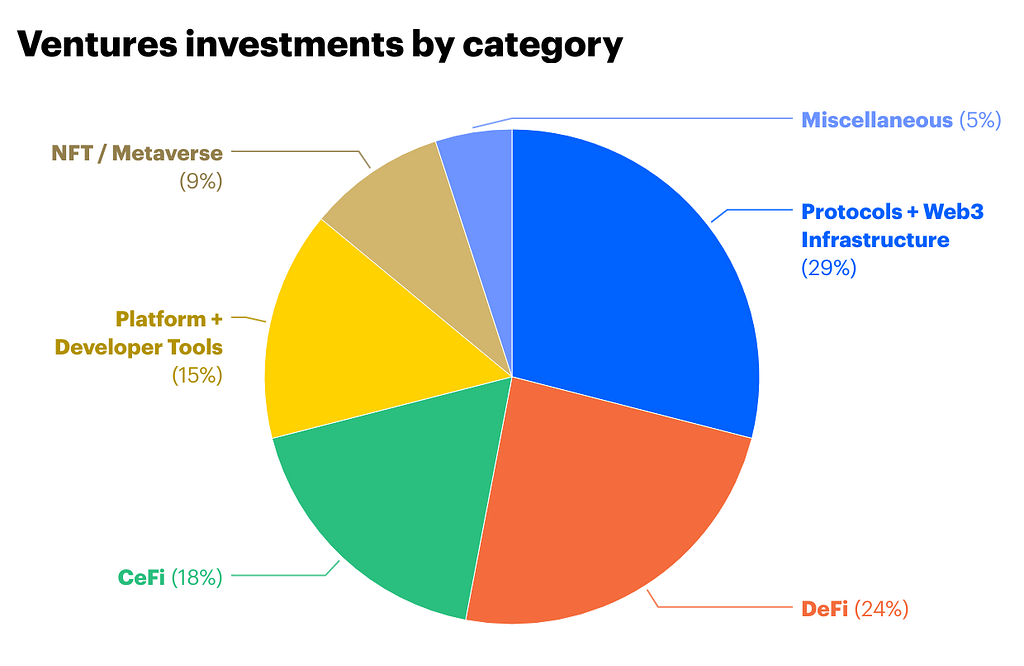
    Coinbase Ventures investments range from six-figure seed deals to multi-million dollar growth rounds. There are many ways to slice our investments, but at the highest level we break down the market across the following categories: Protocols + Web3 infrastructure, DeFi, CeFi, Platform + Developer Tools, NFT / Metaverse, and Miscellaneous.

    Our current distribution of total investments by company is as follows:

    Key Themes & Learnings

    *Coinbase Ventures portfolio company

    In our most active quarter to date, we saw heavy development across centralized finance (CeFi) in the United States, Layer-1/Layer-2, cross-chain protocols, as well as Web3 tooling. Here’s some of the major themes we observed.

    Regulators and centralized players waded deeper into the crypto waters

    Regulatory bodies made their presence more widely known in Q3, as the SEC and Treasury Department in the US, and the Financial Action Task Force (FATF) internationally, all stepped up engagement across the crypto ecosystem. This has introduced some forms of regulatory risk for early stage protocols and teams. On the flip side, the largest cap asset scored positive tailwinds in the form of the BTC Futures ETF approval which we believe will allow latent capital to enter crypto markets, leading to significant volumes, inflows, and interest.

    Web 2.0 companies like Square, Twitter, Stripe, and Tik Tok also expanded their crypto strategies in Q3. Square announced a Bitcoin based platform for financial services, Twitter revealed future BTC Lightning and NFT integrations, and Stripe announced its return to crypto with a new dedicated crypto team. Tik Tok announced a partnership with ImmutableX* to launch a creator-led NFT collection.

    Meanwhile, banks, fintechs, and broker dealers moved to further integrate crypto into their product offerings, enabled by Coinbase Prime, Coinbase Cloud and other third party platforms. All in all, the crypto industry made tremendous strides with respect to maturation and institutional adoption over the quarter.

    The multichain ecosystem hit its stride

    Following years of development on solutions designed to alleviate bottlenecks on Ethereum, scaling is finally here with a range of Layer-1 and Layer-2 ecosystems taking off. The majority of the current traction is on solutions leveraging EVM (Ethereum Virtual Machine) compatibility, allowing users and developers to migrate to new environments with relatively low switching costs. Users can access EVM compatible L1s like Avalanche, or sidechains/L2s like Polygon*/Arbitrum*/Optimism* with their existing wallets. Solidity smart contracts can also be generally copy + pasted to any EVM compatible L1/L2, which has led to implementations of popular DeFi applications across multiple chains.

    As CeFi exchanges have been slow to integrate with these new L1s/L2s, we saw traction across newly launched cross-chain bridges. These bridges facilitated the movement of billions in funds from Ethereum to various L1s/L2s.

    While EVM compatible applications written in Solidity saw the most traction on L1s and L2s in Q3, other ecosystems are bringing more expressive programmability to the table. New primitives focused on more familiar programming languages like Rust (Solana, Polkadot), Golang (Cosmos), and Move (Facebook Diem*, Flow*) may usher in a wave of new Web 2.0 developers to the industry.

    Better Web3 UX is on the way

    In Q3 we saw further development of Web3 tooling that will simplify the experience of Web3 interactions. XMTP* is spearheading a messaging standard across Web3 addresses. Spruce* is standardizing “OAuth” (open authorization), which will allow users to securely share digital credentials, private files, and sensitive media with Web 3 applications. Snapshot* is making it simple to access governance forums and decisions across Dapps.

    Meanwhile, a tremendous amount of work is being done to create added security for Web3 applications. OpenZeppelin’s decentralization effort, Forta*, is making progress on real-time security monitoring of smart contracts with the goal of providing more transparency around smart contract code execution, detection of bugs, and eventually, the prevention of hacks in real-time. Similarly, Certik* is providing a “fast-and-easy” automated audit tool to help Dapps go-to-market more quickly.

    Simultaneously, the DAO tech stack continues to evolve, with the technical and legal formation of on-chain communities beginning to take hold. Syndicate* (among others) aims to be the “AngelList of crypto” through the creation of a decentralized investing protocol and social network.

    NFT 2.0 & crypto gaming took flight

    Q3 also saw a ton of development focused on NFT creator tools that will ultimately broaden the scope of NFT use cases and audiences while creating new social features.

    Meanwhile, NFT based gaming continued to accelerate led by Axie Infinity, as its play-to-earn model took hold in emerging markets (Philippines, Brazil, India among others) attracting 2M DAUs and generating over $2B in revenue. Loot Project also captivated the industry by introducing an inverted model for game development. This was done by first releasing NFT based game assets to the public in order to bootstrap a community and incentivize further development.

    Stay tuned

    Stayed tuned for more insights and updates from the Coinbase Ventures team in the future. Also check out previous editions of Around The Block that you may have missed:

    • The Coinbase Ventures Guide to NFTs
    • Loot Project: the first community owned NFT gaming platform
    • Axie Infinity, Yield Guild Games & the play-to-earn economy


    Coinbase Ventures 2021-Q3 activity and takeaways was originally published in The Coinbase Blog on Medium, where people are continuing the conversation by highlighting and responding to this story.


    [ad_2]

    Source link

  • Halal MRHB DeFi integrates zkSync’s ZK-RollUp solution for Ethereum | by Bit Media Buzz | Oct, 2021

    Halal MRHB DeFi integrates zkSync’s ZK-RollUp solution for Ethereum | by Bit Media Buzz | Oct, 2021

    [ad_1]

    Bit Media Buzz

    Dubai, U.A.E., October 28, 2021 — MRHB DeFi the world’s first inclusive and ethical DeFi platform is integrating the Ethereum scaling solution zkSync, developed by software experts Matter Labs.

    The move will mean that the MRHB DeFi ecosystem will benefit from the low fee transactions zkSync enables, while developers will be able to utilize zkSync technology on the platform’s architecture to improve efficiency, speed, scalability, security and privacy.

    ZK RollUp solves Ethereum Scalability with Zero Security Compromises

    zkSync is an innovative technology that is already live on the Ethereum mainnet. It allows for extremely low transaction fees, relies on a trustless protocol, and keeps funds cryptographically secure. Transactions use zero-knowledge proofs and on-chain data availability to keep users’ funds safe, with computation and storage being performed off-chain.

    At Marhaba, we strongly believe zkSync will lead the way as a ZK-RollUp solution for Ethereum,” said Deniz Dalkilic, CTO of MRHB DeFi. “Given its ability of 100% Solidity compatibility, fast finality with low fees while having the ability to secure unlimited amounts of TVL($), it makes it the perfect L2 solution for DeFi.”

    Built on ZK Rollup architecture, zkSync ensures that it strictly inherits the security guarantees of the underlying L1. Unlike sidechains, Rollup validator(s) can never be corrupted. Smart-contract friendly, exchange friendly, the technology allows for contract-interoperability and atomic swaps on different exchange protocols and even includes native support for NFTs.

    MRHB CTO Dalkilic highlighted that Vitalik Buterin has declared that “in the medium to long term, ZK rollups will win out in all use cases as ZK-SNARK technology improves.”

    The technology is already in use by a wide range of leading blockchain projects, including Curve, Argent, and Balancer, and was supported in its ecosystem funding round by leading names in the blockchain space, including Binance, Huobi, Coinbase and many more.

    An Ethical and Inclusive DeFi Vision

    MRHB DeFi was founded with a vision of providing greater access to the growing opportunities and utilities of the cryptoverse for excluded and cautious communities, and has a particular focus on delivering faith-based DeFi services which adhere to the ethical investment and financing principles rooted in Islamic Finance, many of which align with the United Nations Sustainable Development Goals. Such business practices include those that avoid interest, usury, social exploitation and other acts deemed unethical as well as support sustainability, asset/utility backed financing, transparency and equitable risk/reward sharing.

    With the Islamic Finance industry sized at around USD 3 trillion of assets, bringing even a small portion of Shariah-sensitive liquidity into DeFi will represent a major boost to the total value of the DeFi sector worldwide.

    MRHB DeFi has also received strategic investments from Blockchain Australia, Mozaic, Contango Digital Assets, NewTribe Capital, Sheesha Finance, Acreditus Partners and EMGS Group.

    About MRHB DeFi

    MRHB (pronounced ‘Marhaba’) DeFi is a decentralised finance platform built to bring ethics to the DeFi space with an approach that supports the inclusion of faith-based and other excluded communities in addition to existing crypto-natives so that everyone can benefit from the full empowerment potential of DeFi to help build a true peer-to-peer financial and economic value system.

    Based on the tenets of blockchain such as trust, transparency, and security, MRHB DeFi has encapsulated universally applicable principles of Islamic Finance into those tenets of blockchain to render a suite of offerings that are also ESG compliant.

    The project is backed by a diverse and strong team with backgrounds spanning crypto, technology, faith-compliant investing, finance and seasoned institutional veterans of industry. The public sale offering will be in December. Register your interest and read more about MRHB DeFi’s Shariah Concept Paper, Lite and White Paper here.

    MRHB DeFi Official Channels

    Website: https://marhabadefi.com

    Twitter: https://twitter.com/marhabadefi

    Telegram: https://t.me/mdf_official

    Telegram Announcements: https://t.me/marhabadefi_ANN

    YouTube: https://www.youtube.com/channel/UCHuvZG9DbS5ffeoqLX_bERg

    Medium: https://medium.com/@mrhbdefi

    LinkedIn: https://www.linkedin.com/company/marhabadefi

    Telegram (Arabic): https://t.me/mdf_arabic

    Telegram (Russian): https://t.me/mdf_russia

    Telegram (Turkish): https://t.me/MarhabaDefiTR

    About zkSync

    zkSync is taking a cryptography-first approach to scaling blockchains and spearheading the scaling revolution by offering the cheapest token transfers on Ethereum. Next, they are launching general programmability, EVM-Compatibility, and off-chain data availability for a seamless developer and user experience, for the lowest transaction fees.

    Website: http://zksync.io

    Medium: https://medium.com/matter-labs

    Twitter: https://twitter.com/zksync

    Telegram: https://t.me/zksync_community

    Discord: https://discord.com/invite/px2aR7w


    [ad_2]

    Source link