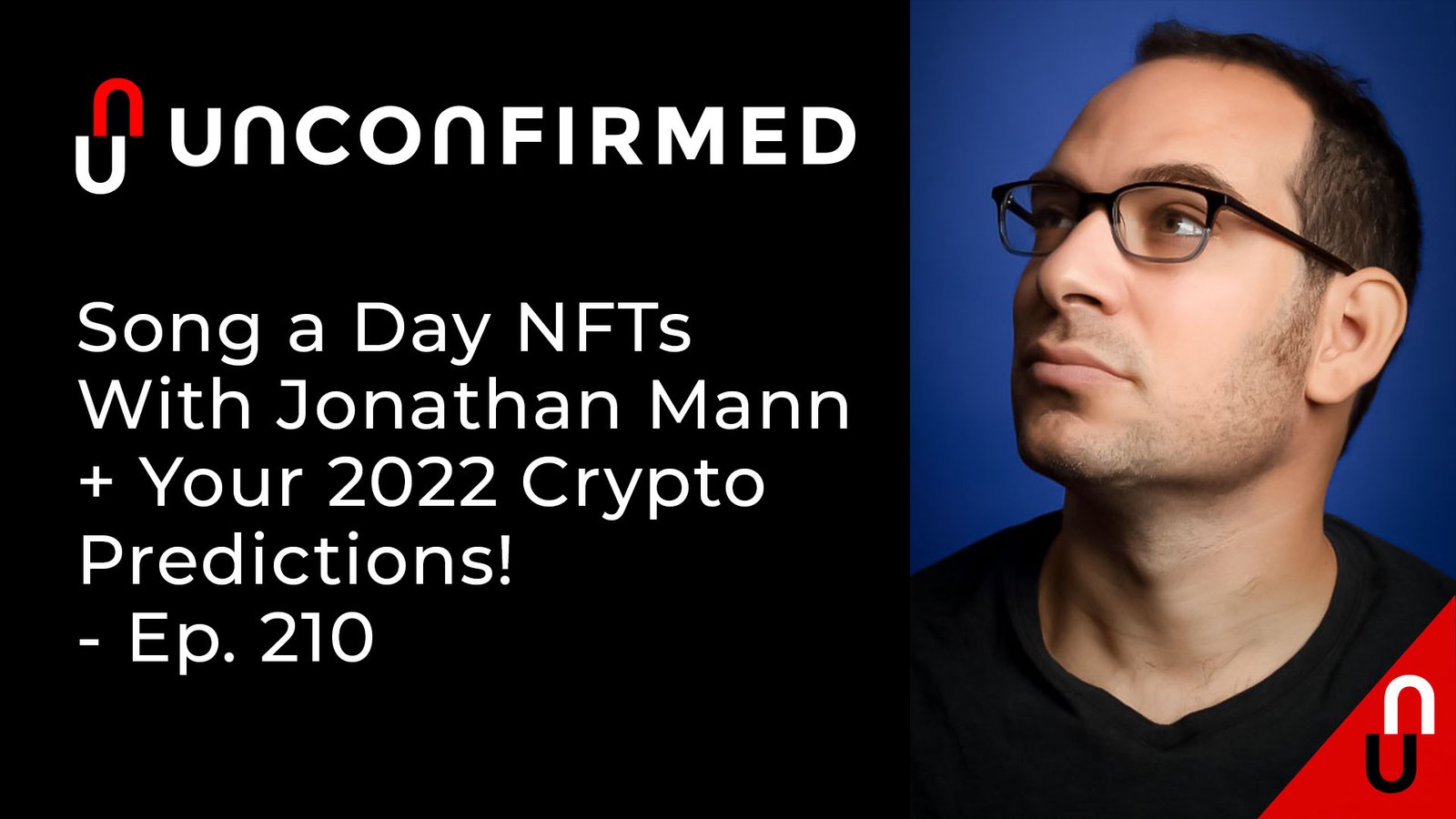
Jonathan Mann has published a song a day for 13 years. On Unchained, he talks about his writing process, how he came up with the idea of publishing his songs as NFTs, his plans for a DAO he created called SongADAO, and more. Show topics:
the significance and process of making a song a day for 13 years straight
how Jonathan monetized his content in the early days (2009) of the internet
what crypto event sent Jonathan down the rabbit hole and how Vitalik Buterin was involved
why CryptoPunks piqued Jonathan’s interest in monetizing his content on-chain
how being in the crypto world has changed Jonathan’s creative process
where his song data is being uploaded in the context of web2 and web3
how SongADAO will work and how it could change the paradigm of the music industry
the characteristics of his 12/31/2021 NFT drop, which will see over 3,000 songs minted
Jonathan plays “Mongoose Coin” for the Unchained audience, a song he made about Senator Brad Sherman’s comments about cryptocurrency in a recent hearing.
Nasdaq-listed business intelligence firm, MicroStrategy yesterday announced the expansion of its Bitcoin portfolio. Michael Saylor, CEO of MicroStrategy, revealed that the company purchased additional 1,914 BTCs for a total of $94.2 million in cash.
In total, the business intelligence firm is now holding 124,391 Bitcoin. The company bought the mentioned coins for approximately $3.75 billion at an average price of $30,159 per BTC. In 2021, MicroStrategy expanded its BTC portfolio significantly.
In a recent statement, Saylor called Bitcoin digital property and mentioned that countries around the world will accept cryptocurrency due to its convenient infrastructure. The CEO of MicroStrategy added that BTC will outperform gold as an inflation hedge.
“MicroStrategy has purchased an additional 1,914 bitcoins for ~$94.2 million in cash at an average price of ~$49,229 per bitcoin. As of 12/29/21, we hold ~124,391 bitcoins acquired for ~$3.75 billion at an average price of ~$30,159 per bitcoin,” Saylor highlighted in a Tweet yesterday.
The stock of MicroStrategy (MSRT) jumped by more than 30% this year. After touching a record high of almost $1,300 in February 2021, MSRT saw a correction in the last few months. Currently, the stock is trading near $560.
Active Bitcoin Addresses
Bitcoin network witnessed record activity in 2021 as a large number of addresses interacted on the daily basis. For BTC address activity, 2021 became the strongest year to date.
“It is highly encouraging to see Bitcoin’s address activity break new ground in 2021, and not just on a single-day basis. With its mean daily addresses at 989,000 – or just short of 1 million addresses/day – this was also the strongest year to date for Bitcoin’s address activity. To put this in context, although 2019 wasn’t a bad year for crypto by all accounts, it hasn’t seen a single day where BTC surpassed 1M DAA. In 2021, one million was almost the mean,” Santiment noted.
Nasdaq-listed business intelligence firm, MicroStrategy yesterday announced the expansion of its Bitcoin portfolio. Michael Saylor, CEO of MicroStrategy, revealed that the company purchased additional 1,914 BTCs for a total of $94.2 million in cash.
In total, the business intelligence firm is now holding 124,391 Bitcoin. The company bought the mentioned coins for approximately $3.75 billion at an average price of $30,159 per BTC. In 2021, MicroStrategy expanded its BTC portfolio significantly.
In a recent statement, Saylor called Bitcoin digital property and mentioned that countries around the world will accept cryptocurrency due to its convenient infrastructure. The CEO of MicroStrategy added that BTC will outperform gold as an inflation hedge.
“MicroStrategy has purchased an additional 1,914 bitcoins for ~$94.2 million in cash at an average price of ~$49,229 per bitcoin. As of 12/29/21, we hold ~124,391 bitcoins acquired for ~$3.75 billion at an average price of ~$30,159 per bitcoin,” Saylor highlighted in a Tweet yesterday.
The stock of MicroStrategy (MSRT) jumped by more than 30% this year. After touching a record high of almost $1,300 in February 2021, MSRT saw a correction in the last few months. Currently, the stock is trading near $560.
Active Bitcoin Addresses
Bitcoin network witnessed record activity in 2021 as a large number of addresses interacted on the daily basis. For BTC address activity, 2021 became the strongest year to date.
“It is highly encouraging to see Bitcoin’s address activity break new ground in 2021, and not just on a single-day basis. With its mean daily addresses at 989,000 – or just short of 1 million addresses/day – this was also the strongest year to date for Bitcoin’s address activity. To put this in context, although 2019 wasn’t a bad year for crypto by all accounts, it hasn’t seen a single day where BTC surpassed 1M DAA. In 2021, one million was almost the mean,” Santiment noted.
Cardano (ADA) experienced a major downtrend in the past months as the crypto market took another swing for the lows. The sixth cryptocurrency by market cap has seen a year in the green as it managed to complete several upgrades on its mainnet.
Related Reading |Biggest Cardano Based Cross-Chain NFT Marketplace Verlux kicks Off Pre-sale
First, Cardano successfully transitioned to a Proof-of-Stake consensus in 2020, shortly after the D parameter reached “0” signaling the full decentralization of block production. The network went from a federate consensus to a community-based consensus as the latter control most stake pools producing blocks on the network.
Later, the start of a new era with the first of 3 major Hard Fork Combinator (HFC) events with the implementation of “Allegra”, followed by “Mary”. These upgrades brought new capabilities to the Cardano mainnet which were completed with “Alonzo” that introduced smart contract capabilities into the blockchain.
This ecosystem has already seen a surge in projects, as developers and users rush in to build and leverage the benefits of its UTXO model. In that sense, community member ADA Whale shared his top predictions that could boost another rally for the underlying cryptocurrency of the Cardano network.
ADA Whale mentioned the potential increase in the number of transactions and active addresses for Cardano. The investor believes these fundamentals could increase by a factor of 5 leading into a massive wave of adoption in 2023.
Cardano remains one of the most actively used networks. Scaling happens via different streams, first gradually to keep up w growth, exponentially in 2023.
This new wave of adoption for this network could translate into more projects. The investors estimated that by the end of 2022, there could be more than 250 decentralized applications, DeFi platforms, launchpad and more on the network. The investor added:
Cardano DeFi starts slowly but TVL >$10bn eoy. Dapp store with levels of certification goes live. Ease of use sees people replace banking stack with Cardano DeFi. Digital Identity projects thrive connecting DeFi w/ real world. UTXO DeFi will be different, and better
Cardano And Its Potential For The Coming Years
In addition to its security, according to ADA Whale, Cardano offers low fees, energy efficiency with a green footprint, and has been adopted by companies and projects with a global impact. This includes World Mobile, Singularity, and others.
The aforementioned collaborations place the ecosystem in different sectors with close deals with governments in growing economies. Cardano will strengthen its partnerships in the coming years as it attempts to provide people with an open, decentralized, and accessible network to manage and support a variety of basic services.
In the meantime, the network develops interoperable capabilities. ADA Whale mentioned Milkomeda, a second layer solution for Cardano with EVM compatibility. This types of solutions will help onboard more users and developers.
Related Reading | Cardano Project Flickto Surpasses 1.5 Million ADA Staked One Month After Launch
As of press time, ADA trades at $1,36 with sideways movement in the past day.
ADA trends to the downside in the 4-hour chart. Source: ADAUSDT Tradingview
2021 proved to be a breakout year for crypto with BTC price gaining almost 70% yoy, Defi hitting $150B in value locked, and NFTs emerging as a new category. Here’s my view through the crystal ball into 2022 and what it holds for our industry:
1. Eth scalability will improve, but newer L1 chains will see substantial growth — As we welcome the next hundred million users to crypto and Web3, scalability challenges for Eth are likely to grow. I am optimistic about improvements in Eth scalability with the emergence of Eth2 and many L2 rollups. Traction of Solana, Avalanche and other L1 chains shows that we’ll live in a multi-chain world in the future. We’re also going to see newer L1 chains emerge that focus on specific use cases such as gaming or social media.
2. There will be significant usability improvements in L1-L2 bridges — As more L1 networks gain traction and L2s become bigger, our industry will desperately seek improvements in speed and usability of cross-L1 and L1-L2 bridges. We’re likely to see interesting developments in usability of bridges in the coming year.
3. Zero knowledge proof technology will get increased traction — 2021 saw protocols like ZkSync and Starknet beginning to get traction. As L1 chains get clogged with increased usage, ZK-rollup technology will attract both investor and user attention. We’ll see new privacy-centric use cases emerge, including privacy-safe applications, and gaming models that have privacy built into the core. This may also bring in more regulator attention to crypto as KYC/AML could be a real challenge in privacy centric networks.
4. Regulated Defi and emergence of on-chain KYC attestation — Many Defi protocols will embrace regulation and will create separate KYC user pools. Decentralized identity and on-chain KYC attestation services will play key roles in connecting users’ real identity with Defi wallet endpoints. We’ll see more acceptance of ENS type addresses, and new systems from cross chain name resolution will emerge.
5. Institutions will play a much bigger role in Defi participation — Institutions are increasingly interested in participating in Defi. For starters, institutions are attracted to higher than average interest-based returns compared to traditional financial products. Also, cost reduction in providing financial services using Defi opens up interesting opportunities for institutions. However, they are still hesitant to participate in Defi. Institutions want to confirm that they are only transacting with known counterparties that have completed a KYC process. Growth of regulated Defi and on-chain KYC attestation will help institutions gain confidence in Defi.
6. Defi insurance will emerge — As Defi proliferates, it also becomes the target of security hacks. According to London-based firm Elliptic, total value lost by Defi exploits in 2021 totaled over $10B. To protect users from hacks, viable insurance protocols guaranteeing users’ funds against security breaches will emerge in 2022.
7. NFT Based Communities will give material competition to Web 2.0 social networks — NFTs will continue to expand in how they are perceived. We’ll see creator tokens or fan tokens take more of a first class seat. NFTs will become the next evolution of users’ digital identity and passport to the metaverse. Users will come together in small and diverse communities based on types of NFTs they own. User created metaverses will be the future of social networks and will start threatening the advertising driven centralized versions of social networks of today.
8. Brands will start actively participating in the metaverse and NFTs — Many brands are realizing that NFTs are great vehicles for brand marketing and establishing brand loyalty. Coca-Cola, Campbell’s, Dolce & Gabbana and Charmin released NFT collectibles in 2021. Adidas recently launched a new metaverse project with Bored Ape Yacht Club. We’re likely to see more interesting brand marketing initiatives using NFTs. NFTs and the metaverse will become the new Instagram for brands. And just like on Instagram, many brands may start as NFT native. We’ll also see many more celebrities jumping in the bandwagon and using NFTs to enhance their personal brand.
9. Web2 companies will wake up and will try to get into Web3 — We’re already seeing this with Facebook trying to recast itself as a Web3 company. We’re likely to see other big Web2 companies dipping their toes into Web3 and metaverse in 2022. However, many of them are likely to create centralized and closed network versions of the metaverse.
10. Time for DAO 2.0 — We’ll see DAOs become more mature and mainstream. More people will join DAOs, prompting a change in definition of employment — never receiving a formal offer letter, accepting tokens instead of or along with fixed salaries, and working in multiple DAO projects at the same time. DAOs will also confront new challenges in terms of figuring out how to do M&A, run payroll and benefits, and coordinate activities in larger and larger organizations. We’ll see a plethora of tools emerge to help DAOs execute with efficiency. Many DAOs will also figure out how to interact with traditional Web2 companies. We’re likely to see regulators taking more interest in DAOs and make an attempt to educate themselves on how DAOs work.
Thanks to our customers and the ecosystem for an incredible 2021. Looking forward to another year of building the foundations for Web3. Wagmi.
10 Predictions for Web3 and the Cryptoeconomy for 2022 was originally published in The Coinbase Blog on Medium, where people are continuing the conversation by highlighting and responding to this story.
Bitcoin (BTC) institutional demand is conspicuously wanting at the end of the year as data flags the “underperformance” of the United States’ first Bitcoin futures exchange-traded fund (ETF).
As noted by markets commentator Holger Zschaepitz on Dec. 29, the ProShares Bitcoin Strategy ETF (BITO) is now trading at nearly 30% below its launch price.
Anticlimax rounds out 2021 for ProShares ETF
In a sign of the times regarding Bitcoin sentiment, the hype that accompanied BITO’s launch in Q3 has died down considerably.
Going from record-breaking volume on its first day to its current state, the ETF has even underperformed the embattled Bitcoin spot price in 2021.
“The first Bitcoin futures ETF in the US was a dud, at least this year,” Zschaepitz commented.
Meanwhile, as Cointelegraph reported, the Grayscale Bitcoin Trust (GBTC) continues to trade at its biggest-ever discount to Bitcoin spot price, or net asset value (NAV).
GBTC’s conversion to an ETF, slated for next year, meanwhile depends on the tone of U.S. regulators regarding spot-based products, these yet to debut.
GBTC price vs. holdings vs. GBTC premium chart. Source: Coinglass
Eerie all-time highs persist in stocks
While detractors describe the GBTC discount as “very concerning,” activity from investors themselves does not unanimously point to apathy when it comes to Bitcoin.
Related: 5 ways derivatives could change the cryptocurrency sector in 2022
Morgan Stanley upped its GBTC allocation this month and last, in a sign that longer-term sentiment remains strong.
As 2021 draws to a close, the $SPX is nearing a 92-year log-scale resistance line, which has the potential to be a formidable barrier given that it is based off of the index’s 1929 and 2000 peaks. ~ Reuters pic.twitter.com/khK1e09vCA
Macro markets, meanwhile, display curious characteristics. The S&P 500 is at record highs, challenging a trendline which has marked topside resistance since its inauguration almost 100 years ago.
Below the surface, however, all is not as it seems, warnings revealed this week.
The crypto mining industry is reportedly booming in Thailand after China imposed a ban on the mining of digital assets like Bitcoin and Ethereum in the region. According to a recent report published by Al Jazeera, retail crypto miners in Thailand are buying mining rigs in large quantities.
The BTC mining hash rate dropped by more than 50% after China’s ban in 2021. However, large mining companies shifted to other locations like the US and Canada to continue their operations. While big companies selected North America and Europe, small retail miners preferred Southeast Asia for the profitable mining business.
“Bitcoin is the gold of the digital world. But, a mining rig is like gold mining stocks: you’re paid dividends according to the gold price. There are around 100,000 Thai miners now,” Thai entrepreneur Pongsakorn Tongtaveenan told Al Jazeera.
Thailand has witnessed a surge in demand for crypto mining machines during the last few months. As a result, Thai entrepreneurs ordered a large amount of Bitmain Antminer SJ19 Pro from Shenzhen this year.
Crypto Mining
Despite a cut in rewards, BTC mining is still profitable for miners around the world. However, the cost of electricity plays an important role in the overall volume of mining profits. “More than 95 percent of electricity produced is made for export, so the excess must be used otherwise it is a big waste for the government,” an expert on Laos’ crypto regulations told Al Jazeera, requesting anonymity. “They see an opportunity to transform that excess into millions of dollars,” the expert added.
The BTC mining hash rate spiked by almost 27% in 2021, which was mainly due to a jump in retail crypto mining across Southeast Asia. While large companies remained dominant in the global crypto mining industry, small retail miners have gained a fair share in the last 6 months.
The crypto mining industry is reportedly booming in Thailand after China imposed a ban on the mining of digital assets like Bitcoin and Ethereum in the region. According to a recent report published by Al Jazeera, retail crypto miners in Thailand are buying mining rigs in large quantities.
The BTC mining hash rate dropped by more than 50% after China’s ban in 2021. However, large mining companies shifted to other locations like the US and Canada to continue their operations. While big companies selected North America and Europe, small retail miners preferred Southeast Asia for the profitable mining business.
“Bitcoin is the gold of the digital world. But, a mining rig is like gold mining stocks: you’re paid dividends according to the gold price. There are around 100,000 Thai miners now,” Thai entrepreneur Pongsakorn Tongtaveenan told Al Jazeera.
Thailand has witnessed a surge in demand for crypto mining machines during the last few months. As a result, Thai entrepreneurs ordered a large amount of Bitmain Antminer SJ19 Pro from Shenzhen this year.
Crypto Mining
Despite a cut in rewards, BTC mining is still profitable for miners around the world. However, the cost of electricity plays an important role in the overall volume of mining profits. “More than 95 percent of electricity produced is made for export, so the excess must be used otherwise it is a big waste for the government,” an expert on Laos’ crypto regulations told Al Jazeera, requesting anonymity. “They see an opportunity to transform that excess into millions of dollars,” the expert added.
The BTC mining hash rate spiked by almost 27% in 2021, which was mainly due to a jump in retail crypto mining across Southeast Asia. While large companies remained dominant in the global crypto mining industry, small retail miners have gained a fair share in the last 6 months.
Melbourne, Australia, December 23rd, 2021 — The world’s first ethical and inclusive DeFi ecosystem platform MRHB DeFihas launched its highly anticipated Souq NFT marketplace. Partnering with Gachyi Land, the first blockchain gaming gacha-launchpad ecosystem, the two parties will mint and issue Hallal Gachyi, a unique Gachyi Land-themed NFT collection created for Souq NFT.
Souq NFT is the first NFT marketplace in the world focussed on creating an ethical and halal marketplace for digital art and other NFT assets. Artists on the platform follow image, audio and video content guidelines such as no hate speech, racism or nudity, and must verify that the artworks are original pieces (no rip-offs of existing NFTs).
The MRHB DeFi collaboration with Gachyi Land will see the latter create 1,410 Hallal Gachyi NFTs (otherwise known as ‘Rimos’). MRHB DeFi will create and deploy the smart contract for these NFTs and Hallal Gachyi will be sold on Souq NFT marketplace.
“Our vision to create an inclusive, ethical DeFi and NFT ecosystem continues to take shape,” says Deniz Dalkilic, CTO of MRHB DeFi. “The Hallal Gachyi collection is the result of a unique collaboration with Gachyi Land and demonstrates our commitment to launching quality crypto products that meet and hopefully exceed community expectations.”
“NFTs are the building blocks of our digital future — they allow us to own digital items in ways we have never been able to before,” comments May Wong, founder of Gachyi Land. “We wanted to provide a colorful and cute entry point into the NFT space for the Islamic community, in the form of a ‘Rimo’. The NFT space has shown us that early adoption of NFTs that gain value over time represents opportunity. We are excited to release Hallal Gachyi with MRHB and provide value to their community!”
Hallal Gachyi NFTs will be issued on the BSC blockchain using the ERC-721 token standard. NFT owners will be able to play a mini-game at a future date where they can earn rewards such as $MRHB tokens and $Polymer tokens. The NFTs will also receive utility in Gachyi Land’s MMO RPG (Massively Multiplayer Online Role-Playing Game), expected to be released in 2023.
Both parties will promote the new venture together on their respective platforms and are exploring future plans for MRHB to create other gamification models that integrate with the MRHB ecosystem.
A Shared Vision to Empower Communities
The Gachyi Land platform was created with the desire to empower artists with its disruptive NFT ecosystem. Gachyi Land provides artists with the platform, community, technology and tools they need to display and sell their work, and further explore the possibilities of the digital realm.
Similarly, MRHB DeFi was conceived with the goal of giving excluded and crypto-cautious communities better access to cryptoverse opportunities with a key focus on the provision of decentralized financial services that avoid interest-based profits and lending. MRHB DeFi bridges the existing gap between crypto offerings and the ethical faith-based community.
The journey to an inclusive, ethical DeFi cryptoverse has not been a lonely one for MRHB DeFi. The halal project is currently backed by investors and partners which include Polygon Technology, Sheesha Finance, Blockchain Australia, Australian Gulf Capital, Mozaic, Contango Digital Assets, NewTribe Capital, Masary Capital, ZKSync, Acreditus Partners, EMGS Group, Sinofy Group, MKD Capital and others.
In collaboration with management consulting group, Sinofy, MRHB DeFi has also organized an NFT art competition, designed for creators and artists, within the framework of the DEV Challenge Season 18 championships in Ukraine. More information on how to participate can be found in the MRHB DeFi Medium blog.
December is turning out to be a very exciting and busy month for MRHB DeFi, having launched their IDO yesterday on December 22nd. The $MRHB tokens were sold out on the DODO launchpad in half a day, with the second launchpad ZeeDO catching up. Upon completion of IDO, TGE (Token Generation Event) will take place on December 24th 1PM UTC/GMT, which will then be closely followed by its listing on the popular DEX Pancakeswap.
About MRHB DeFi
MRHB DeFi is a halal, decentralized finance platform built to embody the true spirit of an “Ethical and Inclusive DeFi” by following faith-based financial and business principles, where all excluded communities can benefit from the full empowerment potential of DeFi.
The diverse team comprises researchers, technocrats, influencers, Islamic fintech experts & business entrepreneurs, who came together to ensure that MRHB DeFi prevails in a manner that will impact society as a whole, essentially bridging the gap between the faith-conscious communities and the blockchain world.
Gachyi Land is building an ecosystem that consists of an NFT Launchpad and Play-To-Earn MMORPG. NFTS issued on their platform will be incorporated within the ecosystem to serve either an in-game functionality such as boosts or exclusive pre-sale access, or their utility can be built into future games.
With its disruptive Play2Earn MMORPG, Gachyi is providing artists with the platform, community, technology, and tools they need to unleash their creativity and gain the exposure they deserve. NFTs will be minted via Gachyi’s interactive gachapon machines on the Polygon blockchain based on the ERC-721 token standard, priced in MATIC.
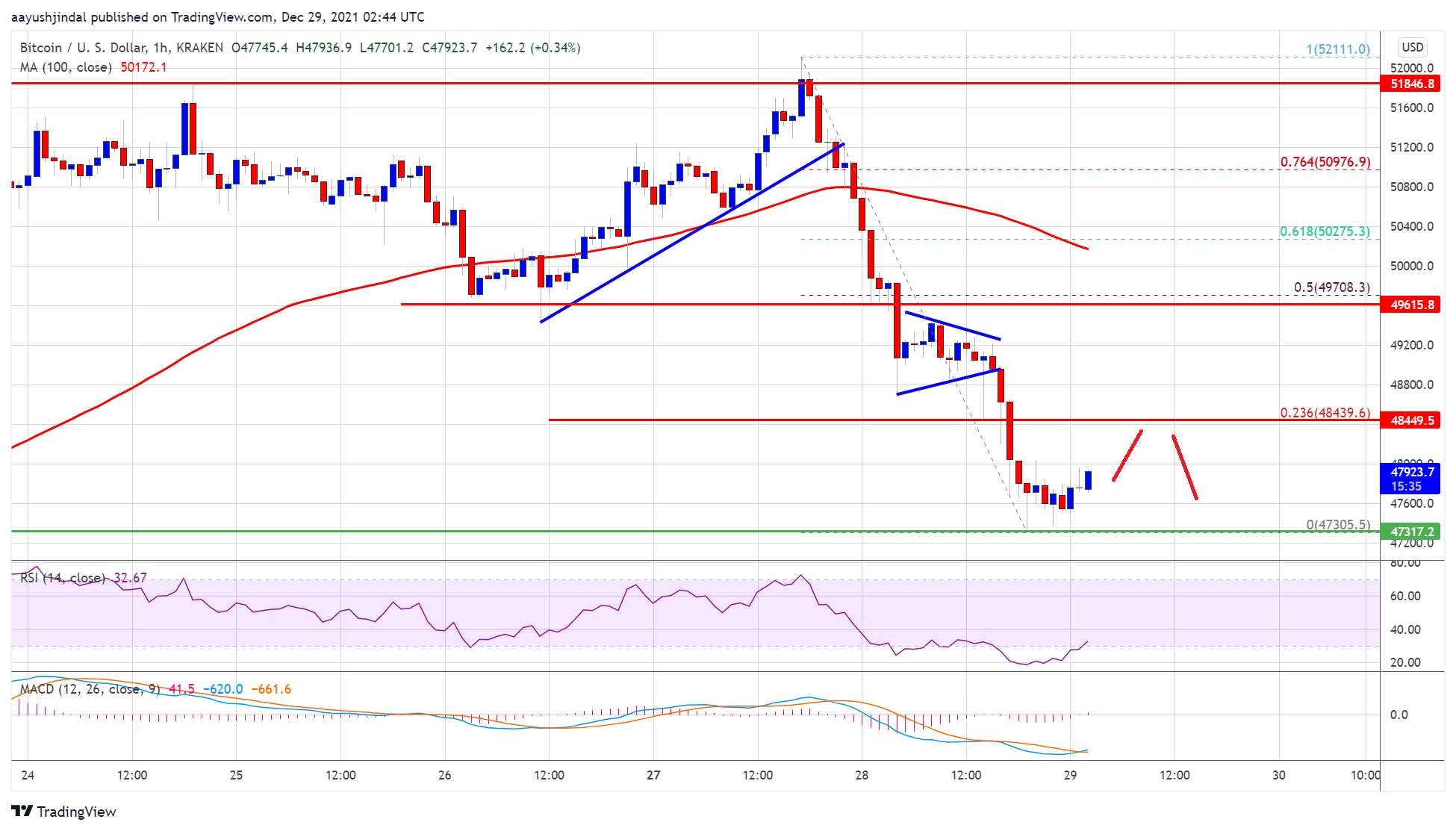
Bitcoin started a fresh decline below the $50,000 support against the US Dollar. BTC remains at a risk of a larger decline below $47,500 in the near term.
Bitcoin started a fresh decline below the $50,000 and $49,500 support levels.
The price is trading below $49,000 and the 100 hourly simple moving average.
There was a break below a bearish continuation pattern with support near $49,200 on the hourly chart of the BTC/USD pair (data feed from Kraken).
The pair could correct higher, but upsides might be limited above $49,200 in the near term.
Bitcoin Price Gains Bearish Momentum
Bitcoin price failed to gain strength and started a fresh decline below the $50,000 support. BTC traded below the $49,200 and $49,000 levels to move into a bearish zone.
Besides, there was a break below a bearish continuation pattern with support near $49,200 on the hourly chart of the BTC/USD pair. The pair even traded below the $48,500 support zone and traded close to the $47,200 level.
A low is formed near $47,305 and the price is now consolidating. Bitcoin is trading below $49,000 and the 100 hourly simple moving average. An immediate resistance on the upside is near the $48,200 level. The first major resistance is near the $48,500 level.
The 23.6% Fib retracement level of the recent decline from the $52,111 swing high to $47,305 low is also near $48,500. The next key resistance could be $49,800.
Source: BTCUSD on TradingView.com
Besides, the 50% Fib retracement level of the recent decline from the $52,111 swing high to $47,305 low is near the $49,700 zone to act as a resistance. A clear move above the $49,800 resistance zone could start a fresh increase. The next major stop for the bulls may possibly be near the $51,200 level.
More Losses In BTC?
If bitcoin fails to recover above $49,200, it could continue to move down. An immediate support is near the $47,500 zone. The first major support is near $47,200.
A downside break below the $47,200 level could push the price towards the $46,500 support. Any more losses may possibly lead the price towards the $45,500 support zone.
Technical indicators:
Hourly MACD – The MACD is slowly losing pace in the bearish zone.
Hourly RSI (Relative Strength Index) – The RSI for BTC/USD is well below the 40 level.
Major Support Levels – $47,200, followed by $46,500.
Major Resistance Levels – $48,200, $48,800 and $49,800.
British Virgin Islands, 22nd Dec 2021 — Following a successful community raise on Launchpool, with 2.7 million tokens staked by 3,000+ wallets at a value of USD 9.4 million, Tony Hollingsworth, CEO of the Listen Campaign announced a massive increase in $LSTN utilities, including a 50% discount on Listen NFTs.
“We are very pleased with the private sales of theListen Tokens ($LSTN),” said Hollingsworth. “After the initial raise, we went back at the request of the Launchpool community for a total raise of $750,000 and an additional $350,000 on Infinity Pad. With Lightning and IDO coming up, we then decided to reward our loyal holders and give back via this massive discount.”
Listen NFT collections
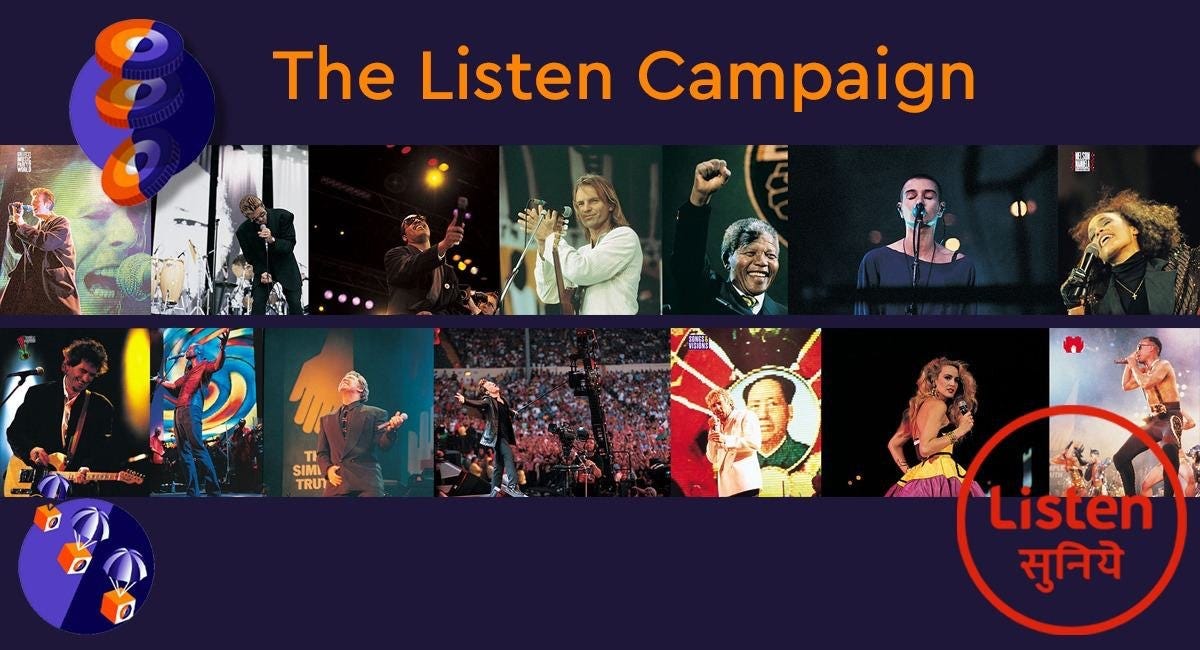
The NFT sale will begin with an unprecedented collection of NFTs featuring never-to-be-repeated performances by huge artists such as Stevie Wonder, Sting, Bob Dylan, David Bowie, BB King, George Michael, Jon Bon Jovi, MC Hammer, and dozens more.
In addition to the discounts available, $LSTN token holders have a chance to win 1 of 50 pairs of tickets to the private view of the “Listen Live” event at the Los Angeles Coliseum on June 20th to 22nd, featuring dozens of film and music stars.
“In order to reward our most loyal holders,” continued Hollingsworth, “those with greater holdings will unlock greater discounts, but we will do more, including having auctions that are open only to $LSTN holders, staking benefits and spot contests and prizes.”
The Listen Campaign platform has an annual reach of 500 million people
The Listen NFTs are a part of the Listen Campaign, a global broadcast campaign in 200 countries, 9 languages and scheduled to reach over 500 million people. The Listen Campaign will benefit 1 billion vulnerable and disadvantaged children around the world. The tokens themselves will be supported via a massive marketing and advertising campaign.
Record-holding team
The team behind the Listen Campaign is headed by Tony Hollingsworth, who created nine of the largest global campaigns including the “Nelson Mandela 70th Anniversary Tribute” and “The Wall: Live in Berlin”. They will be bringing their expertise to the decade-long Listen Campaign.
As the team prepares for launch, they have lined up their final IDO Launchpad with Lightning to further increase the number of token holders, project supporters and community members.
Imminent completion of the security audit will be followed by a strong promotion and execution of TGE and NFT launch via the ‘Listen Collectibles Auction and Shop’.
LCAS, Built on Flow
Listen built their platform from the ground up to make buying NFTs as easy as possible for non-Crypto audiences. It is built on the Flow blockchain so it is faster, allows for native fiat payments using regular credit cards and has lower transaction fees. Flow is also more environmentally friendly than Ethereum.
Data from Cointelegraph Markets Pro and TradingView showed BTC/USD hitting lows of $48,335 on Bitstamp at Dec. 28’s Wall Street open.
The pair had passed $52,000 the previous day, this marking a three-week high, before pressure from sellers halted progress.
At the time of writing, Bitcoin circled $49,000 as traders took the opportunity to remind audiences of Bitcoin’s ongoing active range.
“Humans get bullish at resistance. It’s a thing,” Scott Melker summarized.
“Still ranging. Nothing has changed.”
The $52,000 trip indeed failed to attack any of the price levels previously identified as turning points, notably $53,000 — Bitcoin’s $1 trillion market cap mark.
Popular trader Pentoshi meanwhile identified $44,000 as a potential floor should the downward trend accelerate. Slightly longer timeframes offered a similar outlook based on recent behavior.
Zooming out, however, and there were bearish considerations on the horizon. William Clemente, the lead insights analyst at Blockware, identified a potential repeat of behavior immediately after 2017’s old all-time high, which led to an entire year of a bear market.
“Judgment day is coming for BTC,” he warned in Twitter comments.
Concerns loom over miracle equities readouts
Bitcoin thus presented a contrast to macro Dec. 28 as the S&P 500 hit its 69th all-time high of the year.
Related: Veteran Bitcoin hodlers are still selling record low amounts of BTC despite 70% gains in 2021
Almost a record in itself, stock market exuberance was already ruffling feathers among pundits concerned about a potential chasm between the numbers and empirical reality.
Just to put things into perspective: The S&P 500 may close today at another ATH, it would be the 69th ATH this year, 2nd most ever only behind 77 ATHs in 1995, but the average S&P 500 comp is down 18% from its ATH, suggesting a massive amount of weakness underneath the surface. pic.twitter.com/3RsPFP1Ajs
As Cointelegraph reported, the United States Federal Reserve will have a decisive role to play in shaping 2022’s market climate when it comes to Bitcoin’s performance.
In the meantime, however, BTC/USD faces a low-liquidity — and thus potentially high-volatility — holiday season.