Another decentralized finance (DeFi) platform has fallen victim to a cyberattack, this time its Grim Finance. On Sunday, the Yield compounding tool was siphoned off $30 million worth of fantom tokens, the platform officially confirmed.
“The attackers’ address has been identified with over 30 million dollars worth of theft here,” Grim Finance developers tweeted on Sunday morning. “The exploit was found in the vault contract so all of the vaults and deposited funds are currently at risk.”
Hello Grim Community,
It is with heavy hearts that we inform you that our platform was exploited today by an external attacker roughly 6 hours ago. The attackers address has been identified with over 30 million dollars worth of theft here https://t.co/qA3iBTSepb
The developers detailed that the attack was an advanced one as the attacker exploited Grim’s vault strategy by entering a malicious token contract. It used five reentrancy loops to fake five deposits while the platform was still processing the first deposit.
As a measure of safety, the developers have paused all of the vaults to prevent any future funds from being placed at risk and also urged users to ‘IMMEDIATELY’ withdraw all funds.
“The exploit was found in the vault contract so all of the vaults and deposited funds are currently at risk,” the developers detailed.
They have also contacted and notified USD Coin issuer Circle, AnySwap, and Maker to block the hackers’ addresses and freeze the funds.
DeFi evolved from blockchain as the true challenger of the existing banking industry, but remains vulnerable to cyber-attacks. Most recently Vulcan Forged, which is a crypto gaming ecosystem, lost $140 million that already refunded most of the victims. Another platform Cream Finance suffered three attacks within months, losing more than $192 million worth of cryptocurrencies.
Singapore, December 20th 2021 — For most of history, games have had no direct link with finance, and players had nothing to do with investors. GameFi has now enabled the connections between them with mechanisms such as playtoearn, which opens up a brand new sector in the market.
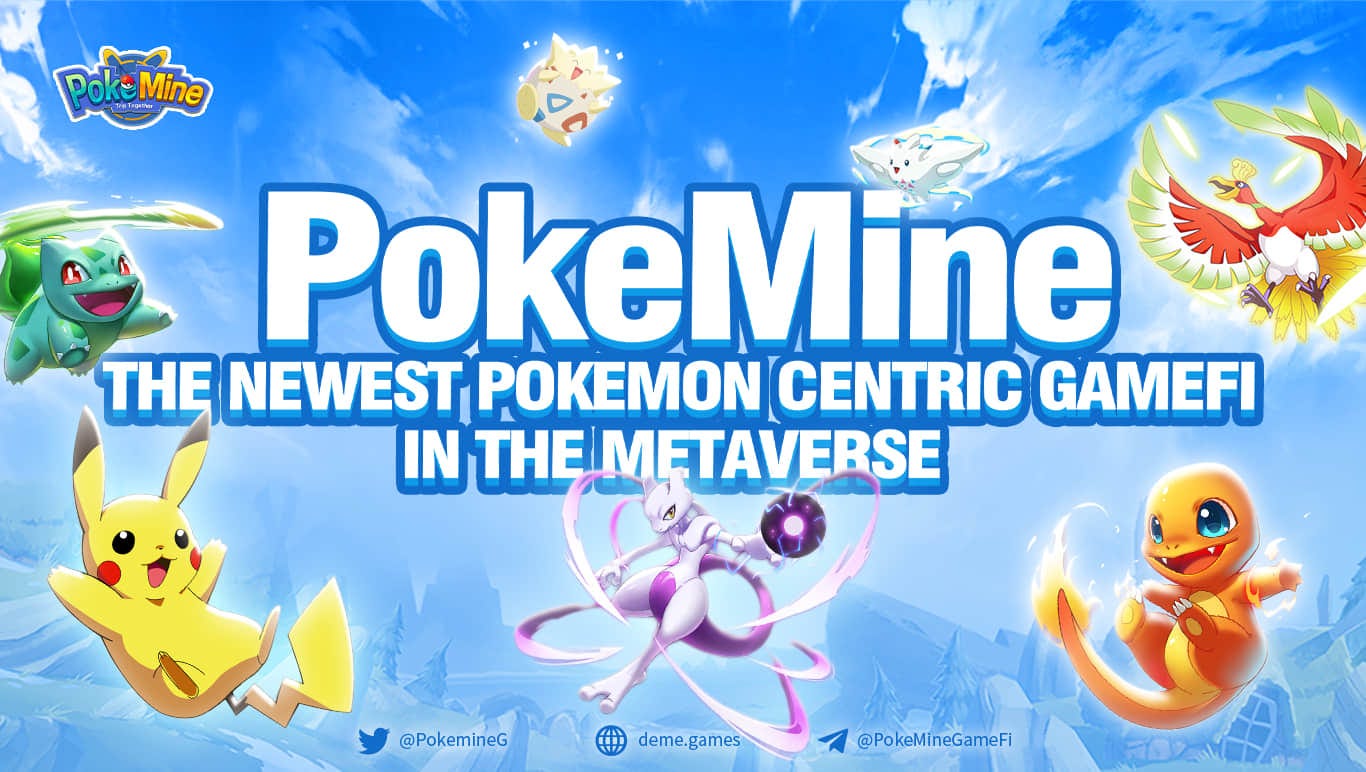
PokeMine is a new action card mobile game with Pokémon as its theme. It is the first Pokémon mobile game where players can independently evolve elves and change their appearance. The overall game restores the Pokémon world in depth, adding a variety of rich gameplay such as the classic Pokémon gacha system, Pokémon cultivation system, checkpoint battles, Z move, Pokémon dispatch (mining), and many others. There are also Budokan, Invasion of Mythical Beasts, Daily Trail, Team Hunting, Battle Tower, Champions Road, Budokan Battle, Quartz Assembly, Alliance War, Cross-server PK and many other gameplay varieties available.
Pokemon has created a unique NFT mechanism that enables a user’s NFT to no longer just be a work of art but a way to build characters in a game. PokeMine has 4 different colors of Pokemon NFTs, red being the most powerful, followed by orange, then purple, then blue. More powerful Pokemons are relatively rare. Users can upgrade NFTs through PVE, or upgrade Pokemon with equipment. Equipment in the game can increase the Pokemon’s combat power, dispatch time, etc. PokeMine has many features to explore, and more detailed tutorials will be released when the official version is released.
Pokemon Exploration: Users can explore the levels to obtain rewards and reach higher levels for their Pokemon. Higher levels, better attributes, and stronger skills make the user’s Pokemon more valuable.
Pokemon Dispatch: Players can get rich rewards by dispatching. The longer the dispatch period, the better the quality of the Pokemon, the more lucrative the rewards, such as diamonds. Using the ‘limit Pokemon Dispatch’ will also double the revenue, depending on the actual profit. Each dispatch line accounts for the dispatch time independently, and each dispatch queue has 4 hours of free dispatch time every day. You can increase any dispatch queue’s available time on the same day by using the “Time aquatic” item produced by [Exploration Level].
In addition, the “limited Pokemon” mechanism and sending “limited Pokemon” can provide a certain percentage of dispatch value bonus for this dispatch queue. The higher the quality of the qualified Pokemon, the greater the increase.
Exploring level and Adventure level: Adventure points and exploration points both require stamina, so it is best to use the stamina of adventure levels in the early stages to level up your team, unlock new features, and then improve your Pokemon overall with appropriate experience gains. Players upgrade Pikachu to unlock to multi-adventure levels. Diamonds are consumed at each level. The amount consumed increases with the progress of the level.
Changeable Combat Strategies: Pokemon types are divided into attack, heal, skill, and defense, and each Pokemon can play according to its positioning characteristics, making the entire gaming experience a battle of wit and courage, and full of strategization.
Cultivate Pokemons: There are more skills that players can use in the game to make you invincible, as well as to increase the level of Pokemons, stars, skill levels, and more so that the Pokemons can continue to grow, allowing players to cultivate a unique and powerful Pokemon from scratch.
Equipment: Elf armor can be upgraded to increase stats. Armor attributes are given to corresponding Pokemons, which is the player’s goal.
Pokemon Center (Gacha Center): Pokemon center’s Gacha System is the main way for players to obtain Pokemon and Pokemon shards. The Pokemon are randomly selected, by consuming diamonds or props. And there are rare Pokemon hidden in it, which can make for surprises.
Pokemon Social Interaction: The built-in gaming environment can also be used for real-time interaction, efficient data interaction, and processing capabilities, so that all users’ data can be displayed in real time. Players can exchange ideas and experiences with other players in the “world” at any time, offering users an immersive experience.
How to start playing Pokemon:
1. Players need to register an account onhttps://deme.games, then connect their wallets and e-mails.
2. To download the game, sign in on the official website.
The Real World Impact of NFTs in Gaming
Besides gameplay, NFTs have more real-world value. NFT items in games are not just items sold on NFT platforms, but they can deal directly on the markets, making the dealing process much easier than in traditional games.
GameFi is one of the ways that can help users understand Metaverse with more clarity. While its beginnings are in the game industry, in the future, it will have a strong impact on more aspects of human civilization, for instance in finance and socialization. It is estimated that in 2021 the global game market will reach profits of $175.8 billion. It is expected that during 2023, the gains will exceed $200 billion. GameFi is at a relatively early stage of development, and it still has enormous growth potential.
The integration of NFT and GameFi has produced a huge impact on gaming and will continue to have both micro and macro effects on business models as well as virtual assets ownership rights.
With the combination of Pokemon and GameFi, PokeMine is without a doubt, the rebirth of the Pokemon world in the real world.
PokeMine was officially launched on December 16th, 2021. After completing its first round of $5 million funding on November 16 2021, more functions have been increasingly launched one after another in stages. The first funding round was financed by GMC, Blockchain Ventures, Hayek Capital, YIBI Exchange, YSL Capital, HKD.COM, NKCCapital, and others. The funds are being used for Pokemon’s technology development and team building so as to fund international growth.
Currently, PokeMine NFTs have been deployed on the Heco-chain and Binance Smart Chain based on the ERC-721 token standard. There are two different types of assets in PokeMine: NFTs and PokeMine Diamonds ($PMD). Users can purchase PokeMine NFTs on Treasureland and purchase $PMD from MDEX and ButterSwap and use PMD to get Pokemon NFTs from the Pokemon center in the game.
The project has also made an official announcement to attract influencers for PokeMine. The influencer initiative purports to give influencers the opportunity to join and share in a large portion of the bonuses. Influencers need to promote across Pokemine social platforms, which include: Telegram, Discord and Twitter.
Diverse game scenarios and unique gameplay have made Pokemon a high-profile GameFi project. There are plenty of strategies and methods to explore, both in the PvE scenario and future PVP. Better strategization will not only be more fun for the player, it will lead to a higher return on investment. In the aspects of game quality and tokenomics, PokeMine is one of the leading offerings in this market.
No Deme games will be deployed on centralized service clients like Amazon in the future. All Deme games will be deployed on the DEME mainnet node, a system which is completely decentralized. Technically, that is the biggest advantage of Deme.
In the future, Deme will access Metaverse and empower more Web 3.0 applications. Meanwhile, Deme will support Cross-chain bridge, Multi-chain wallet, NFT trading markets, and Defi assembly kits. It also sorts the utilities of Metaverse, helps users create decentralized identities, and makes it convenient for users to manage Token and NFT assets easily. What’s more, Deme will let users enjoy all kinds of encrypted applications, and build SocialDAO blocks, open up encrypted application communities, and decentralized governance. Deme will build a highly-decentralized Metaverse platform, inspiring the unlimited vision of every gaming and crypto enthusiast to the encrypted world.
Era7: Game of Truth is an innovative Play2Earn NFT trading card game (TCG) that has recently been creating a lot of buzz in the GameFi space. We reach out to Era7 to find out exactly what makes this game tick.
Q. Please introduce yourself and what you do at Era7, thank you.
Hi, I am Teddy Chen, responsible for the system design of the Era7: Game of Truth project. I graduated with a bachelor’s degree from Shu-Te University. I previously worked at Game Hours Inc as Vice President of Operations and before that I was the General Manager at Joycell Inc and the Operations Manager at ISTAR Inc.
In the game industry, I possess 20 years of experience — from PC online games to web games, mobile games, and now I am a part of the very exciting blockchain GameFi industry. My long gaming experience has taught me to focus on the players — how do they feel, what motivates them etc. As the person in charge of system design at Era7, I hope to provide the best gaming experience for players everywhere.
Q. Congrats on your recent fundraising with a staggering lineup of VCs and institutions. How did you manage that?
Era7’s Research & Development team has 15 years of experience in online game development and achieved great results in the traditional gaming space. To date, we have altogether accumulated nearly 10 million users in the online games that we have developed.
After adding the concept of NFTs and Play-to-Earn to the Era7 game, along with offering chain interoperability, we attracted many well-known blockchain investment institutions. These institutions are extremely interested in the three competitive features of Era7, which are:
1. Ability to attract the traditional gamers. Era7’s Trading Card Game (TCG) genre and rich gameplay are factors that resonate with traditional game players. Moving forward, the iOS and Android versions of the game will be launched simultaneously, and with promotional support from the traditional gaming circles, will bring in more valuable new traffic to the gamefi industry.
2. High-quality product. Era7’s offers rich gameplay content and competitive elements, providing users with long hours of entertainment. With 1,000 exquisitely crafted NFT cards that have different attributes, the players can come up with endless battle strategy combinations which can generate different performance outcomes in battle. In the near future, these players can form an ever-growing PVP (player-to-player) competitive gaming community where they can not only play to earn, but also play for fun. At the same time, Era7 is also in the process of building an Esport-Fi model, so that holders of rare NFT assets will have more avenues to earn.
3. Low threshold entry to Game of Truth. Era7 has no barrier to entry for players. Users who don’t understand cryptocurrency can still experience the game in the free-to-play mode. Indeed both novice and experienced gamers can find their place in the game, and together with the project, build their own worlds of truth that belong to them.
Q. What is the central concept behind Era7: Game of Truth?
Era7’s artistic inspiration comes from TCGs like Hearthstone and Magic: The Gathering.
The Game of Truth plot revolves around seven races on the Continent of Truth who compete for the title of “King of Truth.” Amongst the races are groups of specially gifted individuals who are sent to attend Summoner Academy to undergo rigorous training where they graduate to become Summoners. Upon graduation, they travel the world to make Summoning Pacts with the most powerful amongst the seven races, to establish strong allies in order to consolidate their power.
Since ancient times, throughout the year, battles amongst the Summoners have been held in the heart of the Continent. These Summoning Battles attract Summoners from all over the world who battle for the ‘King of Truth’ title. The winner is crowned ‘King of the Continent’, and he and his race are awarded the highest honors in the land.
At Era7, we hope to create a world of truth that belongs to all the players in this kingdom of truth.
Q. You are a Play2Earn NFT trading card game, are there other GameFi projects like you? If so, how are you different from your competition? If not, help us to understand your first-mover advantages in this space.
We have two types of competitors. The first type are those like Thetan Arena, with elements of esports and competitive attributes built into GameFi. The second type are those like the Splinterlands/Mytheria card games with GameFi. They are all undeniably excellent and successful projects, and have built their own core following.
Compared with the GameFi products on the market, the prime advantages of Era7 are the following:
With our rich game content and a mature economic system that support long hours of gameplay, we can guarantee a healthy ecosystem of players and token pricing.
Both our stable numerical card system and the large number (almost 1,000) of cards make confrontational battles fun and exciting, allowing players room for imagination to strategize their gameplay and create their own unique card libraries.
Our fast-paced and mildly competitive battles will not tire the players out.
While the players are experiencing the fun of gaming, Play-to-Earn is also an objective and we give players the opportunity to benefit financially while they play.
In terms of Esports, we have developed a system of balance and fairness, which will allow capable players to achieve more rewards and honors. This will encourage everyone to enjoy the charm of Esports gaming all the while easily earning as they play.
Q. Tell us more about your upcoming NFT Sale on December 20th. Can you share some pictures of the types of trading cards that will be on sale? What are the premium buys?
The NFT Sales Event will be launched on 20th December and will feature 6,000 standard Mystery Boxes (‘Light Box’) priced at USD 119 and 400 premium Mystery Boxes (‘Epic Light Box’) priced at USD 399 respectively. The Mystery Boxes will be released in batches on a first-come-first-served basis.
The NFT launch will start on December 20th at UTC 12:00 and end on December 22nd at UTC 00:00.
Using Metamask, buyers can connect to the official marketplace to pay for purchases with $BUSD.
The Light Box and the Epic Light Box will feature 16 Master Cards with varying levels of rarity and value. When a buyer obtains a Master Card, he or she has approximately 15 days, before the game is officially launched, to complete the ‘UNSEAL’ function. After the buyer completes unsealing, he or she will receive several Battle Cards in one go. Furthermore, the Master Card that he or she holds has the capability of automatically summoning Battle Cards daily. These NFT cards are all precious in-game resources.
Subsequently, when the user ecosystem is well-developed, the quantity and quality of the cards held by the player will be the conditions that determine the number of ERA tokens and GOT rewards that the player will be able to obtain. Both ERA and GOT are game tokens which can later be exchanged for cryptocurrencies on DEXes and CEXes in the future. The unsealed Mystery Box that has been successfully snapped up at this upcoming sale or the Master Card that is obtained after unsealing can both be traded and sold on the official marketplace.
Here are examples of the 2 types of Mystery Boxes:
Here are some examples of Master Cards:
Q. Please share with us any other exciting news that you would like our readers to know thank you.
Era7 officially launched global marketing for the project in November 2021 and since then we have been revealing news and updates in stages. To date, Era7 has completed its seed round and an initial private round of financing, led by Hashkey and MOBOX, and a dozen other renowned VCs and institutions including Huobi Ventures, OKEx Blockdream Ventures, Good Games Guild (GGG), AU21 Capital, AlphaCoin Fund, Waterdrip Capital and more.
In November 2021, we set up our official website and built our community on channels like telegram, twitter, discord, facebook, reddit and medium. Simultaneously we also launched our global PR in Southeast Asia, Europe, South America and other countries. Currently, we have more than 190,000 followers in our community.
On December 16th, the second phase of our official website was released and we launched the white paper as well. We had a series of airdrops and giveaways and started our NFT airdrop on December 13th. What is most important is that our NFT official marketplace will go live on December 20th, and at the same time, the NFT Mystery Boxes will be on sale for a limited time.
Come January 2022, Era7 will launch our IDO. We are excited that we have managed to collaborate with Pancake and another well-known IDO platform. We will be announcing whitelisting activities, how to participate in the IDO and final confirmation of the IDO platforms. After completing our IDO milestone, ERA token and GOT token will be officially registered on exchanges.
The first version of Era7 will be introduced in February 2022 to our players and they can join the play-to-earn game to play and earn. From here on, we are also planning for the development of an esport ecosystem, construction of a GameFi platform and building a series of IP for Era7 and other metaverse products. Players are welcome to check out the details on our official website or from the roadmap in our White Paper.
For more updates on Era7: Game of Truth, please check out its official Website, follow the project on Twitter and join the conversation on Telegram or Discord.
With native cross-chain trading and very attractive Bitcoin APYs, Thorwallet offers a user-friendly UI with all the trimmings this Christmas
As we near the end of a spectacularly explosive year for the growth of DeFi and blockchain technology in general, both interest and investment in the industry are at an all-time high. Institutions continue to explore the likes of Bitcoin and Ethereum as major investment assets, but decentralized finance solutions have also becoming major forces to be reckoned with; offering financial inclusion to millions of unbanked people around the world, DeFi products are enabling people everywhere to unlock new and independent sources of income as the global economy continues to struggle with the fallout from COVID-19.
Taking a look into blockchain infrastructure, several popular blockchains have grown both in terms of capabilities and ecosystem size in recent months; THORchain is one such example and, having steadily expanded its reach within the industry, the Cosmos-based blockchain protocol is today the home for an array of exciting projects offering a multitude of crypto and DeFi services.
THORWallet Pushes the Envelope for DeFi 2.0 Products
Amongst many innovative solutions being built on THORchain is THORWallet, a non-custodial wallet that looks to pander to both DeFi power users and mainstream consumers with 2 separate mobile applications available to the public. Both THORWallet products offer feature-rich user experiences and exposure to DeFi, with multi-chain savings accounts, liquidity provision capabilities and synthetic asset trading just some of the many things on offer; the retail targeted app strips away some of the more complex attributes of the THORWallet application but continues to extend access to a large majority of the benefits on offer.
THORWallet has been built to complement THORchain’s cross-chain functionality and users of the THORWallet app are able to swap Layer 1 tokens such as Bitcoin and Ethereum in a completely decentralized manner with no middlemen. This improves massively on swapping options available on many other popular blockchain platforms which offer only wrapped assets, keeping custody of the native assets. By doing this, THORWallet is also able to offer users a way to earn yield on their Bitcoin whilst keeping complete custody of their assets at all times.
Previous Funding and the Upcoming MISO IDO
The THORWallet team successfully raised over $3.4 million during private rounds led by THORchain, Fomocraft, Nine Realms, 0x Ventures and several other leading funds in the blockchain investment space. THORWallet’s native TGT multi-utility token serves a variety of purposes within the THORWallet ecosystem such as node operation and as a tool for gamification and community incentives such as airdrops, as well as unlocking premium features for holders.
Having already concluded the first phase of their public token sale on THORStarter, which sold out in just over one minute, phase 2 of the public token sale will take place on Sushi MISO on December 20th 2021. Token holders are currently able to stake their TGT, with rates for single-sided staking sitting at 800% and 1200% for eth-tgt pooling respectively.
“We are thankful to have received considerable interest and support from both reputable funds and the public and we are excited to open the doors to future THORWallet users with the upcoming MISO IDO. The THORchain ecosystem continues to grow rapidly and we’re proud to be one of the projects driving that growth.” – Marcel Harmann, THORWallet Co-Founder and CEO.
As 2021 draws to a close, the premier lineup in the DeFi landscape largely consists of synthetic asset platforms (SAPs). An SAP is any platform that enables users to mint synthetics, which are derivatives whose values are pegged to existing assets in real time. As long as oracles can supply a reliable price feed, synthetics can represent any asset in the world and take on its price — be it a stock, commodity or crypto asset.
As such, SAPs finally bridge the gap between emergent DeFi platforms and legacy finance, allowing investors to place their bets on any asset anywhere, and all from the cozy confines of their favorite blockchain ecosystem. Decentralized and operating on Ethereum’s layer one, SAPs would appear to be crypto’s next major growth catalyst. However, unlike for sound money and verifiable artwork, in the world of collateralized lending, decentralization and secure ownership only make up half the equation.
Collateralized debt
In traditional finance, instruments of collateralized debt are among the world’s most prominent financial assets, boasting a cumulative valuation of nearly $1 trillion. Most people know them as mortgages — a term whose etymology traces back to thirteenth-century France and which translates, literally, as “death pledge.” Perhaps morbid or melodramatic to the average individual, but to the many millions who lost their retirement accounts, life savings, homes and livelihoods in the aftermath of the 2008 financial crisis, the terms “death pledge” and “collateral damage” are not only appropriate but par for the course in conveying the anguish and agony that await those who partake in collateralized lending without first understanding the risks and ramifications that come with it.
Here’s the gut-wrencher: To receive a loan, a debtor puts forward collateral that becomes contractually locked with a creditor, who may seize the collateral in the event the debtor becomes unable to service the debt. Unfortunately, servicing collateralized debt is not as simple as making punctual interest payments, as the value of the underlying collateral may deviate drastically in response to volatility in the broader market — like the sudden collapse of the U.S. subprime housing sector. If the value of a debtor’s collateral falls below a predefined threshold, the creditor — be it a bulge-bracket bank or decentralized protocol — has the right to assume possession and liquidate the collateral at market value to recoup the outstanding loan principal. If the term death pledge is too much to stomach, you might well call it the rug pull of a lifetime.
Related: US debt ceiling crisis: A catalyst for crypto’s ultimate decoupling?
Whether issued on Wall Street or the Ethereum blockchain, the risks involved with collateralized financial products cannot be merely decentralized away. Liquidation triggers are fundamentally rooted in exposure to the volatility of a broader macroeconomic environment, which neither developers nor financiers can control.
MakerDAO’s lesson for DeFi space
Take MakerDAO, for example, an exceptionally decentralized SAP whose collateralized stablecoin DAI is pegged meticulously to the U.S. dollar. On the surface, Maker offered an enticing opportunity for investors, who could stake their otherwise dormant crypto holdings to mint a synthetic dollar. Stable though DAI may be, the distributed collateral pool that backs it is composed of some of the world’s most volatile assets — namely, Ether (ETH) and Bitcoin (BTC).
To prevent crypto market downturns from triggering mass liquidations, the Maker protocol requires over-collateralization to the tune of 150%. In other words, users only receive two-thirds of what they inject into the protocol in dollar terms, a model that neither appeals to traders nor supports adequate capital efficiency in the ecosystem. To add insult to injury, the ever-volatile crypto market proved Maker’s steep collateral requirements insufficient in March 2020, when a 70% drawdown liquidated Maker users across the board for losses totaling over $6 million.
Learning from Maker’s hardships, prominent SAPs have taken additional measures to prevent catastrophic mass liquidations on their platforms. Or, more accurately, they’ve taken more of the same measure: Mirror Protocol requires collateralization levels of up to 250%, and Synthetix demands an audacious 500% from users. Of course, over-collateralization of this magnitude is hardly sufficient to compete with traditional finance, where centralized brokerages provide better metrics hand-over-fist. But there’s another problem, too.
To crypto traders for whom exorbitant collateralization requirements and liquidation risks are unpalatable, it makes more sense to ditch SAPs altogether and purchase synthetic stocks and commodities in secondary markets. As a consequence of the shift in demand, significant pricing premiums now persist for many synthetics, thereby eroding the real-world parity they were designed to uphold and once again pushing users back to traditional finance, where they can purchase the assets they want less the brazen crypto markup.
The need for change
At this stage, DeFi has reached a plateau and is stagnating. Meaningful progress demands a radical tokenomic model for collateral management that redefines the relationship between capital efficiency and risk exposure. As the eloquent Albert Einstein professed nearly a century ago:
”No problem can be solved by thinking at the same level of consciousness that created it.”
On this accord, SAPs currently remain fixated on upgrading and enhancing collateralization models — that is, optimizing what already exists. None dares to broach the realm of radical transformation.
As 2022 dawns and crypto enters a new year, an innovative collateralization model will take DeFi by storm. Rather than locking excess collateral into a contract, users will be able to burn collateral to mint synthetics at an even ratio. That means dollar-for-dollar, sat-for-sat, one-to-one, users get out what they put in — and they’ll never get liquidated or margin called.
The key element that underpins such a model is a native token with an elastic supply. When a user first burns an SAP’s native token to mint synthetics there is little benefit to be perceived. But when the same user burns synthetics to re-mint native tokens on the way out, SAP’s burn-and-mint protocol works its magic. Any deviations that exist between the user’s original burned collateral and minted synthetics will be taken care of by the protocol, which marginally expands or contracts the supply of the native token to cover the difference.
A radical new paradigm, the burn-and-mint collateral model does away with the drawbacks of liquidations and margin calls without decimating the capital efficiency or price parity that give synthetics their power in the first place. In the year ahead, as degens and number crunchers of all creeds continue forth on their quest for yields, the capital of the crypto mass market will migrate to platforms that adopt various iterations of burn-and-mint mechanisms.
As the DeFi landscape experiences its next major transition, all eyes will turn to liquidity management. Deep liquidity stands to be the critical component that will allow SAPs to facilitate large-volume exits from their ecosystems without producing unacceptable volatility. On DeFi platforms where collateral management has been a concern of the past, liquidity management will separate DeFi’s next iteration of blue-chip SAPs from those that do not make the cut.
This article does not contain investment advice or recommendations. Every investment and trading move involves risk, and readers should conduct their own research when making a decision.
The views, thoughts and opinions expressed here are the author’s alone and do not necessarily reflect or represent the views and opinions of Cointelegraph.
Alex Shipp is a professional writer and strategist in the digital asset space with a background in traditional finance and economics as well as the emerging fields of decentralized system architecture, tokenomics, blockchain and digital assets. Alex has been professionally involved in the digital asset space since 2017 and currently serves as a strategist at Offshift, a writer, editor and strategist for the Elastos Foundation and an ecosystem representative at DAO Cyber Republic.
Melbourne, Australia, December 17th, 2021 — Community-focused platform MRHB DeFi has received an investment from Australian Gulf Capital, a global investment management company, as part of the strategic venture round of the world’s first inclusive and ethical DeFi ecosystem platform.
The funding from Australian Gulf (AG) Capital is not the first from the region, with the Islamic DeFi pioneer having received investments from institutions such as Blockchain Australia and other Aussie angel investors. The AG Capital investment presents further opportunity to expand MRHB DeFi’s presence and growth in this key market.
“We are pleased to have an early-stage opportunity to support first-mover Marhaba in the development of their high-growth, disruptive venture in ethical and halal DeFi,” commented CEO and founder of AG Capital, Salman Masaud. “Our investments are typically focused on a company’s early funding stages when the product is nascent and the upside potential is the greatest. We expect to support the project by bringing our legal, consulting and investment banking expertise to assist the Marhaba team in launching their socially impactful vision.”
The Australian PE/VC funds management company is also currently in the process of establishing a license under ADGM in the UAE, a key growth hub for MRHB DeFi, having recently signed a partnership with local partner Masary Capital to provide halal crypto solutions to the retail and institutional sectors in the UAE.
“Australia Gulf Capital’s ethos of actively supporting startups who align with their ambitious growth vision makes them a strong partner for us,” said MRHB DeFi CEO Naquib Mohammed. “As we continue on our journey of building the world’s first ethical DeFi platform, it is this shared vision and support from amongst our family of investors and partners that will help transform our dream into reality.”
MRHB DeFi: An Islamic Finance DeFi Pioneer
MRHB DeFi was created to bridge a perceived gap — by providing excluded and crypto-cautious communities greater access to the growing opportunities and utilities of the cryptosphere. The project is underpinned by faith-based DeFi offerings which adhere to the ethical investment and financing principles rooted in Islamic Finance. Many values upheld by the halal platform also align with the United Nations Sustainable Development Goals. Business practices deemed ethical include those that avoid interest, usury, social exploitation as well as support sustainability, asset or utility backed financing, transparency and equitable risk-reward sharing. These principles have universal appeal far beyond the faith conscious community.
With the Islamic Finance market sized at around USD 3 trillion of assets, bringing even a small portion of Shariah-sensitive liquidity into DeFi will represent a major boost to the total value of the DeFi sector worldwide.
About MRHB DeFi
MRHB DeFi is a halal, decentralized finance platform built to embody the true spirit of an “Ethical and Inclusive DeFi” by following faith-based financial and business principles, where all excluded communities can benefit from the full empowerment potential of DeFi.
The diverse team comprises researchers, technocrats, influencers, Islamic fintech experts & business entrepreneurs, who came together to ensure that MRHB DeFi prevails in a manner that will impact society as a whole, essentially bridging the gap between the faith-conscious communities and the blockchain world.
Australian Gulf Capital is a prominent global investment management company specializing in alternative investments and providing innovative world-class products and services. AG’s substantial and diversified investor base includes corporations, financial institutions, sovereign wealth funds, superannuation/pension funds, insurance companies, qualified high-net-worth investors, and family offices.
Australian Gulf Capital’s business activities are distinguished by exceptional vigor and a profound understanding of clients’ needs and risk profiles. They have become the company of choice because of their insightful approach to creating partnerships with clients for sourcing and investing in attractive investment opportunities. Australian Gulf Capital employs high-caliber teams with diverse expertise and extensive experience.
The Russian central bank wants to ban investments in cryptocurrencies in Russia, citing the growing number of crypto transactions as a threat to financial stability.
Russia Mulls Over Crypto Ban
Russia’s central bank is attempting to outlaw cryptocurrency investments, escalating the country’s long-standing distrust of Bitcoin and other digital assets. Future transactions would be prohibited, but present holders would not be forced to sell their holdings.
Cryptocurrencies, according to Russian authorities, can be used for money laundering and terrorism financing. According to Reuters, the bank’s current stance on cryptocurrency is a “complete rejection.”
Although it is still illegal in Russia to undertake cryptocurrency transactions, a new amendment has made it permissible to invest in and buy cryptocurrencies through exchanges.
Any such limitations might stifle Russia’s current retail investment boom, which has seen 15 million Russians create brokerage accounts in the last few years, according to Central Bank estimates.
The regulator has already acted quickly to restrict access to other types of risky investment products, anticipating that Russia’s low financial literacy and strong broker marketing might lead to consumers being lured into high-risk investments. If they want to invest in items like options and derivatives, retail investors must must complete a series of examinations.
Elvira Nabiullina, the governor of the Central Bank of Russia, increased the fear, uncertainty, and doubt (FUD) around the country’s current state of crypto regulation in a Friday press conference. When asked about the rise of digital assets, Nabiullina said the following, according to finmarket.ru, a local news outlet:
“You know that our attitude towards cryptocurrencies is of, to put it mildly, skepticism. Related to this are the significant risks for retail investors and the substantial volatility for this type of asset. In addition, cryptocurrencies are opaque in that they are frequently used for illegal operations or criminal nature. Therefore, we cannot welcome investments in them. We seek to prevent the Russian financial infrastructure from using crypto transactions. This is quite doable.”
Related article | Russia Plans To Impound Unlawfully Acquired Cryptocurrencies
Illegal Miners To Be Jailed
Andrey Lugovoy, a member of parliament’s lower house, the State Duma, has threatened miners with jail if they connect their equipment to the power grid without permission.
Lugovoy disclosed in November that his nationalist party, the Liberal Democratic Party of Russia, is preparing to introduce a draft law to govern crypto mining. According to the congressman, the approval of the legislation will help Russian nationals, the state, and entrepreneurs who wish to legitimately engage in business.
He has now added, in an interview with the Russian online news outlet Lenta.ru, that mining regulation makes sense. Aside from charging mining businesses varying power prices, the deputy believes their profits should be taxed after deducting the cost of the energy consumed and other expenses such as labor. Lugovoy accused miners of avoiding paying taxes by using subsidized, low-cost electricity.
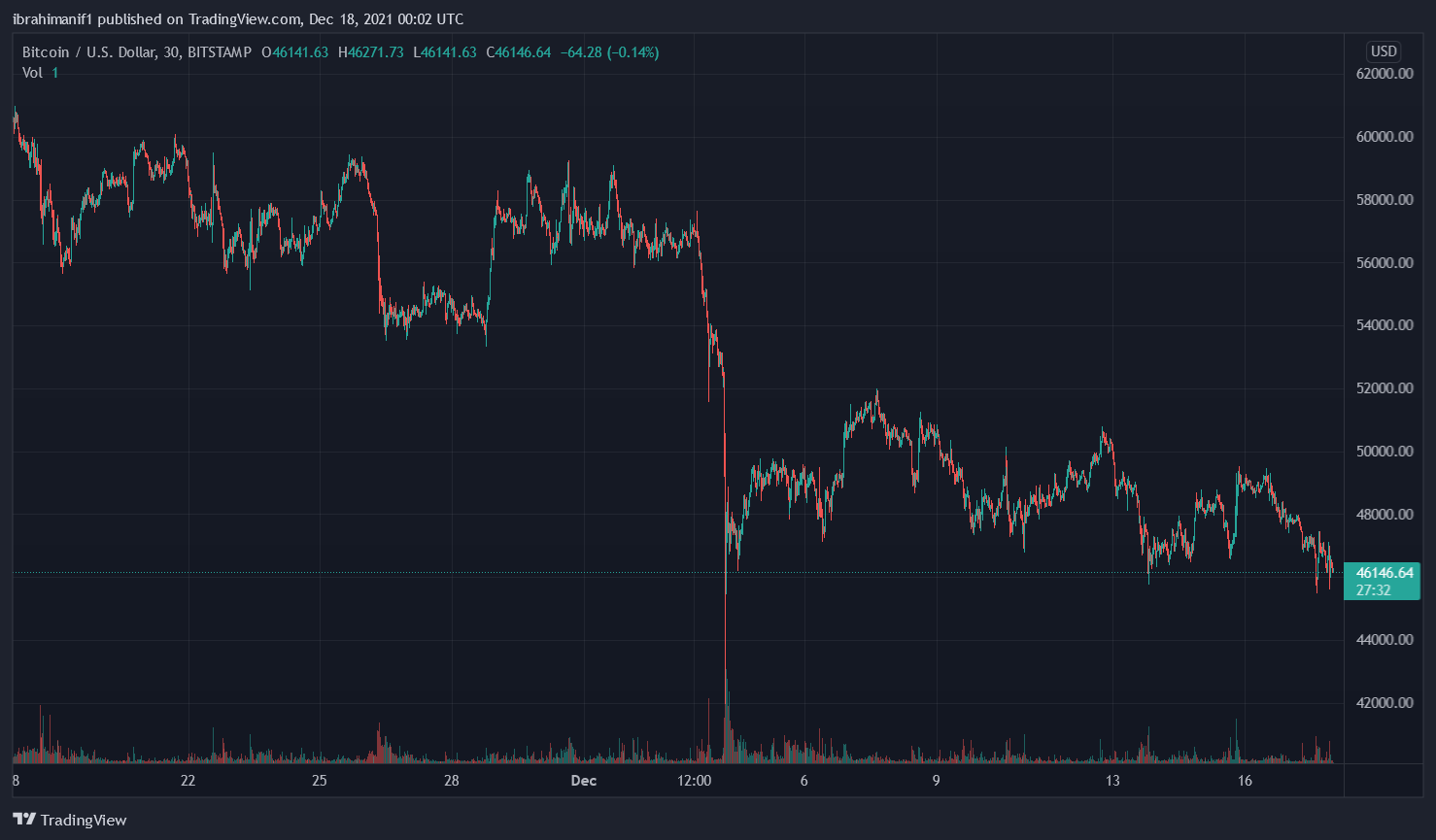
BTC crashes to $46k | Source: BTCUSD on TradingView.com
Related article | Held Accountable: Russia Wants Bitcoin Investors Jailed For Non-Compliance
Featured image from Pixabay, chart from TradingView
TLDR: Over the past year, Coinbase has invested in tooling to eliminate static content across our web frontend. This is the story of how we did it and why it’s important.
Coinbase Learn(ed)
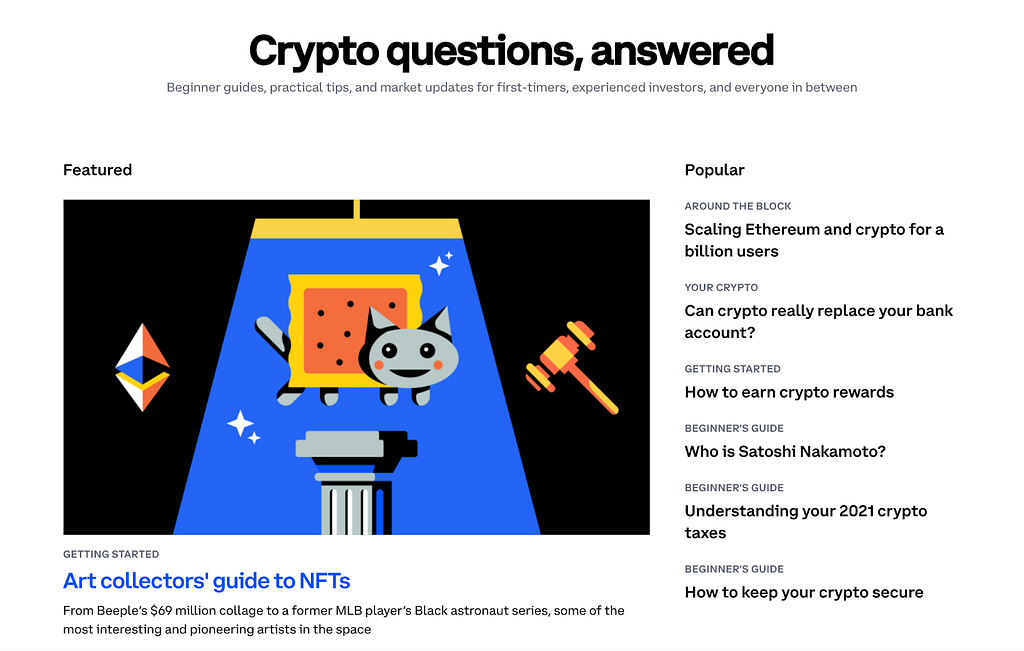
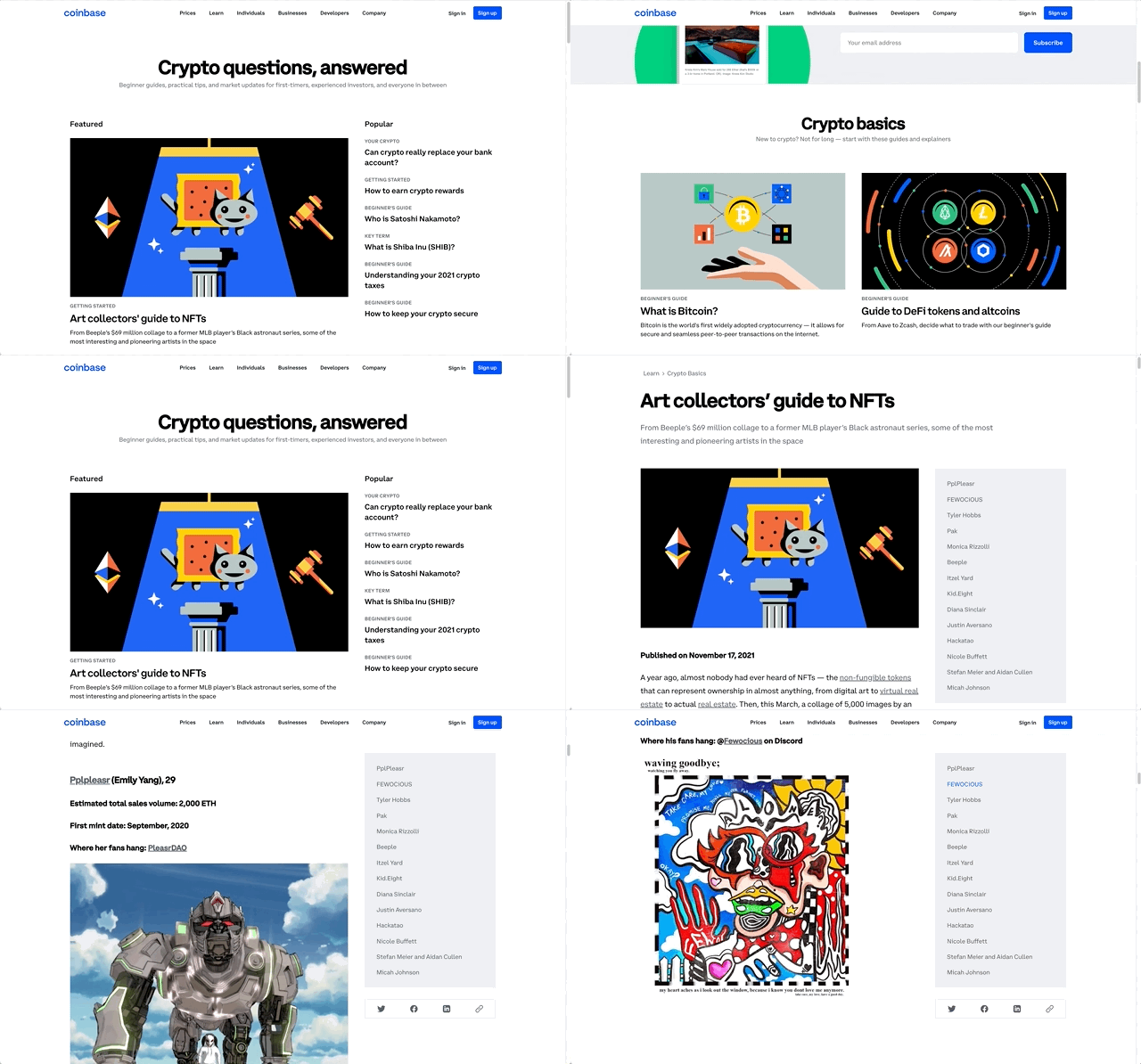
The Coinbase educational portal, Coinbase Learn, launched in late 2020. Learn contains hundreds of beginner guides, practical tutorials, and market updates and is maintained by a dedicated team of content editors.
Our engineers explored various options for powering Learn. Ideally, we wanted a solution that would allow us to seamlessly integrate content into the Coinbase logged out experience.
Hosted options for blog-like content such as Medium provided too little flexibility.
The WordPress framework was too opinionated and directly tied to the UI.
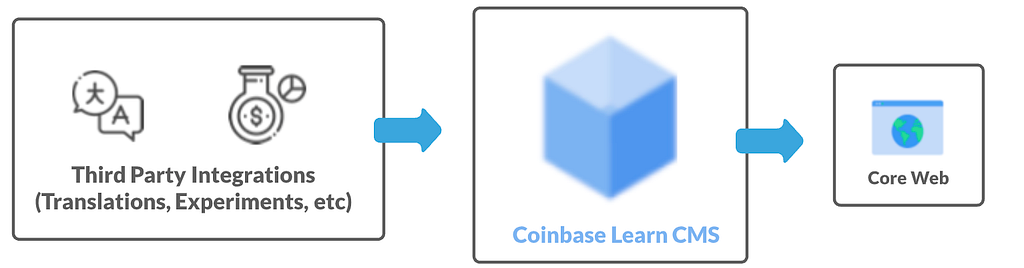
We ended up opting for a headless CMS, specifically Contentful. Contentful is a content platform that delivers a headless approach to content as well as backend extensibility to integrate with our preferred tools and ways of working. Being “headless” means the CMS is UI agnostic — it separates the content from the experience, simply providing structured JSON to the frontend, which allows for us to totally control the frontend experience.
Integrating with Contentful was simply a matter of creating data structures representing different types of content (via the Contentful UI) and then mapping those data structures to React components (which handled actually rendering the data)
Our initial CMS architecture
Donning the Flightsuit
With Coinbase Learn under our belt and the Coinbase Direct Public Offering (DPO) on the horizon, a cohesion initiative kicked off (deemed Project Flightsuit). Project Flightsuit sought to bring a cohesive look and feel across Coinbase logged out properties as well as enforcing design standards across newly created landing pages.
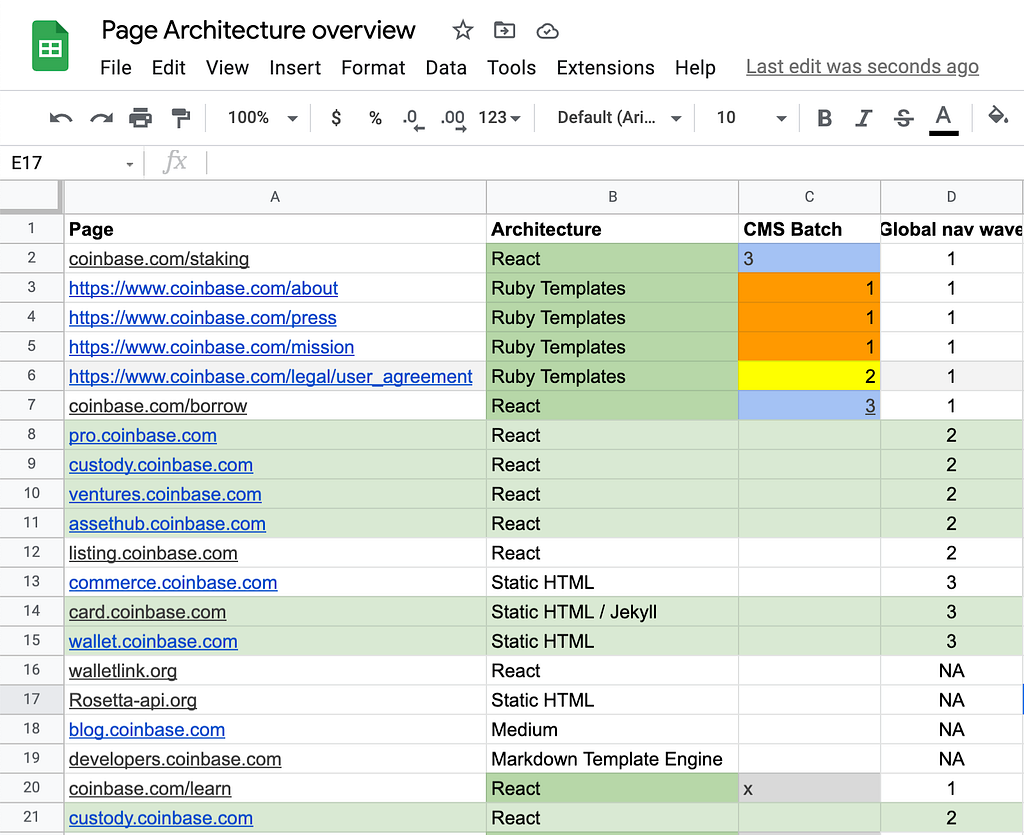
While investigating the state of the Coinbase product landing pages, we uncovered 40 product surfaces spread across 15 different repositories / frontend applications. The various frontends were built using a variety of technologies — everything from React with Typescript (our current standard) to legacy Ruby on Rails templates, to static HTML.
A peek of our “Page Architecture” overview document
Leveraging the Contentful integration initially set up for Coinbase Learn, we began to create a set of “blocks” which could be used to standardize landing page layouts (while aligning around our new brand guidelines).
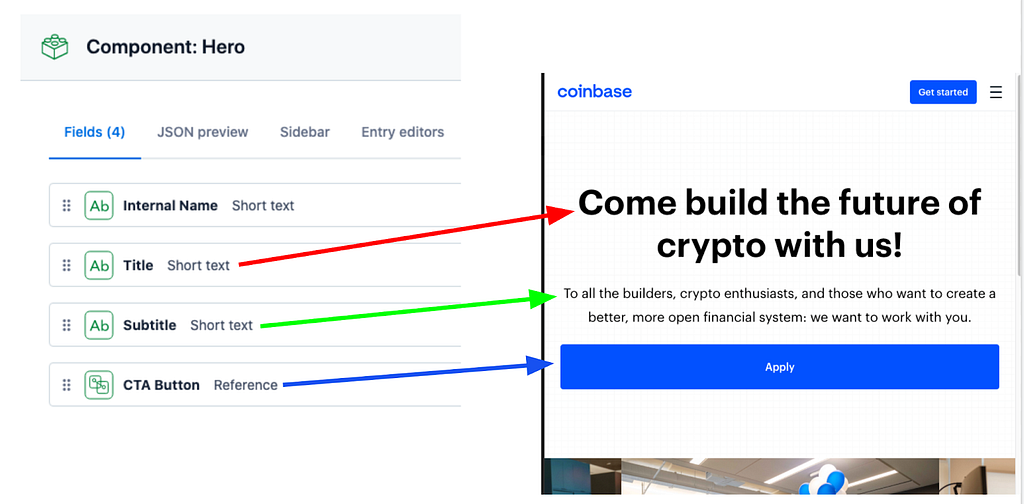
“Blocks,” also known as content types, are high-level components which combine to create landing pages. For example, a “Hero” block might contain a “Title”, “Subtitle” and “CTA Button” in the CMS, which corresponds to a React component on the frontend.
A “Hero Block” data structure (left) and the corresponding React component (right)
By creating a thoughtful “Block-based system” (and reworking our existing landing pages to use this system), we were able to efficiently migrate nearly all landing pages to a single frontend application, powered by React, and integrated with Contentful.
Once the block system was in place, migrating pages was a relatively simple task of dragging / dropping various blocks via the Contentful UI, and redirecting the old page routes to the new, CMS-driven alternative.
1, 2, Automate
Post-Project Flightsuit, our team focused on improving the usability and resiliency of the CMS. A few lessons learned:
Making the CMS easy-to-use for non-technical team members is extremely important. With our first pass at CMS landing pages, we had created some data structures with advanced features (such as generic layout creation) which were mostly only understood and serviceable by Engineers (thus defeating the main value prop of the CMS). We countered this by favoring editor experience above all else. By automating advanced features within Contentful wherever possible (such as automatically determining which layout would best suit a set of content), we could allow editors to focus on editing rather than building.
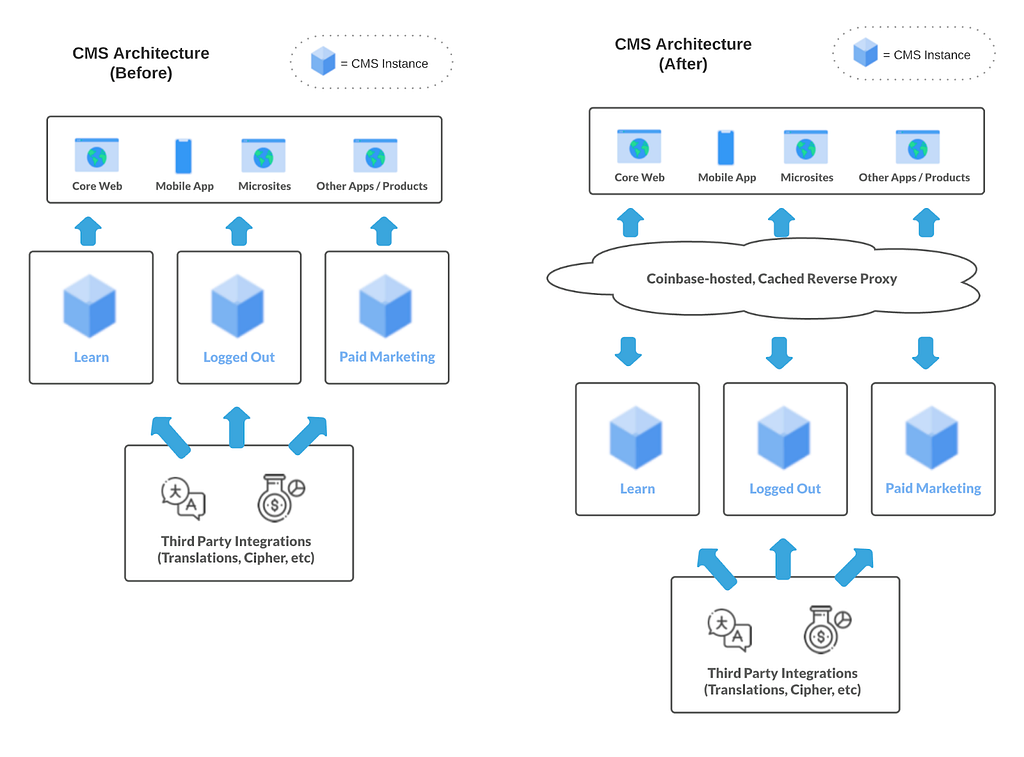
By integrating with Contentful (a third party), our frontends became dependent upon Contentful’s uptime. Contentful has a very consistent track record of nearly 100% uptime, but this reliance was challenged when Contentful experienced two outages due to some widespread DNS issues. (To be fair to Contentful, these outages were also experienced by some of the world’s largest websites and were the only instances we’ve seen where Contentful was unavailable). To ensure availability of our higher visibility pages (such as our homepage), we determined the best path forward was to introduce a reverse API proxy which leverages the stale-if-error header, in order for our CDN to serve cached content if the upstream call happens to fail. This allows us to stay up even if the CMS goes down (for X number of days).
Above: Our CMS architecture before and after adding the cached reverse proxy
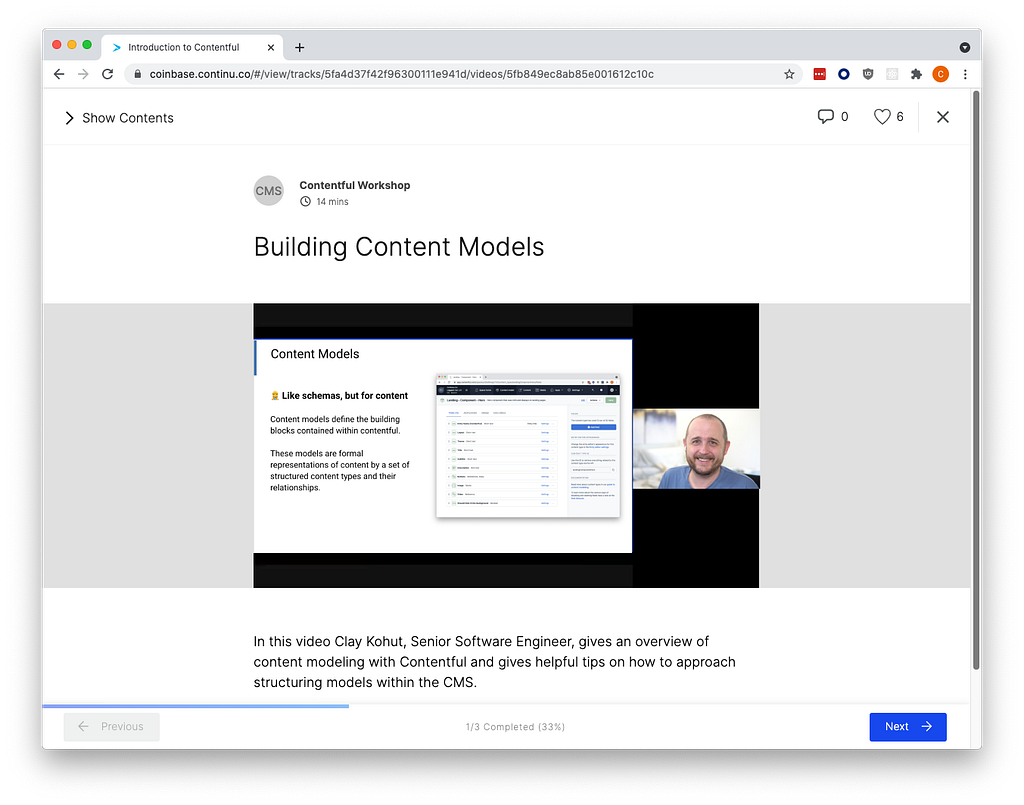
3. Training new engineering teams on working with and extending the CMS was a primary focus. My team had become the sole source of knowledge of an increasingly-used system and were often sourced to onboard new engineers to the system on a one-off basis. To better spread the knowledge of the framework, we developed the CMS Ambassador Program, which aimed to train and bring together subject matter experts for the CMS throughout the company. The program begins with a 1.5 hour structured workshop where attendees learn the ins and outs of integrating with the CMS. While this program is currently driven in real-time and onboarding sessions are held as-needed, we are currently in the process of converting this to a self-service course via an internal training tool.
A snapshot of our internal CMS Ambassador workshop
Key Results
As 2021 comes to a close, we’re proud to look back at how far we’ve come over the past year. Here is the progress we’ve seen after successfully implementing our company-wide CMS:
Landing page creation time reduced from an average of 2 weeks to less than one day.
Content change turnaround time reduced from an hour-long process of code change/review/merge/deploy to under 10 mins, and without engineering involvement.
By the end of year, 90% of all top level surfaces will be covered. This means that nearly all top-level, logged out product surfaces on Coinbase will be powered via Contentful by end of year.
These efficiency gains have been achieved thanks largely to our leadership’s investment in infra and developer tooling. Coinbase truly cares about engineering excellence, developer experience, and automating routine processes.
We also couldn’t have achieved this without the hard work of some astoundingly thoughtful, talented individuals (each of whom I’m incredibly proud to work with):
Leon Haggarty, Askat Bakyev, João Melo, Stephen Lee, Wilhelm Willie, Bryant Gallardo, Guiherme Luersen, Raymond Sohn, Leonardo Zizzamia, Christopher Nascone (Eng)
Bobby Rasmusson, Russ Ballard (Product)
Ananth Chandrasekharan, Goutham Buchi, Manish Gupta (EVP of Eng)
We’re all excited to enter 2022 with a shiny, unified frontend and minimal one-off content change requests on the horizon. If you’re interested in joining Coinbase, check out our Careers page here. Here’s to a happy new year!
Scaling Content at Coinbase was originally published in The Coinbase Blog on Medium, where people are continuing the conversation by highlighting and responding to this story.
Following the announcement that Facebook’s parent company would be rebranding in a shift towards the metaverse, many projects have started similar initiatives entering the virtual space, from buying property to testing the limits of what this universe has to offer.
Digital cities: Santa Monica and Seoul
The Downtown Santa Monica District west of Los Angeles was one of the first real-world areas to allow users to have access to the metaverse through the FlickPlay app. Branded as a metaverse tool, walking around the district seems to be more of a limited augmented reality experience rather than a virtual one, with people collecting digital tokens in the style of Pokémon GO.
In contrast, Seoul’s entry into the metaverse is expected to be a 100% virtual environment once launched in early 2023. In November, the local government announced it would be starting its own platform, Metaverse Seoul, slowly integrating services related to the economy, culture, education and civil complaints. In addition, the Korean capital planned to create virtual versions of its major tourist attractions and hold festivals in the metaverse.
Seoul, South Korea. Source: author
Does Meta have a ‘women problem’?
Following the launch of Horizon Worlds, the virtual reality game and online community platform released by Meta — formerly Facebook — at least one user reported that the virtual environment allowed sexual harassment. In a Dec. 16 report from MIT Technology Review, one of Horizon’s beta testers said a stranger had groped her avatar. Though there is a feature capable of encasing an avatar in a protective bubble to seemingly stop such an attack, the user was either unable to activate it in time, or was otherwise unaware of it.
“At the end of the day, the nature of virtual-reality spaces is such that it is designed to trick the user into thinking they are physically in a certain space, that their every bodily action is occurring in a 3D environment,” said Katherine Cross, an online harassment researcher at the University of Washington. “It’s part of the reason why emotional reactions can be stronger in that space, and why VR triggers the same internal nervous system and psychological responses.”
In November, another woman reported her metaverse persona under attack, this time without the use of avatars and with seemingly more real-world effects on her business. When Facebook rebranded to Meta, Australian artist Thea-Mai Baumann reported being locked out of her Instagram account. Her handle? “Metaverse.”
Because Meta owns Instagram and Baumann’s account was relatively small — fewer than 1,000 followers at the time — many on social media suspected the company would simply seize her account rather than buy it. She ended up being locked out for more than a month without being able to verify her identity before Instagram restored access.
“This account is a decade of my life and work. I didn’t want my contribution to the metaverse to be wiped from the internet,” said Baumann. “That happens to women in tech, to women of color in tech, all the time.”
Companies going meta
On Dec. 10, Chinese internet giant Baidu announced plans to launch its own metaverse product, called XiRang, a universe capable of handling input from 100,000 users where it also plans to host an AI developer conference. The Baidu Create conference is expected to be held on Dec. 27.
A city in Baidu’s metaverse. Source: Baidu
Sports footwear and apparel manufacturer Nike’s products are officially going virtual following the acquisition of virtual sneakers and collectibles brand RTFKT this week. RTFKT, which describes itself as “fully formed in the metaverse,” will likely help Nike advance its own plans to “just do it.”
Facebook whistleblower issues metaverse warning
Former Facebook employee Frances Haugen, who turned over thousands of documents that implied that the company was not doing what it claimed in regard to removing hate speech and posts encouraging violence, voiced her concerns about the metaverse. In a Dec. 16 newsletter released by Time magazine, Haugen said she was “super scared” about the potential risks of the virtual world for surveillance, socializing, and more:
“When you go into the metaverse, your avatar is a little more handsome or pretty than yourself. You have better clothes than we have in reality. The apartment is more stylish, more calm. And you take your headset off and you go to brush your teeth at the end of the night. And maybe you just don’t like yourself in the mirror as much. That cycle… I’m super worried that people are going to look at their apartment, which isn’t as nice, and look at their face or their body, which isn’t as nice, and say: ‘I would rather have my headset on.’”
Leading independent investment fund led by Kraken Alumni, Kraken Ventures today announced that it has secured $65 million for an early-stage fund to invest in companies working in the global crypto and financial technology (Fintech) ecosystem.
Kraken acted as the anchor LP in the latest funding. Additionally, the fund witnessed investment from a wide range of international institutional investors. Kraken Ventures aims to boost innovation in the crypto ecosystem through the support of emerging companies.
The fund focuses on areas including financial infrastructure, Web3, decentralized finance (Defi), consumer crypto protocols as well as enabling technologies, such as AI and Machine Learning. According to the details shared by Kraken Ventures, it has made several investments in some of the leading crypto companies including Anchorage and Messari.
“We’re extremely pleased to have successfully closed our first fund,” said Brandon Gath, Managing Partner of Kraken Ventures. “Our long-term view on investing, and the possibility to leverage Kraken’s experience in building a truly global, scalable platform, definitely contributed to the overwhelming interest we received from investors. Our focus now is to put that money to work and help some of the most innovative projects and their exceptionally talented founders accelerate the development of their companies and protocols.”
Headquartered in Texas, Kraken Ventures has team members in London and New York. The fund makes initial investments in the range of $500K and $2 million. According to the company, its investment strategy is based on the long-term horizon.
Appointment of Laurens De Poorter
To expand its presence in Europe, Kraken Ventures recently announced the appointment of Laurens De Poorter as Head of Europe. The newly appointed Head of Europe will be based in London. “The European crypto scene is booming. Deal count doubled in the last two years and continues to accelerate,” said Laurens De Poorter.
Leading independent investment fund led by Kraken Alumni, Kraken Ventures today announced that it has secured $65 million for an early-stage fund to invest in companies working in the global crypto and financial technology (Fintech) ecosystem.
Kraken acted as the anchor LP in the latest funding. Additionally, the fund witnessed investment from a wide range of international institutional investors. Kraken Ventures aims to boost innovation in the crypto ecosystem through the support of emerging companies.
The fund focuses on areas including financial infrastructure, Web3, decentralized finance (Defi), consumer crypto protocols as well as enabling technologies, such as AI and Machine Learning. According to the details shared by Kraken Ventures, it has made several investments in some of the leading crypto companies including Anchorage and Messari.
“We’re extremely pleased to have successfully closed our first fund,” said Brandon Gath, Managing Partner of Kraken Ventures. “Our long-term view on investing, and the possibility to leverage Kraken’s experience in building a truly global, scalable platform, definitely contributed to the overwhelming interest we received from investors. Our focus now is to put that money to work and help some of the most innovative projects and their exceptionally talented founders accelerate the development of their companies and protocols.”
Headquartered in Texas, Kraken Ventures has team members in London and New York. The fund makes initial investments in the range of $500K and $2 million. According to the company, its investment strategy is based on the long-term horizon.
Appointment of Laurens De Poorter
To expand its presence in Europe, Kraken Ventures recently announced the appointment of Laurens De Poorter as Head of Europe. The newly appointed Head of Europe will be based in London. “The European crypto scene is booming. Deal count doubled in the last two years and continues to accelerate,” said Laurens De Poorter.