[ad_1]
Turkish prosecutors are seeking jail sentences totaling up to 40,564 years for 21 of the founders and executives of the crypto-exchange Thodex. Bloomberg reported that TRY 356 million ($24 million) in losses were incurred due to the collapse of the exchange
Exchange
An exchange is known as a marketplace that supports the trading of derivatives, commodities, securities, and other financial instruments.Generally, an exchange is accessible through a digital platform or sometimes at a tangible address where investors organize to perform trading. Among the chief responsibilities of an exchange would be to uphold honest and fair-trading practices. These are instrumental in making sure that the distribution of supported security rates on that exchange are effectively relevant with real-time pricing.Depending upon where you reside, an exchange may be referred to as a bourse or a share exchange while, as a whole, exchanges are present within the majority of countries. Who is Listed on an Exchange?As trading continues to transition more to electronic exchanges, transactions become more dispersed through varying exchanges. This in turn has caused a surge in the implementation of trading algorithms and high-frequency trading applications. In order for a company to be listed on a stock exchange for example, a company must divulge information such as minimum capital requirements, audited earnings reports, and financial reports.Not all exchanges are created equally, with some outperforming other exchanges significantly. The most high-profile exchanges to date include the New York Stock Exchange (NYSE), the Tokyo Stock Exchange (TSE), the London Stock Exchange (LSE), and the Nasdaq. Outside of trading, a stock exchange may be used by companies aiming to raise capital, this is most commonly seen in the form of initial public offerings (IPOs).Exchanges can now handle other asset classes, given the rise of cryptocurrencies as a more popularized form of trading.
An exchange is known as a marketplace that supports the trading of derivatives, commodities, securities, and other financial instruments.Generally, an exchange is accessible through a digital platform or sometimes at a tangible address where investors organize to perform trading. Among the chief responsibilities of an exchange would be to uphold honest and fair-trading practices. These are instrumental in making sure that the distribution of supported security rates on that exchange are effectively relevant with real-time pricing.Depending upon where you reside, an exchange may be referred to as a bourse or a share exchange while, as a whole, exchanges are present within the majority of countries. Who is Listed on an Exchange?As trading continues to transition more to electronic exchanges, transactions become more dispersed through varying exchanges. This in turn has caused a surge in the implementation of trading algorithms and high-frequency trading applications. In order for a company to be listed on a stock exchange for example, a company must divulge information such as minimum capital requirements, audited earnings reports, and financial reports.Not all exchanges are created equally, with some outperforming other exchanges significantly. The most high-profile exchanges to date include the New York Stock Exchange (NYSE), the Tokyo Stock Exchange (TSE), the London Stock Exchange (LSE), and the Nasdaq. Outside of trading, a stock exchange may be used by companies aiming to raise capital, this is most commonly seen in the form of initial public offerings (IPOs).Exchanges can now handle other asset classes, given the rise of cryptocurrencies as a more popularized form of trading.
Read this Term.
Thodex was part of the boom that attracted thousands of Turks who wished to protect their savings from rampant inflation and an unstable currency. Ozer stated in an unknown location in April 2021 that he would remit investors’ money and return to Turkey at a later date to face justice.
According to the indictment, total losses from the collapse of the exchange were TRY 356 million. That figure is far below the $2.6 billion estimated in a February report by Chainalysis. Based on the report, Thodex was responsible for about 90% of the global value lost to rug pulls in 2021.
It is alleged that the defendants established a criminal organization, engaged in fraud through informatics systems, and laundered proceeds from criminal activities.
Citing the Demiroren News Agency, Bloomberg pointed out that indictments include Faruk Fatih Ozer, the 28-year-old CEO who has been missing for the past year. Turkish police teams have flown to four countries, including Albania, in attempts to locate Ozer since footage of him was first released in April 2021. Despite the red notice posted on Interpol’s website, Ozer remains on the wanted list.
Crypto Adoption in Turkey
In terms of crypto adoption, Turkey is one of the world’s biggest markets. According to the data published by Coinmarketcap, Turkey accounts for almost 16% of global cryptocurrency users. Currently, the country stands at position number 4 for the highest number of crypto users around the world.
The Turkish Lira saw immense volatility
Volatility
In finance, volatility refers to the amount of change in the rate of a financial instrument, such as commodities, currencies, stocks, over a given time period. Essentially, volatility describes the nature of an instrument’s fluctuation; a highly volatile security equates to large fluctuations in price, and a low volatile security equates to timid fluctuations in price. Volatility is an important statistical indicator used by financial traders to assist them in developing trading systems. Traders can be successful in both low and high volatile environments, but the strategies employed are often different depending upon volatility. Why Too Much Volatility is a ProblemIn the FX space, lower volatile currency pairs offer less surprises, and are suited to position traders.High volatile pairs are attractive for many day traders, due to quick and strong movements, offering the potential for higher profits, although the risk associated with such volatile pairs are many. Overall, a look at previous volatility tells us how likely price will fluctuate in the future, although it has nothing to do with direction.All a trader can gather from this is the understanding that the probability of a volatile pair to increase or decrease an X amount in a Y period of time, is more than the probability of a non-volatile pair. Another important factor is, volatility can and does change over time, and there can be periods when even highly volatile instruments show signs of flatness, with price not really making headway in either direction. Too little volatility is just as problematic for markets as too much, we uncertainty in excess can create panic and problems of liquidity. This was evident during Black Swan events or other crisis that have historically roiled currency and equity markets.
In finance, volatility refers to the amount of change in the rate of a financial instrument, such as commodities, currencies, stocks, over a given time period. Essentially, volatility describes the nature of an instrument’s fluctuation; a highly volatile security equates to large fluctuations in price, and a low volatile security equates to timid fluctuations in price. Volatility is an important statistical indicator used by financial traders to assist them in developing trading systems. Traders can be successful in both low and high volatile environments, but the strategies employed are often different depending upon volatility. Why Too Much Volatility is a ProblemIn the FX space, lower volatile currency pairs offer less surprises, and are suited to position traders.High volatile pairs are attractive for many day traders, due to quick and strong movements, offering the potential for higher profits, although the risk associated with such volatile pairs are many. Overall, a look at previous volatility tells us how likely price will fluctuate in the future, although it has nothing to do with direction.All a trader can gather from this is the understanding that the probability of a volatile pair to increase or decrease an X amount in a Y period of time, is more than the probability of a non-volatile pair. Another important factor is, volatility can and does change over time, and there can be periods when even highly volatile instruments show signs of flatness, with price not really making headway in either direction. Too little volatility is just as problematic for markets as too much, we uncertainty in excess can create panic and problems of liquidity. This was evident during Black Swan events or other crisis that have historically roiled currency and equity markets.
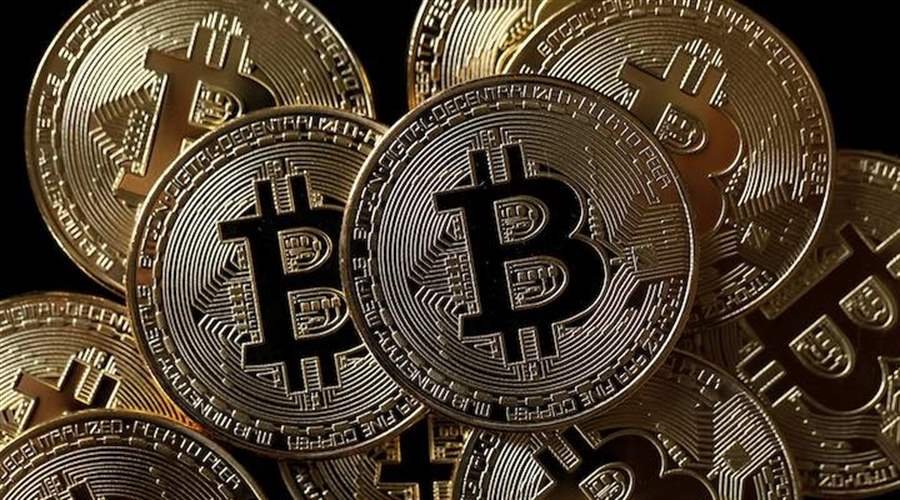
Read this Term in December 2021 after recent steps from Turkey’s central bank. While rising inflation has caused a major worry for local residents, investors have started parking their savings into crypto assets like Bitcoin and Ethereum.
Turkish prosecutors are seeking jail sentences totaling up to 40,564 years for 21 of the founders and executives of the crypto-exchange Thodex. Bloomberg reported that TRY 356 million ($24 million) in losses were incurred due to the collapse of the exchange
Exchange
An exchange is known as a marketplace that supports the trading of derivatives, commodities, securities, and other financial instruments.Generally, an exchange is accessible through a digital platform or sometimes at a tangible address where investors organize to perform trading. Among the chief responsibilities of an exchange would be to uphold honest and fair-trading practices. These are instrumental in making sure that the distribution of supported security rates on that exchange are effectively relevant with real-time pricing.Depending upon where you reside, an exchange may be referred to as a bourse or a share exchange while, as a whole, exchanges are present within the majority of countries. Who is Listed on an Exchange?As trading continues to transition more to electronic exchanges, transactions become more dispersed through varying exchanges. This in turn has caused a surge in the implementation of trading algorithms and high-frequency trading applications. In order for a company to be listed on a stock exchange for example, a company must divulge information such as minimum capital requirements, audited earnings reports, and financial reports.Not all exchanges are created equally, with some outperforming other exchanges significantly. The most high-profile exchanges to date include the New York Stock Exchange (NYSE), the Tokyo Stock Exchange (TSE), the London Stock Exchange (LSE), and the Nasdaq. Outside of trading, a stock exchange may be used by companies aiming to raise capital, this is most commonly seen in the form of initial public offerings (IPOs).Exchanges can now handle other asset classes, given the rise of cryptocurrencies as a more popularized form of trading.
An exchange is known as a marketplace that supports the trading of derivatives, commodities, securities, and other financial instruments.Generally, an exchange is accessible through a digital platform or sometimes at a tangible address where investors organize to perform trading. Among the chief responsibilities of an exchange would be to uphold honest and fair-trading practices. These are instrumental in making sure that the distribution of supported security rates on that exchange are effectively relevant with real-time pricing.Depending upon where you reside, an exchange may be referred to as a bourse or a share exchange while, as a whole, exchanges are present within the majority of countries. Who is Listed on an Exchange?As trading continues to transition more to electronic exchanges, transactions become more dispersed through varying exchanges. This in turn has caused a surge in the implementation of trading algorithms and high-frequency trading applications. In order for a company to be listed on a stock exchange for example, a company must divulge information such as minimum capital requirements, audited earnings reports, and financial reports.Not all exchanges are created equally, with some outperforming other exchanges significantly. The most high-profile exchanges to date include the New York Stock Exchange (NYSE), the Tokyo Stock Exchange (TSE), the London Stock Exchange (LSE), and the Nasdaq. Outside of trading, a stock exchange may be used by companies aiming to raise capital, this is most commonly seen in the form of initial public offerings (IPOs).Exchanges can now handle other asset classes, given the rise of cryptocurrencies as a more popularized form of trading.
Read this Term.
Thodex was part of the boom that attracted thousands of Turks who wished to protect their savings from rampant inflation and an unstable currency. Ozer stated in an unknown location in April 2021 that he would remit investors’ money and return to Turkey at a later date to face justice.
According to the indictment, total losses from the collapse of the exchange were TRY 356 million. That figure is far below the $2.6 billion estimated in a February report by Chainalysis. Based on the report, Thodex was responsible for about 90% of the global value lost to rug pulls in 2021.
It is alleged that the defendants established a criminal organization, engaged in fraud through informatics systems, and laundered proceeds from criminal activities.
Citing the Demiroren News Agency, Bloomberg pointed out that indictments include Faruk Fatih Ozer, the 28-year-old CEO who has been missing for the past year. Turkish police teams have flown to four countries, including Albania, in attempts to locate Ozer since footage of him was first released in April 2021. Despite the red notice posted on Interpol’s website, Ozer remains on the wanted list.
Crypto Adoption in Turkey
In terms of crypto adoption, Turkey is one of the world’s biggest markets. According to the data published by Coinmarketcap, Turkey accounts for almost 16% of global cryptocurrency users. Currently, the country stands at position number 4 for the highest number of crypto users around the world.
The Turkish Lira saw immense volatility
Volatility
In finance, volatility refers to the amount of change in the rate of a financial instrument, such as commodities, currencies, stocks, over a given time period. Essentially, volatility describes the nature of an instrument’s fluctuation; a highly volatile security equates to large fluctuations in price, and a low volatile security equates to timid fluctuations in price. Volatility is an important statistical indicator used by financial traders to assist them in developing trading systems. Traders can be successful in both low and high volatile environments, but the strategies employed are often different depending upon volatility. Why Too Much Volatility is a ProblemIn the FX space, lower volatile currency pairs offer less surprises, and are suited to position traders.High volatile pairs are attractive for many day traders, due to quick and strong movements, offering the potential for higher profits, although the risk associated with such volatile pairs are many. Overall, a look at previous volatility tells us how likely price will fluctuate in the future, although it has nothing to do with direction.All a trader can gather from this is the understanding that the probability of a volatile pair to increase or decrease an X amount in a Y period of time, is more than the probability of a non-volatile pair. Another important factor is, volatility can and does change over time, and there can be periods when even highly volatile instruments show signs of flatness, with price not really making headway in either direction. Too little volatility is just as problematic for markets as too much, we uncertainty in excess can create panic and problems of liquidity. This was evident during Black Swan events or other crisis that have historically roiled currency and equity markets.
In finance, volatility refers to the amount of change in the rate of a financial instrument, such as commodities, currencies, stocks, over a given time period. Essentially, volatility describes the nature of an instrument’s fluctuation; a highly volatile security equates to large fluctuations in price, and a low volatile security equates to timid fluctuations in price. Volatility is an important statistical indicator used by financial traders to assist them in developing trading systems. Traders can be successful in both low and high volatile environments, but the strategies employed are often different depending upon volatility. Why Too Much Volatility is a ProblemIn the FX space, lower volatile currency pairs offer less surprises, and are suited to position traders.High volatile pairs are attractive for many day traders, due to quick and strong movements, offering the potential for higher profits, although the risk associated with such volatile pairs are many. Overall, a look at previous volatility tells us how likely price will fluctuate in the future, although it has nothing to do with direction.All a trader can gather from this is the understanding that the probability of a volatile pair to increase or decrease an X amount in a Y period of time, is more than the probability of a non-volatile pair. Another important factor is, volatility can and does change over time, and there can be periods when even highly volatile instruments show signs of flatness, with price not really making headway in either direction. Too little volatility is just as problematic for markets as too much, we uncertainty in excess can create panic and problems of liquidity. This was evident during Black Swan events or other crisis that have historically roiled currency and equity markets.
Read this Term in December 2021 after recent steps from Turkey’s central bank. While rising inflation has caused a major worry for local residents, investors have started parking their savings into crypto assets like Bitcoin and Ethereum.
[ad_2]
Source link