Author: admin

  • Trezor set to launch new app suite for managing hardware wallet crypto

    Trezor set to launch new app suite for managing hardware wallet crypto

    [ad_1]

    Satoshi Labs, the creators of bitcoin and crypto hardware wallet  brand Trezor, is set to release its new interface application next week, on Wednesday, July 14th. While the Trezor Suite for the web is still available, the new Trezor Suite is built from the group up as a totally unique desktop app for Windows.

    Features of Trezor Suite

    Invity

    Firstly, Trezor Suite will integrate Invity (a Satoshi Labs tool). Invity enables users to buy bitcoin and dozens of other coins straight to their hardware wallet in a decentralized manner. With the integration of Invity, hardware wallet users are free from trusting exchanges with their keys.

    With Invity integration, users can now find an offer according to their region and preferred currency

    Dashboard Enhanced

    From the Trezor Suite dashboard, users will get a full view of all their crypto assets and a graph of their deposits and withdrawals. Trezor Suite is designed to be easy to navigate to a particular asset to start transacting. It is now more efficient to switch to the Trade tab to select an offer for a bitcoin purchase.

    Easy Onboarding

    The new Suite app also now provides an all-in-one onboarding interface guide to get users’ wallets properly set up. The onboarding tool highlights basic security steps user’s should take and how to improve privacy without the need for extra applications or complex networking knowledge.

    New onboarding tool

    Safe Transactions

    With the new Trezor Suite, it is now quicker to generate a new transaction plus set a custom fee. Importantly, security checks by Trezor make sure the fee is not abnormally high, and pre-calculated fees are recommended based on current network capacity. Further, RBF (replace by fee) and Broadcast are enabled by default to provide a more fluid transaction experience.

    RBF and Broadcast are enabled by default

    Efficient Token Management

    ERC-20 tokens can now be easily added to a user’s wallet with the contract address. Further, a crypto token supported by Trezor Suite can now be enabled/disabled from view via a simplified Coin Settings menu. Note, disabling a token just removes it from view on the app, the keys remain safe on Trezor.

    Privacy Simplified

    Lastly, different layers of privacy are available depending on a user’s needs. This feature can already be experienced through a Tor switch and discreet mode.

    Launch July 14th

    “Next week, Trezor Suite will officially launch. This is a significant milestone in its development, and Trezor Suite will become the main interface for managing your funds. But for Suite, it is still just the beginning. Each month will see exciting new features and expanded functionality brought to the new platform, so you can continue to do more with your crypto holdings.”
    – The Satoshi Labs Team

    [ad_2]

    Source link

  • Top 5 Cryptocurrencies of 2021

    Top 5 Cryptocurrencies of 2021

    [ad_1]

    The cryptocurrency market started 2021 on the back of substantial gains in December 2020. The overall market cap of cryptocurrencies jumped from approximately $500 billion to $752 billion in the last month of 2020.

    2021 started as a ‘game-changing’ year for the cryptocurrency market as a dramatic surge in demand for cryptocurrencies led to a substantial jump in the value of digital assets. The overall market cap of digital currencies jumped from $750 billion in January to a record high of approximately $2.5 trillion in May 2021. Despite the latest dip, the total market cap of cryptocurrencies is hovering near $1.4 trillion, which is up by more than 85% in the last six months.

    While some of the cryptocurrencies spiked by more than 10,000% in 2021, we have compiled a list of the top cryptocurrency assets which is not only focused on price gains. We have ranked the top 5 cryptocurrencies on the basis of retail and institutional adoption, popularity and market cap.

    Dogecoin (DOGE)

    Started as a joke cryptocurrency in 2013, Dogecoin became the most popular digital currency in 2021. Driven by the Redditt frenzy in January this year, DOGE spiked by nearly 900% within 24 hours on 29 January. Additionally, Dogecoin received support from celebrities, including Elon Musk and Snoop Dogg. In terms of adoption, several global organizations started accepting DOGE as a mode for payments. As of the time of writing, Dogecoin is trading above $0.21 with a market cap of more than $27 billion. DOGE is up by more than 4,500% since the start of 2021.

    Dogecoin (Coinmarketcap)

    Ethereum (ETH)

    ETH is the second-most valuable cryptocurrency in the world after Bitcoin. Institutional interest in Ethereum jumped substantially in 2021 as large organizations started adding Ethereum to their balance sheets. According to CoinShares, Europe’s largest crypto asset manager, ETH-related investment products attracted more than $1 billion in the first six months of 2021. Grayscale, the US-based digital asset management firm, expanded its ETH assets significantly this year. The company now holds more than 3.1 million ETH. In terms of price, Ethereum remained the best performing cryptocurrency among the top 3 with a jump of nearly 190% in H1 of 2021. ETH currently has a market cap of $254 billion.

    Suggested articles

    Swiss Fintech Set to Change the Landscape of Isolated Financial ServicesGo to article >>

    Ethereum (Coinmarketcap)

    Binance Coin (BNB)

    BNB surprised everyone in 2021 with substantial gains. The cryptocurrency became popular among retail traders due to its limited supply. One of the main reasons behind the surge in the popularity of BNB in 2021 is that a record number of BNB tokens were burnt this year. “When you burn coins, they are taken out of circulation forever. It increases the value of the remaining coins,” Binance CEO, Changpeng Zhao mentioned on Twitter in April. Binance Coin started this year with a price level of $37. The cryptocurrency spiked by more than 700% to reach $300 by the end of June 2021. BNB’s current market cap stands at around $47 billion.

    BNB (Coinmarketcap)

    XRP

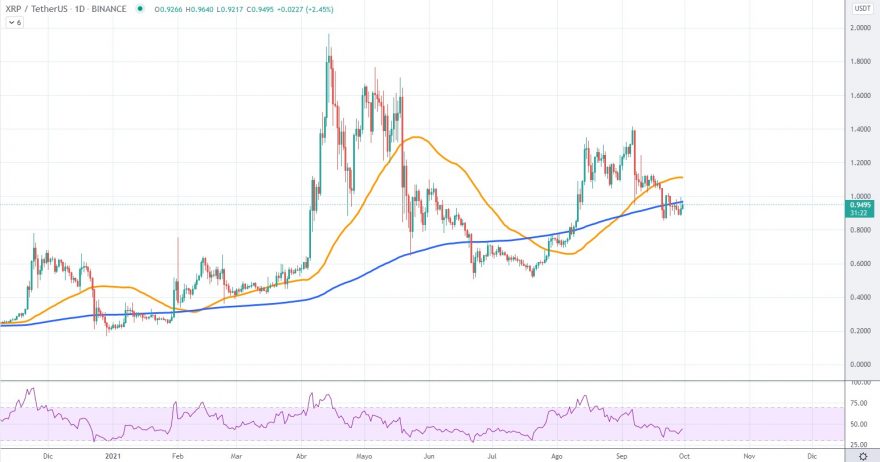
    In December 2020, XRP lost nearly 60% of its value after the US Securities and Exchange Commission (SEC) filed a lawsuit against Ripple. However, the adoption of XRP Ledger (XRPL) has increased rapidly since the start of 2021. Ripple formed several partnerships with some of the leading cross-border payment firms around the world to enhance the use of XRP in global payments. XRP-related investment products also saw large institutional inflows this year. XRP’s retail demand and the total number of whale addresses have increased substantially over the last six months. As a result, the price of XRP has jumped from $0.22 to $0.60 in the first half of 2021. XRP is the 6th most valuable cryptocurrency in the world with a market cap of over $28 billion.

    XRP (Coinmarketcap)

    Bitcoin (BTC)

    Despite the reason that BTC lagged behind other cryptocurrencies like Ethereum, XRP and Dogecoin in terms of price gains, Bitcoin received immense support from large hedge fund managers and institutional investors. In February 2021, Tesla, the world’s largest electric car maker, purchased $1.5 billion worth of Bitcoin. Moreover, MicroStrategy and Square increased their BTC holdings during the first half of 2021. CoinShares mentioned that the overall investment into BTC-related investment products in H1 of 2021 has already jumped above the total investment of the entire 2020. According to the latest data published by crypto analytics firm, Santiment, Bitcoin whales holding between 100 and 10,000 BTC now have more than 9.13 million coins, which is the highest level on record. This shows that BTC remained the preferred choice of large investors in 2021.

    Bitcoin is still the most valuable cryptocurrency in the world with a market cap of over $600 billion.

    BTC (Coinmarketcap)


    [ad_2]

    Source link

  • Industry Formation Using the CoinsPaid Example

    Industry Formation Using the CoinsPaid Example

    [ad_1]

    The crypto market evolved exceptionally in the years 2014 to 2021, and the question of whether this industry will survive no longer exists. Instead, we are questioning where it’s heading and how quickly it will reach new heights.

    In January 2021, the cryptocurrency market capitalization achieved the first trillion USD, and in April 2021, it already hit 2 trillion, with a Bitcoin share of about 50% of the total volume.

    Today the crypto market is represented by a large variety of startups that develop their ideas based on the blockchain. They include the art industry actively promoting NFTs, teams developing the collection and distribution of data on the blockchain, and the financial sector introducing blockchain technology into the processes of transfer and payment systems, to name just some.

    According to Deloitte Research,  the top use cases for blockchain adoption in 2020 were:

    Let’s explore how one such project, operating within two sectors adopting blockchain technology fastest: cryptocurrencies and payments, is achieving new positions in the payment niche and changing traditional finance.

    CoinsPaid rise

    The company started in 2014 with simple digital solutions for processing crypto transactions and built an entire ecosystem of products by 2021. As of July 2021, Cryptoprocessing by CoinsPaid handles 7% of all on-chain Bitcoin transactions. This number continues to increase each month.

    What is the company’s ecosystem, and who are its customers? The ecosystem is developed with a focus on the B2B sector. It includes the crypto processing solution, an exchange and OTC Desk, and enterprise and personal crypto wallets. Most of their clients are online businesses that use the Cryptoprocessing payment gateway and other related services for crypto/fiat operations.

    The future forecast predicts that the market will continue to grow with more clients choosing crypto alternatives for payment and financial services. The year 2020 already demonstrated the shift of traditional merchandisers towards eCommerce platforms, a phenomenon that applies to any economic sector. Online shopping will only continue to rise in the years to come.

    Company perspective

    During 2020, CoinsPaid quintupled in its volumes and became one of the world’s largest providers of crypto payments.

    Some events of 2020 that give proof to the industry’s rapid development were new legal initiatives for crypto, different states launching their national CBDC programs, and the entry into the market of prominent traditional players.

    eCommerce exploded with a 40% growth in 2020 compared to 2019. The industry also started accepting crypto for payments, meaning that it holds great potential for companies like CoinsPaid.

    CoinsPaid has already become the number one payment provider in the iGaming sector and actively attracts customers in other industries.

    In addition to their B2B focus, the company also launched services for individuals. CoinsPaid promotes its products for B2C clients via more than 600 online businesses and an incentive program. These businesses altogether possess five million physical users, which CoinsPaid could reach in a reasonably short time.

    In June 2021, CoinsPaid announced the launch of its CPD token and IDO campaign. CPD will serve as a utility token for the company’s ecosystem, as well as delivering DeFi options for its clients. The popularity of DeFi looks to have a long-term perspective now, with more professional products being offered on the market. It will be interesting to watch how CoinsPaid can apply DeFi within its business model.

    CoinsPaid’s turnover in the first five months of 2021 (January to May) reached EUR 1.3 billion. The company demonstrates how you can grow from a startup to a successfully operating financial company with great potential.


    [ad_2]

    Source link
  • 3 reasons why Ethereum exchange reserves are falling to new lows

    3 reasons why Ethereum exchange reserves are falling to new lows

    [ad_1]

    Over the past week, astute crypto market analysts noticed some interesting developments related to the supply of Ether (ETH) as the network’s August 4 London hard fork approaches.

    Recent data from CryptoQuant, an on-chain analytics firm, indicates that the amount of Ether held in cryptocurrency exchanges’ reserves has hit new daily lows since the start of July.

    Ethereum all exchange reserves. Source: CryptoQuant

    To determine if this is a bullish or bearish development for the top altcoin, let’s take a closer look at some of the factors playing a role in the increased demand for Ether, including the Eth2.0 staking contract, increased activity in decentralized finance and traders’ possible excitement ahead of the implementation of Ethereum Improvement Proposal (EIP) 1559.

    Eth2 staking surpasses 6 million Ether

    One source for the increased demand for Ether is the Eth2 staking contract which surpassed the 6 million Ether mark on June 30.

    Data from CryptoQuant shows that July 1 saw the largest single-day outflow of Ether from exchanges since January 21 with more than 596,000 Ether pulled off exchanges.

    Ethereum all exchanges netflow. Source: CryptoQuant

    The most recent data provided by Eth2 Launchpad indicates that the current amount staked is 6,166,661, which indicates that not all of the Ether withdrawn from exchanges went into staking.

    DeFi values rise

    Another possible destination for the Ether being taken off exchanges is the decentralized finance ecosystem which has seen increases in token values as well as the total value locked in DeFi protocols.

    Total value locked in all of DeFi. Source: Defi Llama

    While Ether and Bitcoin (BTC) hold a lot of the value that is currently locked in DeFi, their prices have remained relatively unchanged over the past week, meaning the recent rise in TVL seen on July 8 may have been caused by rising token values as deposits have remained steady according to deposits and loan data provided by Dune Analytics. 

    Traders’ excitement grows ahead of the London hard fork

    A third potential contributor to the recent flows seen in Ether is the upcoming London Hard Fork and the EIP-1559 proposal.

    Several analysts expect the upgrade to positively impact Ether’s price due to the transition to a more eco-friendly proof-of-stake consensus mechanism as well as a new “scarcity” feature that will reduce the number of tokens in circulation.

    Related: Ethereum price can gain 40% on Bitcoin, argues analyst as London fork nears

    Excitement about the upcoming hard fork is a possible source in the rise of ETH/BTC pair seen since June 27 as the price of Ether also rose in its USD pair.

    ETH/BTC 4-hour chart. Source: TradingView

    While Ether has outperformed Bticoin for a majority of the time since June 27, BTC’s performance during the market-wide pullback on July 8 is a sign that BTC remains the most resilient of the cryptocurrencies when market conditions are less than favorable.

    From a long term perspective, however, the value proposition of Ether can’t be ignored and the battle between Ether and BTC is far from settled as recently discussed in a report from Goldman Sachs, which suggests that Ether will possibly surpass the total market capitalization of Bitcoin in the coming years.

    The views and opinions expressed here are solely those of the author and do not necessarily reflect the views of Cointelegraph.com. Every investment and trading move involves risk, you should conduct your own research when making a decision.