Interoperability has become one of the driving themes within the crypto market and as the blockchain ecosystem evolves into an interconnected web of layer-one protocols, the importance of communication and efficiency among decentralized applications (dApps) will also increase.
Ren (REN), a blockchain protocol designed to provide interoperability and liquidity between different blockchain platforms, has started gaining traction over the past month and a half as activity in the decentralized finance (DeFi) sector has been on the rise.
Data from Cointelegraph Markets Pro and TradingView shows that after reaching a low of $00.41 on Aug. 9, the price of REN has climbed 185% to a daily high at $1.16 on Sept. 15 as its 24-hour trading volume spiked 443% to $673 million.
REN/USDT 1-day chart. Source: TradingView
Three reasons for the price growth seen in REN include the steadily increasing activity and total value locked on RenVM, the launch of a bridge to Arbitrum and the release of RenVM Greycore on the network’s testnet.
Rising volume and total value locked
REN’s bullish momentum can be found in the data for the total network volume and total value locked (TVL).
Total network volume and total value locked on Ren. Source: Ren Project
As 2021 progressed, new chains were added to the list of bridges supported, which now includes Ethereum, Binance Smart Chain, Solana, Polygon, Fantom, Avalanche and Arbitrum.
Each new bridge has helped to increase the volume and TVL on the Ren network, which has coincided with moves seen in REN p.
REN price follows the Bridge to Arbitrum
The spike in price seen on Sept. 15 was due, in large part, to the release of the Arbitrum bridge, an Ethereum (ETH) layer-two scaling solution Arbitrum, which is designed to host popular decentralized applications in a fast, low-fee environment.
The Ethereum network has been plagued by high fees and delayed transaction times, which have hampered the ability of many users to use DeFi or nonfungible token (NFT) related protocols on the network.
Arbitrum’s low-cost environment has proven to be an attractive DeFi environment for BTC holders who are now able to migrate to the layer-two solution and interact on the network with renBTC.
The total value locked on Arbitrum via the Ren protocol was $7.75 million as of Sept. 15 and is represented by the green line in the value locked chart above.
Related: Solana and Arbitrum knocked offline, while Ethereum evades attack
REN marches toward decentralization
A third reason behind the increase in activity for REN was the release of RenVM Greycore on the network’s testnet on Sept. 13, a move that was done as the project works toward its goal of full decentralization.
Greycore is a semi-decentralized validator set of nodes that are operated by reputable DeFi projects and it helps to add an additional layer of protection for the protocol.
The first project to join Greycore was BadgerDAO, a DeFi project focused on building projects that bring BTC to DeFi.
According to data from Cointelegraph Markets Pro, market conditions for REN have been favorable for some time.
The VORTECS™ Score, exclusive to Cointelegraph, is an algorithmic comparison of historical and current market conditions derived from a combination of data points including market sentiment, trading volume, recent price movements and Twitter activity.
VORTECS™ Score (green) vs. REN price. Source: Cointelegraph Markets Pro
As seen on the chart above, the VORTECS™ Score for REN turned green on Sept. 13 and climbed to a high of 71 on Sept. 14 just as the price of REN began to increase 72% over the next two days.
The views and opinions expressed here are solely those of the author and do not necessarily reflect the views of Cointelegraph.com. Every investment and trading move involves risk, you should conduct your own research when making a decision.
Starting today, Shiba Inu (SHIB) is available on Coinbase.com and in the Coinbase Android and iOS apps. Coinbase customers can now trade, send, receive, or store SHIB in most Coinbase-supported regions, with certain exceptions indicated in each asset page here. Trading for these assets is also supported on Coinbase Pro .
Shiba Inu (SHIB) is a token that aspires to be an Ethereum-based alternative to Dogecoin (DOGE), the popular memecoin. Unlike Bitcoin, which is designed to be scarce, SHIB is intentionally abundant — with a circulating supply of one quadrillion. The Shiba Inu Token ecosystem supports projects such as an NFT art incubator and the development of a decentralized exchange called Shibaswap.
One of the most common requests we hear from customers is to be able to buy and sell more cryptocurrencies on Coinbase. We announced a process for listing assets, designed in part to accelerate the addition of more cryptocurrencies. We are also investing in new tools to help people understand and explore cryptocurrencies. We launched informational asset pages (see SHIB), as well as a new section of the Coinbase website to answer common questions about crypto.
Customers can sign up for a Coinbase account here to buy, sell, convert, send, receive, or store e Coinbase Android and iOS apps. Coinbase customers can now trade, send, receive, or store SHIB today.
###
Please note: Coinbase Ventures may be an investor in the crypto projects mentioned here, and additionally, Coinbase may hold such tokens on its balance sheet for operational purposes. A list of Coinbase Ventures investments is available at https://ventures.coinbase.com/. Coinbase intends to maintain its investment in these entities for the foreseeable future and maintains internal policies that address the timing of permissible disposition of any related digital assets, if applicable. All assets, regardless of whether Coinbase Ventures holds an investor or Coinbase holds for operational purposes, are subject to the same strict review guidelines and review process.
This website contains links to third-party websites or other content for information purposes only (“Third-Party Sites”). The Third-Party Sites are not under the control of Coinbase, Inc., and its affiliates (“Coinbase”), and Coinbase is not responsible for the content of any Third-Party Site, including without limitation any link contained in a Third-Party Site, or any changes or updates to a Third-Party Site. Coinbase is not responsible for webcasting or any other form of transmission received from any Third-Party Site. Coinbase is providing these links to you only as a convenience, and the inclusion of any link does not imply endorsement, approval or recommendation by Coinbase of the site or any association with its operators.
Crypto is a new type of asset. Besides potential day to day or hour to hour volatility, each crypto asset has unique features. Make sure you research and understand individual assets before you transact.
All images provided herein are by Coinbase.
Shiba Inu (SHIB) is now available on Coinbase was originally published in The Coinbase Blog on Medium, where people are continuing the conversation by highlighting and responding to this story.
Not many retail and institutional investors heard about Solana (SOL) before 2021. The cryptocurrency hardly saw any substantial gains during the second half of 2020. However, Solana’s popularity skyrocketed in 2021 as the digital asset saw immense demand from retail and institutional investors.
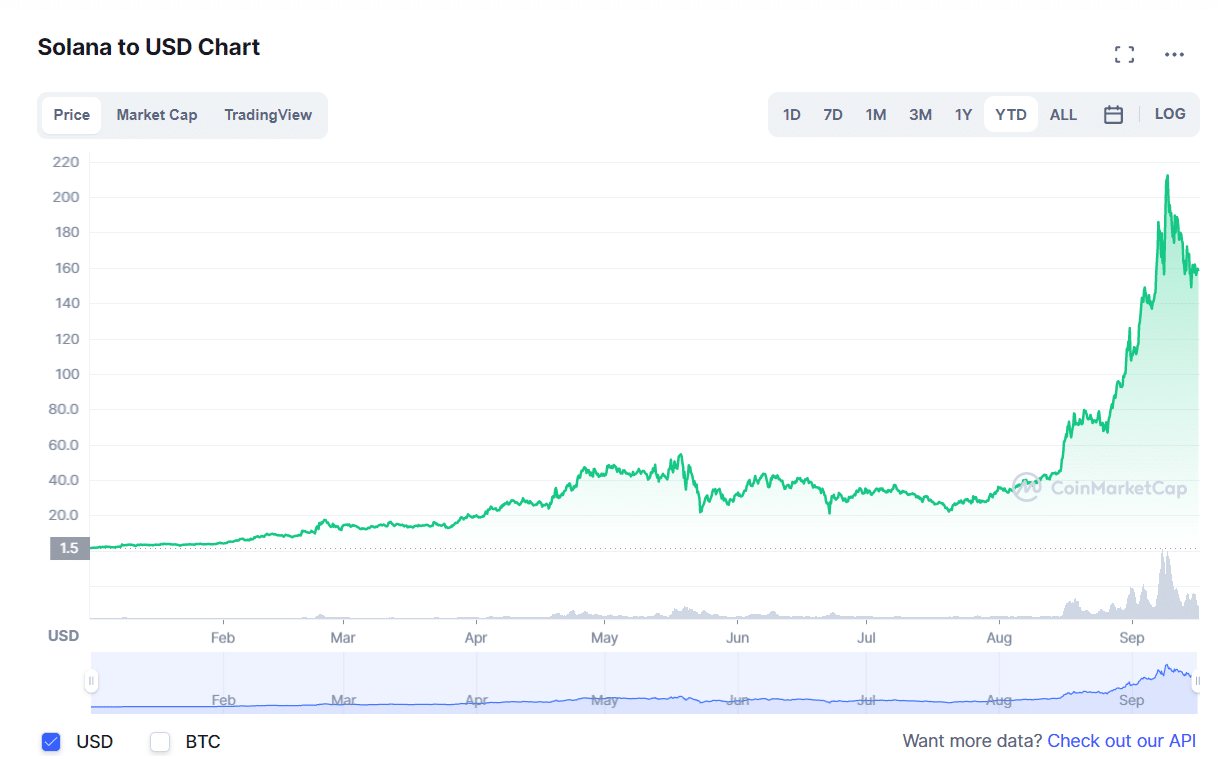
The latest data posted by Coinmarketcap shows that Solana gained nearly 10,500% in 2021, which makes it the best performing digital currency among the top 10. SOL started this year at a price level of just $1.5 and touched an all-time high of approximately $210 on 9 September 2021. Solana’s trading volume and the overall network activity have increased substantially in the last few months.
Coinmarketcap
The most surprising part of the latest rally in Solana is the interest of institutional investors in the world’s 7th largest cryptocurrency. Last week, SOL investment products attracted $50 million worth of institutional inflows, which is more than the combined weekly inflows of Bitcoin, Ethereum, Cardano, Polkadot and XRP investment products.
So, what is the main reason behind Solana’s enormous rally in 2021? Crypto analysts believe that the technology behind Solana is better than most of its competitors and that is why Solana’s adoption has increased significantly in the last few months. Secondly, the fear of missing out (FOMO) is playing a major role in the recent surge in SOL’s demand.
Solana’s Technical Advantages
Maria Stankevich, Chief Business Development Officer at EXMO UK, believes that Solana’s high speed and low cost of the transaction are playing an important role in its global adoption. “To be honest, before the Solana project, we heard many times about so-called ‘Ethereum killers’. Cardano, Polkadot: they all tried to solve challenges ETH faced. ETH is still the absolute champion in the Defi world. However, the Ethereum network is trying to solve massive problems of the network overload which makes it impossible to scale the network to millions of the users since the commissions are rocketing to the roof,” Stankevich said.
Suggested articles
The Rising Star of the DeFi Project, GIBXSwap, Passes CertiK Security AuditGo to article >>
“Solana claims that its blockchain can support more than 50 000 transactions per sec (TPS) which makes it the fastest blockchain ever. In comparison, it’s 3000 times faster than ETH (15 TPS). Also, the average time of the block is 400-800 msec, and the average commission for a transaction is 0.000005 SOL (less than a cent!). Another secret of Solana is a new protocol Proof-of-History, that allows the unprecedented traffic possibility,” she added.
“So, the main advantages that influenced the price surge are: the high speed and low cost of the transactions, a more eco-friendly blockchain, the possibility of scalability (without the sharding and 2 level solutions), numerous partner relations inside of the network, a focus on the dapps in the Defi system, the experienced team, listing on many exchanges, the possibility to earn with staking, and security,” Stankevich explained.
FOMO
Finance Magnates also asked Johnny McCamley, Founder of CryptoClear, about his views on the latest price movement of SOL and the key advantages of the Solana blockchain. McCamley mentioned that the strong fundamentals of Solana blockchain and FOMO among retail and institutional investors are driving its price rally.
“Solana is an excellent investment for the long term- 1 of the 15 projects that we, at CryptoClear, include in our Dollar Cost Averaging plan (DCA Plan) for the long term due to the team, tech maturity and real-life use case. Solana ensures composability between ecosystem projects by maintaining a single international state as the network scales. Never deal with fragmented Layer 2 systems or sharded chains. Low cost, forever-Solana’s scalability ensures transactions remain less than $0.01 for both developers and users. Fast, forever-Solana is all about speed, with 400 millisecond block times. And as hardware gets faster, so does the network,” McCamley mentioned.
“One of the major reasons behind its recent price surge is FOMO (Fear of Missing Out). Those who do not own SOL and other crypto assets will have the fear that they have ‘missed the boat’ and start investing as soon as they can,” he added.
Starting today, Braintrust (BTRST) is available on Coinbase.com and in the Coinbase Android and iOS apps. Coinbase customers can now trade, send, receive, or store BTRST in most Coinbase-supported regions, with certain exceptions indicated here. Trading for these assets is also supported on Coinbase Pro.
Braintrust (BTRST) is an Ethereum token that powers Braintrust, a decentralized talent network connecting freelancers with organizations. BTRST is used to govern the network and also as an incentive to refer new users.
One of the most common requests we hear from customers is to be able to buy and sell more cryptocurrencies on Coinbase. We announced a process for listing assets, designed in part to accelerate the addition of more cryptocurrencies. We are also investing in new tools to help people understand and explore cryptocurrencies. We launched informational asset pages (see BTRST), as well as a new section of the Coinbase website to answer common questions about crypto.
Customers can sign up for a Coinbase account here to buy, sell, convert, send, receive, or store COTI today.
Please note: Coinbase Ventures may be an investor in the crypto projects mentioned here, and additionally, Coinbase may hold such tokens on its balance sheet for operational purposes. A list of Coinbase Ventures investments is available at https://ventures.coinbase.com/. Coinbase intends to maintain its investment in these entities for the foreseeable future and maintains internal policies that address the timing of permissible disposition of any related digital assets, if applicable. All assets, regardless of whether Coinbase Ventures holds an investor or Coinbase holds for operational purposes, are subject to the same strict review guidelines and review process.
This website contains links to third-party websites or other content for information purposes only (“Third-Party Sites”). The Third-Party Sites are not under the control of Coinbase, Inc., and its affiliates (“Coinbase”), and Coinbase is not responsible for the content of any Third-Party Site, including without limitation any link contained in a Third-Party Site, or any changes or updates to a Third-Party Site. Coinbase is not responsible for webcasting or any other form of transmission received from any Third-Party Site. Coinbase is providing these links to you only as a convenience, and the inclusion of any link does not imply endorsement, approval or recommendation by Coinbase of the site or any association with its operators.
Crypto is a new type of asset. Besides potential day to day or hour to hour volatility, each crypto asset has unique features. Make sure you research and understand individual assets before you transact.
All images provided herein are by Coinbase.
Braintrust (BTRST) is now available on Coinbase was originally published in The Coinbase Blog on Medium, where people are continuing the conversation by highlighting and responding to this story.
Leading wealth management platform Abra completed a Series C funding with participation from the Stellar Development Foundation. The company raised $55 million in the round led by major players in the industry, such as IGNIA and Blockchain Capital.
The Stellar Development Foundation was one of the new investors in the company alongside Kingsway Capital and Tiga Investment. In addition, Abra received investments from Lerer Hippeau Ventures, Amex Ventures, Arbor Ventures, RRE Ventures, CMT Digital Ventures, and Kenetic Advisors.
Related Reading | An Introduction To Stellar And XLM: Mission, Control, And Consensus
Other relevant names participated in the Series C funding, according to a press release. The wealth management platform increased its total funding to more than $85 million since its creation.
The release claims that the funds will be used to expand Abra’s team into new offerings which include wealth management, trading, and payments. Thus, why the investment from the Stellar Development Foundation could have a relevant role to achieve this goal. Bill Barhydt, founder, and CEO of Abra said the following:
Cryptocurrencies, NFTs and DeFi are now top of mind for almost all investors. The crypto asset class is growing exponentially, even outpacing the early commercial Internet itself. Our vision of crypto-centric banking is coming to life in front of our eyes, and Abra is excited to serve as a leader in the space.
Barhydt claimed to feel “proud” of the Abra team and their accomplishments. The executive expects the platform to keep scaling and growing.
Stellar And Abra’s Shared History Of Crypto Expansion
Since 2020, Abra has seen “tremendous” growth, according to the press release. The company records a ten-fold increase in revenues, and a 0 to $1 billion in assets under management (AUM) for its custody services, Abra Trade and Abra Earn.
Related Reading | Stellar Network To Power New Savings API Launched By Wyre
In the same period, the company’s 155,000 monthly users have processed $4 billion in transactions. In that sense, Bart Stephens, Managing Partner at Blockchain Capital, said the following on its latest Series C Funding:
We believe Abra is on an exciting growth trajectory, led by a strong management team with an understanding of the long-term potential for cryptocurrencies. Abra offers unmatched accessibility for every type of investor which positions the company well for capitalizing on the growth in adoption and interest in cryptocurrencies globally.
In 2020, the Stellar Development Foundation made a $5 million investment in Abra. The partners worked to expand Abra’s financial services with Stellar as a blockchain back-end and “democratize access” to them for new customers in developing countries.
Related Reading | New To Bitcoin? Learn To Trade Crypto With The NewsBTC Trading Course
At the time, the CEO of the Stellar Development Foundation Denelle Dixon said:
Abra is building a product portfolio of financial services that aligns directly with our mission to create equitable access to the global financial system. They’re committed to providing innovative investment opportunities in underserved, capital-scarce markets.
Alvaro Rodriguez Arregui, a Managing Partner of IGNIA, added:
Abra is perfectly positioned to execute on its mission to expand access to crypto assets in a safe and secure way for customers. As international investors ourselves, we recognize the need for safe and reliable access to the crypto ecosystem and are excited to support Abra.
At the time of writing, XLM trades at $0,33 with a 3.8% profit in the daily chart.
XLM with small profits in the daily chart. Source: XLMUSDT Tradingview
Ripple is one of the most impressive blockchain projects. Unlike Bitcoin, which was originally introduced to create an internet-based currency, Ripple Labs saw the potential of the underlying blockchain technology and decided to create a decentralized infrastructure for the existing financial institutions.
Even in the present day, when the crypto space has been bombarded with decentralized finance (DeFi) projects, only a handful of companies are truly competing with Ripple.
With massive potential use cases, Ripple-issued digital currency XRP became very popular among crypto traders. It is one of the most controversial cryptos, yet remains in high demand. But, what is the optimum value of XRP? Is it currently undervalued or overvalued?
67% Discount
XRP is going through a roller coaster ride since 2020. The prices swang between a bottom of $0.2 and a peak of over $1.8 in the past 12 months, which was also triggered by the delisting of the token on US exchanges. Its volatility still remains and is mostly echoing the movement of the overall cryptocurrency market.
Currently, XRP is trading at little more than a dollar for a few days, but the dominant market volatility can easily push the prices in any direction.
“When XRP was delisted, around the turn of the year, the price had been floating between $0.40 and $0.60 — XRP saw a sharp decline in price directly after delisting but made a steep recovery to far over $1 by April. Since then, the price has ebbed and flowed, but hasn’t dropped back down to immediate post-decline numbers,” said Finder.com’s Zak Killermann.
While Bitcoin and Ethereum are testing their peaked recently, XRP is trading significantly lower than its early 2018 peak. Then, the XRP price touched almost $3.34, meaning the token is now trading at a discount of over 67 percent.
According to CoinPrice Forecast, XRP is likely to end 2021 with a value of $1.15, while it has the possibility of gaining 47 percent by the end of next year: both much lower than the tokens all-time high value. But what is keeping XRP from surging like Solana, Cardano’s ADA, or Polkadot?
The SEC Case
Though there is no certain answer, XRP price is most likely being influenced by the ongoing litigation against Ripple brought by the US Securities and Exchange Commission (SEC). The lawsuit alleged that XRP is unregistered security and accused the San Francisco-headquartered company of illegally raising $1.3 billion by selling the crypto.
Suggested articles
Netflix: Is it Time to Invest?Go to article >>
The regulator’s move against the blockchain company prompted the US exchanges to delist the token as they wanted to avoid regulatory backlash for listing unregistered security.
Though Ripple received recognition from many major international banks and financial giants like Bank of America, Santander, and American Express, the token’s future price is highly correlated with the SEC lawsuit.
A favorable judgment can push XRP to a significantly higher level, while the complications associated with labeling XRP as security can plummet the token price to a new low.
“US exchanges who have chosen to remove XRP have likely damaged their US customers holding XRP. Customers without offshore trading options were likely forced to sell at near-term depressed levels,” said Joshua Greenwald, Head of Risk at Uphold.
“Re-listing may help those who’ve continued to hold recoup some of those losses but many have sold, and for many, the damage is done.”
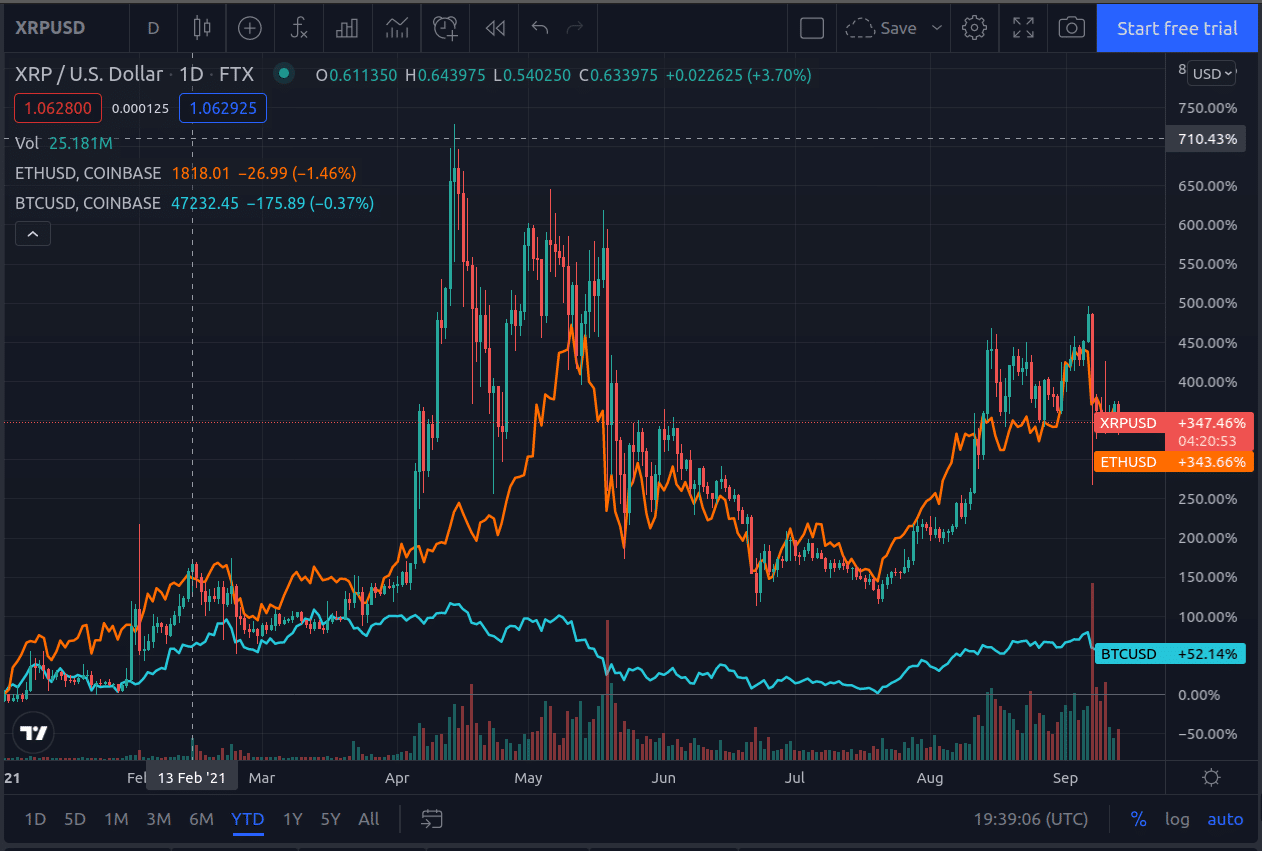
He further pointed out a strange correlation between the overall market value of XRP and ETHUSD since mid-May.
XRPUSD and ETHUSD correlation
Big Fish
Another factor, that can push the value of XRP higher is institutional adoption. Against unlike Bitcoin and Ethereum, XRP failed to get the attention of institutional investors. However, the ties of the project with big banks can surge the demand for the token when the widespread testing RippleNet starts.
Though traditional hedge funds and institutions are yet to adopt XRP, many large crypto investors are already betting big on the token. According to Whale Alert, the number of large XRP transactions is also surging, signaling bullish bets on the token.
“It’s hard to say if Ripple can survive regulatory challenges long term but the short term outlook for XRP looks promising, with a panel average end of year price prediction of $1.23,” Killermann said.
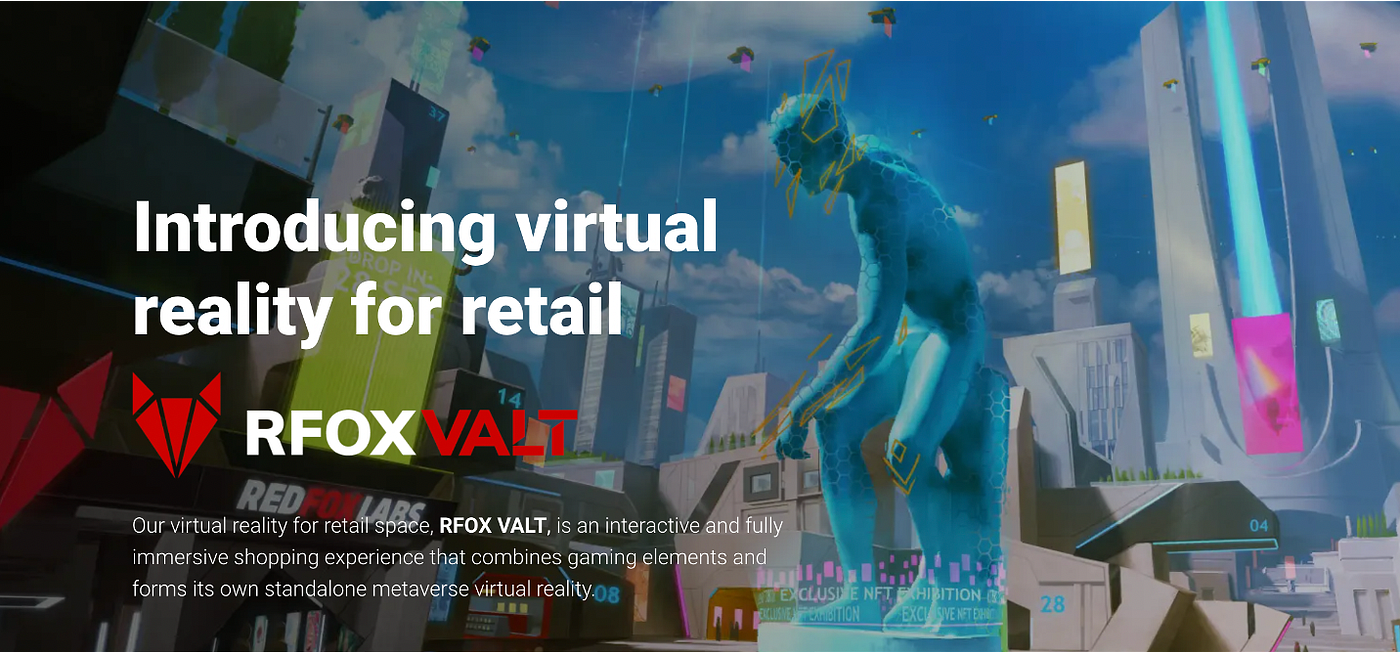
HO CHI MINH CITY, Vietnam — Southeast Asian based RedFOX Labs has launched its first auction of SHOPs for the RFOX VALT metaverse, beginning on September 14, 2021, at 4:00 PM GMT+7, and lasting for 72 hours. The SHOPs being made available for bidding are in the Callinova art-themed quarter of the RFOX VALT metaverse.
The Apple App Store reportedly blocked a Gnosis Safe crypto wallet app update due to it hosting NFTs that weren’t purchased inside the app.
Lukas Schor —a product developer at Ethereum-based crypto wallet provider Gnosis Safe — revealed the firm ran into trouble when it submitted an updated version of its app to the IOS app store earlier this month.
Schor noted on Sept. 14 that despite the update having nothing to do with non-fungibles, the App Store flagged a sample image that displayed an NFT in the app’s description section, even though it had been up for “many months.”
Apple is blocking a release of our @gnosissafe mobile app because we display NFTs in it. After 2 weeks of back-and-forth, I felt that we need to talk publicly about this to raise awareness.
See the thread for details and why this might affect other wallets and apps as well.
While the app is still listed in the store along with the image displaying the NFT, it appears that Apple is blocking the update due to its guidelines around digital content.
According to screenshots he shared of Gnosis’ correspondence with Apple support over email, the tech giant stated that while “NFTs are not mentioned specifically” in its guidelines, apps are not allowed to provide access to “previously purchased digital content” bought outside of the app store.
This essentially means that apps cannot provide any NFT-related services unless they are integrated with Apple payment methods.
“If you choose not to implement in-app purchase, it would be appropriate to revise your app so that does not access previously purchased digital content,” the email concluded.
⛔️ This shows how access to Web3 still relies heavily on gatekeepers like Apple ❗️ It’s an industry problem, as the same arguments apply to any wallet displaying NFTs or games making use of NFTs We need to find better ways to make Web3 accessible on mobile permissionlessly
Schor stated that Gnosis will submit an appeal over the decision as he called on Apple to clarify its guidelines around NFTs. He also suggested that the firm has no plans to walk back its NFT support in its app:
“Permissionless access to Web3 is core to our values, so we are willing to go the extra mile to clear this up. Simply removing NFTs from our app is definitely not an option for us.”
Apple currently prohibits the inclusion of payment rails beyond those offered by the firm in apps listed in its store. While Gnosis doesn’t sell NFTs in its app, Apple charges a flat 30% commission of in-app purchases of digital goods and services.
This policy may not last for much longer however, as Judge Yvonne Gonzalez Rogers issued a permanent injunction in the Epic Games vs Apple case on Sept.10 that will potentially see a major change to the app store.
Epic Games, the creators of widely popular online game Fortnite built its own in-game payment system last year to circumvent Apple’s in-app payment system, which resulted in the game being delisted from the App-store.
In August 2020, Epic took legal action against Apple and specifically took aim against the firm’s in-app payments policies.
In Judge Rogers’ first ruling on the case on Friday, she issued an order for Apple to allow alternate payment options in apps listed on its store, with the injunction set to go into effect on Dec. 9, 2021 — unless it is enjoined by a higher court.
Around the Block from Coinbase Ventures sheds light on key trends in crypto. In this edition, Justin Mart andConnor Dempsey explain what Loot Project is and why it’s interesting.
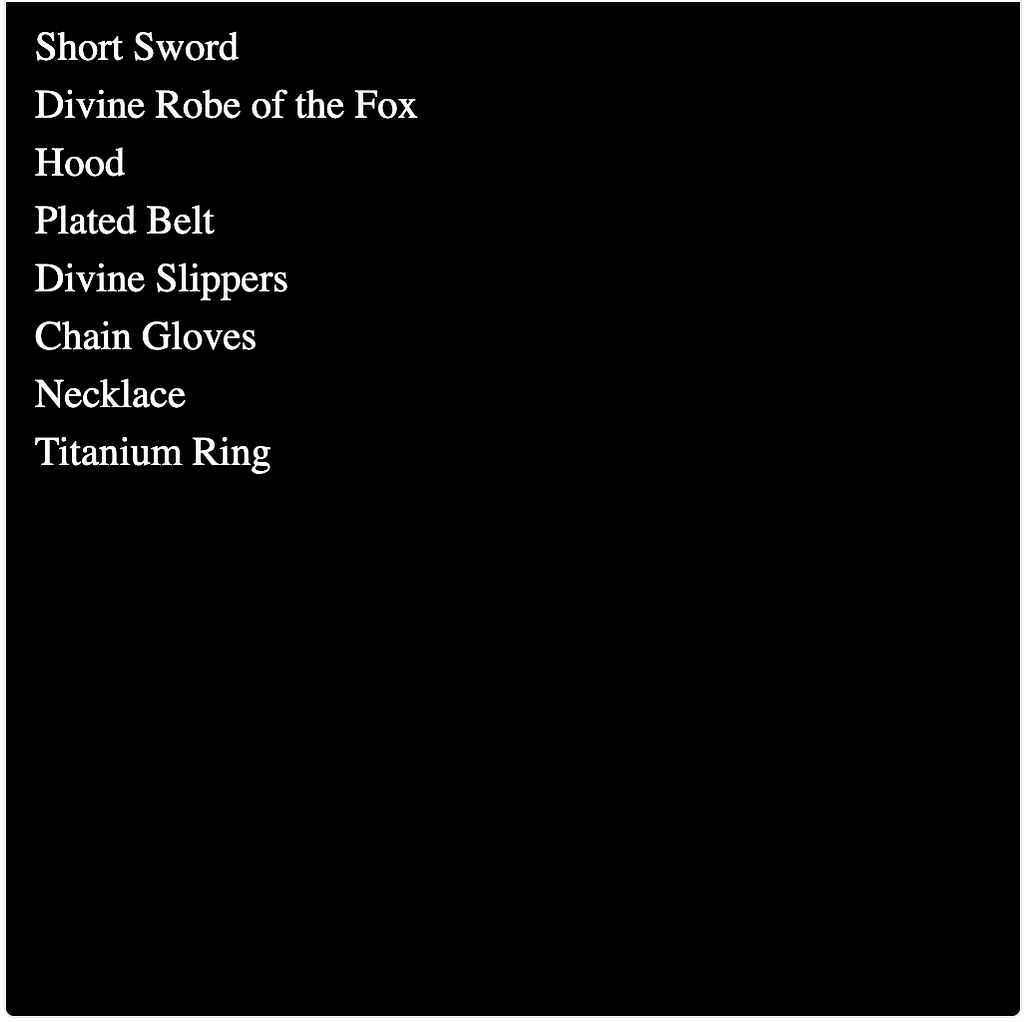
Pictured below, is a Loot bag: A text file consisting of 8 phrases overlaid on a black background. As it turns out, this text file is also an NFT, “Loot Bag #748,” and it sold for 250 ETH, or about $800,000at current prices.
So what can you do with it? Not much… for now, at least.
Dungeons & degens
On August 27th, Dom Hoffmann, who notably co-founded Vine, introduced Loot. A project consisting of 8,000 NFTs full of words that depict “randomized adventurer gear.” Closer inspection reveals items that a character might wield in a game like Dungeons & Dragons. A Short Sword, or Divine Robe of the Fox,for instance.
While we’ve seen a lot of NFT drops over the last few months, two things set Loot apart. First, these NFTs could be claimed for free. The claimee simply had to pay the standard Ethereum gas fee. The other more obvious differentiator: these NFTs are just a bunch of words.
Despite the glaring lack of chimp or penguin art, once claimed, these plain text NFTs quickly started selling for tens of thousands of dollars. At the time of writing, $230M in Loot has changed hands.
One’s knee-jerk reaction might be to dismiss Loot as just another symptom of speculative NFT fever. Loot does, however, introduce an interesting new NFT primitive. Before we get to what makes it interesting, it helps to understand a bit more about what a Loot NFT is.
Instead of just being a single provably scarce image, each of the 8 items within a given Loot bag has smart contract readable parameters. On top of that, each of the 8 items has its own rarity within the broader Loot universe.
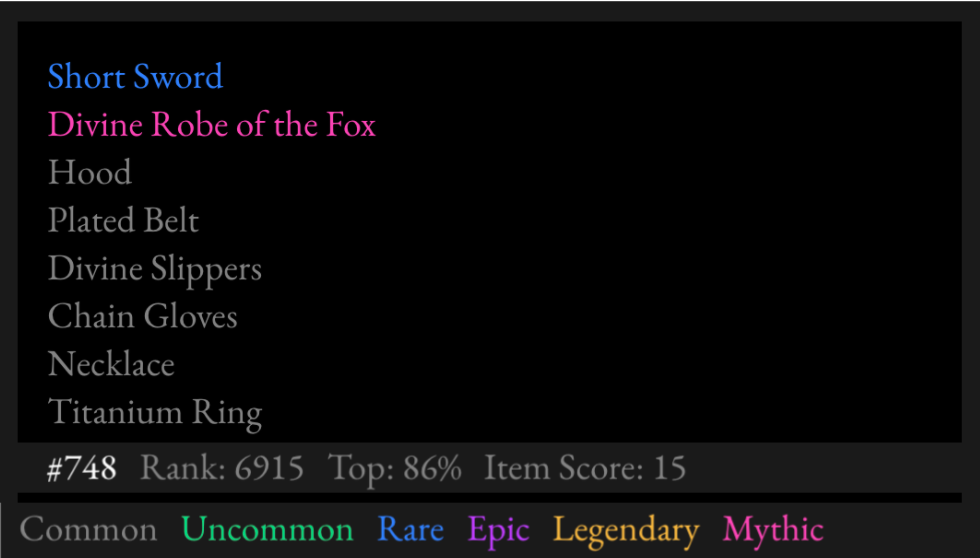
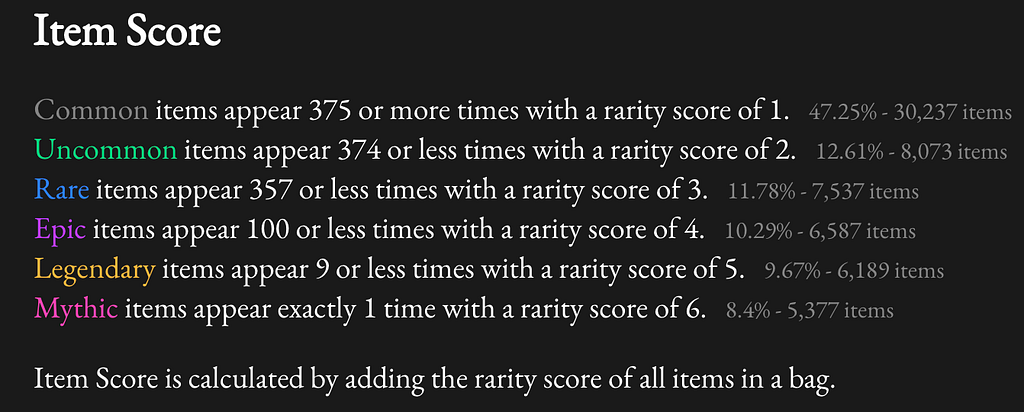
Returning to Bag #748, while 6 of the 8 items are deemed “common”, the Short Sword and the Divine Robe of the Fox are decidedly rare. The Short Sword appears only 325 times across 8,000 Loot bags while the Divine Robe of the Fox appears only once.
Ok, so we have NFTs with Dungeons and Dragon-ey words on them that are smart contract compatible, with some words appearing less frequently than others. So what?
A community owned gaming platform
People appear to be excited about Loot not because of what the NFTs are, but what they could be. These NFTs were released into the wild and left to the interpretation of anyone who found them interesting. Anyone can build something using Loot NFTs as a foundation.
A sound analogy comes from Avichal Garg at Electric Capital, who likens Loot with a 52 deck of cards. Where on its own, a deck of cards is just 52 pieces of paper with pictures on them. With a bit of ingenuity, it’s also the foundation for thousands of games, from Poker, to Hearts, to Crazy 8’s.
Similarly, Loot and its 8,000 NFTs can serve as the foundation of an entire gaming metaverse. The ideal end state being an entire ecosystem of games where Loot items like the Divine Robe of the Fox serve different functions: think Dungeons & Dragons in the metaverse. Whoever builds something on top of Loot NFTs can determine the function served by a given item.
By building the foundation of a game, without building a game itself, Loot leaves its fate in the hands of a decentralized community. Whether or not one thinks it will be successful, it’s an intriguing idea to many.
So what are people building?
Early Loot experiments
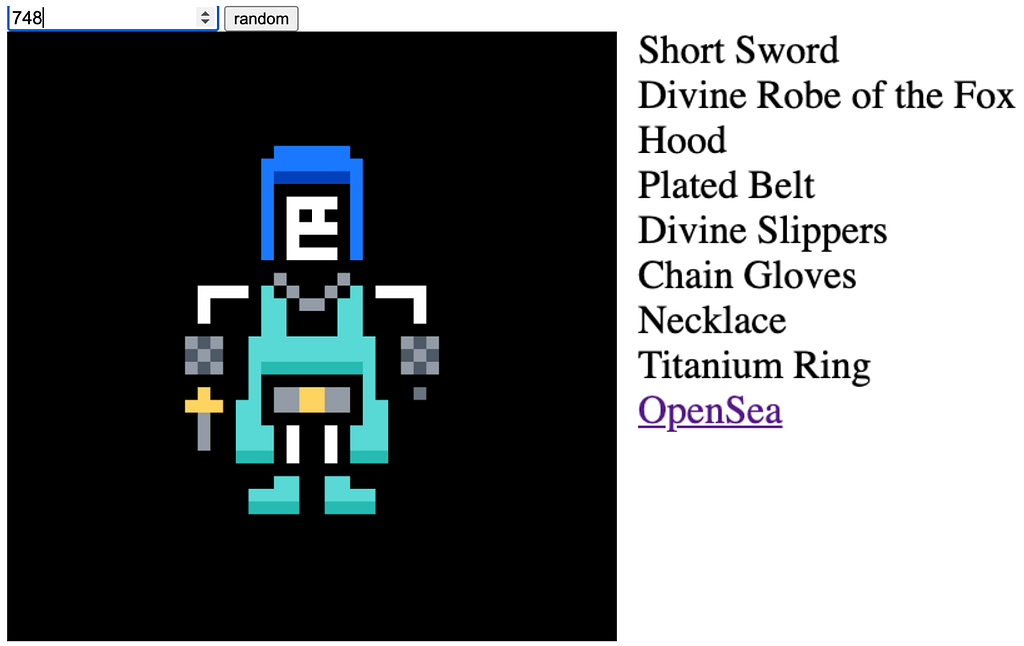
For one, the image I showed above ranking the rarity of Loot bag #748 comes from an application built by someone named @scotato in the Loot community. By pasting your Loot contract address into 0xinventory.app, NFT owners can see the rarity of their Loot bag (note the ranking system was also devised by the community).
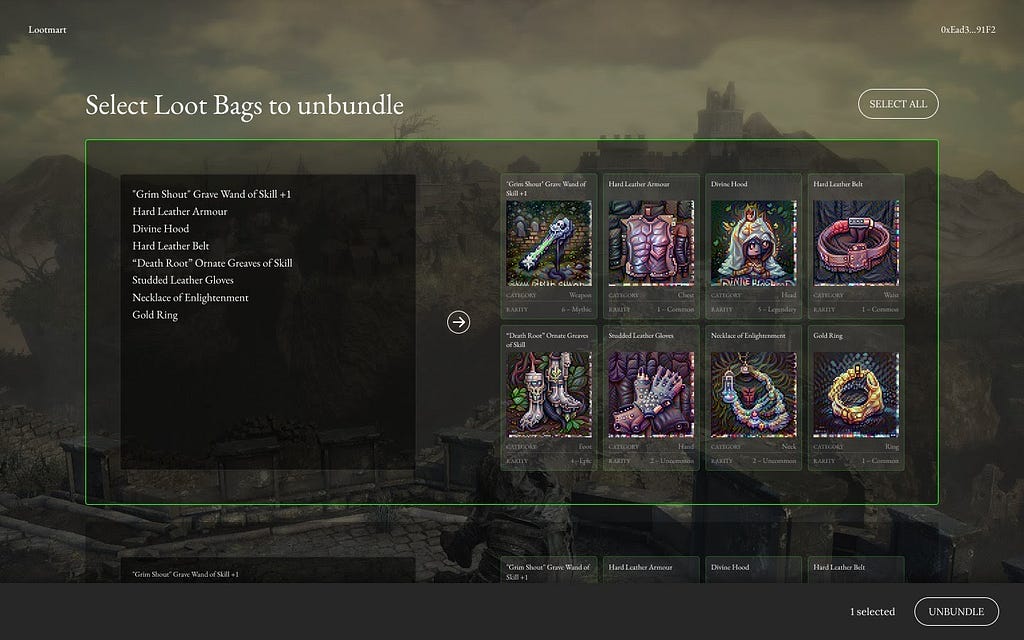
Another project called Lootmart will allow Loot holders to unbundle their Loot Bag into individual NFTs to swap items with other Loot holders, complete with AI generated images of individual items.
Similarly, lootcharacter.com was created to generate pixelated characters based on Loot bags. Here’s Bag #748.
A community member also spun up an ERC-20 token called Adventure Gold ($AGLD) while he was waiting at an airport. Anyone with a Loot bag could claim 10,000 $AGLD. FTX created spot and futures markets for the token and it hit a high of $7.70, meaning Loot holders were essentially gifted tokens worth $77,000 at their peak.
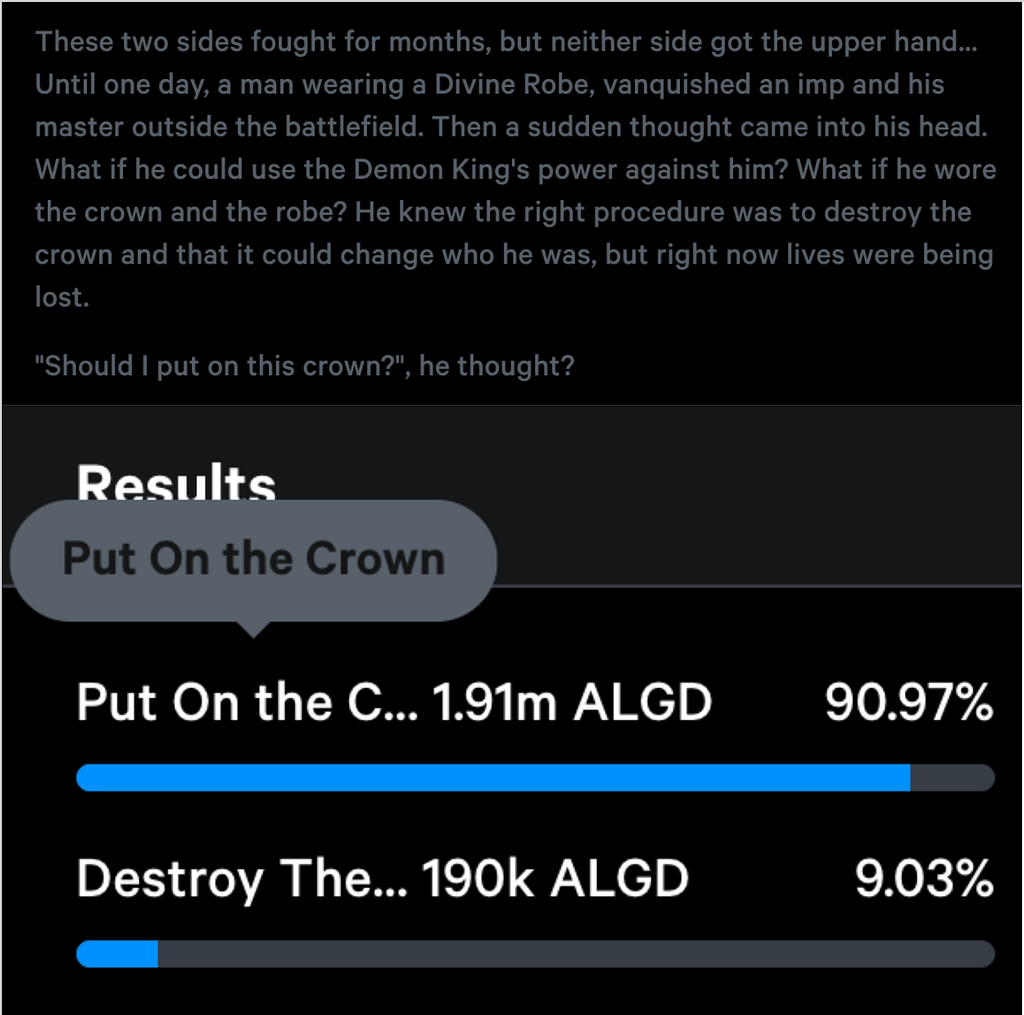
The idea behind $AGLD is that it can serve as an in game currency woven into a game that gets built some day. But like Loot itself, its value is up for interpretation. This didn’t stop people from incorporating it into other budding Loot projects, including a Loot themed “choose your own adventure” story, where $AGLD holders can vote on the direction of the story.
In Chapter 1 of, “Holy War Lore”, $AGLD holders were allowed to vote on whether a man wearing a Divine Robe should put on a Demon King’s crown to absorb his powers (they voted that he put on the crown). In Chapter 2, the crown gets the man into trouble and there’s currently a vote on how he should handle the situation.
These are just a few examples of what the grassroots community of Loot enthusiasts has created so far. The Loot discord reveals wide ranging discussion with distinct channels for builders, artists, writers and a whole lot more.
Creating value from chaos
To recap, Loot is interesting because it inverts the typical gaming and community development path. The Loot creator simply built the foundation of a gaming universe and threw it into the wild to see what others would do with it. And so far, it has energized a diverse community, with a host of new Loot projects in development.
This excitement, coupled with the current NFT bull market sent Loot NFTs soaring, with the cheapest Loot bag trading for $23,000 today. There are however, no guarantees that anything resembling a real game or real utility ever gets built on Loot. Owning a Loot bag is a bet on future utility, which is up to the community to build.
This is the challenge that Loot faces. Can a decentralized community channel its enthusiasm into creating inherent utility in owning a Loot bag? That utility could come from creating strategy games similar to Axie Infinity where Loot items can be used in combat, artwork and avatars exclusive to Loot owners, or from some other application yet to be cooked up.
We are just two weeks into the project, so imagination is required today, but the appeal is tangible.
The cost of entry
A key question surrounding Loot is “Why would game developers build games that incorporate Loot bags when only a select few can afford them?” Developers build games that appeal to the mass market, but the vast majority of gamers are priced out of owning a Loot bag today.
The question of incentives lies at the heart of Loot’s future. Are there answers? Yes — a few. First, game developers who build on Loot have the benefit of bootstrapping their game with a core, passionate community of Loot enthusiasts. Second, and more importantly, there may be unique ways to incorporate Loot without pricing out the majority of the market. We can take inspiration from Axie Infinity and Yield Guild Games. When Axie NFTs got too expensive for most players to afford, lending markets emerged that let players borrow the NFTs needed to play in return for a portion of the winnings from Play to Earn games. We could see the emergence of Loot DAOs that devise similar solutions. Synthetic Loot is another solution being explored. Synthetic Loot lets anyone claim a pseudo Loot bag that can’t be sold or transferred but can be used in Loot games, should a developer choose to allow it. This in theory can open the door for more players.
While many questions remain, we’re in the early stage of a radically new kind of project that’s completely inverted the typical game development model. A self organized grassroots community is now tasked with taking Loot’s foundation and building something real, with all of the tools that crypto, NFTs, and metaverse economies have to offer. The burning questions surrounding Loot’s future make it one of the most captivating experiments in crypto; one that will be fascinating to watch play out over the coming months and years.
Coinbase news
Kate Rouch Joins Coinbase as Chief Marketing Officer
Coinbase updates investment policy to increase investments in crypto assets
Coinbase secures first crypto license in Germany
Coinbase Protocol Team Advances Crypto Community
Retail
Binance.US Hires Ant Group Exec to Succeed Ex-CEO Brian Brooks
Robinhood announces new crypto DCA investing feature
OpenSea bug destroys $100,000 worth of NFTs, including historical ENS name
FTX strikes ambassador, equity deal with NBA star Steph Curry
El Salvador launches Chivo wallet as bitcoin becomes legal tender
You can now mint NFTs on crypto exchange FTX
Twitter testing the ability to display Bitcoin and Ethereum addresses on profiles
This website does not disclose material nonpublic information pertaining to Coinbase or Coinbase Venture’s portfolio companies.
Disclaimer: This material is the property of Coinbase, Inc., its parent and affiliates (“Coinbase”). The views and opinions expressed herein are those of the author and do not necessarily reflect the views of Coinbase or its employees and summarizes information and articles with respect to cryptocurrencies or related topics that the author believes may be of interest. This material is for informational purposes only, and is not (i) an offer, or solicitation of an offer, to invest in, or to buy or sell, any interests or shares, or to participate in any investment or trading strategy, (ii) intended to provide accounting, legal, or tax advice, or investment recommendations or (iii) an official statement of Coinbase. No representation or warranty is made, expressed or implied, with respect to the accuracy or completeness of the information or to the future performance of any digital asset, financial instrument or other market or economic measure. The information is believed to be current as of the date indicated on the materials. Recipients should consult their advisors before making any investment decision. Coinbase may have financial interests in, or relationships with, some of the entities and/or publications discussed or otherwise referenced in the materials. Certain links that may be provided in the materials are provided for convenience and do not imply Coinbase’s endorsement, or approval of any third-party websites or their content. Coinbase, Inc. is not registered or licensed in any capacity with the U.S. Securities and Exchange Commission or the U.S. Commodity Futures Trading Commission.
Loot Project: the first community owned NFT gaming platform was originally published in The Coinbase Blog on Medium, where people are continuing the conversation by highlighting and responding to this story.