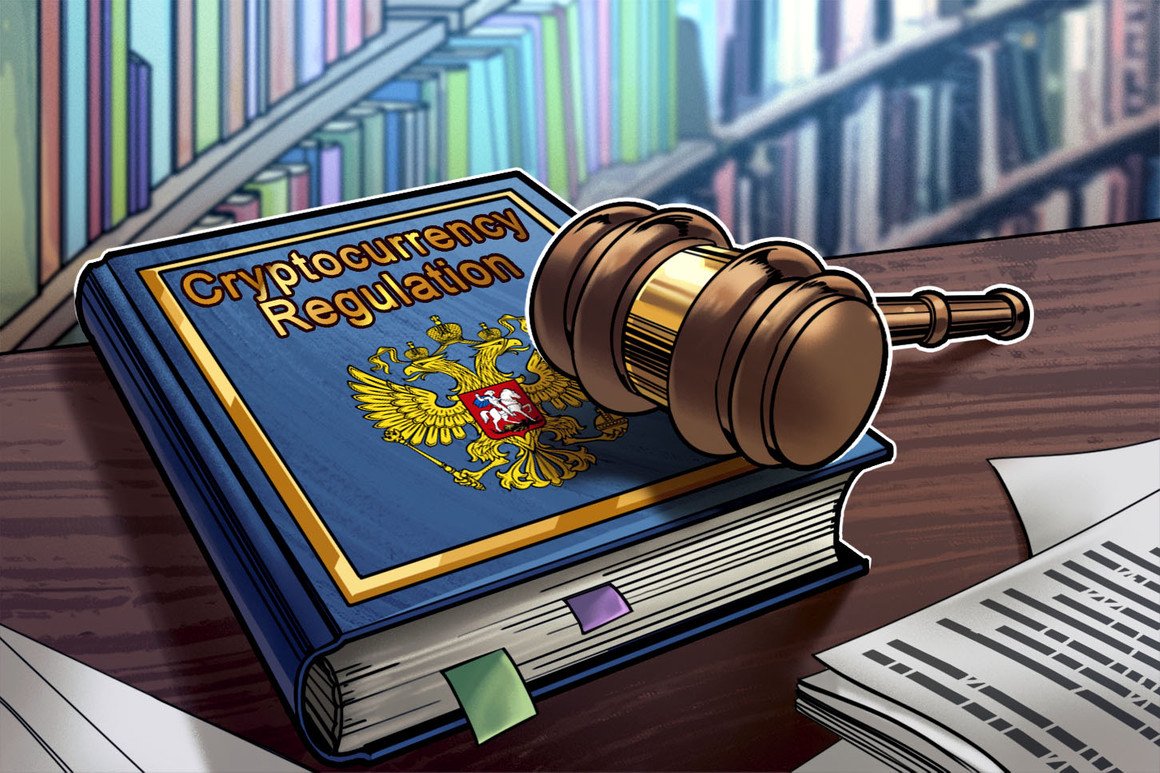
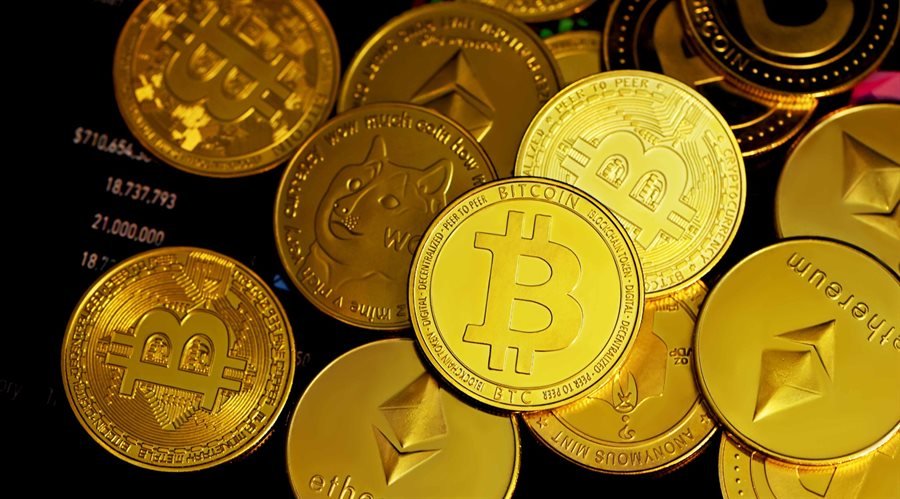
The Ministry of Finance (MinFin) of Russia finalized a draft bill named “On Digital Currency” and has sent it to the Russian government for approval to be passed as law. The draft of the federal law clarifies regulations related to the trading and mining of cryptocurrencies.
On Apr. 8, Russia’s finance ministry announced the amendment and finalization of an impending crypto bill, which provides regulatory clarity related to the circulation, issuance, trading, mining and other activities within the crypto market.
While unconfirmed reports of Russia legalizing cryptocurrency surfaced early Apr 16, the thriving crypto community on Twitter welcomed the announcement with arms wide open.
BREAKING: The Russian government and central bank have just reached an agreement on cryptocurrencies, according to Russia’s Kommersant.
Both organizations will treat bitcoin and crypto assets as currencies.
Binance CEO Changpeng Zhao was also one of the first to acknowledge the move, given the numerous sanctions currently levied against the nation.
As the dust settled, Crypto Twitter soon realized that they’ve been celebrating just a little too early and soon, CZ and others deleted the tweets cheering for crypto’s legal status in Russia.
The buzz around Russia legalizing crypto was sparked by a report from local Russian daily newspaper Kommersant, who reportedly got their hands on the authentic final version of the draft law. According to the local media, the bill recommended accepting digital currency “as a means of payment that is not the monetary unit of the Russian Federation,” which is yet to be passed as law by the Russian government.
While MinFin finalized and shared the draft bill with the Russian government, an official announcement regarding its approval as the law is still awaited with no known timeline.
Kommersant’s report also highlighted that the bill recommends building a regulatory framework for crypto-related activities while sharing the groundwork for registered operators.
On Apr. 14, Sergei Katyrin, President of Russia’s Chamber of Commerce and Industry, recommended collaborating with African countries for conducting cross-border settlements in crypto and central bank digital currencies (CBDCs). In the announcement related to the finalized bill, the ministry disclosed to have clarified crypto regulations while considering the viewpoint of all other departments of the Russian government.
Related: Russia‘s energy chief says it would accept Bitcoin for oil and gas
In an ongoing to counter the international sanctions and the resultant inflation, president of the Russian Gas Society Pavel Zavalny hinted at the possibility of accepting Bitcoin (BTC) as payment for exporting oil and gas.
Explosive.
Russia is now demanding that Europe pay for gas in rubles.
Europe gets 40% of its gas from Russia. That’s 200-800 million euros per day.
Putin is basically saying: you want to play sanctions? Either pay up in rubles or freeze.
As Cointelegraph reported, Zavalny recommended taking payments in Russian rubles, Chinese yuan, Turkish lira, or even Bitcoin (BTC) from “friendly countries.” However, “unfriendly countries” could pay for their oil in rubles or gold.
The digital economy is permanently changing the nature of financial services globally and digital assets are at the center of much of this rapid change. This is something clearly understood by the UK Government. John Glen, Economic Secretary to the Treasury, used his recent keynote speech at Fintech Week to highlight the opportunities crypto presents to the UK economy — and that the country is keen to embrace them. Noting that the UK is second only to the US in the global league table of fintech hubs, Mr Glen was clear in his message that “the UK is open for business, open for crypto companies… we want this country to be a global hub, the very best place to start and scale crypto companies.”
Coinbase welcomes Economic Secretary Glen’s statement and commends the vision of the UK Government that stands behind it. The UK’s depth and strength in capital markets, fintech leadership, its globally respected regulators, its deep talent pool, and the innovative dynamism of the country’s economy combine to present an opportunity for the UK to be a leader in the next technology revolution and to become a global powerhouse for web3.
There is no question that fintech in the UK is growing rapidly and that the broader financial industry will increasingly be built on crypto rails. Mr Glen himself referenced the 200% year-on-year rise in fintech investment. He’s not a lone voice seeing the potential. Some of finance’s most influential voices are waking up to crypto’s economic and transformational power. From funds and VCs to the real economy investor, the UK is increasingly embracing crypto and recognizing its social, cultural, and economic utility.
This is a continuation of a global trend. Larry Fink, chairman of BlackRock, the world’s largest asset manager, for example, revealed in his latest letter to CEOs that BlackRock is investigating how digital currencies, stablecoins and underlying technologies “can help serve” clients of the $10 trillion firm. At the retail level, Coinbase’s own research reveals that about a third of people in the UK who are aware of crypto own or have owned digital currency, and twice that amount intend to increase their holdings. We’re at an inflection point in the adoption curve.
But increased adoption is only the tip of the iceberg. As the possibilities of how crypto can revolutionize traditional finance reveal themselves, there will be so much more innovation at the core of this movement. Whether that’s existing payment systems being streamlined through digitalization or complex contracts being hosted on the blockchain, whole new economic frontiers will open up, bringing new employment with them.
As Mr Glen himself said, these developments create an opportunity for the UK to leverage its existing and formidable advantages to be a leader in digital innovation. He says that if crypto is going to be a “big part of the future, then the UK wants in, and in on the ground floor.” We believe the country can do this by taking steps to build a more free and open financial system, bridging the gap between traditional financial services and the crypto industry, and supporting economic growth and jobs.
Get it wrong and there’s a risk the UK cedes a critical dimension of its financial and technological leadership, and signals to the next generation of entrepreneurs to look elsewhere to build, hire, and grow. Coinbase believes and has advocated for thoughtful regulation for digital assets around the world. We applaud the work and deep thinking that the UK Government is doing to address consumer risk, market integrity, and competition in the financial sector — these are critical issues and require careful analysis.
But what is also critical now is continuing this positive reframing of the debate to focus on the opportunities from digital assets, as opposed to just the perceived risks. Without such clarity, there is a danger the UK is left behind, particularly as more and more entrepreneurs and businesses seek to use crypto rails to build their new ventures. For example, we are concerned that the proposed changes to the existing Financial Promotions Regime to cover crypto will, unless carefully recalibrated, render a de facto ban on the marketing of crypto services in the UK.
Looking ahead, we want to highlight some key principles for consideration by the Government as it considers how to best put the UK on the path to be a web3 leader:
Creation of a tailored framework for digital assets
Digital assets — and in particular blockchain technology — allow for increased efficiency in the financial sector and offer a transformational level of financial empowerment for everyday people. That is why the UK Government’s decision to bring the cryptoeconomy into a central focus of its policymaking is so important. The cryptoeconomy, however, is rapidly evolving, and policy should adapt with it through a regulatory regime that is flexible enough to cope with current and future needs as they emerge — all informed by input by stakeholders and the public.
This is a point the UK authorities clearly appreciate and understand. Mr Glen said that crypto will bring dynamism to finance and that regulation must therefore be dynamic too, “rather than a static, rigid thing.” His analogy of envisioning regulation as “computer code, which can be refined and rewritten when needed” is well-stated and absolutely correct. Marrying this vision of dynamism with the work of regulators who have achieved their international status by being reliable and predictable is clearly something that will require some effort.
For example, industry eagerly awaited the publication of the UK Government’s Stablecoin Consultation response and broadly supported the proposal to bring stablecoins — where used as a means of payment — under a clear regulatory framework. However, success will be determined by how well and quickly this is implemented. The UK Government’s planned consultation and implementation of tailored digital asset regulation will need to be a fast follow to ensure that the UK does not fall behind.
Oversight by a dedicated policy & supervisory unit
Creating a dedicated policy unit and an equivalent supervisory unit with the resources to oversee digital assets would be a worthwhile investment, potentially with a cross-regulatory function much like the Digital Economy Taskforce as proposed by the Kalifa Review. It would need to be staffed by those with specialist knowledge of the sector and could also act as a single point of contact for the industry and present clarity for new and emerging businesses who are considering the UK as their home.
Again the UK Government shows its foresight, with Mr Glen sketching out a new world for both the “newly regulated and the regulators,” with a Government Minister driving the process, including the establishment of the Crypto Engagement Group. For him to imagine a policy of industry and authorities “working together and learning from each other” while maintaining high standards, yet being flexible and working at the pace that the speed of innovation needs” sets the UK as an inviting home for web3 entrepreneurs Mr Glen’s challenge is to make sure that he delivers on his promise to create “robust and effective innovation that won’t hinder innovation, but will boost it.”
International harmonization & Industry coordination
With digital assets rapidly becoming a worldwide phenomenon, countries around the world are competing to establish themselves as leaders and to embrace the potential of the new, decentralized web. As the UK emerges as a leader in crypto and digital assets, it has a unique opportunity to work with other like-minded countries to create a workable international framework for regulation. All this needs to be done together with the industry and other stakeholders in a consultative and transparent manner. True innovation means engaging with the people working with those who have important perspectives on how the best policy outcomes are achieved. A fresh focus on digital assets does not mean leaving established institutions behind — they will unquestionably play an important role in the future and in many cases, will adopt blockchain technology as a critical component of their infrastructure.
To conclude, we must recognize that digital assets are a technological breakthrough that allows us to increase economic freedom for everyone. The UK Government certainly recognizes this, though Mr Glen rightly says that “no one knows for sure what the future of crypto looks like in the UK.” But what he has shown is that the UK clearly sees that the future can only be embraced by not focusing exclusively on perceived risks, but instead also seeing the opportunities.
Mr Glen finished his address by saying “we’re on the cusp of something important, we have the opportunity to shape and lead it.” By following through on this vision and by implementing consistent, proportionate and appropriate regulation as soon as possible, the UK can not only help bring about a better, safer, more resilient and fairer system for everyone, but also help unlock broader innovation. The UK government — and Mr. Glen specifically — deserve enormous credit for setting the stage for the UK to play an important role in the future of innovation.
Crypto trading platform, Gemini confirmed the availability of its crypto rewards credit card in the US yesterday. According to the exchange, users will be able to earn crypto rewards on purchases.
Dubbed ‘Gemini Credit Card’, the product has been issued by WeBank and features Mastercard, the US-based financial services provider, as the exclusive card network. Gemini noted that its crypto rewards credit card received more than 500,000 sign-ups since the launch of its waitlist.
“Last year, the crypto industry had its breakout moment with 44% of crypto owners in the U.S. reported first buying crypto in the last year. Gemini is committed to helping drive more education and offer innovations that remove barriers of entry for consumers who want access to crypto such as bitcoin,” said Pravjit Tiwana, the Chief Technology Officer (CTO) of Gemini. “In partnership with Mastercard and WebBank, we developed the Gemini Credit Card to offer a simplified way to invest in crypto without asking consumers to change their daily behavior.”
Gemini is one of the most valuable digital exchanges in the world. In November last year, the crypto trading platform raised $400 million in growth equity funding and reached a valuation of more than $7 billion.
Crypto Rewards
Sherri Haymond, the Executive Vice President of Digital Partnerships at Mastercard, said that the latest partnership with Gemini will provide an efficient crypto reward experience to the users. Furthermore, Haymond highlighted the growing global popularity of the cryptocurrency ecosystem.
“Mastercard and Gemini share in the belief that providing relevant and innovative crypto rewards experiences will not only empower consumers but also unlock access to the digital currencies ecosystem. We’re honored to work hand in hand with Gemini to deliver these one-of-a-kind rewards offering and make it even easier for consumers to experience crypto,” Haymond added in the press release.
Crypto trading platform, Gemini confirmed the availability of its crypto rewards credit card in the US yesterday. According to the exchange, users will be able to earn crypto rewards on purchases.
Dubbed ‘Gemini Credit Card’, the product has been issued by WeBank and features Mastercard, the US-based financial services provider, as the exclusive card network. Gemini noted that its crypto rewards credit card received more than 500,000 sign-ups since the launch of its waitlist.
“Last year, the crypto industry had its breakout moment with 44% of crypto owners in the U.S. reported first buying crypto in the last year. Gemini is committed to helping drive more education and offer innovations that remove barriers of entry for consumers who want access to crypto such as bitcoin,” said Pravjit Tiwana, the Chief Technology Officer (CTO) of Gemini. “In partnership with Mastercard and WebBank, we developed the Gemini Credit Card to offer a simplified way to invest in crypto without asking consumers to change their daily behavior.”
Gemini is one of the most valuable digital exchanges in the world. In November last year, the crypto trading platform raised $400 million in growth equity funding and reached a valuation of more than $7 billion.
Crypto Rewards
Sherri Haymond, the Executive Vice President of Digital Partnerships at Mastercard, said that the latest partnership with Gemini will provide an efficient crypto reward experience to the users. Furthermore, Haymond highlighted the growing global popularity of the cryptocurrency ecosystem.
“Mastercard and Gemini share in the belief that providing relevant and innovative crypto rewards experiences will not only empower consumers but also unlock access to the digital currencies ecosystem. We’re honored to work hand in hand with Gemini to deliver these one-of-a-kind rewards offering and make it even easier for consumers to experience crypto,” Haymond added in the press release.
Positioned as a stable ecosystem that prioritizes decentralized governance, disintermediation and provides a self-adjusting interest rate mechanism, ApeX is a revolutionary protocol that has the potential to become the standard for all crypto derivatives platforms.
In the last few years, the future of finance has been riding the decentralization wave, at speeds which would heretofore been unimaginable. In line with a fundamental rethinking of the way money works, with a focus on open-source code and permissionless networks, ApeX is a decentralized, permissionless and non-custodial platform that allows for the creation of perpetual swap (funding) markets on any token pair. Perpetual swaps are derivative contracts that allow two counterparties to conduct a margin trade, where settlement does not occur until one party terminates the contract.
The State of ApeX
It has been an eventful beginning for ApeX, having successfully launched a beta version of the protocol on the Arbitrum mainnet, completed their seed round fundraising and sold out a total of 4,580 unique NFTs to their users. With a pre-mined fixed total supply of 1 billion tokens, $APEX represents value and utilities such as governance, protocol incentives, and staking to its users.
Across crypto and beyond, the key question being asked by many is: What is more profitable in the long run — holding, or trading? In tandem with this question is another that follows — which investment is more secure, staking or NFTs? ApeX contends that there is no one-size-fits-all investment advice in today’s world of DeFi — ROI depends on the platform used.
The 3 core pillars of ApeX’s value proposition
The core of ApeX’s protocol is to create a fully permissionless and globally accessible perpetual contract protocol. The ability to trade on the ApeX protocol without the need for an account or verification opens up the world of trading to anyone with internet access.
ApeX operates on three pillars:
Fully Permissionless — No KYC or AML restrictions. Most DeFi platforms require some form of KYC/AML verification before users can use their services. Believing that this creates unnecessary friction for end users and goes against the ethos of a truly permissionless system, ApeX has taken a stance against having KYC/AML restrictions.
Liquidity in Perpetuity — A protocol designed as a foundation for future applications in multiple financial verticals, ApeX believes it is essential to provide an avenue for users to profit from liquidity provision without any time constraints or limitations.
Full-spectrum Asset Support — As a way to transact value across borders and economies by leveraging blockchain technology, crypto-assets are more than just tokens. The ultimate goal of ApeX is to become a one-stop shop for every swap need.
ApeX Protocol is funded and backed by global investors
More than just providing decentralized solutions, ApeX also prioritizes being able to deliver stable liquidity and support the development of the ApeX protocol. ApeX is backed by global partners that include Dragonfly Capital Partners, Jump Trading and Tiger Global Management, who will support the development of the solutions that will transform the state of DeFi.
What makes ApeX different from other perpetual swap protocols
ApeX contends that the most important features of a perpetual swap protocol are the market maker design, pricing formula, and risk management system. All three areas need to work together seamlessly to ensure fair pricing, efficient price discovery, and low risk. Two core features of ApeX protocol make it different from other protocols in the market.
1. Elastic Automated Market Maker (eAMM)
Elastic Automated Market Maker (eAMM) is a self-balancing system that enables the creation of on-chain derivatives. It has a pool of liquidity that is used as collateral to back all positions taken by traders. This allows traders to take leveraged long or short positions without the need for counterparties, unlike traditional centralized exchanges that offer spot and futures trading. The eAMMs are elastic because they expand and contract based on the amount of funding needed for the derivative markets at any given time, so more liquid markets will have larger eAMMs than less liquid ones.
2. Protocol Controlled Value
ApeX provides a Protocol Controlled Value (PCV) system which means that the protocol keeps track of all open positions for each user and maintains a record of their collateral status. PCV also makes sure that all users have enough collateral to back their positions and also incentivizes traders to under-collateralize their positions to maximize profits. This model works well for ApeX as it does not require any liquidations to be done by an outside party or third party.
The future of ApeX
Over the past three months, the ApeX protocol has undergone rapid growth and change to its platform. Each week, new users join the ApeX protocol as token holders, members of the community, and traders on the exchange. Planning for the V1 launch of the ApeX protocol in the first half of 2022, the project’s focus is on creating a bonding program and to launch an advanced trading experience on a multi-chain platform.
ApeX operates on an elastic Automated Market Maker (eAMM) model with the Constant Product Formula being the core of price discovery. The design philosophy of the eAMM is novel and should reduce some of the friction present in creating decentralized liquidity pools. By creating a protocol that supports true decentralized trading with collateralized assets, ApeX offers traders full custody of their funds and protection from market crashes, making it an attractive choice for current and future users.
In the coming months, ApeX has also prepared different programs to incentivize their users, for example, liquidity mining programs, referral programs, staking programs and others. NFT holders can enjoy an 8% life-time transaction fee discount and are entitled to participate in their NFT game competition to win up to more than 120K $APEX.
ApeX is positioned to be a stable protocol and ecosystem due to the following reasons: the incentive structure, which rewards $APEX holders for participating in governance; disintermediation — no custodians, no trusted third parties; and a self-adjusting interest rate mechanism. The potential of this protocol can be seen in the numerous use cases, such as tokenized fiat onramps, price arbitrage, synthetic short selling, and hedged wagers. Overall, ApeX is a well-built and revolutionary protocol that has the potential to become the standard for all crypto derivatives platforms.
Bitcoin sank to an intraday low of $39,714.69 on Friday, following a late surge above Wednesday’s critical resistance level of $41,500. BTC was down as traders braced themselves for the lengthy Easter weekend.
Bitcoin – the world’s most sought-after digital asset – has fallen about $10,000 from a two-week high of $48,220, its highest level in over four months.
However, following weeks of retreats, it looks as though market analysts have identified a stable floor at $39,300, with bulls now attempting to drive prices higher once more.
Related Article | Bitcoin Price Plummets Below $40,000 As Crypto Market Tallies $440 Million In Liquidations
Bitcoin Feeling The Pressure
Concerns about macroeconomic and geopolitical concerns have lingered, keeping some investors away.
Russian President Vladimir Putin stated during a news conference on Thursday that peace talks with Ukraine have reached a stalemate.
Putin further vowed that Russia’s “military operation” will continue indefinitely.
On a technical level, Bitcoin’s 200-day moving average significantly stymied the recent bull run, resulting in a large price fall.
Bears currently control the market, and the price is rapidly declining, resulting in a break below the 50-day and 100-day moving averages.
The $37K and $34K demand zones represent the next levels of Bitcoin support. If the price holds the short-term significant support level around $37K, it may resume its climb toward the significant resistance level at $45K.
BTC total market cap at $752.41 billion on the daily chart | Source: TradingView.com
BTC Could Touch $33K
If this level is not maintained, Bitcoin’s next stop could be the $33K important demand zone.
Bitcoin has lost more than 15% in the last week, prompting one indicator to declare that the market has entered a time of “severe anxiety.”
The price decline occurs in the context of a broader downturn in global financial markets, prompted by geopolitical crises and uncertainty over the prospect of the US Federal Reserve tightening monetary policy.
Related Article | Price Of Bitcoin Retreats Under $42,000 As Enthusiasm From Miami Event Fizzles
Future Still Looks Bright
Despite the current dismal performance of Bitcoin, a prominent trader believes that the cryptocurrency’s price might potentially double in the next two years.
Peter Brandt made a prediction in response to a tweet from Tuur Demeester, a long-time Bitcoin supporter.
According to the latter, following extended periods of consolidation, Bitcoin tends to erupt “like nothing else on this earth.”
According to Brandt’s forecasts, Bitcoin may either double in value in two years or continue its streak of sideways trading for an extended length of time.
A seasoned trader previously predicted that Bitcoin’s next “rocket stage” will begin in 2024, based on how prior market cycles have unfolded.
Featured image from DataDriveInvestor, chart from TradingView.com
Cointelegraph’s Joseph Hall sat down with Silvio Micali, founder of Algorand, as part of its on-the-ground coverage of Paris Blockchain Week Summit. Algorand is a blockchain that uses a pure proof-of-stake (PPoS) protocol, and the company was one of the main sponsors of the summit.
Micali started by explaining that the blockchain trilemma — which claims that no blockchain can be both secure, scalable and decentralized — is false. He affirmed that Algorand is actively working to solve this so-called trilemma by pushing the limits of scalability via its PPoS algorithm.
With Ethereum set to transition from proof-of-work to proof-of-stake later this year, Algorand will stand in direct competition with Ethereum. It was originally Ethereum co-founder Vitalik Buterin who coined the concept of the trilemma, and Micali recognized that “perhaps scalability was sacrificed for security” in Ethereum’s case. However, since it’s not yet known exactly which type of proof-of-stake Ethereum will take on, Micali welcomes the competition.
“Competition is always good. I believe in democratization and meritocracy. There is room to collaborate.”
Appropriate to the setting of the conversation — the former home to the Paris stock exchange —Micali and Hall also discussed the role of institutions and regulation.Micali stated that “Good regulations make for better markets” and asserted that large institutions are slowly understanding that cryptocurrency can be “a much more secure way to transact.”
Related:What is Binance CEO most excited about in 2022? | Interview with CZ
When asked about Algorand’s future, Micali said to expect more tech and increased scalability. He added that within the next year, “Speculation will disappear, and real-world use cases of the blockchain will start.”
He also admitted to looking forward to the democratization of finance. To him, this means that not just the elite but the common person on the street has the same access to sophisticated financial tools at a fraction of the actual cost. He added that “We are getting sick and tired of the concentration of our wealth” and that he believes blockchain technology can level the playing field.
The Wiki Community has voted against accepting cryptocurrency donations and unveiled at least three reasons to take such a decision. According to The Register, the proposal was made by Wikipedia administrator checkuser, who encouraged to Wikimedia Foundation to stop accepting crypto donations.
The vote was based on three points, the media outlet noted: it could be seen as an endorsement of cryptocurrency by the organization; the tech is not environmentally sustainable; and, last of all, accepting crypto could damage the Foundation’s reputation.
As of press time, the Wikimedia Foundation accepts donations in Bitcoin (BTC), Bitcoin Cash (BCH), and Ether (ETH), among other traditional payment methods in fiat currencies. However, crypto donations only represent a small amount in terms of revenues, only having a 0.08% of 2021 revenue, which is $130,100. Total revenue for the Foundation during that period was around $162 million.
“We never should have started accepting them in the first place. Many years later, they represent not even 1 percent of annual donations. Wikimedia is legitimizing a series of environmentally unfriendly Ponzi schemes by accepting Bitcoin and is getting almost nothing back financially in return,” one community member commented at the time of voting.
According to the Foundation’s policy, it converts crypto to US dollars immediately through the bitcoin payment service provider BitPay, a practice that has also raised concerns since it may be interpreted as an endorsement of the vendor.
71% (232) of the 326 votes cast between January 10 and April 12 this year supported the proposal to stop accepting cryptocurrency, while roughly 29% wanted to continue. However, the results are not binding.
Republican Congressional Committee and Cryptos
Last year, the National Republican Congressional Committee (NRCC) decided to accept cryptocurrency donations to support its candidates for the next year’s elections. The committee has become the first national party to take contributions in digital assets such as Bitcoin (BTC) in the midst of growing adoption in different sectors.
The Wiki Community has voted against accepting cryptocurrency donations and unveiled at least three reasons to take such a decision. According to The Register, the proposal was made by Wikipedia administrator checkuser, who encouraged to Wikimedia Foundation to stop accepting crypto donations.
The vote was based on three points, the media outlet noted: it could be seen as an endorsement of cryptocurrency by the organization; the tech is not environmentally sustainable; and, last of all, accepting crypto could damage the Foundation’s reputation.
As of press time, the Wikimedia Foundation accepts donations in Bitcoin (BTC), Bitcoin Cash (BCH), and Ether (ETH), among other traditional payment methods in fiat currencies. However, crypto donations only represent a small amount in terms of revenues, only having a 0.08% of 2021 revenue, which is $130,100. Total revenue for the Foundation during that period was around $162 million.
“We never should have started accepting them in the first place. Many years later, they represent not even 1 percent of annual donations. Wikimedia is legitimizing a series of environmentally unfriendly Ponzi schemes by accepting Bitcoin and is getting almost nothing back financially in return,” one community member commented at the time of voting.
According to the Foundation’s policy, it converts crypto to US dollars immediately through the bitcoin payment service provider BitPay, a practice that has also raised concerns since it may be interpreted as an endorsement of the vendor.
71% (232) of the 326 votes cast between January 10 and April 12 this year supported the proposal to stop accepting cryptocurrency, while roughly 29% wanted to continue. However, the results are not binding.
Republican Congressional Committee and Cryptos
Last year, the National Republican Congressional Committee (NRCC) decided to accept cryptocurrency donations to support its candidates for the next year’s elections. The committee has become the first national party to take contributions in digital assets such as Bitcoin (BTC) in the midst of growing adoption in different sectors.
With the recent crypto market decline, investors have become more fearful of the market. Recorded on the Fear & Greed Index, it shows that this remains an incredibly frightening time for users of cryptocurrencies. In times like these when the prices of digital assets continue to slide down, it is expected that investors become warier. However, this time around, the market had quickly gone into “Extreme Fear” territory with no sign of emerging anytime soon.
Scared Of Investing?
At the start of the month, top cryptocurrencies such as Bitcoin and Ethereum had begun a recovery trend that would eventually wash over the rest of the market. As prices rose, so did positive sentiment among investors who had flooded back into the market. Not long after though, the market had started one of its signature correction trends that comes with the bull rally and now investors have chosen to retreat instead of risk further downside.
Related Reading | CeFi Platform Celsius Restricts Yield Rewards To Only Accredited Investors In U.S.
The Fear & Greed Index shows that the market had been on a downward sliding scale since coming out of last week which had ended with a neutral sentiment from both sides of the market. By Monday however, this had quickly turned into fear with bitcoin finally falling to the $43K territory. Tuesday in itself proved to be worse as the market had indeed fallen into extreme fear, leading to a low score of 20.
Now, while Wednesday is starting out better than what Tuesday ended with at a score of 25, it still does not spell good news for the short term. When investors are scared of the market, they tend to not put any money into it for fear of losing more. This also triggers people taking profits from the market due to fear of their coins dropping further in value. With such low momentum, prices can suffer more instead of staging another recovery.
Is Fear Good For Crypto?
When it comes to how the market is feeling towards cryptocurrencies, it can often be a matter of personal perspective. There are those who believe that steering clear of the market while it is fearful is the best bet and to only invest once the prices start recovering. However, there are those who believe the opposite.
Related Reading | The Ronin Hack Aftermatch: Axie Infinity’s $1M Bug Bounty
Those who subscribe to the “buy the blood” school of thought often welcome downtrends like these since it gives them the opportunity to purchase coins at a “discount.” This mainly comes down to the risk appetite of the investor.
Nevertheless, it still stands to reason that some of the largest rallies have come after the market has consolidated from a price drop. This was the case in late February/early March which had seen the market in extreme fear turn greedy very fast as prices began to recover.
Total market cap falls to $1.8 trillion | Source: Crypto Total Market Cap on TradingView.com
Featured image from Psychology Today, chart from TradingView.com
Facebook whistleblower Frances Haugen has taken aim at Meta in a new interview, suggesting that its version of the Metaverse will simply repeat all of its past mistakes.
In an interview with Politico, Haugen said:
“They’ve made very grandiose promises about how there’s safety-by-design in the Metaverse. But if they don’t commit to transparency and access and other accountability measures, I can imagine just seeing a repeat of all the harms you currently see on Facebook.”
In 2021 Huagen leaked thousands of internal documents from Facebook to the Securities and Exchange Commission and The Wall Street Journal. Her experience working for the company has left her with concerns about privacy issues and about letting the corporation amass data about every aspect of user’s interactions in the Metaverse.
“I’m super concerned about how many sensors are involved. When we do the Metaverse, we have to put lots more microphones from Facebook; lots more other kinds of sensors into our homes,” she said.
“You don’t really have a choice now on whether or not you want Facebook spying on you at home. We just have to trust the company to do the right thing.”
Haugen isn’t the only one concerned. According to a recent survey, 70% of people don’t trust Meta to handle privacy properly.
Andy Yen, CEO of encrypted email service ProtonMail is also concerned with the unilateral powers of Big Tech giants like Meta. Last week, he said in an interview, that his own company, Proton, will only be able to survive based on the goodwill of tech giants.
“Tech giants could today remove us from the Internet with zero legal or financial repercussions,” he said.
Yen has also raised concerns about Big Tech controlling the Metaverse in the past, telling Newsweek last year that Meta was “building a new infrastructure where they control everything. They control the device, they have the VR headsets, you’re now in their world, on their devices, on their platform.”
Yen said that given their track record, he doesn’t believe we should trust Meta with power like that and that promises around privacy in the Metaverse are useless unless its business model changes.
“At the end of the day, their business model revolves on taking your data and monetizing it. So, there is fundamentally always going to be a conflict between what they say and what they actually have to do to make money.”
Data collection
The Electronic Frontier Foundation (EFF) is a nonprofit organization defending civil liberties in the digital world. Like Yen, it believes that VR headsets and AR glasses, and other wearables, will make data collection and surveillance easier than ever before. In December they stated:
“This data harvesting, sometimes done by companies with a history of putting profit before protections, sets the stage for unprecedented invasions into our lives, our homes, and even our thoughts.”
The EFF is concerned that data collected and used for targeted advertising will generate “biometric psychography” and that our deepest desires and inclinations will be up for sale. Once the information has been collated, the data could be monetized by third parties, even without our knowledge or agreement.
The China syndrome
While the Metaverse may seem like an issue for the distant future, in China, citizens are living it every day, in a different way.
WeChat is the social media platform of choice in China. It has a mind-boggling user base of over one billion. Of those, 850 million are active users. The app is amassing data about users in China on a scale never seen before. And, the Chinese government can monitor every word, picture and video on it.
WeChat came under heavy criticism from Reporters Without Borders (RSF) before the Winter Olympic Games earlier this year. RSF urged journalists to protect themselves against Chinese surveillance while reporting in-situ. They said, “RSF recommends journalists who travel to China to avoid downloading applications that could allow the Chinese authorities to monitor them.” These included WeChat and TikTok.
Coming up onWednesday is the first instalment of the Invest Shariah Dialogue Series 2022, an annual four-part series organized by Bursa Malaysia that provides a platform for industry experts to discuss the Islamic capital market and Shariah investing-related topics.
Dubai-based Khalid Howladar will speak on the topic of Millenials and Gen Z: Embracing the Future of Investing. Howladar is Chairman of the Advisory Board at MRHB.Network, a landmark DeFi project in Islamic Finance, offering halal and ethical decentralized finance solutions.
Talking points include:
The debate on whether crypto is halal vs haram and whether the next generation should participate or avoid this space, Millennials and Gen Z being the biggest adopters of crypto, a sector now worth about US$2 trillion
The opportunities and use cases of decentralized finance (DeFi) and its role — if any — in Islamic finance and supporting sustainability goals.
Clarity on these terms — blockchain and cryptocurrencies. Is there a misconception on these digital innovations — do they have any value or are they just pure speculation.
How MRHB is raising the bar on safe investing amongst Millenials and Gen Z and how the platform is envisaged to create future investment opportunities.
About MRHB DeFi
MRHB (pronounced ‘Marhaba’) DeFi is a decentralised finance platform built to bring ethics to the DeFi space with an approach that supports the inclusion of faith-based and other excluded communities in addition to existing crypto-natives so that everyone can benefit from the full empowerment potential of DeFi to help build a true peer-to-peer financial and economic value system.
Based on the tenets of blockchain such as trust, transparency, and security, MRHB DeFi has encapsulated universally applicable principles of Islamic Finance into those tenets of blockchain to render a suite of offerings that are also ESG compliant.
The project is backed by a diverse and strong team with backgrounds spanning crypto, technology, faith-compliant investing, finance and seasoned institutional veterans of industry.
MRHB DeFi Official Channels
Website | Twitter | Telegram Chat | Telegram Announcements | Medium | Documents | Facebook | LinkedIn | Telegram Arabic Community | Russian Community | Turkish Community |Persian Community | Urdu/Hindi Community
Lorsque vous explorez les différentes options de jeux en ligne, Spin Million Casino se distingue par son offre exceptionnelle de bonus et de promotions. Les joueurs expérimentés apprécieront non seulement la diversité des jeux disponibles, mais également les opportunités de gains qui se présentent à eux. Par exemple, ce casino offre des bonus de bienvenue attractifs qui augmentent considérablement votre capital de jeu dès le départ.
En outre, les options de paris sont variées, allant des machines à sous aux jeux de table en passant par le live casino. Les amateurs de jeux de table trouveront des versions classiques comme le blackjack et la roulette, tandis que les fans de machines à sous pourront profiter de jeux avec des thèmes et des fonctionnalités innovantes. Les jackpots progressifs ajoutent une couche d'excitation supplémentaire, offrant des gains potentiels qui peuvent changer la vie.
Les plateformes de jeu comme Yonibet
Lorsque vous recherchez un casino en ligne fiable, Yonibet est une option à considérer sérieusement. Ce casino a su établir une réputation solide grâce à sa large gamme de jeux, y compris des options de paris sportifs et des machines à sous captivantes. Les bonus offerts sont également un point fort, permettant aux joueurs de maximiser leurs mises et d'explorer de nouveaux jeux sans risque.
De plus, la légalité de ce casino est un autre aspect crucial. Yonibet opère sous une licence respectée, garantissant que toutes les transactions et les jeux sont effectués en toute sécurité. Les joueurs peuvent donc se concentrer sur l'essentiel : profiter de l'expérience de jeu. Les fonctionnalités telles que le live casino permettent une immersion totale, avec des croupiers en direct et une interaction en temps réel qui enrichissent l'expérience.
Roobet Casino : une expérience de jeu unique
Pour ceux qui recherchent une expérience de jeu différente, Roobet Casino offre une plateforme innovante qui attire les joueurs du monde entier. L'interface conviviale et les jeux variés en font un lieu de divertissement idéal pour les parieurs avertis. Les bonus réguliers et les promotions spéciales renforcent l'engagement des joueurs, leur permettant de maximiser leur expérience.
Les options de paris sont étendues, avec une section de paris sportifs bien développée qui attire de nombreux passionnés. Les jeux de casino sont également bien représentés, avec des machines à sous excitantes et des jeux de table classiques. L'accent mis sur la sécurité et la légalité est primordial pour Roobet, ce qui permet aux joueurs de profiter de leurs sessions de jeu en toute tranquillité d'esprit.
Cashwin : le choix des joueurs avertis
Enfin, Cashwin se présente comme un choix incontournable pour les joueurs à la recherche de bonus généreux et d'une sélection de jeux de qualité. Avec une interface fluide et des options de paiement variées, ce casino s'efforce de fournir une expérience de jeu optimale. Les promotions régulières et les programmes de fidélité récompensent les joueurs, ajoutant une dimension supplémentaire à leur aventure de jeu.
Cashwin se démarque également par son engagement envers la légalité et la sécurité. Les joueurs peuvent être assurés que leurs informations personnelles et financières sont protégées. Que ce soit pour des paris sportifs ou des jeux de casino, Cashwin offre un environnement sécurisé où l'amusement et le potentiel de gains sont au rendez-vous.