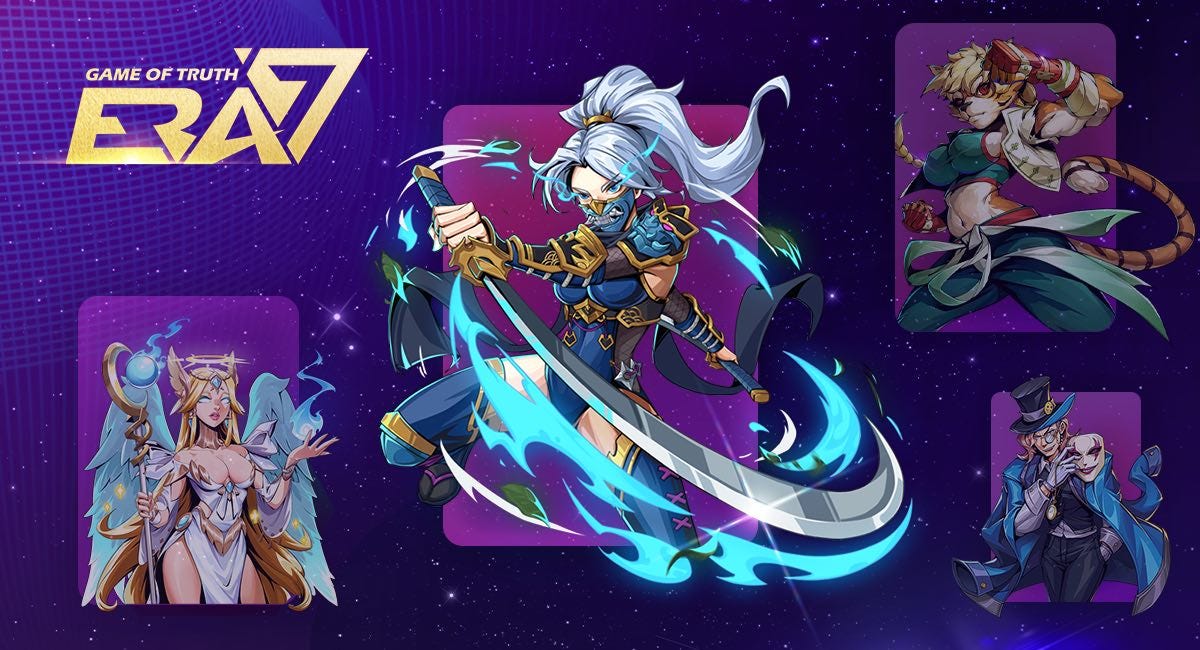
Singapore, December 6th, 2021 — BSC-based (Binance Smart Chain) Era7: Game of Truth is set to open the sales of its first batch of NFT Mystery Boxes on 20th December 2021, paving the way for the launch of Era7’s most anticipated Play-to-Earn NFT Trading Card Game in the first quarter of 2022.
Era7’s journey into the blockchain gaming space is backed by some of the biggest names in the industry, who have rallied behind its vision and mission. To date, Era7 has completed its seed round and an initial private round of financing, led by Hashkey and MOBOX, and a dozen other renowned VCs and institutions including Huobi Ventures, OKEx Blockdream Ventures, Good Games Guild (GGG), AU21 Capital, AlphaCoin Fund, Waterdrip Capital and more.
Funds will be directed towards the ongoing game development as well as marketing and operations. Notably, besides investing, MOBOX will also come on board Era7 as co-developer consultants, providing technology support towards the development of Game of Truth.
An Excellent Opportunity to Access Privileged NFT Prices
The upcoming NFT sale provides a good opportunity for early supporters to benefit from the privileged pricing of the unique trading cards. In the first batch of NFTs on sale, while the Mystery Boxes are priced the lowest, buyers will be able to enjoy privileged pricing across all NFT trading cards. Endowed with different features, all cards have intrinsic in-game value and can hold considerable upside potential in the TCG market as the trading cards gain increasing value alongside growth in the game’s popularity and a corresponding scarcity of the NFT cards on open markets.
Indeed, for fans of the game, this is the perfect opportunity to strategically collect cards and position themselves early in the game, not to mention an excellent opportunity to invest early at the lowest NFT prices for future returns.
According to Era7, they will also implement an NFT airdrop right before the NFT sales to reward the community for their continued support and commitment to Game of Truth.
Game of Truth aims to be a Benchmark for NFT trading card games
Era7: Game of Truth is the first trading card game to deploy the concept of NFTs and DeFi to captivate gamers with its unique Play2Earn features. Designed to drive traditional gamers to GameFi, Era7 gives them and blockchain gamers the opportunity to earn, own, and exchange in-game items with real-world monetary value.
By providing modestly competitive and fast-paced gameplay, combining combat and strategy, Game of Truth hopes to become every gamer’s choice. In a three-minute game, players may think about how to configure and strategize their greatest decks in PVP (player-versus-player), PVE (player-versus-environment), and other tournament types to win the game as well as token rewards.
The Era7 developers aim to establish a market-oriented approach for the Game of Truth. By combining cutting-edge technology and ground-breaking new gaming innovations, Game of Truth’s target of being a TCG benchmark in the world of GameFi looks poised to take off.
About Era7: Game of Truth
Era7: Game of Truth is a Play-To-Earn NFT-based trading card game (TCG). It offers the perfect combination of traditional gaming and decentralized finance (DeFi) to gamers, bringing an entertaining gaming experience while providing an avenue to earn.
According to Era7 ancient folklore, the seven races on the continent of Truth battle against each other for supremacy all year long, to vie for the title “King of Truth”. The victor from the Game of Truth emerges as the ruler of the continent whereby he and his race then enjoy the highest honors in the land.
Founded by core team members from internationally renowned game developers with over 15 years of valuable experience such as Com2uS, NCsoft, Nexon, and Netmarble, Era7 is backed by heavyweight VCs and blockchain institutions such as Hashkey, MOBOX, Huobi Ventures, OKEx Blockdream Ventures, Good Games Guild (GGG), AU21 Capital, AlphaCoin, Fund Waterdrip Capital and more.
Following the tech journeys of four noteworthy Odisha personalities making their mark in the fast-developing blockchain space.
Blockchain technology offers a great many advantages to many industries, with the financial sector being one of the most notable examples. It has the potential to have an even greater impact in developing countries, where blockchain-enhanced fintech can help improve financial accessibility for the 1.7 billion unbanked people around the world through services such as peer-to-peer loans and alternative currency payments and investments.
This Is why it should come as no surprise that, while most of the first wave of cryptocurrency influencers such as Erik Voorhees, Charlie Lee, Tim Draper, Andreas Antonopoulos and many more all hail from first-world Western countries, it is from the developing countries that some of the technology’s biggest thought leaders can be found.
In fact, four highly respected champions of blockchain technology are Odia, referring to people who originate from Odisha, a state in the Indian subcontinent. Despite being one of the poorest states of the country, Odisha has produced four trailblazing journeys, united by both geographic origin as well as their respective challenges in the tech industry. In particular, these personalities are making their mark in the world of blockchain, in remarkably exciting times for disruptive technology.
Sopnendu Mohanty
Sopnendu Mohanty got his start in the IT industry back in 1995, following both a Bachelor’s and Master’s degree in information science. In 1997, he moved to Japan to join Citigroup’s product and services development division. He would stay with the company for 18 years, eventually being promoted to Head of Citigroup’s Asia Pacific Branch Operations, and then later to Head of Citigroup’s Global Consumer Lab.
In 2015, Sopnendu Mohanty left Citigroup and joined the Singapore government-run Monetary Authority of Singapore (MAS) as Chief Financial Officer. At MAS, he has helped contribute to Singapore’s rise as one of the world’s top fintech hubs.
In addition to his work at MAS, Sopnendu is also an avid speaker and global thought leader in fintech, and an outspoken advocate for an accelerated transformation to a digital blockchain-based economy.
“Having a distributed ledger by design takes away the whole complexity behind settling things, checking things. And it allows some of the business rules to be built into the use cases — the payment process, the settlement process, the underlying business rules can be encoded to a single stream,” said Sopnendu Mohanty.
“There are two different processes in today’s world. There’s a process where you pay each other and there’s a process in which we exchange goods and services. Blockchain digital currency brings together these two processes into a single process in which you’re not only paying each other but also ensuring that goods and services are exchanged at the point of payment.”
In September 2021, the MAS granted DBS Vickers — a subsidiary of DBS Bank, the largest bank in Southeast Asia — a license to officially offer cryptocurrency services.
“This is a natural progression in any innovation and there has been a very clear growing interest in digital assets,” Sopnendu Mohanty said.
“Fintechs are always pushing banks out of their comfortable traditional finance space. It’s very encouraging for us to see DBS think about such new areas where they can add value and create a new service. This is truly a sign of the maturity of the Singaporean fintech sector. Here, we don’t see a difference between fintechs and banks. Both are complimentary, they come together and work together.”
Mriganka Pattnaik
Hailing from the ancient city of Bhubaneswar in Odisha, Mriganka Pattnaik got his fintech career off the ground with numerous internships even before he finished his technology Bachelor’s degree from ITT Guwahati in 2013. Upon graduation, Mriganka went straight to work at Bank of America as an analyst in their Mumbai branch.
Two years later, he left to found his first company, Datatrix Healthcare Technologies, to help people remotely order medication and home diagnostic tests from nearby pharmacies.
“I saw an opportunity to address a need and to this day, I believe that entrepreneurship is the most direct way to bridge these gaps,” Pattnaik said
“Unfortunately, there was a lot of regulatory ambiguity in the area of online pharmacies. It was difficult to understand the full picture in terms of risk. Through this experience, I understood how regulatory ambiguity can really hinder innovation and hurt early startups. Afterward, I moved to Singapore in 2016 to work at Luno, a prominent crypto exchange, to support strategy and country-specific execution across three continents.”
During his time at Luno, he witnessed firsthand the compliance challenges faced by digital asset businesses in diverse jurisdictions and the key role regulations play in the industry’s health and sustainable growth. He then joined the Entrepreneur First tech incubator where he met Nirmal Aryath Koroth, with whom he co-founded his second company, Merkle Science, in 2018.
Merkle Science is a risk and intelligence platform that helps companies and government organizations detect, investigate and prevent illegal activities involving cryptocurrencies.
“As blockchain and cryptocurrency gained popularity, more financial institutions, retail platforms and governments started adopting the technology. Unfortunately, as the legitimate use cases rise, so does its illegal use,” Pattnaik said. “In 2020 alone, it is estimated that more than 12 billion dollars worth of crypto was involved in illicit transactions.”
“Unsurprisingly, this has led to many governments around the world introducing new laws and regulations that govern how cryptocurrency businesses can operate. These new regulations seek to mitigate the risk that comes with cryptocurrencies. However, these new laws and regulations have made it difficult for companies to work with cryptocurrencies and they struggle to figure out how to comply. With these new laws, there is then a need for new-age solutions and this is where Merkle Science comes in. We have developed a suite of solutions designed to make use of the blockchain’s transparent and traceable nature in order to help businesses identify and protect themselves against criminal use,” commented Pattnaik.
Debajani Mohanty
Debajani Mohanty is the bestselling author of five books on blockchain and was ranked among the top 30 Blockchain influencers from India on Singapore Fintech news as well as the world’s top 100 blockchain social influencers by Piktale awards. Born in coastal Odisha, she studied Electronics and Telecommunications Engineering at Sambalpur University before launching straight into what would become a 24-year career (and counting) devising software solutions for companies from India and, since 2020, England.
She got her feet wet with blockchain in 2017, from which point she has worked in development using numerous blockchain technologies. “The true potential of blockchain is yet to be realized,” Debajani Mohanty said. “We need much more dedicated research.”
Debajani Mohanty’s books range from broad blockchain overviews for new students on the subject, such as her five-star books “Blockchain for Self Sovereign Digital Identity” and “Ethereum for Architects and Developers”, to deep-dive courses on the specific blockchain technologies R3 Corda, Ripple and Ethereum. She has also published a novel focused on themes of the empowerment of women, titled “The Curse of Damini”, for which she was honored with the Arya award by Nobel Peace prize winner Kailash Satyarthi.
Since the beginning of her blockchain career, she has tried to share her learning through books, blogs, videos and live sessions at numerous blockchain summits in India and abroad. She stresses that “propagating knowledge especially to business leaders and decision-makers is the need of the hour, as they have the authority to carry forward this blockchain journey to the next level.”
According to Debajani Mohanty, the next big trends in blockchain are expected to be CBDC, Decentralized Identity and enforcement of data acts (GDPR, CCPA, PDPA etc.) in handling personal data leading to privacy-preserving solutions.
Naquib Mohammed
Born in the city of Cuttack, Naquib Mohammed studied information technology at the Kalinga Institute of Industrial Technology in Bhubaneswar. He then spent more than a decade in information technology, starting as a software engineer then later as a business architect, working for companies across the globe.
“My interest in cryptocurrency really started to get serious after spending a few years learning and working on enterprise use cases of distributed ledger technology in the bull run of late 2019,” said Naquib Mohammed.
“As an enterprise architect, researching the growing IT market was a natural move, and this is where I noticed blockchain as an important part of Industry 4.0 technologies.”
Mohammed was invited to Australia in 2020 by invitation of the Australian government as a “Distinguished Global Fintech Talent”. There, he dove headfirst into blockchain technology, devoting 7–8 hours a day to study and learn the technology.
“During this tenure, I completed over 15 certifications in different areas of blockchain within a six-month span.”
In April of 2021, after working at another startup he decided to launch his own pioneering decentralized finance startup, MRHB (pronounced Marhaba) DeFi. This was to address what he felt was a major gap in a crypto space that excluded many communities due to their faith (in particular himself as a Muslim), lack of access and technological complexity. The demand for financial services which are consistent with faith principles is evidenced by the Islamic Finance industry, currently worth around $3 trillion USD.
In addition, Mohammed wanted to build a more empowering, ethical and community focussed project that would cater to those new to crypto and also address the negative perception created by extensive instances of fraud, risk and opacity in the sector. As such, he hopes to create a more ethical and inclusive project that benefits everyone regardless of faith.
“As our platform is based on very high ethical standards, one of our product offerings is a crypto-based donations platform, the DePhi, a decentralized philanthropy protocol, planned in Phase 2. We sincerely hope to attract investors from all walks of life who are interested in making sure their investments have some form of social impact in addition to benefiting from the wealth opportunities of the cryptoverse,” explained Mohammed.
“By approaching the new crypto economy with a more ethical approach from the very start, we can all do our part to create a more equitable and more inclusive future for all.”
A landmark project in the DeFi ecosystem, being the first to target the USD 3 trillion Islamic Finance ecosystem and other excluded communities, MRHB DeFi is notably backed by Polygon Technology. A prominent Layer-2 blockchain, Polygon is supporting the development of the first dApp focussed on the Islamic and ethical finance sector.
With their blockchain stories impacting different industries and use-cases, from regulations, compliance, intelligence gathering and security to education, ethics, inclusion, and philanthropy, these blockchain personalities are an inspiration to people all over the world who wish to be involved in the revolutionary technology.
As the blockchain and decentralized finance movements sweep across the world, we will undoubtedly see more professional representation from everywhere. Hopefully, blockchain innovators and startup founders from underdeveloped economies especially will find great success, for these are the regions where the technology can do the most social good. Financial services such as zero-fee payments and transactions, peer-to-peer loans and all manner of banking transactions for excluded communities are possible in the realms of blockchain and cryptocurrency.
We need only for more pioneers to step up and seize the opportunity.
Over the last few months, there have been several token launches on Terra. What has been noted, is that there have been two major challenges that continue to occur. First, the initial liquidity pools are just not deep enough. This causes an outrageous manufactured initial price pump, making all the insiders feel really good, but is quite unfortunate for the retail buyer as they are not part of that initial purchase. The second issue is that as soon as the token goes live, all the liquidity at the initial list price is sniped by bots in the first seconds, again forcing the retail buyer to buy in at higher levels.
White Whale has designed an initial token launch model that addresses both of these issues while at the same time bootstrapping our own protocol owned liquidity efforts… it is called “THE BOOTSWAP”
So what is a BOOTSWAP?
Here’s how it works, White Whale is utilizing the latest, freshly audited, open-sourced LBP code graciously provided to the community by the Astroport team. An LBP, or Liquidity Bootstrapping Pool, is a mechanism for launching tokens originally utilized by Balancer that is designed to defer bot activity by starting the token price high and allowing it to float down to price discovery over a pre-set period of time, say 72 hours. LBP’s are also utilized as fundraising tools as the team provides the initial liquidity at a disproportionate ratio, say (98/2 token/stablecoin) and as the tokens are sold the ratio eventually balances out to whatever target ratio is set by the team in the parameters (i.e. 20/80 token/stablecoin), allowing them to claim the stablecoins and so raise capital from the difference.
This is how it generally works, however at White Whale they are taking a slightly different approach. The team from White Whale has been signaling their intention to pursue Protocol Owned Liquidity for some time now, with that said, unlike most other LBP events, White Whale’s BOOTSWAP event will not be a token sale or fundraiser in any way. Absolutely none of the profits from the event will go to the White Whale team or incubating entities. The team funds will be deposited into the LBP pool (along with WHALE tokens) initially, and at the end of the LBP event, when the liquidity pool balances at our predetermined ratio of 50/50 UST/WHALE, same as your standard LP token… all of that liquidity will migrate straight to TerraSwap and will serve as the perpetual trading liquidity for the UST/WHALE pair. All of the corresponding LP tokens will be deposited into the White Whale War Chest and be owned by the protocol.
So what does this mean?
From its inception, White Whale should own the lion’s share of its own liquidity. That’s right… POL right from the start, and
It means that because this is not a sale or raise and all of the funds are going straight into the community-owned treasury, there will be no KYC requirements or trading restrictions for this event!
Questions that are commonly asked are: how does this benefit the regular retail buyer if the price already starts high? What if it stays high and never comes down? White Whale has thought this through and developed a solution for this scenario. Their goal is to distribute WHALE tokens at fair and honest levels to retail buyers. In order to do so, rather than being another project who under-fills the initial pools to manufacture a pump, the plan is to overshoot demand with our initial pool size. They will be depositing 100 million WHALE tokens into the LBP to start. Their reason for this is arguably refreshing – “Because F#&% The Bots, that’s why. They believe this will give everyone who wants to buy liquid WHALE tokens on the first days of trading an opportunity to do so at good levels without all the juicy initial liquidity being stolen by the bots. The starting price will be $1.00, so if bots want to snipe, that’s the price they will be sniping at. It will then float down to price discovery over a period of 72 hours, or until the target ratio is met
The amount of cryptocurrencies on the market has skyrocketed from 500 in 2014 to nearly 7,000 only seven years later in October 2021. A reported 14% of people in the United States — which roughly equals 21.2 million people — have purchased some form of cryptocurrency, with more than 300 million crypto owners estimated worldwide.
It’s clear: Cryptocurrency is here to stay, and its path to global recognition and success has only just begun. I have shared before how and why innovative sectors of longevity and biotech should cooperate with digital currency visionaries to future-proof their work. Crypto founders, CEOs and purchasers are already breaking down barriers and contributing to a more decentralized future in their everyday lives. By empowering individuals with access to diverse assets and opportunities to invest outside of traditional financial offerings, the cryptocurrency industry is creating a future built with innovation in mind.
I see no reason why this innovation should remain locked in these tech-oriented sectors — the philanthropic world can and should benefit as well. Accepting donations in crypto is a straightforward first step that demonstrates to the broader community that an organization acknowledges its importance and is ready to embrace disruptive technology.
Philanthropic initiatives
Several philanthropic initiatives in our field of longevity have already done so. The SENS Research Foundation is a leading longevity research organization that aims to research, develop and promote comprehensive solutions for aging-related diseases. By educating the general public about new advancements and attracting educated donors, the SENS Foundation supports projects working to cure heart disease, cancer and Alzheimer’s. Notably, it has made cryptocurrencies an integral part of its operations. SENS accepts donations made in 72 different cryptocurrencies ranging from Bitcoin (BTC) and Ether (ETH) to Dogecoin (DOGE) and Aave (AAVE).
In 2018, Vitalik Buterin donated $2.4 million in ETH to the Foundation, and other crypto visionaries have followed suit. Richard Heart, the founder of HEX, launched an airdrop in partnership with SENS that called on users to donate a portion of their cryptocurrencies and be entered to win Heart’s new cryptocurrency PulseChain. The PulseChain airdrop raised over $25 million to support the Foundation’s work, which is clear proof that collaboration between cryptocurrency and longevity can be an incredibly powerful tool.
Related: Cryptocurrency can actually make a difference by helping people
I would be remiss to overlook the newly announced Longevity Science Foundation, which I help run. We accept donations in all major cryptocurrencies and plan to work closely with leaders in the crypto industry to build a decentralized and transparent mode of funding. Because all donors, crypto leaders included, receive voting rights in the Foundation’s funding decisions, the Foundation has committed to supporting projects that reflect the most visionary ways of viewing the world.
But of course, accepting cryptocurrency donations is not a phenomenon limited to longevity nonprofits and foundations. Other founders and fundraising teams are waking up to the incredible power of cryptocurrency and the decentralization it offers. For example, The Giving Block provides tools for any non-profit to accept cryptocurrency donations as well as makes it easier for philanthropists to make donations in their preferred digital currency to 400+ organizations like the American Cancer Society and No Kid Hungry.
Several other worldwide non-profits, including St. Jude Children’s Research Hospital and World Relief, are following suit. If these global entities known for their charitable work and admirable goals can embrace cryptocurrency and the donors behind it, so should other nonprofit organizations.
Related: Digitizing charity: We can do better at doing good
Call for action
It is time for the philanthropic and non-profit sectors to wake up to the potential of digital currencies. Longer human lifespans, and many other important advancements, are in our reach, but support from diverse industries and minds is critical.
Adopting principles from the crypto industry, such as decentralization and tokenization, can enrich these foundations and modernize their operations while accepting donations in cryptocurrencies will help ensure that innovators and change-makers can contribute to major advancements. Together, we can build a better future with all the tools (and currencies!) at our disposal.
The views, thoughts and opinions expressed here are the author’s alone and do not necessarily reflect or represent the views and opinions of Cointelegraph.
Garri Zmudze is a managing partner at LongeVC, a Switzerland and Cyprus-based venture capital firm accelerating innovative startups in biotech and longevity. He is a seasoned business expert and angel investor with several successful exits across biotech and tech companies. He is a long-time supporter and investor in biotech companies including Insilico Medicine, Deep Longevity and Basepaws.
Flickto has seen tremendous success since its first launch on Nov 1st. The number of delegates on the platform has grown rapidly, as has the volume of ADA staked. Less than one month after launch, more than 1.5 ADA has been staked on its ISPO delegator pool.
The project is revolutionizing the way that media financing is carried out. Flickto uses the ISPO pool to fund projects through community partnerships. The media launchpad provides creators with the financing they need to produce their content, while simultaneously providing users the ability to earn passive income by way of distribution royalties after the projects are completed.
Staking In Flickto ISPOs
Users can stake and earn rewards by staking their ADA and earning Flickto’s native token FLICK. Staking with FLICK tokens gives the user the right to vote for the projects which they would like to see funded. Then when the projects are approved by the broader community via voting with staked FLICK tokens, financing is provided until the project is distributed. At which point users will start earning royalties.
Users are able to fund projects that will eventually be seen on the big screen in theaters and also on their TV screens. This takes the power over the media industry out of the hands of a few conglomerates and puts it in the hands of the community, completely eliminating the barrier to entry for industries such as this.
In addition to the rewards from staking FLICK and ADA, participating in voting also earns users rewards. It also makes users eligible for extra rewards, like the just-concluded airdrop that saw two NFTs go to users who have staked in the pool.
Where Media Meets Blockchain
Flickto is the first of its kind on the Cardano blockchain and as such has recorded much success since launch. It entered into a partnership with media industry veterans Ben Morris and Geraint Harvard Jones, who serve as advisors to the project. With decades of experience between the two, they will guide Flickto as they navigate the media project financing space.
Artists from various genres can be selected by the community for financing. Flickto is not just limited to film and TV production. NFT artists and content creators are another example of projects that users can vote on.
FLICK Private And Public Sale
Flickto has completed the first phase of its Private Sale round with great success. The next opportunity to acquire FLICK outside of the ISPO is via the upcoming IDO. The private sale gave users the opportunity to purchase the tokens at a low price.
The Cardano-based project will help accelerate Flickto to provide efficient and transparent crowdfunding services.
The total supply of FLICK tokens is capped at 5,000,000,000 with a total of 1,000,000,000 FLICK tokens going up for sale in the private sale.
On Friday, WisdomTree, a financial institution with over $76 billion in assets under management, announced it had created four cryptocurrency indices in the United States and Europe to provide diversified portfolio exposure to investors. The move comes in collaboration with Ritholtz Wealth Management, OnRamp, and Gemini.
In the U.S., WisdomTree will launch the RWM WisdomTree Crypto Index. And in Europe, WisdomTree is advancing the WisdomTree Crypto Mega Cap Equal Weight (MEGA), WisdomTree Crypto Market (BLOC), and WisdomTree Crypto Altcoins (WALT) indices.
The RWM WisdomTree Crypto Index will focus on crypto assets, layer one networks, layer two protocols, oracle networks, and decentralized finance protocols, among others. But it will have a heavy emphasis on layer one networks, with 64% of the fund’s assets going into this category.
Meanwhile, MEGA will act as an equal weight index for large-cap cryptocurrencies like Bitcoin (BTC) and Ether (ETH). As for BLOC, it will track the performance of the top 70% of cryptos by market cap. Lastly, WALT is another equally-weighted index that seeks to track the performance of altcoins, and will not hold either BTC or ETH.
Related: Grayscale tells SEC ‘no basis’ to approve Bitcoin futures ETFs and not spot ETFs
Alexis Marinof, head of European operations at WisdomTree, issued the following statement with regards to the development:
As interest in crypto assets remains high and becomes a bigger focus for investors, we will continue investing in our platform and capabilities to support investors in this fast-moving market.
WisdomTree’s application to list a Bitcoin spot ETF in the United States was rejected earlier this week after the Securities and Exchange Commission determined that the proposed fund failed to meet various regulatory requirements, including those found under the Exchange Act. However, the asset manager succeeded in listing several exchange-traded products in Europe.
Blockchain.com, a crypto wallet & exchange platform, announced today an early signup list for its forthcoming NFT marketplace As of now, those interested can signup for first access to the Blockchain.com NFT marketplace.
In a few weeks, the ability to buy, sell, and store NFTs will be integrated into the Blockchain.com Wallet. Furthermore, Blockchain.com also recently launched a new NFT Explorer to discover more about the most popular NFTs on the market.
“Over the last ten years, we’ve helped tens of millions of people access crypto by providing an easy way to buy, sell, swap, store, and earn crypto. We want to make accessing the NFT market as easy as accessing the crypto market. With the Blockchain.com NFT marketplace (in beta), you’ll be able to browse, buy, sell, and securely store NFTs without ever leaving your Blockchain.com Wallet.” – The Blockchain.com Team
By Catherine Shyu Sullivan, Senior Product Manager, Coinbase
The month of December normally consists of a scramble to find the perfect gifts for coworkers, hosts, friends, and family. You either brave the long lines in stores or navigate supply chain delays online, and frequently end up settling on another generic candle.
This holiday season, we’re introducing a new crypto gifting experience that allows you to send family and friends crypto assets like Bitcoin and Ethereum along with a personalized digital card. The season of (crypto) giving is here.
The gift that keeps gifting
Crypto gifts educate, excite, and have the potential to increase in value (there’s also risk that they decrease in value). Plus, all crypto gifts come in a personalized digital card featuring up-and-coming, crypto-forward artwork.
Give a crypto gift right from the app or coinbase.com/gifting. Simply tap Send a gift from the menu on the left hand side — all you’ll need is the lucky recipient’s email address. You can gift 100+ crypto assets to recipients who already have a Coinbase account and can gift 5 assets (including Bitcoin and Ethereum) to recipients who are new to Coinbase. There is no fee to send a crypto gift.
Perfectly packaged with a digital card
Your gift is delivered in a digital card featuring a piece of unique artwork by an up-and-coming artist. Pick a piece, write a personalized note, and give the lucky recipient a taste of crypto culture.
“Andrius”-008 by Magdiel Lopez
Born in Havana Cuba, Magdiel Lopez spent his childhood inspired by the colorful culture. Lopez’s upbringing played an integral part in forming his sense of style, art and design, which can be seen in his works today.
“Andrius”-008 by Magdiel Lopez
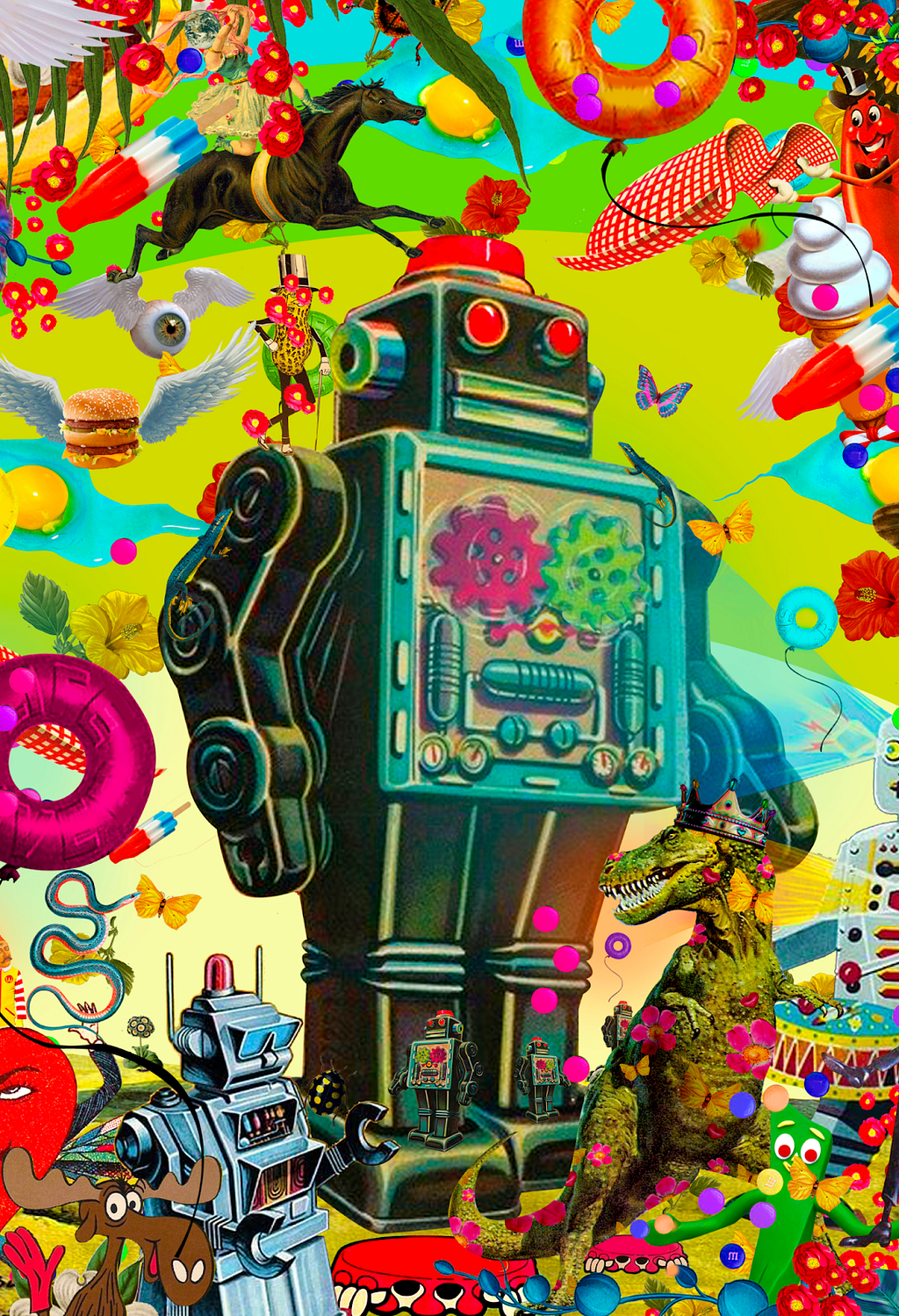
Robot Invasion by David Krovblit
David Krovblit is a Canadian visual artist who now lives in California. He curates images that he considers lost in time — layering them to form whimsical collages rooted in pop culture.
Robot Invasion by David Krovblit
#1644 by Bored Ape Yacht Club
An iconic collection of NFTs. Each Bored Ape is unique and programmatically generated from over 170 possible traits, including expression, fashion accessories, clothing, and more. Note: your recipient will not receive a NFT, just a digital replica of the Bored Ape! Sign up for the waitlist of Coinbase NFT if you’d like to explore NFTs.
#1644 by Bored Ape Yacht Club
Snow Days by Rob Flowers
Rob Flowers is a UK based artist with humor at the heart of his work. It has been described as “trippy…. as if you ate too much candy floss and went on the waltzers at your town’s local fair.”
Snow Days by Rob Flowers
The future of gifting just got brighter. Try it this holiday season in the Coinbase app on iOS or Android or at coinbase.com/gifting.
*Excludes Japan
Give the gift of crypto this holiday season was originally published in The Coinbase Blog on Medium, where people are continuing the conversation by highlighting and responding to this story.
By Aaron Henshaw, Head of Coinbase Cloud Engineering
It’s no secret that crypto is gaining mainstream appeal, with the global crypto market cap reaching an all-time high of $3 trillion for the first time, the total value locked in DeFi reaching $250 billion, and 16% of Americans investing in, trading, or otherwise using cryptocurrency in the past year. A growing number of the world’s largest companies are looking to integrate crypto into their applications. Recently, we’ve seen Stripe, Square, Reddit, the NBA and others introducing crypto into their product lines with no signs of this trend slowing down. They all have one thing in common: a need for infrastructure and tools to operate and participate in the ecosystem.
Coinbase Cloud is committed to empowering current and future builders of the cryptoeconomy. Part of this will be building a platform that allows developers to access a suite of primitives like trading, storing, blockchain data access, and staking services. Our vision is to unleash a wave of innovation by offering turnkey solutions, enabling the innovators of tomorrow to do what they do best: build.
Joining Forces
In January 2021, Coinbase welcomed Bison Trails to become the foundational team and platform of Coinbase Cloud. By joining forces, we could accelerate our combined mission of creating a platform for the next wave of blockchain developers and provide a space to learn, participate, and build for the future of crypto.
As the founders of Bison Trails, Joe Lallouz and I saw this as an opportunity to build something bigger than Bison Trails and more expansive for Coinbase. Coinbase’s commitment to being crypto-first undoubtedly contributed to a seamless transition for our team.
The successful transition was also made possible by the support of the Coinbase leadership team, which has been committed to bringing blockchain infrastructure to the masses, as well as making this a great place for founders like Joe and I to continue building and realizing the vision that we set out to accomplish.
As crypto becomes ubiquitous, the products and services of the Web3 era will need to be powered by reliable and secure infrastructure. Coinbase sees this opportunity and is deeply committed to both our success and the growth of the crypto ecosystem.
The Momentum
Crypto infrastructure has been the bread and butter of Bison Trails since its founding. Its infrastructure platform and products are now the foundation of the Coinbase Cloud platform and suite of developer offerings, to equip the next generation of builders with even more powerful solutions.
We power some of the world’s top custodians, exchanges, funds, dapps and token holders. We are building an industry-leading platform for anyone to participate in blockchains (e.g. Celo Validators Groups, Polkadot Validators, eth2 Validators, including helping power Coinbase’s eth2 staking). We also provide reliable infrastructure for read/write data access, empowering the developers of tomorrow to build innovative crypto products and services, scale across blockchains, gain insights into network trends, and more. This frees our customers from having to invest time and resources into developing the necessary engineering, protocol, DevOps, or security competencies to do so reliably in-house.
We are also taking network participation to the next level by engaging deeply with protocol teams. For example, we’ve worked with Solana Foundation and the NEAR council, and supported the Keanu merger, among others.
Let’s take a look at our progress so far:
$30B+ in assets on platform¹ staked across more than 25 protocols as of November 2021
60,000+ nodes across our Participate, Delegate, and Query & Transact products
Doubling the team size, including expanding our dedicated security team
30+ protocols supported for our read/write infrastructure product, Query & Transact. This includes adding support for global distribution across three cloud providers, and multi-user API key management with rate-limiting options to our customers.
Powering features and cross-platform integrations for highly scaled Coinbase products, such as custody integrations for Institutional and eth2 staking for Retail
These metrics are crucial. They measure our impact on the communities we support. Unlike passive custody, assets that are staked are actively used to secure the underlying protocols, making Coinbase Cloud the largest protector of stake-based protocols.
Given the role we play across 30+ protocols, we’ve invested in the security and operational excellence of both our platform and the broader ecosystem. For example, our double-signing protection capability for eth2 has greatly reduced the risk to our platform users of any equivocation or double signing events. It’s for these reasons that companies and ecosystem players like a16z, Current, and Turner Sports have chosen to work with Coinbase Cloud.
Trevor Marshall, CTO of Current, says “the secure, reliable infrastructure and network expertise Bison Trails (Coinbase Cloud) provides has been invaluable to making it possible for Current to be an early, active participant in Polkadot, Karura and Acala and build hybrid financial products that have the potential to improve the financial outcomes of even more people.”
Up Next
We are now preparing for the next phase. We see a future world where every developer, whether part of an early stage project or a leading financial institution, is in some way touching crypto networks. Coinbase Cloud will provide the tools and the platform they need to do that. Our mission is to empower the innovators and help accelerate the Web3 evolution. This is where the world of software is going and we’re excited to lead the herd.
¹The Bison Trails platform is non-custodial.
Nearly one year in: Leading the herd at Coinbase was originally published in The Coinbase Blog on Medium, where people are continuing the conversation by highlighting and responding to this story.
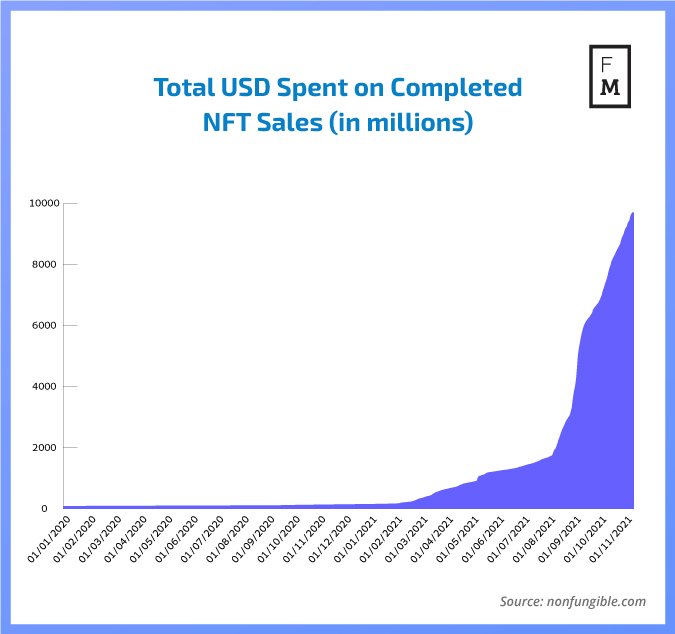
Although the first non-fungible token (NFT) was launched as early as 2015, the market fever around this exciting asset class did not kick off until 2020 when it broke all-time records. The value of NFTs sold in the third quarter of this year reached a record level of $10.7 billion, and the craze around them is no longer reserved exclusively for a narrow group of crypto and blockchain enthusiasts.
The NFT industry has embraced digital artists, celebrities, actors and large companies to look at and engage in this fast-growing industry as a way to maximize profits and build brand awareness. But, are NFTs suitable for everyone? Do they bring added value to retail investment platforms, foreign exchange (Forex) and contracts for difference (CFD) brokers?
Finance Magnates has x-rayed what stands behind the success of CryptoPunks, Bored Apes and other digital collectibles, and it has discussed the subject with industry experts asking if they see an opportunity for Forex and contracts for difference brokers to use NFTs as promotional or trading assets.
Non-Fungible Token (NFT) = An Opportunity for Your Brand?
Famous brands and large companies have quickly discovered that NFTs can be a great way to build popularity among new economy participants and take advantage of the booming trend. As experts point out, it can be a great product for advertising new products and building brand awareness.
“With NFTs, brands can create a buzz about a new product, create scarce and exclusive collectible assets to tell the brand story, or even support causes through token sales. Consumers today like to see brands driving sustainability efforts, which can be seen in the rise of ESG investments. So, brands might look to attract this demographic with NFTs,” Charlotte Day, Director of the Contentworks Agency, said.
As the pandemic months have shown, retail investors aimed trading stands not so far from gamification, and experts have repeatedly commented on the gamification of the industry (commission-free trading platforms gaining huge popularity, such as Robinhood).
Suggested articles
$100,000 Battle: PrimeXBT Debuts New Contests ModuleGo to article >>
According to Philip Gunwhy, the Chief Marketing Officer for the NFT ecosystem, Blockasset, “traditional finance (or TradFi) moves slower than crypto, but it is inevitable that more and more brokers will enter the space in the future.” “It was only in 2020 that many institutions started to look at Bitcoin for the first time. That is still more or less the case today, save for those who are looking into Ethereum. Although NFTs have been around for around five years now, they have only really caught on in 2021. As the space matures, we can see many traditional brokers looking to break in: there is already evidence of that now, with crypto-native firms like Three Arrows Capital dropping millions of dollars on blue chips like Fidenza and Ringers,” Gunwhy commented.
CFDs for NFT-oriented Stocks?
One of the most attractive ways for CFD brokers to tap into this rapidly building market is by offering clients access to NFT-oriented stocks. This is the simplest and easiest method to implement initially. The list of companies related to the non-fungible tokens is long and among the most popular ones you can find: Cloudflare (NET), Mattel (MAT), Dolphin Entertainment (DLPN), Takung Art (TKAT), PLBY Group (PLBY), Funko (FNKO) and, of course, Twitter (TWTR).
Cloudflare’s stock price increased 350% last year, and in 2021 it has gained another 156%. In the case of Mattel, the appreciation is not as high but is also attractive for investors, amounting to over 50% since the beginning of 2020. Moreover, investors are very interested in Funko shares, which have grown by 65% YTD. Such rates of return will undoubtedly be of interest to current and new potential clients.
To get the full article and the bigger picture on NFT phenomena, get our latest Quarterly Intelligence Report.