In May 2021, we announced the launch of Coinbase Giving. Coinbase Giving is the operational embodiment of our commitment to Pledge 1%: our promise to dedicate 1% of Coinbase profits, equity, and employee time toward charitable activities that leverage the power of crypto to increase economic freedom in the world.
Where we are
In the past 7 months we’re proud of what we’ve accomplished:
Coinbase Giving is the largest charitable organization focused on Crypto (>$500M endowed at the time of post)
GiveCrypto, founded in 2018, has been brought officially under the umbrella of Coinbase Giving to enable scale and maximize social impact
We have launched 7 programs, supported 410 organizations, deployed ~$2M, and are impacting 2K+ lives
We are only at the beginning of this journey. 2021 has been a test and iteration year — our impact is still modest. The purpose of this post is to share progress and lessons learned.
Areas of focus
In 2021 our focus has been to support endeavors that align to three broad categories:
Increasing education around, and access to, crypto
Accelerating the development of crypto protocols that underpin the cryptoeconomy
Fostering the next generation of crypto talent, no matter where they are located
Highlights from 2021
GiveCrypto is our nonprofit that enables crypto based direct giving to some of the most needy people in the world. In doing so we also educate them about crypto and give them an alternative to their broken financial systems.
GiveCrypto has been one of Coinbase Giving’s largest investment areas in-house. GiveCrypto is a two-sided market. First, donations are driven by donors who are inspired to give charitably. Second, from these donations, crypto is put directly in the hands of people in need through our on-the-ground Ambassador program.
Bringing GiveCrypto directly within Coinbase has accelerated our ability to integrate donation collection within the consumer experience. As such, 2021 has been a critical year of rebuilding and integration. As the #1 crypto exchange in the US, we see this connection as a huge step forward in enabling public donations using crypto and Coinbase products. We have taken this chance to revamp our Ambassador program — our system to distribute funds directly into the hands of the most needy. In 2021, we were purely testing our distribution system and only reached 246 recipients. However, with those tests now under our belts, we feel ready to scale distributions dramatically in 2022.
Already we are seeing how crypto possesses unique characteristics that make it suitable as a cross-border donations mechanism. For example, it allows donors to avoid disintermediation by bad actors, who often take a cut at the expense of the recipient. Crypto adoption is growing, particularly in Latin American countries where hyperinflation can be devastating. Our independently validated randomized control test shows that direct giving continues to demonstrate high real-life impact, whether in enabling individuals to pay for food, education, or other day-to-day needs.
Developer Grants2.0 to accelerate the development of crypto protocols.
In August, we launched the second iteration of our Crypto Community Fund whose goal is to make the cryptoeconomy safer and easier to access for everyone. We selected 6 developers to fund across 3 thematic areas: (1) Scalability; (2) Privacy, identity and zero knowledge research; and (3) Protocol security and other foundational infrastructure.
Grant terms are typically 1-year and we will share progress on their journeys throughout 2022.
Base 11 partnership to foster the next generation of global and diverse crypto talent.
Earlier this year Coinbase announced our three-year partnership with Base 11. Together, our goal is to develop the next generation of diverse crypto talent. In early October, Base11 hosted the Next Frontier Conference & Expo, which featured a fireside chat with Alesia Haas, CFO at Coinbase and Landon Taylor, Founder & Chairman, Base 11.
At the conclusion of the conference, the Coinbase Giving team launched our first ever Open Innovation Challenge, giving away over $10,000 in prizes and an exclusive NFT. The Open Innovation Challenge called for participants to focus on four key pillars: environmental sustainability, healthcare, education, and financial inclusion. The call to action has drawn hundreds of participants from all over the world and dozens of quality submissions that address the key pillars described above. We’re excited to enter the judging phase and will announce the winner in Q1 2022.
Learnings
The crypto-forward charitable ecosystem — like the crypto ecosystem — is still nascent. That said, there are a growing number of novel partnerships between established non-profits (who deeply understand the social sector) and technical partners (who get crypto/blockchain) trying to better solve old problems with new solutions. We’ve learned this is Coinbase Giving’s sweet spot for grant-making.
As more people hold crypto, more people want to give in crypto. “45% of crypto holders donated $1,000 or more to charities in 2020 compared to 33% of all investors”, according to a new report by Fidelity. We have engaged in many conversations with potential partners exploring the role Coinbase Giving could play in connecting nonprofits and endowments with the infrastructure they need to accept and hold crypto as an endowment (only ~2% have the ability to do so currently).
Without education, there is no access. As the crypto market has heated up in 2021, so has the call for Coinbase Giving to provide more educational resources and support. Non-profits, NGOs and education leaders increasingly see crypto literacy as a next-generation skill required for the future success of their communities and constituencies. Coinbase’s investment in Crypto Learn and other initiatives distinctly well position Coinbase Giving to address this educational need. We look forward to exploring more in 2022.
Accelerating and building infrastructure is more than open source code. There are many barriers to the simple and secure use of crypto and blockchain that are just as much about infrastructure development as having the right protocols. There are also many more applications for blockchain to solve social problems than have yet been envisioned or realized. This is all infrastructure. We can do better to support a flourishing ecosystem.
Next Up
With 2021 as a foundation-building (half) year, we are looking forward to incorporating what we’ve learned and to drive the social impact of crypto in 2022. We’ll keep the community up to date on what’s happening with a quarterly blog. Stay tuned!
Coinbase Giving: Half Year in Review was originally published in The Coinbase Blog on Medium, where people are continuing the conversation by highlighting and responding to this story.
Decentralized cloud protocol StackOS is joining forces with the Avalanche blockchain platform, after being declared the network’s preferred DeCloud provider for its growing developer ecosystem.
The confirmation follows a poll conducted on the official StackOS Twitter account, one that saw users quizzed about which blockchain they would like to see the protocol become interoperable with. After thousands of followers had their say, Avalanche was named the winner with 75.9% of votes cast, beating out the likes of Cardano, Polygon (formerly Matic), and Solana.
As the first decentralized cloud protocol operating on Avalanche’s fast-growing smart contract platform, developers will have the opportunity to leverage StackOS’ cross-chain Infrastructure Protocol to deploy full-stack applications, high-traffic decentralized applications (dApps), blockchain privatenets and mainnet nodes.
In addition, the DeCloud leader will support future technical Avalanche events by sponsoring compute, rewards, and educating developers on how to anonymously leverage StackOS’ no-code, UI-based application deployment engine in a matter of minutes.
Decentralizing the Cloud
While Bitcoin popularized the idea of decentralized currency, and the defi movement has precipitated the emergence of an open and transparent alternative to legacy tradfi, StackOS is determined to make itself the face of DeCloud.
In doing so, the permissionless protocol hopes to rumble the established big cloud cartel dominated by centralized entities such as Amazon, Google and Microsoft, principally by saving clients the hassle of paying for expensive set-ups and ongoing maintenance overheads. Global spending on public cloud services was predicted to grow by 23.1% this year, from $270 billion in 2020 to $332.3 billion.
Unlike existing cloud solutions, StackOS requires no sign-up or infrastructure costs, with computational power and storage provided by third parties (individuals, businesses) who receive cryptocurrency rewards in the form of $STACK tokens. Literally, anyone can join the network and start supplying their computational power.
The Avalanche team has requested for its nodes to be added to the one-click deploy StackOS App Store, thereby creating a network of ‘unstoppable’ Avalanche nodes and giving developers the ability to expeditiously deploy an Avalanche node.
Devs will also be able to take advantage of deploying work-in-progress applications on private testnets before promoting them to the mainnet.
According to StackOS, the number of service requests served on the apps deployed on its platform recently surpassed the three-million mark, a little more than three months since the mainnet launched in August.
A Blockchain Cloud Takeover
The relationship with Avalanche is not the first time StackOS has provided its DeCloud services to a fast-growing Layer-2 blockchain. Other large projects have also adopted StackOS’ decentralized cloud to bring one-click nodes and seamless deployments to their developer ecosystem.
StackOS was previously incubated as the de facto DeCloud solution on the NEO platform, too. Some 250 individual projects now deploy on Stack’s trustless cloud, which is powered by cluster operators scattered around the world.
Within the growing ecosystem, community members can become governors with two tiers – Node Apprentice and Node Authority – corresponding to the number of tokens staked. StackOS governors can variously influence burn rates per resource purchase transaction and the height of annual yield in the governor pool.
Like its new DeCloud provider, Avalanche has enjoyed impressive traction in the market since launching last year. Ava Labs’ layer-2 scaling solution, which supports a glut of DeFi dApps and subnets and is fully interoperable with Ethereum, is now a bonafide top 10 blockchain due to its ultra-low fees and high throughput (4,500+ tps). With a powerful DeCloud provider now part of its armory, Avalanche’s inexorable expansion looks set to continue.
About Avalanche
Avalanche is the fastest smart contracts platform in the blockchain industry, as measured by time-to-finality. Avalanche is blazingly fast, low cost, and eco-friendly. Any smart contract-enabled application can outperform its competition by deploying on Avalanche. Don’t believe it?
About StackOS
StackOS is a cross-chain open protocol that allows individuals and organizations to share their computing resources and collectively offer a decentralized cloud; where developers around the world can deploy any full-stack application, decentralized app, blockchain private nets, and main net nodes.
We aim to provide the world with “The Unstoppable Infrastructure Protocol”, which will allow any person across the world to deploy their application without incurring heavy cloud management costs and freely run any application they wish to run. StackOS furthermore intends to help brick and mortar businesses around the globe, to go online cost-effectively and securely with minimal technical overhead.
Coinbase Prime announced yesterday that the company has established a collaboration with Enfusion to offer seamless crypto trading to institutional investors. The integration, which is expected to be completed during the second quarter of 2022 (Q2 2022), will give institutions easy access to the growing market of digital assets.
Coinbase Prime expects leading financial institutions to increase their crypto exposure in the future. The company aims to provide efficient institutional-level crypto services to its clients through the integration of innovative technologies.
“Enfusion’s connectivity with Coinbase Prime will allow us to seamlessly manage our crypto positions alongside other assets from a single interface, streamlining our trading operations. We’re very excited to see two platforms. We rely on the everyday team up to continue improving how institutions access the crypto markets,” said Eric Peters, the CEO and CIO of One River, a leading asset management firm.
In September 2021, Coinbase Prime announced the launch of innovative features to help clients in the management of their portfolios. Earlier this year, Coinbase acquired Routefire to expand Prime Brokerage execution.
OEMS Enfusion
According to Brett Tejpaul, the Head of Institutional Sales, Trading and Prime at Coinbase, the institutional interest in digital assets has increased substantially in the last 12 months.
“By providing straight-through processing to Coinbase Prime via APIs, Enfusion is providing its clients institutional access to digital asset custody and algorithmic trading, with the potential to further our relationship in the future,” he said in a recent post.
“We’re excited to connect to our first OEMS Enfusion, as their native multi-asset management system is a natural first choice to collaborate with on a joint institutional offering. We expect financial institutions to continue to increase their portfolio exposure to crypto, and we’re committed to offering the best tools to enable them to manage it efficiently,” Tejpaul added.
Coinbase Prime announced yesterday that the company has established a collaboration with Enfusion to offer seamless crypto trading to institutional investors. The integration, which is expected to be completed during the second quarter of 2022 (Q2 2022), will give institutions easy access to the growing market of digital assets.
Coinbase Prime expects leading financial institutions to increase their crypto exposure in the future. The company aims to provide efficient institutional-level crypto services to its clients through the integration of innovative technologies.
“Enfusion’s connectivity with Coinbase Prime will allow us to seamlessly manage our crypto positions alongside other assets from a single interface, streamlining our trading operations. We’re very excited to see two platforms. We rely on the everyday team up to continue improving how institutions access the crypto markets,” said Eric Peters, the CEO and CIO of One River, a leading asset management firm.
In September 2021, Coinbase Prime announced the launch of innovative features to help clients in the management of their portfolios. Earlier this year, Coinbase acquired Routefire to expand Prime Brokerage execution.
OEMS Enfusion
According to Brett Tejpaul, the Head of Institutional Sales, Trading and Prime at Coinbase, the institutional interest in digital assets has increased substantially in the last 12 months.
“By providing straight-through processing to Coinbase Prime via APIs, Enfusion is providing its clients institutional access to digital asset custody and algorithmic trading, with the potential to further our relationship in the future,” he said in a recent post.
“We’re excited to connect to our first OEMS Enfusion, as their native multi-asset management system is a natural first choice to collaborate with on a joint institutional offering. We expect financial institutions to continue to increase their portfolio exposure to crypto, and we’re committed to offering the best tools to enable them to manage it efficiently,” Tejpaul added.
Nonfungible token, or NFT, became such a tech buzzword in 2021 that even Collins Dictionary declared the abbreviation its word of the year and Google searches for NFTs spiked to record levels.
Behind the term is a market that approaches $17 billion, according to Cointelegraph Research. And the NFT marketplace OpenSea is responsible for processing most of these transactions, with a trading volume that recently surpassed $10 billion.
NFTs’ potential reaches far beyond art to include music, sports collectibles and video games, while its utility encompasses ownership as well as exclusive access to unique functions and features.
From CryptoPunks and Beeple’s collage to NBA Top Shot and RTFKT, the following collections stood out, not only in numbers but for their growing communities. As we wrap up 2021, let’s take a look at the top 10 collections and sales in NFTs this year.
CryptoPunks, Larva Labs
CryptoPunks are the OG of NFTs, according to DappRadar. The collection launched back in 2017 before the ERC-721 NFT standard existed. Larva Labs released all 10,000 punks for free to Ethereum users and since then, CryptoPunks’ popularity and value on the secondary market have boomed.
Source: Larva Labs
In June 2021, an alien punk sold at Sotheby’s for $11.75 million. In August, Visa acquired a $150,000 CryptoPunk for its corporate collection and Hollywood agency UTA inked a deal to use CryptoPunks in mainstream media. August 2021 saw a record $400 million spent on CryptoPunks in a single month. In September, Reddit co-founder Alexis Ohanian attended the Met Gala sporting a CryptoPunk badge.
CryptoPunks has seen the highest trading volume on OpenSea with 756,984 Ether (ETH) ($3.03 billion). Its increasing value and historical relevance makes it the top NFT collection.
Bored Ape Yacht Club, Yuga Labs
The collection with the second highest historical trading volume is Bored Ape Yacht Club, or BAYC, with 266,843 ETH ($1.07 billion).
The core team behind Yuga Labs is made up of four friends who wanted “to make some dope apes, test our skills and try to build something ridiculous” this year, according to their website. The lead artist behind BAYC is All Seeing Seneca. As an owner of one of the 10,000 Bored Apes, an NFT can double as a Yacht Club membership card and grant members-only access to THE BATHROOM, the Bored Ape Kennel Club and Mutant Ape Yacht Club, or MAYC.
In September, Sotheby’s sold a collection of 107 BAYC NFTs, made up of 101 Bored Apes and six Mutant Apes, for $24.4 million. This is the third-highest off-chain NFT art sale at an auction house to date, after Beeple’s NFT pieces. In November, a surge in OpenSea sales appeared to be connected with a more than 900% uptick in the sale volume of BAYC and MAYC NFTs, likely due to celebrity buyers like Jimmy Fallon, Post Malone who featured BAYC NFTs in a music video and Rolling Stone magazine Bored Ape and Mutant Ape covers. Most recently, BAYC was part of a four-way collaboration between PUNKS Comic, Gmoney and Adidas Originals for the launch of Adidas’ “Into the Metaverse” NFT project.
Thrilled to have collaborated with @RollingStone on their first-ever NFT covers. Auctions for these two 1 of 1’s close Monday on @SuperRare:
On Tuesday, Bored Ape Yacht Club NFTs surpassed the floor price of CryptoPunks for the first time indicating bullish public sentiment toward the future of BAYC.
Beeple
NFT artist Mike Winkelmann, better known as Beeple and self-described as a “dude who makes crap,” holds the record for first and second-most expensive digital art pieces sold at public auction and off-chain as of November 2021, according to Art Market Research.
Following British auction house Christie’s $69.3 million sale of Beeple’s “Everdays: The First 5000 Days” in March 2021, Beeple’s “HUMAN ONE” piece sold for $28.9 million in November. “HUMAN ONE” is a tangible seven-foot-tall rotating box made of LED screens. It can be physically displayed, unlike most NFTs that live in digital wallets. The footage on the screens will be periodically edited and updated using blockchain by Winkelmann in response to current events, according to Christie’s statement.
Beeple became a household name in 2021, especially after winning GQ’s Maddox Gallery Artist Of The Year in September and sitting down with Jimmy Fallon on the late-night TV talk show The Tonight Show.
Related: Why NFTs can be a riskier investment than cryptocurrencies — Report
Axie Infinity, Sky Mavis
Axie Infinity shattered records as the game became the first DApp to surpass $2 billion in NFT trading volume this year, according to a DappRadar Q3 industry report. Axie lags just behind CryptoPunks in trading volume. The game recently moved to the Ronin sidechain solution and generated over $776 million in revenue in Q3.
Source: Axie Infinity
Axies are creatures used to duel other players, battle enemies and complete daily quests. These NFTs can be bred (minted), bought and sold, and are valued by their rarity and in-game advantages. In November, a land plot within the monster-battle NFT game sold for a lucrative 550 ETH ($2.3 million).
Axie Infinity co-founder Jeff “Jiho” Zirlin spoke on a panel at the NFT BZL conference earlier this month about his belief that “we are in a battle for the future of the internet, and grassroots communities such as Axie are having an impact against large corporations,” referring to corporations like Facebook and Apple.
Axie Infinity was first created in 2018 and currently leads the gaming sector as a pioneer of the play-to-earn, or P2E, movement. And since launching a staking program that allows users to hold Axie Infinity Shards (AXS) governance tokens, the trading game increasingly attracts players.
NBA Top Shot, Dapper Labs
NBA Top Shot is a popular fantasy basketball NFT game that first launched in late 2020. As a first-of-its-kind sports collectible game, users can collect, trade and sell cards as digital tokens that represent their favorite NBA players and moments. Highlights can be used to complete challenges or arrange into showcases to show off to the community.
Source: NBA Top Shot
This summer, Top Shot collectors who were in person at the NBA Summer League games in Las Vegas were able to purchase live in-arena moments. It also welcomed the WNBA to Top Shot and introduced its first WNBA pack drop.
Officially licensed by the National Basketball Association, NBA Top Shot was created by Dapper Labs and built on the Flow blockchain. The historical trading volume, according to DappRadar, is $750.4 million. The three highest-selling NFTs were LeBron James NFTs from the Los Angeles Lakers’ 2019–2020 season.
VeeFriends, Gary Vaynerchuk
Behind VeeFriends is entrepreneur Gary Vaynerchuk, also known as Gary Vee, as both the artist and the project founder. His hand-drawn animal doodles sold out in May for $51 million at auction in the first week, which Vaynerchuk said in one of his podcast episodes, he pocketed. After 90 days, VeeFriends’ revenue totaled $91 million. For the additional $40 million, Vaynerchuk received a 10% royalty on every secondary transaction. In October, Christie’s auctioned five VeeFriend characters for over $1.2 million.
The VeeFriends collection is made up of 10,255 character NFTs and each represents intellectual property. A benefit of owning a VeeFriend is a three-year admission token to the multi-day superconference VeeCon. One NFT called “Hangout Hawk” even comes with the opportunity to receive mentoring sessions with Vaynerchuk. One collector, YouTuber Dan Markham, exchanged his Tesla Roadster for graphic novelist Eli Burton’s “Positive Porcupine” NFT. In the following Twitter thread, VeeFriends outlines its latest collaborations with companies from card game producer Uno to the department store Nordstrom.
[5-min read] What’s been going on in VeeFriends this week!
Related: Blockchains vie for NFT market, but Ethereum still dominates — Report
FLUF World
FLUF World is a collection of metaverse-ready 3D avatars called FLUFs living as NFTs on the Ethereum blockchain. FLUFs are programmatically generated rabbit avatars. In an interview with Cointelegraph, New Zealand-based FLUF World founders shared their approach to entering the metaverse. “We had this strong belief that Web 3.0 metaverse is this community-led creative vision,” they said, adding:
“When you start with stories and weave them into characters, then people fall in love with those characters. And we’ve been really deliberate to build them in a way that makes them dynamic and engaging. It’s not a static piece of art. You can name them, modify the backgrounds or attach new music, according to your mood or vibe. All of this data is stored on-chain. And the users are part of the co-creation journey with us.”
During Miami Art Week, FLUF World hosted a FLUF Haus event to introduce FLUFs popstar, AngelBaby, who performed the first-ever live metaverse concert for both physical and virtual attendees. FLUF Haus organizes events that engage real-world artists into the metaverse and is FLUF World’s way of remaining connected to the physical world.
Users can purchase virtual real estate called Burrows, which serve as meeting spaces for FLUFs and other avatars. The latest addition to FLUF World includes 9,669 Party Bears, which sold out within 10 minutes of being dropped to users who wanted new avatars to explore the metaverse alongside existing FLUFs and spider Thingies.
Jadu Hoverboards and Jetpacks, Jadu AR Inc.
What do Canadian musical sensation Grimes, seven-time Formula One world champion Lewis Hamilton and legendary American rapper Snoop Dogg all have in common? Answer: Together with augmented reality developer Jadu, they are all behind a series of rare Jadu Hoverboards NFTs for players to fly around the augmented reality inside the metaverse. This collection of 6,666 hoverboard NFTs was the firm’s second NFT drop. The first, consisting of 1,111 Jadu Jetpacks, sold out in 20 seconds with a total volume of 2,632 ETH ($10.5 million) traded.
The Jadu Hoverboard collection has also been making waves with 1,873 ETH ($7.5 million) in cumulative volume traded since inception. Recently, Jadu raised $7 million in a seed round backed by prominent venture capital firms such as Coinbase Ventures to fund the development of the world-scale augmented reality game Mirrorverse, launching next year. On top of that, Jadu is partnering with The Sandbox to bring its jetpack NFTs to the latter’s metaverse. Both jetpacks and hoverboards will be compatible with 40,000-plus avatars, including popular collections like FLUFs and CyberKongz.
Back to the Future Day is the perfect time to reveal the Jadu Hoverboard NFT.
On Dec. 14, Nike entered the metaverse after acquiring RTFKT, with the goal of delivering next-generation collectibles to bridge the gap between culture and gaming. RTFKT, pronounced like the word “artifact,” is a studio fostering a new digital sneakers culture for video game and blockchain enthusiasts. In an exclusive interview with Cointelegraph, Chris Le, the firm’s co-founder, said casually: “I manage a team of artists and conceptualize sneaker designs. If I feel like getting my hands dirty, I’ll model the 3D sneakers, do all the rendering and make the NFT’s out of them.” Although the collection consists of 13 sneaker NFTs, they’ve fetched an impressive 976 ETH ($3.9 million).
Aside from NFT footwear, RTFKT also minted a series of 20,000 three-dimensional avatars on the Ethereum blockchain called Clone X. These in-game characters can be used in decentralized virtual reality realms, such as Decentraland, together with other wearable items. At the time of publication, RTFKT Studios second collections trending in terms of trading volume for its Clone X collaboration with artist Takashi Murakami.
Related: Adidas Originals to launch debut NFT collection
Pak, Nifty Gateway
Pak, a pseudonym for a digital artist or anonymous entity, ranks as the top NFT artist with a total artwork value sold of $321 million across 66,319 pieces, according to data by CryptoArt. The creator’s works are known for their sophisticated blend of futurism and spatial depth interwoven with geometry.
During an event earlier this month called Merge, interested buyers were required to purchase as many Merge tokens as they desired during a 48-hour sale. Each new Merge token transfer was then combined with the original Merge token in the recipient’s wallet, forming a single entity and increasing its “mass” value. At the end of the auction, buyers then received dynamically generated NFTs based on how much “mass” they accumulated throughout.
Exploring the new world of decentralized autonomous organizations
Around the Block from Coinbase Ventures sheds light on key trends in crypto. Written by Justin Mart & Connor Dempsey.
What the internet did for communication, DAOs can do for capital.
The internet and social networks have made it easier for like minded individuals to communicate than ever before, regardless of geographic location. The advent of digitally native money and finance have now enabled a new kind of social network that allows for like minded individuals to not just communicate, but also coordinate around capital. As with their predecessors, these new networks are unconstrained by geographic borders, capable of forming at massive scale or across a small number of select participants.
The most optimistic thinkers believe that decentralized autonomous organizations can reinvent how humans organize and eventually eclipse the size and scope of the world’s largest corporations and even nation-states.
In this edition of Around The Block, we explore the current DAO landscape and big questions surrounding their future.
What is a DAO?
Simply put, DAOs are software enabled organizations. They allow people to pool resources toward a common goal and share in value creation when those goals are achieved.
Just as the LLC (limited liability corporation) was the preferred organizing primitive of the industrial revolution, DAOs can be the same for Web3. Where corporations are rooted in the legacy financial system and organized through legal contracts, DAOs run on top of open blockchain networks like Ethereum, organized by tokens with their rules encoded in smart contracts.
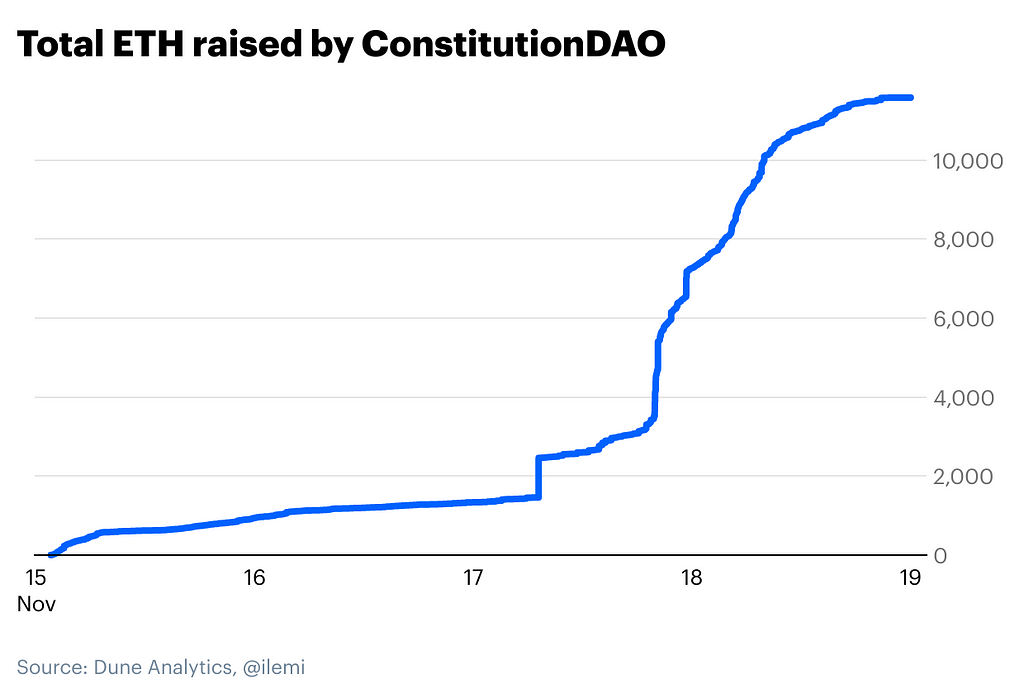
DAOs aren’t tied to a physical location, which allows them to mobilize quickly and attract talent from all over the world — a notion that was on full display when the ConstitutionDAO recently raised over $40M from 17,000 contributors in less than a week in a failed bid to buy one of the original copies of the US constitution.
But DAOs can do so much more than mobilize internet friends to collectively bid on historic documents — they can transform how we organize any manner of economic activity.
What do DAOs do?
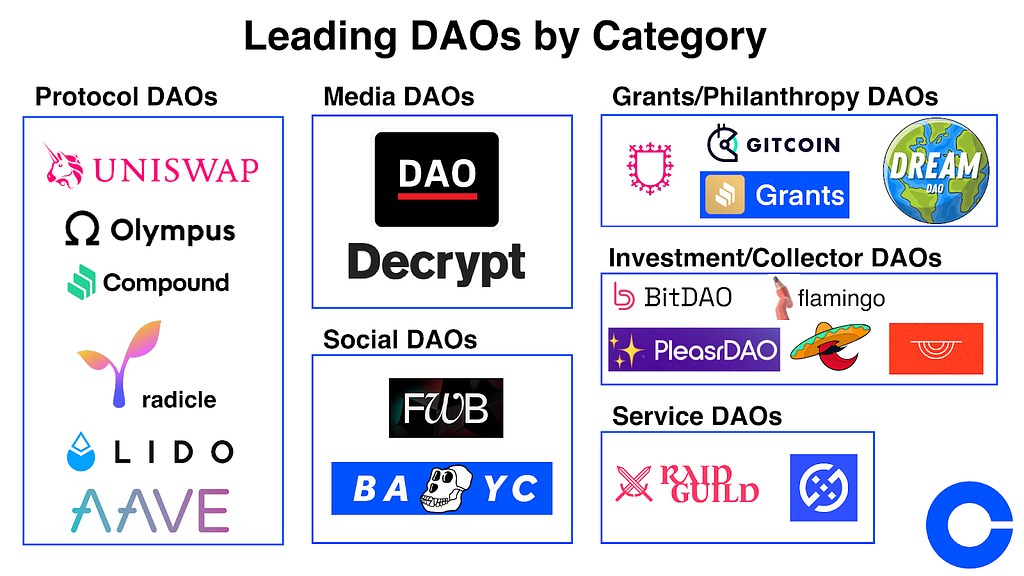
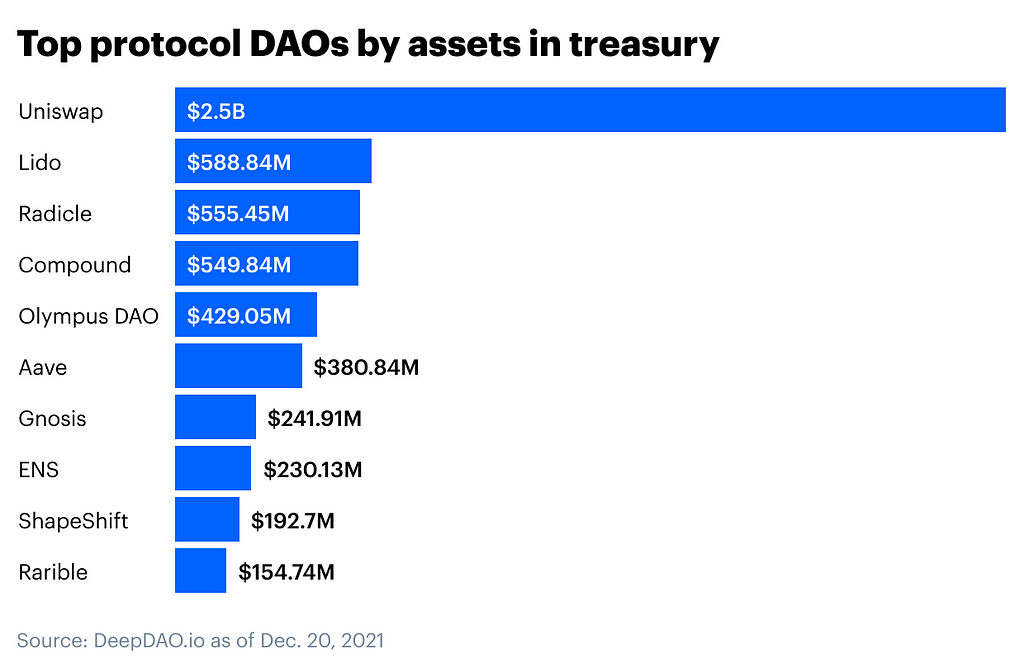
There are already over 180 DAOs (tracked by deepdao.io) with $10B+ in assets under management and nearly 2 million members. These range from DAOs that help manage some of the largest protocols in crypto, to smaller DAOs organized around investment, social communities, media, and philanthropic pursuits.
Protocol DAOs
Ethereum led to an explosion of new crypto assets. From there, developers created protocols that let people trade and lend these new assets (like Uniswap, Compound, and Aave). However these protocols were intended to be decentralized, which created a need to figure out how to govern their growth and evolution.
Rather than put every key decision in the hands of a small team of developers, protocol DAOs emerged as a way to give a protocol’s users a collective say in its future direction. Typically, users are issued governance tokens, often directly based on past usage and contributions, that convey voting rights. Any user can propose ways to improve the project, and token holders can vote on whether or not the developers should move forward with the proposal. More tokens = more voting power.
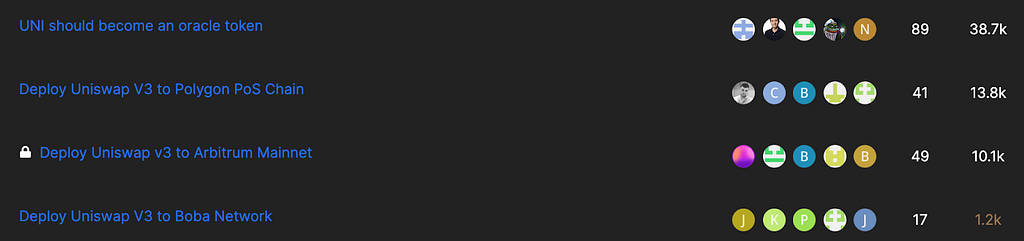
For example, Uniswap token holders are currently voting on which layer 2 networks the decentralized exchange protocol should be deployed on. Token holders also propose and vote on anything from marketing initiatives to how Uniswap’s $2B+ treasury should be managed.
Governance tokens align the community around the future success of the protocol, as they should appreciate in value as the protocol grows — or fall should it fail.
As of December 7th, the largest protocol DAOs by AUM are Uniswap, Lido, Radicle*, Compound,* Olympus, and Aave.
Investment / Collector DAOs
The second largest category is investment and collector DAOs. These let people pool capital with the aim of investing in specific assets. They range from venture investments in things like DeFi protocols or NFTs, to increasingly ambitious efforts like buying rare historic documents or even professional sports franchises.
Similar to other forms of crypto crowdfunding, these DAOs offer a fast and simple means of capital formation when compared to costly and complex legal setups associated with a typical venture capital fund. These funds are also more transparent than traditional venture funds, since members can audit all transactions on chain.
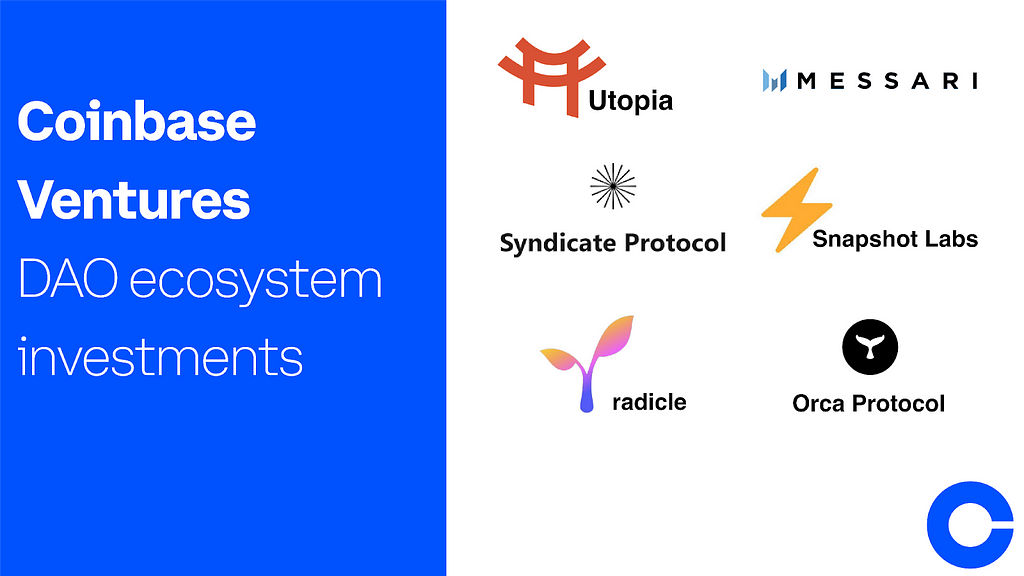
PleasrDAO, MetaCartel Ventures, Flamingo, Komerabi, are all great examples of DAOs pooling resources, collectively making investment decisions, and sharing in the upside when those investments appreciate. In a similar vein, Syndicate* is a project building a suite of tools that let anyone easily spin up their own investment DAO.
Social DAOs
Social DAOs intend to bring like minded people together in online communities, coordinated around a token. The leading example is Friends With Benefits and its $FWB token. To join, members must submit an application and acquire 75 FWB tokens. Entry comes with access to a community full of prominent crypto builders, artists, and creatives as well as exclusive events.
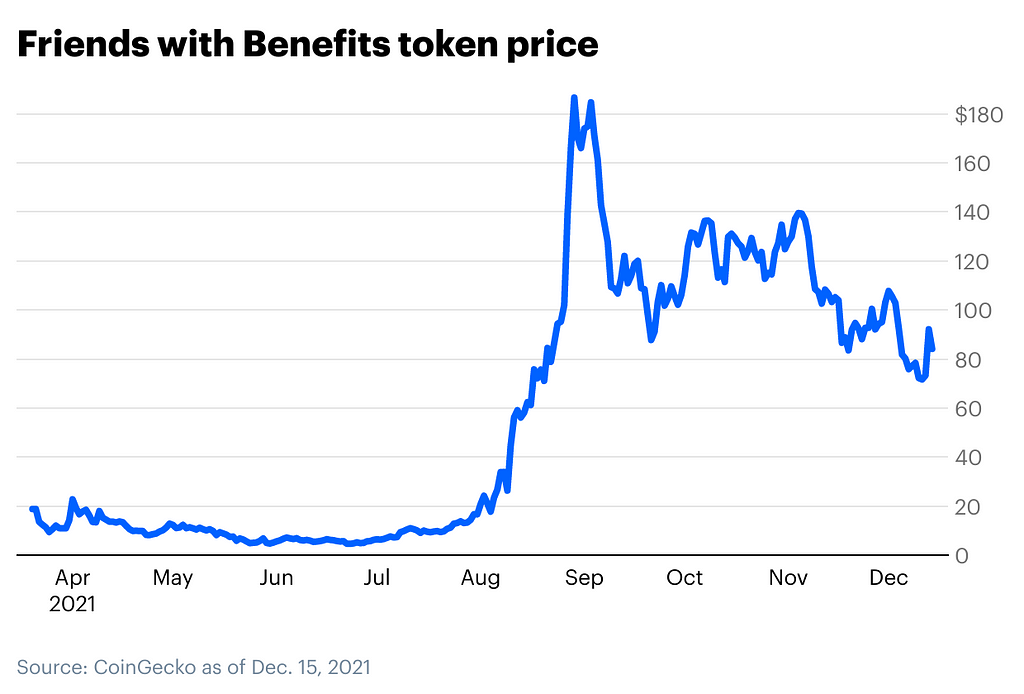
By organizing around a token, members have the incentive to create a valuable community — share insights, host meetups and throw great parties etc. For example, as more people understood the benefits of joining the FWB community, the token appreciated in lockstep, sending the $FWB price from $10 to $75 and therefore membership cost from around $750 to around $6,000.
Other social DAOs use NFTs as the mechanism for unlocking access to a broader community. Owning a Bored Ape NFT for example, unlocks access to the Bored Ape Yacht Club discord, events, NFT airdrops, and merchandise. In this case, the perceived value of the community drives value to the collection of NFTs.
This category of DAOs are all still in their infancy and it will take time to learn which models work and which don’t, but the rapid rise of these communities suggest that they represent a powerful new powerful form of social organization.
Service DAOs
Service DAOs look like online talent agencies that bring strangers together from all over the world to build products and services. Perspective clients can issue bounties for specific tasks and once completed, pay the DAO treasury a portion of the fees before rewarding individual contributors. Contributors also typically receive governance tokens that convey ownership in the DAO.
Most of the early service DAOs, like DxDAO and Raid Guild, are focused on bringing talent together to build out the crypto ecosystem. Their clients consist of other crypto projects and protocols that need everything from software development to graphic design and marketing.
Service DAOs can reinvent how people work, allowing a global talent pool to work on their own time and receive ownership stakes in the networks they care about. While early service DAOs are crypto focused, one can envision a future where Uber is replaced by UberDAO that pairs drivers with riders, while paying drivers an ownership stake in the network (though it will be while before DAOs integrated beyond the purely digital realm).
Media DAOs
Media DAOs aim to reinvent how both content producers and consumers engage with media. Rather than rely on advertising based revenue models, these DAOs use token incentives to reward producers and consumers for their time with an ownership stake in a given outlet.
The idea of decentralized media dates back to 2013 with the “Let’s Talk Bitcoin” podcast, but BanklessDAO is a leading example in 2021. Bankless is an Ethereum-focused media outlet that produces a popular podcast and newsletter. Recently, the Bankless team airdropped the BANK token to its audience. With BANK acquired, readers can take an active role in the media outlet and earn additional BANK by producing content, research, graphic design, article translations, marketing services as well as vote on key decisions to direct the DAO.
At a time when many agree that the current ad-based media model is broken, media DAOs present a compelling alternative for realigning the interests between readers and producers.
Grants/Philanthropy DAOs
Grant and philosophy DAOs, similar to investment DAOs, pool capital and deploy it to various endeavors. The only difference is that allocations are made without the expectation of a financial return.
Gitcoin is a pioneer of this model, supporting grants for critical open source infrastructure that may otherwise have trouble getting funded. Similarly, large protocols like Uniswap, Compound, and Aave have specific grant DAOs that let the community vote on how their treasuries can be deployed to pay builders and developers to further the protocol.
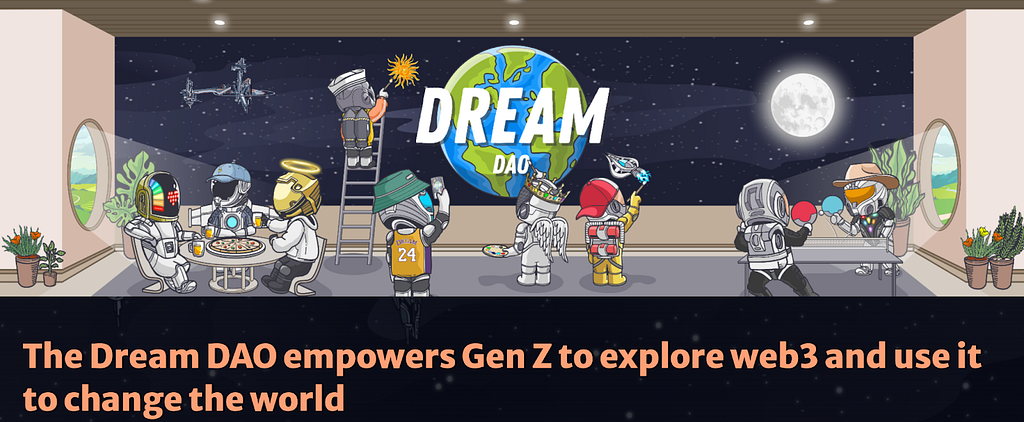
Philanthropy DAOs are also starting to emerge to re-imagine how charitable donations can be made. Dream DAO for example, issued NFTs to raise funds before letting NFT holders vote on how those funds should be allocated towards the DAO’s mission (funding civic leaders in Gen Z).
The hurdles for DAOs
As this increasingly diverse landscape shows, DAOs can become the organizational primitive of Web3, reinventing how we govern, invest, work, create, and donate. Expect to see the categories, number, and quality of DAOs evolve dramatically in the future.
That said, they have a long way to go. Consider that DAOs are essentially tasked with reverse engineering hundreds of years of lessons learned from democracy and corporate governance! The scale of the challenge is palpable, and today we recognize 4 main deficiencies:
Corporations have always been rooted in a specific place, with their right to exist bestowed first by monarchs, and eventually by cities and states. Those same municipalities have always set the rules that corporations in their jurisdiction must abide by. Given that DAOs don’t exist in any one place and don’t operate like corporations, they don’t fit cleanly into existing regulatory frameworks.
Where the rules around forming a new corporation while protecting members from certain liabilities are well defined, DAOs have to grapple with all sorts of thorny regulatory and legal issues. How are DAO tokens and treasury activities treated from a tax perspective? How should income paid to a DAO member be reported?
In the US, DAOs are currently faced with a faustian bargain of forming an LLC in a specific jurisdiction or being treated as a general partnership. The former undermines a DAOs ability to be governed by rules encoded in smart contracts in favor of standard LLC articles of incorporation (and being restricted by the constraints of existing LLC law). The latter potentially exposes members to liabilities through the partnership, which would otherwise be protected by the “limited liability company (LLC)”.
All of this uncertainty makes it difficult for DAOs to interact with non-crypto/Web3 entities, which is a major detriment. Wyoming has pushed forward legislation that will allow DAOs to operate on the same legal footing as traditional LLCs while allowing them to be governed by their own smart contracts but has been met with SEC resistance. Meanwhile, a16z, and OpenLaw have proposed clear legal frameworks for governing DAOs, but DAOs will have to continue to operate in a grey area for the foreseeable future.
All of this uncertainty underscores the notion that in the near term, DAOs growth will likely be concentrated purely in the digital realm — the legal complexity gets amplified when DAOs attempt to crossover to the physical realm (e.g UberDAO).
Lack of efficient coordination mechanisms
There’s a reason corporations and governments don’t have every employee or citizen weigh in on every decision — it’s a highly inefficient way of getting things done and not everyone is qualified to do so.
body[data-twttr-rendered=”true”] {background-color: transparent;}.twitter-tweet {margin: auto !important;}
Corporate hierarchies exist because you often need qualified people making the hard decisions. Many DAOs today exist under somewhat crude governance structures where 1 token equates to 1 vote. In larger DAOs with thousands of token holders, this can lead to chaotic decision making processes where voting power is more a function of buying power than expertise. Similarly, unappointed but high-profile members can gain oversized influence over decision making.
Most agree that for DAOs to be truly effective, they’ll have to explore advancements in governance structures, like shifting to a delegated authority model, where token holders can vote in qualified leaders to make key decisions in a transparent manner (something Orca Protocol* is exploring). In the near term, it’s likely that DAO governance will remain messy and chaotic as they experiment with different models before ultimately figuring out what works (much like the long experimental path from monarchies to democracy).
Lack of developed infrastructure
Just as corporations enjoy clear legal frameworks and efficient decision making processes, they also benefit from highly developed infrastructure on which to operate. DAOs on the other hand, are tasked with building most of that same infrastructure from scratch.
DAO tools for governance, payroll, reporting, treasury management, communication, and every other resource at the disposal of modern day corporations are still nascent. Thankfully, the DAO tooling landscape runs deep, and there are hundreds of teams working on tackling these deficiencies across a range of approaches.
body[data-twttr-rendered=”true”] {background-color: transparent;}.twitter-tweet {margin: auto !important;}
There’s too many great teams to name but on the governance tooling front, we’re excited about Messari’s* new aggregator for monitoring and participating in governance all from one interface.
It’s hard to discuss DAOs without referencing “The DAO:” The first ever DAO on Ethereum, designed around venture investing in 2015, that had 40% of its treasury hacked and drained of $60 million. As the recent $130 million exploit of BadgerDAO showcased, DAO treasuries remain vulnerable to smart contract risk.
Similarly, the largest crypto networks have a history of fragmentation caused by division from within the community. The Bitcoin/Bitcoin Cash split was caused by a technical dispute over blocksize. The Ethereum/Ethereum Classic split was caused by disagreements over how to respond to the above mentioned hack of “The DAO”. It’s reasonable to think that we’ll see the largest DAOs face similar headwinds.
On the other side of that coin, how sustainable are DAOs come another possible crypto winter? Will people continue to be excited about DAOs when token prices are continually falling, treasuries constrict, and both participation and membership dwindles?
Re-wiring the world with DAOs
While obstacles abound, DAOs represent a paradigm shift in economic organization. If Web3 is to become an internet collectively owned by its users, DAOs will be the organizational primitive in which that ownership is metered out.
2021 has seen a renaissance in new DAO experiments and models. Meanwhile, the landscape of projects and companies building out the tooling needed for DAOs to reach their true potential is among the richest in the industry. (Coinbase Ventures is actively investing in the DAO landscape, with a number of deals in the pipeline — reach out if you’re a project pushing the DAO landscape forward!)
Should these trends continue, we may one day see the biggest organizations, venture firms, media outlets, and institutions built not on legal contracts, but on open crypto networks. As crypto UX improves, DAOs may very well usurp the LLC as the preferred mode of organization in an increasingly digitized world.
PS — Look for more DAO focused products and services coming from Coinbase in the near future.
Further DAO listening from the Around The Block Podcast:
What the heck is a DAO? with Coinbase’s Jesse Pollak
The realities of working for a DAO, with Kinjal Shah
Previous editions of Around The Block
Scaling Ethereum & crypto for a billion users
Coinbase Ventures 2021-Q3 activity and takeaways
The Coinbase Ventures Guide to NFTs
Loot Project: the first community owned NFT gaming platform
Axie Infinity, Yield Guild Games & the play-to-earn economy
This website does not disclose material nonpublic information pertaining to Coinbase or Coinbase Venture’s portfolio companies.
Disclaimer: The opinions expressed on this website are those of the authors who may be associated persons of Coinbase, Inc., or its affiliates (“Coinbase”) and who do not represent the views, opinions and positions of Coinbase. Information is provided for general educational purposes only and is not intended to constitute investment or other advice on financial products. Coinbase makes no representations as to the accuracy, completeness, timeliness, suitability, or validity of any information on this website and will not be liable for any errors, omissions, or delays in this information or any losses, injuries, or damages arising from its display or use. Unless otherwise noted, all images provided herein are the property of Coinbase. This website contains links to third-party websites or other content for information purposes only. Third-party websites are not under the control of Coinbase, and Coinbase is not responsible for their contents. The inclusion of any link does not imply endorsement, approval or recommendation by Coinbase of the site or any association with its operators.
DAOs: Social networks that can rewire the world was originally published in The Coinbase Blog on Medium, where people are continuing the conversation by highlighting and responding to this story.
By Brett Tejpaul, Head of Institutional Sales, Trading and Prime
Our goal is to be the trusted bridge to the cryptoeconomy for all institutions, to fuel widespread adoption of crypto, and ultimately to increase global economic freedom. Coinbase Prime, an integrated solution that provides secure custody, an advanced trading platform, prime services and market data, has become a first choice for sophisticated investors and institutions that want to start investing in digital assets.
Coinbase Prime and Enfusion are connecting to offer cryptocurrency trading to financial institutions and investment managers. By providing straight-through processing to Coinbase Prime via APIs Enfusion is providing its clients institutional access to digital asset custody and algorithmic trading, with the potential to further our relationship in the future.
“Enfusion’s connectivity with Coinbase Prime will allow us to seamlessly manage our crypto positions alongside other assets from a single interface, streamlining our trading operations. We’re very excited to see two platforms we rely on every day team up to continue improving how institutions access the crypto markets,’ said Eric Peters, CEO and CIO of One River, a leading asset management firm.
We’re excited to connect to our first OEMS Enfusion, as their native multi-asset management system is a natural first choice to collaborate with on a joint institutional offering. We expect financial institutions to continue to increase their portfolio exposure to crypto, and we’re committed to offering the best tools to enable them to manage it efficiently.
The integrations between both platforms are expected to be completed in Q2 2022. To learn more about Coinbase Prime click here.
Coinbase Prime and Enfusion team up to bring seamless crypto trading to institutional investors was originally published in The Coinbase Blog on Medium, where people are continuing the conversation by highlighting and responding to this story.
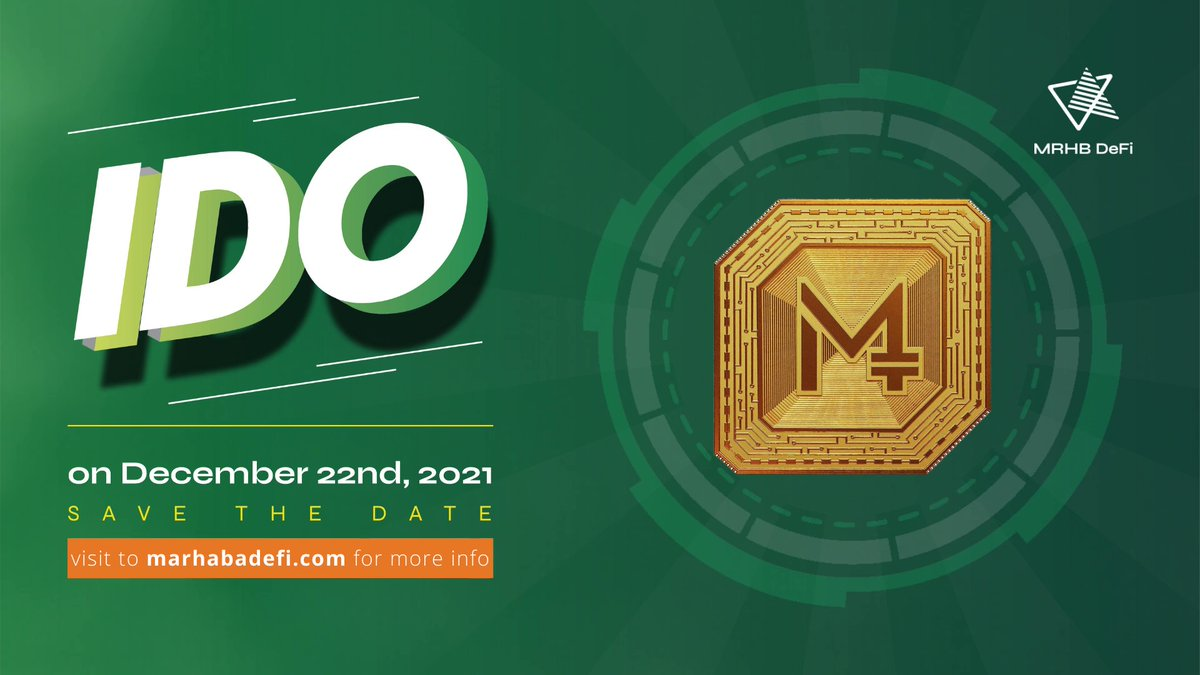
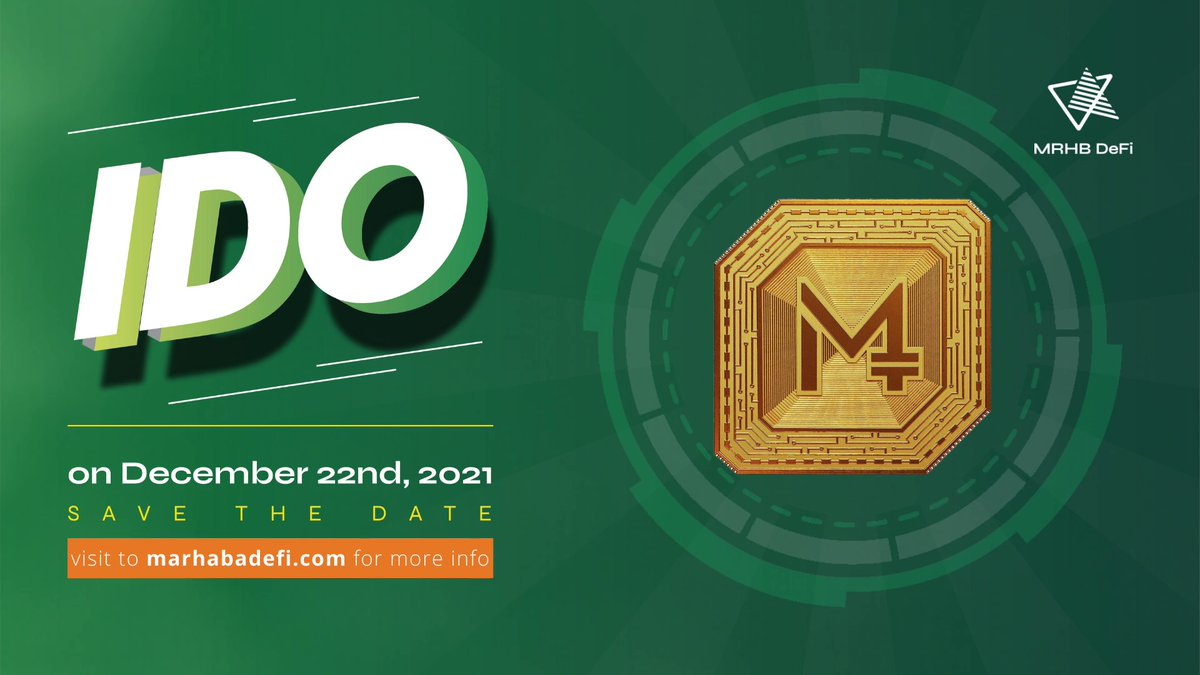
Melbourne, Australia, December 22nd, 2021 — MRHB DeFi, the world’s first inclusive and ethical DeFi ecosystem platform, has announced today the IDO of its BEP-20 token $MRHB on launchpads, ZeroSwap and DODO. Upon IDO completion, immediate listings of the token on DODO and the ever popular PancakeSwap DEX will follow. This is exciting news for the loyal community of over 1000 investors and supporters of the project who will be able to publicly trade $MRHB for the very first time.
“We are thrilled to announce the upcoming IDO and TGE (Token Generation Event) of the $MRHB token, which is the culmination of all the dedication and hard work of the entire Marhaba team,” declared CEO and founder Naquib Mohammed.
“Likewise, we are indebted to our diverse and global family of partners and investors, as well as our loyal community, who have offered steadfast support for the project throughout. The $MRHB token will be the fuel that underpins our entire ethical ecosystem platform, driving our shared vision of an inclusive DeFi for a more sustainable cryptoverse,” he added.
The public sale price of the $MRHB token is USD 0.04 on both ZeeDO, the launchpad of multi-chain DEX aggregator ZeroSwap, and on the DODO BSC launchpad, whose whitelist for the IDO has reportedly already been filled, as of this morning. There will be zero lockup periods for these tokens, which will be 100% released at TGE.
Massive Community Interest for Ethical, Sustainable and Inclusive DeFi Offerings
The community-first project has already concluded two successful pre-launch sales on their website. Unlike many other projects, where only VCs and VIPs get priority, MRHB opened their early rounds to the community to help share the crypto-opportunity — a move celebrated by the now 70,000 strong supporters. For the team, this served as an importantvalidation of the interest for DeFi services rooted in ethics, sustainability and inclusion.
MRHB DeFi was founded with a vision of providing excluded and crypto-cautious communities greater access to the growing opportunities and utilities of the crypto sphere. The project is underpinned by offering faith-based DeFi services which adhere to the ethical investment and financing principles rooted in Islamic Finance — a sector valued at around USD 3 trillion of assets. Bringing even a small portion of Shariah-sensitive liquidity into DeFi will represent a major boost to the total value of the DeFi sector worldwide.
Business practices deemed ethical include those that avoid interest, usury, social exploitation as well as support sustainability, asset or utility backed financing, transparency and equitable risk-reward sharing. These principles have universal appeal far beyond the faith conscious community as evidenced by a large number of stakeholders beyond the halal-seeking population.
Many of the values upheld by the halal platform align with several of the United Nations Sustainable Development Goals and MRHB is also a signatory of the Crypto Climate Accords, a group that seeks to achieve net-zero emissions from electricity consumption by 2030 as well as develop standards and technologies to accelerate the progress toward 100% renewably powered blockchains by the 2025 UNFCCC COP30 conference.
To date, investors include Sheesha Finance, Blockchain Australia, Australian Gulf Capital, Mozaic, Contango Digital Assets, NewTribe Capital, Acreditus Partners, EMGS Group, Sinofy Group, MKD Capital and a grant from Polygon Technology.
About MRHB DeFi
MRHB DeFi is a halal, decentralized finance platform built to embody the true spirit of an “Ethical and Inclusive DeFi” by following faith-based financial and business principles, where all excluded communities can benefit from the full empowerment potential of DeFi.
The diverse team comprises researchers, technocrats, influencers, Islamic fintech experts & business entrepreneurs, who came together to ensure that MRHB DeFi prevails in a manner that will impact society as a whole, essentially bridging the gap between the faith-conscious communities and the blockchain world.
Crypto is a rapidly growing space, with many views on how it might evolve. This series explores various ideas on crypto’s future and does not necessarily reflect the view of Coinbase.
TLDR: This post explores a typical evolution of understanding Bitcoin, how its most common criticisms can actually be strengths, and why its value proposition is unique among cryptocurrencies.
Bitcoin: Introduction and disillusionment
Many people first encounter cryptocurrency through bitcoin. They learn about private keys, mining, consensus mechanisms, and decentralization. They understand and appreciate the uniqueness of Satoshi’s invention, and the potentially transformative impacts of non-governmental money. It’s a fascinating discovery.
Not long after this “orange pill” phase, our new bitcoiner will inevitably encounter a fresh crop of criticism of bitcoin. These aren’t the standard “nocoiner” criticisms, but rather these are the “coiner” criticisms, and unlike many nocoiner critiques, they can’t be dismissed as uninformed. These criticisms are made by people who understand Bitcoin. They are sophisticated and persuasive. Our new bitcoiner finds them compelling. The bitcoiner’s eyes are opened to the many other exciting cryptocurrencies waiting in the wings to eat Bitcoin’s lunch. The new bitcoiner has now entered the “bitcoin is boring” phase¹.
Bitcoin is boring
The criticism usually includes many of the following arguments:
Bitcoin’s proof of work consensus mechanism is inefficient and inferior to proof of stake
Bitcoin is too slow — other chains reach finality much faster and therefore will support many more compelling use cases
Bitcoin can’t possibly succeed due to the lack of onchain privacy
Bitcoin’s lack of an expressive Turing complete programming language makes it less useful than other cryptocurrencies
Bitcoin is stagnant; there is no meaningful innovation in bitcoin, which means it is sure to be outcompeted
Bitcoin’s limited onchain transaction throughput will prevent it from being useful
The hot debate among the “bitcoin is boring” crowd is not about whether Bitcoin will last. They are all certain it won’t. The debate is about which among ETH or the mob of ETH-killers (let’s collectively label all these as the “web3 cryptos”) will first eclipse bitcoin. But regardless of who, how, or when, bitcoin WILL be eclipsed. It’s a dead coin walking, carried by nothing more than inertia, name recognition, and the foolishness of the Eternal September of new users flooding into crypto. Sooner or later, the world will realize this, and bitcoin will fade into irrelevance as a pioneering footnote like so many other “firsts” throughout the history of technology.
The view can be summarized as: “Bitcoin will be outcompeted.”
Nothing remotely competes with Bitcoin
There’s a huge oversight in this line of reasoning.
Proponents believe bitcoin is in competition with web3 cryptos. It’s not. It is trying to be one thing above all else: digital gold.²
Nearly every other actively developed cryptocurrency besides bitcoin has the same product vision as Ethereum: create a decentralized application platform, often called “web3.”³ They are trying to build the next internet, to enable “unstoppable apps”⁴, not build digital gold.
Once Bitcoin’s goal is understood, many of the purported weaknesses laid out in the “bitcoin is boring” view in fact reveals themselves to be strengths:
Digital gold must be transferable. Proof of work has thus far been highly censorship resistant.
Digital gold must be decentralized. Ensuring that a global network can consistently reach consensus without trusted parties is crucial.
Digital gold must be scarce. The transparency of bitcoin’s ledger ensures easy accounting of the total supply.⁵
Digital gold must be safe. Safety is aided through simplicity, driving a need to eliminate unnecessary complexity.⁶
Digital gold must be stable. Constantly changing rules are disqualifying.
Digital gold must be verifiable. Validation of the asset must be cheap and accessible.
The realization that bitcoin has a fundamentally different goal from the web3 cryptos reveals a crucial point: Bitcoin has no meaningful competitors. The web3 crowd is scratching and clawing at each other, while literally no one else is trying to play bitcoin’s game. Bitcoin is sprinting as fast as it can to get years under its belt and build the credibility required to be digital gold — a process that has no shortcuts. It can only do this by being stable, predictable, and functional over many years. For any competitors that do decide to challenge Bitcoin, they will have to overcome Bitcoin’s enormous 13 year head start. Currently, no one else has yet entered the race.
Bitcoin is boring, v2
There’s a second form of the “bitcoin is boring” argument, often a convenient fallback for those who belatedly grasp the shortcomings of the first argument. This form of the argument sees a far grander vision in crypto than “mere” digital gold, and goes something like this:
Digital gold!? Think bigger! Imagine disintermediating Facebook, Amazon, or Google. If the most innovative thing you can think to do is to digitally replicate the refinement of a largely useless metal that people value primarily due to centuries of superstition, prepare to eat my dust.
The proponent of the second version of “bitcoin is boring” might respond to the previous section with “Ok fine, so nothing competes with bitcoin because bitcoin is playing a different sport. But I’m still right, because bitcoin is shown on ESPN 8 while web3 is playing in the superbowl. So congrats on your win in the peewee league.”
The view can be summarized as: “Blockchains can be far more impactful than mere digital gold.”
Digital gold matters, and is here today
There’s nothing wrong with a moonshot. Maybe web3 can provide a democratic revolution for the internet. That’s an exciting possibility.
The error comes from dismissing bitcoin just because you also see value in something else. These are not mutually exclusive futures. Let’s review the impact of digital gold: Bitcoin is a form of value that a government cannot debase or easily seize, and it can be transferred globally with nothing but an internet connection. Such an invention is a big deal. The IMF is rightfully fearful of the threat to fiat currencies posed by nongovernmental money. The existence of web3 projects does nothing to change this potential.
In addition to an honest and thoughtful recognition of the massive impact of true digital gold, there’s another key point to consider: Bitcoin has shipped. Digital gold exists right here, right now. It is ready for investors, financial institutions, and nations.⁷
In contrast, none of the web3 projects have shipped anything close to their final product.⁸ Their current state should be considered as a successful proof of concept for what web3 could become. Readers can know that I’m right because of a simple observation: All the web3 projects have ambitious roadmaps that invariably include crucial breakthroughs to deliver results that have not yet been demonstrated. Will proof of stake effectively resist censorship? Will sharding enable true decentralized verification at scale? Will dev teams be able to step away from being critical points of centralization? Will L2s really allow for trustless scalability? Of course every web3 project insists that success in these matters is a certainty, that these questions will surely be answered in their favor. Perhaps. A truly independent minded skeptic is forced to conclude that only time will tell the answers to these questions.
Leaving the phase
Moving on from “bitcoin is boring” does not make one a bitcoiner.⁹ One can leave the phase and still run the entire gamut: bitcoin maximalist, multicoiner, or bitcoin critic. The hallmark of exit is ceasing to be dismissive of bitcoin.
Maybe bitcoin’s goals are not as interesting to you as web3 goals. But even the biggest web3 proponent has to acknowledge:
Bitcoin is not in competition with any other cryptocurrency. It is crushing its mission to be digital gold while literally no other project is even trying.
Digital gold matters, and is here today.
Recognizing those two things clearly drives the following conclusion: Bitcoin is not boring.
Footnotes
I call it a phase. That doesn’t mean that everyone goes through it, or that everyone leaves it. It’s like being rebellious in your teenage years — some teens don’t do this, and some adults have clearly never moved out of it. But enough people both enter and leave to call it a phase.
Not P2P electronic cash. The blocksize war had a very clear outcome. See the next footnote for more on electronic cash.
There are exceptions. Some cryptos aim to deliver a specific decentralized application, like object storage. Others aim to be cash. Interestingly, the “cash cryptos” can struggle with an identity crisis, since the high onchain transaction throughput requirements for payments also make the chain potentially suitable for decentralized apps. Isn’t “the new decentralized internet” more exciting than “the new decentralized venmo?” The temptation is irresistible, and they implicitly begin moving towards “web3.” Consider the OG cash crypto, Bitcoin Cash.
Unless a bunch of insiders lose a lot of money when the flagship app gets hacked. Then the app should be stopped, of course.
Privacy coins inherently suffer the risk of undetectable inflation vulnerabilities. These are not merely theoretical — they have happened to both ZEC and XMR, the two most prominent privacy coins. And don’t forget Bitcoin Private, a fiasco only made possible by the fact that BTCP is a privacy coin.
Solana recently suffered 17 hours of downtime, earning derisive criticism from many bitcoin maximalists. Interestingly, instead of reacting as if a catastrophe had occurred, a Solana developer downplayed the significance of the failure, and even suggested it could happen again. This would be absurd for bitcoin, and brought howls from the bitcoin crowd. But his view actually makes sense for what he’s building — sometimes web platforms go down. AWS recently suffered almost a day of downtime. While bad, it happens. This is a terrific anecdote for how bitcoin and web3 are playing entirely sports — 17 hours of downtime would be a disaster for digital gold, but not for an app platform.
This doesn’t mean that there’s nothing that can be added to bitcoin. Many improvements are consistent with the goal of being digital gold, such as taproot or improved transaction broadcast logic. But those are refinements to a product that has already cracked the core of its problem, and has delivered its key promise.
This tweet captures it perfectly: “We own bitcoin because it doesn’t change. We own ethereum because it does.” Ethereum can, should, and will change. Digital gold absolutely should not.
This is not a maxi manifesto. I would expect that most well informed web3 proponents would agree with most of what I’ve said here, perhaps with the exception of the skepticism about the ease with which they’ll achieve their roadmaps. Nothing in this article suggests that the web3 cryptos have the wrong objectives, or that they can’t or won’t succeed. Nothing even suggests that the web3 objectives aren’t more exciting or transformative than the digital gold objective. Nevertheless, when comparing them to one another, it’s important to point out that the objectives are different. In addition, the web3 cryptos have not yet shown that they can build everything they need to deliver on their objective. Consider watching Andreas Antonopolous’s talk: The Lion and the Shark.
Perspective: Bitcoin is not boring was originally published in The Coinbase Blog on Medium, where people are continuing the conversation by highlighting and responding to this story.
Bitcoin and altcoins have not had the best week according to reports coming out of the market. The crypto market as a whole has been enjoying months of continuous inflows following hot on the heels of the recent market rally. It has pushed crypto-assets such as bitcoin towards new highs as inflows had hit a new record alongside assets under management. But it seems that this is changing.
Coming off the back of what was 17 consecutive weeks of inflows, the market is now seeing movement in the opposite direction. While assets such as ethereum had previously recorded outflows at various times, they had been isolated to a select few. Now the whole market is seeing its first week of outflows after four months of inflows, setting a record at the same time.
Related Reading | Millennial Millionaires Are The Most Bullish On Crypto, Survey Finds
Largest Record Outflows
The total amount of outflows for last week came out to a total of $142 million. This marked the first week of outflows after a 17-week inflows streak that brought assets under management towards record highs. Not only was this the first week of outflows following over four months of inflows, but it is also the largest weekly outflow from the crypto market on record.
This follows an impressive rally from the crypto market where major cryptocurrencies touched towards a new high. There have been sell-offs all across the market as investors have taken profit and institutional investors are not left out. However, the outflows, despite being a record high, represent only a small total (0.23%) of the asset under management and are also meager compared to the outflows of 2018 that touched as high as 1.6% of total AuM.
The total inflows for the year had reached a record high of $9.5 billion, almost 50% higher than the record that was set in 2020 of $6.7 billion. So despite the outflows, inflows for the year still remain at a record high.
CoinShares also notes that the crypto market is not the only one that has recorded outflows either. Risk assets have all seen outflows after the U.S. Fed had released its statement on tapering.
Bitcoin Leads Outflows
Bitcoin took the lead for the asset with the most outflows for the week. The digital asset had seen its price plummet back to below $50,000 since hitting its all-time high of $69K but had continued to maintain inflows in the weeks following that. This marks the first outflows for over 17 weeks but remains firmly below outflows levels recorded in June that touched as high as $150 million.
Related Reading | Struggling Prices Beats Bitcoin Expectations Down From $100K To $50K
Ethereum has alternated between inflows and outflows for the last 17 weeks. The second-largest cryptocurrency also saw record outflows for the week with a total of $64 million in outflows as it continues to counter bitcoin’s outflows.
Solana, Polkadot, and multi-asset investment products were spared of the onslaught as they saw $6.7 million, $2.5 million, and $1.5 million in inflows respectively.
BTC recovers above $48K | Source: BTCUSD on TradingView.com
Featured image from Wikipedia, chart from TradingView.com
Between 4:00 pm and approximately 5:36 pm PT on Tuesday, November 23rd, we experienced an outage across most Coinbase production systems. During this outage, users were unable to access Coinbase using our websites and apps, and therefore were unable to use our products. This post is intended to describe what occurred and the causes, and to discuss how we plan to avoid such problems in the future.
The Incident
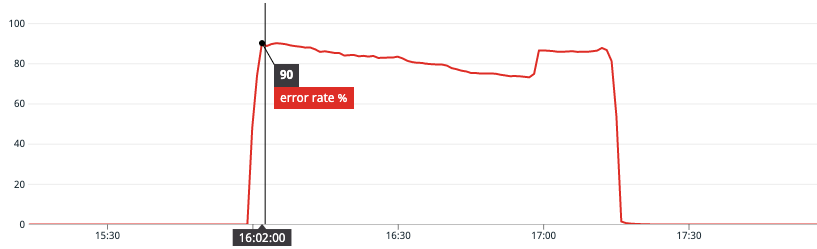
On November 23rd, 2021, at 4:00pm PT (Nov 24, 2021 00:00 UTC) an SSL certificate for an internal hostname in one of our Amazon Web Services (AWS) accounts expired. The expired SSL certificate was used by many of our internal load balancers which caused a majority of inter-service communications to fail. Due to the fact that our API routing layer connects to backend services via subdomains of this internal hostname, about 90% of incoming API traffic returned errors.
Error rates returned to normal once we were able to migrate all load balancers to a valid certificate.
Chart depicting overall 90% error rate at our API routing layer for duration of incident.
Context: Certificates at Coinbase
It’s helpful to provide some background information about how we manage SSL certificates at Coinbase. For the most part, certificates for public hostnames like coinbase.com are managed and provisioned by Cloudflare. For certificates for internal hostnames used to route traffic between backend services, we historically leveraged AWS IAM Server Certificates.
One of the downsides of IAM Server Certificates is that certificates must be generated outside of AWS and uploaded via an API call. So last year, our infrastructure team migrated from IAM Server Certificates to AWS Certificate Manager (ACM). ACM solves the security problem because AWS generates both the public and private components of the certificate within ACM and stores the encrypted version in IAM for us. Only connected services like Cloudfront and Elastic Load Balancers will get access to the certificates. Denying the acm:ExportCertificate permission to all AWS IAM Roles ensures that they can’t be exported.
In addition to the added security benefits, ACM also automatically renews certificates before expiration. Given that ACM certificates are supposed to renew and we did a migration, how did this happen?
Root Cause Analysis
Incident responders quickly noticed that the expired certificate was an IAM Server Certificate. This was unexpected because the aforementioned ACM migration had been widely publicized in engineering communication channels at the time; thus we had been operating under the assumption that we were running exclusively on ACM certificates.
As we later discovered, one of the certificate migrations didn’t go as planned; the group of engineers working on the migration uploaded a new IAM certificate and postponed the rest of the migration. Unfortunately, the delay was not as widely communicated as it should have been and changes to team structure and personnel resulted in the project being incorrectly assumed complete.
Migration status aside, you may ask the same question we asked ourselves: “Why weren’t we alerted to this expiring certificate?” The answer is: we were. Alerts were being sent to an email distribution group that we discovered only consisted of two individuals. This group was originally larger, but shrank with the departure of team members and was never sufficiently repopulated as new folks joined the team.
In short, the critical certificate was allowed to expire due all of three factors:
The IAM to ACM migration was incomplete.
Expiration alerts were only being sent via email and were filtered or ignored.
Only two individuals were on the email distribution list.
Resolution & Improvements
In order to resolve the incident we migrated all of the load balancers that were using the expired IAM cert to the existing auto-renewing ACM cert that had been provisioned as part of the original migration plan. This took longer than desired due to the number of load balancers involved and our cautiousness in defining, testing, and applying the required infrastructure changes.
In order to ensure we don’t run into an issue like this again, we’ve taken the following steps to address the factors mentioned in the RCA section above:
We’ve completed the migration to ACM, are no longer using IAM Server Certificates and are deleting any legacy certificates to reduce noise.
We’re adding automated monitoring that is connected to our alerting and paging system to augment the email alerts. These will page on impending expiration as well as when ACM certificates drop out of auto-renewal eligibility.
We’ve added a permanent group-alias to the email distribution list. Furthermore, this group is automatically updated as employees join and leave the company.
We’re building a repository of incident remediation operations in order to reduce time to define, test and apply new changes.
We take the uptime and performance of our infrastructure very seriously, and we’re working hard to support the millions of customers that choose Coinbase to manage their cryptocurrency. If you’re interested in solving challenges like those listed here, come work with us.
Incident Post Mortem: November 23, 2021 was originally published in The Coinbase Blog on Medium, where people are continuing the conversation by highlighting and responding to this story.