Month: December 2021

  • How Crypto Empowered Porn Creators In 2021: Less Cant More Freedom

    How Crypto Empowered Porn Creators In 2021: Less Cant More Freedom

    [ad_1]

    The crypto industry saw the opportunity of a lifetime this year when OnlyFans, a platform known mostly for its adult content, announced it would ban sexually explicit content. The crypto and porn industry together represents a very profitable merge that has just started to happen.

    The world of payment methods has a history of hypocrisy, control, and morals, and it tends to not support anything related to sex work.

    Reportedly, earlier in the year OnlyFans had decided to shut down all sexually explicit content because of pressure from banks and payment processors. There was a huge backlash and the ban stopped days after its announcement, alleging that the platform had “secured assurances necessary” from the banks.

    The platform’s founder and chief executive told Time that banks were refusing to process adult content-related payments.

    “OnlyFans stands for inclusion”, they said, but they had been trying to distance themselves from the porn industry, interested in launching a streaming service –which doesn’t allow adult content.

    Payment methods have been a burden for porn creators worldwide for years. Their gains are often subject to frozen funds, huge losses, and since there’s not much protection and support offered for sex workers, they need to be extra careful to not become subject to scams and other dangers.

    So anonymity and safe digital wallets go really well with this industry. Naturally, many creators and producers have started to see an answer in crypto.

    Crypto’s Not The Only One With A Bad Reputation

    Cristobal Medoza producer and co-creator of a top Argentinian porn channel called ‘My Bad Reputation’ was one of many to adopt crypto in order to find financial stability and more opportunities. He gave us inside comments on his personal experience, allowing us to take a peek at the industry people love to consume from but try not to support.

    New platforms are surging that connect the porn and crypto industry. A great niche for all parties if successful –it needs to be simple, safe, and well-executed–.

    It’s a demystification that goes both ways: the amount of porn consumers is very high. If adult content platforms are related to crypto, this might become a blasting cap of mainstream adoption.

    Medonza explained that the major porn platforms have already adopted crypto (paying in Bitcoin and USDT), which contrasts with other payment services offered that are very restrictive and using them comes with too many complications and downsides.

    However, many smaller adult content platforms don’t use crypto yet, and that becomes a major problem that comes with huge fees to convert the creators’ money to digital assets.

    Mendoza added that porn creators are often affected by the banks, which he claims have closed the accounts of many and frozen their funds when finding out their income is related to adult content.

    He commented on the OnlyFans sketchy days of adult content baning, alleging that a large of new pornography platforms started to appear, trying to take that big chunk of a very profitable market.

    There’s always going to be someone that will take a stake at that market because it generates huge gains. At the end, OnlyFans took a step back because they knew they would loose too much money and others would quickly fill into their role.

    Mendoza stated that his adult content channel takes its payments through Binance, and it has become a great option since “it doesn’t question where the incomes come from, there are no types or morality issues with how we make the money,” plus they can easily exchange it.

    Further than using crypto as a better payment method, it has also allowed him and his co-creator to make a few investments through trading and hodling.

    There’s many people from the industry that still don’t know how to use crypto as a tool for payments and administration.

    I think [they] would greatly benefit from crypto … comissions are low, there’s full control over one’s own income.

    He mentioned there are many new projects that claim to link the adult content industry with crypto but some are scams, and creators need to be wary and start to educate themselves about cyber security.
    Crypto
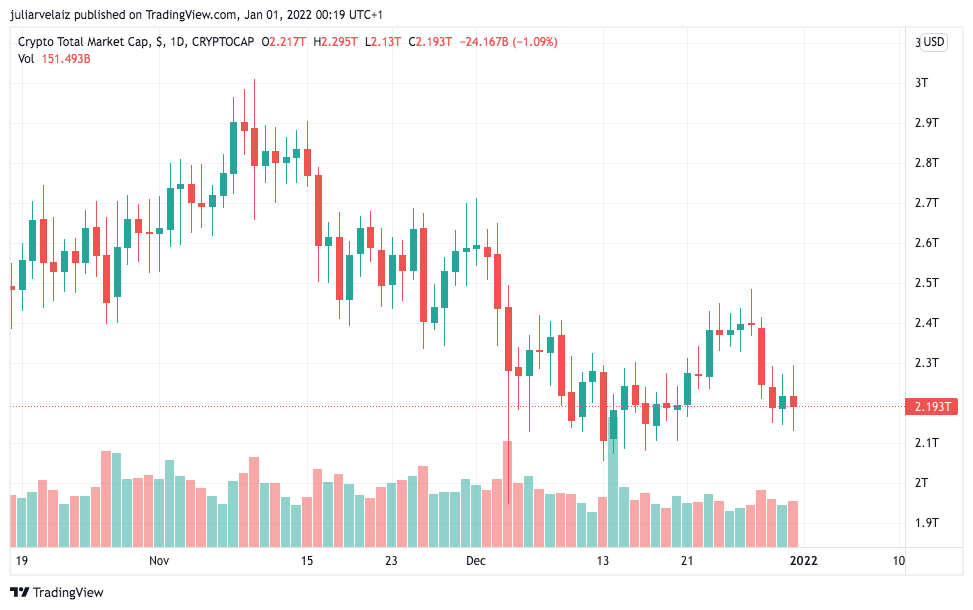
    Crypto total market cap at $2,1 trillion in the daily chart | Source: TradingView.com


    [ad_2]

    Source link

  • Duo Exits Gemini’s APAC To Set Up Crypto Venture in Asia

    [ad_1]

    Gemini’s
     
     Asia-Pacific (APAC 
    ) head Jeremy Ng and head of business development Eugene Ng have left the US crypto exchange and now plan to launch their own crypto venture within the next few months. Eugene had a conversation with Business Times media outlets, and revealed the duo are planning to start their own cryptocurrency business. He did not elaborate further details. He however stated that the duo will be ready to talk about more details on the venture at the end of Q1 2022.

    “Something is cooking. Jeremy and I have been working on this since we left. In a couple of months, we will probably be able to disclose something,” Eugene said, and added that there are “many parties” involved.

    Eugene also declined to share the circumstances that led to his departure from Gemini. Both he and Jeremy had signed non-disclosure agreements with the crypto
     
     exchange 
    . They have not updated their LinkedIn profiles about their next designations.

    Gemini hired Jeremy in June 2020 to be in charge of its new Singapore office as the managing director. Before that, Jeremy was the CEO of Leonteq, a company that specializes in insurance and structured financial products. Jeremy had also worked in a number of major global banks including Goldman Sachs, Deutsche Bank, and Morgan Stanley.

    Meanwhile, Eugene joined Gemini January this year and left the company two months ago. Prior to joining Gemini, he served several tenures in leading global banks such as Barclays Capital, Barclays investment bank, Citi Singapore, and Deutsche Bank, among other financial firms.

    Many Crypto Exchanges Seeking to Obtains MAS License

    The announcement by Jeremy and Eugene comes at a time when Gemini has been pursuing an expansion across Asia. In June 2020, Gemini, a New-York-based crypto exchange founded by Cameron Winklevoss and Tyler Winklevoss, launched its business office in Singapore. The exchange consequently hired Jeremey Ng, a former Goldman Sachs employee and a Singapore resident to lead the Gemini business in Singapore. The exchange took the move after Singapore enacted the Payment Service Act in January 2020, which allows cryptocurrency companies, including exchanges, to be licensed and conduct their business in the city-state. Gemini applied for an operating license in Singapore, a new requirement for crypto trading platforms in the country. However, the company’s ambitions appeared to have run into regulatory bottlenecks.Gemini is still waiting for its business license to be approved by the Monetary Authority of Singapore (MAS), together with other 170 companies.

    Competence in collaborating with regulators across jurisdictions was the major component of Jeremy’s job. Only four companies have been awarded licenses, while the list of several proposals was rejected and many other companies withdrew their applications.

    Since June 2020, Gemini’s office in Singapore has grown moderately. Currently, about 30 staff work at the office. Meanwhile, global crypto exchanges such as Coinbase, Binance, and Huobi also have been crystallizing their plans to operate in the city-state. But regulatory hurdles have made things difficult for them. In September, MAS ordered Binance to stop offering services in Singapore and to cease soliciting business from local residents. The regulator stated that Binance had no appropriate license to conduct its business in the jurisdiction.

    Gemini’s
     
     Asia-Pacific (APAC 
    ) head Jeremy Ng and head of business development Eugene Ng have left the US crypto exchange and now plan to launch their own crypto venture within the next few months. Eugene had a conversation with Business Times media outlets, and revealed the duo are planning to start their own cryptocurrency business. He did not elaborate further details. He however stated that the duo will be ready to talk about more details on the venture at the end of Q1 2022.

    “Something is cooking. Jeremy and I have been working on this since we left. In a couple of months, we will probably be able to disclose something,” Eugene said, and added that there are “many parties” involved.

    Eugene also declined to share the circumstances that led to his departure from Gemini. Both he and Jeremy had signed non-disclosure agreements with the crypto
     
     exchange 
    . They have not updated their LinkedIn profiles about their next designations.

    Gemini hired Jeremy in June 2020 to be in charge of its new Singapore office as the managing director. Before that, Jeremy was the CEO of Leonteq, a company that specializes in insurance and structured financial products. Jeremy had also worked in a number of major global banks including Goldman Sachs, Deutsche Bank, and Morgan Stanley.

    Meanwhile, Eugene joined Gemini January this year and left the company two months ago. Prior to joining Gemini, he served several tenures in leading global banks such as Barclays Capital, Barclays investment bank, Citi Singapore, and Deutsche Bank, among other financial firms.

    Many Crypto Exchanges Seeking to Obtains MAS License

    The announcement by Jeremy and Eugene comes at a time when Gemini has been pursuing an expansion across Asia. In June 2020, Gemini, a New-York-based crypto exchange founded by Cameron Winklevoss and Tyler Winklevoss, launched its business office in Singapore. The exchange consequently hired Jeremey Ng, a former Goldman Sachs employee and a Singapore resident to lead the Gemini business in Singapore. The exchange took the move after Singapore enacted the Payment Service Act in January 2020, which allows cryptocurrency companies, including exchanges, to be licensed and conduct their business in the city-state. Gemini applied for an operating license in Singapore, a new requirement for crypto trading platforms in the country. However, the company’s ambitions appeared to have run into regulatory bottlenecks.Gemini is still waiting for its business license to be approved by the Monetary Authority of Singapore (MAS), together with other 170 companies.

    Competence in collaborating with regulators across jurisdictions was the major component of Jeremy’s job. Only four companies have been awarded licenses, while the list of several proposals was rejected and many other companies withdrew their applications.

    Since June 2020, Gemini’s office in Singapore has grown moderately. Currently, about 30 staff work at the office. Meanwhile, global crypto exchanges such as Coinbase, Binance, and Huobi also have been crystallizing their plans to operate in the city-state. But regulatory hurdles have made things difficult for them. In September, MAS ordered Binance to stop offering services in Singapore and to cease soliciting business from local residents. The regulator stated that Binance had no appropriate license to conduct its business in the jurisdiction.

    [ad_2]

    Source link

  • MRHB DeFi Closes Successful USD5.5M Fundraise with IDO and Announces 5 Million Pool of MRHB Token Rewards for Liquidity Providers | by Bit Media Buzz | Dec, 2021

    MRHB DeFi Closes Successful USD5.5M Fundraise with IDO and Announces 5 Million Pool of MRHB Token Rewards for Liquidity Providers | by Bit Media Buzz | Dec, 2021

    [ad_1]

    Bit Media Buzz

    Melbourne, Australia, December 31st, 2021 — The world’s first ethical and halal DeFi ecosystem platform MRHB DeFi officially concluded its successful fundraising with its final public IDO rounds on DODO and ZeeDO launchpads, altogether raising a total of US$5.5 million with around 85% coming from a global community of investors looking for an ethical and halal entry into the cryptoverse.

    Immediately following the close of the IDO, the MRHB token was listed on the popular DEX PancakeSwap, a leading decentralized exchange on Binance Smart Chain (BSC). For the very first time, early supporters of the project were able to trade and swap their MRHB tokens.

    5 Million Pool of $MRHB Token Rewards for Liquidity Providers

    Instead of standard buy/sell order books, Pancakeswap uses the Automated Market Maker (AMM) model where trades are done through a ‘Liquidity Pool’ whereby users invest funds (become Liquidity Providers or LP’s) to the pools to facilitate swaps.

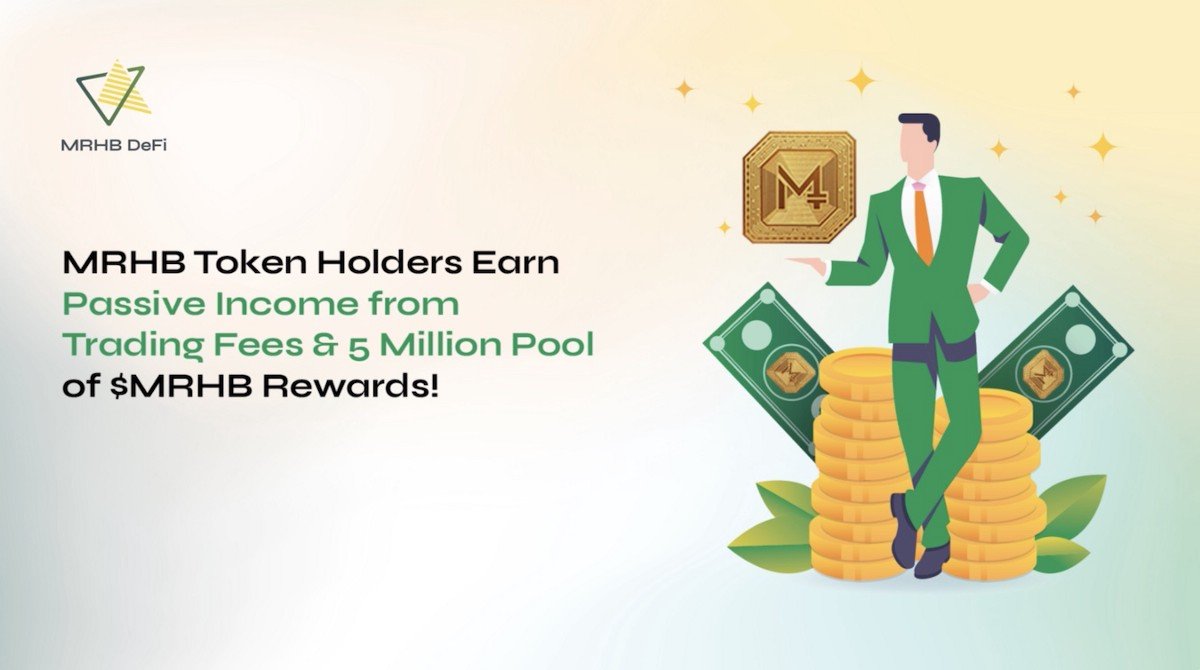
    MRHB DeFi has now announced that over the next three months, $MRHB token holders can become Liquidity Providers on PancakeSwap and earn their share of the pool of 5,000,000 MRHB token rewards.

    The following MRHB/USDT liquidity pool has been set up on PancakeSwap, and MRHB Rewards will only apply to this pool:

    Liquidity Providers to the pool can earn in two ways:

    1. By supplying liquidity to the pool, the liquidity providers earn transaction fees on PancakeSwap as profit. The total trading profits made will be divided among the LPs, proportional to the amount of funds contributed and the amount of time funds are invested in the pool.

    2. In addition, MRHB DeFi will offer a reward to the LP investors on condition that they invest funds into the pool at any point during the three month loyalty period. The $MRHB token reward pool will initially begin at 5,000,000 to be shared among the LP token holders. The number of tokens awarded will change over time but will be visible on the MRHB Reward Dashboard (https://rewards.mrhb.network/). Investors can withdraw their funds at any time.

    As an extra incentive for LPs, MRHB DeFi has announced that LP’s who lock their tokens for the full 90 days in the pool will have the right to claim an NFT from the first collection at their Souq NFT marketplace. Souq NFT is the first anti-NSFW NFT marketplace in the world that is focussed on creating an ethical and halal marketplace for digital art and other NFT assets.

    MRHB DeFi has provided more detailed instructions on how to be Liquidity Providers in the following videos:

    A Conditional ‘Hibah’ Gift

    The LP token rewards are defined as a conditional gift (‘hibah muallaqah bi al-sharth’) that is provided by a third party, permissible according to the Islamic Fiqh. Since there is no (bilateral) exchange contract or transaction between MRHB DeFi and LPs (liquidity providers), MRHB DeFi is considered a third party and is providing the rewards as a gesture of appreciation to their loyal supporters.

    As the share of rewards depends on various factors such as the number of providers and amount of time invested, such LP rewards are not fixed, although they will be stated at the time the tokens are invested into the liquidity pool.

    Such rewards must also be considered together with the price movements (Impermanent Loss) of the MRHB token to assess the overall return to the token holder should they withdraw their funds from the liquidity pool.

    Reminder for Vigilance

    The correct MRHB DeFi contract address for the $MRHB BEP20 Token is as follows:

    https://bscscan.com/address/0xd10332818D6A9B4b84bf5d87DbF9D80012FDF913

    MRHB token holders are reminded to be vigilant against scammers and fake addresses and should exercise caution whenever participating in transactions. Only the following official channels contain the most current and accurate information about the developments of $MRHB.

    MRHB DeFi Official Channels

    MRHB Reward Dashboard: https://rewards.mrhb.network

    Website: https://marhabadefi.com

    Twitter: https://twitter.com/marhabadefi

    Telegram: https://t.me/mdf_official

    Telegram Announcements: https://t.me/marhabadefi_ANN

    YouTube: https://www.youtube.com/channel/UCHuvZG9DbS5ffeoqLX_bERg

    Medium: https://medium.com/@mrhbdefi

    LinkedIn: https://www.linkedin.com/company/marhabadefi

    Facebook: https://www.facebook.com/MRHB-DeFi-105893235209147

    Telegram (Arabic): https://t.me/mdf_arabic

    Telegram (Russian): https://t.me/marhabadefi_russia

    Telegram (Turkish): https://t.me/MarhabaDefiTR

    Telegram (Persian): https://t.me/mrhbdefi_persian

    Telegram (Urdu/Hindi): https://t.me/MRHBDeFi_Urdu_Hindi

    About MRHB DeFi

    MRHB DeFi is a halal, decentralized finance platform built to embody the true spirit of an “Ethical and Inclusive DeFi” by following faith-based financial and business principles, where all excluded communities can benefit from the full empowerment potential of DeFi.

    The diverse team comprises researchers, technocrats, influencers, Islamic fintech experts & business entrepreneurs, who came together to ensure that MRHB DeFi prevails in a manner that will impact society as a whole, essentially bridging the gap between the faith-conscious communities and the blockchain world.


    [ad_2]

    Source link

  • Song a Day NFTs With Jonathan Mann + Your 2022 Crypto Predictions!

    Song a Day NFTs With Jonathan Mann + Your 2022 Crypto Predictions!

    [ad_1]

    Jonathan Mann has published a song a day for 13 years. On Unchained, he talks about his writing process, how he came up with the idea of publishing his songs as NFTs, his plans for a DAO he created called SongADAO, and more. Show topics:

    • the significance and process of making a song a day for 13 years straight
    • how Jonathan monetized his content in the early days (2009) of the internet
    • what crypto event sent Jonathan down the rabbit hole and how Vitalik Buterin was involved
    • why CryptoPunks piqued Jonathan’s interest in monetizing his content on-chain
    • how being in the crypto world has changed Jonathan’s creative process
    • where his song data is being uploaded in the context of web2 and web3 
    • how SongADAO will work and how it could change the paradigm of the music industry
    • the characteristics of his 12/31/2021 NFT drop, which will see over 3,000 songs minted 
    • Jonathan plays “Mongoose Coin” for the Unchained audience, a song he made about Senator Brad Sherman’s comments about cryptocurrency in a recent hearing. 

    Thank you to our sponsors!

    Avado: ava.do

    Crypto.com: https://crypto.onelink.me/J9Lg/unconfirmedcardearnfeb2021 

    Nodle: https://bit.ly/3AXGydJ 


    Episode Links:

    Jonathan Mann


    Song A Day:


    Tweet Thread on Song A Day + SongADAO (must read if you are interested in Jonathan’s work)


    Jonathan at Devcon


    Mongoose Coin


    [ad_2]

    Source link

  • MicroStrategy Purchases Additional 1,914 Bitcoin

    MicroStrategy Purchases Additional 1,914 Bitcoin

    [ad_1]

    Nasdaq-listed business intelligence firm, MicroStrategy yesterday announced the expansion of its Bitcoin portfolio. Michael Saylor, CEO of MicroStrategy, revealed that the company purchased additional 1,914 BTCs for a total of $94.2 million in cash.

    In total, the business intelligence firm is now holding 124,391 Bitcoin. The company bought the mentioned coins for approximately $3.75 billion at an average price of $30,159 per BTC. In 2021, MicroStrategy expanded its BTC portfolio significantly.

    In a recent statement, Saylor called Bitcoin digital property and mentioned that countries around the world will accept cryptocurrency due to its convenient infrastructure. The CEO of MicroStrategy added that BTC will outperform gold as an inflation hedge.

    “MicroStrategy has purchased an additional 1,914 bitcoins for ~$94.2 million in cash at an average price of ~$49,229 per bitcoin. As of 12/29/21, we hold ~124,391 bitcoins acquired for ~$3.75 billion at an average price of ~$30,159 per bitcoin,” Saylor highlighted in a Tweet yesterday.

    The stock of MicroStrategy (MSRT) jumped by more than 30% this year. After touching a record high of almost $1,300 in February 2021, MSRT saw a correction in the last few months. Currently, the stock is trading near $560.

    Active Bitcoin Addresses

    Bitcoin network witnessed record activity in 2021 as a large number of addresses interacted on the daily basis. For BTC address activity, 2021 became the strongest year to date.

    “It is highly encouraging to see Bitcoin’s address activity break new ground in 2021, and not just on a single-day basis. With its mean daily addresses at 989,000 – or just short of 1 million addresses/day – this was also the strongest year to date for Bitcoin’s address activity. To put this in context, although 2019 wasn’t a bad year for crypto by all accounts, it hasn’t seen a single day where BTC surpassed 1M DAA. In 2021, one million was almost the mean,” Santiment noted.

    Nasdaq-listed business intelligence firm, MicroStrategy yesterday announced the expansion of its Bitcoin portfolio. Michael Saylor, CEO of MicroStrategy, revealed that the company purchased additional 1,914 BTCs for a total of $94.2 million in cash.

    In total, the business intelligence firm is now holding 124,391 Bitcoin. The company bought the mentioned coins for approximately $3.75 billion at an average price of $30,159 per BTC. In 2021, MicroStrategy expanded its BTC portfolio significantly.

    In a recent statement, Saylor called Bitcoin digital property and mentioned that countries around the world will accept cryptocurrency due to its convenient infrastructure. The CEO of MicroStrategy added that BTC will outperform gold as an inflation hedge.

    “MicroStrategy has purchased an additional 1,914 bitcoins for ~$94.2 million in cash at an average price of ~$49,229 per bitcoin. As of 12/29/21, we hold ~124,391 bitcoins acquired for ~$3.75 billion at an average price of ~$30,159 per bitcoin,” Saylor highlighted in a Tweet yesterday.

    The stock of MicroStrategy (MSRT) jumped by more than 30% this year. After touching a record high of almost $1,300 in February 2021, MSRT saw a correction in the last few months. Currently, the stock is trading near $560.

    Active Bitcoin Addresses

    Bitcoin network witnessed record activity in 2021 as a large number of addresses interacted on the daily basis. For BTC address activity, 2021 became the strongest year to date.

    “It is highly encouraging to see Bitcoin’s address activity break new ground in 2021, and not just on a single-day basis. With its mean daily addresses at 989,000 – or just short of 1 million addresses/day – this was also the strongest year to date for Bitcoin’s address activity. To put this in context, although 2019 wasn’t a bad year for crypto by all accounts, it hasn’t seen a single day where BTC surpassed 1M DAA. In 2021, one million was almost the mean,” Santiment noted.


    [ad_2]

    Source link

  • Why 2022 Could Be The Best Year For Cardano, Top Bullish Predictions

    Why 2022 Could Be The Best Year For Cardano, Top Bullish Predictions

    [ad_1]

    Cardano (ADA) experienced a major downtrend in the past months as the crypto market took another swing for the lows. The sixth cryptocurrency by market cap has seen a year in the green as it managed to complete several upgrades on its mainnet.

    Related Reading | Biggest Cardano Based Cross-Chain NFT Marketplace Verlux kicks Off Pre-sale

    First, Cardano successfully transitioned to a Proof-of-Stake consensus in 2020, shortly after the D parameter reached “0” signaling the full decentralization of block production. The network went from a federate consensus to a community-based consensus as the latter control most stake pools producing blocks on the network.

    Later, the start of a new era with the first of 3 major Hard Fork Combinator (HFC) events with the implementation of “Allegra”, followed by “Mary”. These upgrades brought new capabilities to the Cardano mainnet which were completed with “Alonzo” that introduced smart contract capabilities into the blockchain.

    This ecosystem has already seen a surge in projects, as developers and users rush in to build and leverage the benefits of its UTXO model. In that sense, community member ADA Whale shared his top predictions that could boost another rally for the underlying cryptocurrency of the Cardano network.

    ADA Whale mentioned the potential increase in the number of transactions and active addresses for Cardano. The investor believes these fundamentals could increase by a factor of 5 leading into a massive wave of adoption in 2023.

    Cardano remains one of the most actively used networks. Scaling happens via different streams, first gradually to keep up w growth, exponentially in 2023.

    This new wave of adoption for this network could translate into more projects. The investors estimated that by the end of 2022, there could be more than 250 decentralized applications, DeFi platforms, launchpad and more on the network. The investor added:

    Cardano DeFi starts slowly but TVL >$10bn eoy. Dapp store with levels of certification goes live. Ease of use sees people replace banking stack with Cardano DeFi. Digital Identity projects thrive connecting DeFi w/ real world. UTXO DeFi will be different, and better

    Cardano And Its Potential For The Coming Years

    In addition to its security, according to ADA Whale, Cardano offers low fees, energy efficiency with a green footprint, and has been adopted by companies and projects with a global impact. This includes World Mobile, Singularity, and others.

    The aforementioned collaborations place the ecosystem in different sectors with close deals with governments in growing economies. Cardano will strengthen its partnerships in the coming years as it attempts to provide people with an open, decentralized, and accessible network to manage and support a variety of basic services.

    In the meantime, the network develops interoperable capabilities. ADA Whale mentioned Milkomeda, a second layer solution for Cardano with EVM compatibility. This types of solutions will help onboard more users and developers.

    Related Reading | Cardano Project Flickto Surpasses 1.5 Million ADA Staked One Month After Launch

    As of press time, ADA trades at $1,36 with sideways movement in the past day.

    Cardano ADA ADAUSDT
    ADA trends to the downside in the 4-hour chart. Source: ADAUSDT Tradingview


    [ad_2]

    Source link

  • 10 Predictions for Web3 and the Cryptoeconomy for 2022

    10 Predictions for Web3 and the Cryptoeconomy for 2022

    [ad_1]

    By Surojit Chatterjee, Chief Product Officer

    2021 proved to be a breakout year for crypto with BTC price gaining almost 70% yoy, Defi hitting $150B in value locked, and NFTs emerging as a new category. Here’s my view through the crystal ball into 2022 and what it holds for our industry:

    1. Eth scalability will improve, but newer L1 chains will see substantial growth — As we welcome the next hundred million users to crypto and Web3, scalability challenges for Eth are likely to grow. I am optimistic about improvements in Eth scalability with the emergence of Eth2 and many L2 rollups. Traction of Solana, Avalanche and other L1 chains shows that we’ll live in a multi-chain world in the future. We’re also going to see newer L1 chains emerge that focus on specific use cases such as gaming or social media.

    2. There will be significant usability improvements in L1-L2 bridges — As more L1 networks gain traction and L2s become bigger, our industry will desperately seek improvements in speed and usability of cross-L1 and L1-L2 bridges. We’re likely to see interesting developments in usability of bridges in the coming year.

    3. Zero knowledge proof technology will get increased traction — 2021 saw protocols like ZkSync and Starknet beginning to get traction. As L1 chains get clogged with increased usage, ZK-rollup technology will attract both investor and user attention. We’ll see new privacy-centric use cases emerge, including privacy-safe applications, and gaming models that have privacy built into the core. This may also bring in more regulator attention to crypto as KYC/AML could be a real challenge in privacy centric networks.

    4. Regulated Defi and emergence of on-chain KYC attestation — Many Defi protocols will embrace regulation and will create separate KYC user pools. Decentralized identity and on-chain KYC attestation services will play key roles in connecting users’ real identity with Defi wallet endpoints. We’ll see more acceptance of ENS type addresses, and new systems from cross chain name resolution will emerge.

    5. Institutions will play a much bigger role in Defi participation — Institutions are increasingly interested in participating in Defi. For starters, institutions are attracted to higher than average interest-based returns compared to traditional financial products. Also, cost reduction in providing financial services using Defi opens up interesting opportunities for institutions. However, they are still hesitant to participate in Defi. Institutions want to confirm that they are only transacting with known counterparties that have completed a KYC process. Growth of regulated Defi and on-chain KYC attestation will help institutions gain confidence in Defi.

    6. Defi insurance will emerge — As Defi proliferates, it also becomes the target of security hacks. According to London-based firm Elliptic, total value lost by Defi exploits in 2021 totaled over $10B. To protect users from hacks, viable insurance protocols guaranteeing users’ funds against security breaches will emerge in 2022.

    7. NFT Based Communities will give material competition to Web 2.0 social networks — NFTs will continue to expand in how they are perceived. We’ll see creator tokens or fan tokens take more of a first class seat. NFTs will become the next evolution of users’ digital identity and passport to the metaverse. Users will come together in small and diverse communities based on types of NFTs they own. User created metaverses will be the future of social networks and will start threatening the advertising driven centralized versions of social networks of today.

    8. Brands will start actively participating in the metaverse and NFTs — Many brands are realizing that NFTs are great vehicles for brand marketing and establishing brand loyalty. Coca-Cola, Campbell’s, Dolce & Gabbana and Charmin released NFT collectibles in 2021. Adidas recently launched a new metaverse project with Bored Ape Yacht Club. We’re likely to see more interesting brand marketing initiatives using NFTs. NFTs and the metaverse will become the new Instagram for brands. And just like on Instagram, many brands may start as NFT native. We’ll also see many more celebrities jumping in the bandwagon and using NFTs to enhance their personal brand.

    9. Web2 companies will wake up and will try to get into Web3 — We’re already seeing this with Facebook trying to recast itself as a Web3 company. We’re likely to see other big Web2 companies dipping their toes into Web3 and metaverse in 2022. However, many of them are likely to create centralized and closed network versions of the metaverse.

    10. Time for DAO 2.0 — We’ll see DAOs become more mature and mainstream. More people will join DAOs, prompting a change in definition of employment — never receiving a formal offer letter, accepting tokens instead of or along with fixed salaries, and working in multiple DAO projects at the same time. DAOs will also confront new challenges in terms of figuring out how to do M&A, run payroll and benefits, and coordinate activities in larger and larger organizations. We’ll see a plethora of tools emerge to help DAOs execute with efficiency. Many DAOs will also figure out how to interact with traditional Web2 companies. We’re likely to see regulators taking more interest in DAOs and make an attempt to educate themselves on how DAOs work.

    Thanks to our customers and the ecosystem for an incredible 2021. Looking forward to another year of building the foundations for Web3. Wagmi.


    10 Predictions for Web3 and the Cryptoeconomy for 2022 was originally published in The Coinbase Blog on Medium, where people are continuing the conversation by highlighting and responding to this story.

    [ad_2]

    Source link

  • First US Bitcoin ETF a ‘dud’ in 2021 as GBTC discount stays near record lows

    First US Bitcoin ETF a ‘dud’ in 2021 as GBTC discount stays near record lows

    [ad_1]

    Bitcoin (BTC) institutional demand is conspicuously wanting at the end of the year as data flags the “underperformance” of the United States’ first Bitcoin futures exchange-traded fund (ETF).

    As noted by markets commentator Holger Zschaepitz on Dec. 29, the ProShares Bitcoin Strategy ETF (BITO) is now trading at nearly 30% below its launch price.

    Anticlimax rounds out 2021 for ProShares ETF

    In a sign of the times regarding Bitcoin sentiment, the hype that accompanied BITO’s launch in Q3 has died down considerably.

    Going from record-breaking volume on its first day to its current state, the ETF has even underperformed the embattled Bitcoin spot price in 2021.

    “The first Bitcoin futures ETF in the US was a dud, at least this year,” Zschaepitz commented.

    ProShares Bitcoin Strategy ETF (BITO) vs. BTC/USD normalized chart. Source: Holger Zschaepitz/ Twitter

    Meanwhile, as Cointelegraph reported, the Grayscale Bitcoin Trust (GBTC) continues to trade at its biggest-ever discount to Bitcoin spot price, or net asset value (NAV).

    GBTC’s conversion to an ETF, slated for next year, meanwhile depends on the tone of U.S. regulators regarding spot-based products, these yet to debut.

    GBTC price vs. holdings vs. GBTC premium chart. Source: Coinglass

    Eerie all-time highs persist in stocks

    While detractors describe the GBTC discount as “very concerning,” activity from investors themselves does not unanimously point to apathy when it comes to Bitcoin.

    Related: 5 ways derivatives could change the cryptocurrency sector in 2022

    Morgan Stanley upped its GBTC allocation this month and last, in a sign that longer-term sentiment remains strong.

    Macro markets, meanwhile, display curious characteristics. The S&P 500 is at record highs, challenging a trendline which has marked topside resistance since its inauguration almost 100 years ago.

    Below the surface, however, all is not as it seems, warnings revealed this week.